

Note: This article contains affiliate links. If you click on these links and make a purchase, I may earn a small commission at no extra cost to you. This helps support my research and content. Read my full affiliate disclosure here.
Small flying pests make kitchens, patios, and indoor plant areas unpleasant and can spread rot or disease to produce and seedlings. Choosing the right gnat and fruit fly trap matters because trap design, bait compatibility, and ease of maintenance determine how quickly you see a drop in fly activity and how much ongoing work is required. This guide covers seven shortlisted traps that represent the range of approaches gardeners and home cooks typically use. We evaluate each option for bait performance, capture efficiency, refill or cleaning needs, and suitability for different locations so you can pick the style that fits your space and routine.
Top Picks at a Glance
| Best Overall The best all-around choice for most situations | LFSYS Window Fly Traps — 50 Disposable Clear Sticky Strips |  |
| Best Quality Built to a higher standard if you want something more solid | Zevo MAX Bug Catcher — Indoor Plug‑In Trap with 2 Refills |  |
| Best Value The sweet spot between price and what you get | LFSYS Plug-In UV Fruit Fly and Gnat Trap with 11 Refills (12 Count) |  |
| Best Budget The cheapest option that still gets the job done reliably | Sturdon Yellow Double-Sided Sticky Fungus Gnat & Fruit Fly Traps, 48-Pack |  |
| Highest Rated A top-rated pick with lots of positive feedback | Altaz Plug-in Indoor Fly Trap with Adhesive Refills (2 Devices + 10 Refills) |  |
| Most Popular A crowd favorite that many people choose with confidence | ZEVO Compact Flying Insect Trap with 3 Refill Cartridges |  |
| Best Seller A high-volume bestseller chosen again and again | ZEVO Flying Insect Trap Starter Kit (Plug-In Base + Refill) |  |
LFSYS Window Fly Traps — 50 Disposable Clear Sticky Strips
| Unit Count | 50 Count |
|---|---|
| Target Species | Fly |
| Power Source | manual |
| Material Type | Paper |
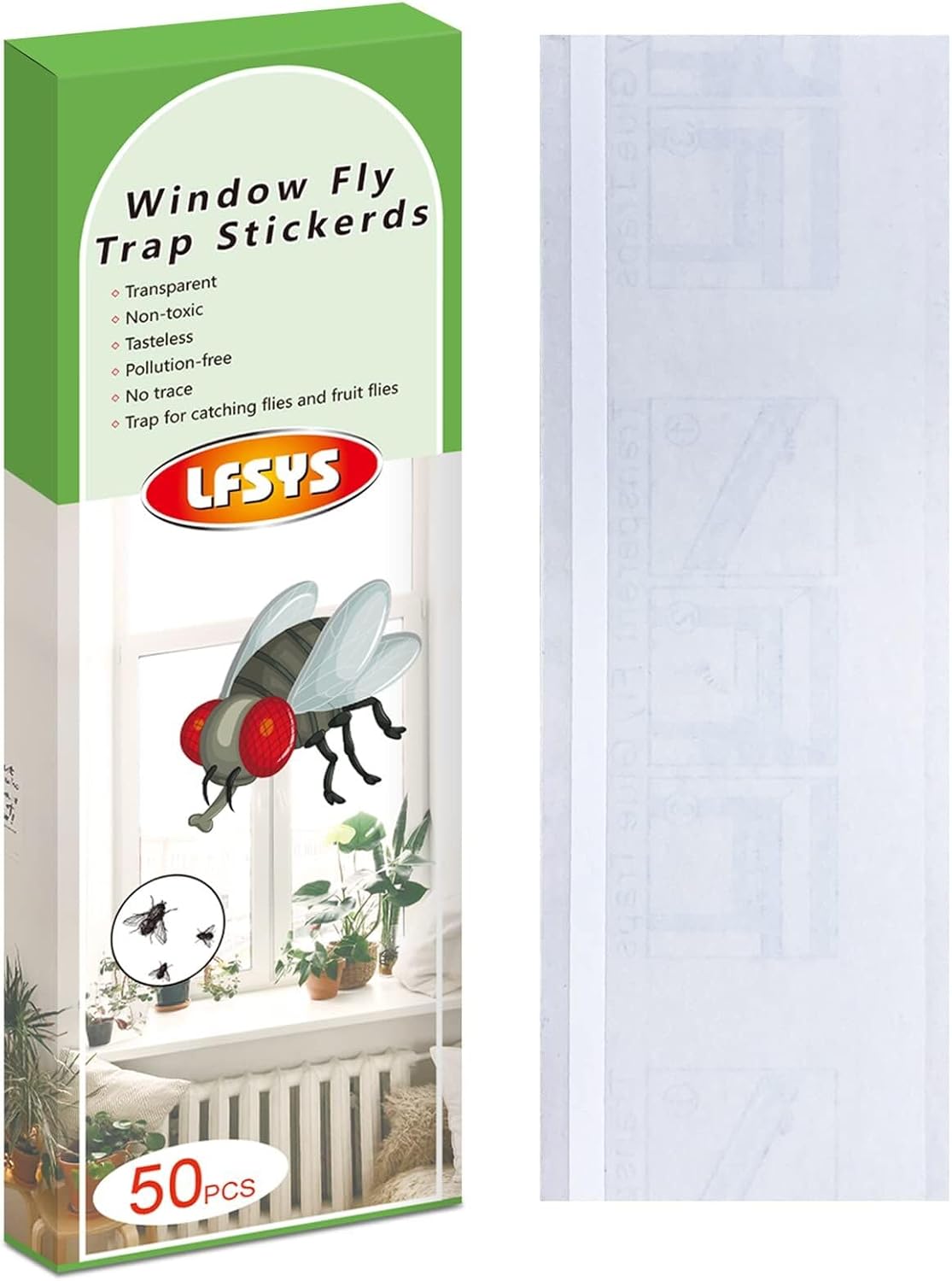
These LFSYS window fly traps are clear adhesive paper strips meant to stick to windows and other smooth surfaces to capture flies, gnats, and other small flying insects. You peel the backing and press the strip to a clean window or glass door where light and air movement attract flying pests; insects land on the transparent surface and become trapped in the glue. The kit includes 50 individual strips, which makes it easy to place traps in multiple rooms or replace them frequently during heavy infestations. The material is thin paper with a transparent finish so they are less visible on glass, and the manufacturer says the adhesive removes cleanly without leaving residue. There are no chemicals or power required, so the traps are safe around children and pets but rely entirely on contact to work. That means they are best for low to moderate indoor problems and require regular replacement when coated in insects or dust. For someone who wants a simple, low-maintenance, non-toxic option to reduce indoor flies, these deliver consistent, predictable results; for severe infestations a powered or baited trap will be faster and require less placement effort.
Best for: Buyers who prioritize a reliable, low-risk indoor solution that can be deployed widely and replaced often to keep fly activity down without chemicals.
Less Ideal for: People dealing with large, persistent infestations or who need an outdoor or powered trapping solution should consider alternatives.
- Large 50-count pack for coverage across multiple rooms or frequent replacement
- Transparent paper design is less noticeable on windows and preserves light
- Non-toxic, manual design is safe to use around children and pets
- Adhesive is formulated to trap small flying insects effectively and is reported to remove cleanly
- No attractant or bait included so effectiveness depends on insect traffic and placement
- Paper strips can become dirty or lose tack in humid or dusty environments
- Not suitable as a standalone solution for heavy infestations or outdoor use
Verdict: A simple, non-toxic pack of 50 clear sticky window strips that reliably reduces small indoor fly problems when placed where insects land.
Zevo MAX Bug Catcher — Indoor Plug‑In Trap with 2 Refills

| Target Species | Fly, Fruit Fly, Gnat |
|---|---|
| Power Source | Electric |
| Unit Count | 3 Count |
| Material Type | Plastic |
The Zevo MAX is a plug‑in indoor bug catcher designed to run continuously and trap flying insects without chemicals. It uses a 360° blue and UV light array to attract house flies, fruit flies and gnats into disposable adhesive cartridges so you never handle the insects. Typical use is to place the unit where insects congregate — kitchens, near indoor plants, garages or living rooms — and keep it powered via the included five foot cord for flexible placement. Notable features include the wider capture area compared with compact models, two starter refill cartridges, and a mess‑free adhesive system. Practical benefits are continuous 24/7 operation, child‑ and pet‑friendly design when used as directed, and easy maintenance by replacing cartridges. Limitations are that it requires a wall outlet and replacement refills over time, and like any light trap its effectiveness depends on room layout and competing light sources. For performance‑minded buyers this is a straightforward, low‑maintenance solution for reducing flying insect activity in indoor spaces.
Best for: Buyers who prioritize consistent, measurable performance in reducing indoor flying insects and want a low‑maintenance, continuously operating solution for kitchens and larger rooms.
Less Ideal for: Those who need a cordless or purely battery‑powered option or who prefer non‑light‑based control methods such as bait stations or traps designed for outdoor use.
- 360° blue and UV lighting increases attraction area compared with compact plug‑ins
- Mess‑free adhesive cartridges eliminate direct contact with insects
- Includes two starter refill cartridges so you can begin using it immediately
- Five foot power cord gives flexible placement around the home
- Requires replacement adhesive cartridges to maintain effectiveness
- Needs a nearby electrical outlet so placement can be limited
Verdict: Choose the Zevo MAX if you want a high‑coverage, plug‑in indoor trap that continuously captures flies, gnats, and fruit flies with minimal upkeep.
LFSYS Plug-In UV Fruit Fly and Gnat Trap with 11 Refills (12 Count)

| Unit Count | 12 Count |
|---|---|
| Item Type Name | Plug in catcher |
| Target Species | Gnat |
| Power Source | manual |
| Material Type | Plastic |
The LFSYS plug-in trap is a small UV-based unit designed for indoor control of fruit flies, fungus gnats, and other small flying pests. It uses dual-wavelength bulbs (365nm and 397nm) to attract insects into the device where they stick to a double-sided transparent adhesive board. Setup is straightforward: slide in a sticky card, plug the unit into a standard outlet and place it in a dark corner for best results. The clear adhesive boards provide broad coverage and the lamp-based attractant works continuously without noise or odor, so it is suitable for kitchens, pantries, and indoor plant areas. Maintenance is minimal — check and replace sticky cards as needed — and the unit is safe to use around people and pets because it does not zap. Limitations include the need for a nearby outlet and reduced effectiveness in brightly lit rooms since the trap performs best in darker environments, and adhesive boards will require periodic replacement to remain effective.
Best for: Buyers who want a low-effort, continuous indoor solution for small flying pests and prefer a quiet, no-odor device that is simple to set up and maintain.
Less Ideal for: People who need an outdoor trap, want an immediate kill from a zapper, or who cannot place devices in dark or low-light areas near an outlet.
- Dual-wavelength UV bulbs (365nm and 397nm) increase attraction of fruit flies and gnats
- Double-sided transparent adhesive boards give wider capture area and discreet appearance
- Quiet, odor-free operation with no zapping makes it safe for indoor use
- Simple installation and low maintenance — replace sticky cards as needed
- Needs a nearby electrical outlet and works best in darkened rooms
- Requires regular purchase and replacement of adhesive boards
Verdict: A fuss-free indoor UV trap that quietly captures fruit flies and gnats with replaceable double-sided sticky boards for continuous, low-maintenance pest control.
Sturdon Yellow Double-Sided Sticky Fungus Gnat & Fruit Fly Traps, 48-Pack

| Unit Count | 48 Count |
|---|---|
| Power Source | manual |
| Material Type | Plastic |
| Number of Pieces | 48 |
These Sturdon sticky traps are a low-effort way to reduce flying pests around potted plants and indoor problem areas. The bright yellow cards use a double-sided ultra-sticky adhesive to attract and hold fungus gnats and fruit flies, while the molded base lets you push the trap into potting soil so it sits close to where gnats emerge. A practical detail is the non-stick twig handle that keeps your fingers away from the glue when inserting or removing spent cards. In use you distribute multiple cards among susceptible pots or place them near kitchen drains and trash zones; the large 48-count pack makes ongoing coverage inexpensive. Expect simple, passive control rather than elimination of heavy infestations; glue-only traps will eventually fill and need replacing, and they do not address larvae in soil. The traps are odor-free and manual to use, so they work silently and require no batteries or chemicals. For someone managing several indoor plants or wanting a cheap, maintenance-light option, these are an effective supplemental tool.
Best for: Buyers who want a very affordable, low-maintenance way to reduce adult gnats and fruit flies around multiple indoor plants or small indoor problem areas.
Less Ideal for: People facing severe infestations that need soil treatment or integrated controls, or those who prefer non-adhesive, reusable electronic or bait-based solutions.
- Double-sided ultra-sticky adhesive increases catch rate when flies land from any side
- Non-stick twig handle prevents touching adhesive and eases placement and removal
- Soil-insert base holds trap upright near gnat emergence points
- Large 48-count pack provides broad coverage for multiple plants or repeated replacement
- Glue surface will become saturated and requires periodic replacement to remain effective
- Glue-only approach does not treat larvae in soil so additional measures may be needed
Verdict: A budget-friendly, no-fuss pack of sticky traps that gives broad, passive control of adult fungus gnats and fruit flies around indoor plants.
Altaz Plug-in Indoor Fly Trap with Adhesive Refills (2 Devices + 10 Refills)

| Power Source | ac |
|---|---|
| Unit Count | 1 Count |
| Material Type | Plastic |
| Number of Pieces | 1 |
The Altaz plug-in indoor fly trap is a simple, reliability-focused solution for reducing small flying pests around the house. It runs continuously on AC power and attracts insects with dual-wavelength blue-violet LEDs; trapped bugs stick to replaceable adhesive refills so there is no noisy zap or chemical spray. Typical use is plugging a unit into a kitchen, bedroom, bathroom or near houseplants and swapping refill strips when they become covered. The included package pairs two devices with ten upgraded adhesive refills, which the brand says provides several months of coverage when rotated. Practical benefits are quiet 24/7 operation, minimal maintenance, and no messy liquids. Important limitations are that it requires an outlet and constant power, it is designed for small flying insects so it will not control large infestations or crawling pests, and adhesive panels need periodic replacement to stay effective. For buyers wanting a low-maintenance, non-chemical indoor trap that consistently captures gnats and fruit flies, this is a solid option.
Best for: Homeowners who prioritize a quiet, dependable, non-chemical way to reduce fruit flies, gnats, and mosquitoes around food prep and plant areas, and who want a set-and-forget device they can check periodically.
Less Ideal for: People who need a cordless or outdoor solution or those facing heavy infestations that require targeted professional or larger-scale treatments.
- Continuous AC-powered operation for constant protection
- Dual-wavelength blue-violet light attracts a range of small flying insects
- Upgraded adhesive refills hold insects without noise or sprays
- Low maintenance: simple peel-and-replace refill system
- Requires a nearby electrical outlet and continuous power
- Not intended for large infestations or for non-flying pests
Verdict: Buy this if you want a quiet, plug-in indoor trap that reliably captures small flying insects using adhesive refills.
ZEVO Compact Flying Insect Trap with 3 Refill Cartridges

| Target Species | Fly, Fruit Fly, Gnat |
|---|---|
| Power Source | Electric |
| Unit Count | 4 Count |
| Material Type | Plastic |
The ZEVO Compact Flying Insect Trap is a plug-in indoor unit that attracts fruit flies, gnats, and house flies with blue and UV light and holds them on disposable adhesive cartridges so you can remove and replace refills without touching the insects. Typical use is to place the unit near problem areas such as fruit bowls, trash cans, or houseplants and leave it powered continuously for around-the-clock catch. Notable features include a no-mess adhesive cartridge with a tab for easy disposal, a compact profile for tight spaces, and a quiet, spray-free operation that avoids chemical odors and zapping sounds. In practice it provides consistent passive control for small flying pests and is family-friendly when used as directed. Limitations are that it is designed for indoor spot control of small flies rather than large infestations, and effectiveness depends on correct placement and periodic cartridge replacement roughly every six weeks. The unit requires an outlet and ongoing refill purchases to maintain performance.
Best for: Buyers who want a discreet, low-maintenance indoor solution for everyday small flying pests and prefer nonchemical, quiet options with easy cleanup.
Less Ideal for: People needing fast knockdown for heavy infestations or outdoor/large-area pest control should consider more powerful or whole-home treatments.
- Chemical-free, quiet operation suitable for homes with children or pets
- No-mess disposable adhesive cartridges with tab for easy removal
- Compact plug-in design fits tight indoor spaces near problem sources
- Blue and UV light provides continuous attraction day and night
- Not intended for large infestations or outdoor use
- Requires regular purchase and replacement of proprietary refills
Verdict: Choose this compact plug-in trap if you want a discreet, chemical-free way to reduce fruit flies and gnats in indoor problem spots with minimal fuss.
ZEVO Flying Insect Trap Starter Kit (Plug-In Base + Refill)

| Target Species | Fly, Fruit Fly, Gnat |
|---|---|
| Power Source | Electric |
| Unit Count | 2 Count |
| Material Type | Plastic |
The ZEVO Flying Insect Trap is a compact plug-in unit designed for continuous indoor use to reduce small flying pests around kitchens, bathrooms, and indoor plants. It uses blue and UV light to lure flies and gnats into a disposable adhesive cartridge so insects are captured quietly and out of sight on the wall-facing glue pad. Setup is simple — plug the base in, slide in a cartridge, and position the device near likely insect sources such as fruit bowls, trash, or potted plants. Notable features include a no-mess removal tab, a blinking reminder to check the cartridge about every six weeks, and a chemical-free, odor-free design that is safe for occupied rooms when used as directed. Practical benefits are low ongoing noise, no zapping or sprays, and discreet continuous protection. Limitations are that it targets small flying insects rather than larger pests, requires regular cartridge replacement, and is intended for indoor coverage so multiple units may be needed for larger rooms.
Best for: Buyers who want a low-risk, everyday indoor solution to reduce fruit flies, gnats, and house flies without chemicals or loud zappers and who prefer a discreet, continuous trap in kitchens and living areas.
Less Ideal for: People needing fast knockdown of larger flies, mosquitoes, or broad multi-room coverage from a single device should consider more powerful or different-style solutions.
- Chemical-free, odor-free capture using blue and UV light
- No-mess disposable adhesive cartridge with removal tab
- Quiet continuous operation suitable for occupied rooms
- Easy plug-in setup and a blinking reminder for cartridge checks
- Designed for small flying insects only and not effective on larger pests
- Requires periodic purchase and replacement of adhesive cartridges
Verdict: A convenient, low-risk plug-in trap that provides quiet, chemical-free day-and-night control of small indoor flying pests.
Choosing the Right Gnat and Fruit Fly Trap: Key Factors to Consider
Bait Type and Effectiveness
Different gnat and fruit fly traps use food baits, pheromones, or vinegar-based lures. The bait type matters because some baits work better on fruit flies that prefer fermenting sugars while others are more attractive to fungus gnats attracted to damp soil and organic decay.
Consider whether the trap accepts fresh baits you can replenish with household items like apple cider vinegar and dish soap, or whether it uses proprietary lures. Household baits are cheap and easy to refresh but may require more frequent replacement. Proprietary lures can be longer lasting but might not be as readily available or may have a scent profile more suited to one fly species than another.
Trap Design and Retention
How a trap is constructed affects both capture rate and how many flies remain trapped. Funnels, sticky surfaces, and drowning chambers are common designs. Funnels let flies enter but can allow escape if the exit path is not sufficiently narrow or baffles are poorly positioned.
Sticky cards capture and hold insects reliably but can look messy and require careful placement to avoid contact with people or pets. Drowning or liquid traps are discreet and effective for many home baits but need periodic emptying and cleaning to avoid odor buildup. Evaluate whether the trap's design reduces escape, limits odor, and keeps liquid or sticky surfaces contained.
Maintenance and Cleaning Frequency
Some traps are essentially disposable and swapped out when full, while others are reusable and require routine cleaning. Maintenance frequency matters because traps placed in kitchens or near plants should not become new sources of smell or breeding if neglected.
Reusable traps save waste but need a cleaning method that fits your tolerance for handling captured insects and sticky residues. Look for traps with removable parts, wide openings for washing, and materials that resist staining. Consider whether you prefer a low-touch disposable approach or a sustainable reusable option and how often you are willing to refresh bait or empty contents.
Safety and Location Suitability
Where you plan to use the trap dictates acceptable materials and bait types. Indoor kitchen traps must avoid toxic chemicals and strong fumes that could taint food. Outdoor patio traps need to resist weather and keep rain from diluting baits. Traps used near children or pets should minimize accessible sticky surfaces and exposed liquids.
Also consider placement near houseplants: traps that target fungus gnats should sit close to pots but not drown beneficial soil microbes with runoff. Check whether the trap can be mounted, hung, or left on a flat surface and whether that placement will be practical in your space.
Refill and Consumable Availability
If a trap uses replaceable lures, sticky cards, or refill cartridges, availability and cost of consumables will influence long-term satisfaction. Traps that rely on household baits avoid ongoing purchases but may require more frequent refreshes which can be inconvenient for busy households.
Assess whether refills are sold in multipacks, whether they store well between uses, and how easy it is to find replacements locally or online. For gardeners, the ability to use DIY baits with readily available ingredients is often a practical advantage when managing seasonal infestations.
Indoor Vs Outdoor Placement Tips
Placement determines effectiveness. Indoors, put traps near ripening fruit, trash areas, or the soil surface of potted plants. Keep traps out of direct sunlight where heat can evaporate baits quickly and reduce attraction.
Outdoors, position traps in shaded, sheltered spots on patios or near composter lids where flies congregate. Make sure outdoor traps divert rain or splash so baits remain concentrated and effective.
- Place traps within a few feet of the target source for best results
- Avoid putting traps directly on countertops where food is prepared
- Use sheltered locations outdoors to prevent bait dilution
DIY Baits That Work
Several simple household baits reliably attract fruit flies and small gnats. A small dish with apple cider vinegar and a drop of dish soap breaks surface tension so flies drown after landing. Overripe fruit in a loosely covered container with small entry holes can also lure pests into a trap.
For fungus gnats that breed in potting soil, a sticky trap placed at soil level will intercept adults emerging from the medium. You can also use a shallow container of diluted yeast and sugar to attract flies in heavy infestations, but monitor such traps so they do not become new breeding sites.
- Apple cider vinegar plus dish soap for fruit flies
- Overripe fruit in a baited funnel for stronger attraction
- Sticky paper at soil level for fungus gnats
Maintaining Traps for Ongoing Control
Empty or replace traps before they become overcrowded, as a buildup of dead insects can reduce attraction and create odors. For reusable traps, rinse with hot water and a mild detergent, then air dry completely before rebaiting to prevent mold growth.
Rotate locations if a trap seems less effective over time. Flies learn and shift activity, so periodically moving traps closer to new hotspots will improve capture rates. Keep a small schedule for checking traps weekly during peak seasons.
- Check traps weekly during active months
- Clean reusable traps with soap and hot water
- Move traps if capture rates decline
Integrating Traps with Cultural Controls
Traps are most effective when combined with cultural practices that reduce fly breeding sites. Remove overripe fruit promptly, keep trash sealed, and allow potted soil to dry slightly between waterings to discourage fungus gnat larvae.
Regularly clean food prep and compost areas, and avoid leaving fermenting liquids uncovered. Traps can reduce adult populations, but source control is essential to prevent new generations from emerging.
- Remove food and organic debris that attract flies
- Adjust watering practices to reduce fungus gnat habitat
- Cover compost and secure trash lids
When to Call a Professional
Most household gnat and fruit fly problems are resolved with consistent trapping and sanitation, but persistent heavy infestations that do not respond after several weeks may need professional advice. Professionals can diagnose hidden breeding sources such as drains, hidden spills, or structural moisture problems.
If you suspect an infestation linked to building dampness or recurring composting issues, a targeted inspection will identify the underlying cause so traps and sanitation steps yield lasting results.
- Seek help if traps and sanitation fail after weeks of effort
- Ask a pro to inspect drains, wall voids, or persistent moisture sources
How We Chose the Best Gnat and Fruit Fly Trap
We focused on practical capture performance and real-world maintenance demands that matter when controlling gnats and fruit flies in kitchens, patios, and around houseplants. Key evaluation criteria included bait effectiveness, trap design and retention, maintenance requirements, and location flexibility. Bait effectiveness measured how well a product attracts common nuisance species using typical home baits. Trap design and retention considered whether flies enter easily and remain trapped without frequent escapes. Maintenance requirements assessed how simple the trap is to clean or refill and whether it creates extra mess. Location flexibility looked at whether a trap can be used indoors near food or outdoors on patios and plant pots without being hazardous to children or pets. We excluded devices intended solely for industrial or agricultural use and traps requiring specialized chemicals not suitable for domestic settings. Our shortlist favors solutions that balance attraction power with safe, low-effort upkeep.
FAQ
How long does it take for a trap to reduce fruit fly numbers?
It often takes several days to a week to notice a visible drop in adult numbers. Effectiveness depends on trap placement, bait strength, and removal of breeding sources.
Can I use vinegar traps around houseplants without harming them?
Yes. Small vinegar traps placed near the soil surface will not harm plants. Avoid spilling bait onto soil and empty traps regularly to prevent attracting more pests to the pot area.
Are sticky traps safe around pets and children?
Sticky traps are effective but should be placed out of reach of pets and children to prevent accidental contact. Consider enclosed designs or hanging traps when young children or curious animals are present.
How often should I change bait or replace the trap?
Replace or refresh bait every one to two weeks, or sooner if you notice reduced captures or strong odors. Disposable traps should be swapped when full, while reusable models require regular cleaning before rebaiting.
Will traps eliminate fungus gnat larvae in the soil?
Traps target adults and reduce future generations but do not remove larvae from soil. Combine adult trapping with cultural controls like drying the top layer of soil and repotting heavily infested plants to reduce larvae numbers.
Final Verdict
Choose a trap that matches the infestation source and your tolerance for maintenance. If fruit and kitchen areas are the problem, bait-based liquid or funnel traps near fruit and trash work well. For potted plants and fungus gnats, soil-level sticky traps or small bait stations capture adults emerging from the medium. Prioritize bait effectiveness, trap retention, and ease of cleaning. Pair traps with sanitation and moisture control to prevent re-infestation. With the right combination of trap type and source reduction, you can regain control of kitchens, patios, and indoor plant areas confidently.
