

Note: This article contains affiliate links. If you click on these links and make a purchase, I may earn a small commission at no extra cost to you. This helps support my research and content. Read my full affiliate disclosure here.
Large containers and planter boxes behave differently than small pots. The wrong compost can compact, drain too quickly, or fail to hold enough nutrients for bigger root systems. This guide looks at five shortlisted compost options tailored for large planters and explains how each choice addresses moisture retention, aeration, and long-term fertility. You will find practical reasons to prefer different textures and ingredient blends based on plant types, watering habits, and seasonal needs. Below we outline the selection criteria used and the key factors to weigh before choosing compost for your large planters.
Top Picks at a Glance
| Best Overall The best all-around choice for most situations | Brut Worm Farms Organic Worm Castings, 30 lb |  |
| Best Quality Built to a higher standard if you want something more solid | Coast of Maine Quoddy Blend Organic Compost (1 cu ft, 2 pack) |  |
| Best Value The sweet spot between price and what you get | Black Kow Composted Cow Manure, 35 lb Bag |  |
| Highest Rated A top-rated pick with lots of positive feedback | Vermont Compost Company Fort Vee Organic Potting Soil Mix, 40 Quart (2 Pack) |  |
| Most Popular A crowd favorite that many people choose with confidence | R&M Organics Cow Manure Compost Soil Amendment (10 lb) |  |
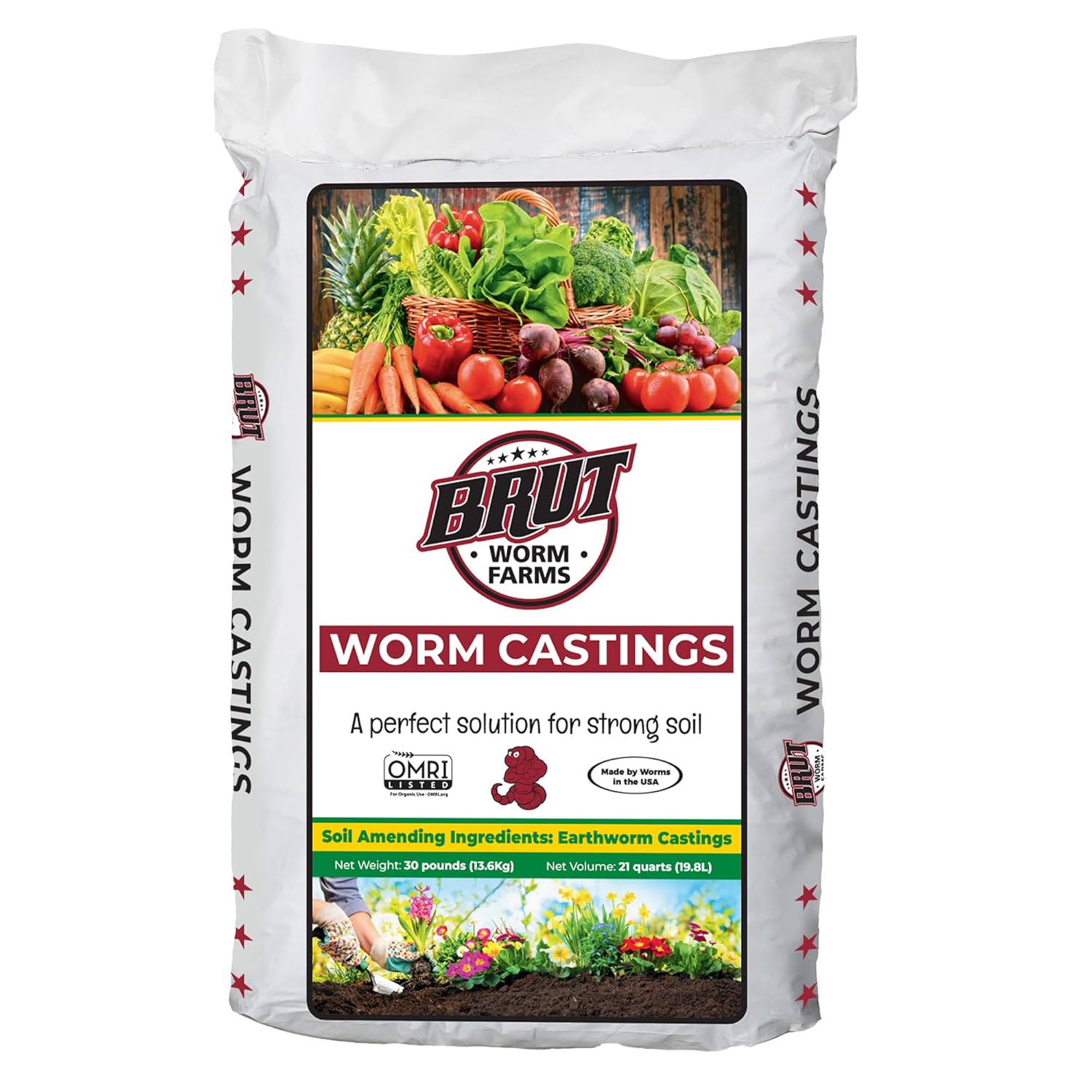
Brut Worm Farms Organic Worm Castings, 30 lb
| Item Form | bag |
|---|---|
| Specific Uses For Product | Gardening,Potting |
| Coverage | 30 |
| Target Species | houseplants, plants, shrubs, vegetables |
| Mixing Ratio | 1:5 |
Brut Worm Farms Organic Worm Castings are a ready-to-use soil amendment sold in a large 30 lb bag for gardeners who want to add nutrient-dense organic matter to potting mixes, containers, and garden beds. Use it as a top dressing, mix into potting soil at the recommended 1:5 ratio, or work a light amount into existing garden soil to improve aeration and water retention. The product is made from earthworm-processed organic material, so it delivers beneficial microbes and soluble nutrients without the risk of burning plants. Practical benefits include improved seedling vigor, healthier root development, and better moisture management in both indoor houseplants and outdoor vegetables or shrubs. Limitations are mostly logistical: a 30 lb bag is bulky to store and handle, and results are gradual since castings release nutrients slowly rather than providing a quick NPK spike. Also, users should follow handling guidance to avoid inhaling dust and keep the bag dry to preserve microbial life.
Best for: Gardeners seeking a reliable, organic soil amendment to steadily improve soil health and support a wide range of plants in containers and beds.
Less Ideal for: People who need a fast-acting chemical fertilizer for immediate greening or those who prefer small, easy-to-handle packages for occasional houseplant use.
- High in beneficial microbes and soluble nutrients that support root health
- Versatile application as a mix-in, top dressing, or soil amendment for indoor and outdoor plants
- Organic, slow-release nutrient profile that reduces risk of fertilizer burn
- Large 30 lb bag covers multiple containers or garden beds for season-long use
- Large bag can be heavy and awkward to move or store
- Nutrient delivery is gradual, so it is not a quick fix for severely deficient plants
Verdict: A large, organic worm-casting product that steadily builds healthier soil and stronger plants across indoor and outdoor gardens.
Coast of Maine Quoddy Blend Organic Compost (1 cu ft, 2 pack)

| Unit Count | 768 Ounce |
|---|---|
| Volume | 1 cubic feet |
| Style Name | 2 Pack |
Coast of Maine Quoddy Blend is a bagged organic compost mix intended for improving garden soil and supporting healthier plant growth. It combines compost, sphagnum peat moss, aged bark and chitin-rich lobster and crab meal to add organic matter, feed soil microbes and improve drainage in beds or containers. Typical uses are top-dressing vegetable plots, amending in-ground garden soil before planting and mixing into raised beds to increase water retention without creating heavy, poorly draining soil. Notable features include OMRI-listed organic inputs, a formula that encourages microbial life and inclusion of marine-derived nutrients that release slowly. Practical benefits are richer soil structure, better root development and a sustainable ingredient profile that reuses byproducts. Limitations are typical of bagged mixes: one cubic foot per bag covers a small area so larger projects need many bags, and peat content means gardeners concerned about peat extraction may prefer peat-free alternatives. Also the product is a soil amendment rather than a complete potting mix, so additional fertilizer may be needed for high-demand crops.
Best for: Gardeners who prioritize reliable, organic soil improvement for vegetables, flowers or raised beds and want a proven amendment that supports soil life.
Less Ideal for: People doing large-scale landscaping who need bulk volume or gardeners seeking a peat-free amendment should consider alternative products.
- OMRI-listed organic ingredients that support sustainable gardening
- Contains compost and chitin-rich lobster and crab meal to feed microbes and provide slow-release nutrients
- Loose texture that improves drainage and root penetration
- Suitable for in-ground beds and raised beds as a soil amendment
- Small volume per bag makes it less efficient for large landscape projects
- Contains peat moss which some gardeners avoid for environmental reasons
Verdict: A dependable organic compost blend that reliably improves soil structure and feeds soil biology for healthier garden beds.
Black Kow Composted Cow Manure, 35 lb Bag

| Item Form | Granules |
|---|---|
| Specific Uses For Product | Organic |
| Coverage | Medium |
| Target Species | Plants, Houseplants, Vegetables |
| Mixing Ratio | 0.5-0.5-0.5 |
Black Kow Composted Cow Manure is a ready-to-use organic soil amendment that supplies slow-release nutrients and improves soil texture. Gardeners typically work it into topsoil or use it as a side dressing on lawns and planting beds; the product can also be used as a planting medium for tomatoes by cutting and planting directly in the bag. Notable features include a mild 0.5-0.5-0.5 nutrient analysis that will not burn roots and a granulated, composted form that increases moisture retention in sandy soils and improves aeration in clay soils. Practical benefits for lawns are better water-holding capacity, improved soil structure, and a steady nutrient supply that reduces the need for frequent feeding. Limitations are that the nutrient analysis is very low compared with concentrated fertilizers, so it is more of a long-term soil builder than a quick lawn green-up solution, and the bagged format means you will need to handle and spread multiple bags for larger lawns. The package also includes handling guidance and cautions to avoid direct ingestion and contact with skin or eyes.
Best for: Homeowners who want an inexpensive, low-risk way to build soil health over time and improve lawn soil structure rather than seeking immediate greening.
Less Ideal for: People needing a fast, high-nitrogen lawn boost or landscapers covering large turf acreage who prefer concentrated fertilizers or bulk delivery options.
- Organic, composted material that improves soil structure and aeration
- Slow-release 0.5-0.5-0.5 nutrient profile that will not burn roots
- Granular, bagged form is easy to spread or incorporate into topsoil
- Helps increase moisture retention in sandy soils and loosens compacted clay soils
- Low nutrient concentration so it is not a quick fix for nitrogen-deficient lawns
- Bag handling required for covering large lawn areas
Verdict: Choose Black Kow if you want an affordable, organic compost that steadily improves lawn soil structure and moisture retention over time.
Vermont Compost Company Fort Vee Organic Potting Soil Mix, 40 Quart (2 Pack)

| Brand | Vermont Compost Company |
|---|---|
| Volume | 40 quarts |
| Style Name | Garden,Peat Moss,Potting,Potting Soil Mix,Soil Mix,Vermiculite |
| Unit Count | 1280 Ounce |
This Fort Vee organic potting soil is a compost-heavy mix designed for seed starting, transplants, and container vegetables that need a nutrient boost. It is intended for indoor and outdoor use in trays, soil blocks, and pots and is blended from composted manure and plant materials with sphagnum peat moss, vermiculite, coconut coir, and mineral amendments to improve structure and nutrients. In practice the mix holds its form well for transplanting and gives heavy-feeding crops like tomatoes and peppers a strong start thanks to added blood meal, kelp meal, and bone meal. It is easy to use straight from the bag with no extra amendments required for short-term container growth, and the composition should help with moisture retention while still draining better than plain compost. Important limitations are typical of rich mixes: it is a starter or container medium rather than a final garden topsoil, and the nutrient level may require adjustment or dilution before long-term use in beds or for very young seedlings sensitive to strong fertilizer salts.
Best for: Gardeners who want a reliable, ready-made organic potting mix to start and grow nutrient-hungry vegetables in containers or for transplanting to the garden.
Less Ideal for: People seeking a low-nutrient seed-starting medium for delicate micro-seedlings or gardeners who need bulk topsoil for bed building rather than a concentrated potting mix.
- Compost-based formula supplies organic nutrients useful for heavy-feeding vegetables
- Includes moisture-holding and aeration components like vermiculite and coconut coir
- Pre-mixed with mineral and biological amendments (bone meal, blood meal, kelp) for immediate plant support
- Designed to hold form for soil blocks, trays, and pots which eases transplanting
- High nutrient content makes it stronger than basic seed mixes and may be too rich for very small seedlings
- Formulated as a potting/starting mix rather than a finished garden soil for permanent beds
Verdict: A dependable, nutrient-rich organic potting mix that gives tomato seedlings and other heavy feeders a strong, ready-to-use start in containers.
R&M Organics Cow Manure Compost Soil Amendment (10 lb)

| Item Form | Solid |
|---|---|
| Specific Uses For Product | Organic |
| Application Method | Apply a thin layer around plants or mix into soil |
| Coverage | All-purpose |
| Target Species | fruits, vegetables, flowers, lawns, trees |
This 10 lb bag of R&M Organics compost is a straightforward, all-purpose soil amendment aimed at improving soil health in garden beds, containers, and raised beds. Made from cured cow manure and fully composted, it is low-odor and easy to work with — apply a thin quarter-inch layer around established plants or mix into planting soil at the recommended 5:1 ratio for new beds. The compost enhances moisture retention, aeration, and organic matter, which helps roots establish and reduces watering frequency. Its small bag size and modest weight make it convenient for small to medium projects and for gardeners who prefer incremental soil improvements. Because the product is pure compost rather than a balanced fertilizer, it is best used as a long-term soil builder rather than a quick nutrient fix; you may still need targeted fertilizers for heavy-feeding vegetables or to correct specific nutrient deficiencies. The simplicity and low odor make it a practical choice for backyard growers who want a reliable organic amendment without handling fresh manure or bulk deliveries.
Best for: Gardeners who prefer incremental, low-effort soil improvement for beds and containers and who prioritize organic, low-odor amendments for everyday maintenance.
Less Ideal for: Large-scale gardeners or landscapers who need bulk amendments or immediate corrective fertilizers for specific nutrient deficiencies should look for bulk compost or formulated plant foods.
- Fully composted cow manure reduces pathogens and minimizes odor compared with raw manure
- Improves soil structure and moisture retention for beds, containers, and raised beds
- Small 10 lb bag is easy to carry, store, and apply for small to medium gardens
- Versatile all-purpose amendment suitable for fruits, vegetables, flowers, lawns, and trees
- Not a formulated fertilizer so it may not supply immediately available nutrients for heavy feeders
- Bag size is small for larger beds or bulk soil rebuilding projects
Verdict: A convenient, low-odor organic compost that steadily improves soil structure and moisture retention for small to medium garden beds.
Choosing the Right Compost for Large Planters: Key Factors to Consider
Moisture Retention and Drainage Balance
Large planters need compost that holds enough moisture to feed bigger root masses without staying waterlogged. A mix with both fine humus and coarser porous material helps moderate how quickly water drains. Fine particles and well-decomposed organic matter increase water holding but can also lead to compaction if there is not enough larger material to keep pore space.
Assess your watering routine and local climate. In hot, windy settings prioritize mixes with higher water-holding capacity. In cooler, wetter climates pick blends with better drainage components to avoid root oxygen stress.
Particle Size and Structure
Particle size determines how a compost performs in a large volume. Larger fragments like coarse bark, coconut chip, or screened wood keep channels open for air and root passage. Smaller, finely decomposed humus improves nutrient and water retention but can collapse under weight if used alone in deep planters.
A layered or blended structure that includes both coarse and fine fractions maintains long-term porosity. Consider mixes that list particle ranges or mention screening size for predictable behavior in taller or deeper containers.
Nutrient Content and Release Profile
Big planters require a steady nutrient supply because they support larger root systems and often house multiple plants. Compost with a balanced organic nutrient profile reduces the need for frequent fertilizing. Look for compost that indicates a nutrient analysis or mentions blended feedstocks like composted manures, green-waste, or yard trimmings.
Fast-release materials give an initial boost but can deplete quickly. Slow-release organic matter and stable humus provide longer-term fertility and feed soil biology that helps store and cycle nutrients over the season.
Organic Matter Quality and Soil Biology
High-quality organic matter builds soil structure and supports beneficial microbes, worms, and fungi that help nutrient uptake. Well-matured compost is less likely to rob nitrogen from plants and is gentler on seedlings and roots. The source material matters: diverse feedstocks produce broader micronutrient profiles.
Avoid immature or hot compost in finished planting mixes. Look for descriptors like 'fully composted' or 'cured' and for assurances that the product is stable and free of pathogens and weed seeds where possible.
Salt Levels and Plant Sensitivity
Some composts, especially those derived from certain manures or seaweed concentrates, can have elevated soluble salts. In large planters where salts accumulate near roots, sensitive plants may show scorch or stunted growth. Rinse or leach new mixes if salt content is unknown and monitor electrical conductivity for salt-sensitive crops.
If you plan to grow salt-sensitive ornamentals or vegetables, choose composts labeled for container use or low-salt formulations, and avoid freshly cured manures without testing.
Longevity and Reuse
Because filling large planters can be time-consuming and costly in bulk, consider composts that maintain structure over multiple seasons. Some mixes compress quickly and require frequent replacement, while others retain porosity and can be refreshed with top-dressing and targeted amendments.
Think about whether you want a one-season replacement or a more permanent fill that you will top-dress and amend. Durable structure reduces labor and waste when working with large containers.
How Compost Behavior Differs in Large Planters
Large planters change the physical environment around roots. Deeper or wider volumes alter drainage paths and temperature dynamics, and compost in a big container holds moisture differently than the same mix in a small pot. Expect slower warming in spring and longer wet pockets after rain or watering.
Because of these differences, gardeners should prioritize mixes that preserve porosity at scale and deliver steady nutrients rather than short-lived boosts. Think about the whole-season rhythm of watering and feeding when choosing a compost for large planters.
- Deeper profiles can trap moisture near the bottom if drainage is poor
- Heat retention in large masses can slow biological activity early in the season
- Structural collapse is more noticeable in tall or heavily planted containers
Mix Adjustments for Specific Plant Types
Adjust compost choice to the plants you intend to grow. Vegetables and heavy feeders benefit from mixes with higher nutrient density and a higher proportion of composted manure or green waste. Drought-tolerant ornamentals and succulents need faster-draining blends with more coarse material and less fine humus.
If you are mixing your own potting blend, a practical approach is to start with a base compost for fertility and add proportions of coarse grit, perlite, or bark to tune drainage and aeration to the crop.
- Vegetable and herb mixes: richer compost, good water retention, added slow-release amendments
- Ornamental shrubs: balanced compost with plenty of structure to support roots
- Succulents: minimal fine compost, high coarse fraction for fast drainage
Preparing and Filling Large Planters
Filling large planters efficiently helps avoid future settling problems. Pre-moisten bulky compost before filling to reduce air pockets and ensure even settling. If using lightweight aggregates or foam to reduce weight, place them beneath the compost rather than mixing in, so organic layers remain consistent.
Compact in stages and avoid over-tamping. Leave some headspace to allow for top-dressing and mulch. After planting, water thoroughly and monitor how the mix compacts, then add fresh compost or aerating material if needed.
- Pre-wet compost to encourage even settling
- Use a coarse base for drainage when planter bottoms restrict flow
- Reserve headspace for mulch and top-dressing
Seasonal Care and Top-Dressing
Large planters benefit from seasonal maintenance rather than full replacement. Top-dressing with a thin layer of quality compost supplies nutrients and helps rebuild fine organic matter lost to decomposition and watering. Work the top layer gently into the root zone to refresh fertility without disturbing established roots.
Monitor for compaction each season. If the surface becomes crusted, lightly fork or aerate and add organic amendments. In autumn, consider adding a slightly higher carbon material to the surface to slow decomposition over winter.
- Top-dress annually with a thin layer of compost
- Aerate surface when compaction is noticed
- Adjust amendments seasonally to match plant demand
Bulk Handling and Storage Tips
Buying compost for large planters often involves handling large volumes. Store bags or bulk piles in a dry, ventilated area to prevent rewetting and anaerobic breakdown. If you receive bulk compost, move it quickly to a covered but breathable location to preserve structure.
When moving compost, keep it loose and avoid crushing it into containers. Use a tarp or bins to shield from heavy rain and to make measured fills easier when preparing multiple planters.
- Keep compost dry and covered in storage
- Move and fill promptly to maintain structure
- Use bins or tarps to stage compost for multiple planters
How We Chose the Best Compost for Large Planters
We focused on attributes that matter most in big containers where root volume and water behavior diverge from smaller pots. Our editorial filters prioritized texture and structure to prevent compaction, nutrient density for sustained feeding, moisture management to reduce watering frequency, and organic content that supports soil life over the planting season. We also considered particle size distribution and the presence of larger components that improve aeration, such as coarse bark or wood fragments. Products were excluded if they were formulated strictly for in-ground beds, contained high percentages of inert fillers, or lacked clear sourcing information on feedstocks. We paid attention to declared nutrient analyses and ingredient transparency, and we favored blends suitable for repeated reuse or top-dressing in large planters. Final selections balance practical gardener needs: long-term fertility, workable moisture behavior, and structural integrity for larger root systems.
FAQ
Can I use garden compost from my pile in large planters?
Often yes, provided the compost is fully matured and well-screened. Homemade compost can be excellent if it is stable and free of large undecomposed pieces. Screen or sieve it to remove oversized fragments and check that it no longer heats up and does not smell strongly before using in containers.
How much compost should I use to fill a large planter?
Fill to within a few inches of the rim to allow for watering and mulch. Depth depends on plant roots, but aim to give large root systems at least 12 to 18 inches of quality mix. Leave headspace for watering and top dress later in the season.
Should I add fertilizer to compost in large planters?
It depends on the compost's nutrient profile and the plants' needs. Well-finished compost provides baseline fertility, but heavy feeders usually benefit from periodic organic fertilizer or slow-release amendments. Monitor plant growth and leaf color to decide when supplemental feeding is needed.
How often will compost in large planters need replacing?
With good-quality compost and regular top-dressing, you may not need to replace the entire volume every season. Expect to top-dress annually and refresh parts of the mix every two to three years, depending on decomposition and compaction.
Is compost for large planters different from potting mix?
Yes. Compost is primarily decomposed organic matter that supplies nutrients and improves structure, while potting mixes are often formulated with inert components to control drainage and weight. For large planters, gardeners commonly use compost-rich blends or mix compost with other aggregates to get the desired balance.
Final Verdict
Choosing compost for large planters is about balancing moisture retention, structure, and steady nutrient delivery. Prioritize mixes that retain water without compacting, include a range of particle sizes to preserve porosity, and contain stable organic matter that feeds soil life over time. Decide based on your plants and maintenance preferences: choose higher nutrient, moisture-retentive blends for heavy feeders and vegetable beds, and leaner, grittier mixes for drought-tolerant ornamentals. With the right compost and simple seasonal care, large planters can deliver strong, reliable growth year after year.
