

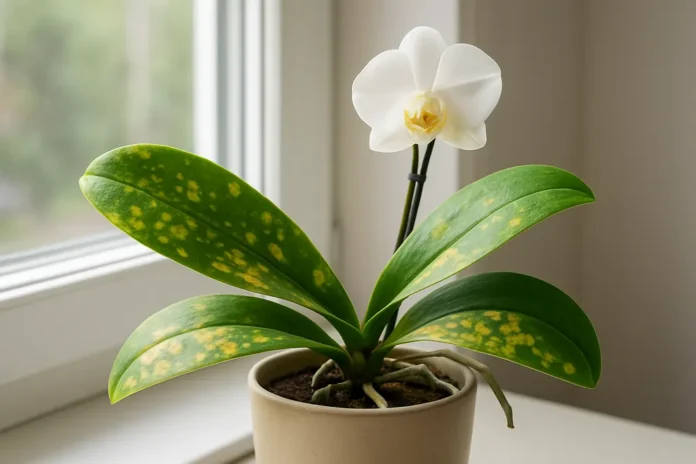
Orchid leaves get yellow spots most often from too much direct sun, pest feeding, fungal or bacterial disease, or stress from watering and fertilizer problems. The exact cause usually shows up in the spot pattern, color, and whether the leaf looks dry, soft, or spreading.
Yellow spotting on orchid leaves can be alarming because orchids tend to look healthy one week and questionable the next. In my experience, these spots usually mean the plant is reacting to a specific stress rather than simply "getting old," and the orchid leaves with yellow spots are giving you clues if you know what to look for.
The most common causes are too much direct light, inconsistent watering, pest damage, disease, and fertilizer salt buildup. Some yellow marks stay small and harmless, while others spread fast and signal a problem that needs quick attention. The key is not just the color yellow, but whether the spots are bleached, sunken, ringed, wet-looking, or paired with other symptoms like limp leaves or root decline.
If this were my plant on the bench, I would start by looking at the pattern before doing anything else. A few scattered pale patches on the sun-facing side tell a different story than tiny stippled dots with webbing, or soft yellow lesions that keep enlarging.
What Yellow Spotting Usually Means on Orchids
Yellow spots are a symptom, not a diagnosis. Orchids develop them when leaf tissue is damaged, stressed, or starved of proper function. That damage may come from intense light, roots staying too wet, insects piercing the leaf surface, or pathogens moving through weakened tissue.
A healthy orchid leaf is typically an even medium green, sometimes a bit lighter depending on the type. When yellow appears in distinct spots instead of an overall pale cast, I start thinking about localized injury first. Localized spotting points more toward sun scorch, pest feeding, bacterial or fungal lesions, or physical damage than toward a broad nutrient shortage.
- Large pale yellow or bleached patches often suggest sunburn.
- Tiny yellow speckles can point to spider mites or sucking pests.
- Soft yellow spots that darken or spread may indicate bacterial or fungal disease.
- Yellow areas paired with limp leaves and mushy roots often trace back to watering stress or root rot.
- Yellow spotting with crusty potting mix or white residue can signal fertilizer salt buildup.
When I am deciding between sun damage and disease, I look at the leaf surface itself. Sunburn usually looks flatter and drier, while infections tend to look active, with soft tissue, darker centers, or edges that keep expanding over several days.
Sunburn and Light Stress Are Common Culprits
Orchids love bright light, but many common houseplant orchids do not want hot direct afternoon sun. Phalaenopsis orchids in particular can develop yellow spots or broad faded patches when exposed to a south- or west-facing window without a sheer curtain. The tissue may first turn light yellow, then become whitish, tan, or papery.
Sunburn usually shows up on the side of the plant facing the strongest light source. The spots are often irregular rather than perfectly round, and they tend to stay where the damage happened rather than jump randomly to shaded leaves. If the burn is severe, the spot may dry out and turn brown in the middle.
Signs the Yellow Spots Are From Too Much Light
- Spots appear on the upper or window-facing leaves
- The affected area looks faded, bleached, or slightly scorched
- The tissue feels dry rather than wet or mushy
- Spots appeared after moving the orchid to brighter conditions
- The rest of the plant and roots still look reasonably healthy
Light stress can also happen without outright burning. An orchid kept in overly bright conditions may show yellowing between veins, slight reddening on leaf edges in some types, or patchy pale areas before true scorch occurs. This is especially common after moving a plant outdoors for summer without gradually acclimating it.
The fix is simple but important: reduce direct sun, especially midday and afternoon exposure. Bright filtered light is ideal for most home-grown orchids. Damaged tissue will not turn green again, but new leaves should come in clean if light levels are corrected.
Watering Problems and Root Stress Can Show Up as Yellow Spots
Watering issues do not always cause even yellowing across the whole leaf. When roots are struggling, orchids may develop scattered yellow patches because parts of the leaf are not being supported well. This is more common when the potting mix stays wet too long, breaks down into soggy material, or the orchid is watered on a schedule that ignores how quickly the mix actually dries.
Overwatering is usually the bigger problem than underwatering for indoor orchids. Rotten roots cannot take up water properly, so the plant ends up stressed even while the pot is wet. Leaves may become limp, slightly wrinkled, or dull, and yellow spotting may appear before the gardener realizes the root system is failing.
Clues That Roots Are Involved
- Leaves feel floppy or less firm than usual
- Roots look brown, hollow, or mushy instead of plump and green or silvery
- The bark mix smells sour or stays wet for many days
- The pot feels heavy long after watering
- Yellow spots appear alongside general decline, bud drop, or slowed growth
If I suspect root trouble, I do not keep adjusting the top growth first. I check the root zone and potting mix, because leaf symptoms often lag behind root damage by days or even weeks.
Underwatering can also lead to yellow spotting, though usually with a drier look. Repeated drought stress may cause dehydrated, thin leaves with irregular yellow patches or tip damage. In that case the roots may look shriveled instead of mushy, and the potting mix may become so dry that water runs right through without soaking in.
If the orchid has not been repotted in a couple of years, old compacted media is often part of the problem. Fresh orchid bark or another airy orchid mix helps roots breathe and recover much better than dense, broken-down material.
Pests Can Cause Stippling, Mottling, and Patchy Yellowing
Several common orchid pests feed by piercing leaf tissue and sucking out plant juices. This often creates tiny yellow dots, fine stippling, or uneven mottling rather than one large blotch. Spider mites are especially good at causing a dusty-looking yellow speckle pattern, and they are easy to miss until damage is noticeable.
Scale, mealybugs, and thrips can also leave yellow spotting behind. Scale often hide along the midrib or leaf undersides. Mealybugs gather in crevices and crown areas. Thrips can leave silvery or yellow scarred patches and may distort flowers as well.
How Pest-related Yellow Spots Usually Look
- Many tiny yellow dots rather than a few large blotches
- Damage on both upper and lower leaf surfaces
- Webbing, sticky residue, or visible insects nearby
- New growth showing fresh spotting first
- Neighboring houseplants starting to show symptoms too
Spider mites are most likely in warm, dry indoor conditions, especially during winter when heating dries the air. Scale and mealybugs can linger longer because they hide well and reproduce quietly. I always inspect the underside of each leaf and the base where it joins the crown, because that is where the evidence usually shows up first.
For light infestations, wiping leaves and treating with insecticidal soap or horticultural oil can help, as long as the product is labeled for orchids and used carefully. Heavy infestations may require repeated treatment and temporary isolation from other plants.
Disease Spots Are Often Soft, Spreading, or Ringed
Fungal and bacterial leaf spots are another major reason orchids develop yellow marks. These can begin as yellow, translucent, or water-soaked areas and then darken to brown or black. In some cases the yellow is a halo around a darker center. In others, the entire lesion starts pale and gradually enlarges.
Bacterial problems often move quickly and may look wet, soft, or foul-smelling. Fungal spots can be more dry and defined, sometimes with rounder shapes or darker margins. Either way, spreading lesions are more concerning than old static damage from sunburn.
Warning Signs of Leaf Spot Disease
- Spots increase in size over a short period
- Tissue looks water-soaked, soft, or sunken
- Yellow halos surround brown or black centers
- Leaves stay wet for long periods after watering or misting
- Air circulation is poor around the plant
I get more suspicious of disease when the spot edge looks sharp one day and noticeably larger two days later. Old sunburn may look ugly, but it usually stays put. Active infections rarely stay unchanged for long.
Disease pressure is often worse when water sits on leaves overnight, the orchid is crowded among other plants, or the room stays humid without airflow. Orchids appreciate humidity, but stale humid air is different from fresh moving air. That distinction matters a lot when spotting starts.
If you suspect disease, isolate the plant, avoid splashing water on foliage, and remove badly affected tissue only with a sterile cutting tool if the damage is extensive. Mild cases may stop progressing once conditions improve, but fast-moving or crown-adjacent infections can be serious.
Fertilizer Buildup, Mineral Issues, and Chemical Injury
Orchids are not heavy feeders, and they can react poorly when fertilizer is too strong or applied too often. Salt buildup from fertilizer or hard water can stress roots and show up as yellow spotting, leaf tip burn, or an overall dull look. This is especially common in orchids grown in small pots that are seldom flushed thoroughly.
Chemical injury can also happen if foliar sprays, leaf shine products, or even certain pest treatments sit on leaves under bright light. In that case the yellow spots may appear suddenly after treatment and may look blotchy or burned where droplets dried.
When to Suspect Fertilizer or Chemical Stress
- White crust appears on the pot rim, bark, or roots
- Leaf tips or margins are browning along with yellow spotting
- Symptoms started after a stronger feeding routine
- The orchid was sprayed and then placed in bright light
- Roots look burned at the tips without obvious rot
Most home growers do best with a weak, regular fertilizer program rather than occasional heavy feeding. A diluted orchid fertilizer used during active growth is usually safer than full-strength doses. If salts have built up, flushing the pot with clean water helps remove excess residue.
True nutrient deficiencies can happen, but they are less often the reason for isolated yellow spots on indoor orchids than light, water, pests, or disease. Broad pale growth or weak new leaves is more typical of nutrition problems than sharply defined spotting.
How to Narrow Down the Cause and Help the Orchid Recover
If your orchid has yellow spots, do not rush into three treatments at once. Start with observation, because the pattern usually points you in the right direction. Look at where the spots are, whether they are dry or soft, and whether roots, crown, flowers, or nearby plants show stress too.
A Simple Way to Troubleshoot
- Check light exposure and note whether the spots are on the brightest side of the plant.
- Inspect roots through the pot or by gently lifting the plant if root decline is likely.
- Examine leaf undersides, crevices, and the crown for mites, scale, mealybugs, or sticky residue.
- Watch whether the spots are stable or actively spreading over several days.
- Review your recent care, including repotting age, fertilizer strength, and any sprays used.
Once you identify the likely trigger, correct only that issue first whenever possible. Move the orchid to gentler light, repot if roots are failing, treat pests thoroughly, or improve airflow and keep foliage dry if disease is suspected. Recovery is judged by healthy new growth, not by old spots disappearing.
It is also worth remembering that one damaged leaf does not always mean the whole plant is in danger. Orchids often carry old cosmetic damage for a long time. If the roots are sound, the crown is firm, and new leaves emerge clean, the plant is usually on the right track.
I try to photograph the plant before making changes and again a week later. Orchids respond slowly, and pictures make it much easier to tell whether the spotting has actually spread or if I am just noticing old damage more clearly.
FAQ
Will Yellow Spots on Orchid Leaves Turn Green Again?
No. Once orchid leaf tissue has been damaged enough to turn yellow, that area usually stays marked. What you want to watch for is whether new growth stays healthy and whether the spots stop spreading.
Should I Cut Off Orchid Leaves with Yellow Spots?
Not always. Leave mildly damaged leaves in place if they are still mostly green and firm, because they still help the plant. Remove leaves only if they are badly infected, mostly dead, or threatening the crown, and always use a sterile tool.
Can Too Much Sun Cause Small Yellow Spots on a Phalaenopsis Orchid?
Yes. Phalaenopsis orchids commonly develop pale yellow or bleached patches when exposed to strong direct sun, especially in hot afternoon windows. The damage is often on the side facing the light.
Do Orchid Yellow Spots Mean Root Rot?
Sometimes, but not always. Root rot can lead to yellow spotting when the plant is stressed, especially if the leaves are limp and the roots are brown or mushy. If the roots look healthy, another cause is more likely.
Can I Mist an Orchid with Yellow-spotted Leaves?
It is better to avoid misting if disease is suspected. Water sitting on leaves can encourage bacterial and fungal spread, especially in cool or poorly ventilated rooms. Focus on watering the potting mix properly instead.
Are Yellow Spots From Pests Contagious to Other Plants?
The spots themselves are not contagious, but the pests causing them can move to nearby plants. If you find spider mites, scale, or mealybugs, isolate the orchid and inspect neighboring houseplants.
How Long Does It Take an Orchid to Recover After Yellow Spotting Appears?
It depends on the cause, but orchids usually show recovery through stable existing damage and clean new growth rather than quick cosmetic improvement. If care is corrected, you may see encouraging signs within a few weeks, though full recovery can take longer.
Need help choosing the right orchid fertilizer, potting mix, or pest treatment? Read our orchid care guides and product picks to fix yellow spotting faster and keep new leaves healthy.
