

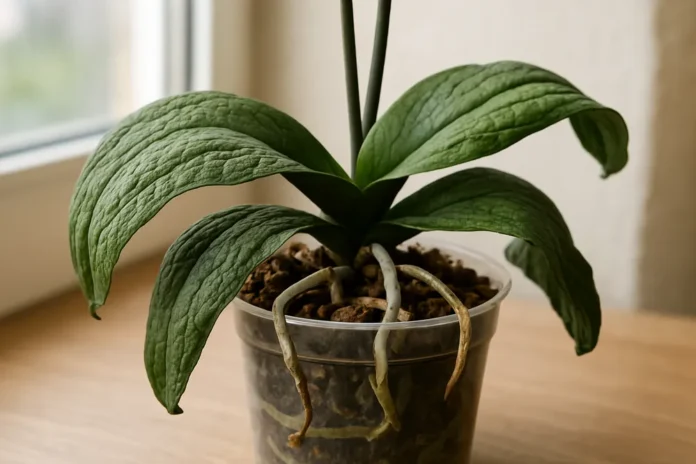
Orchid leaves usually shrivel because the plant is not taking up enough water, even if the potting mix looks wet. Root rot, underwatering, low humidity, heat stress, and old potting media are the most common reasons.
When orchid leaves are shriveling, the plant is telling you it has a water problem, but that does not always mean it simply needs more water. In my experience, shriveled leaves on a houseplant orchid often mean the roots are struggling, the potting mix is breaking down, or the plant has been stressed long enough that it cannot keep its leaves plump.
Most home growers are dealing with moth orchids, also called Phalaenopsis, and these orchids store some moisture in their leaves. When those leaves start looking limp, wrinkled, or accordion-like, the plant has usually been unable to balance water loss with water uptake. The trick is figuring out whether the problem started below the pot, around the plant, or from a sudden change in care.
The good news is that a shriveled orchid is often recoverable if the crown is healthy and some roots are still alive. Shriveled orchid leaves can improve over time, and even when older leaves stay wrinkled, healthy new growth is a strong sign the plant is back on track.
What Shriveled Orchid Leaves Usually Mean
Shriveling happens when an orchid leaf loses internal pressure. A healthy leaf feels firm, smooth, and slightly leathery. A stressed leaf may look soft, droopy, deeply wrinkled, or noticeably thinner than it used to be. That loss of firmness almost always comes back to the plant moving too little water into the leaf, losing water too quickly, or both.
This is why watering more is not always the right first response. If the roots are rotted, smothered, or dried out beyond function, the orchid cannot absorb the extra water you give it. In fact, more water can make the problem worse by keeping damaged roots in soggy conditions.
- If the leaves are shriveling but the potting mix stays wet for a long time, root rot is a likely suspect.
- If the mix becomes bone dry for long stretches and roots look papery or hollow, underwatering is more likely.
- If leaves are shriveling after a heat wave, direct sun exposure, or very dry indoor air, environmental stress may be the trigger.
- If only the oldest bottom leaf is shriveling while the rest of the plant looks strong, natural leaf aging may be all that is happening.
When I diagnose a shriveled orchid, I look at the roots before I change the watering schedule. A limp leaf and a wet pot often mean the orchid is thirsty because it has lost working roots, not because the grower forgot to water.
Root Problems Are the Most Common Cause
Root Rot From Overwatering
The most common reason orchid leaves shrivel is root rot. Orchids like moisture, but they also need air around their roots. When the bark mix stays wet too long, especially in decorative pots without airflow or drainage, roots can suffocate and decay. Once the roots turn brown, mushy, or stringy, they stop moving water into the plant. The leaves then start wrinkling even though the pot looks damp.
Phalaenopsis roots should usually look firm and plump. Green roots are moist and active. Silvery roots are dry but often healthy. Rotting roots are dark, soft, flattened, or hollow when gently squeezed. If many roots look like that, the leaves may continue shrinking until the plant grows replacements.
Severe Underwatering
Underwatering can cause the same symptom from the opposite direction. If the bark dries out so completely and so often that roots desiccate, the plant cannot rehydrate well. This happens a lot when orchids are mounted, grown near heating vents, left in very bright windows, or potted in very coarse bark that dries faster than expected.
An underwatered orchid may have dry, brittle roots that look tan, gray, or shriveled. The pot feels unusually light, and water may run straight through without soaking in if the mix has become too dry to absorb moisture properly.
Old or Compacted Potting Media
Sometimes the issue is not how often you water but what you are watering into. Orchid bark breaks down over time. As it decomposes, it holds more water and less air. That change quietly creates root stress. An orchid in old media may show shriveled leaves because the roots have been declining for months in a soggy, compacted mix.
- Repotting is often needed when bark smells sour, looks fine-textured instead of chunky, or stays wet for many days.
- Clear plastic orchid pots make root checks much easier than opaque cachepots.
- Healthy roots are often attached firmly to the medium and feel solid, not mushy.
If you find both dead roots and a decomposed mix, I would repot before trying to fine-tune watering. A fresh, airy orchid mix gives you a clean starting point and makes every other correction more effective.
Environmental Stress Can Make Leaves Lose Moisture Fast
Low Humidity Indoors
Orchids often shrivel in dry homes, especially in winter. Forced-air heat, fireplaces, and air conditioning can pull moisture from leaves faster than the roots can replace it. Low humidity alone may not cause major shriveling in a healthy orchid, but it can push an already stressed plant over the edge.
Too Much Direct Sun
Phalaenopsis orchids prefer bright, indirect light. Strong direct sun, particularly from a hot south or west window, can overheat the leaves and increase moisture loss. In more severe cases, you may also see yellowing, bleaching, or scorched patches alongside the shriveling.
Heat and Temperature Swings
Hot rooms, nearby radiators, drafty windows, and sudden temperature changes can all add stress. Orchids respond poorly when roots are cool and wet while leaves are exposed to warm, dry air. That mismatch often leads to limp, dehydrated-looking foliage.
On the other hand, cold damage can also interfere with water movement. Leaves exposed to chilly drafts or cold glass may look limp, translucent, or collapsed before they wrinkle. If cold injury has damaged tissue, that leaf may not recover its original shape.
- Keep orchids out of direct afternoon sun unless you know the variety can handle it.
- Avoid placing them right above heating vents, radiators, or air conditioning blasts.
- Aim for stable temperatures and moderate humidity rather than constant swings.
Other Possible Causes Worth Checking
Natural Aging of Lower Leaves
If only the oldest bottom leaf is shriveling or yellowing while the rest of the orchid looks healthy, the plant may simply be reabsorbing that leaf before dropping it. Orchids do not keep every leaf forever. This is normal as long as the crown is firm and newer leaves remain plump.
Recent Repotting or Transplant Stress
After repotting, an orchid may sulk for a while, especially if many roots were damaged or removed. Mild leaf shriveling can happen while the plant adjusts and grows new root tips. This is more likely if the orchid was repotted at an awkward time or shifted into a medium that dries much faster or slower than the previous one.
Fertilizer Salt Buildup
Heavy fertilizing or using softened water high in salts can damage roots over time. Burned roots absorb less water, and the leaves can begin to wrinkle. You may notice white crust on the pot rim or medium surface, blackened root tips, or general poor growth.
Pests and Disease
Pests are less common than watering and root issues, but they are still possible. Mealybugs, scale, and spider mites can stress orchids and reduce vigor. A heavy infestation can contribute to leaf decline, especially if the plant is already weakened. Disease is more likely if leaves are also spotted, mushy, oozing, or foul smelling rather than simply wrinkled.
I get suspicious of pests when a shriveled orchid also looks dull, sticky, or dusty even after watering. Root problems usually explain most wrinkling, but pest pressure can keep a plant from bouncing back the way it should.
How to Fix a Shriveled Orchid and Help It Recover
Recovery starts with matching the fix to the cause. The fastest way to waste time is to water more, fertilize more, and move the plant all at once without knowing what failed. Orchids recover best when you correct the root environment first and then keep conditions steady.
Inspect the Roots and Potting Mix
Slide the orchid out of its pot if possible and look closely at the roots. Remove obviously dead, mushy, or hollow roots with clean scissors. If the medium is old, compacted, sour smelling, or decomposed, repot into fresh orchid bark or an orchid mix suited to your home conditions.
Adjust Watering Based on the Plant, Not the Calendar
A healthy orchid should be watered thoroughly and then allowed to approach dryness before the next watering. In many homes, that means roughly weekly, but season, pot size, medium, airflow, and humidity change the schedule. Watering by feel works better than watering by habit. If roots are silvery and the pot feels light, it is usually time. If roots are green and the mix still feels damp, wait.
Improve Humidity and Placement
Move the orchid into bright, indirect light and away from direct blasts of heat or cold. Moderate humidity helps reduce further moisture loss. A humidity tray, room humidifier, or grouping plants together can help, but good airflow still matters. Avoid misting the crown late in the day, since trapped moisture there can lead to crown rot.
Be Patient with Damaged Leaves
A badly wrinkled orchid leaf may never become perfectly smooth again. What you want to see is improvement in firmness, stable leaf color, and healthy new roots and leaves. If new growth looks strong, your care changes are working even if the oldest damaged leaf still looks tired.
- Check roots and remove dead ones.
- Repot if the medium is broken down or staying wet too long.
- Water thoroughly, then let the mix approach dryness before watering again.
- Move the plant to bright, indirect light with steadier humidity.
- Hold fertilizer until you see active recovery, then resume lightly.
Judge orchid recovery by new roots and new leaves, not by whether old wrinkles disappear. Once an orchid starts producing fresh, firm growth, you know the water balance problem is being corrected.
FAQ
Can Shriveled Orchid Leaves Become Firm Again?
Sometimes they can improve, especially if the problem was caught early and the roots recover. Deeply wrinkled leaves often stay somewhat marked, but the plant can still return to good health and produce firm new growth.
Should I Water My Orchid More if the Leaves Are Wrinkled?
Not automatically. Wrinkled leaves can mean dehydration, but they can also mean root rot or damaged roots that cannot absorb water. If the pot stays wet while the leaves shrink, more watering usually makes things worse.
How Do I Know if Orchid Roots Are Dead?
Dead roots are usually brown, mushy, flattened, or hollow. Healthy roots feel firm and plump. They may look green when moist or silvery when dry.
Can Low Humidity Alone Cause Orchid Leaves to Shrivel?
It can contribute, especially in very dry homes, but it is often not the only issue. Low humidity usually makes existing root or watering problems show up faster and more severely.
Is It Normal for One Bottom Orchid Leaf to Shrivel?
Yes, sometimes. If only the oldest lower leaf is declining and the rest of the orchid looks healthy, it may be normal aging. Widespread wrinkling across several leaves points to a bigger problem.
When Should I Repot an Orchid with Shriveled Leaves?
Repot when the potting mix is decomposed, sour smelling, compacted, or staying wet too long, or when many roots are dead. Fresh, airy media often helps more than changing the watering schedule alone.
Will Fertilizer Fix Shriveled Orchid Leaves?
No. Fertilizer does not solve dehydration or root damage, and too much can worsen stress. It is better to restore healthy roots and proper watering first, then feed lightly once the plant resumes active growth.
Need help choosing the right orchid pot, bark mix, or humidity setup? Read our orchid care guides and product recommendations so you can fix shriveling leaves faster and keep new growth strong.
