

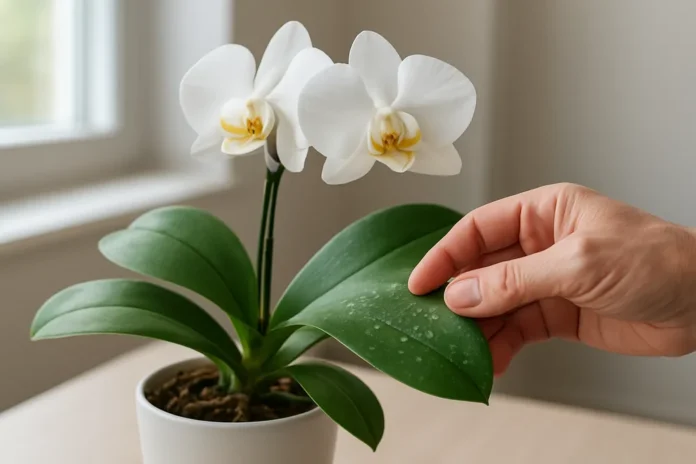
White bumps on orchid leaves are most often mealybugs, scale insects, or dried mineral and fertilizer residue. Sometimes they are harmless old scars, but active pests are the most common cause when the bumps look fuzzy, waxy, or raised.
Seeing white bumps on an orchid can be unsettling, especially when the leaves otherwise look healthy. In my experience, this symptom usually comes down to a short list: orchid pests, residue left behind by water or fertilizer, or scarred tissue from an older problem.
The good news is that the look and placement of the bumps usually tell you a lot. Soft cottony clusters point to mealybugs, flatter waxy bumps can mean scale, and a crusty film on the leaf surface often turns out to be mineral deposits instead of a living problem. Once you know which one you are dealing with, the fix becomes much more straightforward.
Below, I will walk through the most likely causes of white bumps on orchid leaves, how to tell them apart, and what to do so your plant can recover without unnecessary stress.
What White Bumps Usually Mean on Orchids
On orchids, white bumps are rarely a random quirk. They usually fall into one of four categories: insects feeding on the plant, residue sitting on the leaf surface, fungal or mold growth associated with sticky sap, or scar tissue left behind after damage. The first step is deciding whether the bump is on the leaf or actually part of the leaf tissue.
- If it looks cottony, fluffy, or like tiny bits of white lint tucked into leaf joints, it is usually mealybugs.
- If it looks like fixed, waxy, shell-like bumps that do not brush off easily, it may be scale insects.
- If it is chalky or crusty and wipes away with moisture, it is often hard water or fertilizer residue.
- If the bump is firm plant tissue and stays after cleaning, it may be scarring, edema, or old physical damage.
When I inspect an orchid, I always look where the leaf meets the stem and under the leaves before I focus on the obvious spots. Mealybugs and scale often start in those protected areas, and the few bumps on top of the leaf are sometimes just the visible edge of a larger infestation.
Mealybugs Are One of the Most Common Causes
Mealybugs are small sap-sucking insects that hide in white waxy fluff. On orchids, they often gather where leaves join the crown, along midribs, under leaves, and near flower spikes. At first glance they can look like harmless white fuzz or tiny bits of cotton, but they feed on the plant and weaken it over time.
Beyond the bumps themselves, mealybugs often cause other clues. Leaves may look sticky, growth may slow down, and you might see shiny honeydew or even black sooty mold growing on that sugary residue. Heavy infestations can distort new growth and eventually lead to yellowing or leaf drop.
How to Recognize Mealybugs
- Soft, cottony, white masses rather than hard bumps
- Clusters in crevices, leaf axils, roots, or around the pot rim
- Sticky residue on leaves or nearby surfaces
- Movement if you watch closely or disturb them with a cotton swab
Mealybugs spread easily from one houseplant to another, so orchids kept near pothos, hoyas, African violets, or citrus can pick them up fast. Warm indoor conditions help them multiply, especially when plants are crowded and air movement is poor.
Scale Insects Can Look Like White or Pale Bumps
Scale insects are another frequent culprit. Unlike mealybugs, they often look more like tiny shells glued to the plant. Some species are tan or brown, but others can appear pale, creamy, or whitish, especially on smooth orchid leaves. They stay attached in one place and feed by piercing the plant tissue.
Because scale is less fluffy than mealybugs, gardeners sometimes assume the plant has developed harmless spots or texture changes. The giveaway is that the bumps are raised, waxy, and do not look like normal leaf tissue. If you gently scrape one with a fingernail, it may lift off like a tiny cap.
Signs Your Orchid Has Scale
- Small, fixed bumps along the leaf midrib, undersides, or stems
- White, cream, tan, or light brown waxy coverings
- Sticky honeydew on nearby leaves
- Gradual yellowing or weakening as feeding continues
If you are not sure whether a bump is scale or plant tissue, dab one with rubbing alcohol on a cotton swab and wait a few seconds. Scale usually loosens or smears, while normal orchid tissue will not.
Mineral Residue and Fertilizer Salts Can Mimic Pests
Not every white mark means insects. Orchids watered with hard tap water or fed too heavily can develop white crusty deposits on leaves, pots, and exposed roots. This is especially common when water splashes on the foliage and dries in place.
Residue tends to look flatter and more irregular than pests. Instead of distinct insects or shell-like bumps, you may see spots, patches, or grainy streaks. These deposits often wipe away with a damp cloth, though stubborn salt buildup may need repeated cleaning.
Clues That It Is Residue Instead of Insects
- The white material sits on the surface and wipes off
- It appears after misting, splashing, or overhead watering
- There is no sticky honeydew or leaf distortion
- The same white crust may be visible on the pot or bark mix
Salt residue is not usually an emergency, but it can signal a bigger care issue. If fertilizer salts are accumulating on leaves, they are often building up in the potting medium too, and that can stress orchid roots over time.
Less Common Causes of White Bumps
A few less common problems can also create white bumps or white raised areas on orchid leaves. These are worth considering if the spots do not behave like mealybugs, scale, or residue.
Edema and Tissue Blistering
Edema happens when plant cells take up water faster than they can use or release it. On some plants this creates corky bumps or blisters. Orchids get it less often than many houseplants, but overwatering combined with cool temperatures and low airflow can contribute to uneven leaf texture.
Old Scars From Physical Damage
If a leaf was scraped, sunburned, or lightly damaged when it was younger and softer, the tissue may heal into pale raised spots. These scars do not spread, do not wipe off, and do not produce sticky residue. They are cosmetic rather than active.
Fungal Growth on Honeydew
White fungal growth is less common than black sooty mold, but in humid, stagnant conditions, residue and sap can support surface growth that looks patchy or fuzzy. In most cases, though, the fungus is secondary. The underlying issue is still sap-sucking pests producing honeydew.
How to Tell Which Problem You Have
Diagnosis gets much easier when you test the bumps instead of just looking at them. Use bright light and inspect both sides of the leaf, the crown area, and where roots emerge. Then gently touch or wipe one spot and see how it responds.
- Use a damp cotton swab to see whether the white material wipes away cleanly. If it does, think residue first.
- If the bump is soft, cottony, or smears, suspect mealybugs.
- If it stays attached but can be scraped off like a tiny shield, suspect scale.
- If it is part of the leaf and remains after cleaning, consider scarring or edema.
- Check for sticky honeydew, ants, or black mold. Those signs strongly point to sap-sucking insects.
Also pay attention to whether the bumps are spreading. Active pests usually increase over days or weeks and appear in new protected areas. Cosmetic scars stay where they are. Residue may return after watering, but it does not crawl into leaf joints or cluster around buds.
I do not trust a diagnosis based on one spot. I compare several leaves, the crown, and the pot edge because orchids often show a mix of old damage and active pests at the same time. The pattern across the whole plant matters more than one odd mark.
How to Treat White Bumps on Orchid Leaves
Treatment depends on the cause, but start by isolating the orchid from your other houseplants until you know what you are dealing with. White bumps caused by insects can spread quickly, and orchids often sit close to other plants on bright windowsills.
If the Bumps Are Mealybugs
- Isolate the plant immediately.
- Remove visible bugs with cotton swabs dipped in 70 percent isopropyl alcohol.
- Wipe leaf joints, undersides, the crown exterior, and flower spike bases carefully.
- Repeat every few days until no new pests appear.
- For heavier infestations, use an orchid-safe insecticidal soap or horticultural oil labeled for indoor ornamentals, following the label exactly.
Be careful not to let liquid pool in the crown of monopodial orchids such as Phalaenopsis, since trapped moisture can lead to rot. Good light and airflow after treatment help the plant dry safely.
If the Bumps Are Scale
- Manually remove each scale insect with a cotton swab, fingernail, or soft cloth.
- Follow with alcohol on a swab for stubborn individuals, avoiding repeated soaking of the same tissue.
- Inspect the plant weekly because young scale, called crawlers, are easier to miss than adults.
- Use a labeled insecticidal soap or horticultural oil if the infestation is widespread.
If the Bumps Are Mineral or Salt Residue
- Wipe leaves with a soft damp cloth.
- If needed, use plain water first, then a very diluted vinegar solution on the cloth only, followed by plain water to rinse.
- Reduce fertilizer strength and flush the potting mix occasionally with clean water.
- Switch to rainwater, distilled water, or lower-mineral water if your tap water is very hard.
If the spots are scars or edema, there is nothing to remove. Focus instead on steady care so new leaves grow in normally.
Care Changes That Help Orchids Recover
An orchid that has dealt with pests or salt stress benefits from stable, moderate care. Recovery is usually shown in new growth, not in the damaged leaf becoming perfect again. Old bumps, scars, or feeding marks may remain even after the problem is gone.
- Keep the orchid in bright, indirect light so it can rebuild energy.
- Water thoroughly but let the medium approach the right dryness level before watering again.
- Avoid overfertilizing while the plant is stressed.
- Improve air circulation around the plant.
- Inspect weekly until you are sure the issue is resolved.
If the orchid is severely infested and the potting medium is old, repotting may help. Mealybugs can hide around roots and in decomposed bark, so a fresh mix can remove hidden pests and reduce future stress. Just avoid doing too many stressful interventions at once unless the infestation is advanced.
After treatment, judge success by the leaves and roots that form next, not by the marks that stay behind. I see gardeners retreat the same old scars over and over because they expect the damaged spots to disappear.
How to Prevent White Bumps From Coming Back
Prevention is mostly about cleanliness, spacing, and consistent observation. Orchids do not need daily fussing, but they reward regular checks. Catching one mealybug early is very different from discovering a hidden colony after it has reached the crown and roots.
- Quarantine new orchids and gifted houseplants for at least a couple of weeks.
- Inspect leaf axils, undersides, and pot edges during watering.
- Wipe foliage occasionally if you use hard water or foliar fertilizers.
- Avoid crowded plant shelves where leaves touch and pests travel easily.
- Do not leave stagnant humid air around orchids for long stretches.
- Flush fertilizer salts from the potting mix periodically.
I have found that orchids with clean leaves, fresh bark, and good airflow are much easier to keep pest-free. They are not immune, but problems show up sooner and are much easier to manage before they become serious.
When the Problem Is Serious Enough to Escalate
Sometimes white bumps are only the visible part of a broader decline. If your orchid also has yellowing leaves, wrinkled foliage despite watering, black mold, stunted new growth, or root loss, the plant may be dealing with both pests and care stress at the same time.
Escalate your response if pests keep returning after repeated manual removal, if multiple plants are affected, or if the orchid's crown or roots are heavily infested. At that point, more thorough treatment, repotting, and stricter isolation are usually justified. If you are growing a valuable specimen, it may also be worth consulting a local orchid society or experienced grower who can identify the pest in person.
FAQ
Can White Bumps on Orchid Leaves Be Harmless?
Yes. Some white bumps are just mineral residue, fertilizer salts, or old scar tissue. They are more likely to be harmless if they do not spread, do not feel insect-like, and wipe off or remain unchanged over time.
How Do I Know if the White Bumps Are Mealybugs or Scale?
Mealybugs usually look soft, cottony, and a bit fuzzy. Scale looks more like hard or waxy little shells attached to the leaf. Both may leave sticky honeydew behind.
Will Rubbing Alcohol Hurt My Orchid?
Used carefully on a cotton swab, 70 percent isopropyl alcohol is commonly used to remove mealybugs and scale. Avoid soaking the plant, keep it out of harsh direct sun right after treatment, and do not let liquid collect in the crown.
Should I Cut Off Leaves with White Bumps?
Usually no. Most white bump problems can be treated without removing the leaf. Only remove a leaf if it is badly damaged, heavily infested, or already declining and the plant has enough healthy foliage left.
Can Hard Tap Water Leave White Spots on Orchid Leaves?
Yes. Hard water often leaves chalky white residue when droplets dry on the foliage. This is especially common if you mist or splash the leaves regularly.
Do White Bumps Mean My Orchid Has a Fungal Disease?
Not usually. Most white bumps on orchids are pests or residue rather than true fungal disease. Fungus is more likely if the growth looks patchy and surface-level, especially where sticky honeydew is present.
Can White Bumps Spread to My Other Houseplants?
If the cause is mealybugs or scale, yes. Both pests can move to nearby houseplants, especially when leaves touch or plants are grouped tightly together. Residue and scars do not spread.
How Long Does It Take an Orchid to Recover?
Visible recovery depends on the severity of the problem. Pests can often be controlled within a few weeks, but the plant may take months to show full recovery through healthy new leaves, roots, or blooms.
Need help choosing the right orchid treatment? Read our guide to the best insecticidal soaps, horticultural oils, and orchid care supplies so you can act quickly and avoid repeat infestations.
