

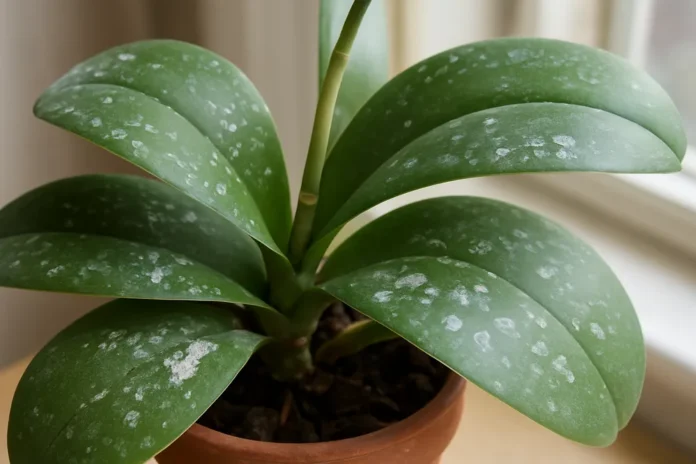
White stuff on orchid leaves is often mineral residue, mealybugs, or powdery mildew. The most likely cause depends on whether it looks chalky, cottony, or powder-like.
If you notice white stuff on orchid leaves, do not panic right away. In many cases, it is something relatively simple like dried mineral residue from tap water or leftover spray deposits. But white spots, fuzzy patches, or cottony clumps can also point to pests or disease, so it is worth taking a closer look before you treat anything.
With orchids, appearance tells you a lot. I usually start by asking whether the white material wipes off cleanly, feels gritty, looks fuzzy, or seems attached around leaf joints and undersides. Those small clues can quickly separate a harmless surface issue from a problem that needs action.
The good news is that most causes are manageable once you identify them correctly. Below, I will walk through the most common reasons orchid leaves develop white residue, how to tell them apart, and what to do next.
What the White Residue Usually Means
White material on orchid leaves usually falls into a few main categories: mineral deposits, pest residue, fungal growth, or dried spray film. The exact look matters more than the color alone. A flat chalky film suggests one thing, while fluffy cotton-like patches suggest something else entirely.
- A thin, crusty, chalk-like coating often comes from hard water or fertilizer salts.
- Soft white cottony clusters usually point to mealybugs or sometimes scale insects with waxy coverings.
- A dusty or powdery white coating can be powdery mildew, especially in still, humid air.
- White rings or spots after misting or spraying often come from tap water, foliar feeds, or leaf shine products.
- Tiny white flecks mixed with webbing can sometimes mean spider mites, though they more often leave stippling than thick white patches.
When I diagnose orchid leaf problems, I always look at more than one leaf before deciding. If every mark appears in the same places where water dries, I lean toward residue. If the white material collects in hidden creases or around the crown, I start thinking pests.
Mineral Residue and Salt Buildup
How This Looks
This is one of the most common and least serious causes. Mineral residue usually appears as flat white spots, pale streaks, or a crusty film on the top of the leaf. It is common when orchids are watered or misted with hard tap water, especially if droplets dry on the foliage.
You may also see white residue when fertilizer solution splashes onto leaves and dries there. Over time, dissolved salts can leave a visible film, particularly on smooth leaves like Phalaenopsis orchids.
How to Tell if This Is the Cause
- The white layer looks chalky or crusty rather than fuzzy.
- It usually wipes off with a damp cloth.
- It often appears where droplets sat and dried.
- The leaf underneath still looks firm and healthy.
What to Do
Wipe the leaves gently with a soft cloth dampened with distilled water, rainwater, or filtered water. If the buildup is stubborn, you can use a very dilute mix of water with a small splash of lemon juice or white vinegar, then wipe again with plain water so nothing acidic sits on the leaf.
Going forward, avoid misting with hard tap water if your water leaves white spots on faucets, shower doors, or houseplants. If fertilizer is splashing on leaves, water more carefully and flush the potting mix occasionally to reduce salt accumulation.
Mealybugs and Other Sap-sucking Pests
What Mealybugs Look Like on Orchids
Mealybugs are one of the classic causes of white stuff on orchid leaves. They look like tiny bits of cotton, fluff, or white lint stuck in leaf joints, around the crown, on the undersides of leaves, and near roots or flower spikes. They often hide where leaves overlap, so they are easy to miss at first.
These insects suck plant sap and can weaken the orchid over time. You may also notice sticky residue called honeydew, distorted new growth, or a general loss of vigor if the infestation has been around for a while.
How to Confirm Pests
- The white material looks fluffy, cottony, or clustered rather than flat.
- It is often tucked into creases and protected spots.
- When touched with a cotton swab, it may smear or reveal a small insect underneath.
- Leaves may feel sticky from honeydew.
How to Treat Mealybugs
Isolate the orchid from your other plants right away. Dab visible mealybugs with a cotton swab dipped in 70 percent isopropyl alcohol, being careful not to flood the crown. Then inspect every leaf axil, the underside of leaves, the pot rim, and exposed roots.
You will usually need repeat treatments because eggs and hidden insects can survive the first pass. Depending on your comfort level, follow-up options include insecticidal soap, horticultural oil labeled for indoor ornamentals, or continued spot treatment with alcohol. Always test a small area first and avoid treating in hot direct sun.
With orchids, one missed mealybug cluster near the crown can restart the whole problem. I like to inspect with a flashlight because the white fluff is much easier to see when side-lit.
Powdery Mildew and Fungal Growth
What Fungal White Patches Look Like
Powdery mildew appears as a pale dusty coating or soft powdery patches on leaves. It does not usually look like cotton balls. Instead, it resembles a thin layer of flour or talc sitting on the surface. In early stages, it may show up as a few fuzzy-looking patches before spreading.
Orchids are not the most common houseplant for powdery mildew, but it can happen when air circulation is poor and humidity stays high around crowded plants. Cool nights combined with stagnant air can make fungal issues more likely.
Signs It May Be Mildew
- The white material looks powdery and spreads across the leaf surface.
- It is not concentrated only in creases or leaf joints.
- Affected areas may slowly enlarge.
- The leaf may start yellowing or looking dull beneath the coating.
What to Do
Move the orchid where it has better airflow and a bit more spacing from nearby plants. Remove heavily affected leaves only if necessary and only if the plant has enough healthy foliage to stay strong. Then use a houseplant-safe fungicide labeled for powdery mildew or ornamental fungal disease, following the label carefully.
Avoid wetting the foliage late in the day and skip unnecessary misting. Good air movement matters just as much as reducing excess moisture on the leaves.
Residue From Sprays, Leaf Cleaners, or Misting
Sometimes the white stuff is not from the orchid at all. Foliar fertilizers, pest sprays, homemade remedies, and even commercial leaf-shine products can dry into a visible residue. This often shows up as spotting, streaking, or a cloudy film after the product evaporates.
If you recently used neem oil, insecticidal soap, diluted milk spray, fertilizer spray, or any DIY treatment, that timing matters. A residue problem is especially likely if the white marks appeared quickly and evenly after treatment.
- Spray residue often coats exposed leaf surfaces more evenly than pests do.
- It may leave circular droplet outlines or streaks from runoff.
- The plant may otherwise look healthy with no sticky honeydew or chewing damage.
To fix it, wipe leaves gently with plain water and a soft cloth. In the future, mix products exactly as directed, avoid overapplying oils, and never use heavy leaf-shine products on orchids. Orchid leaves do not need cosmetic polishing, and those products can clog the surface and attract dust.
Less Common Possibilities
Spider Mites and Webbing
Spider mites are more likely to cause tiny pale speckles, a dull leaf surface, and fine webbing than thick white patches. Still, very fine webbing can catch dust and look whitish. Check the undersides of leaves closely if the foliage looks stippled or dry.
Scale Insects
Some scale insects appear as small pale, waxy bumps attached to the leaves or stems. They are usually firmer and more shell-like than mealybugs. If the white spot does not wipe away easily and looks like a stuck-on bump, scale is worth considering.
Natural Dried Secretions
Orchids can sometimes produce sticky droplets or exudates that dry into pale residue, especially around flower spikes or leaf bases. This is less common on leaves themselves, but it can happen. If the plant looks healthy and the residue is limited and not spreading, it may simply be dried plant sap or nectar-like secretion.
How to Diagnose the Problem Without Harming the Plant
A careful diagnosis saves a lot of unnecessary treatments. Orchids can react badly if you throw multiple sprays, oils, and homemade mixes at them all at once. Start simple and observe before escalating.
- Look at the pattern. Is the white material on exposed surfaces, hidden creases, or only where droplets dried?
- Check the texture. Is it chalky, cottony, powdery, sticky, or web-like?
- Wipe a small area with a damp cloth. Residue often lifts off easily, while pests or fungal growth may smear, cling, or reveal damage beneath.
- Inspect leaf undersides, the crown, and where leaves meet the stem.
- Think about recent care. Have you misted, sprayed, fertilized, or changed water sources lately?
If I can remove the white material and the leaf underneath is green, smooth, and firm, I worry much less. When the leaf itself is yellowing, pitted, sticky, or distorted, I assume there is more going on than simple residue.
How to Clean Orchid Leaves Safely
Orchid leaves are tougher than they look, but they still prefer a gentle touch. Use a soft microfiber cloth or cotton pad dampened with distilled or filtered water. Support the leaf from underneath so you do not bend or crease it while wiping.
- For mineral spots, use plain water first.
- For stubborn residue, use a very mild acidic wipe once, then follow with plain water.
- For mealybugs, use alcohol only as a targeted spot treatment rather than soaking the plant.
- Keep liquid out of the crown, especially on Phalaenopsis orchids, because trapped moisture can lead to crown rot.
After cleaning, let the leaves dry with good airflow. If water collects where the leaves meet the stem, wick it out gently with a paper towel corner.
How to Prevent White Buildup on Orchid Leaves
Prevention is usually a mix of better water quality, careful plant hygiene, and regular inspections. Orchids tend to reward consistency more than heavy intervention.
- Use rainwater, distilled water, or low-mineral filtered water if your tap water is very hard.
- Avoid frequent misting unless your environment truly needs it.
- Do not leave fertilizer solution drying on the leaves.
- Space orchids so air can move between them.
- Inspect leaf joints and undersides every week or two for early pest activity.
- Quarantine new orchids before placing them near your collection.
I have found that orchids kept clean, well spaced, and watered carefully are far less likely to develop mystery residue that turns into a bigger concern later.
When the White Stuff Is a Real Problem
Some white residue is mostly cosmetic. Other cases need prompt attention. The signs that push this out of the harmless category are spread, stickiness, leaf damage, or obvious insects.
- The white material keeps returning quickly after cleaning.
- Leaves are yellowing, softening, or becoming distorted.
- You see cottony clusters, webbing, or shell-like bumps.
- There is sticky honeydew on leaves or nearby surfaces.
- Several plants in the area are starting to show similar symptoms.
If you are unsure, treat the situation as potentially contagious until proven otherwise. Separate the orchid, monitor nearby plants, and avoid sharing tools or water runoff between pots.
FAQ
Can I Use Tap Water to Wipe My Orchid Leaves?
You can, but if your tap water is hard, it may leave more white residue behind. Distilled, filtered, or rainwater is a better choice for cleaning leaves.
Is White Fuzz on Orchid Leaves Always Mealybugs?
No. White fuzz can be mealybugs, but powdery mildew and even certain dried spray residues can also look pale or fuzzy at first glance. The location and texture help tell them apart.
Should I Cut Off Leaves with White Spots?
Usually not for simple residue. Remove a leaf only if it is heavily diseased, severely damaged, or part of a pest problem that cannot be controlled otherwise.
Can I Spray Neem Oil on Orchids with White Residue?
Only if you know the issue is pest-related and the product label says it is safe for orchids or indoor ornamentals. Neem can leave residue and may stress leaves if overused.
Why Do the White Spots Come Back After I Clean the Leaves?
Recurring spots usually mean the underlying cause is still present, such as hard water, fertilizer splash, mealybugs, or ongoing fungal conditions.
Are White Spots on Orchid Leaves Dangerous to People or Pets?
Mineral residue is not a danger. Pests are mostly just a plant issue, while fungal growth should still be handled carefully with good hygiene and prompt cleanup.
Can Misting Cause White Marks on Orchid Leaves?
Yes. Misting with hard water often leaves mineral spots as droplets dry, and frequent misting can also encourage fungal issues in poor airflow.
Need the right fix for pests, fungus, or watering problems? Read our orchid care troubleshooting guide and compare the best orchid-safe treatments before you buy.
