

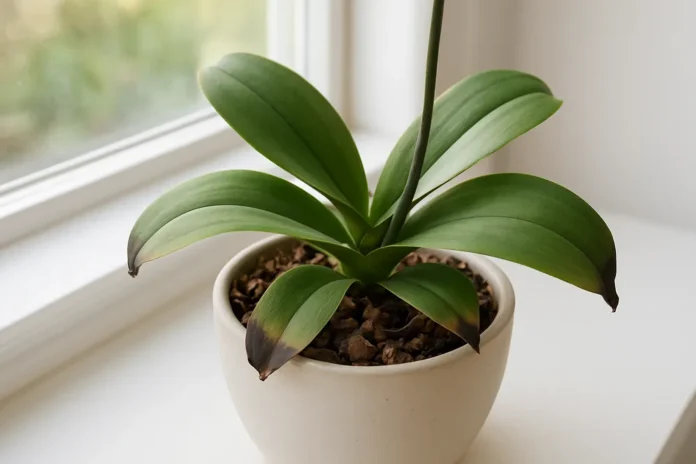
Orchid leaf tips usually turn black because the plant is under stress from mineral-heavy water, fertilizer salt buildup, low humidity, sun damage, or early rot. In many cases, the blackening starts at the tip because that part of the leaf dries out or burns first.
When I see orchid leaf tips turning black, I do not assume the whole plant is doomed. On orchids, tip damage is often the plant's way of showing that something in its environment is slightly off and has been off long enough to leave a mark. The good news is that blackened tips are usually a symptom you can trace back to a manageable cause.
In most homes, the biggest culprits are watering habits, fertilizer salts, dry air, harsh light, and occasional disease after mechanical damage. Sometimes the tip simply dried out from past stress and the problem is no longer active. Other times, blackening keeps creeping inward, which tells you the plant still needs help.
The trick with orchid leaf tip burn is to look at the pattern, not just the color. A dry, crisp black tip points you in a different direction than a soft, wet, spreading black tip. Once you match the symptom to the cause, the fix is usually straightforward.
What Black Leaf Tips Usually Mean on Orchids
Blackening at the very end of an orchid leaf is often a form of tip dieback. The leaf tip is the furthest point from the plant's core water supply, so it tends to show stress first. If the tissue first looked yellow, tan, or dry and then turned dark brown or black, that usually suggests burn, dehydration, salt accumulation, or old physical damage.
If the black area is dry, sharply outlined, and limited to the tip, the problem is commonly environmental rather than infectious. If the tissue is mushy, damp, foul-smelling, or spreading quickly down the leaf, think rot or a secondary infection. That distinction matters because one issue calls for cultural changes, while the other may require trimming and isolating the plant.
When I diagnose orchids, I always compare the newest leaf with the oldest one. If only older leaves have black tips and new growth looks clean, I usually suspect a past care issue rather than an active disease.
Mineral-heavy Water and Fertilizer Salts
Why Salts Burn the Tips First
Orchids are more sensitive to dissolved minerals than many common houseplants. If you water with very hard tap water or fertilize too heavily, salts can build up in the potting mix and around the roots. That interferes with normal water uptake, even when the pot looks moist. The leaf tips may then dry, scorch, and eventually turn black.
This is especially common with moth orchids, or Phalaenopsis, grown indoors year-round. Repeated light feedings are usually fine, but frequent full-strength fertilizer applications can leave residues behind. Over time, the roots struggle, and the leaves start to show stress at their tips and margins.
- A thin white crust on the potting mix, pot rim, or roots
- Leaf tips that first turned tan or brown before going black
- Shriveled roots or roots with dead outer coating
- A plant that stays stagnant even during the growing season
How to Correct It
Flush the pot thoroughly with room-temperature water to wash out built-up salts. Use enough water that it runs freely through the pot for a minute or two. Then switch to a gentler feeding routine, such as diluted orchid fertilizer during active growth. If your tap water is very hard, using rainwater, distilled water, or filtered water often makes a visible difference over the next several weeks.
If I suspect salt stress, I skip fertilizer until I see healthy new root tips or fresh leaf growth. Feeding a stressed orchid before the roots recover usually makes the tip burn worse, not better.
Watering Problems and Root Stress
Underwatering Can Dry the Ends of Leaves
If the potting mix is staying dry too long, the orchid may not be able to keep enough moisture moving to the outermost leaf tissue. That can leave tips crisp, papery, and dark. Underwatering is more likely when bark mix has become so dry that it repels water, or when the root system is sparse and cannot absorb moisture efficiently.
Overwatering Can Lead to Root Loss and Black Tips
Oddly enough, overwatering can produce similar leaf tip symptoms. When orchid roots sit too wet without enough air, they rot. Once the roots are damaged, the plant cannot take up water properly, and the leaves start showing stress even though the pot never seems dry. Black tips combined with limp leaves and brown, mushy roots often point in this direction.
- Healthy orchid roots are firm and pale green, silvery, or white depending on moisture level
- Rotten roots are brown, mushy, hollow, or easy to peel
- A sour smell from the pot is a warning sign of decomposing media or root rot
- Potting mix that stays wet for many days can suffocate roots
Best Watering Reset
Water based on the condition of the roots and potting mix, not the calendar alone. For many orchids in bark, that means watering when the mix is approaching dryness but before the roots stay bone dry too long. If the media has broken down into fine, soggy particles, repotting into fresh orchid mix is often the real fix.
Low Humidity and Dry Indoor Air
Many orchids tolerate normal household conditions, but very dry air can still stress leaf tips, especially in winter when heating systems run constantly. The plant loses moisture through its leaves faster than it can replace it, and the tips may dry out first. This tends to show up as darkened, crisp ends rather than soft black patches.
Low humidity alone does not always cause severe blackening, but it often contributes when combined with hard water, weak roots, or inconsistent watering. That is why some orchids seem fine all summer and then develop blackened tips during the colder months indoors.
- Keep orchids away from heating vents and direct blasts from air conditioners
- Group plants together to create a slightly more humid microclimate
- Use a room humidifier if indoor air is consistently very dry
- Maintain good air circulation so humid conditions do not become stagnant
Too Much Sun or Heat Damage
Orchids need bright light, but many popular home-grown types do not want intense direct sun for long periods. If the plant sits in hot afternoon sun, leaf tissue can scorch. Sometimes the damage appears as bleached patches in the middle of the leaf, but tips and edges can also darken and die back after heat stress.
Sun or heat damage usually produces dry, firm injury rather than wet rot. The blackened area often has a tan or yellow border, and it does not spread rapidly once the plant is moved. A leaf that touches a hot windowpane can also develop dark tip damage localized to the contact area.
Light Clues to Look For
- Blackening on the side facing the window
- Pale yellow or bleached areas near the damaged tip
- Damage after a recent move to a brighter location
- Leaves that feel warm or hot during the brightest part of the day
Physical Damage, Cold Injury, and Old Stress Marks
Sometimes the simplest answer is the right one. A bent leaf tip, accidental bump, pet nibble, or bruise during transport can damage tissue that later dries and turns dark. Cold drafts can do something similar. If an orchid leaf was exposed to chilling temperatures near a drafty window or during winter transport, the injured tip may blacken days later.
These cases are usually stable. The black tip stays limited to the damaged area and does not continue marching toward the base of the leaf. The leaf may never look perfect again, but the plant can remain healthy overall. New growth is the real test.
I do not rush to cut every black tip off an orchid. If the area is dry and inactive, leaving it alone avoids creating a fresh wound that could invite rot.
When Black Tips Point to Rot or Disease
A spreading black leaf tip deserves closer attention because orchids can develop bacterial or fungal problems after water sits on foliage, after a wound, or when conditions stay too cool and damp. Infected tissue often looks wet, soft, or sunken. It may also have a yellow halo around the black area.
Crown rot and bacterial leaf spot usually get more attention than simple tip blackening, but infections can begin at damaged ends. If the black area expands over a few days, isolate the plant from others and improve air movement. Avoid getting water trapped in leaf joints or letting damaged foliage stay wet overnight.
Signs the Problem May Be Infectious
- Black tissue is soft, mushy, or water-soaked
- The damage is expanding inward instead of stopping at the tip
- There is an unpleasant smell
- Nearby leaves or the crown are also developing dark spots
If infection seems likely, trim away clearly dead, mushy tissue with a sterile blade and avoid cutting into healthy tissue more than necessary. Then keep the plant warm, bright, and airy while it dries properly between waterings. Severe or fast-moving infections may require orchid-specific disease management, but many mild cases stop once wet conditions are corrected.
How to Tell Which Cause Fits Your Orchid
Because several orchid problems can lead to black tips, the fastest way to narrow it down is to look at texture, spread, and overall plant condition. Crisp tips usually point to burn or dryness. Soft tips point to rot. Damage on older leaves only often means a past issue, while damage on new leaves suggests the plant is still under stress.
- Dry, crisp, sharply defined black tip: usually salts, low humidity, underwatering, old damage, or sun scorch
- Soft, wet, spreading black tip: more likely rot or infection
- Black tips plus weak or mushy roots: root stress from overwatering or decomposed media
- Black tips after feeding heavily: fertilizer or hard-water burn
- Black tips after a cold snap or move: cold injury or physical stress
Also pay attention to whether the orchid is actively growing. If you see healthy new roots and clean new leaves, the plant is probably recovering even if older leaves still carry blackened tips. Orchids heal by making better new growth, not by repairing old tissue.
What to Do Next Without Making It Worse
Start by correcting the most likely stress factor instead of changing everything at once. Flush the pot if you suspect salt buildup. Repot if the media is compacted or roots are rotting. Move the orchid out of hot direct sun. Raise humidity if the air is desert-dry. Stable, moderate care is more helpful than dramatic rescue measures.
- Inspect the roots and potting mix first
- Review your water source and fertilizer strength
- Check for direct sun, heat, or cold drafts
- Increase airflow and avoid water sitting on leaves
- Watch the newest growth for improvement over the next few weeks
Only trim a black tip if it is mushy, actively spreading, or cosmetically bothering you and clearly dry. If you do cut it, use a sterile tool and leave a small margin of dead tissue instead of cutting flush into healthy leaf tissue. A neat cut can improve appearance, but it will not solve the underlying cause on its own.
How to Prevent Black Tips From Coming Back
Prevention usually comes down to consistency. Orchids like a rhythm of bright filtered light, good airflow, thorough watering followed by drying, and modest feeding. Once their roots are healthy and the mix is fresh, leaf tip problems become much less common.
- Use orchid mix that drains quickly and repot before it breaks down badly
- Water thoroughly, then let the mix approach dryness instead of staying soggy
- Feed lightly rather than using strong fertilizer doses
- Flush the pot periodically to remove mineral buildup
- Protect the plant from harsh midday sun and winter chills
- Keep water out of the crown and allow leaves to dry promptly
If you grow several orchids, you will notice that some are more sensitive than others. I have had one plant tolerate average tap water for years and another develop black tips in the same room. When that happens, I trust the plant's response more than the label and adjust care to what that individual orchid is telling me.
FAQ
Should I Cut Off Black Orchid Leaf Tips?
Only if the tissue is mushy, spreading, or unattractive enough that you want to tidy it. Dry, stable black tips can be left alone because they are not harming the rest of the plant.
Can Black Leaf Tips Turn Green Again?
No. Damaged orchid leaf tissue does not recover its original color. The goal is to stop the damage from spreading and encourage healthy new growth.
Is Tap Water Causing My Orchid Leaf Tips to Turn Black?
It can, especially if your tap water is hard or softened with salts. Mineral buildup from repeated watering may burn roots and leaf tips over time.
Do Black Tips Mean My Orchid Has Root Rot?
Not always. Root rot is one possible cause, but black tips can also come from fertilizer burn, dry air, sun scorch, cold damage, or old physical injury.
Why Are Only the Older Orchid Leaves Getting Black Tips?
That usually suggests a past stress issue rather than an active one. If new leaves look healthy, the plant may already be recovering.
Can Low Humidity Alone Cause Black Tips on Orchids?
Yes, especially in very dry heated homes, but it often works together with other stresses like weak roots or inconsistent watering. Low humidity usually causes dry, crisp tip damage rather than soft rot.
How Long Does It Take an Orchid to Look Better After Fixing the Problem?
Visible improvement often shows up in new roots or new leaves over several weeks to a few months. Existing black tips will stay damaged, so judge recovery by fresh growth.
Want to save a struggling orchid faster? Read our orchid care and repotting guides to choose the right mix, fertilizer, and watering routine before tip damage spreads.
