

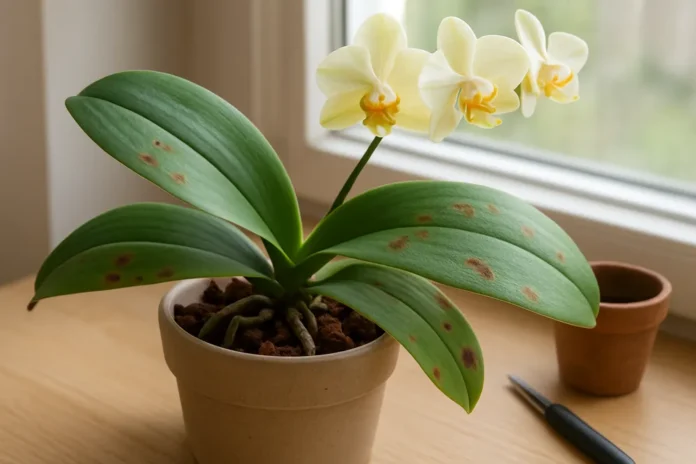
Orchid leaves develop brown spots most often from sunburn, bacterial or fungal infections, or stress from too much moisture on the leaves. In some cases, cold damage, fertilizer burn, or pest injury can also leave brown or blackened spots.
Brown spotting on an orchid leaf can look alarming fast, especially when the rest of the plant seemed fine a few days earlier. In my experience, orchid leaves with brown spots usually mean one of two things: the plant was physically stressed by light, water, temperature, or salts, or it has started dealing with a disease issue that took advantage of those conditions.
The tricky part is that not all spots mean the same thing. A dry tan patch on the side facing a bright window tells a very different story than a soft black-brown lesion that seems to spread overnight. If you slow down and look at the color, texture, location, and speed of change, you can usually narrow the problem down and avoid treating the wrong cause.
The good news is that many orchids recover well once the underlying issue is corrected. The key is to focus on brown spots on orchid leaves as a symptom, not the whole diagnosis.
What the Spots Are Telling You
Before you reach for scissors or fungicide, study the spotting pattern. Orchid leaf damage gives clues through shape, color, and texture. Dry, papery tan spots often suggest sun or heat injury. Dark, water-soaked spots can point to bacterial rot. Small speckles with yellow halos may suggest fungal disease. If the leaf tissue looks bleached first and then turns brown, light damage is a strong suspect.
- Dry, crisp, tan to brown patches: often sunburn or heat stress
- Soft, mushy, dark brown or black spots: often bacterial rot or advanced rot
- Small round spots with defined edges: often fungal spotting
- Brown tips or margins with a dry edge: often salt buildup, low humidity, or irregular watering
- Scattered scars or stippling that later browns over: sometimes pest feeding damage
When I diagnose orchids, I look at the newest leaf first and then compare it with the oldest damaged one. If only one exposed leaf is marked, I suspect sun or splash injury. If new spots keep showing up on multiple leaves, I start thinking disease or a care issue that is still happening.
Also pay attention to where the plant sits. Orchids near west or south windows, under strong grow lights, or in stagnant humid corners tend to develop very different problems. The leaf pattern matters, but the growing environment often confirms the diagnosis.
Common Reasons Orchid Leaves Develop Brown Spots
Sunburn and Heat Damage
Orchids can absolutely scorch, especially common grocery-store phalaenopsis that were grown under filtered greenhouse light and then placed in a bright home window. Sunburn usually starts as yellowed or bleached patches and then turns tan or brown. The damaged area is often broad, dry, and flat rather than wet or sunken. It usually appears on the side facing the strongest light.
This kind of damage does not heal, but it usually does stop spreading once the light level is corrected. If the rest of the plant is healthy, new leaves should emerge normally.
Bacterial Leaf Spot and Soft Rot
Bacterial problems are among the most urgent causes of brown spots on orchids. The spots often look water-soaked at first, then turn dark brown or black. They may feel soft, and the tissue can collapse quickly. In warm, humid conditions, bacterial lesions can expand in a day or two. Sometimes there is a yellow margin around the spot or a foul smell if rot is advanced.
These infections are more common when water sits in leaf joints, leaves stay wet overnight, airflow is poor, or a damaged leaf gives bacteria an entry point. Phalaenopsis orchids are especially vulnerable because their leaf arrangement can trap moisture near the crown.
Fungal Leaf Spotting
Fungal spots tend to be more defined and slower moving than bacterial ones. You may see small brown, black, or tan lesions that gradually enlarge, sometimes with concentric rings or a yellow halo. Fungal disease is encouraged by splashing water, high humidity without airflow, crowded plants, and old foliage that stays damp for long stretches.
Unlike sunburn, fungal spots may continue appearing even after you move the plant unless the moisture issue is corrected. On weak plants, heavy spotting can reduce vigor and flowering.
Watering Stress and Root Trouble
Watering mistakes do not always create neat round spots by themselves, but they often set the stage for them. Overwatered orchids with failing roots cannot regulate moisture well, so leaves may become stressed, yellowed, or vulnerable to rot. Underwatered orchids can develop dry brown tips or edges, especially if the plant also sits in low humidity.
If brown spots appear alongside limp leaves, mushy roots, a sour potting mix, or a stale smell from the pot, root decline may be part of the story. Orchids with unhealthy roots are much more likely to suffer secondary spotting problems.
Fertilizer Burn and Salt Buildup
Orchids are not heavy feeders, and excess fertilizer can burn leaf tips, margins, or roots. This often shows up as dry brown edges, brown tips, or general stress rather than large isolated lesions. If you fertilize every watering without flushing the pot, mineral salts can build up in the bark or moss and damage the root system first, then the leaves.
Cold Injury
A surprisingly common cause of odd brown or black spots is cold exposure. Leaves pressed against a chilly window, hit by winter drafts, or left in a cold car can develop damage that looks wet at first and later turns brown or black. Cold injury may affect a broad patch or leave random damaged areas depending on how the leaf was exposed.
Pest Damage
Pests are not the top cause of large brown spots, but they can contribute. Thrips, spider mites, scale, and mealybugs can scar leaves, create stippling, or weaken tissue that later browns over. If the spotting is paired with silvery scarring, sticky residue, tiny webs, or bumps along the midrib, inspect carefully for insects.
How to Tell Which Cause Is Most Likely
A quick diagnosis usually comes from combining leaf appearance with recent conditions. Think about what changed in the last week or two. Did the orchid move to a brighter window? Was it misted often? Did water sit in the crown? Has the potting mix stayed soggy? Did the plant spend time near air conditioning, a heater, or a cold pane of glass?
- If the spot is dry, bleached, and on the bright side of the plant, suspect sunburn.
- If the spot is soft, dark, spreading fast, or smells bad, suspect bacterial rot.
- If there are many smaller defined lesions that slowly enlarge, suspect fungal spotting.
- If tips and edges are browning while roots also look poor, suspect watering stress or salt buildup.
- If damage appeared right after a cold snap or contact with glass, suspect cold injury.
- If you see insects, webbing, sticky residue, or silvery scars, include pests in the diagnosis.
Do not remove every marked leaf right away. I usually keep a leaf if the spot is dry and stable, because the plant still uses that leaf for energy. I remove tissue only when it is actively rotting, spreading, or threatening the crown.
If you are unsure, isolate the orchid from your others until you see whether the spots are stable or progressing. That simple move can prevent a contagious issue from spreading through a collection.
What to Do for Each Type of Brown Spotting
If It Is Sunburn
Move the orchid to bright but indirect light. An east window, a spot a few feet back from a south window, or filtered light through a sheer curtain usually works better for many common orchids. Do not cut away cosmetic damage unless the area becomes soft or starts decaying. The existing brown patch will remain, but the goal is healthy new growth.
If It Is Bacterial Rot
Act quickly. Isolate the orchid, stop misting, and keep water off the leaves. With a sterilized blade, remove badly infected tissue if the spot is expanding and you can do so without cutting into the crown excessively. Sterilize tools between cuts. Improve airflow and keep the plant warm but not hot. If the rot reaches the crown or spreads rapidly, the orchid may be difficult to save, but early action gives the best chance.
Avoid splashing nearby plants and do not reuse standing water, old wipes, or contaminated tools. Bacterial problems often spread through moisture and handling.
If It Is Fungal Spotting
Trim only heavily affected tissue if needed, improve spacing and airflow, and water early in the day so leaves dry quickly. Keep the leaves dry as much as possible. In stubborn cases, home gardeners sometimes use an orchid-safe fungicidal product labeled for ornamental plants, but cultural correction matters more than spraying alone.
If Roots and Watering Are Involved
Slip the orchid out of its pot and inspect the roots. Healthy roots are usually firm, with a green or silvery outer layer depending on moisture. Dead roots are mushy, papery, hollow, or brown throughout. Trim dead roots with sterilized scissors and repot into fresh orchid bark or another suitable airy mix. Then adjust watering so the medium approaches dryness before you water again, rather than staying constantly wet.
If the orchid is in dense old moss and you are watering on a schedule instead of by feel, that alone may explain recurring stress. Orchids need oxygen at the roots just as much as moisture.
If Fertilizer Salts Are the Problem
Flush the pot thoroughly with plain water to wash out excess salts. Reduce fertilizer strength and feed more lightly going forward. Many growers do well using a weak fertilizer solution during active growth and plain water periodically to prevent buildup.
If Pests Are Present
Isolate the plant and inspect both sides of the leaves, the crown, and where the leaf meets the stem. Wipe away visible pests and use a treatment labeled for the pest and for houseplants or orchids. Repeat applications only as directed, because a single treatment often misses eggs or hidden insects.
With orchids, I get better results when I correct the growing conditions first and use products second. A plant sitting wet and stagnant will keep having problems no matter what spray you buy.
How to Prevent Brown Spots From Coming Back
Most recurring leaf spotting comes back to environment. Orchids do best when light, moisture, and airflow are balanced. They want bright light, but usually not harsh direct afternoon sun. They want humidity, but not trapped moisture on the leaves. They want regular watering, but not stale soggy media.
- Give orchids bright, filtered light instead of intense direct midday sun.
- Water in the morning so leaves and crown dry before evening.
- Avoid leaving water pooled where leaves join the stem.
- Use a loose orchid mix and repot before bark breaks down too far.
- Keep plants spaced so air can move around foliage.
- Sterilize cutting tools before and after trimming damaged tissue.
- Quarantine new orchids for a while before placing them with established plants.
- Fertilize lightly and flush the pot now and then with plain water.
If you grow phalaenopsis, one of the simplest habits is blotting the crown dry after watering. That small step prevents a surprising amount of trouble. I also like to rotate orchids gradually when seasons change so one side does not suddenly get blasted with stronger sun.
Will the Damaged Leaves Recover?
Brown spots themselves do not turn green again. Once leaf tissue is dead, it stays dead. What recovery looks like in orchids is stable damage, healthy roots, and clean new leaves. If the spot stops enlarging and the plant keeps growing normally, that is a good outcome.
Do not judge success only by the old leaf. Watch for fresh root tips, firm new foliage, and the absence of new lesions. Orchids often recover slowly, so patience helps, but continued spread means the original cause is still active.
If the crown is affected, multiple leaves are collapsing, or the plant has almost no healthy roots left, recovery becomes more difficult. At that stage, focus on sanitation, careful watering, and stable conditions rather than heavy feeding or constant handling.
FAQ
Should I Cut Off Orchid Leaves with Brown Spots?
Only if the tissue is soft, rotting, or the spot is actively spreading. Dry, stable spots are mostly cosmetic, and the leaf can still help the plant photosynthesize.
Can I Save an Orchid with Black or Dark Brown Soft Spots?
Sometimes, yes, if you catch it early and remove the source of infection or excess moisture quickly. Fast-spreading soft spots are more serious than dry tan patches.
Do Brown Spots on Orchid Leaves Mean Too Much Water?
Not always. Too much water often contributes indirectly by damaging roots or keeping leaves wet long enough for rot and disease, but sunburn and cold damage can cause spots too.
Can Misting Cause Brown Spots on Orchids?
Yes, especially if misting leaves water sitting in the crown or on the foliage for long periods. In poor airflow, that moisture can encourage bacterial or fungal spotting.
Will a Brown-spotted Orchid Still Bloom?
It can, if the roots and crown stay healthy and the problem is corrected. A few old spots do not always stop flowering, but ongoing stress often reduces bloom performance.
Are Brown Spots Contagious to My Other Orchids?
Sunburn and salt damage are not contagious, but bacterial and fungal issues can spread under wet conditions or through contaminated tools and splashing water.
Why Does Only One Orchid Leaf Have a Brown Patch?
A single affected leaf often points to localized damage such as sun exposure, cold contact, splash injury, or a spot where water lingered rather than a whole-plant problem.
Need help choosing the right orchid care products? See our guide to the best orchid bark mixes, fertilizers, and disease-control options so you can treat the cause and get cleaner new growth.
