

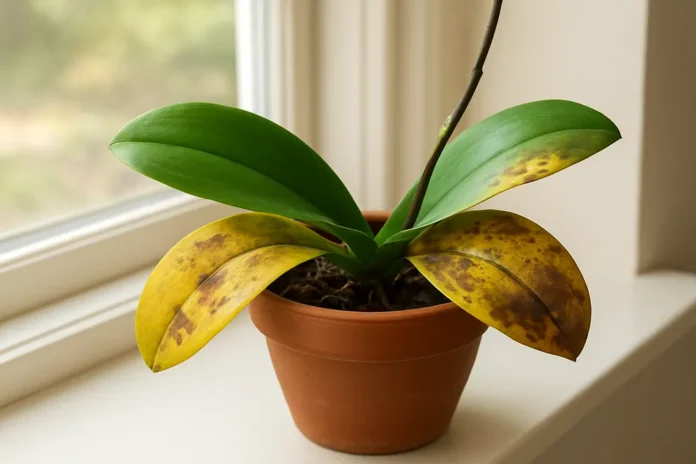
Orchid leaves become discolored when the plant is stressed by light, watering problems, temperature swings, nutrient issues, pests, or disease. The exact color and pattern usually point to the underlying cause.
When orchid leaves start changing color, the plant is usually telling you something important before it declines further. Sometimes the issue is simple, like too much sun or old age. Other times, discoloration is the first visible sign of root trouble, crown rot, pests, or a growing problem with your care routine.
I have found that the leaf color pattern matters more than the color alone. A single lower leaf turning yellow means something very different from bleached patches on top leaves, black soft spots near the crown, or a purple-red blush across the whole plant. Once you match the pattern to the likely cause, orchids become much easier to troubleshoot.
What Healthy Orchid Leaves Should Look Like
Most common houseplant orchids, especially Phalaenopsis, should have firm, smooth leaves with an even medium green color. They should not look limp, accordion-pleated, mushy, heavily spotted, or washed out. Thick leaves that hold their shape usually suggest the plant is reasonably hydrated and the roots are working.
That said, not every color shift means disaster. An older bottom leaf may slowly yellow and drop as the plant grows. Some orchids also show a slight reddish blush under bright light without being damaged. The key is to notice whether the change is limited and gradual, or spreading fast and paired with soft tissue, wrinkles, spots, or root decline.
When I diagnose orchids, I always compare the newest leaf to the oldest one. If only the oldest leaf is fading, I worry less. If the newest leaf looks distorted, pale, spotted, or weak, I start looking for a larger culture problem right away.
Yellow Orchid Leaves and What They Usually Mean
Natural Aging
One yellow leaf at the base of the plant is often normal, especially after blooming or as the orchid puts energy into new roots and leaves. The leaf usually turns yellow gradually, thins out, and eventually drops on its own. If the rest of the plant looks firm and healthy, this is rarely a problem.
Overwatering and Root Stress
If several leaves are yellowing at once, or the leaves look soft and slightly limp while the potting mix stays wet, overwatering is a common cause. Orchids do not like to sit in soggy media. Their roots need both moisture and airflow. When the roots begin to rot, the leaves may yellow because the plant can no longer take up water and nutrients properly.
- Yellowing that starts broadly rather than on one old leaf
- A heavy pot that stays wet for too long
- Brown, mushy, or hollow roots
- Leaves that feel floppy even though the mix is damp
Too Little Water
Underwatering can also lead to yellowing, though it is more often paired with wrinkled or leathery leaves. If the orchid is kept too dry for too long, older leaves may yellow as the plant sacrifices them to support newer growth. Dry, silvery roots and a very lightweight pot are common clues.
Low Light or Nutrient Imbalance
Orchids grown in very low light sometimes develop dull, pale yellow-green leaves instead of rich green ones. Weak fertilizing, repeated watering with hard tap water, or salt buildup can also interfere with nutrient uptake and create a washed-out look. This tends to happen slowly rather than overnight.
Brown, Black, or Mushy Areas Are More Urgent
Sunburn and Heat Scorch
Brown or tan patches on the upper leaf surface often come from too much direct sun. The damaged area may first look pale or bleached, then turn dry and papery. South or west windows can be especially harsh if the orchid was not gradually adapted to brighter light.
Bacterial and Fungal Leaf Spots
Black, dark brown, or water-soaked spots can point to disease, especially if the tissue looks wet, soft, or rapidly enlarging. Bacterial spots often appear greasy or translucent at first. Fungal spots may look more defined, dry, or ringed. Poor airflow, crowded plants, water left sitting on leaves, and cool damp conditions all make these issues more likely.
Crown Rot
If the blackening is near the center of a Phalaenopsis where new leaves emerge, crown rot is a major concern. This often starts when water sits in the crown and does not dry quickly. The center may turn dark, soft, and foul-smelling, and the newest leaf can loosen or pull away. Unfortunately, crown rot can kill the plant if it reaches the growing point.
If you water orchids in the sink, do it early in the day so the leaves and crown dry before evening. I also tilt Phalaenopsis slightly after watering to make sure no water sits in the center.
Cold Damage
Blackened patches can also come from cold exposure. An orchid pressed against a freezing window, left in a cold car, or hit by winter drafts may develop dark, collapsed tissue days later. Cold damage can resemble disease at first, but the timing usually traces back to a clear temperature event.
Red, Purple, Pale, or Bleached Leaves
Light Stress and Anthocyanin Response
A red or purple tint on orchid leaves often means the plant is getting bright light. In some orchids, this is a mild stress response and not immediately harmful. The plant produces protective pigments, much like a sunscreen effect. If growth remains strong and the leaves are not scorching, a light blush can be acceptable.
However, a strong red cast combined with yellowing or bleached patches usually means the light is too intense. This often happens when an orchid is moved from a low-light shelf straight into direct sun.
Pale Green or Bleached Leaves
Leaves that look faded, whitish, or washed out are usually receiving too much sun or heat. Bleaching often affects the side facing the window or grow light. If only one side of the plant is affected, that directional clue is helpful.
Very Dark Green Leaves
Deep, dark green leaves may sound healthy, but in orchids they often suggest the light is too low. A plant in dim conditions may survive, yet it can become weak, slow-growing, and less likely to bloom. In time, low-light stress can contribute to generally poor color and soft growth.
When Roots, Potting Mix, and Watering Are the Real Problem
A lot of orchid leaf discoloration starts below the surface. Leaves are the part you see, but roots usually tell the full story. Healthy orchid roots are typically green when wet, silvery when dry, and firm to the touch. Rotten roots turn brown, mushy, stringy, or papery.
Old potting bark breaks down over time and begins holding too much water. When that happens, air spaces disappear, roots suffocate, and discoloration follows. Orchids that once dried nicely may suddenly stay wet for many extra days. This is one reason an orchid can decline even when you have not changed your watering schedule.
- Repotting is often needed when bark smells sour, looks decomposed, or collapses into small particles
- Clear nursery pots make it much easier to monitor root color and moisture
- Watering on a fixed calendar is less reliable than watering based on how dry the mix actually is
- A decorative outer pot without drainage can keep roots wetter than you realize
I have seen many orchids blamed on fertilizer or light when the real problem was stale media. If an orchid has odd leaf color plus poor root quality, I usually fix the root environment first and wait to judge recovery by the next leaf, not the damaged ones already on the plant.
Pests and Nutrient Issues That Can Change Leaf Color
Spider Mites, Scale, and Mealybugs
Pests can cause stippling, yellow speckling, dull patches, sticky residue, or general decline. Spider mites are especially good at creating a faded, dusty look on leaves. Scale and mealybugs often hide along veins, under leaves, or where leaf bases meet the stem. Heavy infestations weaken the plant and can trigger broader yellowing.
Fertilizer Salts and Mineral Buildup
Orchids need light feeding, but too much fertilizer can damage roots and contribute to yellow leaf tips, brown margins, or a generally stressed appearance. White crust on the pot, roots, or media is a clue that salts are building up. Hard water can create similar issues over time.
True Nutrient Deficiency
A true deficiency is less common in home orchids than root stress, poor light, or watering problems. Still, weak feeding over a long period can lead to pale, undersized growth. The newest leaves may emerge smaller or lighter than normal. Because several issues overlap, it is best not to assume nutrients are the main problem unless the roots and environment otherwise look good.
How to Tell Which Discoloration Matters Most
The fastest way to narrow things down is to look at the pattern, location, and texture of the discoloration. Uniform fading across an old lower leaf usually points to aging. Random bleached areas on top leaves suggest sun stress. Black soft tissue near the crown suggests rot. Fine stippling or sticky residue hints at pests.
- Older bottom leaf only: often normal aging
- Several yellow leaves plus soggy mix: likely root or watering trouble
- Wrinkled leaves plus dry roots: likely underwatering or damaged roots
- Bleached tan patch facing a bright window: likely sunburn
- Dark wet spot that spreads fast: possible bacterial or fungal issue
- Red or purple blush without burning: bright light response
- Speckled fading with tiny pests or webbing: likely mites or other insects
Also pay attention to speed. Sudden discoloration often points to environmental shock, sunburn, cold exposure, or disease. Slow color loss more often ties back to low light, root decline, old media, or a long-term watering issue.
What to Do Next Without Making the Problem Worse
The biggest mistake I see is changing everything at once. Gardeners move the plant, cut roots, fertilize heavily, water more, then water less, and it becomes impossible to tell what helped. Orchids recover slowly, and damaged leaves often stay damaged even after the plant improves.
Start by correcting the most likely stress. Move sunburned plants to bright indirect light. Improve drainage and inspect roots if the mix stays wet. Repot if the media is old and broken down. Remove standing water from the crown. Isolate the orchid if you suspect pests or disease.
- Check the roots and potting media first
- Review how quickly the pot dries after watering
- Adjust light if leaves are bleached, scorched, or very dark
- Inspect under leaves and around leaf joints for pests
- Trim away obviously rotten tissue only if needed and with sterile tools
- Watch new leaves and roots for signs of recovery
Do not judge success by whether the old discolored leaf turns green again. It usually will not. The real sign of recovery is healthy new growth, firmer leaves, and active roots.
FAQ
Should I Cut Off a Yellow Orchid Leaf?
Usually no. If the leaf is yellowing naturally, let the plant reabsorb what it can and allow the leaf to drop on its own. Remove it only if it is fully dead, mushy, or diseased.
Can Discolored Orchid Leaves Turn Green Again?
Most damaged tissue will not regain its original color. Once a leaf is sunburned, spotted, or badly yellowed, the goal is to stabilize the plant and look for healthy new growth.
Why Is Only One Bottom Orchid Leaf Turning Yellow?
That is often normal aging, especially if the rest of the plant looks firm and healthy. Orchids commonly shed an older lower leaf as they grow.
Why Are My Orchid Leaves Red or Purple?
A red or purple tint usually means the orchid is getting fairly bright light. A mild blush can be normal, but strong coloration with bleaching or scorch suggests too much sun.
What Do Black Spots on Orchid Leaves Mean?
Black spots may come from disease, cold damage, or severe tissue injury. Soft, water-soaked, or spreading spots are more concerning than dry, stable marks.
Can Too Much Fertilizer Discolor Orchid Leaves?
Yes. Excess fertilizer or salt buildup can stress roots and lead to yellow tips, brown edges, or general leaf decline. Orchids usually do better with light, regular feeding than heavy doses.
Is Leaf Discoloration Always Caused by Watering?
No. Watering is a common cause, but light stress, temperature damage, pests, old potting mix, nutrient issues, and disease can all change leaf color.
Need help fixing the root cause fast? Read our orchid care and repotting guide to choose the right bark mix, watering routine, and treatments before leaf damage spreads.
