

Note: This article contains affiliate links. If you click on these links and make a purchase, I may earn a small commission at no extra cost to you. This helps support my research and content. Read my full affiliate disclosure here.
Choosing the right decorative mulch affects how your beds look, how long they stay low-maintenance, and how well they protect plant roots. The right mulch balances appearance with practical garden functions like moisture retention, weed suppression, and soil health. This guide covers seven shortlisted decorative mulches that perform well in home landscapes and container plantings, and explains the decision factors we used to evaluate them. Read on to understand the tradeoffs among color stability, decomposition rate, and installation needs before you pick the best material for your planting situation.
Top Picks at a Glance
| Best Overall The best all-around choice for most situations | GASPRO 15 lb Mixed Color Polished River Pebbles |  |
| Best Quality Built to a higher standard if you want something more solid | Hull Farm Cocoa Bean Shell Mulch, 2 Cubic Feet |  |
| Best Value The sweet spot between price and what you get | Back to the Roots Organic Mulch, 1 Cubic Foot |  |
| Best Budget The cheapest option that still gets the job done reliably | MAQIHAN Pine Needle Mulch for Orchids and Acid-Loving Plants, 11 oz |  |
| Highest Rated A top-rated pick with lots of positive feedback | Hazel Shell Mulch 1.5 cu ft — Natural Hazelnut Shell Mulch |  |
| Most Popular A crowd favorite that many people choose with confidence | Plantonix Coco Chips Mulch Brick (10 lb) – Compressed Coconut Husk Chips |  |
| Best Seller A high-volume bestseller chosen again and again | Mosser Lee Spanish Moss — Natural Decorative Moss, 400 Cubic Inches |  |
GASPRO 15 lb Mixed Color Polished River Pebbles

| Item Diameter | 1.75 inches |
|---|---|
| Material | Stone |
| Item Shape | Irregular |
| Color | Mixed |
| Number of Packs | 1 |
These GASPRO polished river pebbles are a ready-to-use decorative mulch option for planters, pathways, ponds, and tabletop displays. The bag contains uniformly screened stones roughly 1 to 1 3/4 inches across with a mixed, polished finish that maintains color under sun and water, so they work well around pools, in garden beds, or as a top dressing for potted plants. Practical benefits include low maintenance cleaning with a rinse, suppression of surface weeds, and reduced soil evaporation. The stones are natural and non-toxic, suitable for aquariums and terrariums when rinsed first. Limitations are inherent to rock mulch: they do not break down to enrich soil, can retain heat in hot climates, and are heavier and harder to move than organic mulches, so larger installations need more labor or multiple bags. For decorative accents and long-lasting ground cover where permanence and minimal upkeep matter, these pebbles are a straightforward choice.
Best for: Buyers who want a low-maintenance, long-lasting decorative mulch or top dressing for planters, paths, and water features and prefer a clean, polished look over organic materials.
Less Ideal for: Gardeners seeking a mulch that improves soil structure or who need a lightweight, easily moved material for seasonal beds should consider organic alternatives.
- Polished, fade-resistant surface retains color in sun and water
- Consistent screened size simplifies even coverage and planting around roots
- Natural non-toxic stone suitable for aquariums and indoor displays after rinsing
- Suppresses weeds and helps lock soil moisture reducing watering frequency
- Does not decompose or improve soil fertility like organic mulches
- Stones are heavy and can be cumbersome to spread for large areas
- Can raise surface temperature compared with lighter organic mulches in hot sun
Verdict: Choose these polished river pebbles when you want a durable, low‑maintenance decorative mulch that keeps its color and suppresses weeds.
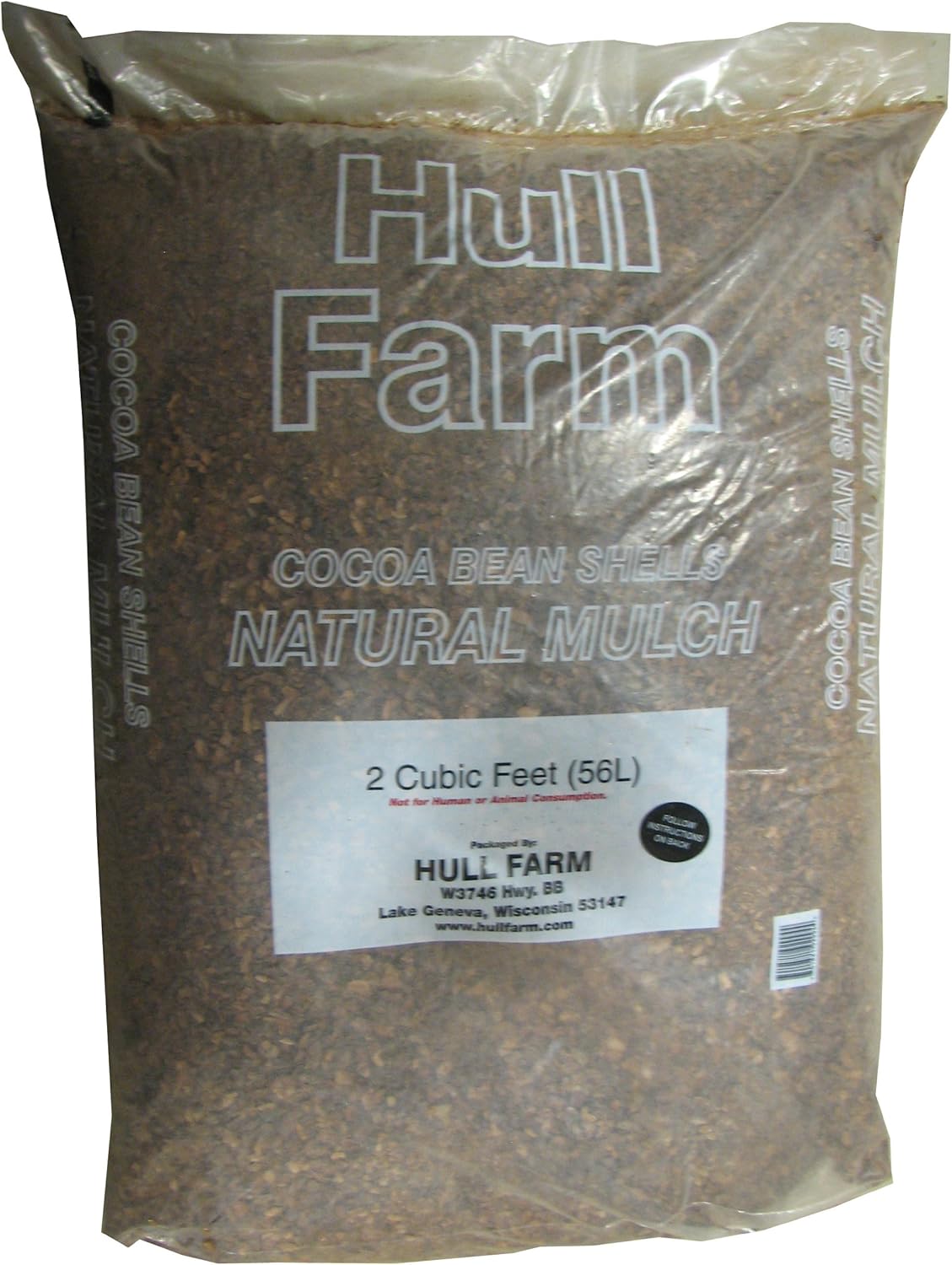
Hull Farm Cocoa Bean Shell Mulch, 2 Cubic Feet
| Brand Name | Hull Farm |
|---|---|
| Model Name | 50150 |
| Material | Plastic |
| Package Weight | 12.72 kg |
Hull Farm Cocoa Bean Shell Mulch is a bagged organic mulch made from cocoa bean shells marketed for landscape beds. It is typically applied as a 1 to 3 inch layer around ornamentals or edibles to suppress weeds, conserve soil moisture, and improve appearance; the shells also slowly break down and provide a small nutrient contribution with an approximate analysis near 2.5-1-3. The product is easy to spread from the 2 cubic foot bag and leaves a fine, attractive textured surface that is less likely to mat than some other fine mulches. Because it is organic it will decompose over time, so plan to replenish annually or as needed. Note that cocoa shell mulch can attract pets if they are tempted to eat it and should be used with care around animals and children; also its small particle size means it can compact in heavy rain and may require light fluffing. For gardeners looking for an attractive, nutrient-contributing mulch that supports moisture retention and weed suppression, this is a practical option for tomato beds when used correctly.
Best for: Gardeners who prioritize plant performance and want a decorative organic mulch that also contributes modest nutrients and conserves moisture for productive beds such as tomatoes.
Less Ideal for: Those with pets that scavenge mulch or gardeners who prefer an inert, longlasting inorganic mulch that will not decompose over a season.
- Adds a mild, slow-release nutrient contribution (approx. 2.5-1-3) as it breaks down
- Fine, attractive texture that spreads evenly and helps retain soil moisture
- Sold in a manageable 2 cubic foot bag for easy handling and targeted application
- Less likely to mat compared with very fine composts, maintaining surface airflow
- Can attract pets or wildlife that may chew or eat the shells
- Small particles can compact after heavy rain and may need occasional fluffing
Verdict: Choose this cocoa shell mulch when you want an attractive organic mulch that helps retain moisture and gives tomatoes a light nutrient boost as it decomposes.
Back to the Roots Organic Mulch, 1 Cubic Foot

| Brand Name | Back to the Roots |
|---|---|
| Item Highlight | Premium organic garden mulch; peat-free; 25.7 quart bag |
| Unit Count | 16 Ounce |
| Volume | 23 cubic centimeters |
This organic mulch from Back to the Roots is a peat-free, upcycled plant-matter blend intended for beds, containers, and around shrubs and trees. It includes dolomitic limestone to help balance pH, yucca extract to improve moisture control, and gypsum to aid water absorption, so it both conserves moisture around root zones and contributes modest nutrients. Typical use is spreading a 2–3 inch layer around bushes, avoiding direct trunk contact, or mixing into the topsoil when planting. Its organic base and added plant food make it a good choice for supporting healthy growth and reducing watering frequency. Limitations to keep in mind are the bag size and volume relative to larger beds and that it is formulated as a general mulch rather than a heavy-duty long-lasting bark product, so it may break down faster and need replenishing more often.
Best for: Gardeners who want an eco-conscious, peat-free mulch that improves moisture retention and supports plant health around bushes and in raised beds.
Less Ideal for: People looking for a coarse, long-lasting decorative bark mulch or a single large bag solution for extensive shrub beds.
- Peat-free organic blend made from upcycled plant matter and wood fines
- Contains yucca extract for improved moisture retention and gypsum for better water absorption
- Includes dolomitic limestone to help adjust and stabilize soil pH
- Formulated with all-purpose plant food to support growth of vegetables, herbs, and shrubs
- Bag volume is relatively small for large or multiple bush beds so more bags may be needed
- Breaks down faster than coarse bark mulches and will require periodic replenishment
Verdict: Choose this peat-free organic mulch when you want an eco-friendly, moisture-saving soil cover that also supplies mild nutrients to bushes and raised beds.
MAQIHAN Pine Needle Mulch for Orchids and Acid-Loving Plants, 11 oz

| Brand Name | MAQIHAN |
|---|---|
| Unit Count | 11 Ounce |
| Item Highlight | Orchid Potting Mix for Landscaping Repotting Indoor Potted Plants,Gardening,Soil Moisture Retention |
This small 11-ounce bag of pine needle mulch is a lightweight, natural mulch intended for acid-loving plants and potted specimens. It is typically used as a top dressing around root zones, a component in potting mixes for orchids and blueberries, or mixed into compost to slowly release nutrients as it decomposes. Notable features include its naturally acidic pH and loose, breathable texture that improves soil aeration and helps retain moisture. For blueberry growers the mulch can help maintain a slightly acidic root environment and reduce surface evaporation when applied 2 to 4 inches thick. The product is sold in a compact pack, so it is most useful for small beds, containers, or to top-dress individual plants rather than large landscape jobs. Because fresh pine needles can draw nitrogen while breaking down, they are best composted or combined with other organic materials before heavy incorporation into planting beds. Expect modest quantity per bag and the need to reapply seasonally for continuous benefits.
Best for: Home gardeners growing a few blueberry plants or container-grown acid-loving shrubs who prioritize an inexpensive, natural mulch to maintain slightly acidic soil and conserve moisture.
Less Ideal for: Gardeners needing bulk mulch for large landscapes or those growing neutral to alkaline plants that dislike acidic conditions should choose a different product.
- Naturally acidic, suitable for acid-loving plants such as blueberries and azaleas
- Loose, breathable texture improves aeration and reduces surface compaction
- Helps retain soil moisture when applied as a 2 to 4 inch top layer
- Biodegradable and slowly releases nutrients as it decomposes
- Small 11 oz package provides limited coverage and is not suited for large beds
- Fresh needles may temporarily tie up soil nitrogen unless composted first
Verdict: A compact, budget-friendly pine needle mulch that helps create and maintain the slightly acidic, moisture-retentive conditions blueberry plants prefer.
Hazel Shell Mulch 1.5 cu ft — Natural Hazelnut Shell Mulch

| Item Type | Mulch |
|---|---|
| Volume | 1.5 cubic feet |
| Ingredients | Hazelnut Shells |
This hazelnut-shell mulch is a 100% natural, recycled option that serves as a decorative ground cover for garden beds, raised beds, containers, and pathways. It lays down like conventional mulch to suppress weed growth and reduce moisture loss while offering a distinctive texture and rich natural color. Because hazelnut shells break down more slowly than many wood mulches, a single application will maintain appearance and coverage for longer, which reduces how often you need to refresh beds. It is lightweight to move in small bags and works well around ornamental plants and vegetable containers, but the shell texture can be a bit coarse for direct seedbeds or very fine root zones. Note the product is a by-product of tree nuts and may contain hazelnut residue, so it is not appropriate where nut allergens are a concern. For gardeners prioritizing a tidy, longer-lasting organic top layer in raised vegetable beds and pots, this mulch is an attractive, low-maintenance choice.
Best for: Gardeners who want a low-maintenance, natural top dressing for raised beds and containers that holds moisture and stays looking good longer between refreshes.
Less Ideal for: Do not choose this if you need a mulch for direct seed germination beds or if you must avoid any material with tree-nut residues.
- Slow decomposition compared with many wood mulches, so it needs less frequent replacement
- Helps retain soil moisture and suppress weeds when applied as a top layer
- 100% natural recycled hazelnut shells without artificial dyes
- Attractive, unique texture and rich natural color for decorative beds and containers
- Coarse shell texture may be less suitable for direct seeding or very fine-rooted transplants
- May contain hazelnut residue so it is unsuitable where nut allergens are a concern
Verdict: Choose this hazelnut-shell mulch when you want a natural, longer-lasting decorative mulch that reduces watering and weeding effort in raised beds and containers.
Plantonix Coco Chips Mulch Brick (10 lb) – Compressed Coconut Husk Chips

| Unit Count | 160 Ounce |
|---|---|
| Item Type Name | Soil and Soil Amendments |
| Brand Name | plantonix |
| Volume | 15 gallons |
Plantonix Coco Chips arrive as a compact 10 pound brick that hydrates and expands into lightweight coconut husk chips for use as mulch, soil amendment, or terrarium bedding. You soak or wet the block to break it apart, then spread the chips over garden beds, containers, orchid pots, or raised beds to reduce evaporation and moderate soil temperature. The product is pre-screened, washed, and aged to remove dirt and rocks, and the low electrical conductivity and near-neutral pH make it safe to mix with potting mixes. Practical benefits include improved drainage and aeration compared with heavy wood mulches, long-lasting moisture retention that can reduce watering frequency, and an attractive tropical look. Important limitations are that you must rehydrate and break up the compressed brick before use which adds prep time, and coco chips do not supply nutrients so you will still need to fertilize regularly. Also note the safety warning about dust and keeping it away from children and pets during handling.
Best for: Buyers who prioritize reliable, consistent mulch performance and want a sustainable, low-maintenance material that retains moisture and improves soil structure for beds and containers.
Less Ideal for: Gardeners who need a nutrient-rich soil amendment or who prefer a no-prep, ready-to-spread loose mulch should consider alternatives.
- Made from 100% recycled coconut husks, a renewable alternative to peat and wood mulches
- Pre-screened and washed to remove dirt, rocks, and excess fiber
- Excellent at retaining moisture while maintaining airflow and drainage
- Lightweight and long-lasting so it does not compact like some organic mulches
- Requires soaking and manual breakup of the compressed brick before use
- Does not provide plant nutrients and should be used with a fertilizer plan
Verdict: A dependable, renewable mulch solution that holds moisture and improves aeration without compacting, ideal for gardeners who want consistent performance.
Mosser Lee Spanish Moss — Natural Decorative Moss, 400 Cubic Inches

| Manufacturer | Mosser Lee |
|---|---|
| Item model number | ML0580 |
Mosser Lee Spanish Moss is a ready-to-use natural moss sold in a 400 cubic inch bag for decorative and horticultural use. It is commonly used as surface mulch for potted plants, liner material for hanging baskets, moisture-retentive top dressing for container gardens, and as craft material for wreaths and floral arrangements. The moss arrives cleaned and fumigated so it can be used indoors without additional treatment. In practical use it helps retain soil moisture, insulates roots, suppresses small weeds in containers, and adds an organic, rustic look to displays. Because it is loose and fibrous, it is easy to shape around plants or tuck into arrangements but will break down over time and may need periodic replenishing. It is not a substitute for a heavier landscape mulch for open-ground beds where longer durability and erosion control are required. For container gardeners and decorative projects looking for a natural, ready-to-use cover that improves moisture retention and aesthetics, this product is a straightforward option.
Best for: Buyers who want a safe, ready-to-use natural mulch or decorative cover for indoor plants, container gardens, and craft projects and who prefer low-risk, no-prep materials.
Less Ideal for: Homeowners who need a durable, long-lasting ground mulch for large outdoor beds or heavy erosion control should choose heavier bark or wood mulches instead.
- Cleaned and fumigated for safe indoor use right out of the bag
- Helps retain moisture and insulate roots in potted plants and containers
- Flexible, easy-to-shape fibrous material suited to wreaths, terrariums, and hanging baskets
- Natural appearance that improves the look of planters and floral arrangements
- Breaks down relatively quickly and requires periodic replacement in containers
- Not heavy or dense enough to provide long-term erosion control or weed suppression in open landscape beds
Verdict: An easy, ready-to-use natural moss that improves moisture retention and appearance for potted plants and decorative container applications.
Choosing the Right Decorative Mulch: Key Factors to Consider
Colorfastness and Sun Exposure
How well decorative mulch holds its color outdoors determines how frequently you will need to refresh beds to maintain a neat appearance. Products with pigments can fade under prolonged sun and rain, while naturally colored materials may oxidize or bleach unevenly. Consider the length and intensity of sun in planted areas and whether you prefer a perfectly maintained look or are comfortable with gradual patina. Frequent touching up increases labor and material costs over a season, so pick a colorfast option for high-visibility beds and a lower-maintenance variety for hidden borders.
Moisture Retention and Drainage
Mulch affects soil moisture by reducing surface evaporation and moderating temperature swings. Denser, compacting mulches can help hold water and reduce watering frequency, which is helpful in dry climates or during summer. However, overly compacting materials can impede drainage and create soggy conditions for shallow-rooted plants. Choose a mulch that balances retaining enough moisture to protect roots while allowing excess water to percolate away. Consider local rainfall patterns and the water needs of your plantings when evaluating moisture performance.
Decomposition Rate and Soil Impact
All organic decorative mulches break down over time and add organic matter to the soil, which can be beneficial for structure and microbial activity. The decomposition rate affects how often you need to replenish the layer and whether the breakdown will temporarily tie up nitrogen in the root zone. Fast-decomposing mulches require more frequent top-ups but enrich the soil faster. Slow-decomposing options last longer and are lower maintenance but contribute less immediate organic matter. Match decomposition expectations to your maintenance schedule and soil-building goals.
Ease of Installation and Maintenance
How easy a mulch is to lay and maintain often determines whether gardeners actually keep beds looking their best. Bagged, uniform pieces are simpler to spread neatly and are a good choice for smaller beds or containers. Bulk material can be more economical for large areas but requires equipment or help to spread evenly. Also consider how well the mulch resists wind displacement and washout on slopes, and whether it compacts into a mat that needs raking. Pick a product that fits your physical ability, bed layout, and willingness to perform seasonal upkeep.
Plant Safety and Chemical Content
Some decorative mulches are dyed or treated, and certain treatments can affect soil chemistry or plant health. Avoid mulches with unknown chemical additives if you grow edibles or have sensitive ornamentals. Natural mulches usually have fewer risks, but you should still confirm they are free of contaminants and invasive seeds. Consider the potential impact on pollinators and soil microbes as well. Choosing an inert or certified-safe product helps prevent unintended damage to plants and supports long-term garden health.
Aesthetic Texture and Bed Integration
Texture influences how mulch integrates visually with plantings and affects practical concerns like weed control and airflow at the soil surface. Coarse, chunky mulches create a structured, natural look and allow good airflow, reducing the risk of fungal issues. Fine-textured mulches form a tighter layer that suppresses weeds well but can compact and limit water infiltration. Think about how the texture complements your plants and hardscape and whether you want a formal, groomed appearance or a more naturalistic bed. Texture also affects how easy it is to replant or insert transplants without disturbance.
Best Mulch Choices by Garden Situation
Different decorative mulches suit different uses. For high-visibility foundation beds and public-facing borders, prioritize colorfast and uniform materials to keep a clean, tidy look. In vegetable-edge areas or around shrubs, select a material that balances decomposition benefits with minimal nitrogen tie-up. For sloped sites, choose mulches that resist washout and compacting; larger pieces and heavier materials perform better in these conditions.
- High-visibility beds: choose long-lasting color and uniform texture
- Vegetable-adjacent beds: prefer natural, untreated materials that break down into the soil
- Slopes and erosion-prone areas: select heavier, coarse pieces that resist movement
Layering and Depth Recommendations
Proper depth is key to success. Most decorative mulches perform well at a 2 to 3 inch depth: thick enough to suppress weeds and conserve moisture, but not so deep that roots are deprived of oxygen. Avoid piling mulch against tree trunks or crown areas; keep a cleared ring to prevent rot and pest issues. For fine-textured materials, a slightly thinner layer often prevents matting and allows better water penetration.
- General beds: 2 to 3 inches
- Tree rings: keep mulch 6 inches away from trunk bases
- Fine mulches: reduce depth to prevent matting and water repellency
Seasonal Care and Replenishing
Inspect mulch each season for compaction, erosion, and color loss. Organic mulches will settle and decompose, so plan to top up annually or biannually depending on the material. Remove any mattes or diseased plant debris before adding fresh material. In climates with freeze-thaw cycles, check for washout in spring and repair thin areas to maintain continuous coverage.
- Spring check: rake and refresh thin spots
- After storms: repair washout and replace displaced material
- Annual maintenance: remove debris and avoid excessive layering
Mulch and Soil Health
Mulch influences soil temperature, moisture, and the microbial community. Regular applications of organic decorative mulch can improve soil structure and increase organic matter over time. Be mindful of potential short-term nitrogen immobilization with high-carbon materials. If soil enrichment is a goal, plan for complementary practices such as periodic soil testing and targeted fertilization to offset any temporary nutrient shifts.
- Organic mulch adds organic matter as it decomposes
- Monitor soil pH and nutrients if using large quantities over time
- Combine mulching with targeted amendments for best plant nutrition
Environmental Considerations
Choose mulches produced responsibly to avoid introducing invasive species or contaminants. Recycled rubber and some manufactured products have tradeoffs related to heat retention and chemical content, so weigh those against longevity and maintenance. Natural options support biodiversity and soil life, while inert materials may perform longer but provide no biological benefits. Think about the long-term ecological impact in your yard and select materials that align with your sustainability goals.
- Natural mulches support soil biology
- Inert mulches may last longer but do not break down
- Check source and processing to avoid contaminants or invasive seed
How We Chose the Best Decorative Mulch
We prioritized attributes that matter in real garden use: color retention under sun exposure, moisture management, decomposition rate and impact on soil, ease of installation and topping up, and environmental safety for plants and pollinators. Each candidate had to demonstrate reliable colorfastness in outdoor conditions or offer a predictable fading timeline. Moisture control was judged by how the mulch reduces surface evaporation and moderates soil temperature, which affects watering frequency and root health. Decomposition rate was assessed for how often gardeners must replenish material and whether the breakdown alters soil pH or nutrient balance. Ease of installation included bagged versus bulk handling, ability to lay cleanly around plants, and how well the product resists wind or washout. We excluded products that are primarily engineered landscaping fabrics, loose soil amendments that are not intended as surface cover, or any materials with known toxic additives. The final shortlist emphasizes materials that balance visual appeal with practical garden performance across common home landscape situations.
FAQ
How often should decorative mulch be replaced?
Replacement depends on the material and local conditions. Organic mulches usually need topping every year or two as they decompose, while heavier or inert materials can last several years before looking worn. Check color, depth, and compaction each season to decide when to refresh.
Is dyed mulch safe around vegetables and pollinator gardens?
Safety often depends on the product formulation. Many dyed mulches are safe once weathered, but gardeners who grow edibles or support pollinators often prefer undyed, untreated materials to avoid any risk from pigments or additives. If using dyed options near edibles, keep mulch out of direct contact with edible parts and wash produce as usual.
Will decorative mulch prevent weeds completely?
Mulch significantly reduces weed pressure by blocking light and limiting seed germination, but no mulch prevents weeds entirely. Persistent perennial weeds and seeds appearing on top of the mulch can still sprout. Combine mulching with pre-plant weed removal and occasional hand-weeding for best results.
Can mulch affect soil pH or nutrient availability?
Some organic mulches can influence soil pH slightly as they decompose, and high-carbon materials may temporarily immobilize nitrogen near the surface. These effects are usually modest in established beds. If you have sensitive plants, monitor soil tests and adjust fertilization or choose slower-decomposing materials to minimize short-term nutrient shifts.
What is the best mulch depth for water conservation?
A 2 to 3 inch depth is generally best for conserving moisture while allowing adequate air exchange. Deeper layers can retain more moisture but increase the risk of compaction and root oxygen limitation. Adjust depth slightly for texture and local climate but avoid very thick layers around stems and trunks.
Final Verdict
Pick a decorative mulch that matches the visual outcome you want while meeting practical needs for moisture control and maintenance. Prioritize colorfastness and appropriate texture for visible beds, and consider decomposition rate and plant safety where soil health and edibles are involved. By matching mulch type to site conditions, you can reduce upkeep and support healthier plants while achieving the landscape look you want.
