

Note: This article contains affiliate links. If you click on these links and make a purchase, I may earn a small commission at no extra cost to you. This helps support my research and content. Read my full affiliate disclosure here.
If deer are browsing your foundation plantings, fruiting shrubs, or ornamental hedges, picking the right deer repellent matters. The best options reduce visible damage, protect new growth, and lower the time you spend replanting or repairing. This guide shortlists seven top deer repellents for shrubs and explains why each type can work in different landscapes. We evaluated products for how well they deter deer, how easy they are to apply and maintain, and how they interact with other garden needs like pollinators and pets. Read on to understand the key tradeoffs and which repellent style fits your yard and seasonal routine.
Top Picks at a Glance
| Best Overall The best all-around choice for most situations | Deer Out 32 oz Concentrate Deer Repellent (Minty Fresh) | 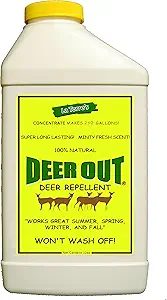 |
| Best Quality Built to a higher standard if you want something more solid | Plantskydd Ready-to-Use Animal Repellent Liquid, 1.3 Gal |  |
| Best Value The sweet spot between price and what you get | Liquid Fence Deer & Rabbit Repellent Concentrate, 32 oz |  |
| Best Budget The cheapest option that still gets the job done reliably | Wanqueen Peppermint Deer Repellent Balls (10 Pack) |  |
| Highest Rated A top-rated pick with lots of positive feedback | Atindirey Deer & Rabbit Repellent Balls |  |
| Most Popular A crowd favorite that many people choose with confidence | Liquid Fence Deer & Rabbit Repellent Ready-to-Use Spray, 1 Gallon |  |
| Best Seller A high-volume bestseller chosen again and again | Bonide Repels-All Animal Repellent Granules, 3 lb |  |
Deer Out 32 oz Concentrate Deer Repellent (Minty Fresh)

| Formulation | Concentrate |
|---|---|
| Scent | Minty Fresh |
| Suitable for | Year-round use |
| Manufacturer | DEER OUT LLC |
Deer Out 32 oz concentrate is a liquid repellent meant to be diluted and applied to garden plants to discourage deer, rabbits, groundhogs and other browsing wildlife. The peppermint-scented formula is described as all-natural and includes sticky agents designed to bind the active ingredients so they resist rain and remain on foliage. In practice it is used season-round on flowers, shrubs, vegetable plants, trees and vines; frequent reapplication after heavy rain is less likely to be needed than with non-sticky sprays. The product’s strengths are its scent that humans find pleasant, reported longevity on plants, and suitability for professional and home use across seasons. Limitations are that effectiveness can vary with local deer pressure and animal habituation, and as a concentrate you must mix and apply it correctly for good coverage. The label claims environmental safety but users should still follow directions when applying around children and pets.
Best for: Gardeners and landscapers who prioritize dependable, long-lasting protection and are willing to mix a concentrate and apply treatments strategically across the season.
Less Ideal for: Casual users who want a ready-to-use spray without mixing or those managing large acreage where constant reapplication and high deer pressure demand alternative exclusion methods.
- Concentrated formula covers more area per purchase when mixed correctly
- Minty scent that is acceptable to people while repelling deer
- Contains natural sticking agents that increase rain resistance
- Suitable for year-round use on a wide range of plants
- Effectiveness may decline where deer are heavily habituated to human areas
- Requires correct dilution and application for best results
Verdict: Buy this concentrate if you want a long-lasting, mint-scented, rain-resistant repellent that professionals and serious gardeners use to reduce deer browsing.
Plantskydd Ready-to-Use Animal Repellent Liquid, 1.3 Gal

| Item Form | Liquid |
|---|---|
| Target Species | Deer, Rabbits, Elk, Moose, Hares, Voles, Squirrels, Chipmunks |
| Liquid Volume | 1.3 gallons |
| Active Ingredients | Dried blood (min 12%) |
Plantskydd Ready-to-Use Liquid is a large-volume, dried-blood–based repellent intended for garden and landscape protection against deer, rabbits, elk, voles, squirrels and similar herbivores. You apply it by spraying plant foliage (avoid blossoms and edible parts) and reapplying new growth every 2–4 weeks during the growing season or every 3–6 months in dormancy. One 1.3 gallon jug covers roughly 500–600 one-foot-tall plants and becomes rainfast within 24 hours, so it holds up through normal wet weather once dried. The formula is simple and pollinator friendly, composed mainly of dried blood, vegetable oil and water, and it can also be used to coat bulbs before planting or to protect tree trunks from rubbing. The product does not include a spray trigger, so you will need a compatible sprayer for wider application, and frequent reapplication is required in heavy browse pressure or on rapidly flushing plants. For gardeners focused on consistent, season-long performance, Plantskydd is straightforward to use and gives broad coverage when applied correctly.
Best for: Gardeners and landscape managers who need reliable, garden‑wide protection from deer and other browsing animals and prioritize consistent seasonal performance over occasional spot treatments.
Less Ideal for: People who want a no-maintenance, one-time solution or those who prefer purely fragrance- or barrier-based repellents should consider alternatives.
- Broad target list including deer, rabbits, elk, voles and other herbivores
- Covers ~500–600 one-foot-tall plants per 1.3 gallon jug when used as directed
- Rainfast in 24 hours for weather-resistant protection
- Pollinator-friendly formulation composed of dried blood, vegetable oil and water
- Does not include a spray trigger or applicator so an additional sprayer is required
- Requires regular reapplication during active growth which adds ongoing labor
Verdict: Buy this if you want a proven, large‑coverage, ready‑to‑use liquid repellent that holds up in rain and protects broad garden plantings from deer and similar herbivores.
Liquid Fence Deer & Rabbit Repellent Concentrate, 32 oz

| Item Volume | 32 fluid ounces |
|---|---|
| Item Form | Concentrate |
| Scent Name | Unscented |
| Material Features | Natural |
| Coverage | Covers up to 5,000 Sq. Ft. |
Liquid Fence Deer & Rabbit Repellent Concentrate is a scent‑based garden treatment designed to keep deer and rabbits away from flower beds and ornamental plantings, including tulips. You dilute the concentrate and spray it on foliage and surrounding areas to create an invisible, scent‑driven barrier that animals avoid without having to bite plants. Notable features include a formula labeled as natural, unscented in the bottle but active via putrescent egg solids, garlic and thyme oil, and claims of rain resistance and long lasting action when applied as directed. Practically, it is suited to routine use: reapply weekly for three weeks, then monthly or after heavy rain, and one 32 oz bottle covers a large area. Limitations are that it requires periodic reapplication and correct dilution/application to work, and effectiveness can vary by local wildlife pressure and weather. When used per directions it will not harm plants or animals.
Best for: Gardeners who want a practical, repeatable method to protect tulips and other ornamental plantings without physical barriers and who prefer a concentrated product that treats larger areas.
Less Ideal for: People seeking a one‑time permanent solution or those unwilling to reapply treatments on a schedule or after storms.
- Concentrated formula covers a large area from a single bottle when mixed and applied correctly
- Works on scent so deer and rabbits often avoid plants before chewing occurs
- Labelled rain‑resistant and long lasting, reducing how often you must reapply
- Formulation described as natural and safe for plants and animals when used as directed
- Requires regular reapplication and dilution, adding time and effort
- Effectiveness can vary with heavy local animal pressure and after heavy rain
Verdict: A concentrated, practical repellent for tulip growers who want a scent‑based, repeatable way to keep deer and rabbits off flower beds.
Wanqueen Peppermint Deer Repellent Balls (10 Pack)

| Number of Items | 10 |
|---|---|
| Unit Count | 10 Count |
| Item Form | Tablet |
| Scent Name | Peppermint |
These peppermint deer repellent balls use concentrated plant-based essential oils to create a strong scent deer and rabbits find unpleasant. Each tablet comes individually sealed and fits into the included mesh bags for simple placement or hanging around garden beds, fence posts, trees, patios, or porches. The manufacturer claims each ball protects about 100 square feet and lasts 60 to 90 days, which makes them a low-effort option for seasonal perimeter protection without sprays or traps. The natural peppermint formulation is safe around plants and pets when used as directed, and the small, portable tablets are easy to move where needed. Limitations to expect are variable longevity in wet or windy conditions and the need to replace the tablets every few months during high-pressure browsing; heavy deer pressure may still require multiple placements or additional barriers for reliable protection. For gardeners who want a non-toxic, low-maintenance deterrent, these are a straightforward, easy-to-use choice.
Best for: Gardeners who want an affordable, low-effort, non-toxic way to reduce deer and rabbit browsing around flower beds, small orchards, or patios.
Less Ideal for: Large properties with persistent high deer populations or situations that require immediate complete exclusion where physical barriers or fencing are necessary.
- Natural peppermint formula that is safe for plants and households
- Individually sealed tablets for simple storage and staged use
- Includes mesh bags for hanging or positioning without tools
- Advertised 60–90 day potency per tablet for seasonal coverage
- Effectiveness can be reduced by heavy rain or strong winds
- May need multiple tablets and placements under heavy deer pressure
Verdict: A budget-friendly, plant-safe peppermint tablet pack that provides easy, seasonal deer and rabbit deterrence with minimal effort.
Atindirey Deer & Rabbit Repellent Balls

| Ingredients | Peppermint Oil |
|---|---|
| Intended pests | Deer and rabbits |
| Application areas | Lawns, flower beds, orchards, landscaping |
These repellent balls are a simple, scent-based solution for protecting shrubs and garden beds from deer and rabbits. Each ball contains peppermint oil in a slow-release formula that mimics predator cues to encourage herbivores to avoid treated areas. Typical use is to space the balls around the perimeter of a bed or at the base of shrubs — the manufacturer recommends roughly one ball every 90 to 100 inches — with no mixing or equipment required. They are marketed as biodegradable and safe for pets, children, and pollinators, which makes them suitable for use near flowering shrubs. Practical benefits include straightforward placement, compatibility with other liquid barriers for layered protection, and a low-maintenance, non-lethal approach. Important limitations are that effectiveness depends on consistent placement and replenishment of the scent over time, and strong winds or heavy rain can reduce the duration of the odor barrier, so occasional reapplication or repositioning may be needed for reliable results.
Best for: Gardeners who prioritize dependable, low-maintenance protection for shrubs and beds and prefer a non-lethal, pet-safe method that can be combined with other barriers.
Less Ideal for: Those who need an instant, permanent solution or live in exposed sites where weather would quickly dissipate scent-based repellents.
- Slow-release peppermint oil designed to create a persistent odor barrier
- Easy to use with no mixing or special tools required
- Safe formulation suitable for use around pets, children, and pollinators
- Compatible with liquid barriers to layer protection for shrubs and beds
- Scent-based approach requires periodic replacement or repositioning to remain effective
- Performance can be reduced by heavy rain or strong winds
Verdict: A simple, pet-safe scent barrier that reliably reduces deer and rabbit damage to shrubs when placed and refreshed consistently.
Liquid Fence Deer & Rabbit Repellent Ready-to-Use Spray, 1 Gallon

| Formulation | Ready-to-use liquid |
|---|---|
| Target pests | Deer and rabbits |
| Active ingredients | Putrescent whole egg solids, garlic, thyme oil |
| Application areas | Ornamental gardens, flowers, shrubs, trees, vines |
Liquid Fence Deer & Rabbit Ready-to-Use is a gallon spray formulated to keep deer and rabbits away by using a strong scent and taste deterrent rather than toxic ingredients. It is applied directly to vegetation—leaves, stems and buds—and is marketed as rain resistant so a single application during a dry period will provide protection for several weeks with monthly reapplication or more frequent sprays in heavy-feeding areas. The formula lists putrescent egg solids, garlic and thyme oil as active components and is intended to be harmless to plants and animals when used as directed. Practical benefits include easy spray application for landscape beds and established plantings and no need to rotate products seasonally. Limitations are the need to reapply after extended rain or heavy browsing pressure and the obvious scent that may be noticeable near treated areas, which some users may find unpleasant.
Best for: Gardeners who want a proven, scent-based deterrent to protect ornamental beds and established plantings and who value straightforward, ready-to-use solutions supported by many users.
Less Ideal for: People who need an invisible or scent-free solution or those seeking a one-time, permanent fix for heavy, constant browsing across large acreage.
- Ready-to-use gallon is simple to apply directly to plants without mixing
- Scent- and taste-based formula repels deer and rabbits before they feed
- Rain-resistant formula reduces frequency of reapplication in normal conditions
- Uses ingredients that are described as harmless to plants and animals when used as directed
- Has a strong odor from active ingredients that may be noticeable to people
- Requires regular reapplication (monthly or weekly under heavy pressure) to maintain protection
Verdict: A reliable, easy-to-apply scent-based spray that protects ornamental gardens from deer and rabbits with monthly maintenance.
Bonide Repels-All Animal Repellent Granules, 3 lb

| Net weight | 3 lb |
|---|---|
| Form | Granules |
| Claims | Biodegradable; People & pet safe when used as directed |
| Coverage duration | Up to 60 days (under normal conditions) |
Bonide Repels-All is a ready-to-use granular repellent formulated to keep deer, rabbits, squirrels, raccoons and many other pests away from planting areas. You spread the granules around beds, borders or other vulnerable spots and lightly water them in if no rain is expected; the manufacturer says the effect can last up to two months under normal conditions. The formula relies on scented and taste-irritant ingredients derived from fish meal, oils and minerals to trigger avoidance behavior rather than kill wildlife, and the product is described as biodegradable and safe for lawns and ornamentals when used as directed. For gardeners focused on protecting perennials, shrubs and newly planted areas it provides a low-effort barrier and can be re-applied more frequently after heavy rain or during rapid plant growth. Limitations are that effectiveness varies by species and local pressure of animals, and the granules require reapplication on a schedule for consistent protection and must not be applied directly to edible crops intended for human consumption.
Best for: Gardeners who want a low-effort, nonlethal way to protect ornamental plants from deer and small mammals and who prefer products that are described as safe for people and pets when used as directed.
Less Ideal for: Growers who need a guaranteed solution for heavy deer browsing or those wanting a repellent they can apply directly to fruits and vegetables should consider other targeted methods.
- Ready-to-use granular form is simple to apply around beds and borders
- Repels a broad list of animals including deer and rabbits using scent and taste deterrents
- Manufacturer states granules are biodegradable and safe for lawns and ornamental plants when used as directed
- Long-lasting effect up to 60 days under normal conditions with light watering after application
- Effectiveness varies with local animal pressure and weather and may require frequent reapplication after heavy rain
- Not labeled for direct use on edible crops intended for human consumption
Verdict: Choose these granules if you want a simple, nonlethal barrier that reduces deer and small-mammal damage to ornamental beds with infrequent reapplication.
Choosing the Right Deer Repellent for Shrubs: Key Factors to Consider
Type of Repellent and Mode of Action
Repellents use scent, taste, visual cues, or motion to discourage deer. Scent-based sprays coat foliage with odors deer find unpleasant and are common for shrubs because they directly protect leaves and buds. Taste deterrents make foliage unpalatable after the first nibble but may require reapplication if it rains. Visual and motion devices add a psychological deterrent but often work best combined with scent or taste repellents.
Understanding the mode of action helps you match a product to your situation. For example, scent-based sprays are practical for shrubs scattered across a yard while motion devices suit isolated specimen shrubs near walkways.
Application Frequency and Coverage
How often a repellent needs reapplying determines ongoing effort and cost. Some liquid sprays require reapplication every few weeks or after heavy rain, while solid or granular options can last longer or release active ingredients slowly. Coverage per container matters for larger shrub beds: a concentrated formula may treat many plants, whereas ready-to-use sprays are quicker but cover less area per bottle.
Also consider reach and access. Sprays that cling to vertical stems and dense foliage reduce drip and waste. For tall or hard-to-reach shrubs, choose an option compatible with extension sprayers or apply from multiple angles to ensure full coverage of new growth.
Seasonal Timing and Plant Growth Stage
Deer pressure and shrub vulnerability change through the season. Spring and early summer are critical because deer target tender new shoots and flower buds. Late fall and winter browsing can remove buds needed for next season. Pick repellents suited to the season: gentler formulas that are safe for pollinators during bloom, and longer-lasting or more potent options for vulnerable growth periods.
Plan applications to protect flushes of new growth and before times of peak deer activity, such as late afternoon and evening. Some repellents advise avoiding spray on flowers to reduce impact on pollinators; follow label instructions and time applications accordingly.
Safety for Pets, Beneficial Wildlife, and Plants
Repellents should deter deer without harming pets or desirable wildlife. Read ingredient guidance: some scent-based products use ingredients that are harmless to birds and pollinators when used correctly, while concentrated chemicals might pose risks. Also consider contact safety for the shrub itself. Some formulations can cause leaf burn in hot sun or on tender foliage.
Choose products labeled safe for ornamentals and take precautions like testing a small branch first. Keep pets away from treated areas until sprays dry if labels recommend it.
Environmental Durability and Weather Resistance
Exposure to rain, irrigation, sunlight, and snow affects how long a repellent lasts. Water-soluble repellents often wash off and require reapplication after heavy rain. Some formulas include binders or stickers that help adherence in wet conditions. Products that are UV stable will not break down as quickly in full-sun exposures.
If your shrubs are in a hard-to-reach bed or in a climate with frequent rain, favor longer-lasting options or plan a reapplication schedule that matches local weather patterns.
Ease of Use and Maintenance Burden
Consider how easy the product is to store, mix, apply, and reapply. Homeowners often prefer ready-to-use sprays for quick treatments, while concentrated concentrates give better long-term economy but require measuring and mixing. Granules and packets can be simpler to apply around the dripline but may not protect leaves directly.
Maintenance includes how often you must treat and whether treated residues need removal. Products that require frequent reapplication add labor, while those that interfere with routine pruning or mulching may complicate garden care. Pick an option that fits the time you can commit and the size of the shrub planting.
How Deer Feed on Shrubs and Why Protections Differ From Lawns
Deer browse selectively, targeting tender shoots, flower buds, and fruiting structures rather than grazing leaves like lawn pests. That means repellents must protect vertical surfaces and new growth where deer can reach. Shrubs with dense branching or thorny structures may naturally deter feeding, but many ornamental and fruiting shrubs remain attractive without added protection.
- Deer focus on new growth and buds, so timing matters
- Repellents that coat leaves or mask scent work better for woody plants than ground-applied options
- Physical barriers are effective but less practical for many landscape shrubs
Best Application Practices for Consistent Protection
Even the most effective repellent fails if applied inconsistently. Start treatments before deer begin heavy browsing in spring or before plants leaf out in late winter, and follow label guidance on frequency. Apply evenly to all accessible foliage and undersides of leaves to prevent deer from finding untreated gaps.
- Treat new growth as it appears during the season
- Reapply after heavy rain if the product is water-soluble
- Test a small branch for phytotoxicity before treating entire shrubs
Combining Repellents and Complementary Tactics
Layering deterrents often increases success. Pairing a scent or taste repellent with visual or motion devices raises the behavioral cost for deer and reduces habituation. Rotating products with different active cues through the season helps prevent deer from getting used to a single stimulus.
- Use different repellent types on a rotating schedule for prolonged effectiveness
- Add physical pruning to reduce accessible tender growth
- Enhance garden diversity with less-preferred plants to lower overall browsing pressure
Protecting Pollinators While Defending Shrubs
Many shrubs flower and attract pollinators, so timing and product choice are important. Avoid applying broad-spectrum or harsh formulations to open blooms. Where possible, use targeted applications to foliage and apply during times of low pollinator activity, such as early morning or late evening.
- Avoid spraying open flowers when bees are active
- Prefer products labeled safe for pollinators or that advise foliage-only application
- Rinse non-target plants if accidental contact occurs and the product label allows
Seasonal Cleanup and Monitoring for Long-term Control
After peak deer season, inspect shrubs for browse patterns and adjust tactics. Replace or reposition deterrents if deer concentrate on certain shrubs. Keep monitoring year to year because deer behavior and population pressure change, and successful repellent use often involves incremental adjustments.
- Document where damage occurs to focus treatments next season
- Prune out severely browsed shoots to encourage healthy regrowth
- Keep a treatment calendar to maintain consistent protection
How We Chose the Best Deer Repellent for Shrubs
We prioritized repellents that are practical for protecting shrubs in home and small-scale landscape settings. Selection criteria focused on measurable performance and real-world usability for gardeners: effectiveness at deterring deer from woody shrubs, application frequency and coverage per treatment, safety around pets and desirable wildlife, and impact on plant health and pollinators. We also considered longevity under typical weather conditions and the ability to reapply or remove treatments without harming foliage. Excluded items included general perimeter fencing, lethal control methods, and products intended only for agricultural-scale operations. We excluded repellents that require professional installation or equipment beyond homeowner capability. Our shortlisting emphasized products that deliver consistent deterrence, are feasible for gardeners to use repeatedly through peak browsing seasons, and have clear usage instructions and safety profiles.
FAQ
How often should I reapply a deer repellent on shrubs?
It depends on the product and weather. Many liquid repellents need reapplication every two to six weeks and after heavy rain. Longer-lasting formulations may extend to several months. Follow label directions and inspect foliage after storms.
Will repellents harm flowering shrubs or pollinators?
Some repellents are formulated to be safe for ornamentals and pollinators when used as directed, but others advise avoiding spray contact with open flowers. Apply during low pollinator activity and follow any foliage-only instructions to reduce risk.
Can I use the same repellent on young and established shrubs?
Often yes, but test first. Young shrubs may be more sensitive to concentrated formulas, so treat a small area and wait several days to check for leaf scorch. Choose gentler options for tender new growth if sensitivity appears.
Are granular or spray repellents better for shrub protection?
Sprays directly coat leaves and buds, making them effective for shrubs. Granules can supplement by creating an odor barrier at the base but may not protect foliage from browsing. Many gardeners combine both types for layered defense.
How do I prevent deer habituation to a repellent?
Rotate products with different active cues, alternate scent-based with taste-based options, and mix in visual or motion deterrents. Changing tactics through the season reduces the chance deer learn to ignore a single stimulus.
Final Verdict
Prioritize repellents that match your shrub layout, seasonal growth patterns, and maintenance capacity. If access and time are limited, favor longer-lasting solutions or concentrated formulas that treat more area per application. For flowering or pollinator-friendly shrubs, choose products and timing that reduce non-target impacts. Ultimately, combine repellents with cultural tactics like pruning and strategic planting for the best defense. Consistent application and seasonal adjustment will give you the most reliable protection against deer browsing.
