

Note: This article contains affiliate links. If you click on these links and make a purchase, I may earn a small commission at no extra cost to you. This helps support my research and content. Read my full affiliate disclosure here.
Picking the right fertilizer for blue hydrangeas matters because these shrubs respond to both nutrients and soil pH. The wrong formula can leave plants pale, leggy, or with pink-tinged flowers even when other care is correct. This guide collects the top seven fertilizer choices suited for gardeners who want reliably blue blooms and healthy shrub structure. We shortlisted options that support aluminum availability and targeted nitrogen, phosphorus, and potassium ratios while considering application ease and safety around roots. Below you will find our picks plus clear criteria used to evaluate them and practical advice for applying any fertilizer in a hydrangea bed.
Top Picks at a Glance
| Best Overall The best all-around choice for most situations | Espoma Organic Soil Acidifier, 30 lb |  |
| Best Quality Built to a higher standard if you want something more solid | Down To Earth Organic Acid Mix Fertilizer 4-3-6, 1 lb |  |
| Best Value The sweet spot between price and what you get | ENVY Plant Foods Acid-Loving Special Water-Soluble Fertilizer (24 oz) |  |
| Best Budget The cheapest option that still gets the job done reliably | Flora's Market Nursery-Grade Hydrangea Fertilizer (6 oz.) |  |
| Highest Rated A top-rated pick with lots of positive feedback | Miracle-Gro Miracid Water-Soluble Plant Food (acid-loving, 30-10-10) |  |
| Most Popular A crowd favorite that many people choose with confidence | Jobe's Organics Granular Soil Acidifier, 6 lb |  |
| Best Seller A high-volume bestseller chosen again and again | Espoma Organic Soil Acidifier, Granular, 6 lb (Pack of 2) |  |
Espoma Organic Soil Acidifier, 30 lb

| Unit Count | 480 Ounce |
|---|---|
| Item Type Name | Espoma UL30 Organic Soil Acidifier Fertilizer, 30 lb |
| Included Components | Fertilizer |
| Manufacturer | Espoma |
Espoma Organic Soil Acidifier is a pelletized, elemental sulfur-based amendment designed to lower soil pH for acid-loving plants like hydrangeas and blueberries. It is applied by spreading around the root zone or across beds and watering in; the package gives straightforward application rates for new plants, established plants, containers, and per-100 sq. ft. for gradual pH changes. The product is approved for organic gardening and avoids aluminum sulfate, so it is a safer choice for repeated use to achieve bluer hydrangea blooms. Practical benefits include clear instructions for different plant situations, a large 30 lb bag that covers significant area, and pellet form that is easy to handle and spread. Important limitations are that pH changes are gradual and may require repeat applications every 60 days, and it can irritate skin and eyes so gloves and a mask are recommended. Expect to monitor soil pH and plant response rather than seeing instant color shifts.
Best for: Gardeners who want a reliable, organic method to lower soil pH for blue hydrangeas and other acid-loving plants and who are willing to test and follow repeated applications for gradual results.
Less Ideal for: People who need instant pH shifts or a one-time quick fix for blooms or those unwilling to use protective gear when handling fertilizers.
- Pelletized elemental sulfur formula specifically formulated to lower soil pH for acid-loving plants
- Clear application rates for pots, individual plants, and per 100 sq. ft. make dosing straightforward
- Approved for organic gardening so it fits organic production and home organic beds
- Large 30 lb bag covers a lot of ground for repeated seasonal applications
- pH adjustment is gradual and requires repeat applications over months to see full effect
- Can cause irritation on contact so protective gear is needed when handling
Verdict: Use this organic, pelletized sulfur amendment if you want a safe, repeatable way to lower soil pH and intensify blue hydrangea blooms over time.
Down To Earth Organic Acid Mix Fertilizer 4-3-6, 1 lb

| Item Form | Granules |
|---|---|
| Specific Uses For Product | Acid-loving plants |
| Coverage | Medium |
| Target Species | rhododendrons, azaleas, hydrangeas, evergreens, blueberries, raspberries |
| Mixing Ratio | 4:3:6 |
This Down To Earth Acid Mix is a small-batch organic granular fertilizer designed to feed acid-loving shrubs and ornamentals, including blue hydrangeas. With an N-P-K of 4-3-6 and a slow-release profile it supplies steady nitrogen, phosphorus and potassium over time rather than a quick flush, which encourages sustained vegetative growth, fuller blooms and better fruit set when used at recommended timings. It is applied to the soil surface or mixed into potting mixes at planting and should be watered in; directions advise spring and bloom-time applications with an optional fall feeding to support roots. The formula uses natural inputs such as feather meal, fish bone meal, kelp and langbeinite, so it supports soil biology and is OMRI-friendly for organic gardens. Limitations are the small 1 lb package size for larger beds and that it does not directly change soil pH, so gardeners wanting to acidify soil for bluer hydrangea color should pair it with sulfur or other pH amendments. For focused feeding of blue hydrangeas it provides balanced, organic nutrition that complements pH management.
Best for: Gardeners who focus on plant performance and long-term health for acid-loving shrubs and want an organic, slow-release fertilizer to support consistent growth and blooms.
Less Ideal for: People who need an immediate soluble feed or a single product that both fertilizes and changes soil pH for instant color shifts in hydrangeas.
- Organic slow-release granular formula supplies nutrients over time for steady growth
- Blended specifically for acid-loving plants including hydrangeas and blueberries
- Made from natural inputs (feather meal, fish bone meal, kelp) that support soil biology
- Clear application guidance for spring, bloom and fall feedings
- One pound package is small for larger shrubs or garden beds
- Does not itself lower soil pH so a separate amendment is needed to increase blueness in hydrangeas
Verdict: Choose this organic, slow-release acid mix when you want steady, performance-focused nutrition specifically formulated for blue hydrangeas and other acid-loving plants.
ENVY Plant Foods Acid-Loving Special Water-Soluble Fertilizer (24 oz)
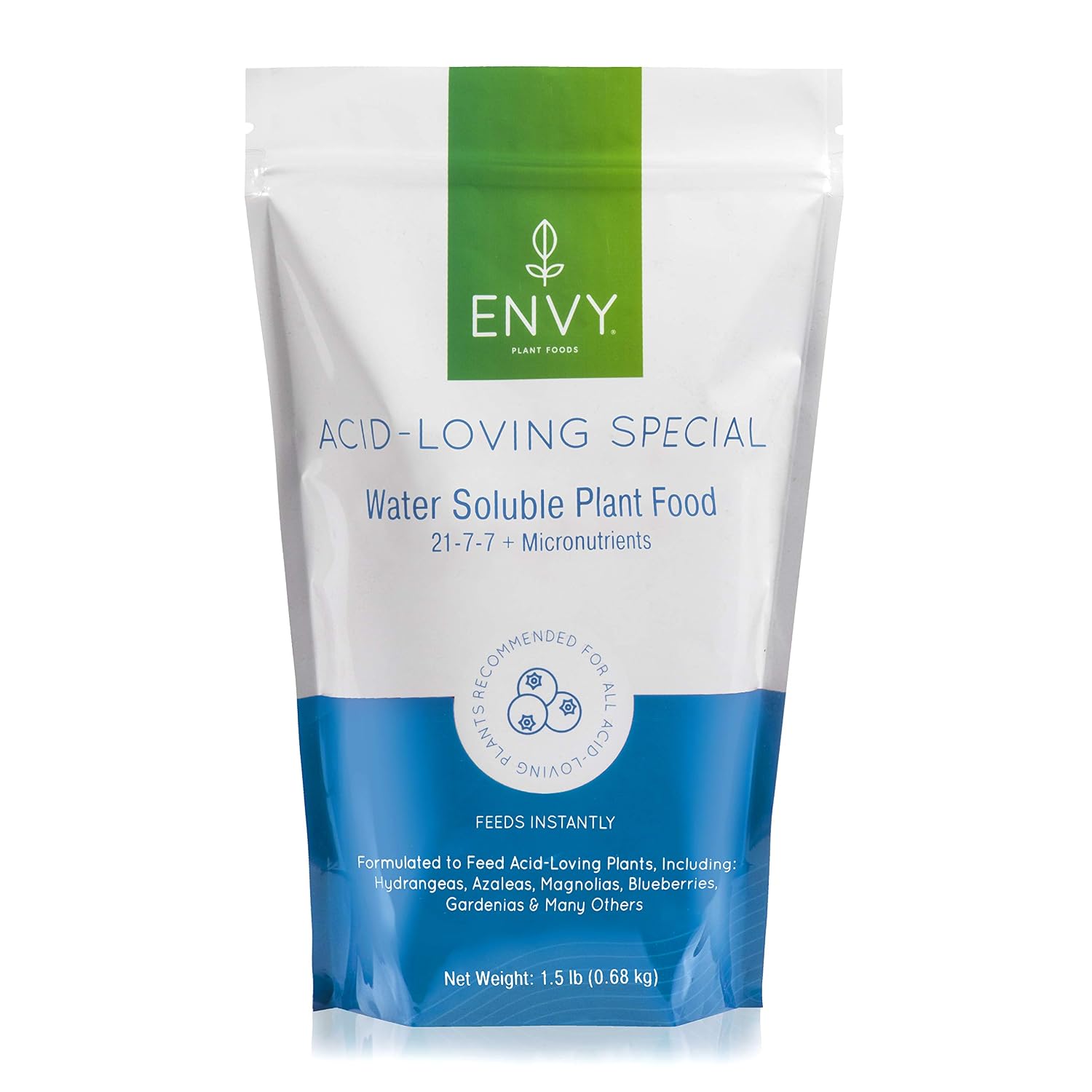
| Item Form | Liquid |
|---|---|
| Application Method | Water Soluble |
| Target Species | Azaleas; Hydrangeas; Magnolias; Gardenias; Camellias; Rhododendrons; Blueberries; Citrus |
| Mixing Ratio | 21:7:7 |
| Unit Count | 24 Ounce |
This ENVY Acid-Loving Special is a 100% water-soluble liquid fertilizer designed to feed plants that prefer acidic soils, with a stated mixing ratio of 21:7:7. You mix the measured scoop into water and apply to soil or with a watering can for regular feedings; the liquid form dissolves quickly so it starts working faster than granular products. Notable features include a resealable pouch and an included measuring scoop that make portioning and storage tidy for garden routines. It targets hydrangeas specifically and other acid-loving species so it should support leaf growth, bloom development and fruiting on blueberries when used to label directions. Practical benefits are convenience of dosing, quick uptake by roots, and a formula aimed at acid-preferring plants. Limitations are the small 24-ounce unit which may require frequent repurchase for larger plantings and the product information does not list exact N-P-K beyond the mixing ratio, so gardeners wanting full nutrient breakdown or long-release feeding may prefer a different option.
Best for: Gardeners who want a convenient, quick-acting fertilizer targeted to acid-loving shrubs and berries and who value easy mixing and tidy storage for routine feedings.
Less Ideal for: Large-scale plantings or landscapers who need bulk, long‑release fertilizer options or users who require a detailed printed N-P-K breakdown on the label.
- 100% water-soluble formula for fast uptake by roots
- Formulated specifically for acid-loving plants like hydrangeas and blueberries
- Comes in a resealable pouch to keep product fresh and reduce spills
- Includes a measuring scoop to simplify mixing accurate feed solutions
- Small 24-ounce unit may not be cost-effective for larger gardens
- Label provides a mixing ratio but does not show a full standard N-P-K line on the product details
Verdict: A handy, water-soluble fertilizer made for acid-loving plants that gives quick feeding and easy mixing for hydrangeas and blueberries.
Flora's Market Nursery-Grade Hydrangea Fertilizer (6 oz.)

| Item Form | Granules |
|---|---|
| Application Method | Sprinkle |
| Target Species | Hydrangea |
| Mixing Ratio | 18-6-8 |
This granular hydrangea fertilizer is a nursery-grade, slow-release prill designed to feed hydrangeas steadily through the season. It is sprinkled around the top of the root ball, about 2 to 3 inches from the plant center, and the coated formulation helps reduce the risk of overfeeding and root damage. The 18-6-8 NPK formula supplies higher nitrogen for leafy growth while still providing phosphorus and potassium for blooms and overall vigor. Typical use is a single seasonal application distributed around multiple plants depending on quantity; the small 6-ounce pack is convenient for trying it on a few bushes or for container-grown plants. Practical benefits include predictable nutrient release, simple sprinkle application, and nursery-grade quality claimed by the maker. Limitations are the small package size, which may not cover larger gardens, and the lack of detailed guidance for adjusting application rate for bloom color modification in blue hydrangeas specifically. Safety precautions are standard for granular fertilizers, including using gloves and keeping it away from children and pets.
Best for: Gardeners looking for an affordable, easy-to-use hydrangea fertilizer to maintain healthy foliage and blooms on a few shrubs or containers.
Less Ideal for: People managing large gardens or multiple mature hydrangea beds who need bulk quantities or detailed bloom-color management guidance.
- Slow-release coated granules provide steady feeding and lower risk of overfertilizing
- Formulated specifically for hydrangeas with an 18-6-8 NPK ratio
- Easy sprinkle application around the root ball
- Nursery-grade product intended for multiple plants or trial use
- Small 6-ounce pack may be insufficient for larger plantings
- No specific instructions for adjusting soil pH or aluminum availability to intensify blue blooms
Verdict: A simple, nursery-grade slow-release fertilizer that delivers steady seasonal nutrients for a few hydrangeas or container plants.
Miracle-Gro Miracid Water-Soluble Plant Food (acid-loving, 30-10-10)

| Item Form | Powder |
|---|---|
| Specific Uses For Product | Root Development |
| Application Method | Water Soluble |
| Target Species | azaleas, hydrangeas, rhododendrons |
| Mixing Ratio | 30-10-10 |
This Miracid water-soluble plant food is formulated specifically for acid-loving shrubs such as azaleas, hydrangeas and rhododendrons and is mixed into water for foliar or soil feeding. The 30-10-10 formulation provides a high nitrogen dose that promotes quick leaf and stem growth while supporting root development and flowering when used as directed. It dissolves easily and the product description notes a double feeding action that supplies nutrients both to roots and leaves, so you can apply it as a soil drench or a foliar spray depending on need. Practical benefits include fast uptake and visible greening and bloom response in responsive plants, plus suitability for repeat feedings during the growing season. Important limitations are the high nitrogen ratio, which means it should be used carefully on bloom-focused plants if overapplied, and that it is aimed at acid-loving species so it is not a general-purpose fertilizer for all garden plants.
Best for: Buyers who prioritize a dependable, plant-specific fertilizer for reliably greening and strengthening blue hydrangeas and other acid-loving shrubs and who plan to follow mixing directions carefully.
Less Ideal for: Gardeners seeking an all-purpose or low-nitrogen bloom-specific fertilizer or those growing plants that prefer neutral to alkaline soil.
- Formulated for acid-loving plants like hydrangeas and azaleas
- Water-soluble powder for foliar or soil application and quick uptake
- Double-action feeding through roots and leaves for flexible use
- High-nitrogen 30-10-10 mix supports rapid greening and root development
- High nitrogen ratio may encourage foliage over blooms if overused
- Not appropriate as a one-size-fits-all fertilizer for neutral or alkaline-loving plants
Verdict: A reliable, acid-loving plant fertilizer that delivers fast, water-soluble feeding ideal for strengthening and greening blue hydrangeas.
Jobe's Organics Granular Soil Acidifier, 6 lb

| Item Form | Granules |
|---|---|
| Target Species | Hydrangeas and blueberries plants |
| Specific Uses For Product | Soil Conditioning, Plant Growth, Root Development |
| Unit Count | 96 Ounce |
| Derived from | Elemental Sulfur and Gypsum |
Jobe's Organics Granular Soil Acidifier is a sulfur-based granular amendment designed to lower soil pH and support acid-loving plants like blue hydrangeas and blueberries. You apply it at planting and reapply two to three times a year or about every eight weeks to maintain a more acidic root zone. The product is OMRI-listed and made from natural elemental sulfur and gypsum, so it is suitable for organic gardens and will slowly change soil acidity without burning roots when used as directed. Practical benefits include easy measuring and application, targeted action on the root zone to encourage blue flower coloration in hydrangeas, and reduced need for frequent liquid treatments. Important limitations are that pH change is gradual so results take weeks to months and a soil test is recommended beforehand to avoid overcorrection. The granules do not supply NPK nutrients, so you will still need a fertilizer if plants require additional nitrogen or phosphorus. Follow safety guidance to avoid inhalation and skin or eye contact during handling.
Best for: Gardeners who want a proven, organic way to acidify soil for blue hydrangeas and similar acid-loving plants and who prefer measured, low-risk treatments backed by broad user acceptance.
Less Ideal for: People needing immediate pH change or quick nutrient feeding for poor-growth plants, or those who prefer liquid pH adjusters for faster short-term results.
- OMRI-listed organic formula suitable for organic gardens
- Elemental sulfur-based granules specifically formulated to lower soil pH for acid-loving plants
- Easy granular application at planting and periodic reapplication
- Slow-release action reduces risk of burning roots when used as directed
- Works gradually so it can take weeks to shift pH and show blueing in hydrangeas
- Does not contain NPK nutrients so separate fertilization may be needed
Verdict: A practical organic granular acidifier that reliably lowers soil pH for blue hydrangeas when applied and maintained as directed.
Espoma Organic Soil Acidifier, Granular, 6 lb (Pack of 2)

| Item Form | Granules |
|---|---|
| Specific Uses For Product | Soil Conditioning |
| Coverage | Medium |
| Target Species | Hydrangeas, Blueberries |
Espoma Organic Soil Acidifier is a granular amendment intended to lower soil pH around acid-loving plants such as hydrangeas and blueberries. You apply it by spreading evenly around the plant to the drip line and watering it in, then repeating about every 60 days until the desired pH or bloom color is achieved. The formula contains elemental sulfur and gypsum and is labeled for organic gardening, so it fits into organic maintenance routines. For gardeners aiming to shift mophead and lacecap hydrangeas toward bluer blooms this product provides a straightforward, repeatable method rather than a one-time fix. Practical benefits include predictable application directions and an organic input material designation. Important limitations are that pH adjustment is gradual and depends on existing soil conditions, so results take several applications and soil testing to control precisely. Also the product is not intended for edible food crops and should be kept away from children and pets per the safety instructions.
Best for: Gardeners who want a conservative, organic way to nudge alkaline soils toward acidity for blue hydrangea blooms and prefer clear, repeatable application steps.
Less Ideal for: Growers who need immediate or highly precise pH changes, or those wanting a product cleared for use on edible food plants.
- Formulated specifically to lower soil pH for acid-loving plants like hydrangeas and blueberries
- Contains elemental sulfur, an effective acidifying agent for gradual pH adjustment
- Approved as an organic input material suitable for organic gardens
- Clear application instructions for spreading and reapplying at 60 day intervals
- pH change is incremental and requires repeated applications and soil testing to achieve precise bloom color
- Not labeled for use on food crops so cannot be applied directly in vegetable or edible herb beds
Verdict: A reliable organic granular acidifier for gardeners who want a simple, repeatable method to shift soil toward bluer hydrangea blooms.
Choosing the Right Fertilizer for Blue Hydrangeas: Key Factors to Consider
Nutrient Ratio and Micronutrients
Hydrangea flowering and leaf health depend on an appropriate balance of nitrogen, phosphorus, and potassium. A formula with moderate nitrogen supports leafy growth without excessive vegetative stretch, while sufficient phosphorus and potassium encourage bud set and flower development. Micronutrients such as iron and magnesium also matter because deficiencies can mimic pH-related color issues.
When choosing a fertilizer, look for label information on secondary nutrients and trace elements. Products that list chelated micronutrients or specific iron sources can help correct subtle shortages that affect pigment intensity.
Soil Acidifying Capability
Blue flower color is often driven by aluminum uptake, which becomes available in more acidic soils. Some fertilizers include acidifying ingredients or are formulated to lower pH gradually, helping aluminum become soluble. Others rely on separate soil amendments to achieve the same result.
Consider whether you need a fertilizer that actively acidifies or whether you will use additional soil acidifiers like sulfur or acidifying mulch. A combined product can simplify maintenance, but you should monitor soil pH over time to avoid over-acidification.
Application Method and Frequency
Fertilizers come as granular, water-soluble, slow-release, or liquid concentrates, and each behaves differently in the garden. Granular slow-release products feed over weeks to months and reduce the risk of burn. Water-soluble and liquid feeds give fast results but require more frequent applications. Choose a method that fits your watering habits and the size of your planting.
Also consider whether the fertilizer can be side-dressed at the root zone, mixed into potting media for container hydrangeas, or applied as a foliar feed. Ease of measurement and clear label instructions reduce the chance of misuse.
Compatibility With Soil and Mulch Practices
Existing soil type and mulches influence how a fertilizer performs. Organic mulches, compost, and acidic mulches like pine needles interact with fertilizer salts and can stabilize pH. Heavy clay or alkaline soils may resist pH changes and require stronger or repeated acidifying approaches.
Assess how a fertilizer works with your routine soil amendments. Products that pair well with compost and do not disrupt beneficial soil life are preferable for long-term shrub health.
Risk Of Root Burn and Plant Stress
Some concentrated feeds can damage roots or scorch foliage if applied too close to the trunk or in dry conditions. Slow-release and low-salt formulations reduce that risk, while liquid concentrates are more likely to cause harm if overapplied.
When choosing a product, favor those with clear safe-application rates and those designed for established shrubs. For newly planted hydrangeas, select gentler formulas or reduce application strength to avoid stressing young roots.
Effect On Bloom Color Consistency
Not all fertilizers will reliably shift or maintain blue tone because color depends on both pH and aluminum availability. A fertilizer that corrects nutrient imbalances but does not address soil chemistry may improve plant health without changing pigment.
Decide whether your priority is vivid blue color, overall shrub vigor, or a balance of both. Look for fertilizers that combine nutrients with acidifying action if maintaining deep blue blooms is the main goal.
How Soil pH Affects Blue Color
Hydrangea flower color is strongly influenced by soil pH because aluminum availability changes with acidity. In acidic soils, aluminum is more soluble and can be taken up by the plant, which encourages blue pigments in many hydrangea varieties. In higher pH soils, aluminum is less available and flowers tend toward pinker shades.
- Measure soil pH before making changes and recheck annually.
- Small pH adjustments can take weeks to months to show in bloom color.
- Combining acidifying fertilizer with acidic mulches speeds change more than relying on fertilizer alone.
Best Practices For Applying Fertilizer
Apply fertilizers at the recommended times for hydrangeas: typically in spring as new growth begins and again after the first flush of blooms if the product suggests a second dose. Water thoroughly after application to move nutrients into the root zone and reduce burn risk.
Avoid placing granules directly against stems or trunk flare and distribute fertilizer evenly across the dripline area. For container-grown specimens, use diluted liquid feeds more frequently and reduce dosage to match the smaller root volume.
- Follow label rates and split applications for concentrated feeds.
- Use a soil probe or trowel to place granules under mulch but above the root crown.
- Adjust timing if your climate has a late frost or an unusually warm winter.
Monitoring pH and Bloom Response
Track both soil pH and bloom color over the season. Keep a simple log of pH readings, fertilizer applications, and bloom observations so you can link changes to specific actions. Expect at least one season of adjustment before color changes stabilize.
If blooms do not shift as expected, re-evaluate watering, mulching, and whether aluminum is present in the soil. Persistent alkaline conditions may require repeated acidifying treatments or larger soil amendments.
- Test pH 4 to 6 inches deep in the root zone for best accuracy.
- Note that different hydrangea cultivars vary in their color responsiveness.
Container Hydrangea Care Considerations
Pots and containers respond faster to fertilizer and pH changes because of the limited soil volume. That means you can see color and growth responses sooner, but containers also require more careful dosing to avoid salt buildup.
Use potting media formulated for acid-loving plants or amend standard mixes with elemental sulfur or acidic compost. Flush containers occasionally with clear water to remove excess salts from frequent liquid feeding.
- Prefer frequent, diluted liquid feeds in small pots.
- Repot every 2 to 3 years to refresh media and rebalance pH if necessary.
How We Chose the Best Fertilizer for Blue Hydrangeas
We focused on products and formulations that specifically support blue hydrangea coloration and shrub health. Our evaluation prioritized nutrient chemistry that encourages aluminum availability, proven acidifying mechanisms, and user-friendly application methods appropriate for home gardens and small landscapes. We also considered the consistency of results reported by gardeners, clarity of label instructions, and the relative risk of root burn or foliage damage when used as directed. Key criteria included the fertilizer's N-P-K balance and micronutrient content, the presence and mechanism of soil acidifiers or pH-adjusting ingredients, application format and frequency, and safety for nearby plants and soil life. We excluded broad-purpose fertilizers with no guidance for acid-loving shrubs, experimental blends lacking usage instructions, and products primarily intended for commercial operations. Our selections favor formulas that are simple to apply, compatible with common irrigation and mulching practices, and that support both bloom color and long-term shrub vigor.
FAQ
How quickly will fertilizer change my hydrangea blooms to blue?
Changes in bloom color depend on soil pH, aluminum availability, and plant responsiveness. You may see shifts within weeks in containers or several months in garden beds. Significant or permanent color changes often require repeated treatments across a season.
Can any fertilizer make flowers bluer if my soil is alkaline?
No. If soil pH is high and there is little available aluminum, a fertilizer alone may not make blooms blue. You will likely need acidifying amendments or products formulated to increase aluminum availability, plus persistent monitoring.
How often should I fertilize blue hydrangeas?
Frequency depends on the product type. Slow-release granular fertilizers are often applied once in spring, with a possible follow-up after bloom. Water-soluble or liquid feeds are usually applied more often at lower concentration, monthly or as directed on the label.
Is it safe to use acidifying fertilizers around other garden plants?
It depends on the tolerance of nearby plants. Localized application around the hydrangea root zone limits impact, but broad soil acidification can affect acid-sensitive neighbors. Use targeted placement and monitor soil pH to avoid unintended effects.
Should I test soil before buying a fertilizer for blue hydrangeas?
Yes. A soil test tells you pH and existing nutrient levels, which helps decide whether you need acidifying action, micronutrients, or just a balanced feed. Testing prevents unnecessary treatments and guides proper product selection.
Final Verdict
Choose a fertilizer for blue hydrangeas that balances supporting overall shrub health with the acidifying action needed to encourage aluminum uptake. Prioritize a clear nutrient profile, safe application rates, and a delivery method that fits your planting situation whether in ground or container. Accept that color shifts take time and may require combined strategies: correct nutrient balance, targeted pH adjustment, and consistent cultural care. Focus on gradual, repeatable steps rather than quick fixes so your hydrangeas develop stable blue blooms and strong structure over multiple seasons.
