

Note: This article contains affiliate links. If you click on these links and make a purchase, I may earn a small commission at no extra cost to you. This helps support my research and content. Read my full affiliate disclosure here.
A sturdy edge changes how a garden looks and performs. Durable garden edging keeps soil and mulch in place, stops grass from creeping into flower beds, and reduces the need for frequent touch-ups. If you want neat beds that stand up to seasonal moisture, foot traffic, and lawn equipment, choosing a long-lasting edge material matters. This guide covers the top shortlisted options for durable garden edging and explains the practical criteria we used to evaluate them, including expected lifespan and how easy each option is to install and maintain. Read on to find the style and performance that fits your yard and workload.
Top Picks at a Glance
| Best Overall The best all-around choice for most situations | EasyFlex Heavy Duty No-Dig Landscape Edging Kit, 100 ft |  |
| Best Quality Built to a higher standard if you want something more solid | LAVEVE Corrugated Galvanized Steel Garden Edging, 6" x 40 ft |  |
| Best Value The sweet spot between price and what you get | STIRLINGEAR 50 ft Corrugated Metal Garden Edging, Rust-Resistant Black |  |
| Best Budget The cheapest option that still gets the job done reliably | BLLREMIPSUR 2" x 16' Flexible Lawn Garden Edging Border with 15 Pegs |  |
| Highest Rated A top-rated pick with lots of positive feedback | AUDEMAR Metal Garden Edging, Modular 3 m (10 pcs) |  |
| Most Popular A crowd favorite that many people choose with confidence | STIRLINGEAR 33 ft Powder-Coated Galvanized Steel Landscape Edging (10-Pack) |  |
| Best Seller A high-volume bestseller chosen again and again | Amazon Basics Flexible Landscape Edging Coil with Stakes, 5 in x 40 ft |  |
EasyFlex Heavy Duty No-Dig Landscape Edging Kit, 100 ft

| Unit Count | 100 Feet |
|---|---|
| Included Components | (1) 100' coil of edging, (5) connectors, (30) spiral anchoring spikes |
| Material Type | Plastic |
| Item Type Name | No-Dig Landscape Edging |
The EasyFlex Heavy Duty No-Dig Landscape Edging Kit is a 100-foot coil of flexible recycled plastic designed to form clean garden borders without trenching. It installs by scoring the ground, laying the edging with the inward-facing tabs, and securing it with the included spiral anchoring spikes, then backfilling to finish. The kit is made from commercial-grade plastic so it resists seasonal exposure and can be bent into curves or laid straight for long stretches. Practical benefits include fast installation for DIY projects, a complete kit with spikes and connectors, and compatibility with a range of soil types including compacted ground. Important limitations are that its 1.7-inch height is best for low-profile borders rather than tall containment, and heavy hammering may be needed on very rocky ground; it also may require trimming for precise fits. For gardeners who want a durable, low-effort edging solution, this kit simplifies creating tidy edges but is not a substitute for buried hardscape where greater height or load resistance is needed.
Best for: Gardeners who want a durable, low-effort solution to define beds and pathways and prefer a fast no-dig installation approach for typical residential landscaping tasks.
Less Ideal for: Those needing high containment, tall edging, or a rigid buried edge for heavy-duty landscaping or vehicular boundaries should consider rigid metal or masonry alternatives.
- No-dig installation for quick DIY placement without trenching
- Commercial-grade recycled plastic built for seasonal exposure and durability
- Flexible coil bends to form curves or straight runs for custom layouts
- Complete kit includes connectors and spiral anchoring spikes for a full 100 ft installation
- Only 1.7 inches tall so it is low-profile and not suited for tall soil containment
- May require significant pounding in very rocky or compacted sites to secure spikes
Verdict: Choose this kit when you want a durable, flexible no-dig edging that quickly creates neat 100 ft borders with minimal tools.
LAVEVE Corrugated Galvanized Steel Garden Edging, 6" x 40 ft

| Material Type | Metal |
|---|---|
| Item Highlight | Galvanized Steel Garden Border |
| Item Dimensions L x W | 480"L x 6"W |
| Color | Black |
This LAVEVE corrugated metal garden edging is built from thickened, galvanized steel with a 3D wavy profile that increases stiffness while still allowing gentle bending for curves. It is typically installed by trenching about half the height, hammering the edging into place, and backfilling to lock it in; the U-rolled top and bottom hems reduce sharp edges for safer handling. The galvanized finish and weather-resistant coating make it suitable for year-round outdoor use and help resist sagging or corrosion compared with thinner alternatives. Buyers will appreciate that the corrugated roll-forming adds impact resistance so borders stay upright around pathways and beds. The product is not a quick-stake solution for very hard ground without moistening or pre-drilling and requires some effort to shape and seat correctly on long runs, so installation takes moderate labor. For those who need very tall or decorative edging, taller size options exist but this 6-inch profile is best for general-purpose durability and clean lines.
Best for: Gardeners who prioritize a long-lasting, performance-oriented border that holds shape around paths and beds and are willing to do moderate physical installation work.
Less Ideal for: People who want a no-dig, temporary, or ultra-decorative edging solution or those who cannot perform light construction tasks.
- Heavy galvanized steel construction for greater durability than thin aluminum edging
- Corrugated 3D profile increases stiffness and resists sagging
- U-shaped rolled hems on top and bottom reduce sharp edges and improve safety
- Weather-resistant coating suitable for year-round outdoor exposure
- Requires trenching and physical effort to install securely over long runs
- May need moistening or pre-drilling in very compacted soil during installation
Verdict: Choose this corrugated galvanized-steel edging when you need a durable, stiff border that stays put and resists weathering for heavy-use garden edges.
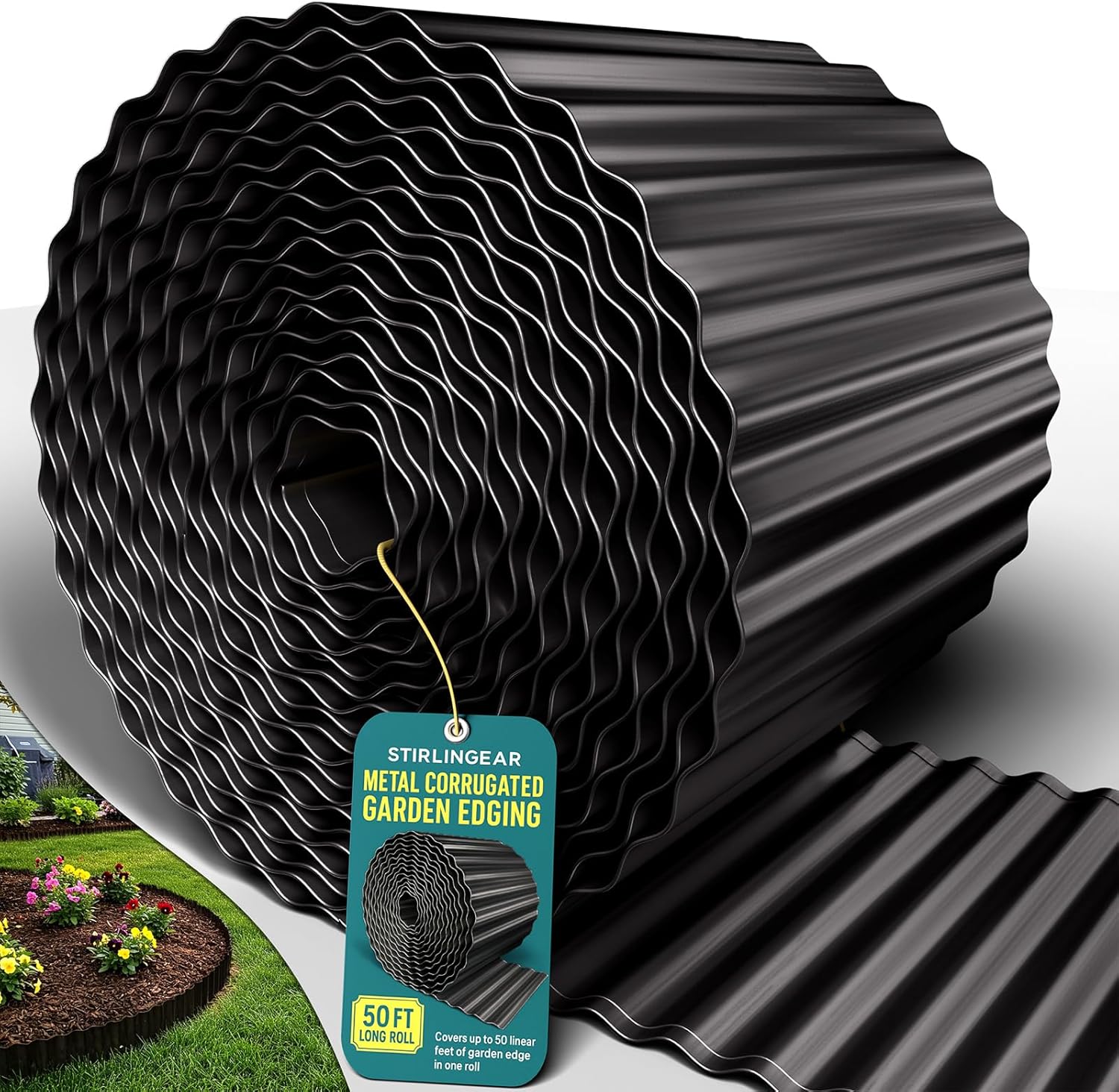
STIRLINGEAR 50 ft Corrugated Metal Garden Edging, Rust-Resistant Black
| Material Type | Metal |
|---|---|
| Length | 50 ft |
| Height | 5.5 inches |
This 50-foot corrugated metal edging is a practical, long-lasting solution for defining garden beds, walkways, and driveways. Made from galvanized steel with a black coating, it resists rust and weathering so you can expect multi-season durability. The corrugated profile adds stiffness and grip in the soil while still allowing the roll to bend for curves and tight corners; it can be cut with tin snips or shears to size for custom layouts. Installation is straightforward: no trenching is required for many installations — the edging can be pressed or lightly tapped into place, which saves time and effort on DIY projects. At 5.5 inches tall it keeps mulch, gravel, and soil contained without creating a high visual barrier. The main compromises are that it requires decent soil contact and occasional re-seating in very loose or frozen ground, and sharp cut edges mean gloves are recommended when handling. Overall it is a cost-effective, durable choice for homeowners who want a neat, modern border that lasts.
Best for: Homeowners who want a durable, low-maintenance edging solution that is quick to install and can be shaped to fit curved beds and walkways.
Less Ideal for: People needing a decorative or high-profile border or those who prefer soft, flexible landscape materials that are simple to remove seasonally.
- Galvanized steel with black coating resists rust and weathering
- Flexible corrugated design bends around curves and tight corners
- 50 feet length covers large areas or multiple projects without joins
- Ridged profile grips soil for easier press-in installation without trenching
- May need re-seating in very loose or frozen soil over time
- Cut edges can be sharp and require gloves and careful handling
Verdict: Choose this rust-resistant, flexible metal edging when you want a durable, low-fuss border that quickly shapes to curves and covers large areas.
BLLREMIPSUR 2" x 16' Flexible Lawn Garden Edging Border with 15 Pegs

| Material Type | Polyethylene (PE) |
|---|---|
| Length | 5 m (16.4 feet) |
| Number of Spikes | 15 |
This 16.4 foot flexible lawn edging is a straightforward, low-cost way to create clean borders around flower beds, trees, and pathways. The strip is made from polyethylene with a reinforced profile and ships with 15 plastic pegs that you press into soil to hold the edging in place; installation is simple and does not require special tools. Its flexibility lets you form curves or straight runs and you can trim it to length for custom layouts. The material is lightweight and weather resistant, so it stands up to rain and seasonal conditions without rusting. Expect a product that is best for shallow edging duties rather than heavy-duty, structural containment of large soil masses because plastic edging can bow under strong soil pressure or mower impact. For basic border definition, straightforward installation, and budget projects this edging is an efficient option, but heavier applications will need more robust, rigid edging.
Best for: Home gardeners wanting an inexpensive, easy-to-install edging solution for defining beds, borders, and pathways in small to medium landscape projects.
Less Ideal for: Those needing heavy-duty, load-bearing edging for steep slopes, large retaining runs, or commercial installations should choose rigid metal or concrete edging instead.
- Flexible profile allows easy shaping around curves and corners
- Includes 15 securing pegs for tool-free, quick installation
- Polyethylene construction resists rust and holds up in wet conditions
- Can be trimmed to length for custom layouts
- Lightweight plastic may bend or bow under heavy soil pressure or mower strikes
- Peg-only anchoring can be less secure in very loose or sandy soils
Verdict: A budget-friendly, weather-resistant plastic edging that makes quick, flexible bed and lawn borders for everyday garden projects.
AUDEMAR Metal Garden Edging, Modular 3 m (10 pcs)

| Brand | AUDEMAR |
|---|---|
| Number of Items | 10 |
| Item Type Name | gardenedging |
| Model Number | ESE300BZ |
This modular metal edging is designed to give a durable, low-profile border for lawns, flower beds, patios, and paths. Each kit includes multiple interlocking steel panels and stakes so you can build continuous curves or straight runs without cutting long rolls. The galvanized steel with an exterior finish resists UV and is intended to withstand trimming and light mower contact, so it requires little maintenance once installed. Installation is straightforward: panels lock together and stakes driven with a hammer hold the edge in place, which makes it suitable for DIYers who want a long-lasting boundary without heavy excavation. Because the system is modular, it is easy to reconfigure or remove if you change the layout. The edging is low height, so it manages visual separation and turf containment but will not stop larger encroaching roots or serve as a deep barrier for aggressive spreading plants.
Best for: Buyers who prioritize a long-lasting, low-maintenance border and want a straightforward DIY solution to define beds and pathways with a tidy, durable edge.
Less Ideal for: Gardeners needing a tall or deep root barrier, heavy-duty containment for invasive species, or an edging solution that doubles as structural retaining wall.
- Galvanized steel construction offers superior durability versus plastic or wood
- Modular interlocking panels allow flexible layouts and easy reconfiguration
- Anti-UV finish stands up to trimmer contact and outdoor weathering
- Simple install with stakes and hammer—no deep digging or special tools
- Low profile design will not prevent deep-rooted or aggressive plants from crossing
- May require periodic repositioning in very soft or highly shifting soil
Verdict: Choose this modular steel edging if you want a weatherproof, easy-to-install border that stays looking neat with minimal upkeep.
STIRLINGEAR 33 ft Powder-Coated Galvanized Steel Landscape Edging (10-Pack)

| Total length | 33 ft (10-pack) |
|---|---|
| Material Type | Powder-Coated Galvanized Steel |
| Included stakes | 11 stakes |
| Panel length | 40" per panel |
This 33 ft STIRLINGEAR edging kit supplies low-profile, rust-resistant metal panels and stakes to create neat, permanent borders around lawns, beds, and pathways. Each 40" panel includes integrated hammer-in stakes that anchor most soils without extensive digging, so installation is typically fast and requires only a mallet and a little alignment. The powder-coated galvanized steel resists corrosion and keeps the black finish looking tidy against soil and plants. The panels can be cut or gently bent to follow curves, and the 10-pack plus 11 stakes covers small to medium edging projects or allows phased installation. Expect a professional-looking, durable edge that limits turf creep and clarifies planting lines. Limitations: the visible height is low, so it is best for subtle borders rather than high containment; very rocky or compacted sites may need pre-drilling or additional anchoring; cutting and shaping metal requires tools and basic DIY care.
Best for: Buyers who want a durable, low-maintenance edging solution that installs quickly and gives a clean, professional border for lawns, paths, and flower beds.
Less Ideal for: Not well suited to gardeners needing tall containment for heavy mulch, soil retention, or situations where frequent heavy equipment will cross the edge.
- Galvanized, powder-coated steel construction for long-term rust resistance
- Hammer-in stake design speeds installation without deep trenching
- Low-profile 2" visible edge provides a clean, modern look
- Panels can be cut or bent to fit curves and custom layouts
- Low visible height limits use where taller containment is needed
- May require pre-drilling or extra effort in very rocky or compacted soil
Verdict: Choose this kit for a durable, low-profile metal edging that installs quickly and keeps garden borders looking sharp.
Amazon Basics Flexible Landscape Edging Coil with Stakes, 5 in x 40 ft

| Item Type Name | Edging Coil |
|---|---|
| Material Type | All-new material |
| Unit Count | 1 Count |
This landscape edging coil is a straightforward, no-frills solution for defining beds, paths, and lawn edges. The 40-foot coil is made from recycled plastic with a faux woodgrain texture that blends into planting areas while resisting rot and insect damage that affect wood. It is flexible enough to form curves or squared beds and comes with 10 matching stakes to hold the edging in place through normal weather. Installation is simple: uncoil, position along the border, and hammer the stakes at regular intervals; the product is intended for surface-to-shallow-ground installation rather than deep, permanent anchoring. Expect a practical, low-maintenance border that keeps grass and mulch contained and gives a neat finished look. Limitations are that the included stakes are basic and may need reinforcement in very loose soil or high-traffic spots, and the plastic profile is modest in height so it will not contain large soil drops or heavy erosion on steep slopes.
Best for: Buyers who want a durable, low-maintenance border that looks natural and is easy to install for typical lawns, flower beds, and pathways.
Less Ideal for: People needing heavy-duty edging to retain soil on steep slopes or to withstand constant vehicle or heavy foot traffic should consider sturdier metal or concrete options.
- Made from recycled plastic so it resists rot and insect damage compared with wood
- Flexible coil design allows easy shaping for curves and squared beds
- Faux woodgrain finish provides a natural look that blends with landscaping
- Includes 10 matching stakes for immediate installation
- Included stakes are basic and may not hold well in very loose or sandy soils
- Modest 5-inch height is not suitable for containing large soil drops or heavy erosion
Verdict: A reliable, low-maintenance recycled-plastic edging coil that creates neat, natural-looking borders with minimal installation effort.
Choosing the Right Durable Garden Edging: Key Factors to Consider
Material and Corrosion Resistance
The edging material determines how well a border stands up to weather and contact with soil. Metals, plastics, stone, and composite materials all age differently. Metals can be strong but may corrode or rust in wet soils unless they are treated or stainless. Plastics resist rot and many chemicals but can become brittle after long-term UV exposure.
Choose materials rated for outdoor use and appropriate for your local climate. In coastal, acidic, or frequently saturated soils, prioritize corrosion-resistant options. For sunny, dry environments, UV-stable plastics or composites will hold up better over years.
Flexibility and Shape Retention
How easily an edging material bends without breaking affects whether it can accommodate curves and irregular bed shapes. Flexible materials make it easier to create flowing bed lines, but excessive flexibility can allow deformation when hit by lawn equipment or when soil shifts.
Rigid materials hold a crisp line and resist being pushed out of place, which is useful along sidewalks or driveways. If you have many curves, choose a product that balances bendability for shaping with enough stiffness to resist pushes and impacts.
Anchoring and Stability
An edging's ability to stay fixed in place prevents soil migration and keeps borders looking tidy. Some edging systems rely on stakes, spikes, or integrated anchors, while others depend on weight or being mortared in place. The ground type influences anchor performance: loose sandy soil may require longer stakes or added backfill; clay can hold anchors but may heave with frost.
Consider how the product attaches and whether the required anchors are included. Also think about seasonal ground movement in your area and whether occasional resetting will be necessary to maintain a clean edge.
Installation Complexity and Tools
Installation time and required tools are a real gardener concern. Some edging options are simple to lay by hand with only a mallet and a few stakes, while others need cutting, concrete, or specialized fastening hardware. More complex installations can provide a more permanent result but add labor and possibly hire-a-pro costs.
Assess your comfort with digging, cutting material, or working with masonry. If you plan to install edging yourself, choose a product whose installation steps match your skill level and the tools you already own.
Aesthetics and Landscape Integration
Edging defines the look of planting beds and how they integrate with lawn, paths, and hardscape. The finish, height, and profile should complement your planting scheme and maintenance habits. Low-profile edging gives a subtle definition, while taller edges provide stronger containment for mulch and soil.
Also consider color stability and whether the edge will blend or contrast with paving and plants. A visually compatible choice reduces the sense of retrofit and makes borders look intentional.
Maintenance and Repair Needs
Long-term upkeep affects the total lifetime cost and hassle. Some edging requires occasional tightening of anchors, replacement of snapped sections, or cleaning to avoid staining. Stone and concrete are low-maintenance but can settle, creating gaps that need filling. Plastic can be low-maintenance but might need section replacement when damaged.
Think about how often you are willing to inspect and fix borders. Choose a system where typical maintenance tasks match the time you plan to devote to upkeep.
Best Edging Types for Different Yard Conditions
Different materials perform better in different yard conditions. For high-traffic lawn edges that will be trimmed with a mower, stiffer metal or concrete edging holds up well. For curved flower beds, flexible strips or modular stone let you shape lines without complex cutting. In wet or freeze-thaw climates, choose materials that resist corrosion and do not absorb water.
- High-traffic lawns: rigid metal, concrete curbing
- Curved beds: flexible plastic or thin stone pavers
- Wet climates: corrosion-resistant metals or sealed stone
How to Prepare a Clean Installation Trench
A consistent, level trench is the foundation of a stable edge. Mark the line with string or hose, then dig a trench deep enough to bury the base so the finished height is what you want above grade. Remove roots and large stones so the edging sits evenly.
Add a compacted base of gravel where recommended to improve drainage and reduce settling. Check the line frequently with a level and tamp soil around anchors or stakes for a tight fit.
- Mark the layout before digging
- Dig consistently to the recommended depth
- Compact backfill around anchors to prevent shifting
Matching Edge Height to Maintenance Habits
Edge height affects both appearance and functionality. A low-profile edge that sits just above the lawn makes mowing easier but may let some mulch spill over. Taller edges better contain mulch and soil and protect plant roots from mower damage, but they can require a trimmer to keep grass tidy along the edge.
Decide how you will manage borders before selecting height. If you prefer low-effort maintenance, choose a modest height that works with your mower and trimming routine.
- Low edges for seamless mowing
- Higher edges for strong containment and protection
Working with Slopes and Erosion-Prone Areas
On slopes, edging must resist downhill soil movement and channel surface water without creating erosion gullies. Heavier, anchored options such as stone or concrete curbing hold soil better than lightweight strips. For steep grades, consider terracing with staggered edging segments or combining edging with plants that stabilize the slope.
Proper drainage behind the edge helps prevent saturation and subsequent slumping. Avoid placing impervious edging that will redirect water to a single outlet without erosion control.
- Use heavier, well-anchored edging on slopes
- Combine edging with soil-stabilizing plants or terraces
- Ensure adequate drainage behind the edge
Blending Function with Garden Design
Borders can be both practical and decorative. Choose profiles and colors that complement paving, fences, and plant palettes. Repeating edge material in paths or raised beds creates a unified look that reads as intentional rather than patched on.
Think about seasonal contrasts. Dark edging looks striking with light gravel, while natural stone can harmonize with perennial borders.
- Coordinate edge color and texture with hardscape
- Use consistent materials to tie different garden areas together
How We Chose the Best Durable Garden Edging
We prioritized attributes that matter in everyday garden use, focusing on materials and design details that deliver long-term performance. Selection began with widely available edging types that are commonly used in residential and small-scale public landscapes. We excluded temporary or purely decorative options that lack structural durability or that are intended for seasonal use only. Evaluation criteria emphasized material longevity under outdoor exposure, resistance to bending or shifting from soil movement and mower impact, and how well an edge holds back soil and mulch. We also considered installation complexity and the tools or fasteners required, plus maintenance needs such as cleaning, repainting, or resetting. A practical measure of value for gardeners was included by looking at expected service life relative to typical upkeep. Finally, we checked for design versatility so the edging works across curved and straight beds, different soil types, and varying landscape slopes.
FAQ
How deep should I bury garden edging for the most stability?
Depth depends on the material and local ground conditions. A common approach is to bury enough of the base so the visible height above ground matches your desired finish while leaving 3 to 6 inches of anchor or base below grade for stability. In loose soils or slopes, increase the buried depth and compact the backfill for better hold.
Can plastic edging last as long as metal or stone?
Plastic edging can last many years if it is UV-stabilized and properly anchored, but in high-impact or very sunny settings it can become brittle sooner than metal or stone. The effective lifespan also depends on how well it is installed and whether sections are protected from mower strikes.
Is it better to install edging yourself or hire a professional?
Many edging types are suitable for DIY installation if you are comfortable digging and using basic tools. More permanent options like poured concrete curbs or heavy masonry might benefit from professional installation to ensure proper drainage and long-term stability. Consider the complexity of the layout and your available time.
How do I prevent edging from heaving in freeze-thaw climates?
To reduce heaving, use proper drainage and avoid trapping excess moisture behind the edge. Install edging with a stable base, such as compacted gravel, and anchor securely so frost action has less purchase to lift sections. Periodic inspection and resetting of anchors can also limit long-term movement.
What is the best way to join sections of edging cleanly?
Many systems use interlocking joints, stakes, or mechanical fasteners to create continuous lines. For rigid materials, plan joints at natural breaks or corners and use adhesive or mortar where appropriate. For flexible strips, overlap and secure with long stakes to keep edges aligned under pressure.
Will edging affect lawn mowing or trimming routines?
Yes. Low-profile edging tends to allow mower wheels and blades closer to the bed for faster mowing, while higher or raised edges may require a string trimmer to finish the line. Choose an edge height and profile that fits how you prefer to maintain the lawn.
Final Verdict
Prioritize material longevity and anchoring when choosing durable garden edging, because those factors determine how the border performs through seasons and routine maintenance. Balance flexibility for shaping with enough stiffness to resist impacts where you mow or store equipment. Consider installation demands and maintenance needs so the edging fits your skill level and the time you plan to spend on upkeep. Focus on the tradeoffs that matter most to you: a more permanent, heavier option reduces resetting but requires more work to install, while lighter systems are easier to shape and replace. Use the evaluation criteria in this guide to pick an edging that keeps beds tidy and reduces long-term chores.
