

Note: This article contains affiliate links. If you click on these links and make a purchase, I may earn a small commission at no extra cost to you. This helps support my research and content. Read my full affiliate disclosure here.
If you want greenery without the fuss, easy indoor succulents are ideal for apartments, offices, and low-light corners. These compact plants cope with irregular watering and modest light, giving you texture and color even when you are busy or new to houseplants. This guide covers seven shortlisted easy indoor succulents chosen for reliability in real indoor conditions. We evaluate each on light tolerance, watering forgiveness, growth habit, and general resiliency to help you pick plants that fit your space and schedule. Read on to find options suited to tiny windowsills, shelves, and desktop planters.
Top Picks at a Glance
| Best Overall The best all-around choice for most situations | Sprout N Green 5-Pack Assorted Live Succulents in 2" Starter Pots |  |
| Best Quality Built to a higher standard if you want something more solid | Altman Plants Deluxe Live Succulents 12-Pack (2-inch pots) |  |
| Best Value The sweet spot between price and what you get | Altman Plants Deluxe Live Succulents 6-Pack (2" Pots) |  |
| Best Budget The cheapest option that still gets the job done reliably | Verdant Vigor 4 Assorted Live Succulents (4-count) |  |
| Highest Rated A top-rated pick with lots of positive feedback | Sprout N Green Echeveria 'Sweet Honey' Live Succulent in 2" Pot |  |
| Most Popular A crowd favorite that many people choose with confidence | Plants for Pets Assorted 2" Succulent 20-Pack |  |
| Best Seller A high-volume bestseller chosen again and again | THE NEXT GARDENER.COM Baby Toes Live Succulent, 4-inch Potted Plant |  |
Sprout N Green 5-Pack Assorted Live Succulents in 2" Starter Pots

| Indoor Outdoor Usage | Indoor, Outdoor |
|---|---|
| Other Special Features of the Product | Drought Tolerant, Low Maintenance |
| Soil Type | Succulent & Cacti Soil Mix |
| USDA Hardiness Zone | 9a-11b |
| Unit Count | 5 Count |
These Sprout N Green succulents arrive as five small, assorted specimens already potted in 2-inch nursery pots with a well‑draining soil mix. They are intended for indoor windowsills or sheltered outdoor spots and are useful for terrariums, desk greenery, party favors, or small container displays. Notable features include drought‑tolerant varieties, a succulent and cacti soil mix, and simple care instructions that emphasize watering only when the soil dries and providing bright indirect light. Practical benefits are easy setup straight from the box, low ongoing maintenance, and versatility for small decorative projects. Limitations to expect are the small starter size—these are about 3 inches tall—so they will need repotting as they grow and may take time to develop showier shapes or colors. Buyers should also be prepared to adjust watering and light after shipping recovery if leaves show stress. For indoor growers seeking instant, low‑effort greenery these are a convenient option, but they are not mature display specimens out of the package.
Best for: Buyers who want low‑effort indoor plants for decoration, small DIY projects, or to build a collection incrementally and who prefer plants that recover quickly from basic care mistakes.
Less Ideal for: Gardeners who need mature, statement succulents or a specific named species right away should look for larger or single‑variety plants instead.
- Comes as a pack of five ready‑potted succulents for immediate use or gifting
- Supplied in a succulent & cacti soil mix that supports good drainage
- Low maintenance and drought tolerant, suitable for busy indoor growers
- Versatile for small projects: terrariums, centerpieces, party favors
- Plants are small starter specimens and will require repotting to develop
- Assorted varieties mean exact species and coloration may vary between orders
Verdict: An easy, low‑maintenance five‑plant starter pack ideal for indoor decoration or building a small succulent collection.
Altman Plants Deluxe Live Succulents 12-Pack (2-inch pots)

| Indoor Outdoor Usage | Indoor, Outdoor |
|---|---|
| Other Special Features of the Product | Compact, Drought Tolerant, Low Maintenance |
| Sunlight Exposure | Full Sun |
| USDA Hardiness Zone | 10, 9 |
| Moisture Needs | Little To No Watering |
This 12-pack from Altman Plants supplies small, fully rooted succulents in 2-inch pots intended for easy-start collections, terrariums, or decorative groupings. The assortment includes six varieties delivered in pairs, so you get visual diversity across shapes and colors without needing to source plants individually. These succulents are shipped dry to avoid rot and need a light drink on arrival, after which they perform well in bright, direct light and require minimal watering, which reduces maintenance for busy owners. Practical benefits include ready-to-display pots, suitability for indoor desks or sunny windowsills, and use in DIY projects like wreaths or favors. Limitations are the small nursery size, which means you will pot-up sooner if you want larger specimens, and the exact varieties are mixed so you cannot pick specific cultivars. For collectors who prioritize resilient, low-care plants and quick setup, this pack is a convenient way to add variety; gardeners wanting mature, show-size plants should plan to repot and grow them on.
Best for: Buyers who want a fast, low-effort way to build a succulent collection or add mixed plants for indoor displays and DIY projects and who value resilient, easy-care specimens.
Less Ideal for: Growers seeking mature, ready-to-display large succulents or those who need specific named varieties for a curated collection.
- Comes with 12 fully rooted succulents ready to display or pot up
- Assortment of six varieties provides visual diversity in color and form
- Low watering needs and drought tolerance simplify care
- Shipped dry to reduce risk of rot during transit
- Plants arrive in 2-inch nursery pots and will need repotting to reach larger size
- Assortment varies by order so you cannot choose exact cultivars
Verdict: This 12-pack is the easiest way to add a variety of hardy, low-care succulents to an indoor collection or sunny display.
Altman Plants Deluxe Live Succulents 6-Pack (2" Pots)

| Indoor Outdoor Usage | Indoor |
|---|---|
| Other Special Features of the Product | Compact, Drought Tolerant, Low Maintenance |
| Sunlight Exposure | Full Sun |
| USDA Hardiness Zone | 10, 9 |
| Moisture Needs | Regular Watering |
This 6-pack from Altman Plants supplies six different, fully rooted succulents in 2-inch pots that are ready for indoor display or placement on a sunny windowsill. The mix changes seasonally and typically includes common easy-care genera like Kalanchoe, Crassula, Echeveria, Sedum, and Portulacaria, so you get a variety of shapes and colors for small planters, terrariums, or desktop groupings. Plants are shipped dry to reduce transit rot and arrive needing only a light initial watering; they prefer bright light and infrequent watering once established. Practical benefits include instant variety without duplicates, compact pots that are simple to reposition, and low overall maintenance suitable for beginners. Limitations are the small pot size, which means repotting is usually needed within weeks for serious growth, and the exact varieties are not guaranteed so aesthetic results may differ from photos.
Best for: Buyers who want an easy, ready-to-display indoor succulent collection that adds variety without complicated care and are comfortable repotting small plants into larger containers as they grow.
Less Ideal for: People seeking mature, show-sized specimens or those who prefer exact cultivar selection and uniformity across plants.
- Assorted mix of six different succulent varieties for visual variety
- Arrives fully rooted and shipped dry to minimize transit rot
- Low-maintenance and drought-tolerant once established
- Compact 2-inch pots are convenient for desks, windowsills, and terrariums
- 2-inch pots are small and will require repotting soon for sustained growth
- Specific varieties are not guaranteed so appearance may vary from pictures
Verdict: A convenient, beginner-friendly six-pack that delivers instant variety and low-maintenance indoor succulents ready for display.
Verdant Vigor 4 Assorted Live Succulents (4-count)

| Indoor Outdoor Usage | Indoor, Outdoor |
|---|---|
| Other Special Features of the Product | Drought Tolerant |
| Sunlight Exposure | Partial Shade |
| USDA Hardiness Zone | 9-11 |
| Moisture Needs | Moderate Watering |
These four assorted succulents arrive as live plants with root balls so you can pot them straight into drainage-friendly containers or a mixed indoor arrangement. They are drought tolerant and suited to partial shade, which makes them low-maintenance houseplants for busy or new growers. Typical use is to plant them in sandy, well-draining soil, water sparingly and keep them in a bright spot away from intense midday sun. The pack works well for creating a small tabletop display, filling a windowsill, or experimenting with propagation. Practical benefits include year-round appearance without frequent watering and pet-safe varieties for shared indoor spaces. Limitations are that sizes are small at about a few inches tall so they are not a standalone focal point, and specific varieties are not listed so you cannot pick a precise color or growth habit. Because they are live plants, initial care in the first week matters to reduce transplant shock.
Best for: Buyers wanting an affordable, low-effort way to add greenery indoors or to start a small succulent collection; ideal for first-time plant owners or those furnishing apartments and desktops.
Less Ideal for: Plantsmen seeking showy large specimens or collectors who need exact species and color selection should choose single-specimen listings instead.
- Includes four live, rooted succulents ready to pot
- Drought tolerant and suitable for partial shade indoor conditions
- Pet-safe selection suitable for homes with animals
- Compact size good for windowsills, terrariums, or small containers
- Plants are small and meant for grouping rather than a single statement plant
- No specific species names provided so variety and color are unpredictable
Verdict: An inexpensive, low-maintenance way to get four pet-safe succulents ready to pot and display indoors.
Sprout N Green Echeveria 'Sweet Honey' Live Succulent in 2" Pot

| Indoor Outdoor Usage | Indoor, Outdoor |
|---|---|
| Other Special Features of the Product | Drought Tolerant, Low Maintenance, Pet Friendly |
| Sunlight Exposure | Partial Shade |
| USDA Hardiness Zone | 9b-11b |
| Soil Type | succulent potting mix |
Echeveria 'Sweet Honey' is a compact rosette-forming succulent offered in a 2" starter pot and intended for container display on windowsills or in outdoor pots during mild seasons. It develops tight spoon-shaped leaves that deepen to orange-pink at the edges under strong light and cool nights, and it will produce small orange-yellow bell flowers in late spring to early summer. The plant ships fully rooted in a cactus and succulent soil mix so it is ready to sit in a decorative pot or be repotted into a larger container. Care is straightforward: bright indirect light or morning to late-afternoon sun, infrequent thorough watering only after the soil is mostly dry, and good ventilation; protect from frost and harsh midday sun. Practical benefits include low maintenance, drought tolerance, and a resilient root start from the grower. Limitations are its small initial size tied to the 2" pot and need for protection from intense summer sun or freezing temperatures, so it performs best in sheltered full-sun to partial-shade container spots in warm climates or as a sunny indoor plant with supplemental light.
Best for: Buyers who want a dependable, low-maintenance succulent to brighten a sunny windowsill or warm-season outdoor pot and prefer plants that arrive well rooted and ready to use.
Less Ideal for: Gardeners seeking an instant, large specimen or year-round outdoor planting in climates with hard freezes should look for larger, cold-hardy varieties or bigger container plants.
- Ships fully rooted in succulent potting mix so it is ready for repotting or display
- Drought tolerant and low maintenance, suitable for busy owners
- Develops stronger color under bright light and cool nights for attractive seasonal interest
- Pet friendly and safe for households with animals
- Sold in a 2" starter pot so it will need repotting for long-term growth
- Requires protection from intense midday sun and winter frost in cooler zones
Verdict: A reliable, low-maintenance Echeveria that arrives well rooted and is ideal for sunny pots or bright windowsills when you want a tough, attractive succulent starter.
Plants for Pets Assorted 2" Succulent 20-Pack
| Indoor Outdoor Usage | Indoor, Outdoor |
|---|---|
| Sunlight Exposure | Full Sun |
| USDA Hardiness Zone | 10, 11, 9 |
| Moisture Needs | Little To No Watering |
| Unit Count | 20 Count |
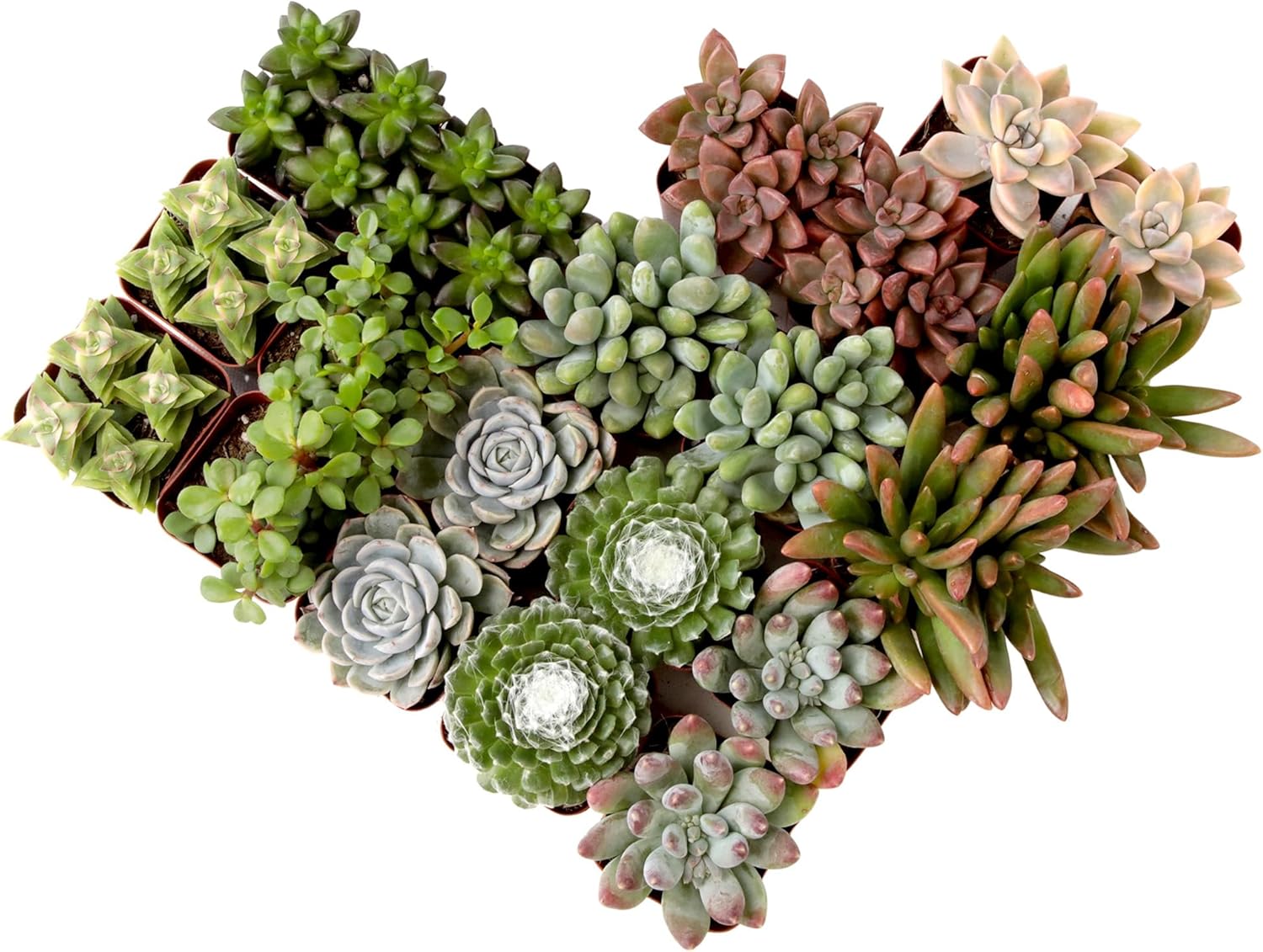
This 20-pack from Plants for Pets supplies a rotating assortment of fully rooted 2-inch succulents that work well for small containers, desk displays, party favors, and beginner collections. The mix typically includes common rosette and trailing types such as Echeveria, Crassula, Sedum, and Portulacaria, giving varied shapes and colors across the set. Plants arrive potted and packaged to limit soil disruption and the brand advises simple care: bright indirect light, sandy soil, and watering only when the soil is dry. Practical benefits are clear: you get instant variety without repotting larger specimens, a compact size that fits tiny planters or craft projects, and low watering needs that suit busy owners. Limitations to expect are the small 2" pot size, which means plants will need repotting sooner if you want them to grow large, and seasonal variation in varieties so you may not receive specific cultivars shown in images. Also several common succulents in the assortment are toxic to pets, so placement matters for households with cats or dogs.
Best for: Buyers who want an easy, ready-made collection of small succulents for indoor décor, DIY projects, or to start a beginner collection and who value visible customer feedback when choosing products.
Less Ideal for: Growers seeking mature specimens ready for large containers or those who need guaranteed specific cultivars should look for larger individual plants or nursery-grade stock.
- Large assortment gives immediate variety for displays and projects
- Plants shipped fully rooted and potted to simplify setup
- Low water and light needs make them beginner-friendly
- Compact 2" size is convenient for favors, terrariums, or small containers
- 2" pots restrict growth and require repotting for long-term health
- Varieties are seasonal so exact cultivars are not guaranteed
Verdict: If you want an inexpensive, low-maintenance way to add instant variety to small indoor displays or projects, this 20-pack delivers a ready-to-use collection of fully rooted succulents.
THE NEXT GARDENER.COM Baby Toes Live Succulent, 4-inch Potted Plant

| Indoor Outdoor Usage | Indoor |
|---|---|
| Other Special Features of the Product | Low Maintenance |
| Expected Blooming Period | Winter to Spring |
| Sunlight Exposure | Partial Sun |
| Moisture Needs | Moderate Watering |
This Baby Toes succulent arrives fully rooted in a 4-inch grower pot and is meant for indoor display on a windowsill, tabletop, or desk. It prefers bright, indirect light and sandy, well-draining soil and follows the usual succulent 'soak and dry' watering rhythm—water thoroughly only after the soil dries. The listing highlights low maintenance and moderate watering needs, which makes it suitable for someone who wants a living accent without daily care. Expected blooming is winter to spring, and the plant tolerates some variation in light by changing color. Limitations are typical for small succulents: the 4-inch pot means the plant will need repotting as it grows and it is vulnerable to overwatering and cold; recovery tips are provided if it dries or freezes, but prevention is easier than recovery. For indoor use, place it where it gets several hours of bright indirect sun and avoid sustained damp soil.
Best for: Buyers who want an easy-care indoor succulent as a low-effort decorative plant and prefer plants with straightforward, forgiving care instructions.
Less Ideal for: Gardeners who need larger specimen plants or those wanting an outdoor landscape succulent are better served by bigger nursery stock or outdoor-hardy varieties.
- Sold fully rooted in a 4-inch grower pot ready to display
- Low maintenance and drought-tolerant care profile
- Clear care guidance on watering, light, and recovery from damage
- Suitable for indoor spots like windowsills, desks, and tabletops
- Small container size means repotting will be needed as it establishes
- Sensitive to overwatering and cold, which can cause damage
Verdict: A small, fully rooted Baby Toes succulent that is ideal for indoor growers who want a low-maintenance, attractive windowsill or desk plant.
Choosing the Right Easy Indoor Succulents: Key Factors to Consider
Light Requirements
Light is the single biggest factor determining where you place an indoor succulent. Some varieties do well in bright, direct window light while others tolerate lower, indirect light. Assess the light in the intended spot across the day and match a succulent whose needs fit that range. Placing a sun-loving succulent in a dim room will cause stretched, weak growth while putting a low-light tolerant plant in direct afternoon sun can lead to scorched leaves.
Also consider seasonal light changes. South- and west-facing windows give more winter light, while north-facing windows stay dimmer year-round. If your space has only low light, choose succulents known for shade tolerance and keep them away from heating vents that can dry them out.
Watering Frequency and Drainage
Indoor succulents store water in their leaves and stems, so they prefer infrequent, thorough watering and fast-draining soils. The key is letting the potting mix dry between waterings to prevent root rot. Choose containers with drainage holes and use a porous potting blend designed for succulents or cacti.
Consider your routine: if you travel or forget to water, pick succulents that tolerate longer dry spells. For busy households, shallow pots dry faster, which reduces risk of standing moisture. Avoid decorative cachepots without drainage or use them only with a drainage strategy that keeps roots dry.
Pot Size and Growth Habit
Many indoor succulents stay small and are well suited to windowsills, desks, or small shelves. Check typical mature size and growth rate when choosing a plant. Slow-growing, clumping, or rosette-forming succulents remain compact and require less frequent repotting.
If you have limited space, prioritize varieties described as dwarf or compact. Also consider whether a plant offsets or produces pups; these can fill a container attractively but may eventually need division. Fast-spreading succulents can overrun small displays, so match growth habit to the pot footprint you want to maintain.
Temperature and Indoor Climate
Most indoor succulents prefer average household temperatures and can tolerate typical day-night swings. Avoid placing plants directly above radiators, near drafty windows in winter, or right next to cold sliding doors. Sudden temperature extremes and cold exposure stress succulents and make them more vulnerable to pests and rot.
If your home runs cooler at night, pick varieties with known tolerance for lower temperatures. Conversely, if indoor heating dries the air, allow for slightly more frequent watering while still permitting the soil to dry between waterings.
Pest Susceptibility and Maintenance
Indoor succulents are generally low-maintenance but still attract common houseplant pests such as mealybugs, scale, and spider mites. Regularly inspect plants for sticky residue, cottony clusters, or stippling on leaves. Good airflow, occasional cleaning of leaves, and isolating new plants for a short period reduce pest introduction.
Choose succulents with thicker leaves and compact forms if you want the easiest maintenance. Those with crevices or dense rosettes can hide pests more easily, increasing inspection and treatment time. Keep a simple pest toolkit like a soft brush, insecticidal soap, or isopropyl alcohol for spot treatment.
Propagation and Long-Term Care
If you like multiplying plants, select succulents that propagate reliably from leaf or stem cuttings. Easy propagation reduces replacement cost and lets you refresh arrangements without buying new plants. Succulents that produce pups or offsets are particularly convenient for beginners.
Also consider repotting needs. Many succulents stay in the same pot for a year or two, but faster growers will need fresh soil and a larger container. Look for plants that tolerate occasional root disturbance and respond well to light pruning or division.
Best Spots for Succulents Inside the Home
Match a succulent to the room and the light available. Kitchen counters and south-facing windows offer the brightest conditions, while bathrooms and hallways tend to be dimmer but more humid. Bedrooms with indirect morning light can host many compact varieties comfortably.
Observe actual light patterns over a few days before choosing plant placement. Rotating plants periodically ensures even growth and prevents leaning toward light sources.
- Bright windowsill: choose sun-tolerant rosettes and columnar forms
- Low to medium light shelf: pick shade-tolerant, thicker-leaved varieties
- Bathroom or humid spot: avoid species that require very dry air
Potting Mix and Container Choices
Use a gritty, fast-draining mix formulated for succulents or cacti. Regular houseplant soil holds too much moisture and raises the risk of root rot. You can make your own by mixing potting soil with coarse sand, perlite, or pumice to improve drainage.
Containers should have drainage holes. If you prefer decorative containers without holes, keep the plant in an inner nursery pot with drainage and remove it briefly after watering to let excess water drain away.
- Avoid heavy, water-retaining soils
- Shallow pots dry faster and suit many succulents
- Use breathable pots like terracotta to help wick moisture
Light Management Without Grow Lights
If you do not use grow lights, maximize available natural light by placing succulents near the brightest window and turning them regularly. South and west windows supply more intense light, which some succulents need for compact coloration and form.
If light is limited, group succulents together to create a microclimate and choose varieties known for lower light tolerance. Avoid pushing a sun-loving plant into a dim spot and then compensating with more water, which often causes rot.
- Rotate plants weekly for even growth
- Watch for stretching as a sign of insufficient light
- Supplement with indirect reflective surfaces if possible
Routine Care and Seasonal Adjustments
Adopt a simple care routine: inspect plants weekly, water only when the soil is dry, and remove dead leaves from the pot. In active growth seasons, some succulents will need slightly more water and occasional feeding with a diluted, balanced houseplant fertilizer.
In winter, many succulents enter a slower growth phase and need less water. Reduce frequency to prevent soggy soil and move plants away from cold windows or uninsulated walls.
- Water deeply but infrequently during growth
- Cut back watering in cooler months
- Keep leaves clean to allow light absorption and easy pest checks
Troubleshooting Common Problems
Yellowing or mushy leaves usually point to overwatering. If the soil smells sour or the plant feels soft at the crown, take the plant out, let the roots dry, trim rotten tissue, and repot in fresh, dry mix. For stretched stems or elongated leaves, increase light exposure gradually.
Pest issues are often manageable with isolation and spot treatments. For persistent problems, prune and treat affected areas and improve airflow to reduce humidity around dense rosettes.
- Overwatering signs: soft, translucent leaves and stem collapse
- Underwatering signs: shriveled leaves and slowed growth
- Pest signs: cottony clusters, sticky residue, or tiny webbing
How We Chose the Best Easy Indoor Succulents
We focused on traits that matter in everyday indoor gardening rather than rare collector features. Priority went to species and varieties that reliably survive typical household conditions: low to medium natural light, occasional missed waterings, and indoor temperature ranges. We also looked for compact growth habits appropriate for small pots and for plants that tolerate the common pests and problems found inside homes. Evaluation centered on four to six concrete dimensions: light tolerance, drought forgiveness, compactness and growth control, ease of propagation, and pest and disease resistance. We filtered out plants that need specialized humidity, grow extremely large indoors, or require constant bright sun. We excluded collector-only species that demand precise care, high humidity, or year-round greenhouse conditions. The result is a list of practical, hardy succulents suited to typical indoor gardeners who want decorative plants with minimal time investment.
FAQ
How often should I water indoor succulents?
Usually every 2 to 4 weeks depending on light, pot size, and season. Let the soil dry thoroughly between waterings and adjust frequency in winter when growth slows.
Can succulents survive in low-light rooms?
Some varieties tolerate low to medium indirect light and will survive with slower growth. Expect paler color and leggier stems if light is limited; choose shade-tolerant types for dimmer spots.
Do indoor succulents need fertilizer?
They benefit from light feeding during the active growing season, usually a diluted balanced fertilizer once a month. Avoid heavy feeding, especially in winter when growth is minimal.
What potting soil is best for succulents?
A gritty, well-draining mix with coarse sand, perlite, or pumice is best. Standard houseplant mixes retain too much moisture and increase the risk of root rot.
How do I prevent pests on indoor succulents?
Inspect new plants before introducing them, keep foliage clean, and provide good airflow. Isolate and treat affected plants promptly with targeted, low-toxicity controls like insecticidal soap or alcohol swabs.
Final Verdict
Choose indoor succulents by matching species to your light conditions and willingness to water. Prioritize plants with forgiving watering habits and compact growth if you have limited space. Expect tradeoffs: sun-loving succulents show brighter color but need brighter windows, while shade-tolerant types survive lower light with slower, less colorful growth. Focus on drainage, routine inspection, and selecting plants that fit your schedule so you get reliable green accents indoors with minimal fuss.
