

Note: This article contains affiliate links. If you click on these links and make a purchase, I may earn a small commission at no extra cost to you. This helps support my research and content. Read my full affiliate disclosure here.
If you need a pressure washer that starts quickly and delivers sustained cleaning power for decks, driveways, gutters, and equipment, an electric start gas pressure washer can save time and frustration. These units combine the portability and higher-pressure output of gas engines with the convenience of a simple electric key or button to get going. Choosing the right one affects how easily you tackle caked-on dirt, how long the machine runs between service intervals, and how comfortable it is to handle around the yard. This guide covers a short list of the top electric start gas pressure washers available for heavy-duty outdoor use and explains the practical strengths and tradeoffs gardeners and homeowners should expect. We evaluate each option on real-world performance criteria gardeners care about, then highlight factors to consider so you can match a machine to your jobs and maintenance tolerance.
Top Picks at a Glance
| Best Overall The best all-around choice for most situations | Green-Power America GNHW3530E 3500 PSI Hot Water Pressure Washer |  |
| Best Quality Built to a higher standard if you want something more solid | MechMaxx HPW40H Hot Water Pressure Washer with Honda GX390 Electric Start |  |
| Best Value The sweet spot between price and what you get | Dapper Supply 4350 PSI Cold Water Gas Pressure Washer, 5.0 GPM, Electric Start |  |
| Best Budget The cheapest option that still gets the job done reliably | TechSweepPro 4400 PSI Gas Pressure Washer with Electric Key Start and Hose Reel |  |
| Highest Rated A top-rated pick with lots of positive feedback | Steupoek 4200 PSI 4.0 GPM Gas Pressure Washer with 25 ft Hose and 5 Quick-Connect Nozzles |  |
| Most Popular A crowd favorite that many people choose with confidence | TechSweepPro 3600 PSI Electric-Start Gas Pressure Washer, 3.3 GPM, 212cc |  |
| Best Seller A high-volume bestseller chosen again and again | TechSweepPro 4400 PSI Electric-Start Gas Pressure Washer, 4.5 GPM | |
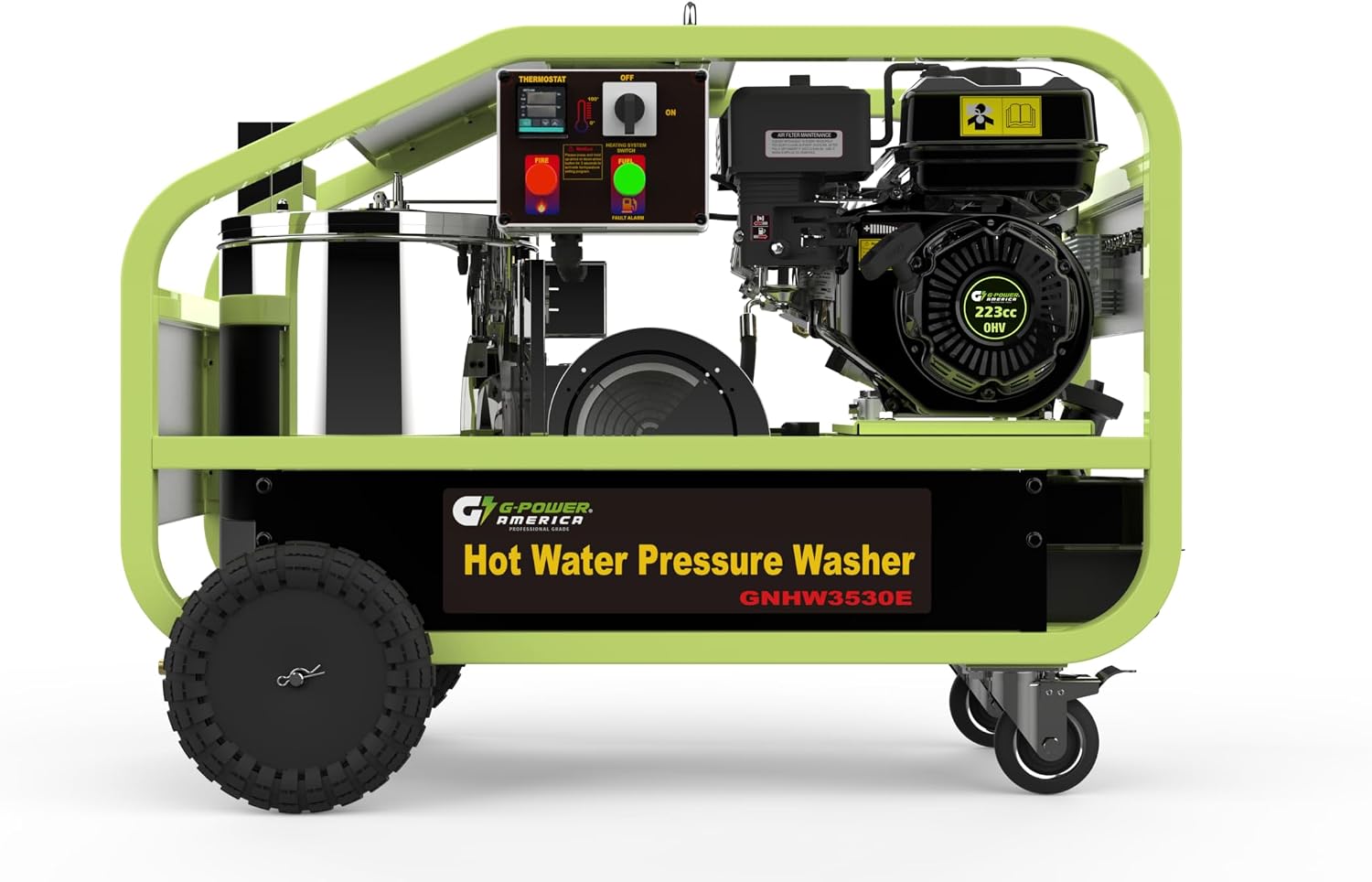
Green-Power America GNHW3530E 3500 PSI Hot Water Pressure Washer
| Maximum Flow Rate | 3 gpm |
|---|---|
| Maximum Pressure | 3500 psi |
| Hose Length | 33 feet |
| Specification Met | EPA |
The Green-Power America GNHW3530E is a commercial-grade hot water pressure washer built for demanding, repeat cleaning tasks. It pairs a 223cc four-stroke engine with an AR brass triplex plunger pump to deliver 3500 PSI at 3.0 GPM while a burner raises water temperature to about 212°F to cut through grease, oil, and baked-on grime. The unit is typically used on job sites, fleet maintenance, farms, and industrial equipment where hot water is significantly more effective than cold for degreasing. Notable features include push-button electric start, a 33 ft steel-braided high-pressure hose, stainless-steel wand, and five quick-connect nozzles for changing spray patterns quickly. The heavy-duty steel chassis, offset four-wheel layout, and never-flat front tires make it reasonably mobile across rough terrain. Important limitations are its commercial size and weight which make it less convenient for casual home users and that it is not intended for use where a cold-water washer would suffice; also California sale restrictions apply. For reliability-focused buyers this model emphasizes durable pump components and engine protections for intensive daily use.
Best for: Professional cleaners, contractors, and facility or fleet managers who need a dependable hot-water washer for frequent heavy-duty degreasing and industrial cleaning.
Less Ideal for: Homeowners with light cleaning needs or users who need a compact, easily storable cold-water washer should consider smaller consumer models instead.
- Commercial AR brass triplex plunger pump built for continuous duty and corrosion resistance
- Hot-water burner up to 212°F greatly improves removal of oil and heavy grease
- Electric push-button start simplifies repeated daily use on job sites
- Includes 33 ft steel-braided high-pressure hose and five quick-connect nozzles for versatile cleaning
- Robust chassis and offset wheel system with never-flat front tires for better mobility on rough terrain
- Large, heavy commercial unit not suited to casual residential use
- Not compliant for sale in California
Verdict: Choose this model when you need a rugged, hot-water commercial pressure washer built for reliable daily degreasing and heavy-duty cleaning.
MechMaxx HPW40H Hot Water Pressure Washer with Honda GX390 Electric Start

| Power Source | gas_powered |
|---|---|
| Maximum Flow Rate | 4 gpm |
| Maximum Pressure | 4000 psi |
| Max Temperature | 200℉ (93℃) |
The MechMaxx HPW40H is a commercial-style hot water pressure washer designed for demanding washdown jobs on farms, fleets, and construction equipment. It pairs a Honda GX390 electric-start engine with a triplex plunger pump and diesel-fired heating coil to produce 3,500–4,000 PSI at 4.0 GPM and water up to 200°F, which helps cut grease and heavy grime faster than cold-water units. The unit is mounted on a powder-coated steel frame with a hose reel, integrated control panel, 13" pneumatic tires, and a handlebar for moving around job sites and loading onto trucks. Standard accessories include a 50-foot pressure hose, multiple spray nozzles, a 36" gun and wand, and a hose reel, so you can begin typical fleet or equipment cleaning tasks right away. Because it is gas- and diesel-powered, it runs without external electricity but requires proper fuel, engine oil, and routine maintenance, and it is heavy and large compared with portable cold-water machines, so expect forklift or vehicle loading for transport. For buyers prioritizing reliable components and hot-water cleaning power for commercial use, this is a practical, serviceable choice.
Best for: Professionals or maintenance managers who need robust hot-water cleaning for industrial, farm, or fleet equipment and who prioritize reliable, proven components and on-site portability over lightweight convenience.
Less Ideal for: Homeowners with occasional light cleaning tasks or anyone who needs a compact, electricity-powered unit for simple driveway and patio work.
- Honda GX390 electric-start engine for dependable commercial-grade starting and power
- Diesel-fired heating coil reaches up to 200°F for effective removal of oil and grease
- Triplex plunger pump for stable pressure output and durability under heavy use
- Includes 50' high-pressure hose, multiple nozzles, 36" spray gun and hose reel for immediate operation
- Very heavy and large which requires mechanical assistance or vehicle loading for transport
- Operates on gasoline and diesel so it needs separate fuel storage and routine engine maintenance
Verdict: Choose this unit when you need dependable, hot-water commercial cleaning power with proven Honda engine reliability for heavy-duty equipment and fleet washdown.
Dapper Supply 4350 PSI Cold Water Gas Pressure Washer, 5.0 GPM, Electric Start

| Power Source | gas_powered |
|---|---|
| Maximum Flow Rate | 5 gpm |
| Maximum Pressure | 4350 psi |
| Tank Volume | 6.6 gallons |
This Dapper Supply pressure washer is built for demanding cleaning tasks on equipment, concrete, and job sites where high cleaning power matters. It pairs a 420cc gas engine with a triplex, water-cooled plunger pump to deliver 4350 psi at 5.0 gpm, producing heavy-duty cleaning units and stable pressure during extended runs. The unit includes an electric start, throttle control, low-oil shutdown, and multiple safety protections for dependable operation. Practical jobsite conveniences include a 50 ft, high-temp hose, insulated 48 in. wand with quick-connect nozzles, a powder-coated tubular steel frame with solid wheels, and standard 3/8 in. fittings for common accessories. Expect robust performance and long runtimes, but note this is a large, heavy machine intended for commercial or serious residential use and not for light household tasks. Setup and transport require space and care, and noise level is high consistent with commercial gas units.
Best for: Buyers who need a durable, high-output washer for regular heavy cleaning at job sites or on commercial equipment and who prioritize reliable performance and uptime.
Less Ideal for: Casual homeowners with small cleaning jobs or limited storage and those who need a quiet, compact electric washer.
- Very high cleaning power at 4350 psi and 5.0 gpm for heavy grease and buildup
- Triplex water-cooled pump with electric start and low-oil shutdown for reliable extended operation
- 50 ft high-temperature rated hose and insulated long wand with quick-connect nozzles for versatile reach and cleaning angles
- Rugged powder-coated steel frame and solid wheels designed for jobsite durability and mobility
- Standard fittings and safety systems (pressure relief, thermal protection, emergency shutoff) for compatibility and safer use
- Large, heavy unit that requires significant space and handling to move and store
- 95 dB operating noise makes it unsuitable for noise-sensitive residential areas
Verdict: Choose this unit when you need a worksite-ready, electric-start gas washer that delivers commercial-level pressure and flow for heavy-duty cleaning.
TechSweepPro 4400 PSI Gas Pressure Washer with Electric Key Start and Hose Reel

| Power Source | gas_powered |
|---|---|
| Maximum Flow Rate | 4 gpm |
| Maximum Pressure | 4400 psi |
| Hose Length | 50 feet |
This TechSweepPro unit is a commercial-style gas pressure washer built for fast, heavy cleaning. It uses a 420cc 4-stroke engine with an electric one-button key start plus a recoil backup, so you can get running without repeated pull starts. The 4400 psi and 4.5 gpm flow combine to remove grease, oil, tar, and stubborn grime from concrete, vehicles, decks, and farm equipment, while the five quick-connect nozzles cover everything from delicate rinsing to aggressive stripping. A 50-foot steel-braided hose on an integrated reel keeps the hose tidy and speeds setup and teardown on large jobs. The welded steel frame and pneumatic tires make it portable across rough ground, and the package includes a spray gun and wand for immediate use. Downsides to consider are the unit weight and physical footprint that come with commercial power, and the fuel and maintenance demands of a large gas engine. For buyers on a tight budget this model delivers commercial cleaning power but expect higher operating and storage costs than smaller electric or lighter gas models.
Best for: Buyers who need near-commercial cleaning power for large driveways, equipment, or property and prioritize getting the job done quickly without repeated pull starts. Practical owners who accept routine engine upkeep and want features that speed large-job setup and teardown will appreciate this machine.
Less Ideal for: Apartment dwellers, casual users, or those seeking a low-maintenance electric cleaner should look at smaller electric or lightweight gas models instead.
- Electric key start with recoil backup for reliable, easy starting
- High-pressure 4400 psi and 4.5 gpm flow for fast removal of heavy soils
- Integrated 50 ft steel-braided hose reel for organized, tangle-free operation
- Five quick-connect nozzles and included gun/wand provide versatile cleaning options
- Commercial-grade frame and pneumatic tires improve durability and mobility
- Large, heavy unit requires significant storage space and makes transport more effortful
- Gas engine needs regular maintenance and consumes fuel at higher rates than smaller models
Verdict: If you need powerful, fast cleaning for large or heavily soiled surfaces and want the convenience of an electric key start, this unit delivers commercial-level performance.
Steupoek 4200 PSI 4.0 GPM Gas Pressure Washer with 25 ft Hose and 5 Quick-Connect Nozzles

| Power Source | gas_powered |
|---|---|
| Maximum Flow Rate | 4 gpm |
| Maximum Pressure | 4200 psi |
| Specification Met | ETL |
This Steupoek gas pressure washer is built to deliver high cleaning power for tough outdoor jobs. With a 212cc, 7HP engine and an axial cam pump it produces up to 4200 PSI and 4.0 GPM, making it useful for driveways, patios, siding, and heavily soiled vehicles. The unit ships with five quick-connect nozzles including a soap nozzle, a 25-foot high-pressure hose, a 1 L detergent tank, and a standard 1/4-inch quick-connect fitting so you can attach surface cleaners or foam cannons. Large never-flat tires and the long hose make it reasonably mobile around yards and job sites. Important practical limits are typical of gas machines: it requires fuel, regular oil and maintenance, and produces exhaust and noise compared with electric models. The pump and commercial-style engine suggest durability for frequent use, but its 60 pound listed weight means lifting or tight storage could be awkward. For someone needing maximum cleaning force for heavy grime, this washer provides substantial, accessory-friendly performance.
Best for: Buyers who want high cleaning power for heavy grime on driveways, decks, siding, and vehicles and who prioritize durability and accessory compatibility over quiet operation.
Less Ideal for: Users who need a lightweight, quiet, low-maintenance cleaner for occasional light-duty tasks or for indoor use should consider electric alternatives.
- High output: up to 4200 PSI and 4.0 GPM for strong cleaning performance
- Commercial-style 212cc 7HP engine and axial cam pump designed for durability
- Comes with five quick-connect nozzles and a 1 L soap tank for versatile cleaning
- 25 ft high-pressure hose and never-flat tires improve reach and mobility
- Gas-powered operation requires fuel, maintenance, and produces exhaust and noise
- Relatively heavy to lift or store compared with electric models
Verdict: If you need top-tier cleaning force and a durable gas-driven unit that accepts common accessories, this 4200 PSI washer is a strong choice.
TechSweepPro 3600 PSI Electric-Start Gas Pressure Washer, 3.3 GPM, 212cc

| Power Source | gas_powered |
|---|---|
| Maximum Pressure | 3600 psi |
| Engine | 212cc 4-stroke |
| Hose Length | 50FT |
This TechSweepPro pressure washer is built for heavy residential and light commercial cleaning where power and convenience matter. The 212cc 4-stroke engine delivers up to 3600 psi and 3.3 GPM to remove oil, grease, and deep-set grime from driveways, decks, trucks, and farm equipment. The standout convenience is the electric key start that eliminates repeated pull-starts, with a recoil backup if needed. A built-in reel holds a 50-foot steel-braided hose to reduce kinks and keep the hose protected on job sites. The unit ships with a spray gun, wand, and five quick-connect nozzles that let you switch from soap to pinpoint 0-degree or wide 40-degree spray patterns quickly. Practical trade-offs are the size and weight that make it less hand-portable than lightweight models and the gas engine that requires fuel and routine maintenance. For users who need high-impact cleaning and prefer a start-without-pulling workflow, this model delivers strong pressure, long reach, and jobsite durability.
Best for: Buyers who want a dependable, high-power washer that starts easily and tackles tough outdoor cleaning jobs with minimal fuss, particularly homeowners or small contractors who value convenience and proven performance.
Less Ideal for: People who need a lightweight, easily carried unit for occasional light-duty tasks or those who prefer electric or battery-powered models to avoid fuel maintenance.
- Electric key start provides push-button ignition with a recoil backup for reliable starting
- High cleaning force at 3600 psi and 3.3 GPM handles heavy grime and industrial residues
- 50-foot steel-braided hose on a built-in reel reduces kinks and protects the hose on site
- Includes spray gun, extension wand, and five quick-connect nozzles for versatile cleaning tasks
- Heavy and bulky compared with portable consumer models, making transport and storage more demanding
- Gas engine requires fuel, oil changes, and periodic maintenance
Verdict: If you need a high-pressure, easy-to-start gas washer for heavy-duty cleaning, this model pairs commercial-grade force with the convenience of electric key start.
TechSweepPro 4400 PSI Electric-Start Gas Pressure Washer, 4.5 GPM
| Power Source | gas_powered |
|---|---|
| Maximum Flow Rate | 4 gpm |
| Maximum Pressure | 4400 psi |
| Hose Length | 50 feet |
This TechSweepPro 4400 PSI gas pressure washer is built for heavy-duty cleaning where quick, powerful results matter. The electric key start makes getting going much easier than a traditional pull cord and the recoil backup offers a reliable fallback. With a commercial-style 420cc 4-stroke engine and up to 4.5 gallons per minute flow, it clears oil, mud, and built-up grime quickly, and the five quick-connect nozzles let you switch from delicate rinsing to aggressive stripping. Practical features include a 50 foot steel-braided hose on a built-in reel to reduce tangles and a robust frame with oversized never-flat tires for moving across rough terrain. For a cautious buyer this model provides convenience and commercial power, but it is a heavy, gas-powered unit that requires fuel, routine engine maintenance, and safe handling of high pressure. Expect noise and the typical responsibilities of gas equipment, but also much faster cleaning on large surfaces compared with smaller electric models.
Best for: Someone who wants dependable, commercial-level cleaning power with the convenience of electric start and is comfortable maintaining a gas engine for frequent or large-scale outdoor cleaning tasks.
Less Ideal for: If you need a quiet, low-maintenance unit for occasional small-yard or garage use, a lightweight electric pressure washer would be a better fit.
- Electric key start with recoil backup for easy and reliable starting
- High cleaning power at 4400 psi with a 4.5 gpm flow for fast results
- 50 ft steel-braided hose on a built-in reel reduces tangles and protects the hose
- Includes five quick-connect nozzles and extension wand for versatile jobs
- Commercial frame and large never-flat wheels for stability and jobsite mobility
- Heavy and bulky, requiring effort to move and store
- Gas engine requires fuel, periodic maintenance, and generates noise
Verdict: Choose this model if you want effortless starting plus commercial-grade pressure and flow to finish large cleaning jobs faster.
Choosing the Right Electric Start Gas Pressure Washer: Key Factors to Consider
Pressure and Flow Rate Match to Tasks
Pick a machine with PSI and gallons-per-minute (GPM) matched to the surfaces you will clean. Higher PSI removes stubborn dirt and mildew from concrete and metal, while higher GPM rinses larger areas faster. A pressure washer that delivers strong peak numbers but drops dramatically under load will slow work and may require multiple passes.
Consider the combination of PSI and GPM rather than PSI alone. For example, siding and painted surfaces often need moderate pressure with controlled flow, while driveways and heavy equipment benefit from both higher pressure and higher flow to dislodge and wash away grime.
Electric Start Reliability and Ignition Design
An electric start system should make starting predictable and repeatable in damp or cold conditions. Look for units with integrated electric start mechanisms that power the engine ignition directly, and check whether the system uses a recoil backup. Systems that depend on external starter accessories can be less reliable in the field.
Consider the battery or power source for the starter, accessibility for replacement, and whether the machine exposes the starter to dust and water. A well-protected starter and an easy-to-use backup recoil pull reduce the chance of being stuck before a job.
Pump Construction and Maintainability
The pump is the heart of any pressure washer. Brass, forged-steel, or ceramic components tend to last longer under heavy use than cheap plastic parts. Equally important is serviceability: pumps that allow routine maintenance like oil changes, seal replacement, and easy access to inlet filters extend the machine's useful life.
When you use a pressure washer frequently on tough jobs, expect to rebuild or replace seals and valves eventually. Units that use common pump patterns and readily available replacement parts typically cost less to keep running over years of service.
Frame, Wheels, and Portability
Heavy-duty pressure washers can be heavy; a robust frame and large pneumatic or semi-pneumatic wheels make them easier to move across lawns, gravel, and uneven driveways. Look for welded frames and good clearance to avoid scraping when pulling the unit over curbs.
Portability also affects storage and transport. Consider whether the frame has secure hose wrap options, a protected control panel, and tie-down points for hauling. Machines that feel stable during operation reduce the risk of tipping and accidental hose kinking when you move around the work area.
Hoses, Wand, and Connection Quality
Hoses and fittings are frequent failure points. Reinforced, kink-resistant high-pressure hoses with robust crimped fittings will outlast thin, low-quality lines. The wand should be comfortable for extended use, offer secure nozzle attachments, and provide a safe trigger lock.
Quick-connect fittings that stay put under pressure and seals that are easy to replace make field repairs simpler. Also check compatibility with extension hoses and replacement nozzles so you can adapt the machine to different tasks without compromising safety.
Maintenance Access and Daily Upkeep
Regular maintenance keeps a gas pressure washer reliable. Easy access to engine oil fill, air filter, spark plug, fuel shutoff, and pump oil makes routine service quicker and more likely to be done on schedule. Features like drain plugs and clear service intervals in the manual reduce the chance of overlooked tasks.
Consider how exposed vulnerable components are to dirt and moisture. Machines with protective covers or better sealing around sensitive parts usually need less frequent corrective maintenance and last longer in rugged outdoor environments.
Matching Power to Common Cleaning Jobs
Different cleaning tasks demand different power. Light-duty jobs like patio furniture or lawn equipment can be handled by moderate PSI with a controlled nozzle, while concrete, masonry, and grease-stained surfaces need higher PSI and solid flow to remove entrenched grime. Think about the most frequent tasks you will do and choose a unit whose pressure and flow balance those priorities.
Also consider nozzle selection and whether the unit includes a low-pressure soap option. The right nozzle angles along with stable flow speed can save time and reduce surface damage.
- Low-pressure tips and soap injection for delicate or pre-wash tasks
- High-pressure fan and turbo nozzles for concrete and masonry
- Flow rate that allows efficient rinsing of large areas
Using Electric Start Systems Safely
Electric start saves pulling effort but requires attention to batteries and wiring. Verify that the start circuit is protected from water exposure and that the battery location allows easy inspection. Keep spare fuses and a basic tool kit with you so minor electrical issues do not stall work.
Always follow engine shutdown procedures and avoid working with a charging circuit exposed to wet surfaces. If a unit provides a recoil backup, practice using it so you can still start the engine if the electric system fails.
- Keep starter battery charged if applicable
- Inspect wiring and connections for corrosion regularly
- Store the unit in a dry location to protect the starter
Maintaining Pump Health Between Jobs
Flush detergent lines and run clean water through the pump after using soap to prevent buildup. Check pump oil levels on triplex units and follow the recommended oil-change intervals. Replace inlet filters and examine seals for leaks after long runs or if pressure performance drops.
If you notice pressure loss, check hose connections and wand nozzles before assuming a pump failure. Often a blocked nozzle or kinked hose is the simple culprit.
- Flush soap and debris from pump after each use
- Check and top pump oil per manufacturer intervals
- Inspect high-pressure hoses for wear and replace if damaged
Transport and Storage Tips for Seasonality
For winter storage, drain the pump and use a pump saver or antifreeze solution if recommended to prevent freeze damage. Stabilize fuel or drain the tank to avoid varnish and carburetor issues after long storage periods. When transporting, secure the unit to prevent tipping and protect the starter and electrical connections from road spray.
Keep accessories like extra nozzles, hoses, and wand tips together in a labeled box so you have what you need on site instead of improvising with incompatible parts.
- Drain or stabilize fuel before long storage
- Use a pump saver to protect seals in freezing conditions
- Secure unit and accessories for safe transport
Noise, Vibration, and Operator Comfort
Gas engines can be loud and produce vibration that increases user fatigue. Consider engine mounts, muffler design, and wand ergonomics when choosing a machine you will run for hours. Larger wheels and a well-balanced frame reduce the effort needed to reposition the washer and slow operator fatigue.
Using hearing protection and gloves reduces fatigue and improves control when you work on extended cleaning jobs.
- Look for vibration-isolating mounts
- Choose a balanced frame with comfortable handles
- Plan for hearing protection during long runs
How We Chose the Best Electric Start Gas Pressure Washer
We started by focusing on features that matter in real outdoor cleaning tasks: sustained pressure output under load, engine starting reliability, pump construction and serviceability, and portability for moving around yards and properties. Units had to offer an electric start system built into the engine or ignition circuit rather than third-party add-ons, and they needed to produce the PSI and flow rates appropriate for heavy-duty cleaning without frequent stalls. We prioritized durable pump types and materials that are commonly repairable or rebuildable, and we checked for common maintenance features like easy-access oil fill, fuel shutoff, and accessible inlet screens. Noise and vibration control, stability during operation, and hose/connection quality were also part of the evaluation because these affect day-to-day usability. Excluded from consideration were models that rely solely on battery starts, compact consumer units intended only for light-duty patio cleaning, or machines with unclear serviceability. Our selection emphasizes machines that balance start reliability, repairability, and the sustained pressure needed for demanding outdoor tasks.
FAQ
How much PSI and GPM do I need for driveway and patio cleaning?
Driveways and patios typically need higher PSI combined with moderate to high GPM to dislodge and rinse away dirt. A balance that emphasizes both pressure and flow will clean faster and reduce repeat passes.
What should I do if the electric start fails in the field?
Many units include a recoil starter as backup. Keep basic tools and spare fuses or battery terminals on hand. If the starter system is dead, use the recoil start procedure and inspect battery connections and starter protection when you return.
How often should I service the pump on a gas pressure washer?
Follow the pump manufacturer's schedule, but roughly inspect after every few major jobs, change pump oil according to the manual intervals, and rebuild or replace seals when you observe persistent leakage or pressure loss.
Can I use hot water with an electric start gas pressure washer?
Most residential and many commercial gas pressure washers are designed for cold water only. Using hot water requires a model rated for it; otherwise, pump seals and components can be damaged. Check the specifications before adding heated water.
Are there special hoses or nozzles I should buy for heavy-duty work?
Reinforced, kink-resistant hoses with strong crimped fittings and matching high-pressure nozzles are worth investing in. Choose nozzle tips that match your PSI and task to avoid surface damage and to get efficient coverage.
Final Verdict
Pick an electric start gas pressure washer by matching the unit's sustained pressure and flow to the toughest tasks you expect to perform, then confirm the machine offers reliable starting, a serviceable pump, and sturdy mobility features. Weigh tradeoffs between raw power and ease of maintenance: the most powerful units require more attention but finish heavy jobs faster. Prioritize pump serviceability, protected electric start systems, and quality hoses and fittings. Those choices reduce downtime and extend the useful life of the machine, letting you clean more efficiently and with less frustration.
