

Note: This article contains affiliate links. If you click on these links and make a purchase, I may earn a small commission at no extra cost to you. This helps support my research and content. Read my full affiliate disclosure here.
If you want to grow vegetables, herbs, or showy ornamentals without constant stooping, an elevated container planter can make gardening easier and more productive. The right raised planter keeps roots healthy with better drainage, cuts down on weeds and pests at ground level, and makes daily tasks like watering and harvesting less physically demanding. This guide covers the top shortlisted elevated container planters for a range of outdoor spaces and planting styles. We evaluated practical factors such as build durability, drainage performance, and planting depth to help you choose the best elevated planter for your garden or patio.
Top Picks at a Glance
| Best Overall The best all-around choice for most situations | SoliWood Cedar Raised Garden Bed with Legs, 48 x 24 x 30 in |  |
| Best Quality Built to a higher standard if you want something more solid | Gardener's Supply Company Elevated Cedar Raised Garden Bed 2' x 4' |  |
| Best Value The sweet spot between price and what you get | FOYUEE 31.5" Elevated Mobile Raised Garden Bed with Wheels and Shelf |  |
| Best Budget The cheapest option that still gets the job done reliably | DIIYIV Galvanized Raised Garden Bed (24 x 24 x 15 in) |  |
| Highest Rated A top-rated pick with lots of positive feedback | LDAILY Elevated Raised Garden Bed with Legs and Storage Shelf |  |
| Most Popular A crowd favorite that many people choose with confidence | Land Guard Galvanized Oval Raised Garden Bed Kit (4×2×1 ft) |  |
| Best Seller A high-volume bestseller chosen again and again | LEETOLLA 31.6" Elevated Raised Garden Bed with Wheels and Storage Shelf |  |
SoliWood Cedar Raised Garden Bed with Legs, 48 x 24 x 30 in

| Capacity | 6 cubic feet |
|---|---|
| Material Type | Cedar Wood |
| Finish Types | Grey Water Based Painting |
| Included Components | Liner |
This SoliWood raised garden bed is a straightforward elevated planter designed for reliable home vegetable growing. It provides a roomy planting area and a comfortable 30-inch working height so you can tend herbs and vegetables without constant bending. Constructed from cedar with a water-based finish, the box resists outdoor exposure better than untreated softwood and comes with a liner and drainage holes to reduce waterlogging and help roots stay healthy. Assembly uses pre-drilled holes and basic fasteners so one person can put it together in a short time. The 2.4-inch-thick legs and a specified weight capacity make it stable for soil and mature plants on patios, balconies, and backyards. Expect natural wood to require occasional maintenance if left exposed over years, and the planting volume is moderate so very large root crops or multiple seasons of heavy soil may need more frequent replenishing. For straightforward, low-fuss vegetable beds that prioritize durable materials and ergonomic access this unit delivers predictable performance.
Best for: Gardeners who want a dependable, ergonomic planter for growing vegetables and herbs on patios, balconies, or small backyards and who prioritize durable natural materials over lowest cost.
Less Ideal for: People who need very large planting volume for commercial-scale or heavy-rooted crops or who prefer maintenance-free synthetic planters.
- Cedar construction with water-based finish offers natural rot resistance for outdoor use
- Included liner and drainage holes improve soil moisture control and root health
- 30-inch height reduces bending and makes planting and harvest easier
- Pre-drilled holes and straightforward assembly speed setup for most users
- Moderate planting capacity may be small for very large vegetables or dense planting plans
- Natural wood will need periodic maintenance to preserve appearance and longevity
Verdict: A reliable, ergonomically raised cedar planter that makes growing vegetables easier while offering durable, well-draining construction.
Gardener's Supply Company Elevated Cedar Raised Garden Bed 2' x 4'

| Capacity | 7 cubic feet |
|---|---|
| Planting Depth | 10" planting depth |
| Material Type | Wood |
| Corner Material | Powder-Coated Aluminum |
This elevated cedar raised bed is built for gardeners who want durable, easy-to-tend container growing without kneeling. The planter uses rot-resistant cedar siding with rustproof aluminum corners and legs to keep the box stable and long-lasting outdoors. At 29 inches high it brings soil up to a comfortable working height so planting, pruning, and harvesting are easier on the back and knees. The bed holds about 7 cubic feet of soil and includes a cedar false floor set below the soil level to aid drainage while preserving rooting depth for vegetables and deeper-rooted crops. Assembly is straightforward with supplied hardware and the unfinished cedar accepts stains or sealers if you prefer a different look. Important limits are the 10 inch planting depth, which restricts very deep-rooted plantings, and the footprint is modest, so it is best for focused vegetable, herb, or flower plots rather than large-scale production.
Best for: Gardeners who prioritize efficient, comfortable work and long-term durability for small-scale vegetable or herb production on patios, decks, or compact yards.
Less Ideal for: Growers who need large contiguous growing area or who plan to cultivate many deep-rooted crops at commercial or high-yield scale.
- Rot-resistant cedar construction prolongs outdoor life without chemical treatments
- Rustproof aluminum corners and legs provide structural durability and stability
- Elevated 29 inch height reduces bending and makes planting and harvesting ergonomic
- Integrated false cedar floor promotes drainage while keeping rootable soil depth
- Around 10 inch planting depth limits very deep-rooted crops and large root vegetables
- Modest 2' x 4' footprint offers limited planting area for ambitious yields
Verdict: Buy this if you want a durable, ergonomic elevated cedar planter that makes small-scale vegetable and herb gardening easier and longer lasting.
FOYUEE 31.5" Elevated Mobile Raised Garden Bed with Wheels and Shelf

| Capacity | 2.5 cubic feet |
|---|---|
| Material Type | Metal |
| Finish Types | Powder Coated |
| Mounting Type | Floor Standing |
| Included Components | Wheels, Plant Stand |
This FOYUEE elevated raised bed is a mobile, waist-height planter designed for easy, ergonomic vegetable and herb growing on patios and balconies. The galvanized steel box with a powder-coated finish resists rust and supports heavy fill so you can add ample soil for productive vegetable crops. Built-in drainage channels and a central drain help prevent waterlogging while the raised profile improves air circulation around roots. A lower storage shelf keeps tools and pots handy and the integrated handle plus 6-inch all-terrain wheels make it straightforward to reposition the planter for sun or shelter. Typical uses are growing salad greens, herbs, compact vegetables, or creating a movable culinary garden outside a kitchen door. Assembly and moving when fully loaded will require some effort despite wheels, and the metal surface can warm in strong sun so seedling protection may be needed. The unit favors growers who want less bending and an organized, movable planting station rather than a large in-ground plot.
Best for: Gardeners who want an ergonomic, moveable vegetable planter for patios or balconies and value easy access, organization, and rust-resistant construction.
Less Ideal for: People who need very large planting volumes, deep-rooted crops, or a permanent in-ground bed for large-scale vegetable production.
- Powder-coated galvanized steel construction resists rust for outdoor use
- Raised waist-height design reduces bending and back strain
- Integrated drainage channels and central drain prevent water buildup
- Built-in wheels and handle allow the planter to be moved for light or weather
- Lower shelf provides convenient storage for tools and supplies
- May be heavy and awkward to assemble or move when filled with soil
- Metal walls can heat up in direct sun and may require shading for sensitive plants
Verdict: Buy this if you want a durable, waist-height mobile planter that makes growing herbs and compact vegetables easier without stooping.
DIIYIV Galvanized Raised Garden Bed (24 x 24 x 15 in)

| Material Type | Metal |
|---|---|
| Finish Types | Galvanized |
| Capacity | 5 cubic feet |
| Other Special Features of the Product | Open Base |
| Indoor Outdoor Usage | Outdoor |
This galvanized raised garden bed is a compact, floor‑standing planter intended to give small outdoor spaces a durable, elevated planting area. It arrives as a metal frame with reinforced corners and an open base so you can set it on soil or hard surfaces while still getting good drainage and root aeration. Typical use is for vegetables, herbs, or flowers in patios, balconies, and small yards where a contained, tidy bed is preferred. The galvanized finish and reinforced frame improve longevity compared with thin sheet metal alternatives, and the included instruction manual simplifies assembly without special tools. Practical benefits include portability to reposition the bed, easier access for planting and harvesting compared with ground beds, and safer soil containment thanks to the protective coating. Limitations are its small planted volume, which restricts larger vegetables or deep-rooted perennials, and the open base means you will need to place it over soil or add a liner on hard surfaces to hold potting mix in place.
Best for: Buyers looking for an inexpensive, durable elevated planter to add organized container gardening to a patio or balcony and who value easy setup and portability.
Less Ideal for: Gardeners who need large planting volume for big vegetables, heavy production beds, or a fully contained planter on hard surfaces without additional liners.
- Galvanized metal construction with reinforced corners for improved durability
- Open base design provides natural drainage and better root aeration
- Compact footprint suitable for patios, balconies, and small yards
- Easy assembly with included instruction manual and no special tools
- Small capacity limits use to shallow-rooted plants and modest vegetable yields
- Open bottom requires placement over soil or a liner to retain potting mix on hard surfaces
Verdict: A budget-friendly, durable galvanized raised bed that gives small patios and balconies an easy elevated planting solution.
LDAILY Elevated Raised Garden Bed with Legs and Storage Shelf
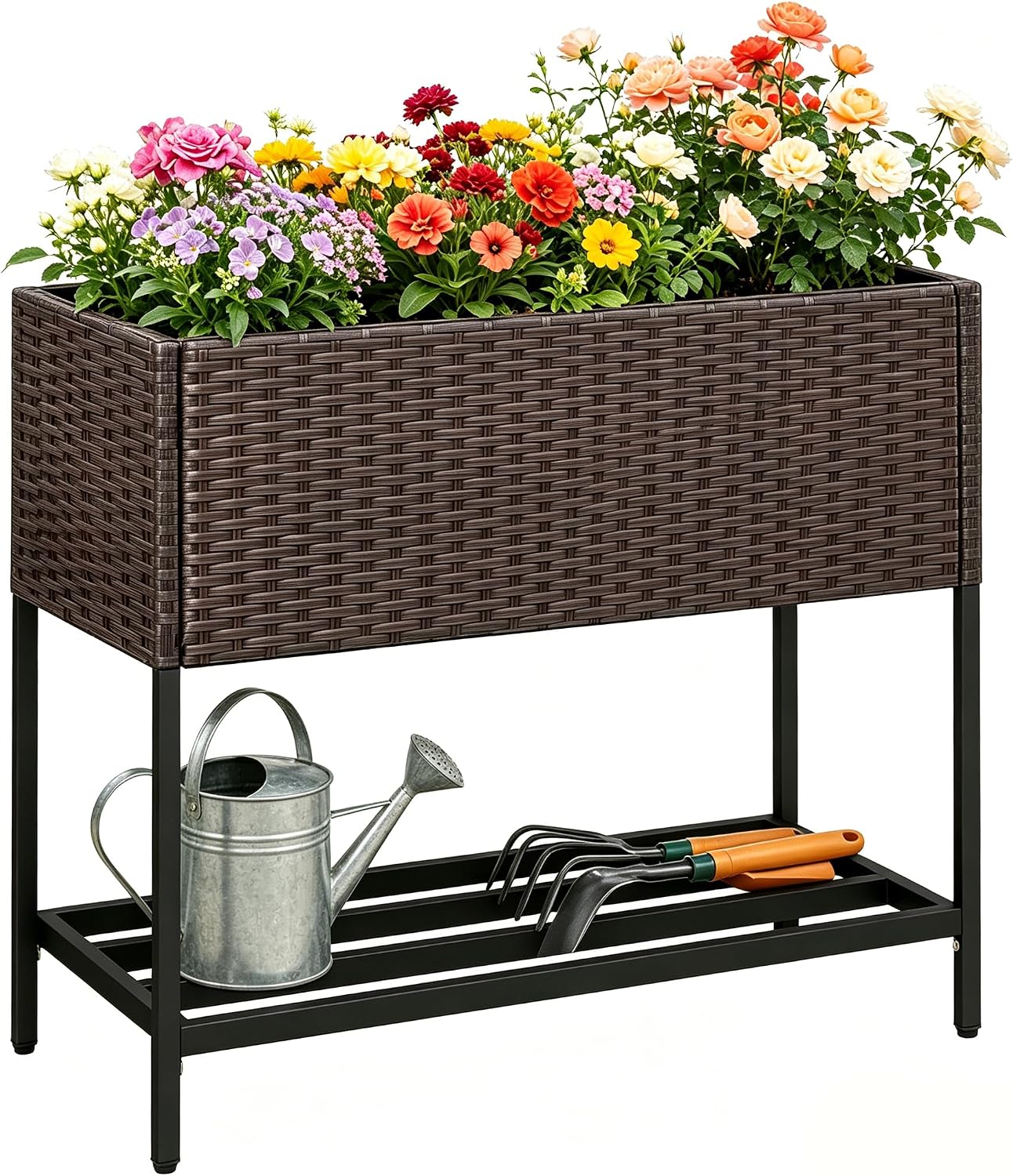
| Capacity | 132 pounds |
|---|---|
| Included Components | Instruction, Raised Garden Bed with Legs |
| Material Type | Metal, Rattan |
| Other Special Features | Drainage Hole |
| Mounting Type | Floor Standing |
This elevated raised garden bed combines a sturdy metal frame with rattan panels to give you a durable, waist-high planting surface that is easy to use in small yards, patios, or balconies. It is designed to hold garden soil and plants while keeping you off your knees; the bottom drainage gap and included non-woven liner let excess water escape while retaining soil, which helps prevent waterlogging and keeps roots oxygenated. The lower shelf is handy for storing trowels, pots, or soil bags so tools stay within reach. The frame is rated to support up to 132 pounds in the planting box and 66 pounds on the shelf, so you can fill it with quality potting mix and a few heavier containers without worrying about collapse. Assembly is typical for metal-frame planters and will require basic tools and moderate effort. The rattan finish improves appearance but may need occasional cleaning and protection from prolonged wet conditions compared with all-metal alternatives. Overall it is a practical, space-saving planter for reliable, elevated gardening in outdoor settings.
Best for: Buyers who prioritize a dependable, no-fuss elevated planter for regular outdoor vegetable or ornamental planting and want a model that keeps tools handy and reduces bending while gardening.
Less Ideal for: People seeking a heavy-duty, all-weather commercial planter or those who need very large planting volumes for large perennial shrubs should consider larger or different construction options.
- Sturdy metal frame with stated capacity of 132 lb for the planting box and 66 lb for the shelf
- Built-in drainage gap plus non-woven liner to reduce waterlogging and improve root oxygenation
- Elevated height reduces bending and helps deter small ground animals
- Integrated bottom shelf provides convenient storage for tools and supplies
- Rattan panels may require extra care and could weather faster than all-metal planters
- Assembly requires tools and moderate effort
Verdict: A reliable elevated planter that combines a load-rated metal frame, drainage, and handy storage to make small-space vegetable and flower gardening easier and less physically demanding.
Land Guard Galvanized Oval Raised Garden Bed Kit (4×2×1 ft)

| Material Type | Metal |
|---|---|
| Finish Types | Double-layer galvanized |
| Capacity | 7.14 cubic feet |
| Mounting Type | Floor Standing |
This Land Guard raised garden bed is a simple, durable option for planting vegetables, herbs, or mixed annuals in a compact outdoor space. The kit arrives as flat panels that assemble into an oval planter about 4 by 2 feet and 1 foot deep, and setup is straightforward so you can fill and plant in minutes. Its double-layer galvanized steel construction and wave-shaped panels are intended to resist corrosion and add rigidity, and the manufacturer states thicker panels at stress points to reduce deformation. An open base design lets excess water drain and helps avoid root rot if placed on soil or lawn. Practical benefits include low maintenance, a tidy planted border that keeps soil contained, and a metal finish that lasts longer than untreated steel. Limitations are the shallow depth for deep-rooted crops and the likelihood the metal will warm quickly in hot sun, which may require more frequent watering or shade management. It is best used as a portable, long-lasting planter for raised-bed style container gardening rather than a full replacement for deeper in-ground beds.
Best for: Gardeners who want a quick-to-assemble, durable raised planter to grow vegetables or herbs in small outdoor spaces and who prioritize evidence of longevity over decorative complexity.
Less Ideal for: Growers who need deep soil for large root crops, or those looking for insulated or fully enclosed beds to control soil temperature and moisture long-term.
- Galvanized double-layer steel resists corrosion for multi-season outdoor use
- Oval, interlocking panel design assembles quickly with included tools
- Open base allows natural drainage to reduce standing water and root rot
- Compact footprint fits small patios, balconies, and tight garden beds
- Only 12 inches deep which limits planting of larger, deep-rooted vegetables or shrubs
- Metal surface can heat up in full sun and increase watering needs
Verdict: A tough, easy-to-assemble galvanized oval raised bed that gives small-space gardeners a durable, low-maintenance container for vegetables and herbs.
LEETOLLA 31.6" Elevated Raised Garden Bed with Wheels and Storage Shelf

| Capacity | 2.5 cubic feet |
|---|---|
| Number of Levels | 2 |
| Material Type | Iron |
| Indoor Outdoor Usage | Indoor, Outdoor |
| Other Special Features of the Product | 2 universal wheels + 2 stabilizing feet, 5 drainage holes + 2 cross-lines, Handle Bar, Storage Shelf |
This LEETOLLA elevated raised bed lifts container gardening to waist height so you can plant, water, and harvest without kneeling. It is built from painted iron with a powder-coat finish, includes two all-terrain wheels and an ergonomic handle for moving the filled bed, and has a lower shelf for tools or extra pots. The planting area holds about 2.5 cubic feet of soil and features five drainage holes plus cross-channels to help prevent waterlogging. Assembly is straightforward with the included hardware and takes roughly 30 to 45 minutes with two people. Practical benefits include reduced back strain, mobility to follow sun patterns or shelter plants from storms, and tidy storage on the attached shelf. Limitations are the metal construction, which will require touch-up care over time to avoid surface rust in very wet or coastal conditions, and the relatively narrow planting depth compared with deep beds, so very large root crops may be less suitable. The unit fits small balconies and patios but is best for mixed vegetables, herbs, and compact varieties rather than large, heavy crops.
Best for: Buyers who want comfortable, low-effort vegetable or herb gardening on a balcony, patio, or small yard and prioritize mobility and ease of use over maximal soil depth.
Less Ideal for: Gardeners seeking very deep beds for large root vegetables or those who prefer untreated wood or plastic planters that do not require metal maintenance.
- Elevated height reduces bending and kneeling for easier planting and harvesting
- Two large wheels and a handle let you reposition the bed to follow sun or avoid bad weather
- Built-in drainage holes and cross-channels reduce risk of overwatering
- Lower storage shelf keeps small tools and supplies handy
- Powder-coated iron construction for sturdier, decorative outdoor use
- Metal finish can require periodic touch-up to prevent corrosion in very wet or salty environments
- Planting depth is modest so very deep-rooted crops may be limited
Verdict: A mobile, waist-height metal raised bed that makes growing herbs and compact vegetables easier by cutting bending and letting you move plants to the best light.
Choosing the Right Elevated Container Planter: Key Factors to Consider
Material Durability
The construction material determines how well an elevated container stands up to sun, rain, and temperature swings over multiple seasons. Rot-resistant woods, powder-coated metals, and UV-stable plastics each age differently. Consider whether the planter will be left outside year-round or brought under cover in winter. Materials also affect weight, which matters if you move planters for sun or storage.
Durable materials reduce long-term maintenance and the risk of structural failure. Look for finishes and joints designed for outdoor exposure and for corrosion-resistant fasteners. Remember that heavier, more durable planters may need stronger support surfaces.
Drainage and Moisture Management
Good drainage prevents waterlogged roots and reduces fungal disease risk. Elevated planters should offer clear drainage paths and, where appropriate, integrated features such as built-in drain holes, removable plugs, or inner liners with weep channels. Some designs include space beneath the soil for a reservoir or for improved airflow around the root ball.
Think about how you water and whether you use drip irrigation or hand watering. Effective moisture control limits salt buildup in container soil and makes it easier to keep moisture consistent throughout the root zone, which is especially important for vegetables and shallow-rooted ornamentals.
Planting Depth and Soil Volume
Different plants need different rooting spaces. Deeper-rooted vegetables and shrubs require more soil volume than herbs and annual flowers. An elevated container should provide enough depth and capacity to support the intended crop without frequent drying or root restriction. Soil volume also affects how often you need to top up nutrients and the planter's weight when filled.
Plan for adequate soil depth for drainage and root development, and remember that adding a lightweight soil mix can reduce overall weight while preserving water-holding capacity.
Ergonomics and Access
A primary reason gardeners choose elevated containers is to reduce strain from repeated bending. The planter height should fit the gardener's body and gardening tasks, whether planting, pruning, or harvesting. Consider knee height, reach across the planter, and whether the design allows comfortable access to the center without overreaching.
Also check for edges or tops that serve as seats or tool rests, and whether the planter height pairs well with common container tools. Good ergonomics reduce fatigue and make regular maintenance faster and more pleasant.
Assembly, Maintenance, and Portability
Some elevated containers arrive ready to use, while others require assembly with hardware. Easy-to-follow assembly reduces the chance of incorrect setup that can compromise stability or drainage. Consider how easy it is to clean, to refresh soil each season, and to winterize the planter if needed. Removable liners or inserts simplify soil changes and pest control.
Portability matters when you need to reposition planters for sun, protect them from storms, or move them indoors. Check whether the planter can be moved empty and whether the supports are stable on the planting surface.
Aesthetics and Placement
An elevated container is both a functional growing vessel and a visual element in the garden. The planter's style and finish should complement existing hardscape and planting beds. Placement decisions influence sunlight, wind exposure, and accessibility. A visually appealing planter that also matches the microclimate of its spot is more likely to be used and maintained properly.
Consider how the planter sits in relation to pathways and doors, whether it shadows lower plantings, and how seasonal changes will affect its look and function.
Sizing for Different Crops and Spaces
Choose a planter size that fits both the plants you want and the space available. Narrow balconies and patios do better with long, shallow troughs for herbs or strawberries, while larger beds can handle deeper boxes for tomatoes and small shrubs. Depth drives what you can grow as much as width does.
If you plan a mixed planting, allocate deeper sections for root crops or larger perennials and shallower areas for herbs. Also consider how much soil weight the supporting surface can take, especially on decks or balconies.
- Shallow troughs: best for herbs and succulents.
- Medium-depth boxes: good for most annual vegetables.
- Deep boxes: needed for larger root crops and small shrubs.
Placement and Sun Exposure
Elevated containers follow the same sun rules as ground beds. Measure how many hours of direct sun the chosen spot receives and match plant light needs accordingly. Remember that heat reflected from walls or decking can increase temperatures in the planter.
Placement also affects wind exposure. Higher planters can catch more wind, which increases drying and may stress taller plants. Use windbreaks, heavier soil mixes, or plant placement strategies to protect vulnerable crops.
- Full sun: vegetables and most annuals.
- Partial shade: leafy greens and some herbs.
- Sheltered spots: delicate flowers or young transplants.
Soil Mixes and Fertility Management
Container soil should be well-draining yet moisture-retentive. Use a mix formulated for containers or amend garden loam with compost and coarse material to improve drainage. Because containers have limited nutrient reserves, plan a feeding schedule using organic or slow-release fertilizers.
Top-dress or refresh soil annually to replace lost nutrients and to reduce compaction. For edible plantings, ensure the soil mix is free of contaminants and suited to food crops.
- Use light, well-aerated mixes for better root oxygenation.
- Incorporate compost for steady nutrient release.
- Monitor pH if growing crops with specific needs.
Winter Care and Longevity
How you handle elevated planters in winter affects their longevity. In very cold climates, repeated freeze-thaw cycles can damage some materials or split liners. Drain and store removable liners, or move planters to a protected area if possible. Wood planters may benefit from light sealing before winter.
For perennial plantings left in place, add insulation around planters or mulch the soil surface to protect roots. Regular maintenance and seasonal inspections extend the usable life of the planter.
- Empty and store liners to prevent freeze damage.
- Use mulch for overwintering perennials in containers.
- Inspect fasteners and joints each spring.
Integrating Irrigation
Plan how you will water elevated containers before you buy. Many gardeners prefer drip lines or soaker tubing routed into the soil profile to deliver consistent moisture without overhead wetting. If you water by hand, select a planter with easy access to the soil surface and good drainage to avoid pooling.
Some elevated planters accommodate simple self-watering inserts or reservoirs. These can reduce watering frequency but require attention to prevent salt buildup and to ensure roots do not remain overly wet.
- Drip irrigation reduces surface evaporation.
- Self-watering inserts can help in hot climates.
- Ensure drainage is not obstructed by irrigation components.
How We Chose the Best Elevated Container Planter
We focused on features that matter in everyday garden use and excluded items that are decorative-only or intended for indoor tabletop use. Editorial filters prioritized structural durability for outdoor exposure, planting depth and soil capacity suitable for common edibles, effective drainage solutions that prevent root rot, and ease of maintenance for seasonal planting and cleaning. We also weighed ergonomics so the planters genuinely reduce bending and jarring when you tend plants. Products lacking adequate drainage, shallow rooting depth, or materials unsuitable for outdoor climates were removed from consideration. The end result is a selection that balances longevity, plant health, and gardener comfort across common backyard and patio situations.
FAQ
What height is ideal for an elevated planter to reduce back strain?
An ideal height often matches your standing elbow height or slightly below so you can reach the center without bending. Many gardeners find 24 to 36 inches comfortable, but it depends on your stature and whether you prefer to sit or stand while working.
Can I grow tomatoes and larger vegetables in elevated containers?
Yes, provided the planter offers sufficient depth and soil volume. Tomatoes and larger vegetables need deeper soil and stable anchoring for stakes or cages. Choose a deeper box and support system when planning for these crops.
Do elevated planters dry out faster than ground beds?
They can, because containers expose more soil surface to air and heat. Using a moisture-retentive mix, mulching the surface, and installing drip irrigation or reservoirs helps maintain consistent moisture and reduces watering frequency.
How do I winterize an elevated planter?
Remove and store any removable liners or self-watering inserts, drain excess water, and move lightweight planters to shelter if possible. Add mulch over soil for perennial plantings and check fasteners and finishes before the next season.
Are certain materials better for food crops?
Materials that do not leach chemicals and that withstand outdoor conditions are preferred for edibles. Untreated or properly sealed wood, food-safe liners, and inert plastics designed for outdoor use are common choices. Avoid containers with unknown coatings that could degrade.
How often should I refresh the soil in an elevated container?
Annual light top-dressing and nutrient replenishment are common, with a full soil refresh every 2 to 4 years depending on crop demands. Heavy-feeding vegetables may require more frequent amendments or container soil replacement.
Final Verdict
When choosing an elevated container planter, prioritize the features that match how and where you garden. Durable materials and solid drainage promote plant health, while sufficient planting depth and soil volume determine what you can grow. Balance ergonomics with weight and placement so the planter feels comfortable to use throughout the season. Decide which tradeoffs matter most for your situation and pick a design that meets those needs. A well-chosen elevated planter will make regular gardening easier and improve the success of both edible and ornamental plantings.
