

Note: This article contains affiliate links. If you click on these links and make a purchase, I may earn a small commission at no extra cost to you. This helps support my research and content. Read my full affiliate disclosure here.
If you want to grow herbs, annuals, or compact vegetables on a balcony or raised deck, the right elevated deck planter makes gardening easier, cleaner, and more productive. The right unit protects decking from moisture, reduces bending and kneeling, and fits where space is limited. This guide shortlists the top elevated deck planters suited to small outdoor spaces and explains why each type made the cut. We evaluated drainage, materials, footprint, and ease of use so you can pick a planter that fits your deck layout and planting goals.
Top Picks at a Glance
| Best Overall The best all-around choice for most situations | Best Choice Products 48 x 24 Raised Garden Bed, 16 in Soil Depth |  |
| Best Quality Built to a higher standard if you want something more solid | SoliWood Cedar Raised Garden Bed with Legs, 48 x 24 x 30 in |  |
| Best Value The sweet spot between price and what you get | KETOYARK HDPE Elevated Raised Garden Bed with Legs |  |
| Best Budget The cheapest option that still gets the job done reliably | BTY 3-Tier Vertical Raised Garden Bed Planter |  |
| Highest Rated A top-rated pick with lots of positive feedback | PASAMIC 30" Elevated Raised Garden Bed with Legs (Wood-Look HIPS) | 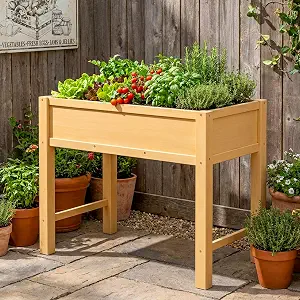 |
| Most Popular A crowd favorite that many people choose with confidence | Best Choice Products 48 x 24 x 30in Raised Fir Wood Garden Bed with Liner |  |
| Best Seller A high-volume bestseller chosen again and again | Best Choice Products 48 x 24 x 32 in Mobile Raised Garden Bed (Fir Wood) |  |
Best Choice Products 48 x 24 Raised Garden Bed, 16 in Soil Depth
| Capacity | 299 quarts |
|---|---|
| Material Type | Alloy Steel, Wood |
| Other Special Features of the Product | Drainage Hole |
| Mounting Type | Freestanding |
| Indoor Outdoor Usage | Outdoor |
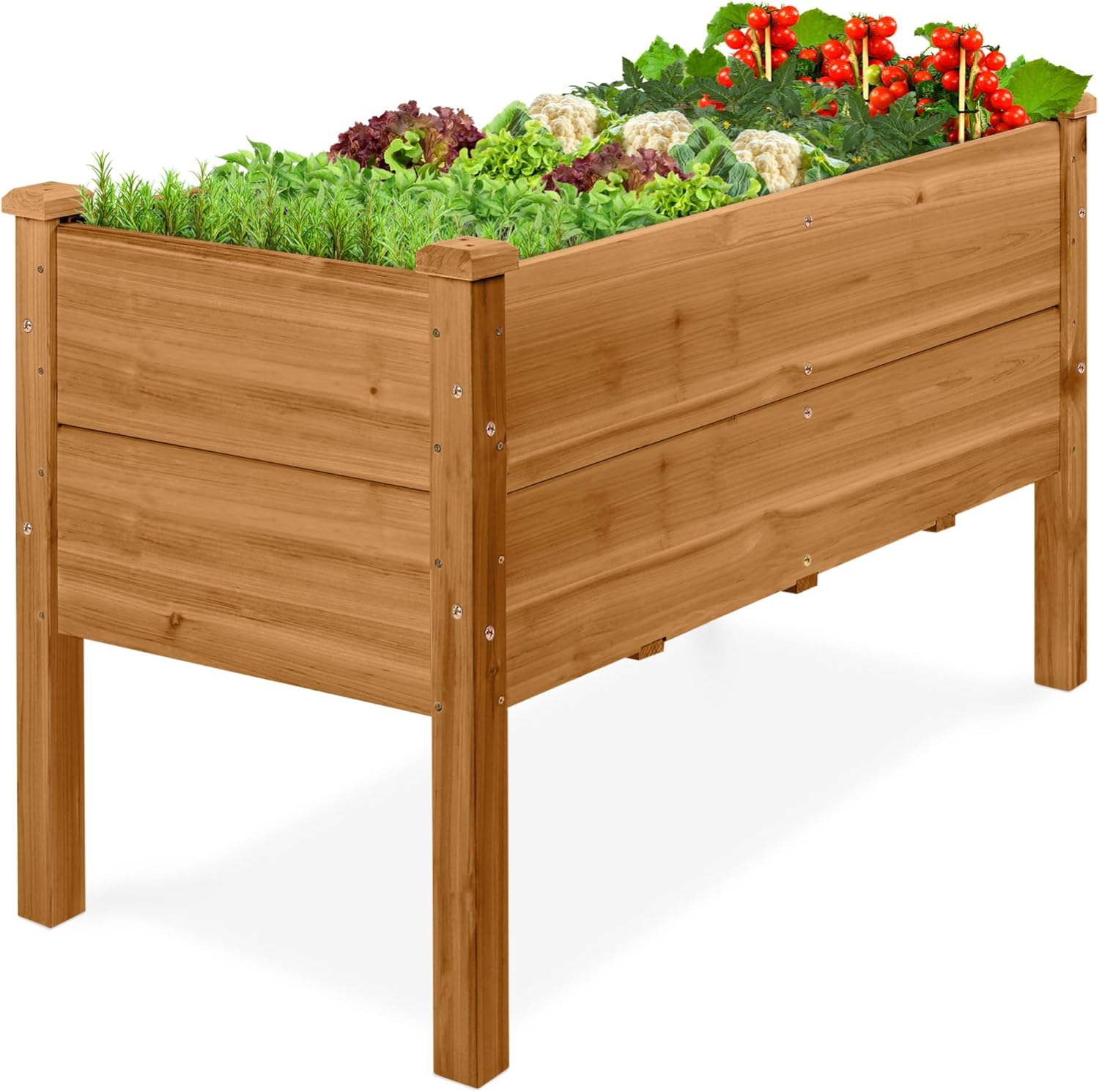
This raised garden bed provides a deep, elevated planting space designed for comfortable small-space vegetable and herb gardening. It assembles from fir wood panels with reinforced corner posts and alloy-steel supports to give a stable freestanding frame that keeps soil contained and plants protected from pets and ground pests. The 16 inch soil depth is suited to root vegetables and larger herbs, and the built-in drainage hole helps prevent waterlogging while keeping roots aerated. At its elevated height planting and harvesting are easier on the back compared with ground-level beds, and the rectangular footprint fits patios, decks, or narrow yards. Assembly requires following the included guide and the wood finish will need periodic maintenance outdoors to prolong life. The bed is compact so it limits the total planting area per unit compared with larger beds, but it is a practical, sturdy option for gardeners who want a durable, comfortable planter for vegetables and container-grown crops.
Best for: Gardeners who want a comfortable, durable raised bed for patios, decks, or small yards and prioritize ease of planting and healthy root development.
Less Ideal for: People needing very large contiguous growing areas or those who prefer maintenance-free synthetic planters for long-term outdoor exposure.
- Deep 16 in soil depth suitable for root vegetables and larger herbs
- Elevated freestanding design reduces bending and protects plants from ground pests
- Solid fir wood panels with reinforced corners for stable, wobble-resistant support
- Built-in drainage hole helps prevent waterlogging and improves root health
- Requires outdoor maintenance of the wood finish to resist rot and weathering
- Smaller footprint limits total planting area compared with larger raised beds
Verdict: Choose this elevated fir-wood raised bed when you want a deep, comfortable, and sturdy planter that makes growing root vegetables and herbs easy on small patios and decks.
SoliWood Cedar Raised Garden Bed with Legs, 48 x 24 x 30 in

| Capacity | 6 cubic feet |
|---|---|
| Material Type | Cedar Wood |
| Finish Types | Grey Water Based Painting |
| Included Components | Liner |
This SoliWood raised garden bed is a straightforward elevated planter designed for reliable home vegetable growing. It provides a roomy planting area and a comfortable 30-inch working height so you can tend herbs and vegetables without constant bending. Constructed from cedar with a water-based finish, the box resists outdoor exposure better than untreated softwood and comes with a liner and drainage holes to reduce waterlogging and help roots stay healthy. Assembly uses pre-drilled holes and basic fasteners so one person can put it together in a short time. The 2.4-inch-thick legs and a specified weight capacity make it stable for soil and mature plants on patios, balconies, and backyards. Expect natural wood to require occasional maintenance if left exposed over years, and the planting volume is moderate so very large root crops or multiple seasons of heavy soil may need more frequent replenishing. For straightforward, low-fuss vegetable beds that prioritize durable materials and ergonomic access this unit delivers predictable performance.
Best for: Gardeners who want a dependable, ergonomic planter for growing vegetables and herbs on patios, balconies, or small backyards and who prioritize durable natural materials over lowest cost.
Less Ideal for: People who need very large planting volume for commercial-scale or heavy-rooted crops or who prefer maintenance-free synthetic planters.
- Cedar construction with water-based finish offers natural rot resistance for outdoor use
- Included liner and drainage holes improve soil moisture control and root health
- 30-inch height reduces bending and makes planting and harvest easier
- Pre-drilled holes and straightforward assembly speed setup for most users
- Moderate planting capacity may be small for very large vegetables or dense planting plans
- Natural wood will need periodic maintenance to preserve appearance and longevity
Verdict: A reliable, ergonomically raised cedar planter that makes growing vegetables easier while offering durable, well-draining construction.
KETOYARK HDPE Elevated Raised Garden Bed with Legs

| Capacity | 6.7 gallons |
|---|---|
| Material Type | High Density Polyethylene (HDPE) |
| Mounting Type | Floor Standing |
| Indoor Outdoor Usage | Indoor, Outdoor |
This KETOYARK raised garden bed is a compact elevated planter made from UV-resistant HDPE that stands on legs for waist-friendly planting. It is intended for small-space vegetable and herb growing on patios, balconies, or indoors where bending is a concern. Notable features include integrated drainage holes to prevent waterlogging, monolithic side panels designed to resist soil corrosion, and weather- and fade-resistant material that is easy to clean. The unit ships with basic installation tools and stainless fasteners and assembles to provide a stable, elevated planting surface. Practical benefits are obvious for everyday growers: it keeps soil off decks, improves ergonomics for planting and harvesting, and should last longer than wood in wet or sunny locations. Limitations are the planter's modest capacity and footprint, which suit herbs and a few compact vegetables but will not replace larger beds for heavy feeders or deep-rooted crops. Also assembly is required and plantable volume is constrained by the unit's compact dimensions.
Best for: Gardeners who want a low-maintenance, space-efficient elevated planter for herbs and small vegetables and who prioritize durability and convenience over large planting volume.
Less Ideal for: Growers who need deep or high-volume beds for tomatoes, large root vegetables, or full-season vegetable production should choose a larger raised bed or in-ground option.
- Durable HDPE construction resists UV, weathering, rot and is easy to clean
- Built-in drainage holes and ventilation to reduce waterlogging and root rot
- Elevated design reduces bending and makes planting/harvesting easier
- Monolithic side panels and rounded connections improve structural stability and resist soil corrosion
- Small internal capacity limits planting to herbs and compact vegetables rather than large, heavy-feeding crops
Verdict: A durable, low-maintenance elevated planter built for small-space vegetable and herb growing where ergonomics and weather resistance matter most.
BTY 3-Tier Vertical Raised Garden Bed Planter

| Number of Levels | 3 |
|---|---|
| Material Type | Metal, Plastic |
| Mounting Type | Floor Standing |
| Other Special Features of the Product | Drainage Hole, Lightweight, Rust Resistant, Scratch Resistant, Weather Resistant |
| Indoor Outdoor Usage | Indoor, Outdoor |
This BTY 3-tier vertical raised garden bed stacks three removable plastic planter boxes on a painted metal frame to create compact, elevated planting space for herbs, flowers, or small vegetables. It is designed for patios, balconies, decks, or small yards where horizontal space is limited. The triangular metal supports give the stand stability while the plastic bins include drainage holes and removable trays so excess water can flow through and be caught or emptied. The height and ergonomics reduce bending for planting and watering, which helps if you prefer gardening from a standing position. Assembly is straightforward with included tools and hardware. Practical benefits include weather and rust resistance for outdoor use, separate planting compartments for easy crop rotation, and a lightweight footprint that is simple to reposition. Limits to consider are the relatively small planter bin volume, so it is best for shallow-rooted herbs and compact plants rather than larger vegetables, and the painted metal finish may show wear over extended outdoor exposure in harsh climates.
Best for: A budget-minded gardener who needs an economical, space-saving elevated planter for herbs and small annuals on a deck or balcony and prefers minimal bending while tending plants.
Less Ideal for: Not a good choice for growers who need deep soil for large vegetables or want a heavy-duty, long-lived planter for extreme outdoor exposure.
- Three stacked planter bins maximize vertical growing space for small patios or decks.
- Drainage holes plus removable trays make watering and overwatering management easier.
- Painted metal frame with triangular supports provides stable, lightweight outdoor structure.
- Suitable for indoor or outdoor placement thanks to rust and weather resistant features.
- Planter bins are shallow so they do not accommodate deep‑rooted or larger vegetable plants.
- Painted finish and plastic components may degrade faster than heavy-duty all-metal options in very harsh weather.
Verdict: A compact, affordable elevated planter that stretches limited deck or balcony space into three usable herb and small-plant beds.
PASAMIC 30" Elevated Raised Garden Bed with Legs (Wood-Look HIPS)
| Capacity | 200 pounds |
|---|---|
| Indoor Outdoor Usage | Outdoor |
| Other Special Features of the Product | Fade Resistant |
| Finish Types | Wood-Look |
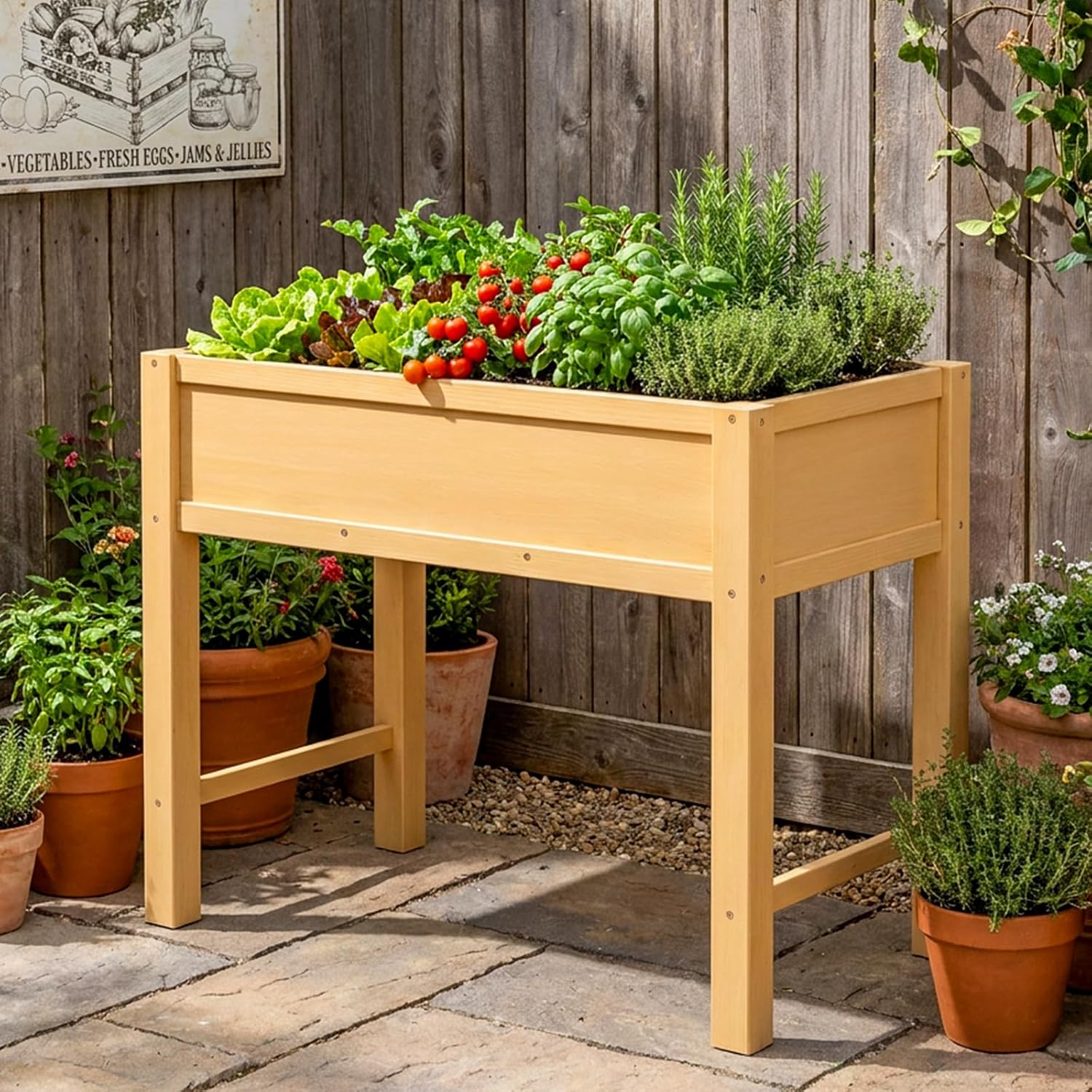
This PASAMIC elevated garden bed is a pre-assembled, 30-inch-tall planter built from heavy-duty HIPS with a UV-resistant wood-look finish. It is designed for easy setup using the included panels and instructions and provides a roomy interior for deep soil and healthy root development. The elevated height reduces bending and keeps plants away from ground moisture and many crawling pests, making it convenient for regular maintenance on decks, patios, and balconies. Notable features include a fade-resistant finish, a stable frame rated to support about 200 pounds, and materials that resist cracking, warping, rust, and rot compared with wood or metal alternatives. Practical benefits are lower upkeep, improved drainage from the raised design, and a sturdy, ergonomic work height. Limitations to note are its moderate weight capacity if you plan very heavy soils or built-in irrigation, and the rectangular footprint may be less adaptable in very tight or irregular deck layouts. Assembly is simplified by pre-assembled panels but still requires following the instructions for stable installation.
Best for: Gardeners who prioritize a low-maintenance, long-lasting deck planter that keeps growing beds elevated for easier planting and routine care.
Less Ideal for: People who need a planter for very heavy built structures or who require a custom-shaped bed for an unusually small or irregular deck area.
- Durable HIPS construction resists fading, cracking, warping, rust, and rot
- UV-resistant wood-look finish requires minimal maintenance
- 30 inch elevated height reduces bending and keeps plants off the ground
- Pre-assembled panels simplify setup and reduce installation time
- Rated to support approximately 200 pounds for soil and plants
- Capacity may be limiting for very heavy soil mixes or added waterlogged weight
- Rectangular fixed footprint may not fit very small or irregular deck spaces
Verdict: Choose this elevated HIPS planter when you want a low-maintenance, durable deck planter that keeps soil and plants elevated for comfortable, reliable gardening.
Best Choice Products 48 x 24 x 30in Raised Fir Wood Garden Bed with Liner

| Capacity | 5 cubic feet |
|---|---|
| Material Type | Fir Wood |
| Mounting Type | Floor Standing |
| Other Special Features of the Product | Drainage Hole |
| Indoor Outdoor Usage | Outdoor |
This raised garden bed is a straightforward option for small-space vegetable and herb gardening. Constructed from unfinished fir wood, it assembles into a 48 x 24 footprint with a 30 inch planting height that reduces bending while you tend plants. The included bed liner separates soil from the wood, slowing rot and keeping roots and soil contained, and a built-in drainage hole prevents waterlogging. With about 5 cubic feet of planting volume and a 200 lb weight capacity it accommodates several seasonal vegetables, potting mixes, or a mix of herbs and flowers. The all-wood construction looks natural outdoors but will need sealing or periodic maintenance to maximize longevity. Assembly requires following the included guide and handling multiple pieces, so expect some time and basic tools. For gardeners who value an elevated, ergonomic setup and a ready-to-use liner, this planter delivers a practical balance of planting space and convenience; heavy-duty or permanent raised beds will outlast unfinished fir without added treatment.
Best for: Gardeners who want an elevated, easy-to-use planter for vegetables or herbs and prefer a natural wood look while minimizing daily maintenance.
Less Ideal for: People seeking a permanent, maintenance-free raised bed or very large-scale vegetable production should consider heavier-duty or larger alternatives.
- Ergonomic 30 inch height reduces bending and makes planting and harvesting easier
- Included liner keeps soil off the wood to slow rot and discourage pests
- Built-in drainage hole prevents waterlogging and promotes healthier roots
- Natural fir wood construction offers an attractive, rustic look outdoors
- Unfinished fir requires sealing or periodic maintenance to resist weathering
- Assembly involves multiple parts and basic tools and can take time
Verdict: A practical, elevated wooden planter with a liner and drainage that makes small vegetable and herb gardening easier and more ergonomic.
Best Choice Products 48 x 24 x 32 in Mobile Raised Garden Bed (Fir Wood)

| Capacity | 135 quarts |
|---|---|
| Number of Levels | 2 |
| Plant or Animal Product Type | Vegetable |
| Material Type | Fir Wood |
| Other Special Features of the Product | Drainage Hole |
This raised garden bed brings tray-style planting up to waist height so you can garden from a comfortable standing position. It is built from fir wood, includes a garden bed liner to protect the wood from soil contact, and rolls on locking caster wheels so you can reposition it to follow sun or shade. The internal planting area is large enough for multiple vegetables or mixed herbs and the lower shelf gives handy storage for small tools and bags of potting mix. Drainage holes help prevent waterlogging and the bed is specified for outdoor use. Because it is a wooden unit it will require seasonal maintenance such as occasional sealing or inspection for rot at fastener points despite the liner. Assembly is required and the listed weight capacity and dimensions mean it is best for container-style vegetable gardening rather than very heavy raised-rock or concrete infill. For gardeners who want an ergonomic, movable deck planter that keeps soil off the decking, this is a practical choice.
Best for: Gardeners who prefer low-effort, low-back-strain planting on a deck or patio and want a movable, tidy planter for vegetables and herbs.
Less Ideal for: People who need a permanent, maintenance-free planter or who plan to fill the bed with very heavy materials or large shrubs that exceed the specified capacity.
- Waist-high design reduces bending and makes planting and harvesting easier
- Locking caster wheels allow easy repositioning and stable placement
- Included bed liner protects wood from direct soil contact and helps longevity
- Built-in lower shelf provides convenient storage for tools and supplies
- Drainage holes prevent oversaturation and promote healthier roots
- Made from fir wood so it will need periodic maintenance to prevent weathering and rot
- Assembly required and may take time for one person to complete
Verdict: A practical, movable waist-high planter that makes deck vegetable gardening easier and keeps soil off the decking.
Choosing the Right Elevated Deck Planter: Key Factors to Consider
Drainage and Water Management
Good drainage prevents waterlogging of roots and limits the risk of staining or rot on deck surfaces. Look for planters with integrated drain holes, a raised inner tray, or a separate reservoir that keeps soil from sitting in standing water. Some elevated planters include overflow channels or removable trays that let excess water escape safely away from deck boards.
Consider how you will water: if you plan to use drip irrigation or regular hand-watering, drainage must move water out quickly. A planter with a small reservoir can reduce watering frequency, but it still needs a way to prevent trapped moisture against the deck.
Material and Construction
Materials determine how the planter weathers sun, rain, winter freeze cycles, and repeated watering. Timber treated for outdoor use offers a natural aesthetic but needs rot-resistant species or protective finish. Composite or recycled plastics resist rot and often require less upkeep, while powder-coated steel or aluminum can be very durable if the hardware is corrosion-resistant.
Pay attention to joinery and how boards or panels are fastened. Sealed seams and non-porous liners prolong life. Lightweight materials are easier to move, but very lightweight constructions may flex under soil weight unless reinforced.
Footprint and Load on Deck
Measure usable deck space and consider the planter footprint. Long narrow planters can fit railings and narrow balconies, while wider boxes hold more soil and larger plants but exert greater point loads. Soil, water, and mature plants can add significant weight, so choose planters with design features that distribute load across multiple joists or include brackets to anchor to railings.
If you are on an upper-story balcony, check building load limits and favor shallower, wider designs or planters that spread weight evenly. Consider mobility if you may need to relocate units seasonally.
Accessibility for Planting and Maintenance
Elevated planters are chosen in part to reduce bending, but accessibility varies. Taller planters are easier on the back but can be awkward for reaching the center if they are very wide. Look for designs with removable inner pots, hinged lids, or modular panels that allow soil access without lifting heavy volumes.
Think about routine tasks: deadheading, harvesting herbs, and re-potting. A planter that offers comfortable working height and clear access to soil will make routine gardening less of a chore.
Attachment, Stability, and Safety
Stability is critical on decks and balconies where wind and limited space matter. Many elevated planters include bracket options to attach to railings or guardrails. Others rely on broad legs or weighted bases. Fastening options should avoid penetrating the deck surface when possible and instead use rail clamps or noninvasive anchors.
Also evaluate wind exposure. Tall or narrow planters can act as sails. Choose solutions with low center of gravity or the ability to be secured to existing structures to prevent tipping.
Planting Capacity and Soil Depth
Different plants require different soil depths. Herbs and shallow-rooted flowers do fine in shallower boxes, while tomatoes and larger vegetables need deeper, larger-volume planters. Calculate the soil volume you need for chosen plants and match planter depth to root systems.
More soil volume improves water retention and temperature buffering but increases weight. Balance plant needs against deck load limits and planter size constraints.
Deck-Protecting Installation Tips
Protecting the deck surface under an elevated planter is as important as the planter itself. Use a waterproof barrier or puddle tray between the planter and deck boards to catch overflow and evaporative salts. If the planter clamps to a railing, check for protective pads where metal or wood meets the deck to avoid scuffs.
Position planters where water runoff will not flow toward doors or seating areas. Periodically lift or slide planters to inspect the deck surface beneath for early signs of staining or mold, and rotate placement seasonally if possible.
- Place a thin plastic or rubber drip tray under planters that sit directly on decking
- Use furniture pads under fixed legs to prevent constant friction
- Anchor railing-mounted planters with noninvasive clamps and check tightness each season
Best Plants for Elevated Deck Planters
Choose plants that match the soil depth and microclimate of your deck. Low-growing herbs such as thyme, oregano, and chives do well in shallow troughs. Compact annuals and trailing plants add visual interest without needing deep soil.
For edible gardening, bush varieties of peppers, salad greens, and compact determinate tomatoes are good candidates for deeper elevated boxes. Consider companion planting to make efficient use of space and reduce pest pressure.
- Shallow planters: herbs, succulents, small annuals
- Deeper planters: peppers, bush tomatoes, larger herb clumps
- Trailing or spilling plants for visual softening of balcony edges
Seasonal Care and Winter Storage
Plan seasonal care around watering frequency and frost risk. Elevated planters warm up and dry out faster than ground beds, so they usually need more frequent watering in hot weather. Mulch surfaces to reduce evaporation and protect roots from temperature swings.
For winter, emptying soil from very shallow planters can reduce freeze-thaw damage. Move lightweight planters to sheltered locations or invert them and cover to prevent water pooling and ice expansion. Durable materials can often remain in place, but check fasteners and coverings after storms.
- Mulch to retain moisture in summer
- Reduce watering in cooler months and monitor for frost heave
- Store or secure lightweight planters before high-wind winter storms
Watering Strategies for Elevated Planters
Because elevated planters drain more freely, establishing a consistent watering routine helps avoid stress. Group plants with similar water needs together and use a watering can or drip tape that distributes water evenly. Consider a shallow reservoir or self-watering insert if you travel frequently or the planter is in a hot, exposed spot.
Check drainage outlets regularly to ensure they are not blocked by roots or debris. If runoff stains the deck, redirect overflow away from the structure using an extension or tray.
- Group plants by water need to simplify irrigation
- Use mulch or capillary mats to reduce watering frequency
- Inspect drain holes and trays monthly
Styling and Visual Placement
Elevated planters can define a balcony's layout and add vertical interest. Place planters at railing height to create a green screen or along edges to free central floor space. Mix heights and pot shapes to add depth and make a small space feel layered.
Consider color and texture of materials in relation to your deck and furniture. Natural wood blends with rustic settings while sleek metal or composite works better with modern furniture.
- Use railing planters to maximize floor space
- Mix tall and short planters for layered visual interest
- Coordinate planter finish with outdoor furniture for a cohesive look
How We Chose the Best Elevated Deck Planter
We prioritized features that matter for container gardening on decks and balconies. Drainage and water management were a primary filter because poor drainage leads to deck staining and root problems. Build durability and material choice were assessed for weather exposure and long-term resistance to rot or corrosion. Weight and footprint were evaluated to ensure units are safe for typical balcony load limits and that they fit narrow railings or limited floor space. Ease of planting and maintenance was considered, including accessibility for transferring soil, installing liners, and routine watering. Assembly and fastening options were checked so planters can be secured or removed without damaging deck surfaces. We excluded full-scale raised beds, freestanding ground planters, and any product that requires significant permanent attachment to a structure. We also filtered out designs with inadequate drainage options or materials unsuited for regular outdoor moisture. The included dimensions, drainage provisions, fastener compatibility, and construction materials were the decisive dimensions used to select the shortlist.
FAQ
How deep should an elevated deck planter be for herbs?
Herbs generally do well in 6 to 8 inches of soil, though some like rosemary prefer slightly deeper, denser soil. Aim for a planter that provides at least 6 inches of usable soil depth for most common culinary herbs.
Will an elevated planter damage my deck?
It can if moisture and drainage are not managed. Use trays or barriers, and pick planters with good drainage. Regularly check beneath the planter and use protective pads or noninvasive clamps to prevent surface damage.
Can I grow vegetables in an elevated deck planter?
Yes, many vegetables are well suited to deck planters when the box is deep enough. Shallow crops like salad greens need less depth, while tomatoes and peppers require more soil volume and support. Match plant choice to planter depth and weight limits.
How do I secure a railing-mounted planter safely?
Use brackets or clamps designed to fit your railing profile and avoid penetrating the deck surface when possible. Ensure the hardware spreads load across the railing and check attachments periodically, especially after storms or heavy winds.
What material is best for a planter exposed to sun and salt air?
In salt-air environments, corrosion-resistant materials such as marine-grade aluminum or certain composites perform better than untreated steel or softer woods. Durable plastics and sealed or rot-resistant woods are also practical choices.
Final Verdict
Choose an elevated deck planter that balances drainage, material durability, and footprint for your specific deck or balcony. Prioritize drainage solutions and secure fastening if you have limited space or heavy winds. Match soil depth to the plants you want to grow and consider maintenance access to make routine care easier. The right planter will protect your deck while making gardening on a balcony comfortable and productive. Focus on the tradeoffs between weight, capacity, and durability to pick the best fit for your space and planting goals.
