

Note: This article contains affiliate links. If you click on these links and make a purchase, I may earn a small commission at no extra cost to you. This helps support my research and content. Read my full affiliate disclosure here.
If you want to enjoy container blooms without kneeling or straining your back, an elevated flower planter can make daily care simpler and more enjoyable. The right raised planter keeps soil off the ground, improves drainage and airflow around root zones, and makes deadheading, watering, and pest checks faster. This guide covers seven shortlisted elevated flower planters that suit patios, small yards, and entryways. We evaluated each option for build durability, drainage performance, and practical handling so you can pick a planter that fits your space and maintenance style. Read on to see which features matter most and how these planters perform in real garden use.
Top Picks at a Glance
| Best Overall The best all-around choice for most situations | FOYUEE 31.5" Elevated Mobile Raised Garden Bed with Wheels and Shelf |  |
| Best Quality Built to a higher standard if you want something more solid | Permasteel EnGrow Raised Garden Bed with Eco-Chamber and Locking Wheels |  |
| Best Value The sweet spot between price and what you get | Keter Urban Bloomer 12.7 Gallon Elevated Raised Garden Bed |  |
| Best Budget The cheapest option that still gets the job done reliably | Generic Modular Elevated Planter Box with Wicker-Style Finish |  |
| Highest Rated A top-rated pick with lots of positive feedback | LDAILY Elevated Raised Garden Bed with Legs and Storage Shelf |  |
| Most Popular A crowd favorite that many people choose with confidence | Best Choice Products 48 x 24 x 30in Raised Fir Wood Garden Bed with Liner |  |
| Best Seller A high-volume bestseller chosen again and again | Land Guard Galvanized Oval Raised Garden Bed Kit (4×2×1 ft) |  |
FOYUEE 31.5" Elevated Mobile Raised Garden Bed with Wheels and Shelf

| Capacity | 2.5 cubic feet |
|---|---|
| Material Type | Metal |
| Finish Types | Powder Coated |
| Mounting Type | Floor Standing |
| Included Components | Wheels, Plant Stand |
This FOYUEE elevated raised bed is a mobile, waist-height planter designed for easy, ergonomic vegetable and herb growing on patios and balconies. The galvanized steel box with a powder-coated finish resists rust and supports heavy fill so you can add ample soil for productive vegetable crops. Built-in drainage channels and a central drain help prevent waterlogging while the raised profile improves air circulation around roots. A lower storage shelf keeps tools and pots handy and the integrated handle plus 6-inch all-terrain wheels make it straightforward to reposition the planter for sun or shelter. Typical uses are growing salad greens, herbs, compact vegetables, or creating a movable culinary garden outside a kitchen door. Assembly and moving when fully loaded will require some effort despite wheels, and the metal surface can warm in strong sun so seedling protection may be needed. The unit favors growers who want less bending and an organized, movable planting station rather than a large in-ground plot.
Best for: Gardeners who want an ergonomic, moveable vegetable planter for patios or balconies and value easy access, organization, and rust-resistant construction.
Less Ideal for: People who need very large planting volumes, deep-rooted crops, or a permanent in-ground bed for large-scale vegetable production.
- Powder-coated galvanized steel construction resists rust for outdoor use
- Raised waist-height design reduces bending and back strain
- Integrated drainage channels and central drain prevent water buildup
- Built-in wheels and handle allow the planter to be moved for light or weather
- Lower shelf provides convenient storage for tools and supplies
- May be heavy and awkward to assemble or move when filled with soil
- Metal walls can heat up in direct sun and may require shading for sensitive plants
Verdict: Buy this if you want a durable, waist-height mobile planter that makes growing herbs and compact vegetables easier without stooping.
Permasteel EnGrow Raised Garden Bed with Eco-Chamber and Locking Wheels

| Capacity | 5.6 cubic feet |
|---|---|
| Included Components | Drain Plugs, Storage Shelf, Wheels |
| Material Type | Powder Coated Zinc Alloy Steel |
| Other Special Features of the Product | Breathable, Drainage Hole, Fade Resistant, Portable, UV Resistant |
| Indoor Outdoor Usage | Indoor, Outdoor |
This Permasteel EnGrow raised garden bed is built for easy, high-performance container growing of herbs and compact vegetables on patios or balconies. Its powder-coated zinc alloy steel frame gives a sturdy, rust-resistant shell while the included soil platform and soil fabric lift the planting medium above an Eco-Chamber reservoir to avoid soggy roots. The reservoir holds several gallons, includes a drain valve for easy flushing and a water-level indicator so you know when to empty it. Two locking caster wheels make relocating or positioning the bed simple, and the small footprint fits tight outdoor spaces while still providing a usable planting area. Practical benefits include improved drainage and root aeration from the EnGrow design, reduced fussing over daily watering thanks to the indicator and reservoir, and durable outdoor finish for season-long use. Important limitations are the compact soil capacity that restricts very large crops and the metal construction which will be cooler or hotter than wood in extreme temperatures, so placement and planting choices should reflect that.
Best for: Buyers who want a low-maintenance, performance-focused herb or small-vegetable planter for a balcony or patio and value consistent drainage and easy mobility.
Less Ideal for: Not a good fit for growers who need large planting volumes for full-size vegetables or prefer all-natural wood planters for aesthetics or thermal buffering.
- EnGrow soil platform and reservoir prevent standing water and support healthier root aeration.
- Water-level indicator plus drain valve make monitoring and draining the reservoir straightforward.
- Powder-coated zinc alloy steel resists rust and provides a sturdy, long-lasting frame.
- Locking caster wheels allow easy repositioning and secure placement on patios or balconies.
- Relatively small soil capacity limits large or deep-rooted vegetables.
- Metal sides can heat or cool more rapidly than wood, affecting soil temperature in extremes.
Verdict: For small-space herb and vegetable growers who prioritize consistent drainage and low-maintenance performance, this EnGrow raised bed delivers reliable root health and easy mobility.
Keter Urban Bloomer 12.7 Gallon Elevated Raised Garden Bed

| Capacity | 22.4 gallons |
|---|---|
| Material Type | Resin |
| Other Special Features | Fade Resistant |
| Mounting Type | Floor Standing |
| Indoor Outdoor Usage | Outdoor |
The Keter Urban Bloomer is an elevated raised garden bed built for simple, low-maintenance herb and small-vegetable gardening on patios, balconies, or decks. It uses a built-in reservoir and water gauge to reduce watering frequency and help prevent overwatering and root rot, while a manual drainage tap allows you to empty the reservoir for indoor moves or heavy rain. The included seed sprouting tray makes starting seedlings neater, and the resin, wood-look finish is UV protected so it resists fading and rot better than real wood. Assembly is straightforward and the rectangular, floor-standing form fits alongside outdoor furniture. Because it is a single-piece plastic/resin planter, it is lightweight and weatherproof but will not provide the insulating or aesthetic qualities of natural wood or heavier materials. Capacity is limited compared with large raised beds, so it is best for herbs, salad greens, and a few compact vegetables rather than large crops.
Best for: Gardeners who want a practical, low-effort elevated planter for growing herbs and small salad greens on a balcony or patio and who prioritize easy watering management and low maintenance.
Less Ideal for: People planning to grow large vegetables, heavy production beds, or who want the look and thermal benefits of natural wood or metal raised beds.
- Self-watering reservoir with visible water gauge helps maintain consistent moisture and prevents overwatering
- Manual drainage tap makes it easy to drain excess water and move the planter indoors without leaks
- UV-protected resin construction resists fading, rot, and rust for low outdoor maintenance
- Included seed sprouting tray simplifies starting seedlings and transplanting into the bed
- Relatively small soil capacity limits the number and size of plants compared with full-size raised beds
- Resin construction lacks the natural insulation and aesthetic of wood or heavier materials
Verdict: If you want a compact, low-maintenance elevated planter that simplifies watering and seed starting for herbs and small veggies, this is a practical choice.
Generic Modular Elevated Planter Box with Wicker-Style Finish

| Capacity | 0.5 cubic feet |
|---|---|
| Material Type | Plastic, Polypropylene (PP) |
| Other Special Features | Elevated Raised Bed, Expandable, Modular |
| Mounting Type | Free Standing |
This elevated planter is a budget-friendly, modular raised bed intended for patios, balconies, and small outdoor spaces. It assembles without tools from polypropylene panels, connector clips, and leg posts so you can use a single unit or join multiples into a larger bed. The planter has a built-in bottom water reservoir plus drainage holes to help retain moisture while preventing waterlogging, and the wicker-style texture gives it a decorative look without the weight of real rattan. At roughly one foot square and shallow depth, it is best suited to annual flowers, herbs, and compact vegetable varieties rather than deep-rooted perennials. The plastic construction keeps the unit light and easy to move, but it is not as sturdy or long-lasting as thicker molded resin or wood and will show wear if left in harsh sun year after year. For gardeners on a tight budget who want a quick elevated planting solution and the option to expand modularly, this planter delivers practical performance with a few durability trade-offs.
Best for: Gardeners who need an inexpensive, easy-to-install elevated planter for flowers, herbs, or small vegetables on a patio or balcony and who value expandability and low upfront cost.
Less Ideal for: Those wanting a heavy-duty, long-lasting planter for large or deep-rooted plants or for permanent landscape installations should choose sturdier materials.
- Modular design lets you use one unit or connect multiple units to expand planting area
- Built-in water reservoir with drainage holes helps maintain consistent moisture
- Tool-free assembly with included hardware makes setup quick and simple
- Lightweight plastic construction is easy to move and reposition
- Wicker-style finish provides decorative look for outdoor spaces
- Shallow planting capacity limits use to shallow-rooted plants
- Lightweight plastic is less durable than wood or heavy resin in long-term sun exposure
Verdict: A cost-conscious, expandable elevated planter that gives quick, tool-free container gardening for small outdoor spaces.
LDAILY Elevated Raised Garden Bed with Legs and Storage Shelf
| Capacity | 132 pounds |
|---|---|
| Included Components | Instruction, Raised Garden Bed with Legs |
| Material Type | Metal, Rattan |
| Other Special Features | Drainage Hole |
| Mounting Type | Floor Standing |
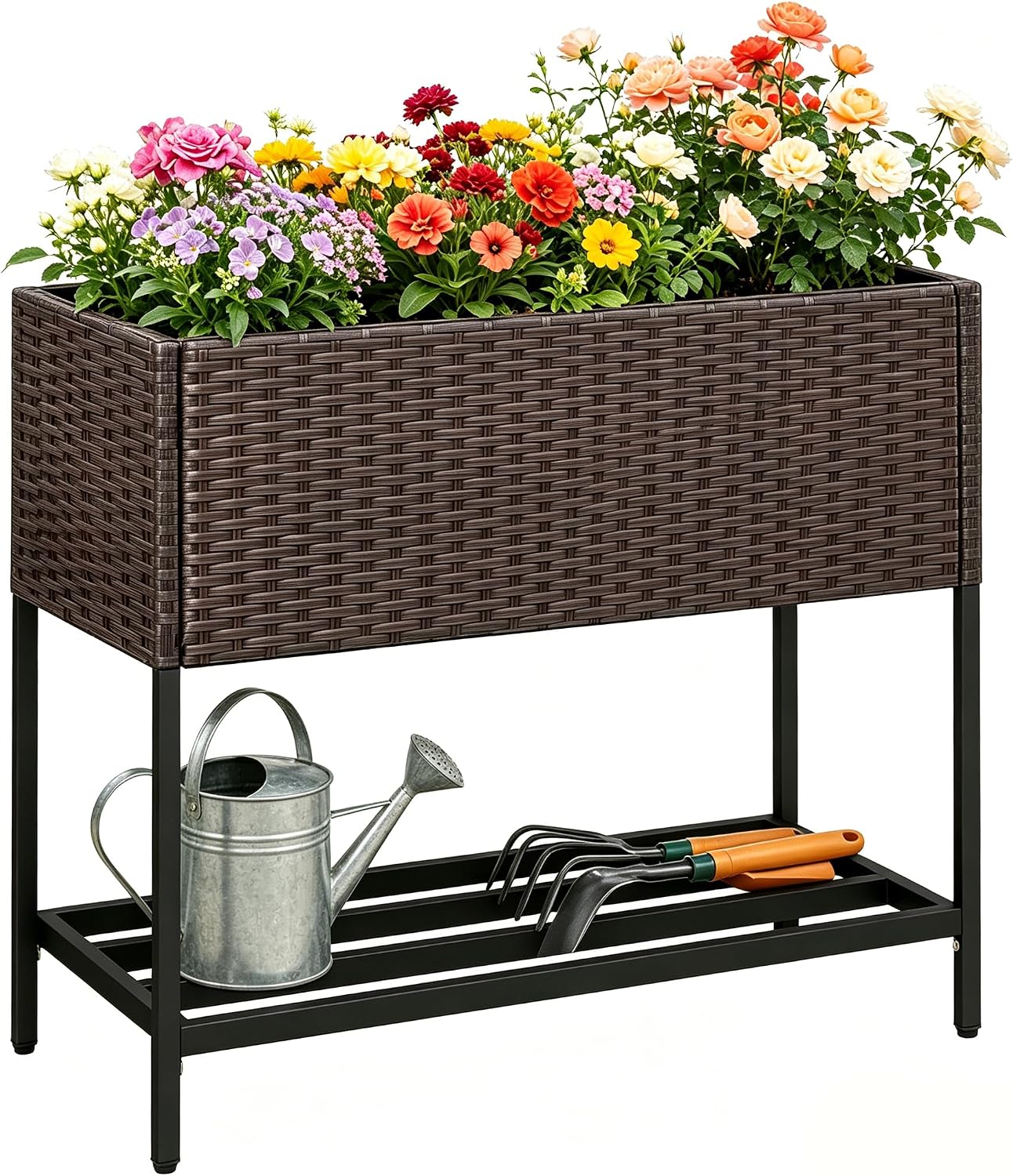
This elevated raised garden bed combines a sturdy metal frame with rattan panels to give you a durable, waist-high planting surface that is easy to use in small yards, patios, or balconies. It is designed to hold garden soil and plants while keeping you off your knees; the bottom drainage gap and included non-woven liner let excess water escape while retaining soil, which helps prevent waterlogging and keeps roots oxygenated. The lower shelf is handy for storing trowels, pots, or soil bags so tools stay within reach. The frame is rated to support up to 132 pounds in the planting box and 66 pounds on the shelf, so you can fill it with quality potting mix and a few heavier containers without worrying about collapse. Assembly is typical for metal-frame planters and will require basic tools and moderate effort. The rattan finish improves appearance but may need occasional cleaning and protection from prolonged wet conditions compared with all-metal alternatives. Overall it is a practical, space-saving planter for reliable, elevated gardening in outdoor settings.
Best for: Buyers who prioritize a dependable, no-fuss elevated planter for regular outdoor vegetable or ornamental planting and want a model that keeps tools handy and reduces bending while gardening.
Less Ideal for: People seeking a heavy-duty, all-weather commercial planter or those who need very large planting volumes for large perennial shrubs should consider larger or different construction options.
- Sturdy metal frame with stated capacity of 132 lb for the planting box and 66 lb for the shelf
- Built-in drainage gap plus non-woven liner to reduce waterlogging and improve root oxygenation
- Elevated height reduces bending and helps deter small ground animals
- Integrated bottom shelf provides convenient storage for tools and supplies
- Rattan panels may require extra care and could weather faster than all-metal planters
- Assembly requires tools and moderate effort
Verdict: A reliable elevated planter that combines a load-rated metal frame, drainage, and handy storage to make small-space vegetable and flower gardening easier and less physically demanding.
Best Choice Products 48 x 24 x 30in Raised Fir Wood Garden Bed with Liner

| Capacity | 5 cubic feet |
|---|---|
| Material Type | Fir Wood |
| Mounting Type | Floor Standing |
| Other Special Features of the Product | Drainage Hole |
| Indoor Outdoor Usage | Outdoor |
This raised garden bed is a straightforward option for small-space vegetable and herb gardening. Constructed from unfinished fir wood, it assembles into a 48 x 24 footprint with a 30 inch planting height that reduces bending while you tend plants. The included bed liner separates soil from the wood, slowing rot and keeping roots and soil contained, and a built-in drainage hole prevents waterlogging. With about 5 cubic feet of planting volume and a 200 lb weight capacity it accommodates several seasonal vegetables, potting mixes, or a mix of herbs and flowers. The all-wood construction looks natural outdoors but will need sealing or periodic maintenance to maximize longevity. Assembly requires following the included guide and handling multiple pieces, so expect some time and basic tools. For gardeners who value an elevated, ergonomic setup and a ready-to-use liner, this planter delivers a practical balance of planting space and convenience; heavy-duty or permanent raised beds will outlast unfinished fir without added treatment.
Best for: Gardeners who want an elevated, easy-to-use planter for vegetables or herbs and prefer a natural wood look while minimizing daily maintenance.
Less Ideal for: People seeking a permanent, maintenance-free raised bed or very large-scale vegetable production should consider heavier-duty or larger alternatives.
- Ergonomic 30 inch height reduces bending and makes planting and harvesting easier
- Included liner keeps soil off the wood to slow rot and discourage pests
- Built-in drainage hole prevents waterlogging and promotes healthier roots
- Natural fir wood construction offers an attractive, rustic look outdoors
- Unfinished fir requires sealing or periodic maintenance to resist weathering
- Assembly involves multiple parts and basic tools and can take time
Verdict: A practical, elevated wooden planter with a liner and drainage that makes small vegetable and herb gardening easier and more ergonomic.
Land Guard Galvanized Oval Raised Garden Bed Kit (4×2×1 ft)

| Material Type | Metal |
|---|---|
| Finish Types | Double-layer galvanized |
| Capacity | 7.14 cubic feet |
| Mounting Type | Floor Standing |
This Land Guard raised garden bed is a simple, durable option for planting vegetables, herbs, or mixed annuals in a compact outdoor space. The kit arrives as flat panels that assemble into an oval planter about 4 by 2 feet and 1 foot deep, and setup is straightforward so you can fill and plant in minutes. Its double-layer galvanized steel construction and wave-shaped panels are intended to resist corrosion and add rigidity, and the manufacturer states thicker panels at stress points to reduce deformation. An open base design lets excess water drain and helps avoid root rot if placed on soil or lawn. Practical benefits include low maintenance, a tidy planted border that keeps soil contained, and a metal finish that lasts longer than untreated steel. Limitations are the shallow depth for deep-rooted crops and the likelihood the metal will warm quickly in hot sun, which may require more frequent watering or shade management. It is best used as a portable, long-lasting planter for raised-bed style container gardening rather than a full replacement for deeper in-ground beds.
Best for: Gardeners who want a quick-to-assemble, durable raised planter to grow vegetables or herbs in small outdoor spaces and who prioritize evidence of longevity over decorative complexity.
Less Ideal for: Growers who need deep soil for large root crops, or those looking for insulated or fully enclosed beds to control soil temperature and moisture long-term.
- Galvanized double-layer steel resists corrosion for multi-season outdoor use
- Oval, interlocking panel design assembles quickly with included tools
- Open base allows natural drainage to reduce standing water and root rot
- Compact footprint fits small patios, balconies, and tight garden beds
- Only 12 inches deep which limits planting of larger, deep-rooted vegetables or shrubs
- Metal surface can heat up in full sun and increase watering needs
Verdict: A tough, easy-to-assemble galvanized oval raised bed that gives small-space gardeners a durable, low-maintenance container for vegetables and herbs.
Choosing the Right Elevated Flower Planter: Key Factors to Consider
Material and Weather Resistance
What a planter is made from determines how it weathers sun, rain, and freezing temperatures. Wood can look attractive but may need preservative treatment or rot-resistant species to last several seasons. Metal frames provide strength but can corrode unless powder-coated or made from rust-resistant alloys. Plastics and composite materials avoid rot and rust, but cheap plastics can become brittle in sun or crack in cold. Consider how exposed the planter will be and choose a material that matches the climate and desired lifespan.
Material also affects thermal behavior and moisture. Dark metals and plastics heat up faster in full sun, which can stress roots. Lighter or insulated materials moderate soil temperatures. Durable finishes and UV-stable components reduce long-term maintenance and help the planter retain its look through multiple seasons.
Drainage Design and Soil Retention
Good drainage is critical for container flowers to avoid waterlogging and root diseases. Look for planters with pre-drilled drainage holes, removable plugs, or layered drainage chambers that allow excess water to escape while retaining soil. Built-in reservoirs can extend time between waterings but must be designed to prevent constant saturation of the root zone.
Soil retention features such as liners, lip edges, or mesh screens keep potting mix from washing out while still letting water pass. If the planter sits on a terrace or wooden deck, check whether water will drip below or if a catch tray is needed to protect the surface.
Working Height and Ergonomics
The main benefit of an elevated planter is reduced bending, so the working height needs to match who will use it. A comfortable height allows planting, deadheading, and watering while standing or sitting without hunching. Taller planters are better for gardeners with back issues but can be top-heavy when full of soil; shorter raised planters are easier to stabilize but might not eliminate bending entirely.
Also consider edge width and access to the planting area. Narrow rims and wide planting beds offer different planting patterns and maintenance ergonomics. Ensure there is enough top access to reach the back plants for routine tasks.
Capacity, Soil Volume, and Planting Depth
Soil volume determines how many plants you can fit and how well the planter buffers moisture and nutrients. Deep planters support larger root systems and longer flowering displays without frequent replanting. Shallow elevated planters limit choices to smaller bedding plants but use less potting mix and reduce overall weight.
Think about how the planter will be used: massed annuals, mixed perennials, or trailing plants all have different root and soil needs. The right planting depth helps maintain consistent soil moisture and reduces the need for daily watering.
Stability and Support
Once filled with soil, elevated planters can be heavy and top-heavy depending on height and leg design. Sturdy legs, bracing, and a low center of gravity improve stability in wind and when leaning on the edge for maintenance. Some designs include feet or anchors to protect decking and prevent tipping.
Check whether the planter will sit on an uneven surface and whether adjustable feet or leveling options are available. A stable planter is safer around children and pets and reduces the risk of spilled soil and damaged plants.
Maintenance, Cleaning, and Winter Care
Planters require occasional cleaning, liner replacement, and winter prep. Materials that resist staining and mold are easier to rinse and scrub. Removable liners or inserts simplify soil changes and fall cleanup. If you live where ground freezing is common, consider whether the planter can be drained and stored or whether the materials will survive freeze-thaw cycles.
Easy access to interior corners and seams makes it simpler to remove old soil and debris. Lower-maintenance surface finishes extend the time between cosmetic upkeep tasks.
Where Elevated Flower Planters Work Best
Elevated flower planters are well suited to patios, balconies, entryways, and small yards where ground space is limited. They create a focal point at eye level, which is useful for creating layered plantings or screening a view without a full garden bed. Because they sit above the ground, planters are also helpful where soil quality is poor or contaminated and you want to control the growing medium.
Use elevated planters near seating areas or walkways for easier deadheading and watering. They also make it easier to manage pests that spend most of their time at ground level, though they do not replace regular inspection and integrated pest management.
- Ideal for small outdoor spaces and patios
- Good for areas with poor or contaminated soil
- Places plantings at eye level for visual impact and easier care
Planting Mixes and Fertility Strategy
Choose a potting mix formulated for containers, with good water retention and drainage. Blends that include composted bark, perlite, and well-aged compost hold moisture while allowing excess to escape. Avoid using garden soil alone because it compacts and impedes drainage.
Fertilize container plantings more regularly than garden beds because nutrients leach with each watering. Use a balanced slow-release granular feed at planting, then supplement with a liquid feed during the growing season for continuous blooms.
- Use a high-quality container potting mix with organic matter
- Apply a baseline slow-release fertilizer at planting
- Top-dress or feed liquid fertilizer through the season for steady blooms
Watering Techniques for Elevated Plantings
Elevated planters dry faster than ground beds since they are exposed on all sides. Water deeply but less frequently to encourage roots to grow downward and access available moisture. Check moisture by probing the soil with a finger or a moisture meter rather than relying on surface dryness.
Consider built-in reservoirs or self-watering inserts for hot sites or if you travel frequently. When using reservoirs, monitor for signs of overwatering because standing water can lead to root problems if the system does not allow proper oxygen exchange.
- Water deeply and check subsurface moisture
- Use reservoirs or inserts when necessary, but watch for over-saturation
- Mulch the surface with decorative bark or gravel to reduce evaporation
Placement and Light Considerations
Match the planter location to the light needs of chosen plants. Full-sun annuals benefit from south- or west-facing placement, while shade-tolerant perennials do better on the north side or under light canopy. Because planters are movable, you can experiment with placement to find the best exposure throughout the season.
Also think about sightlines and traffic flow. Elevated planters create vertical interest but can obstruct a narrow walkway if placed without consideration. Keep access clear for watering and maintenance tasks.
- Place according to plant light requirements
- Avoid blocking walkways or seating areas
- Use mobility to adjust placement with seasonal light shifts
Seasonal Care and Overwintering
Prepare elevated planters for winter by removing spent annuals and trimming perennials as appropriate. Reduce watering late in the season to harden off roots before cold weather. If planters have reservoirs, drain them if freezing is expected to prevent cracking.
Decide whether the planter will remain outdoors year-round. Some materials tolerate freeze-thaw cycles well, while others benefit from being emptied and stored. For long-term plantings, refresh the top few inches of planting mix in spring and add compost to rebuild fertility.
- Clear out spent plants and drain reservoirs before freeze
- Refresh soil surface in spring to restore nutrients
- Store or protect vulnerable materials over winter if needed
How We Chose the Best Elevated Flower Planter
We evaluated elevated flower planters using criteria that reflect how these products perform in everyday garden situations. Durability matters because outdoor planters face sun, rain, and temperature swings. Drainage and soil retention are essential to prevent root rot and to support healthy flowering. Ergonomics and working height determine whether the planter actually reduces bending and improves comfort during planting and maintenance. Material weight and portability affect where you can place the planter and how easy it is to move for seasonal changes. Assembly and maintenance ease reduce time spent on setup and cleaning, which is important for repeated seasonal use. We excluded planters designed exclusively for vegetables or very heavy raised beds that are impractical for patios. We also filtered out units with unclear drainage solutions or fragile construction that would not withstand outdoor exposure. The shortlist focuses on planters with clear drainage design, weather-resistant materials, sensible working height, and practical access for planting and upkeep.
FAQ
How deep should an elevated flower planter be for mixed annuals and perennials?
For most annuals and smaller perennials, 8 to 12 inches of planting depth is adequate. Larger perennials or plants with deeper roots benefit from 14 inches or more. Depth affects available soil volume and watering frequency.
Can I use regular garden soil in an elevated planter?
Regular garden soil tends to compact in containers and reduces drainage. A loose container potting mix with organic matter and drainage amendments performs better for elevated planters and helps roots access oxygen.
Do elevated planters need drainage holes?
Yes, effective drainage is important to prevent root rot. Look for planters with holes, removable plugs, or a designed drainage chamber. If the planter sits on decking, add a tray or ensure water will not damage the surface.
How do I prevent an elevated planter from tipping over?
Choose a design with sturdy legs, cross-bracing, and a low center of gravity. Place heavier soil and large plants lower in the bed, anchor the planter if needed, and avoid placing it on uneven surfaces without leveling the feet.
What maintenance do elevated planters require between seasons?
Basic tasks include removing spent plants, refreshing the top layer of potting mix, checking drainage holes, and cleaning liners or inserts. If the planter is made of a material sensitive to cold, consider emptying and storing it during winter.
Final Verdict
When choosing an elevated flower planter, prioritize drainage, working height, and material durability based on your site and how you garden. Decide whether you need deeper soil for larger plantings or a lighter, portable unit for seasonal display. Expect tradeoffs between weight and stability, and plan for maintenance tasks like soil refresh and winter protection. Focus on the features that match your routine and space, and you will find an elevated planter that reduces lifting and makes container gardening more enjoyable.
