

Note: This article contains affiliate links. If you click on these links and make a purchase, I may earn a small commission at no extra cost to you. This helps support my research and content. Read my full affiliate disclosure here.
If you spend time tending containers on a balcony, deck, or tight patio, choosing the right elevated planter can change how you garden. Elevated outdoor planters lift pots to a comfortable height, reduce back strain, and improve drainage and airflow for healthier plants. This guide covers seven top shortlisted elevated outdoor planters that suit small-space outdoor living and offers clear criteria to help you pick the one that matches your routine and location. We focused on how these planters perform in real garden use, including water management, material longevity, and ease of planting.
Top Picks at a Glance
| Best Overall The best all-around choice for most situations | Veradek Mason Series Raised Lima Planter with Stand |  |
| Best Quality Built to a higher standard if you want something more solid | Veradek Pure Series Tall Tapered Outdoor Planter with Removable Shelf (2-pack) |  |
| Best Value The sweet spot between price and what you get | COMHOMA 2-Pack Elevated Galvanized Metal Raised Garden Beds with Legs |  |
| Best Budget The cheapest option that still gets the job done reliably | BTY 3‑Tier Vertical Raised Garden Bed Planter |  |
| Highest Rated A top-rated pick with lots of positive feedback | GYMHILL Outdoor Raised Garden Bed Elevated Planter with Wheels and Storage Shelf |  |
| Most Popular A crowd favorite that many people choose with confidence | Land Guard Galvanized Oval Raised Garden Bed Kit (4×2×1 ft) |  |
| Best Seller A high-volume bestseller chosen again and again | LEETOLLA 31.6" Elevated Raised Garden Bed with Wheels and Shelf |  |
Veradek Mason Series Raised Lima Planter with Stand

| Capacity | 35.6 liters |
|---|---|
| Material Type | Plastic-stone composite planter & Galvanized Steel Stands |
| Other Special Features of the Product | UV Resistant, Weather Resistant |
| Mounting Type | Floor Standing |
| Indoor Outdoor Usage | Outdoor |
The Veradek Raised Lima planter pairs a textured plastic-stone composite pot with a galvanized steel stand to give plants a lifted, modern display for patios, porches, or balconies. It is used as a freestanding outdoor planter that elevates pots off the ground to improve visibility and airflow around the root zone while creating a cleaner, more intentional decor look. Notable features include UV and weather resistance, crack- and fade-resistant composite construction, and a simple no-tools assembly for the stand. The composite mimics concrete appearance without the weight or brittleness, so it resists freezing and cracking in cold climates and will not easily chip during handling. The included stand adds height and presence for statement plants like fiddle leaf figs, monsteras, or mixed seasonal arrangements. Limitations are that the pot is intended primarily for outdoor display and is sold as a single unit, so larger plantings or planters needing very deep root space may require a different size or additional drainage planning.
Best for: Buyers who want a durable, low-maintenance elevated planter to give potted plants a polished, modern look on patios, balconies, or small yards.
Less Ideal for: Gardeners needing very deep or large-capacity planting containers or those who prefer heavyweight real concrete planters for permanent installations.
- Plastic-stone composite looks like concrete but resists cracking and fading
- UV resistant and weather resistant for year-round outdoor use
- Includes galvanized steel stand to elevate plants and improve display
- Lightweight compared with real concrete for easier placement and handling
- Sold as a single 15-inch planter so not suitable alone for very large specimens
- Designed primarily for outdoor use which limits indoor versatility
Verdict: Choose this raised Veradek planter when you want a weatherproof, concrete-look pot on a sturdy stand that elevates and showcases outdoor plants with minimal maintenance.
Veradek Pure Series Tall Tapered Outdoor Planter with Removable Shelf (2-pack)

| Capacity | 73.6 liters |
|---|---|
| Number of Pieces | 2 |
| Material Type | Polypropylene Plastic |
| Other Special Features | UV Resistant, Weather Resistant |
| Mounting Type | Floor Standing |
The Veradek Pure Series tall taper planters are designed to deliver durable, low-maintenance container planting for patios, entrances, and balconies. Made from molded polypropylene, the pots are lightweight yet impact resistant and treated for UV and weather exposure so they hold up through sun and colder conditions without cracking or heavy fading. Each set includes a removable insert shelf so you can either fill the body with soil for deep-rooted plantings or use the insert for shallower plant mixes and easier repotting; the insert also offers an optional drainage hole. At 30 inches tall these planters create height and presence for elevated displays of perennials, small shrubs, or dramatic succulents. The single-wall construction keeps them easy to move compared with heavy ceramic or metal alternatives but means they do not offer the insulating mass of heavier materials, so soil can warm and cool faster. For gardeners who prioritize robust, weatherproof planters that are simple to manage, these deliver strong real-world performance with a modern profile.
Best for: Gardeners who want durable, low-maintenance planters that create height and impact while remaining easy to move and manage, especially for patio, balcony, or entryway displays.
Less Ideal for: People seeking heavy, decorative materials with built-in insulation or those who prefer natural stone or ceramic aesthetics for formal garden designs.
- UV and weather resistant finish designed to resist fading and cracking
- Lightweight polypropylene construction makes placement and relocation easy
- Removable insert shelf gives flexibility for deep fills or contained inserts
- Tall 30 inch profile provides strong vertical presence for elevated plantings
- Single-wall plastic lacks the thermal mass of ceramic or stone, so root temperatures fluctuate more
- Not insulated; may need protection in extreme freeze-thaw conditions
Verdict: A weatherproof, lightweight pair of tall planters that deliver reliable, low-maintenance performance and strong vertical presence for outdoor container gardens.
COMHOMA 2-Pack Elevated Galvanized Metal Raised Garden Beds with Legs
| Capacity | 48 gallons |
|---|---|
| Number of Levels | 1 |
| Material Type | Metal |
| Finish Types | Powder Coated |
| Other Special Features of the Product | Breathable, Drainage Hole, Rust Resistant, Scratch Resistant, Weather Resistant |
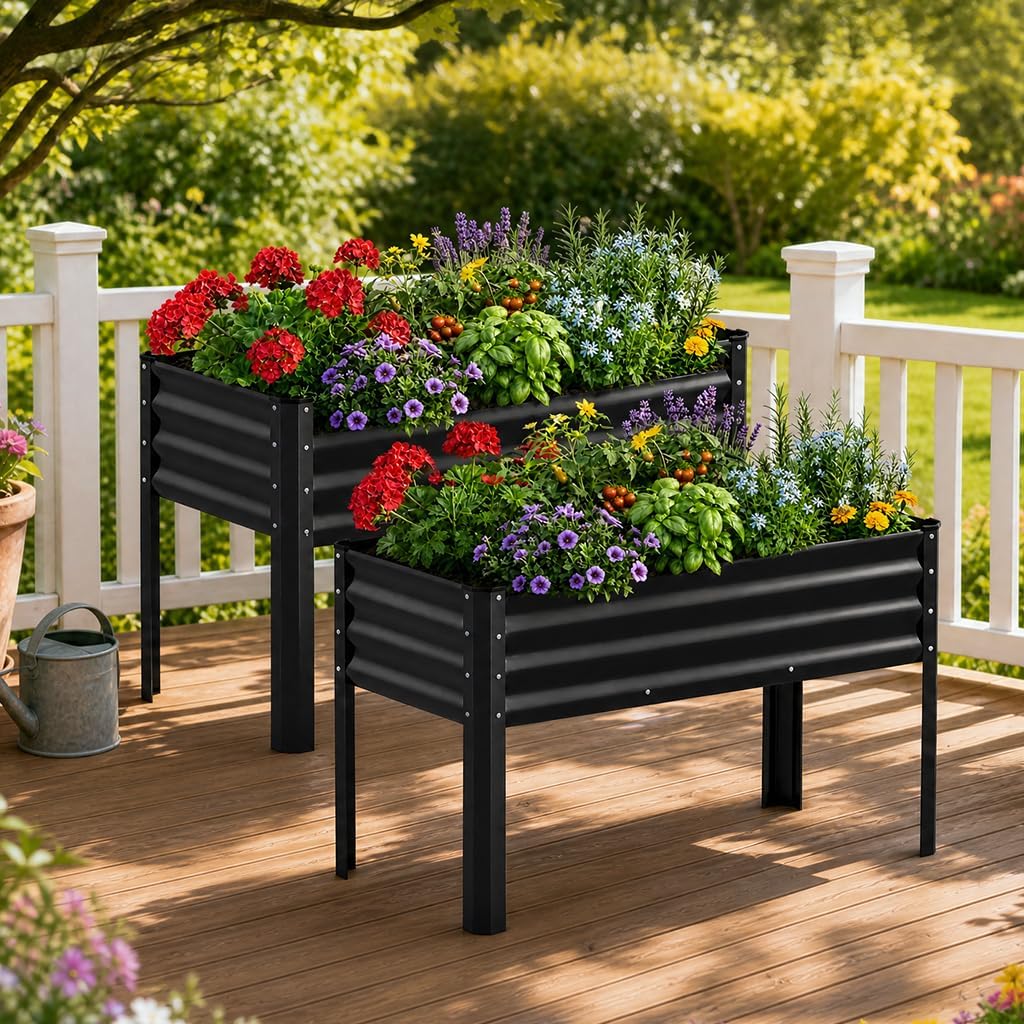
The COMHOMA raised garden bed set puts two elevated, metal planters on legs into a compact backyard or patio footprint so you can grow vegetables, herbs or flowers without kneeling. Each box is galvanized steel with a powder coated finish and predrilled drainage holes, so soil drains freely and the metal resists corrosion and surface scratches in outdoor conditions. Assembly is straightforward with included screws and hardware and the raised height and legs make planting and harvesting easier while keeping small pests from digging. The set includes a middle shelf and all-metal construction that feels sturdier and longer lasting than thin wood alternatives, but the metal panels and assembly mean it is heavier to move once filled. It is best for shallow-to-medium depth beds and container-style planting rather than very deep-rooted crops. For gardeners who value durability, easy drainage, and less bending, this set is a practical elevated planter option.
Best for: Gardeners who want a durable, low-maintenance elevated planter to maximize productivity in a patio, balcony, or small backyard while minimizing bending and pest issues.
Less Ideal for: Those who need very deep beds for large root crops or who want a lightweight, frequently moved container system should consider other options.
- Galvanized steel construction with powder coating offers strong corrosion and scratch resistance for outdoor use
- Raised design reduces bending and keeps plants off the ground to limit pest damage and improve ergonomics
- Built-in drainage holes and breathable design promote airflow and prevent soggy soil
- Comes as a two-piece set with included hardware and pre-drilled holes for faster assembly
- Heavier when filled and less portable than lightweight plastic or fabric planters
- Metal sides limit how deep a soil profile you can create for very deep-rooted vegetables
Verdict: Choose this sturdy galvanized elevated bed set if you want a low-bend, rust-resistant planter that improves drainage and lasts in outdoor conditions.
BTY 3‑Tier Vertical Raised Garden Bed Planter

| Number of Levels | 3 |
|---|---|
| Material Type | Metal, Plastic |
| Other Special Features of the Product | Drainage Hole, Lightweight, Rust Resistant, Weather Resistant |
| Indoor Outdoor Usage | Indoor, Outdoor |
This BTY 3‑Tier Vertical Raised Garden Bed turns a narrow balcony, patio, or corner of your yard into organized growing space by stacking three shallow planter boxes on a triangular metal frame. Each box has drainage holes and a removable tray so excess water drains down and can be caught below, which helps prevent overwatering and keeps the lowest tier from sitting in standing water. The metal frame is described as rust and weather resistant and the lightweight construction makes it easy to move or reposition. Assembly is straightforward and includes basic tools and instructions. Because the boxes are shallow, the planter is best for herbs, small annuals, lettuce and other shallow‑rooted vegetables rather than deep‑rooted crops. The compact footprint and vertical layout maximize planting area in tight spaces, but expect smaller individual yields per tier compared with full‑depth raised beds. Overall this is a practical, budget‑friendly option for adding accessible, tiered planting where space is limited.
Best for: Buyers who need an affordable, space‑saving planter for herbs, salad greens, and small flowers on a balcony, patio, or small yard and prioritize value and ease of setup.
Less Ideal for: Gardeners who want to grow large, deep‑rooted vegetables or need high soil volume for perennials should choose a full‑depth raised bed instead.
- Vertical 3‑tier design maximizes planting area in small footprints
- Drainage holes with removable trays help control moisture and reduce root rot
- Metal triangular frame gives stable support and is described as rust and weather resistant
- Lightweight and easy to move or reposition for seasonal use
- Shallow planter boxes limit use to shallow‑rooted plants and reduce individual yields
Verdict: A low‑cost, space‑saving vertical planter that gives beginners and budget gardeners three usable tiers for herbs and small vegetables in tight outdoor spaces.
GYMHILL Outdoor Raised Garden Bed Elevated Planter with Wheels and Storage Shelf

| Brand Name | GYMHILL |
|---|---|
| Included Components | Wheels |
| Other Special Features of the Product | UV Resistant |
| Mounting Type | Floor Standing |
| Indoor Outdoor Usage | Outdoor |
This elevated planter is built from thick, UV-resistant resin intended to withstand sun and rain without cracking or rusting, which makes it a low-maintenance option for patios, balconies, and small outdoor gardens. It assembles quickly without tools and has smooth rounded edges for safer handling. The raised design and ergonomic height reduce bending while the reinforced base and four sturdy legs keep the bed stable when filled with soil. Practical touches include drainage holes to prevent waterlogging, a built-in water-level indicator so you can judge watering at a glance, and a lockable 360 degree swivel wheel system that makes the planter easy to move and then secure in place. A lower shelf provides a handy place for potting tools or supplies. The main limitations are that it is a plastic/resin construction rather than wood or metal so it will have a different aesthetic and may feel less substantial to some buyers, and the planting area is divided which reduces continuous root space for very large plants.
Best for: Gardeners who prioritize a durable, low-maintenance elevated planter that stays stable outdoors and reduces bending for frequent container planting tasks.
Less Ideal for: Buyers seeking a heavy-duty natural-wood or metal aesthetic or those needing one large uninterrupted planting bed for big root crops.
- UV-resistant resin construction resists cracking, warping, and rust for long outdoor life
- Tool-free assembly with smooth rounded edges for safer, quick setup
- Drainage holes plus built-in water-level indicator simplify irrigation management
- Lockable 360° swivel wheels and a lower shelf make the planter mobile and organized
- Reinforced base and four legs provide stable support when filled with soil
- Resin construction looks and feels less substantial than wood or metal alternatives
- Divided planting sections limit continuous root space for very large plants
Verdict: A practical, weather-resistant elevated planter that makes outdoor container gardening easier to manage and move while minimizing maintenance.
Land Guard Galvanized Oval Raised Garden Bed Kit (4×2×1 ft)

| Material Type | Metal |
|---|---|
| Finish Types | Double-layer galvanized |
| Capacity | 7.14 cubic feet |
| Mounting Type | Floor Standing |
This Land Guard raised garden bed is a simple, durable option for planting vegetables, herbs, or mixed annuals in a compact outdoor space. The kit arrives as flat panels that assemble into an oval planter about 4 by 2 feet and 1 foot deep, and setup is straightforward so you can fill and plant in minutes. Its double-layer galvanized steel construction and wave-shaped panels are intended to resist corrosion and add rigidity, and the manufacturer states thicker panels at stress points to reduce deformation. An open base design lets excess water drain and helps avoid root rot if placed on soil or lawn. Practical benefits include low maintenance, a tidy planted border that keeps soil contained, and a metal finish that lasts longer than untreated steel. Limitations are the shallow depth for deep-rooted crops and the likelihood the metal will warm quickly in hot sun, which may require more frequent watering or shade management. It is best used as a portable, long-lasting planter for raised-bed style container gardening rather than a full replacement for deeper in-ground beds.
Best for: Gardeners who want a quick-to-assemble, durable raised planter to grow vegetables or herbs in small outdoor spaces and who prioritize evidence of longevity over decorative complexity.
Less Ideal for: Growers who need deep soil for large root crops, or those looking for insulated or fully enclosed beds to control soil temperature and moisture long-term.
- Galvanized double-layer steel resists corrosion for multi-season outdoor use
- Oval, interlocking panel design assembles quickly with included tools
- Open base allows natural drainage to reduce standing water and root rot
- Compact footprint fits small patios, balconies, and tight garden beds
- Only 12 inches deep which limits planting of larger, deep-rooted vegetables or shrubs
- Metal surface can heat up in full sun and increase watering needs
Verdict: A tough, easy-to-assemble galvanized oval raised bed that gives small-space gardeners a durable, low-maintenance container for vegetables and herbs.
LEETOLLA 31.6" Elevated Raised Garden Bed with Wheels and Shelf

| Capacity | 2.5 cubic feet |
|---|---|
| Number of Levels | 2 |
| Material Type | Iron |
| Indoor Outdoor Usage | Indoor, Outdoor |
| Other Special Features of the Product | 2 universal wheels + 2 stabilizing feet; 5 drainage holes + 2 cross-lines; Handle Bar; Storage Shelf |
This elevated raised bed brings container gardening up to standing height so you can plant and tend vegetables, herbs, and flowers without kneeling. The powder-coated iron tray holds about 2.5 cubic feet of soil and features five drainage holes plus dual cross-channels to avoid waterlogging. Two large all-terrain wheels and an ergonomic handle let one person reposition the bed on hard surfaces, while two stabilizing feet keep it steady once parked. The included lower shelf provides a handy spot for small tools or pots, and assembly is straightforward with the supplied hardware and basic tools. Because the shell is metal with a painted finish it is more durable than many wood boxes for exposed outdoor use, but you should address scratches promptly and follow care instructions to limit corrosion over time. The planting depth is modest, so this is best for shallow-rooted vegetables, herbs, and annuals rather than very large root crops.
Best for: Buyers who want an accessible, low-effort raised planter for balconies, patios, or small yards and prioritize comfort and easy mobility over deep-soil planting.
Less Ideal for: Gardeners needing deep beds for large root vegetables or those who plan to grow heavy perennial root systems should choose a deeper, full-size bed instead.
- Standing height reduces bending and kneeling for easier long-term use.
- Built-in drainage with five holes and cross-channels helps prevent overwatering.
- Two large wheels plus an ergonomic handle make it easy to move to follow sun or protect plants from storms.
- Lower storage shelf keeps potting tools and supplies within reach.
- Powder-coated iron construction is more weather resistant than untreated wood and looks tidy on patios and balconies.
- Modest planting depth limits use to shallower-rooted edibles and ornamentals.
- Painted metal can show scratches and may require periodic touch-up to prevent corrosion.
Verdict: If you want an easy-to-move, back-friendly planter for herbs and shallow vegetables on a patio or balcony, this wheeled elevated bed is a practical, low-strain choice.
Choosing the Right Elevated Outdoor Planters: Key Factors to Consider
Material and Weather Resistance
Material choice is the foundation of how long an elevated planter will last and how it behaves through seasons. Wood can be attractive and warm to the touch but needs proper rot-resistant species or preservative treatment to avoid splitting or decay over time. Metal frames are strong and compact, but lower-grade steel can rust without protective coatings while aluminum resists corrosion but can dent.
Plastic and composite materials resist rot and are lightweight, but lower-quality plastics can become brittle under prolonged UV exposure. Consider how much direct sun, wet weather, and winter freeze-thaw cycles your outdoor space sees, and choose a material rated for those conditions to minimize maintenance and replacement.
Drainage and Water Management
Good drainage prevents waterlogged soil and root rot, which is especially important in elevated planters where pots or liners may trap moisture. Look for planters with built-in drainage channels, raised bottoms, or removable trays that allow excess water to escape. If a planter uses a liner, ensure it has multiple drainage points and that trays are easy to remove and clean.
Consider how you water: if you hand-water heavily, you will want more effective overflow paths or a larger catch tray. For outdoor settings that receive heavy rain, planters with raised feet or slatted bases help move water away from roots and reduce standing moisture around the structure.
Stability, Load Capacity, and Wind Resistance
Elevated planters must safely support the combined weight of soil, plants, and water without tipping. Check construction joinery, leg bracing, and overall footprint. Narrow or tall stands are more likely to tip in wind unless counterweighted or anchored. A low, wide base increases wind resistance, while cross-bracing and thicker legs increase load capacity.
Think about the heaviest expected planting combination, especially if you use dense potting mixes or large ceramic pots. If the planter will sit on a balcony or raised deck, confirm weight limits and consider anchoring or choosing a model with a broader stance for safety.
Ergonomics and Working Height
One of the main benefits of elevated planters is reduced bending and better posture while planting, pruning, and harvesting. Consider the working height relative to the primary gardener: a comfortable height reduces strain on the back and knees during routine tasks. Some planters have adjustable legs or multiple height options to fit different users and containers.
Also evaluate access to the soil surface and how the design affects common tasks like repotting, inserting supports, or installing drip irrigation. Wide rims or removable trays can make routine care much easier than fixed, narrow designs.
Capacity, Pot Fit, and Planting Depth
Different plants need different root volumes. Herb and salad gardens can thrive in shallow, narrow planters, while vegetables and perennials may need deeper soil. Verify internal depth and whether the planter accepts standard pot sizes or uses a custom liner. Larger capacity holds more moisture and nutrients but also increases weight and may require stronger materials.
Think about the plants you plan to grow and whether the planter allows for layered planting, companion planting, or adding supports for taller crops. Flexibility to use removable pots or modular inserts increases the planter's usefulness over multiple seasons.
Maintenance and Ease of Cleaning
Routine maintenance affects how pleasant the planter is to own. Designs that allow easy removal of trays, liners, and soil make replanting and winterizing simpler. Materials that resist staining, mold, and algae reduce cleaning time. Hardware should be accessible and replaceable in case of corrosion or loosening.
Consider whether finishes need seasonal reapplication, if parts can be disassembled without tools, and how easy it is to flush out leftover fertilizer salts or soil residues. Low-maintenance choices reduce long-term upkeep and keep planters functional year after year.
Best Elevated Planter Styles for Small Patios
Elevated planters come in several styles that fit small outdoor areas: narrow railing boxes, compact bench planters, and step-up stands that sit against a wall. Each style trades off capacity and footprint. Railing boxes conserve floor space but limit planting depth, while bench-style planters offer more soil volume and a stable work surface.
Match the planter style to how you use the space. If you need seating plus planting, a bench planter doubles as a seat and growing bed. For maximal soil depth in a tiny footprint, choose a deeper compact planter rather than multiple shallow boxes.
- Railing mount boxes free up floor area but check load and railing size.
- Bench planters add stability and surface area for planting tasks.
- Narrow stands work well against walls and under windows.
Plant Choices That Thrive in Elevated Planters
Many vegetables, herbs, and ornamental plants do well in elevated planters when given adequate soil depth and consistent watering. Herbs, lettuces, and compact tomatoes are natural fits for shallower beds, while root crops and larger perennials need deeper containers.
Consider companion planting to maximize limited soil. Fast-growing salad greens can provide shade for seedlings of larger crops. Use lightweight soil mixes for hanging baskets or narrow stands to reduce weight while maintaining drainage and fertility.
- Shallow-friendly: herbs, salad greens, strawberries.
- Medium depth: peppers, compact tomatoes, bush beans.
- Deep-rooted: carrots, beets, larger perennials require deeper beds.
Placement, Sun, and Microclimates
Where you place an elevated planter affects plant performance and planter longevity. South- and west-facing patios receive more sun and heat, which can dry soil quickly and stress roots in small planters. East-facing or partially shaded spots retain moisture longer and suit shade-tolerant crops.
Also consider microclimates created by walls, buildings, or overhangs. These can protect planters from wind and cold but may trap heat. Position planters to balance sun exposure with protection from persistent winds that could tip lightweight stands.
- Monitor soil moisture more closely in hot, sunny exposures.
- Use windbreaks or heavier bases on exposed balconies.
- Group planters to create a microclimate and simplify watering.
Seasonal Care and Winter Storage
Seasonal changes influence how you maintain elevated planters. In fall, remove spent annuals and clear debris from trays and drainage channels to prevent standing water and frost damage. For planters with wooden frames, a light protective coat before winter can extend life but only after drying and cleaning.
If you winterize by storing the planter, disassemble removable parts and drain trays completely. For fixed outdoor planters left in place, raise them slightly off wet ground and ensure drainage remains open to avoid freeze-thaw cracking.
- Empty and clean trays before the first hard freeze.
- Store removable liners indoors if possible to prevent cracking.
- Inspect fasteners and joints each spring for looseness or corrosion.
Improving Drainage and Reducing Weight
Two practical upgrades make elevated planters perform better: adding drainage media and choosing lighter soils. A coarse layer of gravel or broken pottery can help water move away from roots in deeper planters, while professional potting mixes blended for containers hold enough water without compacting.
Substituting heavy garden loam with lightweight container mixes and adding moisture-retentive amendments for hot exposures reduces total weight and stress on the stand, helping stability and longevity.
- Use chunky drainage layers in deep beds, not in shallow pots where it reduces root space.
- Prefer lightweight container mixes when weight limits are a concern.
- Install overflow outlets or removable trays for easier water management.
How We Chose the Best Elevated Outdoor Planters
We evaluated options that make container gardening easier and more reliable for patios, balconies, and small yards. Selection prioritized structural stability under wind and weight, material resistance to weather and rot, and planter drainage to prevent root rot. We also considered height and ergonomics for comfortable plant care, construction quality and ease of assembly, and flexibility for different pot sizes or soil volumes. Products that lacked adequate drainage, had questionable load ratings, or relied on thin, fragile materials were excluded. We tested editorial samples mentally against practical garden scenarios such as heavy rainfall, seasonal sun exposure, and routine watering. The final list emphasizes durable materials, clear drainage solutions, comfortable working height, and design choices that fit small outdoor spaces while supporting healthy root systems and seasonal maintenance.
FAQ
How deep should an elevated planter be for vegetables?
Depth depends on the crop. Leafy greens and herbs do well in 6 to 8 inches of soil, while most vegetables prefer 10 to 12 inches. Root vegetables and larger plants often need 12 to 18 inches for healthy root development.
Can elevated planters be left outside year-round?
Often yes, but it depends on materials and local climate. Rot-resistant wood, aluminum, and quality composites handle year-round exposure better. Remove liners and trays for winter if freeze-thaw cycles are severe, and check for water accumulation that could cause damage.
Will elevated planters dry out faster than ground beds?
Usually they do, because they have more exposure to air and heat. Use moisture-retentive mixes, add mulch, and water more frequently in hot weather. Self-watering options and drip irrigation can help maintain consistent moisture.
Are elevated planters stable on balconies or railings?
They can be stable if designed for that use and properly secured. Check the planter's footprint, anchoring options, and the balcony's load limits. Wider bases and low centers of gravity improve safety in windy conditions.
How do I prevent roots from becoming pot-bound in an elevated planter?
Choose a planter with sufficient depth and width for the species, and refresh or divide plants every couple of seasons. Use removable pots or modular inserts when possible to make transplanting and root management easier.
What maintenance is needed for elevated planter hardware?
Inspect screws, brackets, and fasteners seasonally for looseness or corrosion. Tighten connections, replace corroded hardware, and apply protective finishes to untreated wood. Lubricate moving parts and ensure drainage channels are clear.
Final Verdict
Prioritize material durability, drainage, and a working height that suits the primary gardener when choosing an elevated outdoor planter. Expect tradeoffs between soil capacity and weight: deeper beds support larger plants but need stronger frames and better drainage. For small patios, focus on stable footprints, removable liners or trays, and materials rated for your local weather. By matching planter style and capacity to the crops you plan to grow and the microclimate of your space, you can reduce maintenance and increase yields. Choose the option that best balances ergonomics, drainage, and durability for confident outdoor container gardening.
