

Note: This article contains affiliate links. If you click on these links and make a purchase, I may earn a small commission at no extra cost to you. This helps support my research and content. Read my full affiliate disclosure here.
Blueberry plants need more than generic garden food. Because they prefer acidic, low-phosphorus conditions and a consistent supply of readily available nitrogen, the fertilizer you pick directly affects bush vigor, flowering, and berry flavor. This guide compares seven top fertilizer options specifically for blueberry care and small-scale plantings. We shortlisted products that match acid-loving nutrient profiles and practical garden use, then evaluated them on soil pH impact, nutrient release, and application ease. Read on to understand the tradeoffs so you can pick the feeding strategy that fits your planting and maintenance style.
Top Picks at a Glance
| Best Overall The best all-around choice for most situations | Down To Earth Acid Mix Organic Fertilizer 4-3-6, 25 lb |  |
| Best Quality Built to a higher standard if you want something more solid | FoxFarm Happy Frog Acid Loving Plants Fertilizer, 4 lb |  |
| Best Value The sweet spot between price and what you get | True Organic Prilled Sulfur Organic Soil Acidifier (5 lb) |  |
| Best Budget The cheapest option that still gets the job done reliably | Down To Earth Organic Acid Mix Fertilizer 4-3-6, 1 lb |  |
| Highest Rated A top-rated pick with lots of positive feedback | Lawn Synergy Soil Acidifier Elemental Sulfur (18 lb) |  |
| Most Popular A crowd favorite that many people choose with confidence | Espoma Organic Berry-Tone 4-3-4 Organic Fertilizer for Berries, 4 lb, Pack of 2 |  |
| Best Seller A high-volume bestseller chosen again and again | Jobe's Organics Granular Soil Acidifier (6 lb) |  |
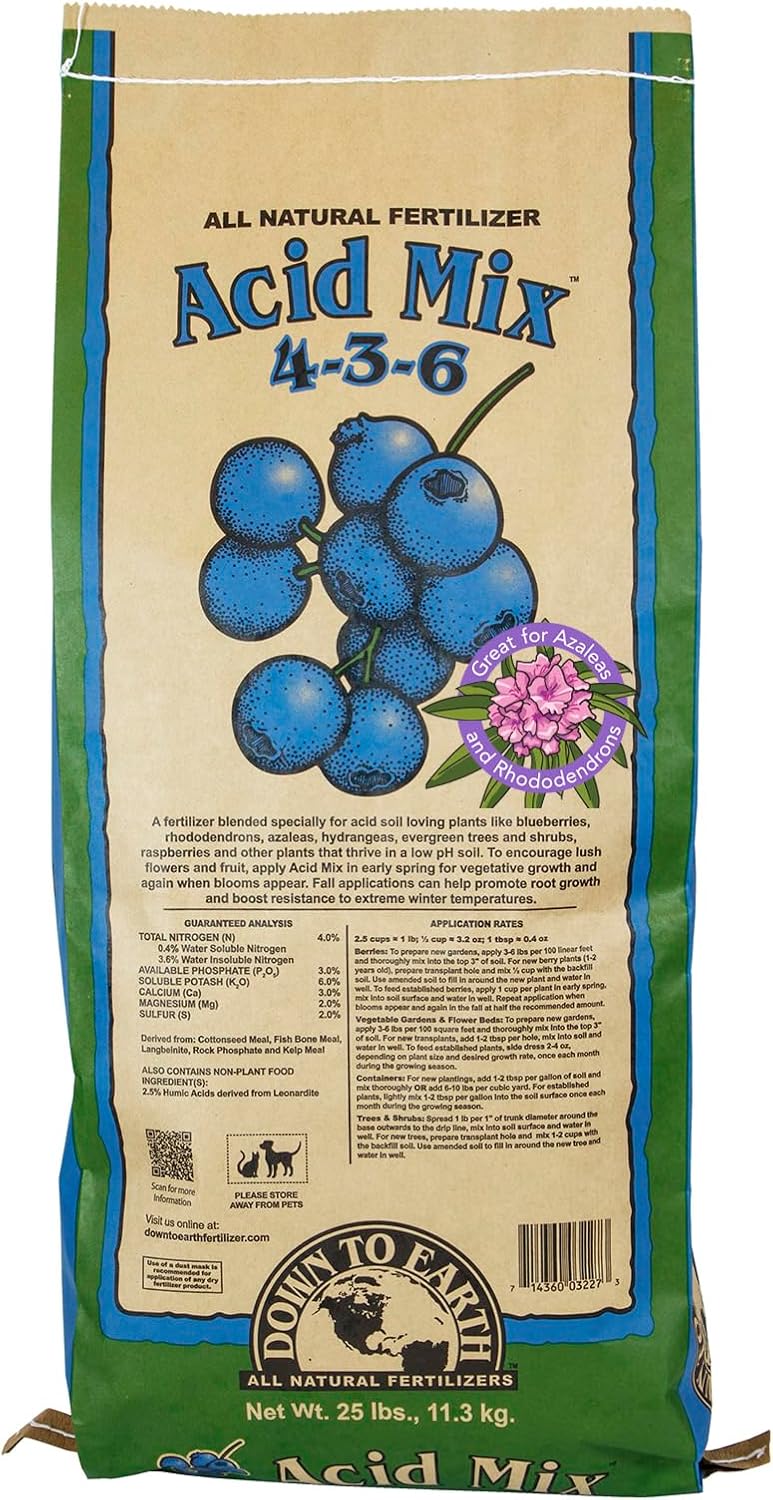
Down To Earth Acid Mix Organic Fertilizer 4-3-6, 25 lb
| Item Form | Granules |
|---|---|
| Target Species | Acid-Loving Plants |
| Mixing Ratio | 4-3-6 |
| Coverage | Medium |
Down To Earth Acid Mix is a granular, organic fertilizer blended to feed acid‑loving plants such as blueberries, azaleas, rhododendrons and camellias. It supplies primary nutrients in a 4-3-6 formula along with bone meal, rock phosphate, kelp and humates to support vegetative growth, flowering and fruit set. Use it broadcast on the soil surface in early spring and again at bloom, or worked into planting holes when establishing shrubs and bushes; watering it in helps release nutrients. Because it is shelf stable and OMRI‑friendly, it fits into organic gardening routines and can improve bloom size and fruit yield over time. The product does not change soil pH, so gardeners who need to lower acidity must pair it with a separate sulfur treatment. Also note it contains phosphorus, which may be restricted by some local regulations for non‑agricultural turf applications.
Best for: Home gardeners growing blueberries or other acid‑loving shrubs who want an organic, all‑purpose fertilizer to encourage blooms and fruit without synthetic inputs.
Less Ideal for: Gardeners who need to lower their soil pH directly or who must avoid phosphorus due to local runoff regulations should consider soil amendments or alternative products instead.
- Designed specifically for acid‑loving plants such as blueberries and rhododendrons
- Organic ingredient mix (bone meal, kelp, humates) that supports soil biology
- Clear 4-3-6 N‑P‑K ratio suitable for flowering and fruiting stages
- Shelf stable formulation that can be applied on the soil surface or mixed into planting holes
- Does not alter soil pH so a separate amendment is needed to acidify alkaline soils
- Contains phosphorus which may be restricted by local regulations in some areas
Verdict: For blueberry growers who prefer organic inputs, this 4-3-6 acid mix delivers balanced nutrition to boost blooms and fruit production.
FoxFarm Happy Frog Acid Loving Plants Fertilizer, 4 lb

| Item Form | Powder |
|---|---|
| Application Method | Granular |
| Coverage | Medium |
| Target Species | Acid-loving plants |
| Mixing Ratio | 1/16 cup per gallon |
This granular, slow-release fertilizer is formulated for acid-loving plants such as blueberries, azaleas, and rhododendrons and includes beneficial soil microbes to help roots access nutrients and water. It is applied directly to soil or mixed per the label directions for planting and established plants, providing steady, gentle feedings that reduce the risk of burning sensitive roots. The product’s powder/granular form and defined mixing ratio make it straightforward to measure for container mixes or side-dressing in beds. Practical benefits include targeted nutrition for low-pH crops and reduced application frequency compared with fast-release salts. Limitations are that it is not a single-solution program for every stage of development and gardeners seeking complete liquid feed schedules or exact N-P-K numbers will need to supplement with other inputs or reference lab analyses. For blueberry growers focused on reliable, low-pH feeding, this is a solid foundational fertilizer to include in a seasonal program.
Best for: Blueberry growers and gardeners seeking a dependable, low-pH fertilizer to support steady growth and root health who prioritize consistent, performance-focused feeding rather than aggressive quick-release boosts.
Less Ideal for: Users who need precise N-P-K data for scientific nutrient management or who rely on liquid fertigation and foliar feeding as their primary feeding method.
- Formulated specifically for acid-loving plants like blueberries and rhododendrons
- Slow-release granular form provides steady feedings that reduce burn risk
- Includes beneficial soil microbes to improve nutrient uptake and water absorption
- Clear mixing ratio and application directions for planting and established plants
- No N-P-K analysis provided on the listing so exact nutrient ratios are not obvious
- Not a complete liquid feed solution for growers who prefer fertigation or foliar feeding
Verdict: A reliable slow-release fertilizer formulated for low-pH crops that supports steady growth and root nutrient uptake in blueberry plantings.
True Organic Prilled Sulfur Organic Soil Acidifier (5 lb)

| Item Form | Granules |
|---|---|
| Specific Uses For Product | Agriculture, Gardening |
| Coverage | Medium |
| Target Species | Plants |
| Unit Count | 80 Ounce |
True Organic Prilled Sulfur is a granular elemental sulfur designed to acidify soil and improve nutrient availability for in-ground plantings. Gardeners typically broadcast it across beds or work it into the topsoil one to two weeks before planting to lower pH and make micronutrients more accessible, which can improve flowering and fruit set. The product comes as prilled granules that are easy to spread and covers up to about 1,333 sq. ft. from a 5 lb bag, so a single bag can treat several blueberry bushes or a modest planting area. Because it slowly reacts in soil, effects appear over weeks rather than immediately, making it suitable for preseason soil adjustment rather than a fast corrective. It contains elemental sulfur only, so it does not add nutrients like nitrogen or potassium and should be used after a soil pH test and in combination with a fertilizer program tailored for acid-loving fruiting shrubs. Handle with care to avoid inhalation or contact and follow label directions for rates and timing.
Best for: Gardeners who test their soil and want a reliable, single-ingredient product to lower pH for acid-loving crops like blueberries and who plan applications ahead of the growing season.
Less Ideal for: Gardeners needing a quick pH correction, a complete fertilizer, or indoor container growers looking for fast-acting soluble amendments.
- Granular prilled form is easy to broadcast and incorporate into garden beds
- Designed specifically to lower soil pH, which benefits acid-loving plants
- Single-ingredient elemental sulfur with no synthetic additives
- 5 lb bag provides broad coverage suitable for several blueberry plants or multiple beds
- Works gradually so pH change is not immediate and requires time and soil moisture to react
- Does not supply macronutrients so it must be paired with appropriate fertilizer for fruiting
Verdict: A simple, effective elemental sulfur granule for gardeners who plan ahead and need to lower soil pH for blueberries and other acid-loving plants.
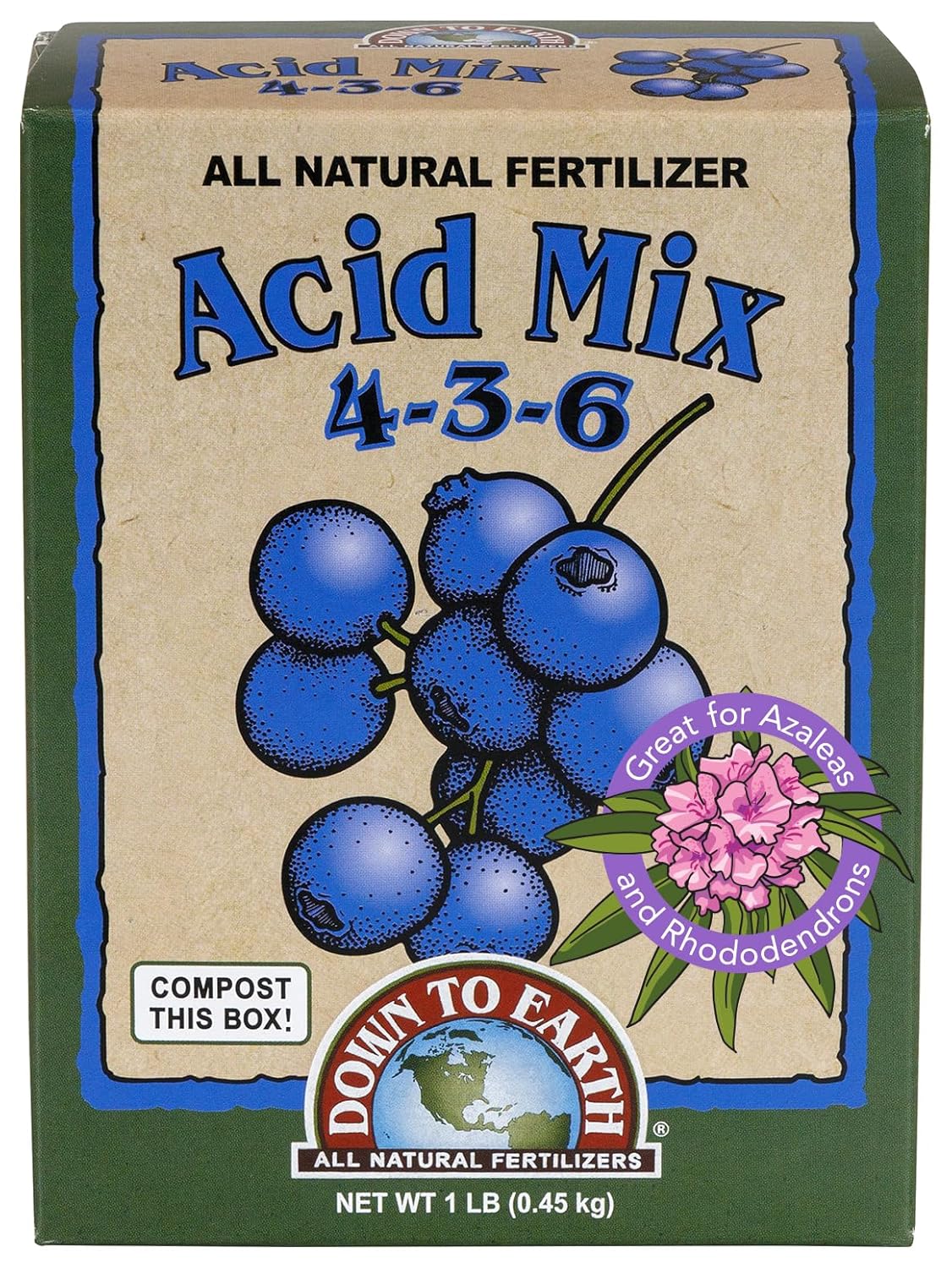
Down To Earth Organic Acid Mix Fertilizer 4-3-6, 1 lb
| Item Form | Granules |
|---|---|
| Specific Uses For Product | Acid-loving plants |
| Target Species | rhododendrons, azaleas, hydrangeas, evergreen trees and shrubs, blueberries, raspberries |
| Mixing Ratio | 4:3:6 |
This 1 lb Down To Earth Acid Mix is a granular, slow-release organic fertilizer designed for acid-loving plants like blueberries. It supplies a balanced 4-3-6 NPK while relying on natural ingredients such as feather meal, fish bone meal, kelp and humates to feed plants over time. Typical use is a surface application in early spring, repeat at bloom and again in fall, or mix into soil at planting and water in. The formulation supports steady vegetative growth, bloom production and root development without synthetic salts, and the OMRI-friendly ingredient list suits organic gardens. Practical benefits include easy application, shelf stability and targeted nutrition for low-pH feeders so you do not need frequent refeeding. Limitations are small pack size for larger plantings and that this product does not actually change soil pH itself so you will still need sulfur or lime to alter acidity levels if required.
Best for: Gardeners who want an organic, low-maintenance fertilizer targeted at acid-loving plants and who are managing a small to medium blueberry patch on a budget.
Less Ideal for: Large-scale growers or those who need rapid corrective pH adjustment across an entire planting beds.
- Organic slow-release formula that feeds plants over time
- Made from recognizable natural ingredients including fish bone meal and kelp
- Formulated specifically for acid-loving species such as blueberries and rhododendrons
- Shelf stable and easy to apply to soil surface or incorporated at planting
- Small 1 lb package may be insufficient for larger blueberry patches
- Does not change soil pH on its own so separate amendments are needed to lower pH
Verdict: A compact, organic slow-release fertilizer that delivers targeted nutrition for blueberry growers who prefer natural products and infrequent feeding.
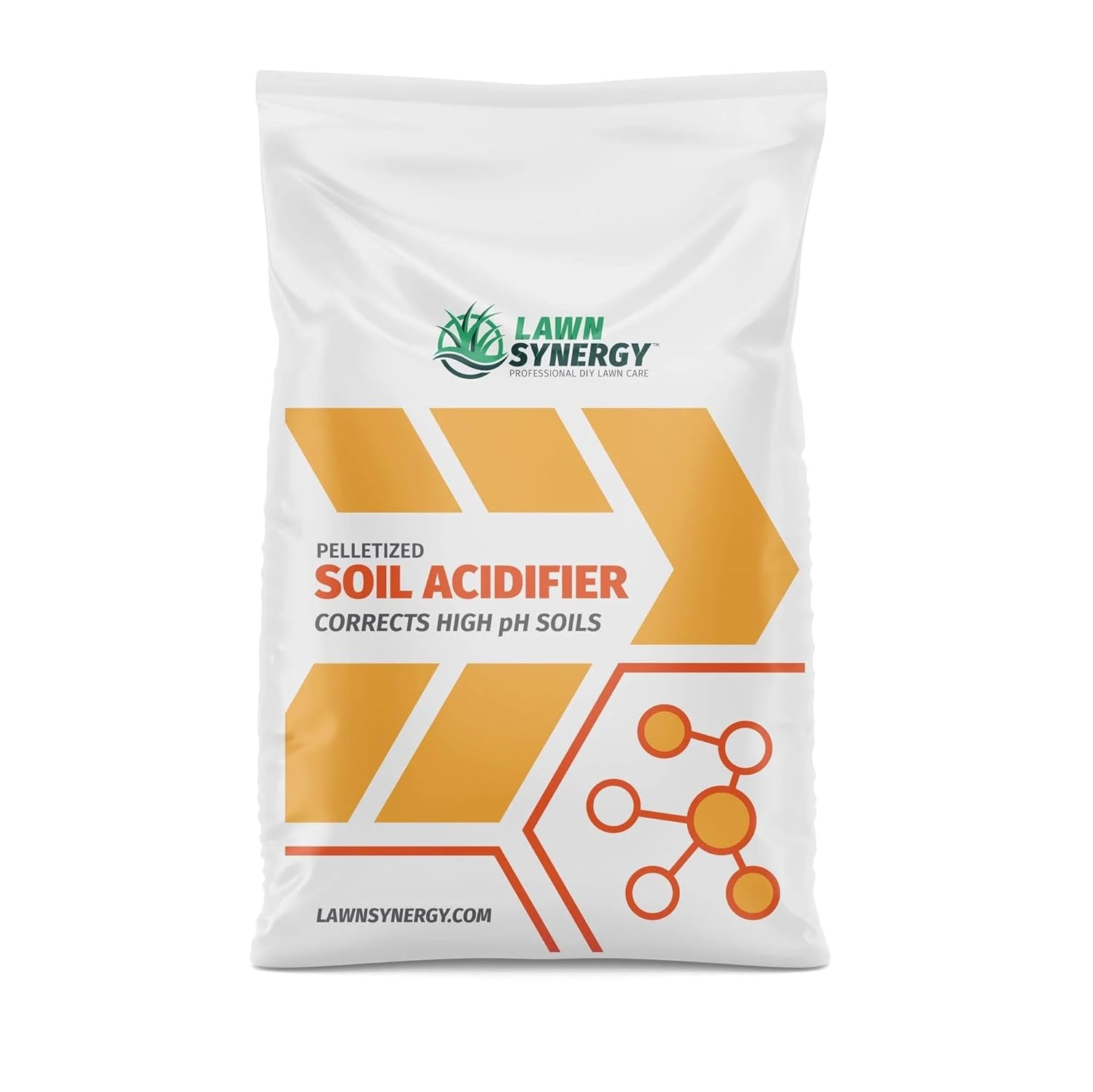
Lawn Synergy Soil Acidifier Elemental Sulfur (18 lb)
| Item Form | Granules |
|---|---|
| Coverage | 1800 sq.ft. |
| Target Species | lawns, hydrangeas, blueberry bushes |
| Ingredients | Elemental Sulfur 90% |
This 18 lb bag of Lawn Synergy Soil Acidifier is 90% elemental sulfur in granule form designed to lower soil pH for acid-loving plants. You spread it across the planting area or mix into the root zone to progressively acidify the soil; the label lists a coverage of about 1800 sq. ft. and the high sulfur content means it acts reliably where pH reduction is needed. For blueberry growers the product creates the more acidic conditions these shrubs prefer, which helps nutrient availability and fruiting when used as part of a regular soil management plan. Application is simple and lends itself to broadcast spreading or spot treatment around plants; because it works through soil microbiology it produces steady pH change rather than an instant chemical shock. Limitations to expect are the need for proper pH testing before and after application and slower action in cool or poorly drained soils where conversion to sulfate is reduced. This is a straightforward, no-frills amendment for gardeners who want a dependable way to lower pH over time.
Best for: Gardeners who prioritize consistent, dependable pH correction for acid-loving crops and who plan treatments based on soil tests and seasonal timing.
Less Ideal for: People who need an immediate pH change or a multi-nutrient fertilizer solution; those seeking quick foliar fixes or rapid short-term results should consider alternatives.
- High elemental sulfur concentration (90%) for effective pH reduction.
- Granular form that is easy to distribute for broadcast or spot applications.
- Covers a large area per bag (listed coverage about 1800 sq. ft.).
- Formulation suited specifically for acid-loving plants such as blueberries and hydrangeas.
- Acts through soil biology so pH change can be gradual and slower in cool or poorly drained soils.
- Requires prior and follow-up soil pH testing to avoid over-application.
Verdict: A reliable, high-concentration elemental sulfur amendment for gardeners who need steady, test-driven soil acidification for blueberries.
Espoma Organic Berry-Tone 4-3-4 Organic Fertilizer for Berries, 4 lb, Pack of 2

| Item Form | Granules |
|---|---|
| Specific Uses For Product | Gardening |
| Coverage | Medium |
| Target Species | Berries |
| Mixing Ratio | 4:3:4 |
Espoma Berry-Tone is a ready-to-use granular organic fertilizer designed for blueberries, strawberries, raspberries, and blackberries. It supplies a balanced 4-3-4 nutrient mix plus 5% sulfur to help maintain the slightly acidic soil conditions blueberries prefer. Typical use is at planting and as a feed in early and late spring, worked into amended soil or applied around established plants and watered in. The product’s organic ingredients and Bio-tone microbes support steady, slow-release nutrition rather than a quick chemical boost, which helps reduce burn risk and supports soil life. It comes in a medium coverage granule form that is easy to spread by hand or with a small spreader and is registered for organic production. Limitations are that its lower nutrient numbers mean slower visible growth compared with synthetic fertilizers and you may need repeat applications during a heavy-fruiting season to meet higher nutrient demand. For gardeners wanting an organic, soil-friendly option tailored to berries, this is a practical, well-documented choice.
Best for: Gardeners who prioritize organic, soil-friendly feeding and want a fertilizer made specifically to support berry crops and acidic-soil needs.
Less Ideal for: Growers seeking immediate, high-nitrogen green-up or those managing large commercial plantings where concentrated synthetic feeds are more economical.
- Formulated specifically for berries with N-P-K 4-3-4 and 5% sulfur to support acidity-loving plants
- Organic granules with Bio-tone microbial blend that support soil health and slow nutrient release
- Ready to use for planting or feeding without onsite mixing
- Approved for organic gardening and produced by a long-established brand
- Lower N-P-K means slower visible results compared with synthetic, high-analysis fertilizers
- Sold in modest bag sizes so frequent applications or larger plantings may require multiple bags
Verdict: A soil-friendly organic fertilizer tailored to berries that supplies steady nutrition and helps maintain the acidity blueberries need.
Jobe's Organics Granular Soil Acidifier (6 lb)

| Item Form | Granules |
|---|---|
| Specific Uses For Product | Soil Conditioning, Root Development |
| Coverage | Medium |
| Target Species | Hydrangeas and blueberries plants |
| Mixing Ratio | 2-14-0 |
Jobe's Organics Granular Soil Acidifier is a slow-acting, granular amendment formulated to lower alkaline soils and supply elemental sulfur to acid-loving plants. It is meant to be applied at planting and then reapplied two to three times per year or every eight weeks as needed to maintain a lower pH. Because it is OMRI listed and made from natural ingredients, it suits gardeners who prefer organic inputs and want a low-risk way to nudge soil acidity over time. The product is easy to measure and spread around the root zone, and the granular form reduces immediate runoff and mess compared with liquids. Practical benefits include helping blueberries develop the acidic root environment they need and encouraging blue hydrangea coloration when pH is reduced. Important limitations are that results take time because elemental sulfur requires soil microbes to convert it into acidity, and a soil test is necessary to avoid overapplication; it does not supply NPK nutrients so you will still need a fertilization plan for plant nutrition.
Best for: A cautious gardener who wants an organic, low-risk method to lower soil pH for blueberries and prefers predictable, repeatable maintenance steps.
Less Ideal for: Gardeners needing rapid pH change or immediate nutrient feeding for established plants should consider faster-acting acidifiers or a combined fertilizer product.
- OMRI listed organic ingredient (elemental sulfur) suitable for organic gardening
- Granular form is easy to measure and apply at the root zone with minimal runoff
- Designed specifically for acid-loving plants like blueberries and hydrangeas
- Reapply schedule provided makes maintenance straightforward
- Works slowly because sulfur must be microbially converted to acid in soil
- Does not provide NPK nutrients so additional fertilizer may be required
Verdict: Use this OMRI-listed granular sulfur product if you want a safe, organic way to gradually lower soil pH for healthier blueberry growth.
Choosing the Right Fertilizer for Blueberries: Key Factors to Consider
Soil pH and Long-Term Acidity
Blueberries thrive in acidic soil, typically between pH 4.5 and 5.5. A fertilizer that helps maintain or gradually lower pH is valuable because repeated applications of neutral or alkaline feeds can push the root zone out of the plant's preferred range.
Consider how the product interacts with your existing soil amendments. Some fertilizers contain sulfur or ammonium forms of nitrogen that acidify the soil over time, while others are pH-neutral and require separate soil acidifiers. Regular pH monitoring is important because corrective steps are slower than immediate nutrient corrections.
Nitrogen Form and Timing
Blueberries prefer readily available nitrogen in moderate amounts and can be sensitive to sudden excesses. The nitrogen form matters: ammonium-based nitrogen tends to acidify soil and is usually preferred, while nitrate forms can raise soil pH slowly and stimulate rapid leafy growth.
Match the nutrient release profile to the plant's growth cycle. Slow-release or controlled-release nitrogen provides steady growth and reduces the risk of leaf burn, while soluble feeds can be useful for quick corrections during early spring or fruit set.
Phosphorus and Potassium Levels
Blueberries need phosphorus and potassium, but high phosphorus can be counterproductive in established acidic soils and with mycorrhizal relationships. Look for formulations with moderate phosphorus that support root development without excess.
Potassium supports fruit quality and winter hardiness, so a balanced amount is useful. Fertilizers designed for fruiting ericaceous shrubs tend to prioritize nitrogen and potassium while keeping phosphorus in check.
Organic Versus Synthetic Options
Organic fertilizers supply nutrients more slowly and often improve soil structure and microbial life. They are less likely to cause nutrient spikes but may require repeated applications to maintain supply during heavy cropping years.
Synthetic or mineral fertilizers can deliver precise nutrient ratios and faster uptake. Choose synthetic options when you need rapid correction or precise dosing. Consider combining organic matter such as pine needle mulch with mineral feeds to get both soil-building benefits and targeted nutrition.
Application Method and Planting Scale
How you apply fertilizer depends on whether you have a few potted bushes or a larger patch. Granular slow-release products are convenient for larger beds and reduce frequency of applications. Water-soluble or foliar feeds suit container-grown plants or quick midseason boosts.
Think about equipment and effort. Spreader-friendly granules, scoopable formulations, and concentrated liquids each demand different labor levels. For small-scale garden use, ease of measuring and even distribution are practical priorities.
Interaction With Mulch and Soil Amendments
Mulches such as pine needles or wood chips help maintain acidity and conserve moisture, but they also influence nutrient availability. Some fertilizers require direct soil contact to be effective, while others can be applied on top of mulch.
Plan your feeding schedule around mulching routines. If you add fresh acidic mulch each year, you may need lighter fertilizer application. Products that integrate well with organic mulches reduce the chance of uneven feeding or nutrient tie-up.
When to Feed Blueberry Plants
Timing feeds to the plant's growth cycle improves uptake and minimizes waste. For most climates, an early spring application as buds swell and a lighter midseason feed during fruit set covers the major nutrient demands.
Avoid heavy late-summer nitrogen that encourages tender growth heading into winter. For newly planted bushes, use gentler, more frequent feeds until plants establish. Mature plants with established root systems need fewer, well-timed applications.
- Early spring for new shoot development
- At or just after flowering for fruit set support
- Avoid heavy late-summer nitrogen
Testing and Adjusting Soil pH
Regular soil pH testing is the only reliable way to know whether your fertilizer strategy is keeping the root zone acidic. Use a simple meter or lab test to check pH annually or every other year.
If tests show rising pH, correct gradually with acidifying amendments or choose an ammonium-based feed. Rapid pH changes are hard to accomplish and can stress roots, so aim for steady adjustments rather than dramatic swings.
- Test in spring before major feeding
- Amend slowly if pH moves above the ideal range
- Combine fertilizer choice with acidic mulches
Feeding Blueberries in Containers Versus In-Ground
Container-grown blueberries need more frequent, lighter feedings because potting mixes hold less nutrient reserve and leach faster. Use water-soluble fertilizers or smaller doses of slow-release granules tailored for containers.
In-ground bushes benefit from deeper root zones and organic matter that buffer nutrient swings. Apply granular feeds around the drip line and incorporate organic mulch to help hold acidity and moisture.
- Containers: more frequent, dilute applications
- In-ground: deeper placement and mulch integration
- Monitor moisture as it affects nutrient availability
Using Mulch and Organic Matter to Support Nutrition
Organic mulches both preserve soil acidity and slowly add nutrients as they break down. Pine needles, shredded bark, and leaf mold are good choices for blueberry beds because they help maintain an acidic microclimate.
Layer mulch to moderate soil temperature and reduce evaporation. Keep mulch a few inches away from the crown to prevent crown rot while still protecting the root zone and aiding nutrient retention.
- Choose acidic mulches where possible
- Replace or top-dress mulch annually
- Avoid piling mulch against the plant stem
Signs of Overfeeding or Nutrient Deficiency
Watch for symptoms rather than guessing. Yellowing leaves with green veins point to iron chlorosis, often a pH-related issue rather than lack of iron. Browning leaf edges or scorched tips can indicate salt buildup from over-fertilizing.
Poor flower set or small fruits can signal insufficient phosphorus or potassium, but low soil acidity can produce similar symptoms. When in doubt, test soil and adjust pH and nutrients rather than increasing fertilizer blindly.
- Iron chlorosis suggests high pH
- Leaf scorch can mean excess salts
- Small fruit may indicate nutrient imbalance or pH issues
How We Chose the Best Fertilizer for Blueberries
We selected fertilizers that suit acid-loving blueberry plants and practical home garden use. Primary evaluation dimensions were nutrient formulation and balance for ericaceous plants, impact on soil pH and acidity maintenance, and nutrient release pattern so gardeners can match feeding rhythm to seasonal growth. We also judged ease of application in small plantings, including spreadability and suitability for foliar or soil feeding, and how clearly dosing and timing are explained for backyard growers. Longevity and predictable feeding were considered to avoid root scorch or uneven growth, plus compatibility with mulches and organic soil amendments. Exclusions included general-purpose fertilizers without an acidifying component, products formulated only for lawns or trees, and any that require heavy machinery or commercial application methods. The result is a list focused on products and feeding approaches that reliably support blueberry bloom, fruit set, and long-term soil health.
FAQ
How often should I feed established blueberry bushes?
Established bushes usually do well with one to two feedings per year: once in early spring and a lighter application at or just after flowering. Frequency depends on the fertilizer type and your soil's nutrient-holding capacity.
Can I use a general-purpose fertilizer on blueberries?
You can, but general-purpose fertilizers may not maintain the low pH blueberries prefer and may contain higher phosphorus than optimal. If you use a general feed, monitor soil pH and adjust with acidifying amendments as needed.
Are organic fertilizers effective for blueberries?
Organic fertilizers work well over the long term by improving soil structure and microbial life and providing slow nutrient release. They often require more frequent or repeated applications in heavy cropping years to maintain supply.
What is the best way to lower soil pH for blueberries?
Lowering pH is best done gradually with sulfur amendments or by using ammonium-based fertilizers that acidify during nitrification. Combining acidic mulches like pine needles with targeted amendments yields the most stable results.
Should I worry about phosphorus levels for fruiting?
Moderate phosphorus supports root development and fruiting, but excessive phosphorus is unnecessary and can interfere with beneficial microbes. Focus on balanced formulations that prioritize nitrogen and potassium while keeping phosphorus modest.
Final Verdict
Prioritize fertilizers that support acidic soil conditions, supply nitrogen in a form blueberries prefer, and deliver nutrients at a pace that matches growth and fruiting. Balance ease of application with the long-term soil impacts of your choice, and pair feeding with mulches and regular pH testing. With attention to these tradeoffs you can maintain vigorous bushes and better fruit quality without overfeeding or disturbing the root environment.
