

Note: This article contains affiliate links. If you click on these links and make a purchase, I may earn a small commission at no extra cost to you. This helps support my research and content. Read my full affiliate disclosure here.
Getting the right fertilizer for bush beans makes a noticeable difference in pod set, plant vigor, and overall harvest timing. Bush beans are short-season, nutrient-responsive plants that need a balanced supply of nitrogen, phosphorus, and other micronutrients without encouraging excessive leafy growth at the expense of pods. This guide covers seven top fertilizer options suited for bush beans, shortlisted for different garden styles and application preferences. We evaluated nutrient balance, ease of use, and how each product behaves in real garden situations to help you pick the best approach for your plot or containers. Read on for practical notes that prepare you to feed bush beans effectively this season.
Top Picks at a Glance
| Best Overall The best all-around choice for most situations | Jack's Classic 20-20-20 All Purpose Water-Soluble Fertilizer, 24 oz | 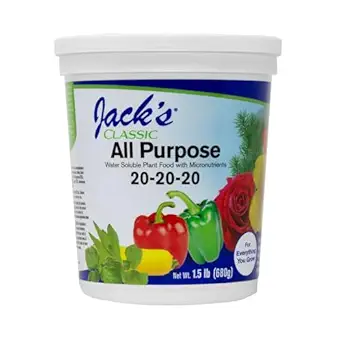 |
| Best Quality Built to a higher standard if you want something more solid | FoxFarm Big Bloom Liquid Plant Food, 16 fl oz |  |
| Best Value The sweet spot between price and what you get | Scotts All Purpose Flower & Vegetable Continuous Release Plant Food, 3 lb |  |
| Best Budget The cheapest option that still gets the job done reliably | Miracle-Gro Water Soluble Tomato Plant Food, 1.5 lb |  |
| Highest Rated A top-rated pick with lots of positive feedback | Miracle-Gro Water Soluble All Purpose Plant Food, 1.5 lb |  |
| Most Popular A crowd favorite that many people choose with confidence | Miracle-Gro Water Soluble All Purpose Plant Food, 6.25 lb |  |
| Best Seller A high-volume bestseller chosen again and again | Miracle-Gro Liquid All Purpose Plant Food Concentrate, 32 oz |  |
Jack's Classic 20-20-20 All Purpose Water-Soluble Fertilizer, 24 oz

| Item Form | Powder |
|---|---|
| Specific Uses For Product | Plant Growth |
| Unit Count | 24 Ounce |
| Mixing Ratio | 0.22 |
Jack's Classic 20-20-20 is a water-soluble powder designed as a general-purpose feed for indoor and outdoor plants. You mix the measured powder with water (manufacturer recommends 1 teaspoon per gallon for standard feeding and much lower rates for seedlings) and apply it as a root drench or foliar spray every 7 to 14 days. The balanced 20-20-20 N-P-K plus micronutrients promotes quick green-up and leaf expansion, which is useful during vegetative growth of bush beans. The powder format stretches farther than comparable liquids and the included scoop makes mixing straightforward. Because it is soluble, it works well in spray bottles, watering cans, and drip or continuous-feed systems. Limitations: it is a general formula rather than a crop-specific fertilizer, so it does not supply targeted bloom or pod-boosting ratios; careful measuring is needed to avoid overfeeding and it requires storage in a dry place to stay effective.
Best for: Home gardeners who want a reliable, easy-to-use general fertilizer to keep bush beans healthy during vegetative growth and who prefer a single product usable for different plants and feeding methods.
Less Ideal for: Growers seeking a bloom- or pod-focused fertilizer formulation or those who prefer a slow-release granular product for low-maintenance feeding.
- Balanced 20-20-20 N-P-K with added micronutrients for steady vegetative growth
- Water-soluble powder stretches farther than liquids and dissolves for foliar or root feeding
- Clear mixing directions and included scoop simplify preparation
- Versatile for use in spray bottles, watering cans, and continuous-feed systems
- General-purpose formula not optimized specifically for flowering or pod development
- Requires careful measuring and dry storage to maintain effectiveness
Verdict: A versatile, water-soluble 20-20-20 powder that reliably greens and feeds bush beans during vegetative growth and fits multiple application methods.
FoxFarm Big Bloom Liquid Plant Food, 16 fl oz

| Item Form | Liquid |
|---|---|
| Specific Uses For Product | Organic |
| Application Method | watering can, sprayer, or drip system |
| Liquid Volume | 16 fluid ounces |
FoxFarm Big Bloom is a concentrated liquid plant food designed to boost blooms and fruiting by supplying readily available organic nutrients. Mixed at the manufacturer recommended rate, it is applied with a watering can, sprayer, or through drip systems and can be used each time you water to support plants throughout all growth stages. The formula lists bat guano and earthworm castings, which provide a natural source of nutrients and encourage quick uptake for visible response in flowering and fruit set. It is OMRI listed for organic use, so it fits into organic vegetable and flower programs. Practical benefits for bush beans include encouraging bloom development and helping extend flowering into later weeks of the season. Important limitations are that the product contains phosphorus, so local restrictions on phosphorus use may apply and runoff needs to be avoided, and the 16 ounce bottle will require accurate mixing for larger beds or repeated feedings.
Best for: Gardeners focused on maximizing flowering and pod set who prefer an organic, fast-acting liquid feed and will follow regular feeding schedules.
Less Ideal for: People managing strict low-phosphorus turf or very large vegetable acreages where bulk granular fertilizers and lower phosphorus inputs are preferred.
- Organic, OMRI-listed formula suitable for certified organic gardening
- Contains bat guano and earthworm castings for a nutrient-rich, fast-acting feed
- Versatile application options: watering can, sprayer, or drip system
- Designed for use across all growth stages to support blooms and fruiting
- Contains phosphorus which may be restricted in some areas and can pose runoff risks
- Small 16 fl oz bottle requires frequent repurchasing or careful dilution for larger plots
Verdict: A compact, OMRI-listed liquid bloom fertilizer that organic gardeners can use to boost flowering and fruiting performance in bush beans and other flowering vegetables.
Scotts All Purpose Flower & Vegetable Continuous Release Plant Food, 3 lb

| Item Form | Granules |
|---|---|
| Application Method | Sprinkle and rake into top 1-3 inches |
| Target Species | All Purpose Flower & Vegetable Continuous Release Plant Food |
| Unit Count | 48 Ounce |
This Scotts continuous-release plant food is a simple granular fertilizer meant for in-ground flowers and vegetables. You apply by sprinkling the granules around plants, raking them into the top 1–3 inches of soil, and watering to start the nutrient release; one 3 lb bag covers roughly 150 sq ft and the feed lasts up to two months. Its balanced formula is designed to encourage root development, leafy growth, and better blooms and harvests without the need for frequent applications, which makes it convenient for routine garden maintenance. Practical directions and measured coverage make it easy to dose across beds of beans or mixed vegetable plots. Limitations are that it is not fast-acting like soluble feeds and you must avoid concentrating granules at crowns or stems to prevent damage; also, a single small bag only treats a modest area so larger veggie gardens will need multiple bags or a more concentrated program. For steady, low-effort feeding of bush beans this product fits well into a twice-per-season feeding schedule.
Best for: Gardeners who want a low-maintenance, scheduled feeding for small to medium vegetable beds and prefer predictable, infrequent applications over frequent soluble feeds.
Less Ideal for: Growers needing rapid nutrient correction, those managing very large production beds, or gardeners who only use liquid fertilizers and want immediate uptake.
- Continuous-release formula feeds up to two months reducing application frequency
- Easy application: sprinkle, rake into topsoil, then water in
- Suitable for a wide range of plants including flowers and vegetables
- Clear coverage and dosing guidance for straightforward calculations
- Not a quick-release, so plants needing immediate correction will respond slower
- 3 lb bag only covers a modest area which may require multiple purchases for larger plots
Verdict: Choose this product if you want an easy, low-effort granular fertilizer that delivers steady two-month feeding for bush beans and other in-ground vegetables.
Miracle-Gro Water Soluble Tomato Plant Food, 1.5 lb

| Item Form | Liquid |
|---|---|
| Application Method | Water Soluble |
| Target Species | Tomatoes and vegetables |
| Mixing Ratio | 18-18-21 |
Miracle-Gro Water Soluble Tomato Plant Food is a water-soluble fertilizer intended to boost fruiting vegetables when applied throughout the growing season. You mix the powder into a watering can or use it with a garden feeder and soak the base of plants every 7 to 14 days. The listed analysis and mixing directions (18-18-21 ratio in product data) mean it delivers balanced nutrients with extra phosphorus and potassium to support flowering and fruit development. In practice it is easy to use, works quickly because nutrients are immediately available to roots, and is convenient for small beds or container-grown vegetables. It covers a medium area from a 1.5 lb container when used with a feeder and is safe when used as directed. Limitations are that it requires regular reapplication through the season and careful measuring to avoid overfeeding, and it is a soluble feed rather than a slow-release option so you will need to stay on the feeding schedule for steady results.
Best for: Gardeners on a budget who want an easy, fast-acting fertilizer for bush beans and other vegetables and who can commit to feeding every one to two weeks.
Less Ideal for: People looking for a once-per-season slow-release fertilizer or gardeners who prefer organic or granular options that need less frequent attention.
- Water-soluble formula delivers nutrients immediately to roots for quick response
- Simple to mix and apply with a watering can or Miracle-Gro Garden Feeder
- Formulated for tomatoes and vegetables to support flowering and fruit set
- Clear feeding schedule (every 7–14 days) makes routine feeding straightforward
- Requires frequent reapplication during the season because it is not slow-release
- Must be measured and mixed correctly to avoid overfeeding or waste
Verdict: A straightforward, fast-acting water-soluble fertilizer that gives dependable blossom and fruit support for budget-conscious vegetable gardeners who will feed regularly.
Miracle-Gro Water Soluble All Purpose Plant Food, 1.5 lb

| Item Form | Powder |
|---|---|
| Application Method | Watering Can |
| Target Species | For all flowers, vegetables, trees, shrubs and houseplants |
| Mixing Ratio | 24-8-16 |
Miracle-Gro Water Soluble All Purpose Plant Food is a powdered, water‑soluble fertilizer designed to give plants a fast nutrient boost. You mix the powder into a watering can or a garden feeder and apply to the soil at the base of plants; the product is sold with dosing guidance for indoor and outdoor use and is intended for repeated feeding every 7 to 14 days. Notable features include its high nitrogen formula (24-8-16), compatibility with containers and in‑ground beds, and clear mixing instructions for different plant types. In practice this means quick uptake at the root zone, which is useful when bush beans need a steady supply of nitrogen during rapid leaf and pod development. The container size feeds roughly 600 sq ft, so it covers a typical vegetable patch but will require refills for larger plots. Limitations are that it is a quick‑release fertilizer so it does not provide long‑term slow feeding, and frequent applications require careful measuring to avoid overfeeding. Users should follow the label and avoid foliar feeding for houseplants.
Best for: Gardeners who prioritize predictable, reliable feeding for vegetable beds and container crops and want a straightforward, repeatable fertilizer routine.
Less Ideal for: Those who prefer low‑maintenance, slow‑release fertilizers or have very large vegetable plots where frequent refills would be inconvenient.
- Fast‑acting water‑soluble formula that delivers nutrients quickly to roots
- Clear mixing and application instructions for indoor and outdoor use
- Works with containers, in‑ground beds, and garden feeders for flexible application
- High nitrogen ratio suited to leafy growth and early pod development in vegetables
- Quick‑release formula does not supply long‑term nutrients between applications
- 1.5 lb container covers moderate area but may be small for larger vegetable gardens
Verdict: Use this if you want a dependable, fast‑acting, easy‑to‑measure fertilizer to keep bush beans and other vegetable crops consistently fed.
Miracle-Gro Water Soluble All Purpose Plant Food, 6.25 lb

| Item Form | Powder |
|---|---|
| Application Method | watering can |
| Target Species | all plants, all flowers, vegetables, trees, shrubs and houseplants |
| Mixing Ratio | 1/2 tsp per gallon (indoor) / 1.5 tbsp per 1.5 gallons (outdoor) |
Miracle‑Gro Water Soluble All Purpose Plant Food is a powder fertilizer you mix into a watering can to feed vegetables, flowers, shrubs and houseplants. For bush beans you would dissolve the measured scoop in water and soak the soil around the base every 7 to 14 days for outdoor plants or every two weeks for containers, supplying quick‑available NPK nutrients that support leafy growth and flowering. The included scoop and simple mixing ratios make dosing straightforward, and one 6.25 lb container claims to cover roughly 2,500 sq. ft., so it lasts through a season for small to medium beds. Because it is water soluble it feeds plants immediately and can be applied through hand watering or a compatible garden feeder. Limitations are that the product is a general formula rather than a crop‑specific blend and it requires regular reapplication; for beans some gardeners prefer lower nitrogen or specialized formulations at flowering to favor pod set. Follow label directions closely to avoid overapplication.
Best for: Gardeners who want a simple, reliable feed they can apply by watering can or feeder to boost growth and flowering across a mixed vegetable or ornamental plot.
Less Ideal for: Growers seeking a fertilizer formulated specifically to encourage pod set on legumes or those wanting a single slow‑release product that needs less frequent application.
- Water‑soluble powder that feeds plants immediately when mixed into a watering can
- Clear mixing ratios with a scoop make dosing easy for indoor and outdoor use
- Suitable for a broad range of plants including vegetables and container crops
- Covers a large area per container for season‑long feeding in small to medium gardens
- General all‑purpose NPK formula rather than a bean‑specific or low‑nitrogen blend
- Requires frequent reapplication compared with slow‑release granular fertilizers
Verdict: A straightforward, easy‑to‑mix water‑soluble fertilizer that reliably feeds bush beans and other garden plants when used on a regular watering schedule.
Miracle-Gro Liquid All Purpose Plant Food Concentrate, 32 oz

| Item Form | Liquid |
|---|---|
| Specific Uses For Product | Plant Growth, Root Development |
| Application Method | Mix with water in a watering can |
| Target Species | Flowers, trees, houseplants |
| Mixing Ratio | 1:10 (concentrate to water, estimate) |
Miracle-Gro Liquid All Purpose Plant Food is a ready-to-mix concentrate designed to give plants quick, balanced nutrition. You dilute it in a watering can and apply to container or in-ground plants every one to two weeks; directions include a cap measurement for garden feeding and a teaspoon-per-gallon guideline for houseplants. The liquid form makes it easy to deliver nutrients directly into the root zone and it is suitable for flowers, vegetables, shrubs, trees, and houseplants. Practical benefits include fast uptake, broad compatibility across plant types, and simple measuring instructions that reduce guesswork. Because it is concentrated, a 32 oz bottle covers many applications when used as directed. Limitations are that it is an all-purpose formula rather than crop-specific nutrition tailored to legumes, and frequent application is needed to maintain feeding intervals rather than a slow-release solution. Users should follow mixing rates carefully to avoid overfeeding and store the product out of reach of children.
Best for: Buyers who want a low-risk, easy-to-use fertilizer that reliably boosts growth for a variety of garden and container plants and prefer clear mixing instructions.
Less Ideal for: Growers seeking a slow-release fertilizer or a product specifically formulated for legumes and bean bloom/fruiting optimization should consider other options.
- Water‑soluble concentrate for quick nutrient uptake
- Simple mixing guidelines for garden and container use
- Works on a wide range of plants including vegetables and houseplants
- Compact 32 oz bottle provides many feedings when diluted
- All-purpose formula not specifically balanced for nitrogen-fixing crops
- Requires regular applications every 1–2 weeks rather than long-term feeding
Verdict: A dependable, easy-to-use liquid concentrate that gives fast nutrition to a wide range of plants, ideal if you want straightforward, low-risk feeding for bean beds.
Choosing the Right Fertilizer for Bush Beans: Key Factors to Consider
Nutrient Ratio and Timing
Bush beans respond best to a balanced nutrient profile that supports flowering and pod set. A modest nitrogen level prevents plants from putting too much energy into leafy growth, while adequate phosphorus and potassium promote flowers, root strength, and pod fill. Consider fertilizers labeled with clear N-P-K ratios and note how that ratio aligns with your soil test results.
Timing matters because bush beans have a short production window. A starter feed at planting and one or two follow-up applications timed at early flowering will often outperform a single heavy feeding. Choose a fertilizer whose nutrient release matches the crop schedule so nutrients are available when the plant forms flowers and young pods.
Release Type and Longevity
Fertilizers come as quick-release, slow-release, and soluble forms. Quick-release fertilizers deliver nutrients fast and are useful if a soil test shows an immediate deficiency, but they can leach and may require repeat applications. Slow-release or controlled-release options provide steadier nutrition, reducing the need for frequent feeding during the short bush-bean season.
Soluble fertilizers applied as side-dress or foliar feeds let you correct deficiencies at critical growth stages. Match release type to your watering practices and garden setup: container growers often favor soluble feeds for frequent dosing, while in-ground beds can benefit from timed-release granules that match rain and irrigation patterns.
Application Method and Garden Setup
Think about how you prefer to feed: granules worked into the soil, liquid concentrates diluted at watering, or foliar sprays. Raised beds and containers warm and drain faster, so they may need more frequent, lighter feedings. In-ground beds with established organic matter can retain nutrients longer, making slow-release granules or pre-plant amendments practical.
Also consider labor and measurement. Products with clear application rates and simple measuring systems reduce the chance of over- or under-feeding. For small plots, look for formulations that are easy to measure in teaspoons or tablespoons rather than large scoops.
Compatibility With Organic Practices
If you prefer organic gardening, check ingredient lists for approved sources and avoid synthetic additives. Organic fertilizers often supply a broader range of micronutrients and improve soil biology, but their nutrient release can be slower and less concentrated. Combining an organic baseline amendment with targeted soluble feeds at bloom can offer a balanced approach for bush beans.
For gardeners using organic certification or adhering to strict organic standards, prioritize fertilizers with clear certification or ingredient sourcing and avoid mixes that include non-organic stabilizers or synthetic chelates.
Micronutrients and pH Considerations
Beyond N-P-K, bush beans can benefit from boron, calcium, magnesium, and trace elements that support flower retention and pod development. Soil pH affects nutrient availability; for example, low pH can lock up phosphorus and molybdenum, which are important for legumes.
Test your soil or observe symptoms before adding broad-spectrum micronutrient mixes. Foliar applications can correct certain trace element deficiencies quickly, while regular soil amendments improve availability over the season. Choose fertilizers that disclose micronutrient content if you suspect deficiencies.
Residue and Food-Safety Concerns
Because bush beans are an edible crop, select fertilizers labeled safe for vegetables and avoid products that list heavy-metal contamination risks or vague ingredient sourcing. Soluble formulations applied close to harvest require attention to label pre-harvest intervals if listed, and organic inputs should state food-crop suitability.
Gardeners harvesting beans for fresh eating or preserving should prefer clear, food-safe formulations and rinse harvests thoroughly. Where uncertainty exists, choose fertilizers with explicit statements about vegetable use or look for third-party assurances on purity.
Preparing Soil Before Planting
A good feeding program starts with soil prep. Work in compost or a balanced slow-release amendment a few weeks before planting to build structure, water-holding capacity, and baseline nutrients. This initial step reduces early deficiencies that can stunt seedlings and delay flowering.
- Incorporate 2 to 4 inches of compost into the top 6 to 8 inches of soil.
- If soil test shows low phosphorus, add a phosphorus-rich amendment at planting.
- Avoid high-nitrogen top-dressings before bloom to prevent excessive foliage.
Starter Feeds That Promote Early Rooting
When sowing bush beans, a light starter feed helps seedlings develop robust roots without pushing too much leaf growth. Apply a low to moderate nitrogen formula at planting or use a small amount of a balanced liquid fertilizer with micronutrients. For inoculated seeds, avoid heavy nitrogen loads that can reduce nodulation.
- Apply starter feed in bands or side-dress to keep concentrated nutrients away from seeds.
- Use water-soluble mixes at half strength for young seedlings to prevent burning.
Managing Fertilizer During Flowering and Pod Set
The flowering stage is when fertilizer choice matters most for yield. Switch to a feed that supports blooms and pod fill, with balanced phosphorus and potassium. If you used a slow-release product at planting, a light supplemental soluble feed at first bloom can help sustain pods through maturation.
- Time an additional feed at first open flowers to support pod development.
- Avoid heavy nitrogen after flowering begins to prevent vegetative regrowth.
Feeding Containers and Small Raised Beds
Containers and small raised beds dry and deplete nutrients faster than in-ground plots. Use more frequent, low-dose applications of soluble fertilizer or a regular liquid feed schedule to keep nutrient levels steady. Monitor plants closely for wilting or yellowing that indicates nutrient stress.
- Top-dress containers with compost between plantings to restore organic matter.
- Reduce application rates in small containers to avoid salt buildup.
Correcting Common Deficiencies
Yellowing leaves, poor pod set, or aborted flowers often indicate specific nutrient shortages. Nitrogen deficiency shows as general chlorosis, while phosphorus shortage may delay maturity and reduce flowers. Magnesium or iron deficiencies present as interveinal chlorosis on younger or older leaves depending on the element. Use targeted foliar sprays for quick corrections of micronutrient issues and adjust soil amendments for longer-term fixes. Always confirm with a soil test or clear symptom pattern before applying concentrated corrections.
- Use foliar manganese or magnesium sprays for acute interveinal chlorosis when appropriate.
- Avoid repeated high-dose corrections without testing; buildup of some nutrients can harm plants over time.
How We Chose the Best Fertilizer for Bush Beans
Our shortlist focused on fertilizers and feeding methods that match the growth habits and nutrient needs of bush beans. We prioritized formulas and application styles that encourage flowering and pod development rather than excessive vegetative growth. Key evaluation dimensions included nutrient ratio and completeness, which determine whether a fertilizer supplies the right proportions of nitrogen, phosphorus, and potassium for bush beans; application flexibility, to suit in-ground beds, raised beds, and containers; and release profile so gardeners can choose between quick correction and steady feeding across the short bush-bean lifecycle. Other editorial filters included ingredient clarity and safety for edible crops, ease of measuring and applying in small-scale vegetable plots, and compatibility with common soil types and organic practices. We excluded products whose labels lacked clear nutrient analysis or that are formulated primarily for non-edible ornamental use. The result is a focused set of options ranked by how well they meet the real-world needs of gardeners growing bush beans.
FAQ
How often should I feed bush beans during the season?
Often a starter feed at planting plus one light application at early bloom is sufficient. If you use quick-release fertilizers or grow in containers, you may need to feed every two to three weeks at a reduced rate.
Can I use high-nitrogen fertilizer on bush beans?
High nitrogen can promote leaf growth at the expense of flowers and pods. Use moderate nitrogen and prioritize phosphorus and potassium during bloom to encourage pod production.
Are foliar feeds useful for bush beans?
Foliar feeds are useful for correcting micronutrient deficiencies quickly or giving a short-term boost at flowering. They are not a substitute for balanced soil nutrition and should be used as a supplement.
Should I inoculate bush bean seeds with rhizobia?
Inoculation can improve nitrogen fixation, especially in new beds or where beans have not been grown recently. Inoculation is compatible with most fertilizer programs but avoid overapplying nitrogen which can reduce nodulation.
What feeding method is best for raised beds and containers?
Frequent, low-dose liquid feeding or soluble fertilizer mixes are typically best for containers and small raised beds since they leach and deplete nutrients faster than in-ground soil.
How does soil pH affect fertilizer choice for bush beans?
Soil pH influences nutrient availability; phosphorus and some micronutrients become less available in very acidic or alkaline soils. Test pH and adjust if needed, and choose fertilizers that help correct the specific deficiencies revealed by tests.
Final Verdict
Choose a fertilizer strategy that matches your soil baseline, garden style, and the short lifecycle of bush beans. Prioritize balanced nutrient ratios with adequate phosphorus and potassium at bloom, and select a release profile that fits your watering and labor cadence. Tradeoffs are inevitable: quick-release feeds offer fast correction but require repeat applications, while slow-release options reduce trips to the garden but may not respond fast to deficiencies. Focus on nutrient balance, crop safety, and application ease to make a confident pick for healthy pod production.
