

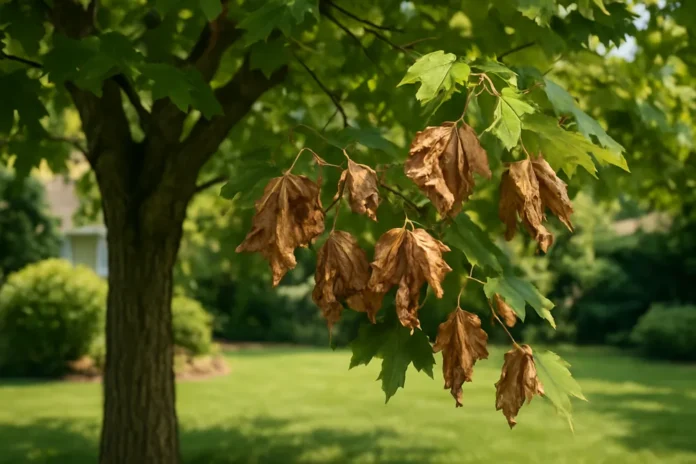
Maple tree leaves usually shrivel because the tree is losing water faster than it can replace it, or because something is damaging the roots, leaves, or vascular system. Common causes include drought, heat, transplant stress, pests, fungal disease, and chemical injury.
When maple tree leaves are shriveling, the tree is telling you it is under stress, but the exact reason is not always obvious at first glance. Shriveling can look like curling, crinkling, drying at the edges, or leaves that seem thin and collapsed even when they are still hanging on the branch.
In my experience, the most useful clue is not just the leaf itself, but where the damage shows up first. A maple that is shriveling mostly on the outer canopy during a hot spell often points to water stress. A tree with scattered damaged leaves, spotting, chewing, or blackened tissue can suggest pests, disease, or spray injury instead. Looking at the timing, the weather, and the damage pattern usually gets you much closer to the real cause.
The good news is that not every shriveled leaf means a maple is dying. Many trees recover well once the underlying stress is corrected, especially if the trunk, branches, and roots are still sound. The key is figuring out whether you are dealing with temporary weather stress or a bigger health problem that needs more attention.
What Shriveling Leaves Usually Mean on a Maple
Shriveling happens when leaf tissue loses moisture, suffers damage, or cannot move water properly. On a maple, that can come from simple summer stress, but it can also happen when roots are injured, soil stays too wet, insects feed on the foliage, or a disease interferes with normal leaf function.
Maple leaves do not always shrivel in one clean, textbook way. Some become crisp along the edges. Others curl inward and feel limp. Some turn brown between the veins, while others develop blotches before they dry up. That is why the symptom alone is not enough. You need to pair it with the season, recent weather, and the tree's overall condition.
- If damage starts during hot, dry weather, drought and heat stress are strong suspects.
- If the soil has stayed soggy or drainage is poor, root stress may be involved.
- If leaves show spots, mildew, black patches, or odd distortion, disease is more likely.
- If only one side of the tree is affected, think about wind, reflected heat, chemical drift, or root disturbance on that side.
- If a newly planted maple shrivels, transplant shock is often part of the problem.
Drought and Heat Stress Are the Most Common Causes
For established landscape maples, prolonged heat and dry soil are the most common reasons leaves shrivel. During hot weather, a tree can lose water from its leaves faster than the roots can pull it back in. The leaf edges often dry first, then the whole leaf begins to curl or wrinkle. On some maples, especially Japanese maples and shallow-rooted trees near pavement, this can happen quickly.
Heat stress is often worst on the outer canopy, the upper side exposed to afternoon sun, or the side facing reflected heat from driveways, walls, or patios. You may also notice early fall color, leaf drop in midsummer, or leaves that look papery even though the branches are still alive.
When I am trying to separate drought stress from disease, I look for uniformity. If many leaves are drying in a similar way across the sunniest parts of the tree and the weather has been harsh, I lean toward environmental stress before I assume infection.
Signs Drought Is Behind the Problem
- Brown, dry, or brittle leaf margins
- Leaves curling upward or inward
- Shriveling concentrated on exposed branches
- Premature leaf drop during summer
- Dry soil several inches below the surface
If drought is the cause, deep watering and root-zone mulching usually help stabilize the tree. Mature maples generally respond better to a slow, soaking irrigation than to frequent shallow watering. A two- to three-inch layer of mulch over the root zone also reduces evaporation and keeps soil temperatures more even.
Too Much Water Can Shrivel Leaves Too
It sounds backward, but overwatering can create shriveled leaves because stressed roots cannot absorb oxygen or water properly. When the soil stays constantly saturated, fine feeder roots begin to decline. The canopy may then show symptoms that look a lot like drought, including limp, curling, or scorched foliage.
This is especially common in heavy clay soil, low spots, lawns that get frequent irrigation, or sites where downspouts dump water near the trunk. Newly planted maples are vulnerable because their smaller root systems can decline quickly in soggy ground.
Clues That Soggy Roots Are the Issue
- Soil feels wet for days after watering or rain
- Leaves shrivel but also look dull, pale, or slightly yellow
- Growth is weak or sparse
- Some small twigs may die back
- Mushrooms or sour-smelling soil appear near the root zone
If the site drains poorly, the fix is not simply watering less for a week. The long-term solution may involve redirecting runoff, adjusting irrigation, widening mulch rings instead of watering turf around the trunk, or improving grade and drainage around the tree.
Transplant Shock and Root Disturbance Can Trigger Leaf Collapse
A recently planted maple often shrivels because the root system is not yet large enough to support the canopy during warm weather. This is classic transplant shock. Even if the tree was planted correctly, roots need time to spread into surrounding soil, and the top of the tree may temporarily demand more moisture than the roots can supply.
Root disturbance is not limited to newly planted trees. Construction, trenching, new patios, soil compaction from heavy traffic, and repeated mower damage can all interfere with root function. Because many maple roots run close to the soil surface, they are easy to injure without obvious signs at ground level.
If your maple was planted this year, judge recovery by the condition of new growth rather than by damaged older leaves. I often see gardeners overreact to the first wave of scorched foliage when the tree is actually stabilizing.
What Helps a Stressed Root System Recover
- Water deeply but only when the root zone begins to dry
- Keep mulch a few inches away from the trunk
- Do not fertilize heavily during active stress
- Avoid digging, trenching, or compacting the soil over roots
- Provide temporary shade for delicate young maples in extreme heat if practical
Leaf Scorch, Sunburn, and Wind Exposure
Not all shriveled leaves come from a root problem. Sometimes the leaf itself is getting physically overwhelmed by sun, dry wind, or sudden exposure. This is common with Japanese maples, variegated cultivars, and trees that were protected by shade but are now exposed after pruning or storm damage.
Leaf scorch usually starts at the margins and between veins. The tissue turns tan or brown, then crisps and curls. Wind can make the problem worse by pulling moisture out of leaves even when the soil is not completely dry. On very hot sites, reflected heat from siding, stone, or pavement can amplify the damage.
- Damage is heaviest on the hottest or windiest side of the tree
- Tender new leaves are more affected than older shaded leaves
- The branch structure remains alive even though foliage looks rough
- Symptoms worsen after sudden heat waves
For sensitive maples, afternoon shade, wind protection, and better soil moisture management usually make the biggest difference. The damaged leaves will not smooth back out, but the tree can still push healthy growth later if conditions improve.
Pests That Distort or Shrivel Maple Leaves
Several insects can make maple leaves curl, pucker, or shrivel. Aphids, mites, and certain leafhoppers are the most common culprits. Their feeding damages leaf tissue or draws out plant fluids, leaving foliage distorted or weak. In some cases the leaves also feel sticky from honeydew, or they show a fine stippled look before they curl.
Gall mites can also create odd bumps, blisters, or pouch-like growths on maple leaves. These often look dramatic but are more cosmetic than dangerous. Spider mites are more serious during hot, dry weather because they multiply fast and can add to drought stress.
Pest Signs Worth Checking For
- Fine webbing on leaf undersides
- Tiny moving dots when you tap a leaf over white paper
- Sticky residue or black sooty mold
- Puckered or twisted new growth
- Chewed edges or holes
Most pest problems do not justify broad insecticide use right away. A strong spray of water, better tree hydration, and preserving beneficial insects often help more than aggressive treatment. If an infestation is severe, identify the pest first so you do not spray something ineffective or harmful to pollinators.
Fungal Disease and Maple Leaf Problems That Resemble Shriveling
Some maple diseases begin with spots, blotches, or mildew and then progress into curling and shriveling. Anthracnose can cause irregular brown areas along veins and leaf distortion, especially in cool, wet spring weather. Tar spot creates black blotches later in the season and looks alarming, though it is usually more cosmetic than dangerous. Powdery mildew can also twist and stress tender leaves.
A more serious concern is verticillium wilt, a soilborne disease that can block water movement inside the tree. Leaves may wilt, shrivel, brown, and hang on branches, often affecting one limb or one side of the tree first. Branch dieback may follow. This pattern is more worrying than simple leaf scorch.
When only one major branch or one side of a maple suddenly wilts while the rest still looks decent, I stop thinking about ordinary weather stress and start considering vascular problems like wilt or root injury. That uneven pattern is a valuable clue.
Signs Disease May Be Involved
- Leaf spots, blotches, or fungal growth appear before shriveling
- One branch or one side declines much faster than the rest
- Twigs die back along with leaf damage
- Symptoms return year after year in a similar pattern
- Wet spring weather preceded the problem
For minor foliar diseases, sanitation can help. Rake and discard infected leaves, improve air flow where possible, and avoid wetting foliage late in the day. For suspected wilt or major dieback, an arborist or diagnostic lab is the better next step because treatment options depend on the exact cause and the overall condition of the tree.
Chemical Injury, Salt, and Fertilizer Burn
Maples can also develop shriveled leaves after exposure to herbicide drift, deicing salt, or excess fertilizer. Herbicide damage often causes twisted, cupped, or unusually narrow leaves, especially when lawn weed killers or drift from nearby spraying reach tender new growth. Salt injury tends to show up as brown margins and dry tissue, often worse on the roadside or driveway side of the tree.
Fertilizer burn is less common on established trees than on turf, but it can happen when concentrated product is overapplied in the root zone. High salts in the soil interfere with moisture uptake, so leaves can look scorched and shriveled even if water is present.
- Symptoms appear suddenly after spraying nearby
- Damage is strongest on one side or one layer of foliage
- Leaves look twisted or misshapen, not just dry
- The tree sits near winter salt exposure or heavy lawn treatment
How to Narrow Down the Cause and Help Your Maple Recover
Start by checking the simplest factors first: weather, soil moisture, and recent site changes. Feel the soil several inches down rather than judging by the surface. Look at whether the entire canopy is affected or only certain branches. Check leaf undersides for insects, and think about any recent spraying, digging, paving, or drainage changes around the tree.
Once you have a likely cause, support the tree instead of throwing multiple treatments at it. Most maples recover best with stable moisture, mulch over the root zone, and less added stress. Severe pruning during active stress usually makes the situation worse because it removes leaf area the tree still needs for energy.
Best Next Moves for a Stressed Maple
- Water deeply during dry periods, especially in the first few years after planting.
- Mulch the root zone with wood chips or bark, keeping mulch off the trunk.
- Avoid frequent shallow lawn irrigation around the tree.
- Inspect for pests or disease before using any spray product.
- Hold off on heavy fertilizer unless a soil test shows a real deficiency.
- Call a certified arborist if large limbs wilt, bark cracks, or dieback spreads.
If the tree puts out healthy new leaves and the twigs remain flexible, recovery is likely. If shriveling is followed by widespread branch death, trunk injury, or repeated decline year after year, the problem is more serious and worth diagnosing professionally.
FAQ
Will Shriveled Maple Leaves Recover and Flatten Back Out?
Usually no. Once a leaf has dried, curled, or been distorted, it stays that way. Recovery is judged by whether the tree holds its canopy, stops declining, and produces healthy new growth later.
How Often Should I Water a Maple Tree with Shriveling Leaves?
Watering depends on age, soil, and weather, but the goal is deep, slow soaking when the root zone starts to dry. Young trees need more regular watering than established ones, while soggy soil should be allowed to drain before watering again.
Can Overwatering Really Make Maple Leaves Look Dry?
Yes. Saturated soil damages fine roots and limits oxygen, so the tree cannot move moisture properly. The canopy may then show curling, limp, or scorched leaves that look similar to drought stress.
Why Are Only One Side or a Few Branches on My Maple Shriveling?
That pattern often points to localized stress such as root injury, herbicide drift, sun and wind exposure, or a vascular problem like wilt. Uneven damage is more concerning than light scorch spread evenly across the canopy.
Should I Fertilize a Maple Tree when the Leaves Are Shriveling?
Not automatically. Fertilizer does not fix heat stress, transplant shock, root rot, or disease, and too much can worsen the problem. It is usually better to stabilize watering first and only fertilize if a soil test suggests a real need.
Is Leaf Scorch the Same as a Disease?
No. Leaf scorch is often an environmental stress response caused by heat, drought, wind, or root trouble. Some diseases can cause similar browning and curling, but disease usually brings extra clues like spotting, blotching, mildew, or dieback.
Need a clearer fix for a stressed shade tree? Read our guide to tree watering tools, mulch options, and arborist-approved care products so you can protect your maple before the damage spreads.
