

Note: This article contains affiliate links. If you click on these links and make a purchase, I may earn a small commission at no extra cost to you. This helps support my research and content. Read my full affiliate disclosure here.
Getting the fertilizer right makes a noticeable difference in how well chili pepper plants grow, flower, and produce mature pods. In container gardens, raised beds, or full-size vegetable plots, the wrong nutrient balance can cause leafy growth with few fruits or lead to blossom drop when peppers should be forming. This guide covers our seven shortlisted fertilizer options for chili peppers and explains the practical reasons each type makes sense in real garden situations. We evaluate nutrient profile, application ease, and how fertilizers behave in different soils and containers to help you pick the right approach for your pepper patch.
Top Picks at a Glance
| Best Overall The best all-around choice for most situations | Greenway Biotech Pepper & Herb Fertilizer 11-11-40 Powder, 1 lb | 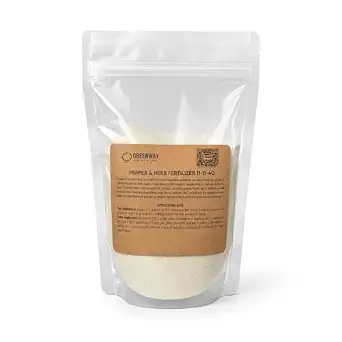 |
| Best Quality Built to a higher standard if you want something more solid | Big A Pepper Fertilizer — 13.5 oz Organic Powder for Peppers |  |
| Best Value The sweet spot between price and what you get | TPS Nutrients Pepper Fertilizer Liquid Plant Food, 8 oz |  |
| Highest Rated A top-rated pick with lots of positive feedback | FoxFarm Happy Frog Tomato & Vegetable Fertilizer, 5-7-3 Blend, 4 lb |  |
| Most Popular A crowd favorite that many people choose with confidence | Miracle-Gro Water Soluble All Purpose Plant Food, 3 lb |  |
| Best Seller A high-volume bestseller chosen again and again | Miracle-Gro Water Soluble All Purpose Plant Food, 1.5 lb |  |
Greenway Biotech Pepper & Herb Fertilizer 11-11-40 Powder, 1 lb

| Item Form | Powder |
|---|---|
| Specific Uses For Product | Hydroponic |
| Coverage | peppers and herbs |
| Liquid Volume | 200 gallons |
| Mixing Ratio | 0.5 Pounds per 100 Gallons of Water |
This 11-11-40 powder from Greenway Biotech is built to push flowering and fruit set on hot and sweet peppers while also enhancing essential oil production in herbs. It dissolves fully in room-temperature water so you can use it as a soil drench, foliar spray, or in hydroponic systems without clogging emitters. The formula includes EDTA-chelated iron, manganese, zinc and copper plus boron and molybdenum, which helps keep micronutrients available across a broad pH range and reduces the chance of lockout. Directions cover side-dressing, foliar feed, and reservoir dosing so it adapts to backyard beds, containers, and NFT or DWC setups. Practical benefits include a high potassium level to support capsaicin and fruit development and a concentrated powder format that treats many gallons per pound. Important limitations are that accurate dosing requires a scale for small-plant applications and that a single 1 lb package is intended for focused use rather than season-long feeding of large plantings.
Best for: Serious pepper growers focused on maximizing fruit size, heat, and yield who use targeted feeds or run hydroponic systems and want a performance-minded, pH-tolerant nutrient.
Less Ideal for: Casual gardeners who prefer low-effort granular feeds or pre-mixed liquid fertilizers intended for whole-season broadcasting across very large beds.
- High potassium ratio (40%) that supports flowering, fruit development, and capsaicin production in hot peppers
- EDTA-chelated micronutrients (Fe, Mn, Zn, Cu) plus boron and molybdenum to reduce nutrient lockout across pH 4–9
- 100% water soluble powder that dissolves cleanly for soil drench, foliar spray, and hydroponic systems without clogging
- Concentrated formula stretches a small package to treat large volumes of water for targeted feeding
- Requires precise measuring (scale or careful teaspoons) for correct dilution on small plants
- 1 lb package may be small for growers with many plants or multiple growing seasons
Verdict: Choose this concentrated, chelated 11-11-40 powder when you want a performance fertilizer that boosts pepper flowering, fruit set, and capsaicin production in soil or hydroponic systems.
Big A Pepper Fertilizer — 13.5 oz Organic Powder for Peppers

| Item Form | Powder |
|---|---|
| Specific Uses For Product | Gardening,Plant Food |
| Coverage | Resealable |
| Target Species | pepper |
| Unit Count | 13.5 Ounce |
This powder fertilizer is designed for pepper growers who want a performance-focused organic feed. It is a highly soluble, resealable 13.5 ounce pouch containing a proprietary blend of nutrients including nitrogen, calcium, manganese, kelp, and humic acid aimed at improving pepper size, crispness, and flavor. Typical use is dissolving the powder into water according to package directions and applying during the growing season to outdoor or container pepper plants. Notable features are its pepper-targeted formulation, high solubility for quick uptake, and resealable packaging that helps preserve the mix between uses. Practical benefits include faster nutrient availability compared with granular organics and a blend tuned to support fruit development and root health. Limitations are that nutrient analysis numbers are not listed on the product page so precise dosing and comparison to other performance fertilizers requires following labeled instructions or contacting the maker. Also the 13.5 ounce pouch is best suited to small to medium pepper gardens rather than very large plantings.
Best for: Gardeners who prioritize measurable improvements in pepper performance and want an organic, quick-acting feed for small to medium home pepper plots.
Less Ideal for: Large-scale growers or those who require exact nutrient breakdowns for precision fertilizer programs should consider bulk or lab-analysed alternatives.
- Formula targeted specifically for peppers to support fruit size, flavor, and crispness
- Highly soluble powder for quick nutrient uptake when mixed into water
- Includes organic inputs such as kelp and humic acid to support root health
- Resealable pouch preserves remaining product and reduces moisture exposure
- No detailed N-P-K or full nutrient analysis listed on the product page
- 13.5 ounce pouch may be small for large or commercial pepper plantings
Verdict: If you want an organic, pepper-focused feed that absorbs quickly to boost fruit size and flavor in home gardens, this powder is a strong performance-oriented choice.
TPS Nutrients Pepper Fertilizer Liquid Plant Food, 8 oz

| Brand Name | TPS NUTRIENTS |
|---|---|
| Unit Count | 8 Fluid Ounces |
| Item Highlight | Supports Blossom Set, Kelp-Enriched Formula, Garden & Container Use |
| Manufacturer | TPS Nutrients |
TPS Nutrients Pepper Fertilizer is a concentrated 8 oz liquid feed designed specifically for pepper plants. It is mixed with water and applied during the growing season to support root strength, healthy foliage, blossom set, and fruit production in both garden beds and containers. The formula includes kelp and nutrients aimed at encouraging flowering and improving yield, so gardeners can expect better fruit set when used as part of a regular feeding schedule. Practical benefits include easy mixing and dosing from a small bottle, suitability for different pepper varieties, and compatibility with container growing where quick nutrient uptake matters. Limitations are that the bottle is small, so frequent applications or larger plots will require multiple purchases, and the product listing does not include a full N-P-K breakdown so exact nutrient ratios are not available to users who follow strict feeding plans. This is best used as a targeted supplement alongside standard soil care rather than a complete soil amendment on its own.
Best for: Gardeners who want a simple, pepper-focused liquid feed to boost flowering and yields in containers or small beds and prefer easy-to-use concentrates over granular regimes.
Less Ideal for: Large-scale growers or those who need complete fertilizer transparency and precise N-P-K control should consider bulk or fully labeled formulations instead.
- Formulated specifically for peppers to support blossom set and fruiting.
- Kelp-enriched formula that aids root health and plant vigor.
- Easy to mix and apply for garden beds and containers.
- Small concentrated bottle is convenient for trialing on different pepper varieties.
- Small 8 oz volume means it may not last for larger gardens without repeat purchases.
- No explicit N-P-K ratio provided in the product details for precise nutrient management.
Verdict: A convenient, kelp-enriched liquid feed tailored to boost flowering and fruit set in chili and bell peppers, ideal for container and small-plot gardeners.
FoxFarm Happy Frog Tomato & Vegetable Fertilizer, 5-7-3 Blend, 4 lb

| Item Form | Granules |
|---|---|
| Specific Uses For Product | Vegetables, Tomatoes, Soft Fruits, and Berries |
| Unit Count | 64 Ounce |
| Mixing Ratio | 5:7:3 |
| Target Species | Vegetables |
This granular FoxFarm Happy Frog fertilizer supplies a balanced 5-7-3 N-P-K blend designed to support leafy growth and plentiful fruit set, plus added calcium and mycorrhizal fungi to improve root uptake and reduce blossom end rot. It is applied to in-ground beds and containers following the package directions and is suitable across vegetable plantings. The OMRI listing means it fits organic-minded plots, and the inclusion of mycorrhizae can help young roots access nutrients and moisture more efficiently. For root crops such as turnips the moderate nitrogen level encourages healthy foliage without overly stimulating excessive top growth that can reduce root development when used at recommended rates. Practical limits are that it is a general vegetable formula rather than a turnip-specific mix, so tight control of nitrogen and timing is still needed for optimal root size, and application rates must be followed to avoid uneven root formation. The dry granules are easy to store and apply but require incorporation or watering in to activate nutrients.
Best for: Gardeners focused on reliable, performance-oriented nutrition for a variety of vegetable crops who want an organic-certified, all-purpose fertilizer that supports both roots and fruiting.
Less Ideal for: Growers seeking a specialized low-nitrogen or root-maximizing formula specifically for large-scale root vegetable production should consider a product formulated expressly for root crops.
- Balanced 5-7-3 N-P-K suited to vegetables that need both foliage and root development
- Contains calcium to help prevent blossom end rot and related fruiting issues
- Includes mycorrhizal fungi to improve root nutrient and water uptake
- OMRI listed, making it acceptable for organic gardens
- Granular form is simple to store, measure, and apply to containers or beds
- Not tailored specifically to root crops so growers may need to adjust application timing or rates for turnips
- Sold in a single size that may require multiple purchases for larger plots
Verdict: Choose this OMRI-listed 5-7-3 granular if you want a performance-oriented, organic-friendly fertilizer that supports healthy roots and reliable vegetable yields.
Miracle-Gro Water Soluble All Purpose Plant Food, 3 lb

| Item Form | Powder |
|---|---|
| Application Method | Mix with water in a watering can |
| Fertilizer Analysis (N‑P‑K) | 24-8-16 |
| Unit Count | 48 Ounce |
| Coverage | Feeds approximately 1,200 sq. ft. |
Miracle‑Gro Water Soluble All Purpose Plant Food is a powdered NPK 24‑8‑16 formula that dissolves in water to give plants a quick nutrient boost. You mix measured scoops into a watering can and apply to the soil at the base of plants every 7–14 days for outdoor use or every 14 days for houseplants. Notable features include a high nitrogen content for leafy growth, compatibility with containers and in‑ground beds, and guidance for use with a Miracle‑Gro Garden Feeder for larger areas. In practical terms this is a fast‑acting feed that encourages bigger, greener foliage and works well in regular maintenance of perennials like hostas. Limitations are that it is a fast‑release fertilizer rather than a slow‑release option, so it requires regular reapplication and careful measuring to avoid overfeeding. Also, the 24‑8‑16 balance is geared toward vegetative growth, so it is not optimized if you want to prioritize flowering or bloom boosting.
Best for: Buyers who want a reliable, fast‑acting feed to maintain lush, leafy perennials and container plants and who value proven products with broad user endorsement.
Less Ideal for: Gardeners seeking a single, long‑lasting granular fertilizer or a bloom‑focused formula should consider alternative slow‑release or high‑phosphorus products.
- Water‑soluble powder mixes easily for quick uptake by roots
- High nitrogen formula promotes robust leafy growth ideal for shade plants
- Clear mixing and application instructions for both indoor and outdoor use
- Suitable for containers and in‑ground gardens and compatible with garden feeders
- Requires frequent applications so it is not a low‑maintenance, slow‑release option
- High nitrogen ratio is less suitable when the primary goal is more flowers than foliage
Verdict: A fast‑acting, water‑soluble fertilizer that reliably produces bigger, greener hosta leaves when used as directed.
Miracle-Gro Water Soluble All Purpose Plant Food, 1.5 lb

| Item Form | Powder |
|---|---|
| Application Method | Watering Can |
| Target Species | For all flowers, vegetables, trees, shrubs and houseplants |
| Mixing Ratio | 24-8-16 |
Miracle-Gro Water Soluble All Purpose Plant Food is a powder concentrate you mix with water to give a quick nutrient boost to flowers, vegetables, houseplants, shrubs and trees. It is typically dissolved in a watering can or used with a compatible garden feeder to soak soil at the base of plants, delivering nitrogen-heavy nutrition that shows effects faster than granular fertilizers. Notable features include an easy scooping method for indoor and outdoor dosing, compatibility with containers and in-ground planting, and clear directions for feeding every one to two weeks. In practice this makes the product a convenient option when you want visible growth and greener foliage quickly, and the 1.5 lb container covers roughly 600 sq. ft. Important limitations are that it is a fast-release, high-nitrogen formula best used as a regular quick feed rather than a long-term slow-release solution, and it requires careful measuring to avoid overfeeding. For routine maintenance combine with good watering and follow the label to avoid nutrient imbalance.
Best for: Buyers who prefer proven, easy-to-use feeding routines and want noticeable growth quickly for a variety of garden and houseplants, guided by established usage directions and broad user experience.
Less Ideal for: Gardeners seeking a single, long-term slow-release solution or those who prefer organic or low-nitrogen fertilizers for sensitive plantings should consider alternative products.
- Water-soluble powder starts working quickly at the roots when mixed and applied
- Clear, simple dosing for indoor and outdoor use with included scoop guidance
- Suitable for a wide range of plants including vegetables, flowers, shrubs and houseplants
- Covers a large area from a small container (about 600 sq. ft. per 1.5 lb)
- Fast-release formula means benefits are short-term compared with slow-release granular fertilizers
- Requires precise measuring and regular reapplication to avoid overfeeding
Verdict: A reliable, fast-acting water-soluble plant food for gardeners who want easy, repeatable feeding and quick visible results.
Choosing the Right Fertilizer for Chili Peppers: Key Factors to Consider
Nutrient Ratio and Timing
Chili peppers need different nutrient priorities during vegetative growth versus flowering and fruiting. A fertilizer with a higher middle and final number relative to nitrogen supports blossom formation and pod development without encouraging excessive leaf growth.
Timing also matters: early-season feeds that favor moderate nitrogen help establish strong plants, but once the first flowers appear you should switch to a formulation that boosts phosphorus and potassium. Regular light feedings are often preferable to heavy single applications, because peppers respond quickly to soluble nutrients and are sensitive to sudden salt spikes.
Release Pattern and Longevity
Slow-release granular fertilizers supply nutrients over weeks to months and reduce the need for repeated applications, which is useful for busy gardeners or for long-season varieties. Water-soluble and liquid feeds deliver a fast nutrient boost, which is handy to correct deficiencies or to stimulate fruit set at key stages.
Consider how long you want to feed between applications. In containers, soluble feeds are easier to dial in, while in-ground beds often benefit from a steady slow-release product. Matching release pattern to your watering habits prevents leaching or nutrient waste.
Soil Type and Container Media
The existing soil or potting mix affects how a fertilizer behaves. Heavy clay holds nutrients and moisture differently than sandy soils, which drain quickly and may need more frequent feeding. Container mixes typically lack long-term reserves, so potted peppers usually require a consistent feeding schedule or a slow-release mix designed for containers.
Test or at least observe soil drainage and fertility before committing to a fertilizer plan. Amendments like compost will change nutrient availability and can reduce the need for concentrated chemical feeds.
Application Method and Gardener Labor
Different fertilizers demand different levels of attention. Granular broadcast or side-dress applications require periodic reapplication and some light incorporation. Water-soluble powders and liquids need mixing and frequent applications but offer fast correction. Fertilizer spikes or stakes are low-effort but can be hard to calibrate for plants with high water use.
Pick a method that matches how much time you want to spend and how precise you need feeding to be. Frequent light applications often give the best control for fruiting crops like chili peppers.
Salt Accumulation and Plant Sensitivity
Chili peppers are sensitive to high soluble salt levels in the root zone, which can inhibit water uptake and damage developing fruit. Fertilizers with high salt indices or those applied too heavily can cause leaf burn and reduced yields.
Monitor plants for leaf tip burn, wilting after watering, or reduced fruit set. Periodic flushing of containers and avoiding overapplication will reduce risk. Choosing lower-salt formulations or organic options can mitigate buildup in soils that are irrigated frequently.
Edibility and Crop Safety
Because peppers are eaten, choose fertilizers formulated for edible crops with clear ingredient lists and known withholding or harvest intervals. Avoid products with additives intended for ornamentals or that contain nonfood-safe coatings.
Consider how soon before harvest you will stop feeding and whether any residual compounds could affect fruit flavor or safety. Organic-sourced fertilizers often have different nutrient release characteristics and may appeal to gardeners prioritizing minimal synthetic input.
Feeding Schedules by Growth Stage
Adjusting feed frequency and nutrient balance as plants move from establishment to flowering and fruiting yields better results than a single static program. For seedlings and transplants, use a mild balanced feed to support root development without forcing rapid top growth. Once flowers appear, shift toward higher phosphorus and potassium to encourage fruit set and ripening.
For mature plants, a combination of regular light liquid feeds and occasional slow-release top-ups works well. In containers, expect to feed more often because water drains nutrients away; in-ground plants with good organic matter need less frequent applications.
- Seedlings: low-strength balanced feed weekly
- Pre-flowering: moderate nitrogen to build structure
- Flowering/fruiting: higher phosphorus and potassium, reduce nitrogen
- Late season: lighter feeds to support ripening
Container Versus In-ground Approaches
Containers require more frequent feeding and attention to salt buildup because potting mixes have limited nutrient reserves and are flushed by frequent watering. Use soluble feeds or a container-specific slow-release formulation and monitor plants closely.
In-ground peppers planted in amended soil benefit from a single incorporated base fertilizer and occasional side-dressings. Deep-rooted in-ground plants can access broader soil nutrient pools, so lighter supplemental feeding is often sufficient.
- Containers: frequent light liquid feeding, occasional flushes
- In-ground: base application plus targeted side-dressings
Organic Options and How They Behave
Organic fertilizers, such as composted manures, bone meal, or kelp-based products, release nutrients more slowly and improve soil biology. They are generally lower-salt and can enhance long-term soil structure and microbial health, which benefits pepper plants over multiple seasons.
Because organic sources release nutrients through microbial action, they may not correct acute deficiencies quickly. Combining organic amendments with a targeted soluble feed when needed gives both fast correction and long-term benefit.
- Pros: improves soil life, lower salt risk, long-term fertility
- Cons: slower to correct deficiencies, nutrient ratios can be variable
Recognizing Deficiency Signs in Peppers
Common nutrient issues show up in predictable plant symptoms. Yellowing between leaf veins often signals magnesium or iron problems, while overall pale leaves suggest nitrogen shortfall. Poor flowering and small or misshapen fruit can indicate low phosphorus or potassium.
Regular visual checks let you tailor feeding. When you see signs, confirm with soil testing if possible, then choose a corrective feed with the nutrients needed rather than increasing a general-purpose fertilizer indiscriminately.
- Interveinal chlorosis: possible iron or magnesium issue
- Pale overall foliage: check nitrogen availability
- Few flowers or small fruits: consider phosphorus and potassium
Watering, pH, and Nutrient Availability
Soil pH strongly influences how available nutrients are to chili peppers. Most pepper varieties perform best in slightly acidic to neutral soil. If pH drifts too high or too low, certain nutrients become locked up and plants show deficiency symptoms despite adequate fertilization.
Consistent watering matters because both underwatering and overwatering affect nutrient uptake. Match fertilizer choice and schedule to your irrigation practices to avoid periods of drought stress or nutrient leaching.
- Aim for slightly acidic to neutral pH for best nutrient uptake
- Keep watering even to support steady nutrient flow
- Test soil pH if persistent deficiency signs appear
How We Chose the Best Fertilizer for Chili Peppers
We shortlisted fertilizers based on measurable garden performance and real-world usability for chili peppers. Primary evaluation criteria included nutrient ratio and release pattern, which determine whether a formula supports flowering and fruit development rather than excessive foliage. Soil and container compatibility was assessed to ensure products work in raised beds, pots, and in-ground plots without frequent reworking. Application method and frequency were considered, because gardeners balance time and labor against feeding needs. Safety for edible crops and salt buildup potential were examined to avoid fruit damage or long-term soil harm. Longevity and cost-per-application were reviewed as practical operating concerns for seasonal care. We excluded blends and specialty products formulated primarily for ornamental flowers or unrelated crops, and we omitted fertilizers with unclear ingredient declarations. The final list focuses on options that deliver appropriate phosphorus and potassium to encourage fruit set, manageable nitrogen levels to avoid overgrowth, and formulations that suit common garden soils and container media.
FAQ
How often should I fertilize chili peppers in containers?
Container-grown peppers generally need light feedings every one to two weeks with a soluble fertilizer, or a single slow-release formulation applied according to label timing. Frequency depends on pot size, mix, and watering; smaller pots require more frequent feeding.
Can I use a general vegetable fertilizer for chili peppers?
Often a general vegetable fertilizer works if its nutrient ratio supports fruiting. Look for moderate nitrogen with higher phosphorus and potassium for the flowering and fruiting stages. Avoid high-nitrogen blends that encourage leafy growth at the expense of fruit.
When should I stop fertilizing before harvest?
Usually you can taper off heavy feeding a few weeks before the main harvest to encourage ripening and reduce excess vegetative growth. Exact timing varies by variety and growing conditions, so monitor plant vigor and fruit development and adjust accordingly.
Are organic fertilizers effective for chili peppers?
Yes. Organic fertilizers improve soil structure and microbial life and provide steady nutrient release. They may act slower than soluble synthetics, so combine with targeted soluble feeds if you need a quick correction during flowering or fruit set.
How do I fix blossom drop in pepper plants?
Blossom drop can result from inconsistent watering, heat stress, or nutrient imbalance. Ensure even moisture, moderate feeding with adequate phosphorus and potassium, and protect plants from extreme temperatures. Quick foliar feeds can help in the short term but address environmental causes first.
Will changing fertilizer improve pepper flavor?
Fertilizer affects plant health and fruit development, which in turn influences flavor intensity. Balanced feeding that supports full ripening rather than excessive foliage generally produces better-flavored peppers. Soil health and watering practices also play major roles.
Final Verdict
Select a fertilizer program for chili peppers that matches soil type, container use, and growth stage. Prioritize nutrient ratios that favor flowering and fruiting once plants are established, and match release pattern to how often you want to feed. Remember to manage salt buildup and watch for deficiency signs so you can correct course with targeted feeds. By weighing application effort, soil behavior, and edibility concerns, you can choose an approach that produces abundant, flavorful peppers with minimal fuss.
