

Note: This article contains affiliate links. If you click on these links and make a purchase, I may earn a small commission at no extra cost to you. This helps support my research and content. Read my full affiliate disclosure here.
Crotons are prized for bold, colorful foliage, but they need the right feeding plan to keep leaves vivid and growth balanced. Choosing the right fertilizer for croton plant affects leaf intensity, seasonal growth patterns, and overall plant health in containers or landscape beds. This guide covers seven top-ranked options chosen for how they support croton nutrient needs and fit typical home-garden routines. We shortlisted products that match the practical needs of indoor and outdoor growers and evaluated them on nutrient mix and ease of use. Read on to find a feeding approach that matches your light, potting medium, and maintenance style.
Top Picks at a Glance
| Best Overall The best all-around choice for most situations | Miracle-Gro Indoor Plant Food for Tropicals, 8 fl. oz. (2-Pack) |  |
| Best Quality Built to a higher standard if you want something more solid | Exotica Tropicals Professional Nursery Croton Fertilizer, 4 lb Slow-Release Granules |  |
| Best Value The sweet spot between price and what you get | FOOP Organic All-Purpose Liquid Plant Food (32 oz) |  |
| Best Budget The cheapest option that still gets the job done reliably | Miracle-Gro Watering Can Singles All Purpose Plant Food, 24 Packets |  |
| Highest Rated A top-rated pick with lots of positive feedback | Osmocote Smart-Release Plant Food Plus Outdoor & Indoor, 1 lb |  |
| Most Popular A crowd favorite that many people choose with confidence | Miracle-Gro Indoor Plant Food, Liquid, 8 oz. (2-Pack) |  |
| Best Seller A high-volume bestseller chosen again and again | Miracle-Gro Indoor Plant Food Spikes, 48 Spikes (2-Pack) |  |
Miracle-Gro Indoor Plant Food for Tropicals, 8 fl. oz. (2-Pack)

| Item Form | Liquid |
|---|---|
| Application Method | Directly to soil or mixed with water |
| Target Species | Tropical Plants |
| Mixing Ratio | 4 pumps:1 quart of water |
| Unit Count | 16 Fluid Ounces (per bottle) |
This liquid formula is designed to feed tropical indoor plants and is useful for houseplants that benefit from regular, low‑volume nutrition. It can be applied directly to potting soil using the built‑in pump or diluted at a ratio of 4 pumps per quart of water for routine watering, with reapplication every two weeks. The potassium‑focused formulation aims to promote lush green foliage, which matters for many broadleaf tropicals. Practical benefits include an easy pump dispenser for small pots, two bottles in the bundle for longer supply, and clear mixing guidance so dosing is straightforward. Limitations to consider: the product is formulated for general tropical houseplants rather than a specialist crop, and coverage is described as low so frequent dosing or multiple bottles may be needed for larger collections. If you prefer granular slow‑release nutrition or a fertilizer tailored to a very specific species, this liquid feed may not match those needs.
Best for: Indoor plant owners who want a simple, pump‑dispensed liquid fertilizer to maintain lush foliage on common tropical houseplants and who value straightforward dosing and social proof from other buyers.
Less Ideal for: Collectors seeking a slow‑release granular fertilizer, a formula customized for specialist epiphytes, or growers who want concentrated coverage for large collections.
- Designed specifically for tropical indoor plants with a potassium‑focused formula to support foliage
- Built‑in pump and clear 4 pumps per quart mixing ratio for easy, repeatable dosing
- Comes as a two‑bottle bundle so you have spare supply for ongoing feeding
- Liquid form delivers nutrients immediately when applied to soil
- Not species‑specific so it is a general tropical formula rather than tailored to unusual plants
- Labeled coverage is low, meaning frequent applications or additional product may be required for many plants
Verdict: A convenient, pump‑dispensed liquid fertilizer that makes biweekly feeding of common tropical houseplants quick and reliable.
Exotica Tropicals Professional Nursery Croton Fertilizer, 4 lb Slow-Release Granules

| Item Form | Granules |
|---|---|
| Coverage | 5 to 6 months |
| Target Species | Croton Codiaeum variegatum |
| Mixing Ratio | 18:5:12 |
This Exotica Tropicals fertilizer is a nursery-grade granular formula designed specifically for croton plants. It delivers a high nitrogen ratio (18) with balanced phosphate and potash and includes micro-nutrients such as magnesium, iron, manganese and zinc, plus slow-release pellets that feed for five to six months. Typical use is a broadcast or top-dress application around container or landscape crotons at the recommended rate; the slow-release fraction provides steady growth while the smaller instant-release portion gives an initial green-up. Practical benefits include long coverage between applications, a professional-strength NPK useful for vigorous foliar color and size, and a compact 4 lb package that contains granules and a resealable bag. Limitations are that the formula is focused on growth and green-up rather than bloom forcing, and the high nitrogen may be excessive if you prefer conservative feeding or have very small pots. Users should follow the mixing and application guidance and avoid overapplication to prevent leaf burn.
Best for: Buyers who prioritize strong, visible vegetative growth and want a long-lasting, professional nursery fertilizer for croton plants in containers or landscape settings.
Less Ideal for: Casual growers who prefer low-frequency, low-nitrogen bloom boosters or gardeners managing many small pots with sensitive seedlings should consider gentler alternatives.
- Professional-grade NPK (18-5-12) tailored for vigorous croton growth
- Slow-release pellets provide 5 to 6 months of continuous feeding
- Contains key micronutrients such as magnesium, iron, manganese and zinc
- Includes a small instant-release fraction for an immediate green-up
- High nitrogen formula may be too strong for very small pots or conservative feeders
- Pack is focused on crotons and may not suit plants that need low-nitrogen bloom formulas
Verdict: Choose this fertilizer if you want a professional, long-lasting, high-nitrogen feed that reliably boosts croton growth and foliage color.
FOOP Organic All-Purpose Liquid Plant Food (32 oz)

| Item Form | Liquid |
|---|---|
| Specific Uses For Product | General Plant Food |
| Coverage | Large |
| Target Species | vegetables, herbs, flowers, trees, shrubs |
| Mixing Ratio | 1:32 |
FOOP Organic All-Purpose Liquid Plant Food is a 32 oz concentrate formulated to feed a wide range of outdoor and indoor plants. It mixes at 1:32 to make a large volume of usable solution and contains organic inputs such as fish emulsion, kelp, mycorrhizae, and beneficial microbes to supply nitrogen, phosphorus, potassium, calcium, magnesium, and silica. In practice you dilute it and apply it as a routine feed to beds, containers, and established perennials; the microbial inoculant and kelp content support root health and vigor while the broad nutrient profile helps leafy plants develop. For gardeners growing hostas this product provides balanced, organic nutrition that encourages lush foliage without synthetic salts. Expect easy mixing and broad compatibility, but be prepared for the typical odor of fish-based fertilizers and to follow dilution guidance so you do not overapply. This is best used as a regular feed alongside good cultural care rather than a one-time corrective soil amendment.
Best for: Gardeners who prioritize practical, organic solutions and want a single concentrated feed to maintain lush, leafy perennials and mixed beds without complex dosing schemes.
Less Ideal for: Gardeners seeking odorless synthetic fertilizers or those who need a specialized slow-release granular product for long-term soil nutrient retention.
- Concentrated 1:32 mixing ratio stretches one bottle into a large amount of feed
- Broad nutrient spectrum including N, P, K plus calcium and magnesium for balanced feeding
- Contains kelp, mycorrhizae, and beneficial microbes to support root and soil biology
- Suitable for a wide range of plants from vegetables to ornamentals so one product covers multiple beds
- Fish emulsion base can have a strong odor that some users find unpleasant
- Not a targeted slow-release soil amendment for long-term nutrient holding
Verdict: A concentrated, organic liquid feed that provides balanced nutrition and soil-friendly microbes to keep hostas and other shade perennials lush and healthy.
Miracle-Gro Watering Can Singles All Purpose Plant Food, 24 Packets

| Number of Packs | 24 |
|---|---|
| Unit Count | 10.24 Ounce |
| Item Form | SOLID |
| Application Method | watering can |
| Mixing Ratio | 1 teaspoon per 1 gallon of water |
Miracle-Gro Watering Can Singles are single-use, pre-measured fertilizer packets intended to make feeding roses and other garden plants simple and reliable. To use, tear a packet into a watering can, add the specified amount of water, then apply the solution while watering; the manufacturer recommends feeding every 7 to 14 days during active growth. The packets remove measuring errors and mess, which helps prevent accidental overfeeding. Because the formula is labeled for all flowers, vegetables, trees and shrubs, it fits into regular rose care routines for bloom and bush development. Practical benefits include instant solubility, clear application instructions for outdoor and indoor containers, and consistent coverage per packet for about 10 sq. ft. of garden. Limitations are that you must keep up with the every-1–2-week schedule for best results and that the product is sold as a general-purpose feed rather than a rose-specific bloom booster, so dedicated rosarians seeking targeted NPK ratios might prefer a specialized rose fertilizer.
Best for: Gardeners who want a low-risk, no-mess way to feed roses and mixed flower beds as part of routine watering and prefer simple, foolproof dosing.
Less Ideal for: Specialist rose growers seeking a targeted bloom-boosting formula or those who want a single, slow-release application instead of frequent liquid feedings.
- Pre-measured packets eliminate measuring and reduce mess and dosing errors
- Water-soluble formula mixes quickly in a watering can for immediate application
- Labeled for use on flowers, roses, shrubs, trees and vegetables so it suits mixed beds
- Clear directions for indoor and outdoor application and coverage per packet
- General all-purpose formula rather than a rose-specific NPK for bloom boosting
- Requires regular reapplication every 7–14 days to maintain results
Verdict: If you want a safe, fuss-free way to feed roses while you water, these pre-measured soluble packets make regular feeding simple and consistent.
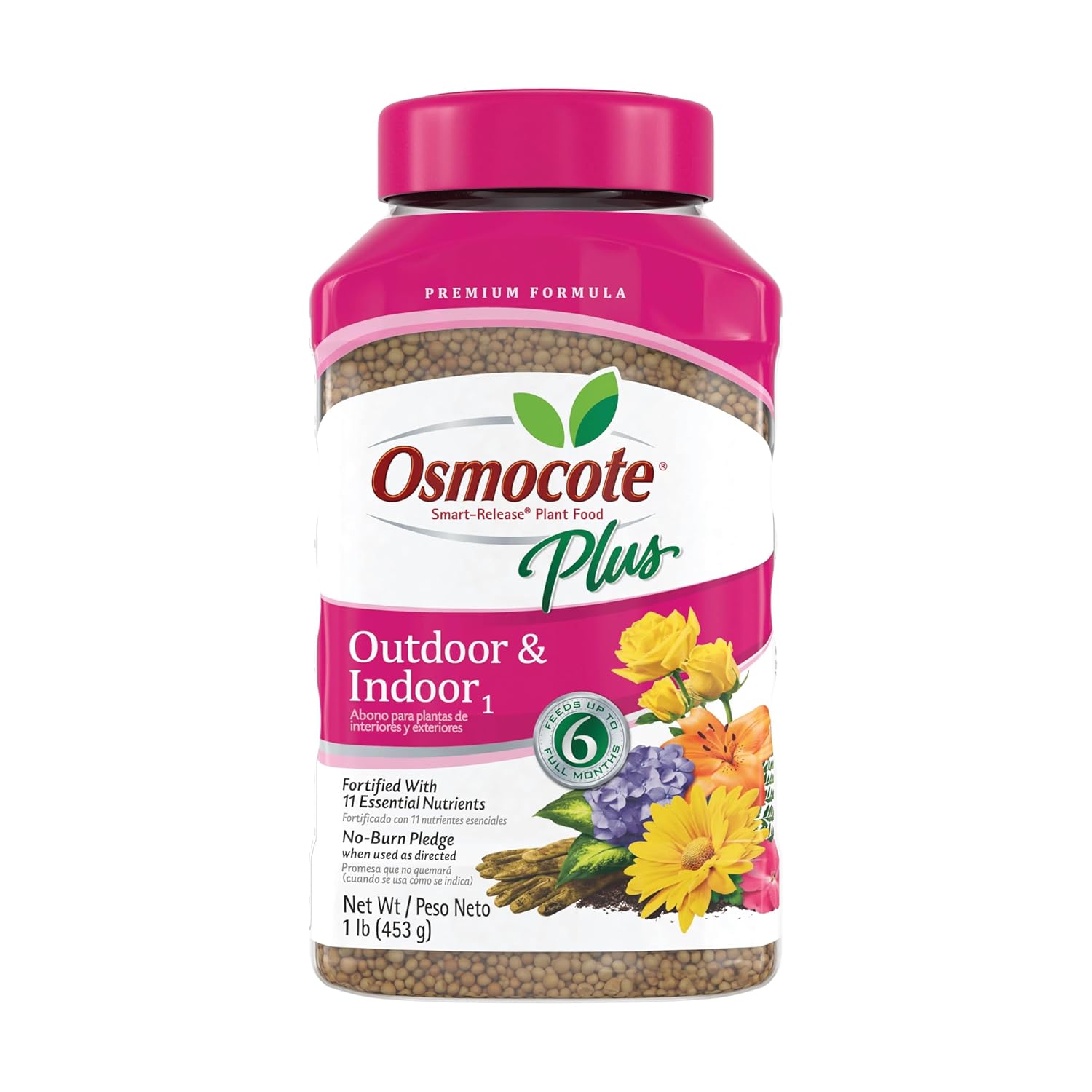
Osmocote Smart-Release Plant Food Plus Outdoor & Indoor, 1 lb
| Item Form | Granules |
|---|---|
| Specific Uses For Product | Plant Food |
| Application Method | sprinkle around the base and work into the soil |
| Unit Count | 16 Ounce |
Osmocote Smart-Release Plant Food Plus is a resin-coated granular fertilizer designed to deliver steady nutrition to a wide range of plants for up to six months from a single application. You apply it by sprinkling the recommended scoop into the top inch or so of potting mix for containers or around plants in garden beds, then watering to activate the coating. The product contains 11 essential nutrients and is formulated to release based on soil temperature, which helps reduce overfeeding and supports consistent bloom and foliage performance in hanging baskets. Its no-burn pledge makes it easy to use at the recommended rates for mixed annuals, trailing plants, and container veggies. Limitations are that coverage is modest from a 1 lb. container so frequent use on many large baskets will require buying more, and release timing still depends on temperature so plants in cool, shaded spots may receive nutrients more slowly than those in warm sun.
Best for: Gardeners who prioritize steady, low-maintenance feeding for hanging baskets and containers and want consistent bloom and foliage without frequent fertilizing.
Less Ideal for: Those who need immediate, short-term nutrient boosts or precise liquid feeding schedules for plants that demand fast correction.
- Resin-coated granules provide controlled release of nutrients for up to six months
- Formulated with 11 essential nutrients suitable for a wide variety of plants
- No-burn pledge when used as directed reduces risk of damaging roots in containers
- Simple sprinkle-and-water application works well for hanging baskets and pots
- 1 lb container covers a limited area so multiple baskets will need additional product
- Release rate depends on temperature so nutrient delivery can be slower in cool conditions
Verdict: An easy, low-maintenance slow-release fertilizer that keeps hanging baskets fed for months with minimal effort.
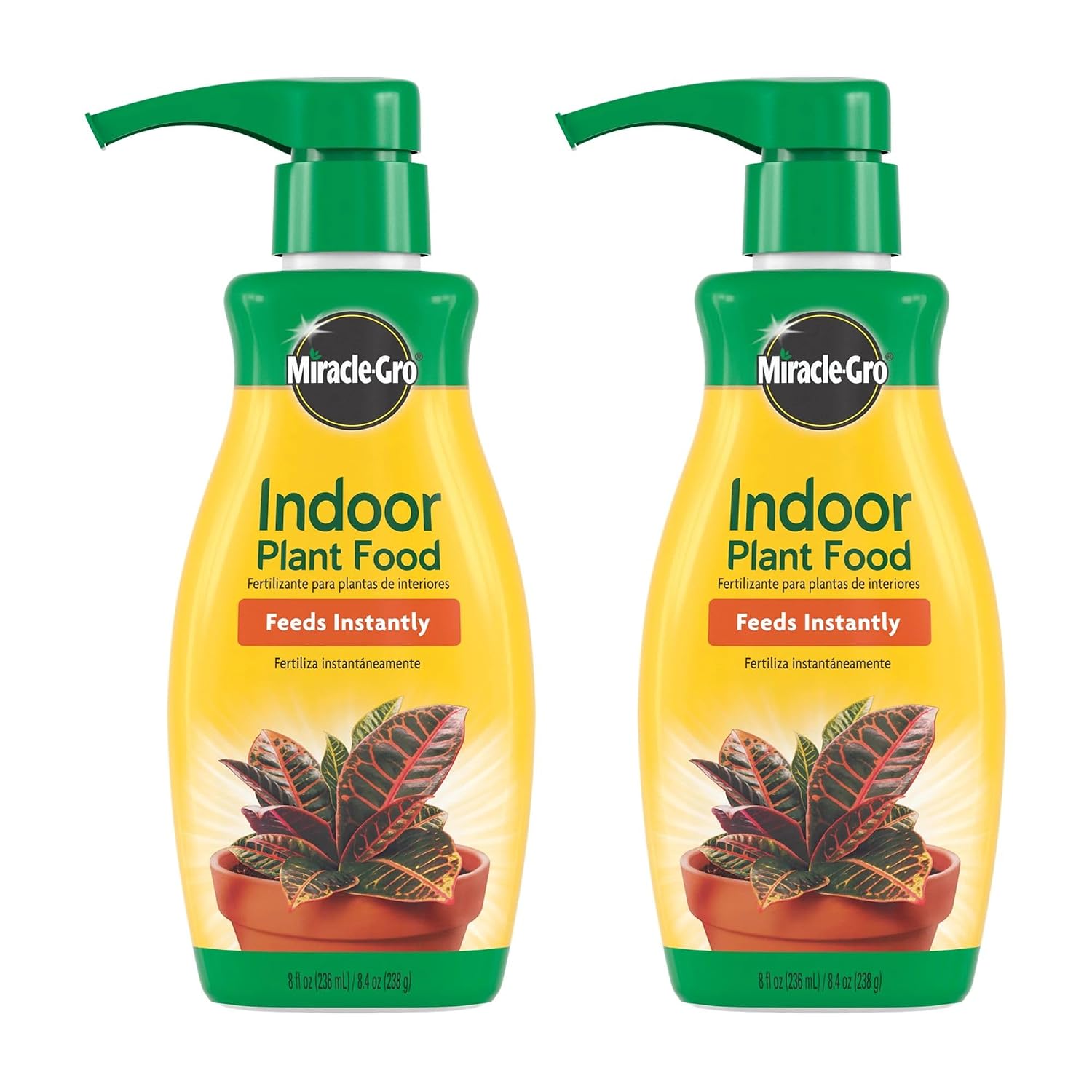
Miracle-Gro Indoor Plant Food, Liquid, 8 oz. (2-Pack)
| Item Form | Liquid |
|---|---|
| Application Method | Apply directly to the soil or mix with water |
| Coverage | Pot size |
| Target Species | Peace Lily, Snake Plant, Croton, Succulents, Herbs |
| Unit Count | 16 Fluid Ounces |
Miracle-Gro Indoor Plant Food is a ready-to-use liquid fertilizer designed for weekly feeding of houseplants. It is applied either by pumping directly into the potting soil (one pump for small pots, two for larger pots) or by diluting four pumps per quart of water and using as a regular watering. The formula is aimed at common indoor species such as snake plants, peace lilies, succulents, herbs and edible container vegetables, so it suits mixed collections. Practical benefits include instant nutrient availability, easy dosing with the pump bottle, and a compact two-pack that keeps a steady supply on hand. Important limitations are that it requires weekly application to see results and contains concentrated nutrients that should be kept away from children and pets and handled with care. Also, instructions assume typical indoor pot sizes so very large container gardens may need adjusted dosing. For everyday indoor gardeners wanting straightforward, frequent feeding, this product makes routine care simple and effective.
Best for: Indoor plant owners who want a simple, regular feeding routine for a mixed collection of houseplants and occasional edible containers.
Less Ideal for: People who prefer organic or slow-release granular fertilizers or those who want a low-maintenance no-fertilizer approach.
- Suitable for a wide range of common houseplants including edibles and succulents
- Easy pump-dosing or water-dilution application for quick feeding
- Comes as a two-pack to maintain a regular feeding schedule
- Liquid form delivers nutrients immediately to the root zone
- Requires weekly application to maintain benefits
- Contains concentrated chemicals that require safe handling away from children and pets
Verdict: A convenient, pump-dosed liquid fertilizer that makes weekly feeding of mixed houseplant collections quick and reliable.
Miracle-Gro Indoor Plant Food Spikes, 48 Spikes (2-Pack)

| Item Form | Sticks |
|---|---|
| Application Method | Insert into soil |
| Target Species | all indoor plants |
| Unit Count | 48 Count |
| Mixing Ratio | 6:12:6 |
These Miracle-Gro Indoor Plant Food Spikes are a convenient, low-effort way to feed potted croton and other houseplants. Each stick is pushed into moist potting soil with the included aerator; the spikes dissolve slowly and release nutrients for up to two months, so feeding becomes a twice-seasonal task rather than a weekly chore. The 6-12-6 NPK mix supports foliage and flowering, which is helpful for crotons that benefit from steady nutrients to maintain leaf color. Practical benefits include tidy application with minimal mess, predictable slow release that reduces the risk of overfertilizing, and compatibility with a wide range of indoor plants. Limitations are that spikes do not allow precise, adjustable dosing for small or newly rooted plants, and they do not address soil pH or drainage issues that also affect croton health. For growers who want targeted micronutrients or a quick corrective feeding, a soluble fertilizer may be preferable.
Best for: A cautious indoor gardener who prefers set-and-forget feeding for decorative houseplants like croton and values predictable, low-risk care routines.
Less Ideal for: Plant parents who need precise dosing for seedlings, recently repotted specimens, or who require immediate nutrient correction should consider soluble or targeted fertilizers instead.
- Continuous slow-release feeding for up to two months reduces maintenance frequency
- Easy, mess-free insertion with the Miracle-Aerator tool
- Formulated NPK 6-12-6 supports both foliage and flowering
- Suitable for a wide range of indoor plants including croton
- Not suitable for fine-tuning nutrient levels or for very small/petite pots
- Does not correct soil pH or drainage problems that affect plant uptake
Verdict: Use these spikes when you want an easy, low-risk way to keep croton foliage vibrant with twice-monthly to monthly set-and-forget feeding.
Choosing the Right Fertilizer for Croton Plant: Key Factors to Consider
Nutrient Balance and N-P-K Ratio
Crotons benefit from a fertilizer that encourages both leafy growth and strong pigmentation. Look for a balanced but slightly higher nitrogen formulation during the active growth season to support new leaf production, then shift toward a slightly higher potassium profile before cooler or lower-light periods to help with color retention.
The N-P-K numbers tell you the proportion of nutrients but not the full story. Micronutrient content matters for croton coloration, so check labels for iron, manganese, and magnesium. A product with a clear guaranteed analysis helps you plan feedings and avoid overapplication.
Micronutrients and Trace Elements
Small deficiencies in iron, manganese, or magnesium quickly show up as faded or yellowing leaves on crotons. Fertilizers that include these trace elements reduce the chance of nutrient-specific chlorosis and keep leaf colors vibrant.
If your water or potting mix is alkaline, iron chelates or readily available iron forms help prevent iron lockup. Consider whether the fertilizer lists chelated or plant-available micronutrients and how often supplemental foliar feeding might be required.
Application Method and Ease
Different formulations require different habits. Water-soluble feeds give quick correction and are good for regular maintenance on potted crotons. Granular slow-release products reduce frequency of feeding and lower the risk of overfertilizing for busy gardeners.
Consider how easy instructions are to follow. Products with simple dilution ratios and clear schedules are best for casual growers. If you prefer foliar feeding to quickly improve leaf color, choose a fertilizer that is labeled safe for leaves and provides mixing guidance.
Release Rate and Predictability
Release profile affects how steady the nutrient supply is and how often you must intervene. Fast-release fertilizers show quick results but can cause nutrient swings and raise salt levels in pots. Slow-release products provide steadier nutrition but can be slower to correct an established deficiency.
Match release rate to your watering habits and season. In active growth you may want more frequent, lighter feedings. In summer heat or cooler months, a slower, more predictable release reduces stress on roots and minimizes fertilizer burn risk.
Salt Load and Root Safety
Crotons in containers are sensitive to salt accumulation. High-salt fertilizers and heavy feeding without periodic leaching can lead to leaf browning and root stress. Choose options with lower soluble salt index for regular use, and flush pots occasionally to prevent buildup.
Check product directions for recommended leaching intervals and whether the formulation is intended for container-safe use. If you use tap water with higher dissolved solids, factor that into your fertilizer schedule to avoid compounding salt levels.
Formulation Versatility and Compatibility
Consider whether you need a product strictly for soil drench or one safe for foliar sprays. Some croton situations benefit from supplemental foliar feeding during color development periods, while landscape plantings are better served by granular or slow-release soil-applied fertilizers.
Also think about compatibility with other treatments you use, such as systemic insect controls or soil amendments. A versatile formulation that mixes well and does not precipitate when combined with other common garden products reduces hassle and dosing mistakes.
When to Start Feeding Crotons
Begin regular feeding after a croton shows active new growth, typically in spring for temperate climates or after the plant has settled from repotting. Avoid starting a heavy feeding schedule during dormancy or when the plant is stressed from temperature swings or pests.
For container crotons, lighter, more frequent feedings during the growing season yield steady color and growth. For landscape or established shrubs, timed granular applications can provide long-term support with less handling.
- Wait until new growth appears before beginning regular fertilization
- Reduce feed frequency as daylight shortens or growth slows
- Flush containers occasionally to prevent salt buildup
Foliar Feeding Versus Soil Feeding
Foliar feeding delivers nutrients directly to the leaf surface and can rapidly correct micronutrient deficiencies that dull croton coloration. Use foliar sprays sparingly and on cooler parts of the day to avoid burn and maximize uptake.
Soil feeding supports root uptake and sustains longer-term growth. Choose the method that matches the issue you are addressing: foliar sprays for quick color fixes and soil drenches or slow-release granules for steady seasonal nutrition.
- Foliar applications are fast but temporary
- Soil feeding supports longer-term vigor
- Combine both methods when correcting a deficiency quickly while building longer-term supply
Adjusting Feedings by Light and Season
Croton color intensity depends on light levels as well as nutrition. In stronger light, plants use nutrients faster and will tolerate more regular feeding. In lower light, reduce frequency and strength of applications to avoid leggy growth and leaf drop.
Seasonal adjustments help avoid overstressing plants. Ramp up feeding in spring and summer when growth is vigorous, then taper off in fall and winter to match the plant's slowed metabolism.
- Increase feed frequency in bright, warm conditions
- Reduce or pause feeding during slow-growth months
- Monitor leaf response and adjust strength before changing schedules drastically
Feeding for Container Crotons
Containers concentrate salts and nutrients, so choose fertilizers with clear dosing and low salt indices. Regular, light liquid feedings can be easier to control in pots, while a single, measured slow-release granule application may work for those who prefer less frequent care.
Always water well before and after applying granular fertilizers to prevent localized root burn, and schedule occasional deep waterings to flush excess salts from the root zone.
- Prefer low-salt options for frequent container feeding
- Follow label dilution instructions carefully
- Leach pots periodically to manage accumulated salts
Common Nutrient Problems and How Feeding Helps
Pale or yellowing leaves often point to iron or magnesium shortages, while overall weak growth with small leaves can indicate insufficient nitrogen. Targeted feeding that includes the missing micronutrient can restore color and vigor faster than generic boosting alone.
If new leaves emerge pale but later green up, minor adjustments to micronutrient supply or pH may be sufficient. Persistent mottling or edge browning may require a reassessment of root health, watering practices, and the fertilizer schedule rather than more fertilizer.
- Iron deficiency shows as uniform yellowing with green veins
- Magnesium deficiency can cause interveinal yellowing on older leaves
- Overfertilization often presents as leaf tip burn or widespread browning
How We Chose the Best Fertilizer for Croton Plant
We focused on criteria that matter to gardeners growing crotons, not marketing claims. Primary evaluation factors were nutrient balance and formulation tailored for foliar color, ease of application and dosage control for container and landscape settings, and nutrient release profile to match croton growth cycles. We also assessed salt load and fertilizer safety for sensitive container roots, plus packaging and labeling clarity that affects correct dosing. Products were excluded if they lacked clear N-P-K breakdowns, did not specify micronutrients, or relied solely on vague organic claims without analysis. We favored formulations that provide accessible nitrogen, sufficient potassium for leaf tone, and trace elements like iron and manganese that prevent chlorosis. Slow-release and water-soluble options were both considered but scored differently based on predictability and suitability for croton care. Finally, we checked application flexibility for foliar feeding versus soil drench, and how straightforward instructions are for home gardeners.
FAQ
How often should I feed a croton in a pot?
Often depends on the formulation. Water-soluble feeds are usually applied every two to four weeks during active growth. Slow-release granules may only need application once or twice per season. Monitor growth and leaf color to fine-tune frequency.
Can I use houseplant fertilizer for a croton outdoors?
Usually yes if the fertilizer provides balanced nutrients and micronutrients. Check that the product is suitable for larger containers or landscape use and adjust dosage to the scale of the planting and local watering habits.
Will foliar feeding damage croton leaves?
Foliar feeding is generally safe when mixed to label rates and applied during cool, shaded parts of the day. Avoid spraying strong concentrations in direct sun to prevent leaf scorch and always test a small area first if you are unsure.
What micronutrients are most important for croton color?
Iron and manganese are critical to prevent yellowing and maintain vivid leaf tones. Magnesium also supports chlorophyll function. Look for fertilizers that list these trace elements or consider occasional supplemental foliar applications if symptoms appear.
How do I correct fertilizer burn on a croton?
Stop fertilizing immediately and flush the pot or root zone with plenty of water to leach excess salts. After leaching, reduce next applications to lower strength and increase intervals. If root damage is severe, repotting into fresh medium may be necessary.
Final Verdict
Choose a feeding plan that matches your croton's light, container size, and growth rhythm. Prioritize a fertilizer with a clear nutrient analysis and the micronutrients crotons need for color, and pick a release profile that fits how often you want to feed. Expect tradeoffs between speed and safety: fast-release soluble feeds correct problems quickly but require careful dosing and flushing, while slow-release options reduce handling but are slower to fix deficiencies. Match your schedule and monitoring habits to the product type and adjust based on leaf response for the best results.
