

Note: This article contains affiliate links. If you click on these links and make a purchase, I may earn a small commission at no extra cost to you. This helps support my research and content. Read my full affiliate disclosure here.
Picking the right fertilizer for daffodil bulbs matters because bulbs store the energy they need for next year during and after bloom. Feed at the right time with the right balance of nutrients and you will encourage stronger foliage, larger flowers, and healthier bulbs that resist disease. This guide covers six top options suitable for gardeners growing daffodils in beds, borders, and containers. We shortlisted products that suit typical spring planting and post-bloom feeding habits and evaluated them on nutrient profile, ease of application, and suitability for bulb health. Read on to see which features matter most and how each choice behaves in real garden use.
Top Picks at a Glance
| Best Overall The best all-around choice for most situations | Espoma Bulb-Tone Organic Fertilizer (4 lb) |  |
| Best Quality Built to a higher standard if you want something more solid | Cz Garden Supply Bulb & Bloom Fertilizer 4-10-10 (64 oz) |  |
| Best Budget The cheapest option that still gets the job done reliably | Espoma Bulb-Tone Organic Fertilizer 3-5-3, 4 lb |  |
| Highest Rated A top-rated pick with lots of positive feedback | Espoma Bulb-Tone Organic Bulb Food, 3-5-3, 4 lb (4-pack) |  |
| Most Popular A crowd favorite that many people choose with confidence | Burpee Bone Meal Fertilizer, 3 lb |  |
| Best Seller A high-volume bestseller chosen again and again | Jobe's Organics Granular Bulb Fertilizer, 4 lb | 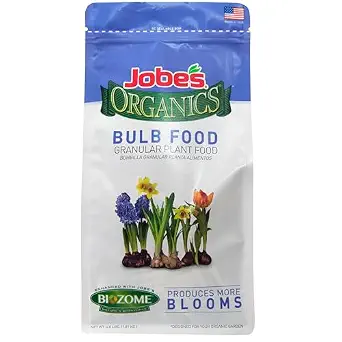 |
Espoma Bulb-Tone Organic Fertilizer (4 lb)

| Item Form | Granules |
|---|---|
| Application Method | Sprinkle on soil surface |
| Target Species | bulbs |
| Mixing Ratio | No Mixing Required |
Espoma Bulb-Tone is a ready-to-use granular organic fertilizer designed for planting and feeding bulbous flowers such as tulips, daffodils, and other spring and fall bulbs. You apply it directly in the planting hole for new bulbs or sprinkle on the soil surface around established bulbs and then water it in. The 3-5-3 NPK blend with added calcium and Espoma’s Bio-tone formula supplies balanced nutrients that favor strong root development and vibrant blooms without synthetic inputs. Because it is an organic registered input and contains only organic ingredients, it suits gardeners who prefer natural feeds and want steady, soil-building nutrition rather than quick-release chemical boosts. Limitations are that it is a medium-coverage granular product so it works more slowly than soluble fertilizers and requires correct timing at planting or post-bloom to be most effective. For someone seeking predictable, low-risk bloom support for bulbs, Bulb-Tone is an easy, low-fuss choice.
Best for: Gardeners who prioritize low-risk, organic feeding for bulbous flowers and want an easy-to-apply fertilizer that supports reliable bloom development.
Less Ideal for: Growers who need rapid, soluble nutrient delivery for quick corrections or who prefer concentrated liquid feeds for foliar feeding.
- Organic, registered input suitable for organic gardening
- Ready-to-use granules require no mixing and are simple to apply
- Balanced 3-5-3 formula with added calcium to support blooms and root health
- Can be used at planting or as a surface feed for established bulbs
- Granular, medium-coverage formula releases nutrients more slowly than soluble fertilizers
Verdict: A simple, certified organic granular fertilizer that reliably supports healthy bulbs and better blooms with minimal fuss.
Cz Garden Supply Bulb & Bloom Fertilizer 4-10-10 (64 oz)

| Item Form | Granules |
|---|---|
| Coverage | Vegetable gardens, lawns, flower gardens, and indoor/outdoor plants |
| Target Species | Flowers |
| Mixing Ratio | 4:10:10 |
| Unit Count | 64 Ounce |
This granular 4-10-10 fertilizer is designed for bulb-forming flowers and general garden use, supplying a bloom-focused balance of phosphorus with nitrogen and potassium plus micronutrients and 2% iron. It is typically applied by mixing at the stated ratio and worked into soil at planting or fed during the growing season to encourage stronger root development and fuller blooms in tulips, daffodils, lilies and similar bulbs. The product comes in a resealable pouch for straightforward measuring and storage, and the US-made formulation is oriented toward reliable, repeatable results rather than novelty additives. Practical benefits include versatile coverage for containers and beds and a clear mixing ratio that helps standardize applications. Limitations are that it is a synthetic granular formula, so gardeners seeking organic certification or slow-release organics will need an alternative, and specific application rates for every bulb species are not listed on the product details so some experience or reference to bulb feeding guidelines is helpful.
Best for: Gardeners who prioritize predictable, repeatable feeding for tulips and other spring bulbs and want a straightforward granular fertilizer to promote strong blooms.
Less Ideal for: Growers who require organic-certified products or those who prefer a long‑term slow‑release amendment tailored to specific bulb species.
- Bloom-focused N-P-K (4-10-10) supports flower and bulb development
- Includes micronutrients and 2% iron to address common nutrient deficiencies
- Resealable pouch makes measuring and storing easy
- Made in the USA with a clear mixing ratio for consistent application
- Granular synthetic formula is not certified organic
- Packaging and listing omit detailed species-specific application rates
Verdict: A dependable, bloom-focused granular fertilizer for tulips and other bulbs when you want consistent, repeatable feeding to boost flower production.
Espoma Bulb-Tone Organic Fertilizer 3-5-3, 4 lb

| Item Form | Granules |
|---|---|
| Specific Uses For Product | Gardening,Organic,Plant Food |
| Coverage | Medium |
| Target Species | bulbs |
| Mixing Ratio | 3:5:3 |
Espoma Bulb-Tone is an organic granular fertilizer designed primarily for planting and feeding spring and fall bulbs, but it can be applied to other allium crops like onions when a balanced, natural boost is desired. It is ready to use out of the bag and recommended for placing in the planting hole for new bulbs or sprinkling on the soil surface for established plants then watering in. Notable features include its 3-5-3 NPK ratio, inclusion of calcium, and Espoma's Bio-tone formula made from organic ingredients approved for organic gardening. In practice this product provides steady nutrient release and helps support root development and flowering; for onions that translates to healthier sets and improved bulb formation when applied at planting and during early growth. Limitations are that it is formulated for bulbs rather than specifically for vegetable onions, so growers seeking higher nitrogen for heavier foliage or a slow-release formulation tailored to vegetable production may want a fertilizer made for vegetables. For gardeners who prioritize natural inputs and predictable, gentle feeding, Bulb-Tone is a dependable choice.
Best for: Gardeners who prefer organic, reliable products and want a gentle, easy-to-apply fertilizer to support bulb and bulb-like crops during planting and early growth.
Less Ideal for: Growers who need a vegetable-specific fertilizer with higher nitrogen or a targeted slow-release program for commercial onion production.
- Organic formula approved for organic gardening
- Ready-to-use granular form that can be placed at planting or sprinkled on soil
- Balanced 3-5-3 NPK with added calcium to support root and bulb development
- Produces steady, gentle nutrient release suitable for sensitive bulb roots
- Formulated for ornamental bulbs rather than specifically for vegetable onions
- Not a high-nitrogen feed if you want vigorous foliage growth
Verdict: Choose Bulb-Tone when you want an organic, ready-to-use granular fertilizer that reliably supports bulb and bulb-like crops with balanced nutrients.
Espoma Bulb-Tone Organic Bulb Food, 3-5-3, 4 lb (4-pack)

| Item Form | Granules |
|---|---|
| Specific Uses For Product | Bulbs |
| Coverage | Organic |
| Mixing Ratio | 3:5:3 |
| Unit Count | 64 Fluid Ounces |
Espoma Bulb-Tone is a ready-to-use granular fertilizer designed specifically for bulbs such as daffodils, tulips, crocus and hyacinths. You apply it at planting by placing some in the hole for new bulbs or sprinkle it on the soil surface and water in for established bulbs and post-bloom feedings. The 3-5-3 analysis with added calcium and beneficial microbes aims to support stronger root development and healthier blooms while avoiding synthetic fillers. Because it is organic and registered for organic production, it fits into low-input and chemical-free garden plans. Practical benefits include ease of use with no mixing required, a formula tailored to bulb nutrient needs, and the inclusion of humates and microbes that can improve soil biology over time. Limitations are that it is a granular product so results build over seasons rather than producing an immediate bloom boost, and quantity is household-scale which may require multiple packs for larger beds.
Best for: Gardeners who prioritize reliable, organic feeding for spring-flowering bulbs and want a purpose-made product that supports soil biology and steady seasonal performance.
Less Ideal for: Growers who need a quick, fast-acting bloom enhancer or who manage very large commercial bulb plantings may want a higher-rate or concentrated option instead.
- Formulated specifically for bulbs with a 3-5-3 NPK balance.
- Organic and certified for use in organic gardening.
- Contains calcium, humates and beneficial microbes to support soil health.
- Ready-to-use granules require no mixing and are simple to apply.
- Granular formula works gradually so not ideal for rapid, immediate bloom effects.
- Four-pack unit is modest in coverage and may be insufficient for very large planting areas.
Verdict: Choose this fertilizer if you want a dependable, organic bulb-specific feed that supports healthier bulbs and soil over seasons.
Burpee Bone Meal Fertilizer, 3 lb

| Item Form | Powder |
|---|---|
| Specific Uses For Product | Plant Growth, Root Development |
| Coverage | 240 Sqaure Feet |
| Target Species | tomatoes, peppers, and bulbs |
Burpee Bone Meal is a slow-release granular fertilizer designed to boost early root development and flowering in root and bulb crops. Gardeners typically work it into planting holes for bulbs or mix it into soil and potting media when starting seeds or transplanting vegetables like carrots, beets, and onions. The product is OMRI listed for organic gardening and provides phosphorus and calcium that support stronger root systems and better early-season growth. Its fine granular texture makes it easy to apply evenly, and because it breaks down slowly it feeds plants over the season without burning them. Practical benefits include targeted support for root vegetables and an easy application method for beds and containers. Limitations are that it supplies mainly phosphorus and calcium rather than a balanced NPK profile, so it is best used alongside a nitrogen source if foliage development is needed, and results are gradual rather than immediate because of the slow-release nature.
Best for: Gardeners focused on improving root development and bulb planting who prefer organic inputs and want a simple amendment to add at planting or during bed preparation.
Less Ideal for: Growers seeking an all-in-one balanced fertilizer for both foliage and root development or those who need fast-acting, soluble nutrients for immediate correction.
- OMRI listed for organic gardening, suitable for certified organic beds
- Fine granular form that is easy to spread and incorporate
- Provides phosphorus and calcium to encourage strong root and bulb development
- Slow-release action reduces risk of burning plants and supplies season-long support
- Not a complete fertilizer profile so additional nitrogen may be needed for leafy growth
Verdict: A reliable organic bone meal to strengthen roots and jump-start bulbs and root vegetables when added at planting.
Jobe's Organics Granular Bulb Fertilizer, 4 lb

| Item Form | Granules |
|---|---|
| Specific Uses For Product | Plant Growth, Root Development, Seed Development, Soil Conditioning |
| Target Species | bulbs, flowers |
| Mixing Ratio | 3-5-4 |
Jobe's Organics Granular Bulb Fertilizer is an OMRI-listed, pet- and kid-friendly granular formula designed to feed tulips and other spring bulbs through bloom. It uses a 3-5-4 NPK ratio aimed at supporting flowering and root development and is applied every 3 to 5 weeks during the growing season. In practice the granules are easy to measure and sprinkle into bulb beds or mixed into the planting hole, and because it is organic it reduces the risk of burning delicate bulbs when used as directed. The product is versatile for both new plantings and established beds and is intended to minimize runoff and mess compared with liquids. Limitations to know are that granular organics release nutrients more slowly than soluble feeds, so you should expect gradual results rather than an immediate boost, and regular reapplication is required during bloom. For growers seeking steady, low-risk feeding tailored to bulb flowering, this delivers practical, reliable nutrition.
Best for: Gardeners who prioritize steady, low-risk feeding for tulips and other bulb flowers and want an organic product that protects delicate bulbs while supporting bloom production.
Less Ideal for: Growers who need an immediate, dramatic bloom response or who prefer quick-release, water-soluble feeds for rapid correction of nutrient deficiencies.
- OMRI listed organic formula suitable for certified organic production
- 3-5-4 NPK ratio formulated to promote blooms and root development
- Granular form is easy to measure and apply to beds or planting holes
- Labeled safe for use around children and pets when used as directed
- Slower nutrient release than water-soluble fertilizers, so effects are gradual
- Requires repeated applications every 3–5 weeks during the season for best results
Verdict: Choose this product if you want a reliable organic granular fertilizer that steadily promotes bulbs' blooms and root health without risking burn.
Choosing the Right Fertilizer for Daffodil Bulbs: Key Factors to Consider
Nutrient Ratio and Timing
Daffodil bulbs need a nutrient balance that supports root and bulb development more than heavy leafy growth. Phosphorus and potassium are important for root strength and flower production, while modest nitrogen helps foliage photosynthesize without encouraging weak, floppy growth. Look for fertilizers with a clear N-P-K profile and consider feeding in two windows: a pre-spring application as shoots emerge and a post-bloom feed to replenish bulb stores.
Timing matters because feeding too early can push tender shoots prematurely, and feeding too late will not reach the bulb while it is actively storing energy. Match the product directions to local climate and daffodil phenology to get the best results.
Release Profile and Persistence
Slow-release formulations deliver nutrients over weeks or months, reducing the risk of burning bulbs and lowering the need for frequent applications. Water-soluble fertilizers provide a quick nutrient boost but require precise timing and repeat applications to avoid leaching and excess foliage growth. Consider whether you prefer a low-maintenance slow-release granule or a soluble feed you can control with each application.
How long nutrients remain available affects post-bloom recovery. For bulbs that need steady replenishment after flowering, a balanced slow-release product or a two-step plan using soluble feed can be more effective than a single quick-release application.
Application Method and Ease
Different fertilizers apply in different ways: top-dressing granulars, working in slow-release pellets at planting, side-dressing after bloom, or diluting soluble products for foliar or soil drench. Ease of measuring and applying the correct dose matters for gardeners who maintain many bulbs or those new to feeding routines. Clear labeling and simple recommended rates reduce mistakes that can harm bulbs.
Also factor in compatibility with common garden tools and whether the product can be used safely in containers. Some preparations require incorporation into the soil, while others are meant to stay on the surface as mulch-friendly top dressings.
Soil Type and Compatibility
Soil texture, organic matter, and pH affect how a fertilizer performs. Heavy clay holds nutrients differently than sandy soil, and high organic matter reduces the need for high nitrogen. Some fertilizers include conditioners or trace elements that benefit particular soil deficits. Choose a product whose release characteristics and nutrient form match your soil so that nutrients reach bulb roots when needed.
Testing soil or knowing your garden's baseline will help you pick a fertilizer that complements soil chemistry rather than working against it.
Bulb Health and Long-Term Effects
A feeding program should support bulb vigor across seasons. Overfeeding nitrogen or applying erratic doses can weaken bulbs over time, while the right balance encourages carbohydrate storage and disease resistance. Look for fertilizers that support root development and do not promote premature bulb division or excessive leaf growth that could deplete reserves.
Consider how the fertilizer affects subsequent seasons. Good choices help bulbs naturalize and produce repeatable blooms year after year when combined with proper deadheading and foliage management.
Environmental and Safety Considerations
Fertilizer runoff can harm nearby plants and waterways, so consider products with low leaching potential or those formulated for targeted application. Safety for pets and children is also a practical concern in garden spaces. Some granulars are easier to keep out of reach than liquid concentrates that might spill.
Also weigh ingredient transparency and whether the product contains unnecessary additives that do not benefit bulbs. Choosing responsible options helps protect soil life and reduces the need for corrective measures later.
When to Feed Daffodil Bulbs
Feed daffodils at two practical times: as shoots first emerge in spring and after the blooms fade. The early feed supplies the nutrients plants need as they build foliage and flower stems, while the post-bloom feed helps replenish carbohydrate stores in the bulb for next year.
Avoid late-season high-nitrogen applications that can delay bulb dormancy. After foliage yellows naturally, stop feeding and allow the leaves to die back so energy moves into the bulb.
- Early spring: light feeding when green tips appear
- Post-bloom: apply before foliage fully browns but after flowering fades
- Stop feeding once foliage begins to yellow and die back
Feeding Techniques for Beds and Containers
In garden beds, a gentle top-dressing around the bulbs or a side-dressing down the row supplies nutrients while minimizing root disturbance. For new plantings, incorporate a measured granular or bulb-focused starter at planting depth according to product guidance.
Containers need closer attention because limited soil volume leads to faster nutrient depletion and potential salt buildup. Use lower concentration applications more often or choose a slow-release formula rated for containers to avoid root burn.
- Top-dress beds to minimize disturbance
- Use lower concentrations in containers and flush periodically
- For newly planted bulbs, mix any planting amendments sparingly
Organic Options and Compost Use
Organic fertilizers and compost can improve soil structure and feed bulbs, but their nutrient release is slower and depends on microbial activity. Well-rotted compost spread thinly in fall or spring adds organic matter that supports long-term bulb health without producing rapid leafy flushes.
If you use an organic granular or blood-and-bone style feed, account for lower phosphorus availability compared with soluble mineral options and be patient for results over multiple seasons.
- Thin layer of well-rotted compost improves soil life
- Organic feeds release nutrients slowly and sustainably
- Expect gradual improvement over several seasons
Common Feeding Mistakes to Avoid
Avoid high-nitrogen feeds applied late in the season, as these can delay bulb dormancy and increase disease risk. Over-application of any fertilizer can lead to salt buildup and bulb damage.
Do not remove or cut back foliage until it has yellowed and withered naturally. Premature removal prevents carbohydrate storage and reduces next year's blooms regardless of fertilizer choice.
- Do not cut foliage too early
- Do not overapply high-nitrogen fertilizer
- Avoid feeding during drought stress without adequate watering
Adjusting Feeding for Climatic Differences
In colder climates with a short growing season, concentrate feeds earlier in spring and ensure bulbs get an effective post-bloom dose before foliage dies back. In mild climates where growth stretches longer into spring, space applications to avoid encouraging late tender growth.
Rainfall patterns affect nutrient leaching. In areas with heavy spring rains, prefer slower-release formulations or split applications to reduce loss of phosphorus and potassium from the root zone.
- Cold climates: front-load feeding in spring
- Wet climates: prefer slow-release or split doses
- Dry climates: water before and after feeding to aid uptake
How We Chose the Best Fertilizer for Daffodil Bulbs
We focused on fertilizers formulated or commonly used for spring-flowering bulbs and applied practical filters that matter in the garden. Important evaluation criteria included the nutrient ratio and the presence of bulb-supporting nutrients, timing and method of application, how the product behaves in soil (slow-release versus soluble), and safety for bulbs and surrounding plants. We also considered ease of use for common garden routines and whether the fertilizer works in beds, borders, and containers. Products that lacked a clear nutrient analysis for bulbs, relied solely on vague marketing claims, or were unsuitable for typical planting situations were excluded. We favored formulations that supply phosphorus and potassium to support root and bulb development while offering enough nitrogen for healthy foliage without promoting excessive leafy growth before bloom. We also prioritized options with clear application guidance so gardeners can match feeding to bloom stage and post-bloom recovery.
FAQ
How often should I fertilize daffodil bulbs?
Most gardeners feed bulbs at two key times: a light application as shoots emerge and another after flowering finishes. Annual post-bloom feeding helps bulbs rebuild energy stores for the next season.
Can I use a general-purpose fertilizer on daffodils?
A balanced general-purpose fertilizer can work if its nutrient ratio suits bulbs. Favor formulations that do not have excessive nitrogen and that supply phosphorus and potassium for root and flower development.
Are organic fertilizers effective for bulbs?
Yes, organic options and compost improve soil life and provide steady nutrients, but they act more slowly. Expect gradual benefits over seasons rather than immediate, dramatic changes in bloom size.
Will feeding improve bloom color and size immediately?
Feeding supports stronger foliage and bulb stores which translate to better blooms the following season. You may see healthier leaves in the current season, but significant increases in flower size usually appear the next year.
What should I do if I over-fertilize?
Flush the soil with water to help leach excess soluble salts and avoid further feeding that season. Monitor bulbs for signs of burn and adjust future dosing to lower concentrations and slower-release options.
Final Verdict
Choose a fertilizer for daffodil bulbs based on the nutrient balance you need, the timing you can manage, and your soil conditions. Prioritize products that supply phosphorus and potassium for root and bulb development and avoid late-season high-nitrogen feeds that delay dormancy. Weigh tradeoffs between fast-acting soluble feeds and low-maintenance slow-release formulas according to your watering habits and local climate. With sensible timing and appropriate product selection, you can encourage healthier bulbs and more reliable spring blooms year after year.
