

Note: This article contains affiliate links. If you click on these links and make a purchase, I may earn a small commission at no extra cost to you. This helps support my research and content. Read my full affiliate disclosure here.
Growing habanero peppers successfully depends as much on soil nutrition as on light and watering. The right fertilizer encourages steady vegetative growth early and then shifts the plant into fruit production when pods set. In this guide we shortlisted seven fertilizers suited to habanero peppers in containers, raised beds, and in-ground gardens and evaluated them for nutrient profile and ease of use. You will find options that favor early growth, formulas that push fruiting, and approaches for gardeners who prefer organic or synthetic feeds. Read on to see the practical pros and cons that matter when feeding hot pepper plants.
Top Picks at a Glance
| Best Overall The best all-around choice for most situations | Greenway Biotech Pepper & Herb Fertilizer 11-11-40 Powder, 1 lb | 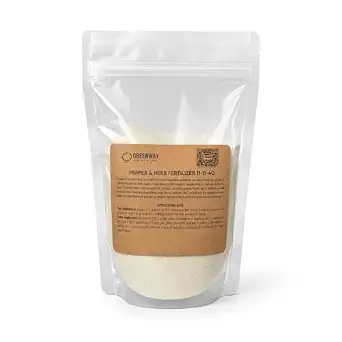 |
| Best Quality Built to a higher standard if you want something more solid | Big A Pepper Fertilizer — 13.5 oz Organic Powder for Peppers |  |
| Best Value The sweet spot between price and what you get | Leaves & Soul Pepper Liquid Fertilizer, 5-1-5 Concentrate, 8 fl oz |  |
| Best Budget The cheapest option that still gets the job done reliably | Jobe's Organics Tomato Fertilizer Spikes, 6-18-6, 54 Spikes (3-Pack) |  |
| Highest Rated A top-rated pick with lots of positive feedback | FoxFarm Happy Frog Tomato & Vegetable Fertilizer, 5-7-3 Blend, 4 lb |  |
| Most Popular A crowd favorite that many people choose with confidence | Miracle-Gro Water Soluble Tomato Plant Food, 1.5 lb |  |
| Best Seller A high-volume bestseller chosen again and again | TPS Nutrients Liquid Plant Food for AeroGarden and Hydroponics, 8 oz |  |
Greenway Biotech Pepper & Herb Fertilizer 11-11-40 Powder, 1 lb

| Item Form | Powder |
|---|---|
| Specific Uses For Product | Hydroponic |
| Coverage | peppers and herbs |
| Liquid Volume | 200 gallons |
| Mixing Ratio | 0.5 Pounds per 100 Gallons of Water |
This 11-11-40 powder from Greenway Biotech is built to push flowering and fruit set on hot and sweet peppers while also enhancing essential oil production in herbs. It dissolves fully in room-temperature water so you can use it as a soil drench, foliar spray, or in hydroponic systems without clogging emitters. The formula includes EDTA-chelated iron, manganese, zinc and copper plus boron and molybdenum, which helps keep micronutrients available across a broad pH range and reduces the chance of lockout. Directions cover side-dressing, foliar feed, and reservoir dosing so it adapts to backyard beds, containers, and NFT or DWC setups. Practical benefits include a high potassium level to support capsaicin and fruit development and a concentrated powder format that treats many gallons per pound. Important limitations are that accurate dosing requires a scale for small-plant applications and that a single 1 lb package is intended for focused use rather than season-long feeding of large plantings.
Best for: Serious pepper growers focused on maximizing fruit size, heat, and yield who use targeted feeds or run hydroponic systems and want a performance-minded, pH-tolerant nutrient.
Less Ideal for: Casual gardeners who prefer low-effort granular feeds or pre-mixed liquid fertilizers intended for whole-season broadcasting across very large beds.
- High potassium ratio (40%) that supports flowering, fruit development, and capsaicin production in hot peppers
- EDTA-chelated micronutrients (Fe, Mn, Zn, Cu) plus boron and molybdenum to reduce nutrient lockout across pH 4–9
- 100% water soluble powder that dissolves cleanly for soil drench, foliar spray, and hydroponic systems without clogging
- Concentrated formula stretches a small package to treat large volumes of water for targeted feeding
- Requires precise measuring (scale or careful teaspoons) for correct dilution on small plants
- 1 lb package may be small for growers with many plants or multiple growing seasons
Verdict: Choose this concentrated, chelated 11-11-40 powder when you want a performance fertilizer that boosts pepper flowering, fruit set, and capsaicin production in soil or hydroponic systems.
Big A Pepper Fertilizer — 13.5 oz Organic Powder for Peppers

| Item Form | Powder |
|---|---|
| Specific Uses For Product | Gardening,Plant Food |
| Coverage | Resealable |
| Target Species | pepper |
| Unit Count | 13.5 Ounce |
This powder fertilizer is designed for pepper growers who want a performance-focused organic feed. It is a highly soluble, resealable 13.5 ounce pouch containing a proprietary blend of nutrients including nitrogen, calcium, manganese, kelp, and humic acid aimed at improving pepper size, crispness, and flavor. Typical use is dissolving the powder into water according to package directions and applying during the growing season to outdoor or container pepper plants. Notable features are its pepper-targeted formulation, high solubility for quick uptake, and resealable packaging that helps preserve the mix between uses. Practical benefits include faster nutrient availability compared with granular organics and a blend tuned to support fruit development and root health. Limitations are that nutrient analysis numbers are not listed on the product page so precise dosing and comparison to other performance fertilizers requires following labeled instructions or contacting the maker. Also the 13.5 ounce pouch is best suited to small to medium pepper gardens rather than very large plantings.
Best for: Gardeners who prioritize measurable improvements in pepper performance and want an organic, quick-acting feed for small to medium home pepper plots.
Less Ideal for: Large-scale growers or those who require exact nutrient breakdowns for precision fertilizer programs should consider bulk or lab-analysed alternatives.
- Formula targeted specifically for peppers to support fruit size, flavor, and crispness
- Highly soluble powder for quick nutrient uptake when mixed into water
- Includes organic inputs such as kelp and humic acid to support root health
- Resealable pouch preserves remaining product and reduces moisture exposure
- No detailed N-P-K or full nutrient analysis listed on the product page
- 13.5 ounce pouch may be small for large or commercial pepper plantings
Verdict: If you want an organic, pepper-focused feed that absorbs quickly to boost fruit size and flavor in home gardens, this powder is a strong performance-oriented choice.
Leaves & Soul Pepper Liquid Fertilizer, 5-1-5 Concentrate, 8 fl oz

| NPK | 5-1-5 |
|---|---|
| Form | Liquid concentrate |
| Unit Count | 8 Fluid Ounces |
| Application Method | Dilute with water and apply to plants |
| Target Species | pepper |
Leaves & Soul Pepper Liquid Fertilizer is a concentrated 8 fl oz bottle of liquid plant food formulated with a 5-1-5 NPK ratio and added micronutrients specifically for pepper plants. You dilute 2 tablespoons per gallon of water and apply the solution to the root zone every 2–4 weeks during active growth or every 4 weeks in cooler periods. The liquid format absorbs quickly and is convenient for container, raised bed, and in-ground habanero plants where consistent, fast nutrition is useful. Practical benefits include an easy dilution ratio that scales for single pots or multiple plants, compatibility with indoor and outdoor growing, and a balanced nutrient profile that supports foliage, flowering, and fruit development. Limitations to note are the small 8 oz bottle size for larger gardens, which means more frequent repurchase if feeding many plants, and the need to strictly follow dilution instructions since the product is concentrated and not intended for direct application from the bottle. It is best used as part of a regular watering and care routine rather than as a corrective treatment for severe nutrient deficiencies.
Best for: Practical gardeners growing habaneros who want a simple, repeatable feeding routine that delivers fast nutrition to plants in containers or small beds.
Less Ideal for: Large-market growers or hobbyists managing dozens of pepper plants who need bulk or slow-release fertilizer options.
- Balanced 5-1-5 NPK tailored to support pepper foliage, flowering, and fruiting
- Concentrated liquid that mixes easily and is fast absorbing for quick nutrient uptake
- Works for seedlings through mature plants and across container and garden setups
- Includes micronutrients for broader nutritional support beyond NPK
- Small 8 fl oz bottle may not be economical for large gardens or many plants
- Requires careful dilution and measuring since it is a concentrate
Verdict: A convenient concentrated 5-1-5 liquid feed that makes regular, fast-absorbing nutrition easy for home-grown habanero plants.
Jobe's Organics Tomato Fertilizer Spikes, 6-18-6, 54 Spikes (3-Pack)

| Item Form | Sticks |
|---|---|
| Specific Uses For Product | Root Development |
| Application Method | Insert spikes around the plants |
| Target Species | tomato |
| Mixing Ratio | 6:18:6 |
These Jobe's Organics fertilizer spikes are pre-measured, slow‑release sticks formulated to deliver nitrogen, phosphorus, and potassium directly to the root zone. You insert spikes around individual plants at planting or early in the season and they steadily release nutrients for up to about eight weeks, which reduces the need for frequent feeding. The 6-18-6 NPK and added secondary minerals make them useful for promoting root development and fruit set in fruiting peppers like habaneros. Practical benefits include easy, mess‑free application, clear dosing per spike, and a long shelf life so you can buy in bulk and use across the season. Limitations are that spikes feed a localized area so you must place them correctly for container plants or clustered beds, and each spike lasts a finite period so repeated applications are needed for a full season. Also the formulation is targeted to vegetable fruiting needs rather than high‑nitrogen leafy growth, so gardeners seeking heavy foliage might prefer a different balance.
Best for: Practical gardeners who want a low-effort way to feed habanero or other fruiting pepper plants and prefer buying enough product to treat multiple plants across the season.
Less Ideal for: Growers needing continuous high-nitrogen feeding for heavyleaf growth or those who prefer liquid or granular fertilizers that can be broadcast over large beds.
- Pre-measured slow-release sticks simplify feeding and reduce messy mixing
- NPK 6-18-6 formulation supports root development and fruit set for pepper plants
- Sold as 54 spikes (3-pack) allows treating multiple plants or seasons
- Easy insertion application works for in-ground and container plants
- Feeds a localized root zone so placement is important for even nutrition
- Each spike lasts about eight weeks so multiple applications are required for season-long feeding
Verdict: If you want a simple, low‑mess fertilizer to support root growth and fruit set in habanero peppers, these pre‑measured slow‑release spikes are an efficient buy.
FoxFarm Happy Frog Tomato & Vegetable Fertilizer, 5-7-3 Blend, 4 lb

| Item Form | Granules |
|---|---|
| Specific Uses For Product | Vegetables, Tomatoes, Soft Fruits, and Berries |
| Unit Count | 64 Ounce |
| Mixing Ratio | 5:7:3 |
| Target Species | Vegetables |
This granular FoxFarm Happy Frog fertilizer supplies a balanced 5-7-3 N-P-K blend designed to support leafy growth and plentiful fruit set, plus added calcium and mycorrhizal fungi to improve root uptake and reduce blossom end rot. It is applied to in-ground beds and containers following the package directions and is suitable across vegetable plantings. The OMRI listing means it fits organic-minded plots, and the inclusion of mycorrhizae can help young roots access nutrients and moisture more efficiently. For root crops such as turnips the moderate nitrogen level encourages healthy foliage without overly stimulating excessive top growth that can reduce root development when used at recommended rates. Practical limits are that it is a general vegetable formula rather than a turnip-specific mix, so tight control of nitrogen and timing is still needed for optimal root size, and application rates must be followed to avoid uneven root formation. The dry granules are easy to store and apply but require incorporation or watering in to activate nutrients.
Best for: Gardeners focused on reliable, performance-oriented nutrition for a variety of vegetable crops who want an organic-certified, all-purpose fertilizer that supports both roots and fruiting.
Less Ideal for: Growers seeking a specialized low-nitrogen or root-maximizing formula specifically for large-scale root vegetable production should consider a product formulated expressly for root crops.
- Balanced 5-7-3 N-P-K suited to vegetables that need both foliage and root development
- Contains calcium to help prevent blossom end rot and related fruiting issues
- Includes mycorrhizal fungi to improve root nutrient and water uptake
- OMRI listed, making it acceptable for organic gardens
- Granular form is simple to store, measure, and apply to containers or beds
- Not tailored specifically to root crops so growers may need to adjust application timing or rates for turnips
- Sold in a single size that may require multiple purchases for larger plots
Verdict: Choose this OMRI-listed 5-7-3 granular if you want a performance-oriented, organic-friendly fertilizer that supports healthy roots and reliable vegetable yields.
Miracle-Gro Water Soluble Tomato Plant Food, 1.5 lb

| Item Form | Liquid |
|---|---|
| Application Method | Water Soluble |
| Target Species | Great for tomatoes and vegetables |
| Mixing Ratio | 18-18-21 |
Miracle-Gro Water Soluble Tomato Plant Food is a water-soluble fertilizer intended to boost vegetable growth by delivering nutrients quickly through a watering can or Miracle-Gro Garden Feeder. Its 18-18-21 mixing ratio supplies balanced nitrogen, phosphorus, and potassium so plants get a steady supply of the elements they need for leafy growth, flowering, and fruit set. Use it by mixing the recommended dose into a watering can for outdoor containers or in-ground beds and apply every 7 to 14 days during the growing season. The product works fast because it dissolves completely and can be applied directly to the root zone, which is useful for impatient gardeners trying to push tuber and foliage development in potatoes. On the downside it is a concentrated chemical fertilizer rather than an organic option and requires careful measuring to avoid overfeeding. Coverage notes from the brand indicate a small 1.5 lb package is meant to feed a modest area when used with the Garden Feeder, so larger plots will need multiple containers.
Best for: Ideal for gardeners on a budget who want a straightforward, fast-acting fertilizer to boost potato foliage and tuber development without complicated application methods.
Less Ideal for: Not the best choice for growers seeking organic or slow-release nutrition or for those managing large acreages who need bulk, long-lasting supplies.
- Water-soluble formula mixes easily for quick nutrient uptake
- Balanced NPK (18-18-21) supports foliage, flowers, and fruit development
- Designed for use with watering cans or the Miracle-Gro Garden Feeder for convenient application
- Feeds quickly when applied every 7 to 14 days during the growing season
- Concentrated synthetic formula, not an organic fertilizer
- 1.5 lb package is small for larger vegetable plots and will require frequent repurchasing
Verdict: A simple, fast-acting water-soluble fertilizer that gives budget-minded vegetable growers an easy way to boost potato growth and yields.
TPS Nutrients Liquid Plant Food for AeroGarden and Hydroponics, 8 oz

| Item Form | Liquid |
|---|---|
| Specific Uses For Product | Plant Growth, Root Development |
| Target Species | Herb, Vegetable |
| Mixing Ratio | 5 mL (1 tsp) per quart of feedwater |
| Unit Count | 8 Fluid Ounces |
This 8 oz liquid plant food provides concentrated, reservoir-safe nutrition intended for AeroGarden and comparable hydroponic units. It is used by mixing the recommended 5 mL per quart of feedwater into the system reservoir on a regular feeding schedule to supply macro and micronutrients for herbs, greens, and other compact edible plants. Notable features include a liquid formulation that dissolves easily, a focus on root development, and explicit compatibility with indoor hydroponic gardens. In practice it simplifies feeding for small indoor crops because a measured teaspoon per quart is straightforward to dose and store. Important limitations are the small bottle size, which will require frequent repurchasing for larger or multiple units, and the need to follow dilution directions carefully to avoid overfeeding. Safety handling is necessary because the concentrate should be kept away from children and pets. For risk-averse growers, the product’s clear mixing ratio and hydroponic focus make predictable feeding simple, but you should track reservoir concentrations rather than guessing frequency or volume adjustments.
Best for: Buyers who want a simple, low-risk feeding routine for indoor green onions and other small edible hydroponic crops and prefer clear dosing instructions they can follow reliably.
Less Ideal for: Growers managing large hydroponic setups, outdoor beds, or those who need a detailed NPK profile for tailored nutrient programs should look for larger or fully specified concentrates.
- Designed specifically for AeroGarden and similar hydroponic systems for straightforward compatibility
- Liquid formula mixes easily for even nutrient distribution in the reservoir
- Clear mixing ratio (5 mL per quart) simplifies dosing and repeatable feeding
- Targets root development and steady growth for herbs and vegetables
- Small 8 oz bottle may not last long for multiple or larger units
- No full nutrient analysis or NPK breakdown provided on the product listing
Verdict: A compact, easy-to-dose liquid fertilizer that makes predictable feeding of indoor green onions simple and low risk.
Choosing the Right Fertilizer for Habanero Peppers: Key Factors to Consider
Nutrient Ratio and Timing
Habanero peppers need different nutrients at each stage. Early in the season a fertilizer with a bit more nitrogen helps produce strong stems and leaves so the plant can support heavy fruit later. When flowers form and pods begin to set, phosphorus and potassium become more important to encourage flowering, fruit development, and overall yield.
Timing matters because overfeeding nitrogen late can boost foliage at the expense of fruit. Look for fertilizers that either change ratio over time or use a feeding schedule that shifts emphasis from vegetative to reproductive nutrients. This affects not only yield but pod heat concentration and plant resilience to stress.
Formulation and Ease of Application
Fertilizers come as liquids, water-soluble powders, granular slow-release, and organic solids. Liquids and soluble powders give fast, controllable feeding ideal for potted peppers or short seasons. Granular slow-release reduces maintenance but may not match the rapid adjustment gardeners sometimes need during flowering.
Consider how you water and how often you can feed. If you grow in containers, a soluble feed applied with irrigation or watering can quickly correct deficiencies. In-ground plantings tolerate slower-release formulas better because root systems explore a larger soil volume.
Salt Content and Risk of Fertilizer Burn
Some concentrated fertilizers carry a higher salt index and can damage pepper roots, especially in small pots or sandy soils. Excess salts draw moisture away from roots and can cause leaf tip burn, yellowing, and reduced fruit set.
Check for products with explicit guidance on concentration and flush intervals. Organic amendments tend to have lower immediate salt impact but release nutrients more slowly. If you see signs of burn, leach the soil with extra water and reduce concentration on subsequent feeds.
Compatibility With Soil and Microbial Health
Habanero peppers benefit when fertilizers support overall soil biology. Some synthetic feeds can temporarily suppress microbial activity if used in overly high concentrations, while organic fertilizers and amendments feed microbes and improve long-term soil structure and nutrient cycling.
If you use compost or regular organic matter, choose a complementary fertilizer that does not tip the soil nutrient balance. In vegetable gardens where crop rotation is practiced, maintaining soil biology helps future plantings and reduces disease pressure.
Container Versus In-Ground Considerations
Growing peppers in containers changes nutrient dynamics because pots hold limited soil and salts accumulate more rapidly. Containers often need more frequent but lighter feedings and careful monitoring of moisture. In contrast, in-ground plants access a larger reservoir and can tolerate less frequent, higher-dose applications.
When choosing a fertilizer, note the manufacturer's guidance for container rates. Also consider the root volume of your habanero plants and whether you will repot during the season; frequent repotting may let you rely more on slow-release starters.
Organic Practices and Certification
Many gardeners prefer organic fertilizers for home vegetable plots. Organic formulas often release nutrients more gradually and build soil structure but can require earlier planning since they take time to mineralize. Certification and ingredient transparency matter when you want predictable outcomes while maintaining organic standards.
If you follow organic practices, look for fertilizers with clear ingredient lists and directions for use with compost and other amendments. Consider how the product integrates with existing soil care routines like mulching and cover cropping.
Feeding Schedule for Strong Fruit Set
Establish a simple feeding rhythm that reflects the plant life stages. Start with a balanced, slightly nitrogen-lean feed when transplanting to avoid excessive top growth, then switch to a bloom-focused regimen as flowers appear. For most gardeners a two-week feeding cadence with a higher phosphorus and potassium mix during bloom works well.
Adjust feed concentration rather than frequency if plants show stress. For example, cut solution strength in half and continue at the same interval if you see leaf burn or slow growth.
- Transplant to first flowering: balanced feed every two weeks
- Flowering to fruiting: shift to bloom/formula every one to two weeks
- Late season: reduce nitrogen to focus plant energy on ripening pods
Adjusting Fertilizer for Containers
Container-grown habaneros need gentler, more frequent feeding because potting mixes drain quickly and salts concentrate. Use half-strength water-soluble feeds more often rather than heavy single applications. Also plan a periodic leach with plain water to reset salt buildup.
Top-dressing with compost or slow-release granules at potting time gives a baseline of nutrition, while liquid feeds supply what the plant uses during critical bloom and pod development.
- Use weaker solutions every 7 to 10 days for small pots
- Flush pots monthly if you apply salts or notice tip burn
- Match fertilizer strength to pot size and plant vigor
Organic Versus Synthetic Options
Organic fertilizers release nutrients more slowly, usually improving soil long term and supporting microbial life. They are forgiving in terms of salt burn but require planning since they do not correct a deficiency overnight. Synthetic feeds deliver predictable, fast results and are useful when you need to push plants into fruit quickly.
Many gardeners combine both approaches: organic base amendments for soil health and targeted synthetic or soluble feeds during flowering and pod fill to ensure steady nutrient availability.
- Organic base plus targeted soluble feed equals balanced strategy
- Consider worm castings, compost tea, and bone meal as organic complements
- Reserve synthetic soluble feeds for short corrective applications
Common Nutrient Deficiencies and How to Spot Them
Nitrogen deficiency shows as overall yellowing and stunted leaves, which can reduce flower production if it appears early. Phosphorus shortage may delay flowering and produce dark, sometimes purplish foliage. Potassium deficiency often causes leaf edge browning and poor fruit set.
Correcting deficiencies requires identifying the likely limiting nutrient and choosing a feed that supplies that element without creating excess of others. Always adjust concentration gradually and observe changes over a week to avoid overcorrection.
- Yellowing older leaves: check nitrogen levels
- Delayed or sparse blooms: consider phosphorus
- Edge browning and poor pods: evaluate potassium
Soil Testing and Simple Diagnostics
A basic soil test provides pH and macro nutrient readings that help you pick the right fertilizer. Habanero peppers prefer slightly acidic to neutral soil; pH affects nutrient availability and should be corrected before intensive feeding when possible.
If testing is not available, use plant symptoms and feeding history to make conservative adjustments. Soil tests also reveal excess salts or micronutrient imbalances that can mimic macronutrient deficiencies.
- Aim for slightly acidic to neutral pH
- Test before heavy amendments
- Repeat tests every one to two seasons in long-term beds
How We Chose the Best Fertilizer for Habanero Peppers
We evaluated fertilizers for habanero peppers using gardener-focused, measurable criteria that predict real-world results. Our selection started with formulas appropriate for fruiting hot peppers and eliminated products designed only for lawns, general houseplants, or slow-release blends with application schedules incompatible with a short pepper season. We prioritized nutrient ratios that support the crop cycle, specifically moderate nitrogen for leaf growth followed by higher phosphorus and potassium during bloom and fruit set. Key evaluation dimensions included nutrient balance and N-P-K ratio clarity, because precise feeding influences pod size and plant vigor; application ease, covering granules, water-soluble powders, and liquids so gardeners can match method to setup; release profile and timing to avoid fertilizer burn or nutrient washout; and suitability for container versus in-ground use, since root volume changes how quickly nutrients are used. We also considered compatibility with organic practices for gardeners wanting natural inputs and measured potential salt load for sensitive soils. Products were excluded if they lacked clear nutrient labeling, were formulated only for non-fruiting ornamentals, or required specialty equipment for application. The final list reflects fertilizers that meet these practical performance filters.
FAQ
How often should I feed habanero pepper plants?
Frequency depends on the fertilizer form. Containers often benefit from light feeding every 7 to 14 days with soluble feeds. In-ground plants can be fed every two to four weeks or rely on slow-release products applied at planting.
What N-P-K ratio works best for peppers?
Start with a balanced, slightly lower nitrogen mix during early growth, then move to a formula higher in phosphorus and potassium during flowering and pod development. Exact ratios vary, but the principle is more bloom and fruit support once flowers appear.
Can I use compost instead of fertilizer?
Compost supplies steady background nutrition and improves soil structure but may not supply sufficient phosphorus or potassium quickly when plants are flowering. Combining compost with targeted feeds gives both long-term health and short-term nutrient availability.
How do I prevent fertilizer burn in pots?
Use lower concentrations, feed more frequently at reduced strength, and flush the potting mix periodically with plain water to remove accumulated salts. Choose products with clear dilution instructions for container use.
When should I stop fertilizing before harvest?
Reduce nitrogen late in the season to focus plant energy on ripening pods. You can continue lighter feeds that favor phosphorus and potassium until two to three weeks before final harvest if desired, depending on plant health.
Are micronutrients important for habanero peppers?
Micronutrients like magnesium, calcium, and iron support overall plant health and can prevent disorders such as blossom end rot. Many balanced feeds include these in small amounts, but severe deficiencies may require specific supplements.
Final Verdict
Prioritize the nutrient stages of habanero growth: support leaves early, then switch to bloom and fruit-focused feeding once flowers appear. Match fertilizer form and concentration to your growing setup, favoring gentler, more frequent applications for containers and timing heavier inputs for in-ground beds. Balance short-term needs with soil health by combining baseline organic amendments with targeted feeds during flowering. Practically, choose a feeding plan that you can follow consistently and adjust based on plant response to achieve reliable pod set and mature, flavorful habaneros.
