

Note: This article contains affiliate links. If you click on these links and make a purchase, I may earn a small commission at no extra cost to you. This helps support my research and content. Read my full affiliate disclosure here.
Hibiscus respond quickly when you match feeding to their growth stage and local growing conditions. The right fertilizer for hibiscus supports abundant blooms, prevents leaf yellowing, and helps plants recover after pruning or transplanting. This guide covers six shortlisted options chosen for common garden situations and patio containers. We evaluate each pick on nutrient balance, ease of application, and how they behave in real gardens, so you can pick a feeding approach that fits your watering routine and soil.
Top Picks at a Glance
| Best Overall The best all-around choice for most situations | TPS NUTRIENTS Hibiscus Liquid Fertilizer, 1 Gallon |  |
| Best Quality Built to a higher standard if you want something more solid | Cz Garden BloomBiscus Hibiscus Plant Food 10-4-12 (4 lb) |  |
| Best Value The sweet spot between price and what you get | Miracle-Gro Water Soluble Bloom Booster Flower Food, 4 lb |  |
| Best Budget The cheapest option that still gets the job done reliably | Jobe's Rose Fertilizer Spikes, 10 Count (9-12-9) |  |
| Highest Rated A top-rated pick with lots of positive feedback | BGI Fertilizers Hibiscus Fertilizer, 10 lb Bag |  |
| Most Popular A crowd favorite that many people choose with confidence | TPS Nutrients Hibiscus Liquid Fertilizer, 8 oz |  |
TPS NUTRIENTS Hibiscus Liquid Fertilizer, 1 Gallon

| Item Form | Liquid |
|---|---|
| Target Species | Hibiscus |
| Unit Count | 128 Fluid Ounces |
| Mixing Ratio | 1:64 |
| Specific Uses For Product | Plant Food |
This TPS NUTRIENTS hibiscus fertilizer is a one-gallon liquid concentrate designed to promote larger, more colorful blooms and healthier foliage on hibiscus grown in containers or in the garden. It mixes at 1:64 and can be applied with a watering can, hose-end sprayer, or used as a foliar mist, so it fits into weekly or biweekly feeding routines during the growing season. The formula emphasizes quick uptake and root support, which helps reduce bud drop and encourages fuller branch and leaf growth. Practical benefits include easy dilution, flexible application methods, and a volume that lasts through multiple seasons for hobbyists with several plants. Important limitations are that the product requires regular dosing to see results and it must be stored and used with care to avoid contact or runoff into waterways. Follow the mixing and safety directions to prevent overfeeding and protect pets and children.
Best for: Gardeners who want a straightforward, bloom-focused feeding program for outdoor or container hibiscus and prefer an easy-to-mix liquid they can apply on a schedule.
Less Ideal for: People looking for an all-in-one slow-release granular solution or those who prefer a zero-maintenance feeding option.
- Formulated specifically for hibiscus to encourage bigger, more colorful blooms
- Liquid concentrate with a clear 1:64 mixing ratio for consistent dosing
- Multiple application options: watering can, hose-end sprayer, or foliar mist
- One-gallon volume provides enough product for repeated feedings across a season
- Requires regular scheduled applications to maintain results
- Contains concentrated fertilizer that needs careful storage and handling to avoid exposure or runoff
Verdict: Choose this product if you want an easy-to-mix liquid fertilizer that reliably promotes bigger, more colorful hibiscus blooms.
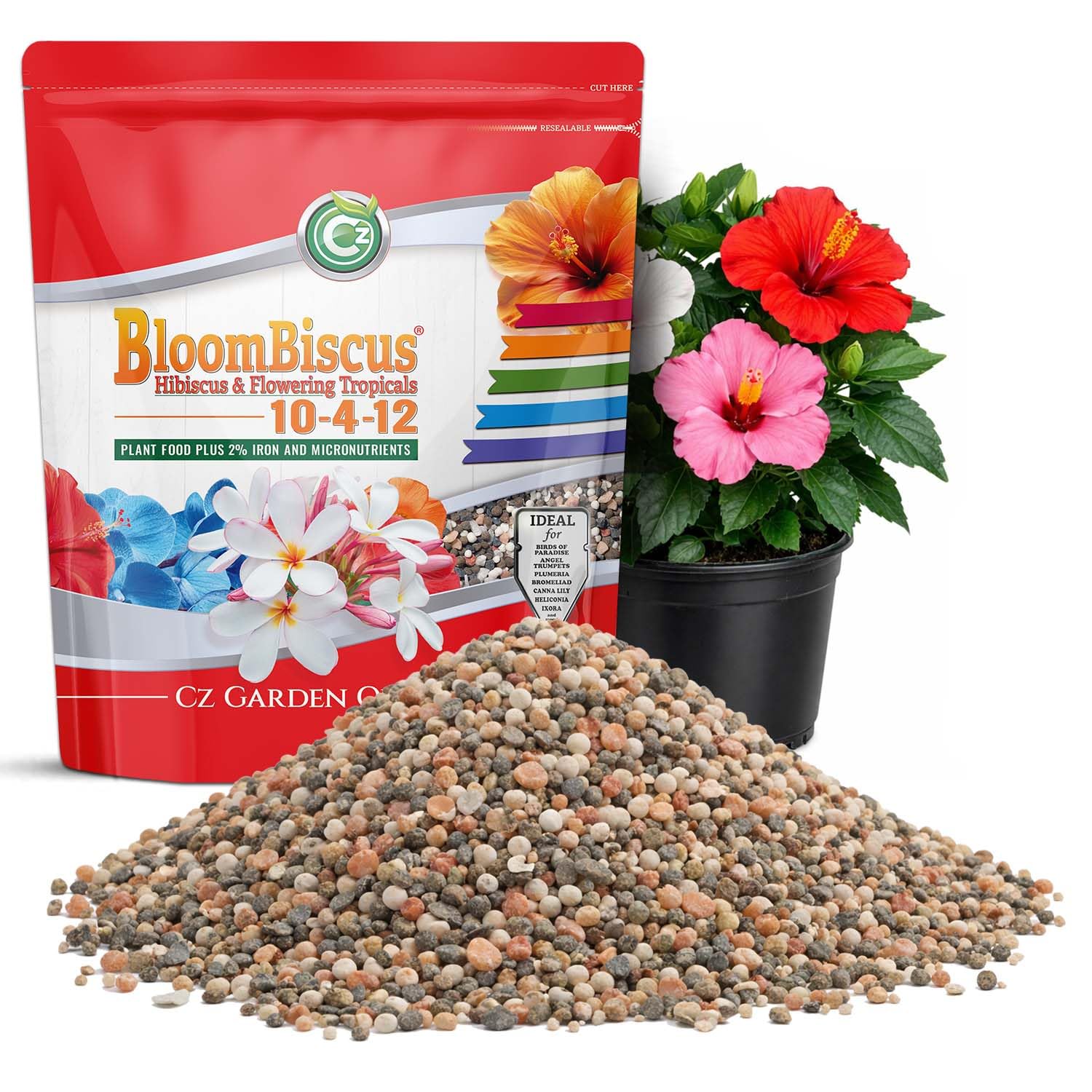
Cz Garden BloomBiscus Hibiscus Plant Food 10-4-12 (4 lb)
| Item Form | Granules |
|---|---|
| Specific Uses For Product | Plant Growth, Root Development, Seed Development, Soil Conditioning |
| Target Species | Flowering Tropicals |
| Unit Count | 64 Ounce |
| Mixing Ratio | 10-4-12 |
This granular BloomBiscus formula is designed to boost blooms and overall vigor in hibiscus and similar tropical flowering plants. It is typically worked into potting mix or applied around the root zone and watered in according to package directions. The 10-4-12 NPK delivers higher potassium for flowering and fruiting while the modest nitrogen supports leaf growth without excessive lushness that can reduce blooms. The added 2% iron and micronutrients help correct common deficiencies that dull flower color. Packaging comes in a resealable pouch for easy pouring and storage. Practical benefits include targeted nutrition for bloom production, broad suitability across many tropical species, and US-made ingredient sourcing. Limitations are that the product is a general granular feed rather than a slow-release or time-release formula so it may require regular reapplication and careful dosing for container-grown plants. Directions are brief on the label so growers who want a feeding schedule may need to follow common hibiscus fertilizing guidelines or consult extension recommendations.
Best for: A gardener focused on getting bigger, more consistent blooms from hibiscus and other tropical flowering plants who prefers a targeted, performance-oriented fertilizer.
Less Ideal for: Those who want a long-term slow-release feed or a liquid program for weekly foliar feeding should consider alternative formulations.
- NPK ratio (10-4-12) concentrated toward flowering and fruiting
- Includes 2% iron plus micronutrients to address common deficiencies
- Resealable heavy-duty pouch for easy pouring and storage
- Formulated specifically for hibiscus and other flowering tropicals
- Not specified as slow-release so it may need more frequent reapplication
Verdict: Choose this 10-4-12 granular with 2% iron when your main goal is stronger, more reliable hibiscus blooms.
Miracle-Gro Water Soluble Bloom Booster Flower Food, 4 lb

| Item Form | Powder |
|---|---|
| Application Method | Water Soluble |
| Target Species | flowers |
| Mixing Ratio | 1 tablespoon per gallon |
This Miracle-Gro Bloom Booster is a water-soluble powder fertilizer designed to produce more and stronger blooms on flowering plants. You mix the powder into a watering can (1 tablespoon per gallon for outdoor use, a smaller dose for indoors) or use it with the Miracle-Gro Garden Feeder to feed containers, window boxes and in-ground flowers every 7 to 14 days. The high phosphorus NPK ratio (noted as 10-52-10 in product highlights) makes it effective for encouraging color and bloom production quickly, and the powder form dissolves readily in water for even distribution. Practical benefits include fast uptake, easy measurement, and compatibility with routine watering so feeding is quick and repeatable. Important limitations are that it is focused on flowering performance rather than foliage or general soil improvement, so it is not a one-stop feed for all nutrient needs, and frequent applications mean you must follow label directions to avoid overfeeding sensitive plants.
Best for: Gardeners who prioritize frequent, visible bloom improvements in containers and garden beds and want a straightforward, fast-acting feed that integrates with regular watering.
Less Ideal for: Growers who need a balanced, all-purpose soil conditioner or those wanting slow-release feeding that reduces application frequency.
- High phosphorus formula specifically tuned to increase flower production and color
- Water-soluble powder mixes easily for use with a watering can or garden feeder
- Works quickly so you can see bloom responses within a feeding cycle
- Easy dosing instructions for outdoor and indoor plants
- Designed primarily for bloom boost so it does not address long-term soil amendment or balanced nutrition needs
Verdict: Choose this bloom booster when your priority is fast, easy feeding that produces noticeably more and brighter flowers.
Jobe's Rose Fertilizer Spikes, 10 Count (9-12-9)

| Unit Count | 10 Count |
|---|---|
| NPK | 9-12-9 |
| Application Method | Insert into soil |
| Item Form | Sticks |
Jobe's Rose Fertilizer Spikes are premeasured sticks you insert into the soil around roses and other flowering shrubs, including hibiscus. Each spike releases a balanced 9-12-9 formula slowly over about eight weeks so you do not need to mix or apply granular fertilizer frequently. Typical use is to push spikes into the root zone in early spring when new growth begins and replace every two months during the growing season. The spikes are convenient and mess free, come in a resealable pouch, and are formulated from feather meal, bone meal, and sulfate of potash to support blooms and root development. Because the nutrients are delivered at the roots they are less likely to wash away with watering. Limitations are that spikes provide medium coverage per unit and are best for individual shrubs or small groups rather than broad beds, so you may need multiple packs for larger plantings; they also deliver nutrients on a set schedule so you have less control over timing and exact rates than with granular or liquid options.
Best for: Gardeners who want a low-effort, no-mess way to feed individual hibiscus plants or small groups and prefer scheduled, slow-release feeding over frequent applications.
Less Ideal for: Those managing large beds, landscapes, or who need precise, adjustable nutrient dosing should consider granular or liquid fertilizers instead.
- Premeasured spikes are easy and clean to apply with no mixing required
- Slow-release 9-12-9 formula feeds roots for about eight weeks
- Formulated to support blooms and root development using feather meal and bone meal
- Resealable waterproof pouch keeps unused spikes dry
- Medium coverage means multiple packs are needed for larger plantings
Verdict: A simple, low-effort slow-release spike that makes regular feeding of hibiscus easy and mess free.
BGI Fertilizers Hibiscus Fertilizer, 10 lb Bag

| Item Form | Granules |
|---|---|
| Specific Uses For Product | Plant Growth |
| Coverage | Resealable |
| Target Species | Hibiscus |
| Mixing Ratio | No mixing required |
This 10 lb bag of BGI Hibiscus Fertilizer is a straightforward granular feed formulated specifically for hibiscus, developed by commercial growers. It is applied directly on top of soil or mulch with no mixing required, which makes routine monthly feedings quick and low-effort. The resealable bag and built-in handle help keep product fresh and simplify storage and measuring for multiple applications. Because it is made for frequent light applications, it supports steady bloom and growth when used as part of a regular feeding schedule. Limitations to note are that the label provides general directions rather than precise N-P-K numbers, so gardeners who track exact nutrient ratios or require a specific formulation may find the information insufficient. Also it is a single-purpose hibiscus product, so users growing a wide mix of plants may still need other fertilizers for different nutritional needs.
Best for: Gardeners who want a reliable, low-effort fertilizer targeted to hibiscus and who plan to feed plants regularly throughout the growing season.
Less Ideal for: Growers who require exact nutrient formulations or a multi-plant fertilizer solution should consider a product with full N-P-K labeling or a more general-purpose formula.
- Formulated specifically for hibiscus and developed by commercial hibiscus growers
- Granular form applied directly to soil or mulch with no mixing required
- Resealable 10 lb bag with handle for easier storage and repeated use
- Supports frequent light feedings recommended for heavy-feeding hibiscus
- Product listing does not provide explicit N-P-K nutrient percentages
- Focused on hibiscus so may not meet the needs of other plant types
Verdict: Choose this product if you want a purpose-built, easy-to-apply fertilizer that simplifies regular feeding for healthy hibiscus blooms.
TPS Nutrients Hibiscus Liquid Fertilizer, 8 oz

| Unit Count | 8 Fluid Ounces |
|---|---|
| Brand Name | TPS NUTRIENTS |
| Item Highlight | Supports Vibrant Flower Color, Helps Reduce Bud Drop, For Potted & Outdoor Plants, Fast-Absorbing Formula |
This 8-ounce liquid hibiscus fertilizer is a concentrated plant food designed to boost flower color, reduce bud drop, and support fresh leaf and branch growth in tropical hibiscus. It is typically diluted and applied on the schedule recommended for flowering tropicals, making it convenient for container plants and garden beds alike. Notable features include a fast-absorbing formula aimed at visible bloom improvement and claims of stronger root development for better water and nutrient uptake. In practice the small bottle is easy to store and works well for hobbyists who fertilize regularly or test different feeding schedules on a few plants. The compact size means it is not ideal for heavy-feeding landscapes where you would refill often, but it is handy for trialing a hibiscus-specific feed or treating prized specimens. Follow safety directions carefully since it is a concentrated product and keep it away from children and pets.
Best for: Gardeners who want a purpose-built feed to improve hibiscus bloom size and color and who prefer to try a targeted, easy-to-apply liquid rather than general-purpose fertilizers.
Less Ideal for: Those maintaining large beds or many hibiscus where a bulk granular or concentrated gallon-size feed would be more economical.
- Formulated specifically for hibiscus to encourage larger, more colorful blooms
- Fast-absorbing liquid that is simple to mix and apply to potted or outdoor plants
- Supports root development and healthy foliage for fuller-looking plants
- Small 8 oz bottle may require frequent repurchasing for multiple plants or larger gardens
Verdict: A compact, hibiscus-specific liquid feed that makes it easy to boost bloom color and reduce bud drop on a few prized plants.
Choosing the Right Fertilizer for Hibiscus: Key Factors to Consider
Nutrient Ratio and Micronutrients
Hibiscus need a fertilizer that supports both flower production and lush foliage. A balanced N-P-K with slightly higher phosphorus and potassium during bloom season helps set and sustain larger flowers. Micronutrients such as iron, magnesium, and manganese influence leaf color and overall vigor; deficiencies often show as interveinal chlorosis or stunted new growth.
When choosing a fertilizer, look for a clear guaranteed analysis so you can match feeding to the plant's stage. Overly high nitrogen formulas can produce leafy growth at the expense of blooms, while low micronutrient levels can leave attractive varieties looking dull.
Formulation Type and Release Pattern
Granular slow-release, water-soluble, and liquid concentrates behave differently in a hibiscus bed or container. Water-soluble feeds provide a quick nutrient boost that is useful for triggering bloom flushes or correcting deficiencies. Granular slow-release products supply steady nutrients over weeks or months, reducing the chance of overfeeding and lowering maintenance for busy gardeners.
Consider how often you want to feed and how closely you can monitor plants. Slow-release options are forgiving in garden beds, while soluble feeds give precise, immediate control for potted hibiscus or seasonal bloom pushing.
Salt Index and Soil Health
Hibiscus are moderately sensitive to salt buildup in the root zone, which can cause leaf burn and reduced water uptake. Fertilizer formulations vary in their salt index and how quickly salts accumulate after repeated applications. Water-soluble products and strong liquid feeds can raise salt levels if irrigation or rainfall is limited.
To protect soil biology and root health, choose products with low to moderate salt potential for regular feeding, and plan occasional flushing or organic matter top-ups for containers and poorly drained soils.
Container Compatibility and Dose Control
Many gardeners grow hibiscus in pots where root volume limits nutrient availability and salt tolerance. A fertilizer that offers clear dosing instructions for container sizes makes it easier to avoid root burn and uneven growth. Some products include measuring caps or sachets sized for common pot volumes, which reduces guesswork.
Also consider whether the product dissolves cleanly or leaves residues. Granules intended for top-dressing behave differently than soluble powders that mix into irrigation water.
Application Practicalities and Frequency
How you apply fertilizer affects its real-world usefulness. If you water by hand, a soluble feed you mix into a watering can may be easiest. If you have many plants or larger beds, granular or slow-release options cut down on repeat work. Frequency matters too: heavyweight monthly feeds need less attention but can be harder to reverse mid-season, while weekly light feedings let you fine-tune bloom cycles.
Think about your climate and watering schedule. In hot, dry weather you may need lighter, more frequent feedings to avoid stress. In cooler or rainy seasons, reduce application frequency to prevent nutrient leaching.
Environmental and Pollinator Safety
Hibiscus often attract pollinators and may be near edible herbs or vegetables. Choosing fertilizers with minimal runoff risk and responsible phosphorus levels helps protect nearby waterways and beneficial insects. Organic or lower-solubility options can support soil microbes and reduce abrupt shifts in soil chemistry.
Read labels for recommendations about application near water features or during heavy rain. Avoid products with additives that are unnecessary for ornamental shrubs if you want to minimize environmental impact.
Feeding Schedule by Season and Growth Stage
Hibiscus have distinct needs through the year. In spring, focus on balanced feeding to support new shoots and root recovery. During peak bloom, lean toward formulas or timing that favor phosphorus and potassium for flower set and longevity. In late season and winter dormancy or slow growth, reduce frequency and dosage to avoid forcing tender growth that cold weather can damage.
Adjust feeding based on plant performance. If blooms are sparse but foliage is healthy, a targeted bloom booster for a short period may help. Conversely, if leaves yellow between veins, pause high-phosphorus treatments and address micronutrient gaps or watering issues first.
- Spring: moderate balanced feeding to build structure
- Blooming season: increased bloom-support nutrients and timely applications
- Off-season: cut back frequency and amounts to match reduced growth
Watering and Fertilizer Interaction
How you water affects fertilizer uptake and risk. Regular, even moisture helps soluble feeds move into the root zone without concentrating salts. Overhead watering can wash residues from foliage but does little to prevent buildup in containers. Deep, thorough watering after granular applications activates slow-release granules and moves nutrients down to roots.
For potted hibiscus, flush the container occasionally to prevent salt accumulation, especially if you use concentrated liquid feeds frequently. Match feed strength to the pot size and the plant's response rather than sticking strictly to label intervals.
- Always water after granular or top-dress applications to activate nutrients
- Flush containers periodically if using regular soluble feeding
- Reduce feed strength during hot, dry spells to avoid salt stress
Soil Test and Correcting Deficiencies
A basic soil test can clarify pH and nutrient availability before you choose a feeding plan. Hibiscus prefer slightly acidic to neutral soils; extreme pH levels can lock up iron and other micronutrients even when they are present in the soil. Knowing the soil status helps you select a product that corrects specific deficiencies rather than adding unnecessary elements.
Correcting deficiencies often involves targeted supplements such as iron chelates or magnesium if tester results or symptoms indicate a need. Work incrementally and observe plant response over several weeks before changing strategies.
- Test soil pH and nutrient levels if plants show persistent symptoms
- Apply targeted micronutrient supplements only when tests or symptoms support them
- Use organic matter to improve soil structure and nutrient-holding capacity
Organic Vs Synthetic Options
Organic fertilizers release nutrients more slowly and often improve soil structure and microbiology. They can be gentler in containers and reduce the risk of sudden nutrient spikes. Synthetic options provide predictable, quick-release nutrients that are handy for rapid correction or pushing blooms on a schedule.
Decide based on how hands-on you want to be. Organic feeding pairs well with seasonal amendments and compost top-dressing. Synthetic feeds suit gardeners who want precise control over nutrient ratios and timing.
- Organic: slower release, soil-building benefits, lower burn risk
- Synthetic: precise N-P-K control, faster plant response
- Mixing approaches is possible but adjust doses to avoid overfeeding
Troubleshooting Common Feeding Problems
Yellowing leaves, scorched margins, or reduced flowering can indicate several distinct issues. Overfeeding often shows as burnt leaf edges and suppressed root uptake. Underfeeding typically causes pale leaves and fewer blooms. Saline buildup stresses roots and causes uneven watering responses.
To troubleshoot, stop feeding and flush containers if you suspect salt buildup. Check for pests, watering problems, and soil compaction that mimic nutrient symptoms. Adjust feeding strength and frequency gradually and track changes so you can identify which adjustments helped.
- Flush containers when salts build up or after heavy feeding
- Look for non-nutrient causes like pests or irrigation problems
- Reduce concentration rather than frequency if leaf burn appears
How We Chose the Best Fertilizer for Hibiscus
We shortlisted products that deliver nutrients hibiscus need at the rates gardeners can realistically apply. Primary evaluation criteria included N-P-K balance and micronutrient profile to judge bloom support and leaf color; formulation type and application frequency to assess ease of use across containers, beds, and large shrubs; solubility and release pattern to predict responsiveness and risk of salt buildup; and packaging sizes and dosing clarity so gardeners can feed accurately without overwriting soil health. We also considered material safety for edible or pollinator-friendly gardens and compatibility with common soil amendments and mulches. Excluded items were blends designed strictly for acid-loving trees or commercial greenhouse concentrates that require specialized meters or mixing. We filtered out fertilizers with unclear labeling or missing nutrient breakdowns. The picks reflect products gardeners can apply with basic tools and standard watering practices, emphasizing balanced bloom feeding and manageable maintenance.
FAQ
How often should I feed hibiscus in containers?
Often the best approach is light, frequent feeding during active growth, such as every one to two weeks with a diluted soluble feed. For slow-release granules, follow label intervals and avoid stacking additional feeds unless plants show deficiency symptoms.
Can I use a general-purpose fertilizer on hibiscus?
Yes, a balanced general-purpose fertilizer can work, but monitor bloom production. If flowers are sparse, switch to a formulation with relatively more phosphorus and potassium during the bloom period or add a targeted bloom supplement for a limited time.
What signs show my hibiscus needs micronutrients?
Interveinal chlorosis, stunted new growth, or a general faded leaf color often indicate micronutrient shortages such as iron or magnesium. Confirm with a soil test if possible, then apply appropriate supplements rather than blanket high-N fertilization.
Is organic fertilizer sufficient for heavy bloom production?
Organic fertilizers can support robust flowering, but they release nutrients more slowly. For gardeners seeking rapid or repeated bloom pushes, combining organic feeding with occasional targeted soluble feeds can balance soil health and bloom performance.
How do I avoid fertilizer burn on hibiscus?
Use recommended dilutions, apply at cooler times of day, and avoid applying concentrated feeds to dry soil. For containers, err on the side of lower doses and flush the pot if you observe leaf edge browning or stunted growth.
Final Verdict
Choosing a fertilizer for hibiscus comes down to matching nutrient ratios and release patterns to how you grow and maintain plants. Prioritize a formula that supplies bloom-supporting phosphorus and essential micronutrients while fitting your watering routine and container or bed conditions. Expect tradeoffs: fast-acting soluble feeds give quick results but require careful dosing, while slow-release or organic options reduce maintenance but respond more slowly. Decide on the feeding rhythm you can maintain, watch plant response, and adjust concentration before changing products. With attention to nutrient balance, application method, and salt management, you can encourage fuller blooms and healthier foliage consistently.
