

Note: This article contains affiliate links. If you click on these links and make a purchase, I may earn a small commission at no extra cost to you. This helps support my research and content. Read my full affiliate disclosure here.
Kale responds quickly to the right feeding routine, which is why choosing a fertilizer for kales matters for home gardeners and small-scale growers. The right product promotes steady leaf growth, improves color and texture, and helps plants tolerate stress from heat or compact soils. This guide presents six shortlisted fertilizers selected for common kale needs in gardens, containers, and raised beds. We evaluate options against practical criteria gardeners care about, such as nutrient profile, ease of use, and suitability for successive plantings. Read on to find feeding approaches and product types that match your soil, schedule, and desired harvest timing.
Top Picks at a Glance
| Best Overall The best all-around choice for most situations | Neptune's Harvest Fish & Seaweed Liquid Fertilizer (2-3-1) 36 oz |  |
| Best Quality Built to a higher standard if you want something more solid | YARDi Brassicas & Greens Liquid Plant Food, 32 oz |  |
| Best Value The sweet spot between price and what you get | Dr. Earth Organic Tomato, Vegetable & Herb Fertilizer (64 oz) |  |
| Highest Rated A top-rated pick with lots of positive feedback | Miracle-Gro Water Soluble All Purpose Plant Food, 1.5 lb |  |
| Most Popular A crowd favorite that many people choose with confidence | Miracle-Gro Water Soluble All Purpose Plant Food, 3 lb |  |
| Best Seller A high-volume bestseller chosen again and again | Miracle-Gro Liquid All Purpose Plant Food Concentrate, 32 oz |  |
Neptune's Harvest Fish & Seaweed Liquid Fertilizer (2-3-1) 36 oz

| Item Form | Liquid |
|---|---|
| Mixing Ratio | 2:3 |
| Specific Uses For Product | Plant Growth |
| Liquid Volume | 946 ml |
Neptune's Harvest Fish & Seaweed Liquid Fertilizer is a concentrated organic plant food that mixes with water for use as a soil drench or foliar feed. It is typically diluted (manufacturer directions give roughly 1 fl oz per gallon for outdoor use and 1 tablespoon per gallon for houseplants) and applied every 1 to 3 weeks depending on the crop. The formula combines hydrolyzed fish and seaweed to deliver nitrogen, micronutrients, and seaweed-derived growth compounds in a plant-ready form, which helps green growth, flowering color, and vegetable flavor. Because it is a liquid concentrate it is easy to measure and applies evenly, and regular use can improve soil biology and structure over time. Limitations are that it is low in phosphorus and potassium relative to some specialty bloom or fruit formulas and it has an odor typical of fish-based fertilizers that some users may find strong. This product suits gardeners who want an effective, organic regular feed that supports both potted houseplants and garden beds.
Best for: Gardeners seeking a reliable, organic everyday fertilizer that simplifies feeding for a mixture of houseplants, vegetables, flowers and shrubs and who value soil health as well as plant vigor.
Less Ideal for: Growers who need a high-phosphorus bloom booster or a fertilizer formulated specifically for fruit set or lawns should look for a targeted specialty product instead.
- Organic concentrate blending hydrolyzed fish and seaweed for plant-ready nutrients
- Versatile application as soil drench or foliar feed for indoor and outdoor plants
- Supports soil biology and structure with regular use
- Easy-to-measure mixing ratios for routine feeding
- Has a strong fish odor that some users may find unpleasant
- Lower phosphorus and potassium compared with specialized bloom or fruit formulas
Verdict: A dependable organic liquid concentrate that provides balanced, plant-ready nutrients and improves soil health for routine feeding of mixed garden and houseplants.
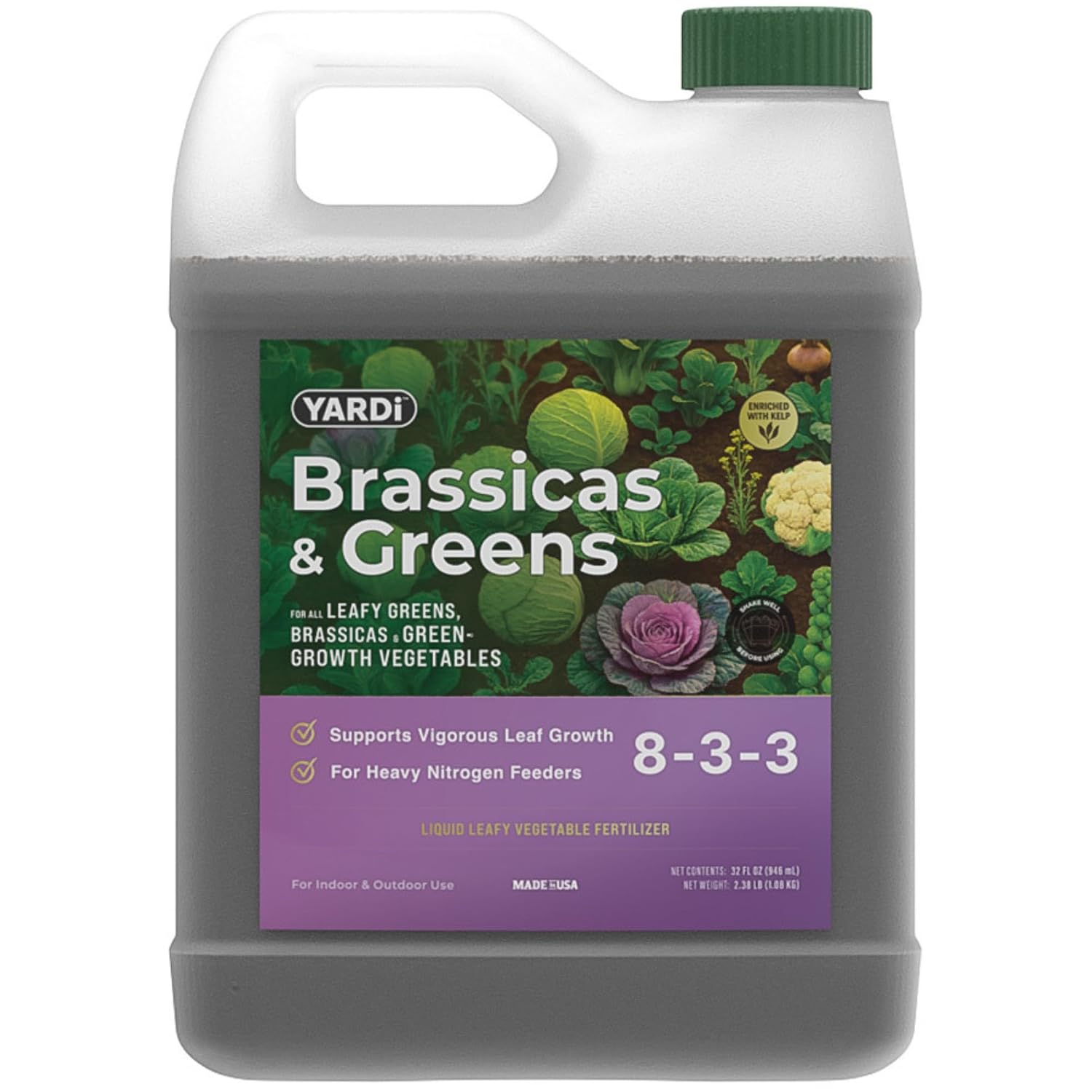
YARDi Brassicas & Greens Liquid Plant Food, 32 oz
| Item Form | Liquid |
|---|---|
| Specific Uses For Product | Leafy Greens |
| Target Species | Vegetables |
| Unit Count | 32 Fluid Ounces |
YARDi Brassicas & Greens is a liquid fertilizer concentrated for leafy vegetables and brassicas, sold in a 32 oz bottle. It supplies an 8-3-3 NPK ratio with micronutrients and is designed to be mixed with water and applied as a soil drench, foliar spray, drip feed, or through a hose-end. Typical use is every 2 to 3 weeks during the growing season at a rate of 1 to 2 teaspoons per gallon, which makes it easy to dose across beds or containers. The higher nitrogen content helps kale, cabbage, broccoli and other greens produce fuller, darker leaves and faster vegetative growth. Practical benefits include quick uptake when foliar-sprayed and versatility for different delivery methods, so it fits both small plots and drip-irrigated raised beds. Limitations are that it is focused on nitrogen-rich feeding, so it is not a balanced all-season tonic for flowering or fruiting stages and should be rotated or paired with lower-nitrogen formulas when you want to encourage blooms or long-term soil nutrient balance.
Best for: Gardeners who prioritize fast, vigorous leafy growth in kale and other brassicas and want a flexible, easy-to-apply liquid feed for outdoor beds or containers.
Less Ideal for: Growers seeking an all-purpose fertilizer to support flowering, fruiting, or long-term soil amendment should consider a more balanced or granular option.
- High nitrogen 8-3-3 formula encourages rapid leafy growth in kale and other brassicas
- Liquid concentrate mixes easily for foliar spray, soil drench, drip lines, or hose-end use
- Clear dosing directions for regular in-season feeding every 2–3 weeks
- Includes micronutrients to support leaf color and vigor
- Focused on vegetative growth so not ideal as a balanced feed for flowering or fruit set
Verdict: Choose this if you want a concentrated, high-nitrogen liquid feed to quickly boost leaf size and color in kale and other brassicas during the growing season.
Dr. Earth Organic Tomato, Vegetable & Herb Fertilizer (64 oz)

| Unit Count | 64 Ounce |
|---|---|
| Item Form | Granules |
| Specific Uses For Product | Organic |
| Target Species | Herb |
| Coverage | Medium |
This granular organic fertilizer is designed to boost vegetable and herb production by supplying balanced nutrients and soil biology support. It is typically broadcast into beds, mixed into potting mixes, or applied at planting and midseason for a nutritional lift; the manufacturer recommends reapplying every six weeks for containers. Notable features include a fully organic ingredient list, fast but sustained nutrient release, and a blend of probiotic microbes plus ecto and endo mycorrhizae intended to improve nutrient uptake and drought tolerance. In practice that means healthier root systems and potentially better yields and flavor in crops like cucumbers when used as part of an organic program. Limitations are that it is a medium coverage product in a 64 ounce bag so larger plots will need more frequent purchases, and it contains phosphorus so local runoff rules should be checked before use. Follow the directions for pH and application timing to avoid overapplication in small containers.
Best for: Gardeners who prioritize organic soil health and want a single, biology‑focused fertilizer to support vegetables like cucumbers in beds or containers.
Less Ideal for: Large‑scale growers seeking a bulk, high‑coverage fertilizer or those who must avoid phosphorus due to local regulations should consider other options.
- 100 percent organic formula suitable for certified organic gardens
- Contains beneficial microbes and eight strains of mycorrhizae to support root health and nutrient uptake
- Granular form releases nutrients quickly and continues feeding for several months
- Works for beds, raised planters and containers and can be used at planting, transplanting or midseason
- Bag is medium coverage so not economical for very large vegetable plots
- Includes phosphorus which may be restricted in some local jurisdictions
Verdict: Choose this product if you want an organic, microbe‑rich granular fertilizer that supports root health and steady feeding for cucumber and other vegetable plantings.
Miracle-Gro Water Soluble All Purpose Plant Food, 1.5 lb

| Item Form | Powder |
|---|---|
| Application Method | Watering Can |
| Target Species | For all flowers, vegetables, trees, shrubs and houseplants |
| Mixing Ratio | 24-8-16 |
Miracle-Gro Water Soluble All Purpose Plant Food is a powder concentrate you mix with water to give a quick nutrient boost to flowers, vegetables, houseplants, shrubs and trees. It is typically dissolved in a watering can or used with a compatible garden feeder to soak soil at the base of plants, delivering nitrogen-heavy nutrition that shows effects faster than granular fertilizers. Notable features include an easy scooping method for indoor and outdoor dosing, compatibility with containers and in-ground planting, and clear directions for feeding every one to two weeks. In practice this makes the product a convenient option when you want visible growth and greener foliage quickly, and the 1.5 lb container covers roughly 600 sq. ft. Important limitations are that it is a fast-release, high-nitrogen formula best used as a regular quick feed rather than a long-term slow-release solution, and it requires careful measuring to avoid overfeeding. For routine maintenance combine with good watering and follow the label to avoid nutrient imbalance.
Best for: Buyers who prefer proven, easy-to-use feeding routines and want noticeable growth quickly for a variety of garden and houseplants, guided by established usage directions and broad user experience.
Less Ideal for: Gardeners seeking a single, long-term slow-release solution or those who prefer organic or low-nitrogen fertilizers for sensitive plantings should consider alternative products.
- Water-soluble powder starts working quickly at the roots when mixed and applied
- Clear, simple dosing for indoor and outdoor use with included scoop guidance
- Suitable for a wide range of plants including vegetables, flowers, shrubs and houseplants
- Covers a large area from a small container (about 600 sq. ft. per 1.5 lb)
- Fast-release formula means benefits are short-term compared with slow-release granular fertilizers
- Requires precise measuring and regular reapplication to avoid overfeeding
Verdict: A reliable, fast-acting water-soluble plant food for gardeners who want easy, repeatable feeding and quick visible results.
Miracle-Gro Water Soluble All Purpose Plant Food, 3 lb

| Item Form | Powder |
|---|---|
| Application Method | Mix with water in a watering can |
| Fertilizer Analysis (N‑P‑K) | 24-8-16 |
| Unit Count | 48 Ounce |
| Coverage | Feeds approximately 1,200 sq. ft. |
Miracle‑Gro Water Soluble All Purpose Plant Food is a powdered NPK 24‑8‑16 formula that dissolves in water to give plants a quick nutrient boost. You mix measured scoops into a watering can and apply to the soil at the base of plants every 7–14 days for outdoor use or every 14 days for houseplants. Notable features include a high nitrogen content for leafy growth, compatibility with containers and in‑ground beds, and guidance for use with a Miracle‑Gro Garden Feeder for larger areas. In practical terms this is a fast‑acting feed that encourages bigger, greener foliage and works well in regular maintenance of perennials like hostas. Limitations are that it is a fast‑release fertilizer rather than a slow‑release option, so it requires regular reapplication and careful measuring to avoid overfeeding. Also, the 24‑8‑16 balance is geared toward vegetative growth, so it is not optimized if you want to prioritize flowering or bloom boosting.
Best for: Buyers who want a reliable, fast‑acting feed to maintain lush, leafy perennials and container plants and who value proven products with broad user endorsement.
Less Ideal for: Gardeners seeking a single, long‑lasting granular fertilizer or a bloom‑focused formula should consider alternative slow‑release or high‑phosphorus products.
- Water‑soluble powder mixes easily for quick uptake by roots
- High nitrogen formula promotes robust leafy growth ideal for shade plants
- Clear mixing and application instructions for both indoor and outdoor use
- Suitable for containers and in‑ground gardens and compatible with garden feeders
- Requires frequent applications so it is not a low‑maintenance, slow‑release option
- High nitrogen ratio is less suitable when the primary goal is more flowers than foliage
Verdict: A fast‑acting, water‑soluble fertilizer that reliably produces bigger, greener hosta leaves when used as directed.
Miracle-Gro Liquid All Purpose Plant Food Concentrate, 32 oz

| Item Form | Liquid |
|---|---|
| Specific Uses For Product | Plant Growth, Root Development |
| Application Method | Mix with water in a watering can |
| Mixing Ratio | 1:10 (concentrate to water, estimate) |
Miracle-Gro Liquid All Purpose is a water-soluble concentrate you mix into a watering can and apply every 1 to 2 weeks to container and in-ground plants. It is formulated for general plant growth and root development and is marketed for flowers, vegetables, shrubs and houseplants, so it works as a straightforward feed for flowering bulbs like calla lilies. The bottle’s mixing guidance (cap measures for garden application and 1 teaspoon per gallon for containers) makes it easy to dose for pots or small beds. Practical benefits include fast uptake through the soil when applied as directed and compatibility with routine watering schedules. Limitations to note are that it is an all-purpose formula rather than a bloom-focused or calcium-rich fertilizer tailored specifically to calla lilies, so growers seeking targeted bloom enhancement or specialty nutrition may want a supplement. Also, frequent use at higher-than-recommended strength can risk fertilizer burn, so follow the mixing directions and schedule.
Best for: Buyers who want an affordable, easy-to-use liquid fertilizer to keep calla lilies and other flowering plants regularly fed without fuss.
Less Ideal for: Growers seeking a specialist bloom-boost or a fertilizer formulated for specific micronutrient needs should consider a targeted or bloom-specific product instead.
- Concentrated liquid mixes easily with water for quick application
- Clear dosing instructions for both garden beds and container plants
- Suitable for a wide range of plant types including flowering bulbs and houseplants
- General all-purpose formula not specifically formulated for enhancing blooms of calla lilies
Verdict: A budget-friendly, easy-to-use liquid concentrate that reliably feeds calla lilies and other common garden plants on a regular schedule.
Choosing the Right Fertilizer for Kales: Key Factors to Consider
Nutrient Ratio and Timing
Kale is a leafy green that benefits from higher nitrogen during active leaf production, but a balanced supply of phosphorus and potassium is also important to support root development and overall plant vigor. Look for fertilizer labels that specify an N-P-K ratio suited to leafy brassicas and provide guidance on feeding frequency.
Timing matters because excessive nitrogen late in the season can encourage bolting when temperatures rise. Plan feedings for active cool-season growth, and taper or adjust applications if you are approaching warm weather or a planned harvest window.
Primary and Secondary Nutrients
Beyond the primary macronutrients, kale benefits from calcium for leaf texture and magnesium for chlorophyll production. Micronutrients like iron and manganese can prevent common deficiency symptoms such as interveinal chlorosis on older leaves. A fertilizer that lists secondary and micronutrients helps avoid chasing problems later with spot treatments.
If your soil test shows specific deficiencies, choose a formula that corrects those needs or pair a balanced fertilizer with targeted supplements such as dolomitic lime for magnesium or calcium amendments when blossom end issues or brittle leaves appear.
Application Format and Garden Setup
Granular fertilizers are convenient for beds and slow-release options reduce how often you need to feed, which is useful for busy gardeners or extended succession planting. Liquid feeds give faster uptake and are valuable for container-grown kale or when you need a quick corrective boost. Consider the garden setup: containers drain quickly and often need more frequent feeding, while established beds with organic matter can rely more on slow-release or soil-applied products.
Also factor in how easy the product is to apply evenly. Granules require even broadcasting and incorporation; liquids need proper dilution and foliar vs. root feeding considerations. Choose a format that matches how you manage your plot.
Soil Type and pH Effects
Soil texture and pH have major effects on nutrient availability for kale. Sandy soils hold less nutrient and may require more frequent, lighter feedings. Clay soils can lock up nutrients, and organic matter helps buffer availability. pH influences whether micronutrients are accessible; kale prefers slightly acidic to neutral soil where most nutrients are mobile.
Before committing to a fertilizer regimen, test the soil pH and organic matter level. That information lets you choose products formulated for your conditions or combine fertilization with pH amendments for better long-term results.
Organic Vs Synthetic Preference
Organic fertilizers release nutrients more slowly and improve soil structure over time, which benefits successive plantings and soil life. Synthetic fertilizers can correct deficiencies quickly and allow precise control of N-P-K inputs for immediate leafy growth. Your choice depends on gardening philosophy, how fast you need results, and whether you prioritize building soil health alongside crop yield.
Consider organic inputs if you want ongoing soil improvement and fewer reapplications, or use targeted synthetic applications when rapid correction of deficiencies is the priority.
Environmental and Safety Considerations
Excessive fertilization can leach into waterways or burn plant roots, so following label rates and avoiding over-application matters for plant health and the environment. Slow-release formulas and split applications reduce runoff risk and provide steadier nutrition.
Keep fertilizers stored securely and follow handling instructions to protect children, pets, and beneficial insects. Consider products with clear safety guidance and application buffers near water features or storm drains.
Feeding Strategies for Different Growing Seasons
Kale is commonly grown across cool seasons and in succession planting schedules. In early growth stages, plan for steady nitrogen to promote leaf set, then reduce or maintain levels as plants approach maturity to minimize bolting risk. In mild winters you may feed less frequently, while spring and fall growth spurts often respond well to scheduled boosts.
For containers, use lighter, more frequent feeds because water drains faster and nutrients move out with each watering. In-ground beds with good organic matter can rely more on slow-release options that feed over several weeks.
- Seedling to early vegetative stage: light, balanced feeding to encourage roots and leaf emergence
- Mid-growth: steady nitrogen to maintain leaf production without promoting flower initiation
- Pre-harvest or warm weather: reduce nitrogen to limit bolting risk
Interpreting Soil Tests and Adjusting Feed
A basic soil test gives a snapshot of available nutrients and pH. Use that information to tailor fertilizer choice and avoid unnecessary inputs. If nitrogen is already sufficient, choose a fertilizer with more balanced ratios or focus on missing secondary nutrients.
Adjust application rates based on organic matter and texture. Incorporate organic compost where possible to improve long-term fertility and reduce reliance on frequent fertilization.
- Correct pH before aggressive feeding when possible
- Match fertilizer strength to existing soil nutrient levels
- Add targeted micronutrients only if tests indicate deficiency
Managing Bolting and Leaf Quality
Bolting is a stress response influenced by temperature, day length, and nutrient status. Excessive nitrogen alone can interact with warming temperatures to prompt flowering. To manage this risk, avoid heavy late-season nitrogen applications and maintain even soil moisture to reduce stress.
Leaf texture and taste respond to both feeding and harvest timing. Maintain steady nutrition during leaf expansion and harvest outer leaves regularly to encourage new growth without overstressing the plant.
- Reduce feed strength as temperatures rise
- Use steady, lighter applications instead of infrequent heavy doses
- Prioritize calcium and magnesium if leaves show texture or color issues
Practical Tips for Container Kale
Containers require different feeding rhythms than beds. Choose a fertilizer formulated for container vegetables or use a dilute liquid feed every one to two weeks during active growth. Also monitor drainage and replace potting mix between major crops to refresh nutrient reserves.
When using slow-release granules in containers, pick a product with a suitable release period and apply conservatively to avoid salt buildup that can damage roots.
- Dilute liquids for steady, safe dosing
- Refresh potting mix for long-season plantings
- Watch for salt accumulation with granular synthetics
Combining Fertilizers with Organic Matter
Integrating compost or well-rotted manure with a fertilizer plan gives both immediate nutrients and long-term soil improvement. Compost supplies slow-release nitrogen and improves soil structure, which helps kale roots access nutrients and moisture more consistently.
Use compost as a baseline soil amendment and then apply targeted fertilizers for quick corrections or to meet peak growth demands. This hybrid approach reduces the risk of overfeeding and builds resilience in the planting site.
- Top-dress with compost annually
- Use targeted feeds for short-term growth spurts
- Balance immediate plant needs with long-term soil health
How We Chose the Best Fertilizer for Kales
We prioritized fertilizers that address kale's specific nutritional needs and real-world use in home gardens. Selection filters included N-P-K ratio suitability for leafy brassicas, the presence of secondary nutrients like calcium and magnesium, and whether the formula supports steady vegetative growth without encouraging premature flowering. We also evaluated application formats that gardeners prefer: granular, liquid concentrate, and slow-release, because handling and timing affect results in beds and containers. Other editorial criteria included ease of mixing or spreading, clear usage rates for successive crops, and compatibility with common soil types and organic workflows. We excluded products lacking transparent ingredient lists, those designed solely for blooming or fruiting crops, and fertilizers with impractical application windows for cool-season greens. The final picks balance nutrient performance, practicality in the garden, and predictable outcomes for kale leaf quality.
FAQ
How often should I fertilize kale during the growing season?
It depends on the fertilizer type. Slow-release granules often need one application at planting or every few months, while liquid feeds are usually applied every one to two weeks during active growth. Adjust frequency for containers versus in-ground beds and follow label dilution rates.
Can I use a general vegetable fertilizer for kale?
Often a general vegetable fertilizer works if it has a balanced N-P-K ratio suitable for leafy greens. Check that the product does not prioritize flowering or fruiting and that it provides adequate nitrogen and some secondary nutrients for leaf development.
Will too much fertilizer make kale taste bad?
Excessive nitrogen can produce overly lush, tender leaves that may be less flavorful and can increase the risk of bolting. Over-application can also cause salt buildup that stresses roots. Use recommended rates and split applications to maintain leaf quality.
Are organic fertilizers effective for kale in containers?
Yes. Organics release nutrients more slowly and improve potting mix structure, but because containers drain quickly you may need supplemental liquid feedings during peak growth. Monitor plant vigor and add targeted organic supplements if growth slows.
What signs indicate my kale needs a feeding?
Slow growth, pale or yellowing leaves, and reduced leaf size can suggest a nutrient shortfall. A soil test helps confirm specific deficiencies. For quick correction, a dilute liquid feed can revive plants while you address soil amendments for longer-term health.
Final Verdict
Choose a fertilizer for kales based on your garden setup, soil test results, and whether you prefer immediate correction or long-term soil building. Prioritize nutrient balance that favors leafy growth, include secondary nutrients when needed, and match the application format to your beds or containers. Managing timing and avoiding over-application are the keys to steady harvests and good leaf quality, so pick a feeding plan that fits your schedule and garden conditions.
