

Note: This article contains affiliate links. If you click on these links and make a purchase, I may earn a small commission at no extra cost to you. This helps support my research and content. Read my full affiliate disclosure here.
Morning glories are fast-growing vining annuals prized for bold, trumpet-shaped flowers and quick coverage on fences, trellises, and containers. Choosing the right fertilizer for morning glories matters because excess nitrogen can produce lots of leaves at the expense of flowers, while too little fertility limits bloom size and stamina through hot weather. This guide covers the top shortlisted fertilizer options for morning glories that balance bloom promotion, vine health, and gardener convenience. We evaluated products by nutrient profile, ease of application, and salt risk so you can pick a feeding strategy that fits your planting situation. Read on to see which approaches work best for vigorous, flower-filled morning glory vines.
Top Picks at a Glance
| Best Overall The best all-around choice for most situations | Jack's Classic Blossom Booster Water‑Soluble Fertilizer 10-30-20, 8 oz |  |
| Best Quality Built to a higher standard if you want something more solid | FoxFarm Tiger Bloom Liquid Plant Food (1 pint) |  |
| Best Value The sweet spot between price and what you get | Scotts All Purpose Flower & Vegetable Continuous Release Plant Food, 3 lb |  |
| Best Budget The cheapest option that still gets the job done reliably | Jobe's Flowering Plant Food Spikes, 30-Count |  |
| Highest Rated A top-rated pick with lots of positive feedback | Miracle-Gro Water Soluble All Purpose Plant Food, 12.5 lb |  |
| Most Popular A crowd favorite that many people choose with confidence | Miracle-Gro Water Soluble All Purpose Plant Food, 1.5 lb |  |
| Best Seller A high-volume bestseller chosen again and again | Miracle-Gro Watering Can Singles All Purpose Plant Food, 24 Packets |  |
Jack's Classic Blossom Booster Water‑Soluble Fertilizer 10-30-20, 8 oz
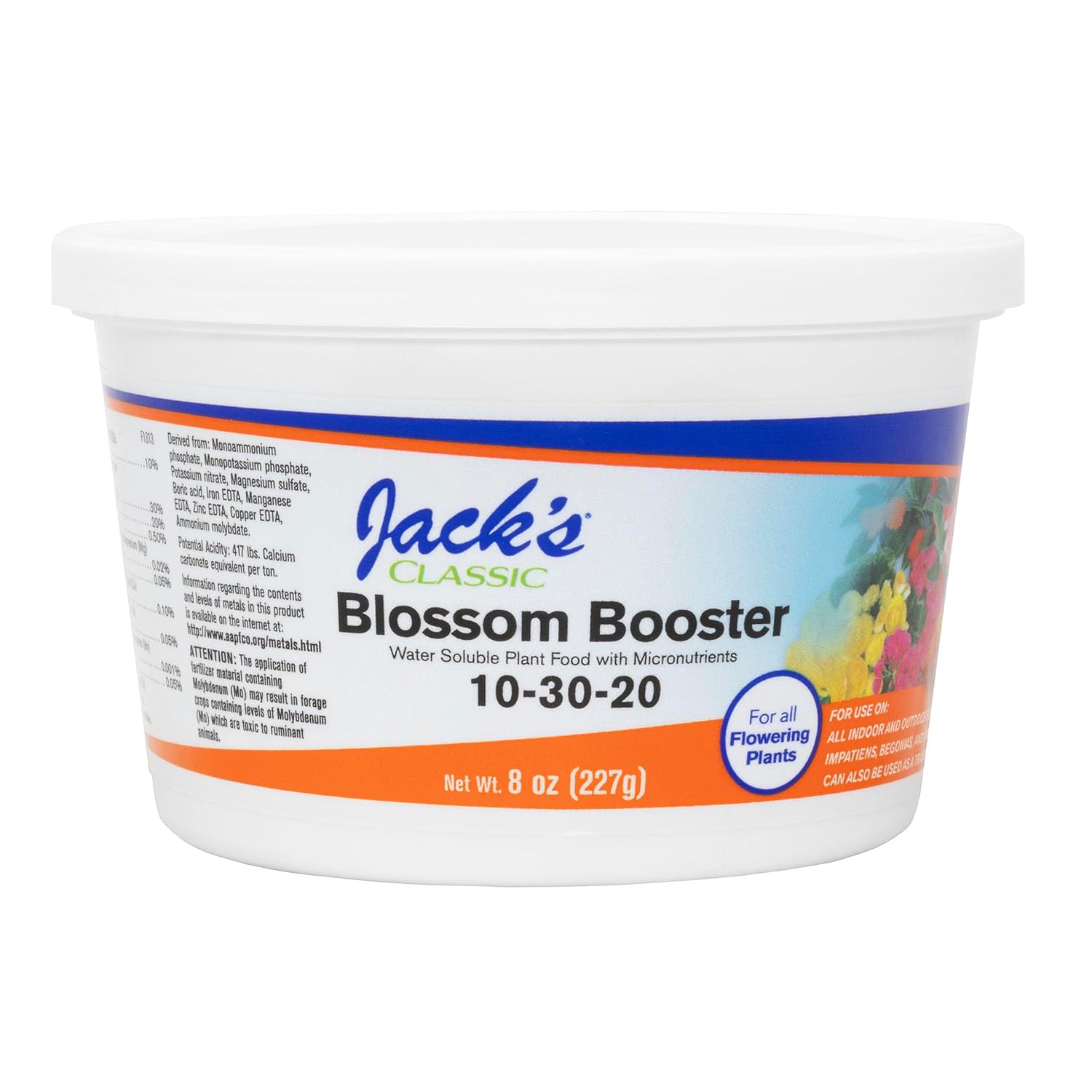
| Item Form | Powder |
|---|---|
| Application Method | watering or spraying on leaves |
| Specific Uses For Product | Plant Growth |
| Mixing Ratio | 10-30-20 |
Jack's Classic Blossom Booster is a concentrated water‑soluble powder designed to encourage more and brighter blooms on flowering plants. You mix the supplied scoop with water to create a liquid feed that can be applied through the soil or sprayed on foliage, and the 10-30-20 NPK ratio plus added micronutrients targets blossom production rather than vegetative growth. For morning glories this means it supports heavier flowering and richer color during the bloom period while remaining easy to use in containers, hanging baskets, or beds. The powdered form stretches farther than equivalent liquids and the included measuring spoon makes repeatable mixes simple. Important limitations are that its high middle number focuses on bloom set and is not meant as an all-purpose grower for establishing new plants or driving leafy growth, and it requires proper dilution and safety precautions to avoid foliar burn. Regular, moderate feedings during the flowering season will give the best results for gardeners seeking showier morning glory displays.
Best for: Gardeners who want a straightforward bloom booster to increase flower quantity and color on established morning glories in containers or beds and prefer a concentrate that stretches across many feedings.
Less Ideal for: Growers aiming to bulk up foliage, establish seedlings, or replace a balanced all-purpose fertilizer should choose a different formula tailored to vegetative growth and early-stage plants.
- High phosphorus formulation (10-30-20) specifically supports flower production and color
- Water-soluble powder mixes into multiple gallons for economical feeding
- Can be applied as a root drench or foliar spray for flexible use
- Includes a measuring spoon for consistent mixing and dosing
- Not formulated for promoting vegetative or root establishment due to bloom-focused NPK
- Requires careful dilution and application to avoid leaf burn when used as a foliar spray
Verdict: Use this water-soluble 10-30-20 bloom booster when you want more and brighter morning glory flowers without swapping feeding methods.
FoxFarm Tiger Bloom Liquid Plant Food (1 pint)
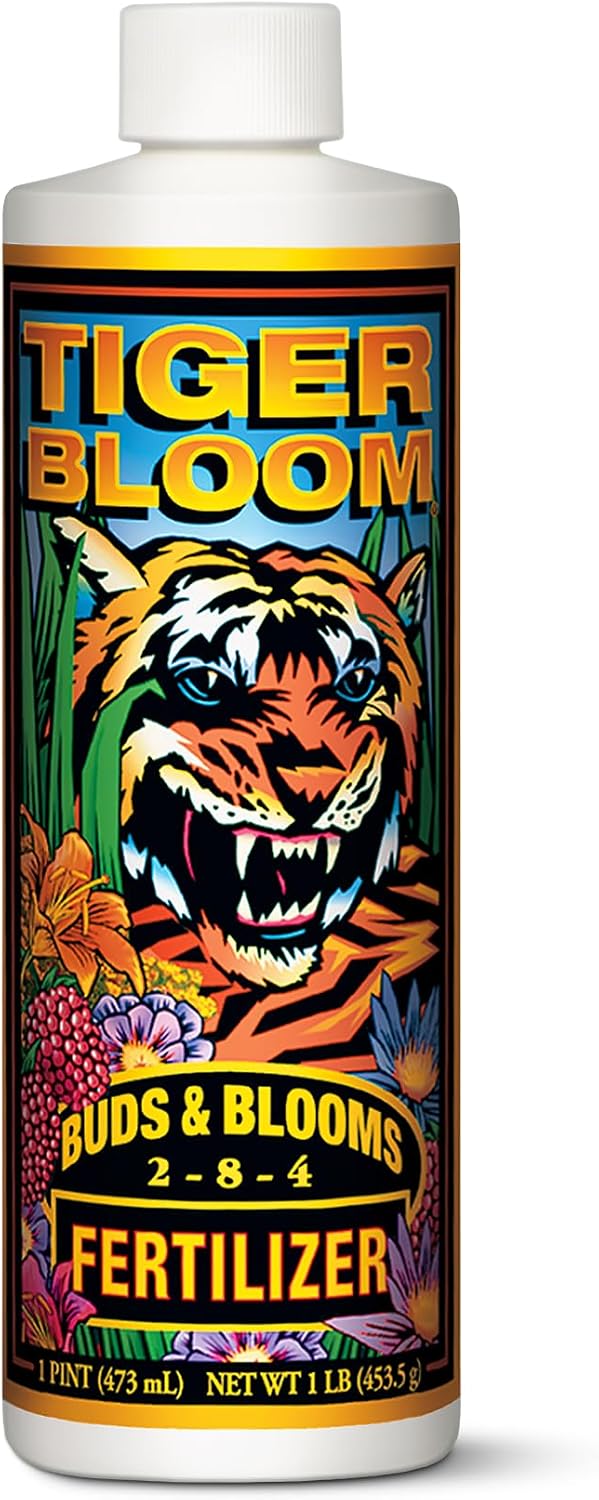
| Item Form | Liquid |
|---|---|
| Specific Uses For Product | Hydroponic |
| Application Method | Watering; Foliar spraying |
| Target Species | Flowering Plants |
| Mixing Ratio | 1:200 or 1:300 |
Tiger Bloom is a liquid, high-phosphorus fertilizer designed to push plants into a strong flowering and fruiting phase. You mix a small amount into the irrigation water or use it as a foliar spray and apply from first signs of flowering through harvest. The 2-8-4 formula and included micronutrients support bud set and larger blooms, and the concentrate mixes at 1:200 to 1:300 for routine feeding or 2 to 4 teaspoons per gallon for heavier feeding. It works in both soil and hydroponic setups and is formulated for quick nutrient uptake and stable micronutrient availability during storage. Practical benefits include flexible application methods, suitability for intensive flowering cycles, and a small bottle that lasts when used at recommended dilutions. Important limitations are that it is bloom-focused rather than an all-purpose feed so it may not meet vegetative needs, and the phosphorus content means users near waterways should follow local regulations to avoid runoff issues.
Best for: Serious growers who prioritize maximizing flower and bloom performance and want a concentrated, fast-acting bloom booster for soil or hydroponic environments.
Less Ideal for: Casual gardeners seeking a single all-purpose fertilizer for every growth stage or those managing turf or non-flowering lawns where phosphorus restrictions apply.
- High phosphorus NPK (2-8-4) concentrated for stronger bud development
- Works in soil and hydroponic systems for versatile use
- Liquid concentrate mixes easily for foliar or watering applications
- Formulated for quick nutrient uptake and stable micronutrient availability
- Focused on flowering so it is not a balanced all-stage fertilizer
- Contains phosphorus which may be restricted near waterways
Verdict: Choose Tiger Bloom when you need a concentrated, fast-acting bloom booster to maximize flower and fruit production.
Scotts All Purpose Flower & Vegetable Continuous Release Plant Food, 3 lb

| Item Form | Granules |
|---|---|
| Application Method | Sprinkle on soil and rake into top 1-3 inches |
| Target Species | All Purpose Flower & Vegetable Continuous Release Plant Food |
| Unit Count | 48 Ounce |
Scotts All Purpose Flower & Vegetable Continuous Release Plant Food is a simple granular fertilizer intended for in-ground flower and vegetable gardens. You apply it by sprinkling the granules around plants, raking them into the top 1 to 3 inches of soil, and watering to start nutrient release. Formulated to feed for up to two months, it supplies steady nitrogen to support root growth and foliage and is recommended for common garden crops including peppers. The bag covers roughly 150 sq. ft., so a single 3 lb package is convenient for small beds or a few pepper plants. Key practical benefits are ease of use, predictable feeding intervals, and reduced need for frequent applications during the growing season. Limitations are that it is an all-purpose formula rather than a pepper-specific mix and its N-P-K profile is not listed on the label data here, so you may want to monitor fruiting and supplement with a bloom-boost fertilizer if you need higher phosphorus for heavy fruit set. Follow label rates to avoid overapplication near crowns.
Best for: Gardeners who want an inexpensive, low-effort fertilizer to maintain steady growth for a few jalapeno plants or a small vegetable bed without frequent feeding.
Less Ideal for: Growers who manage large vegetable plots or who need a nutrient program tailored specifically to maximize pepper fruit set and yield.
- Continuous-release granules feed plants for up to two months, reducing application frequency
- Easy application: sprinkle, rake into topsoil, and water
- Suitable for a wide range of garden plants including vegetables and peppers
- 3 lb bag covers about 150 sq. ft., practical for small gardens or container groups
- All-purpose formula may not provide the specific N-P-K balance jalapenos need for maximum fruiting
- Small bag size means frequent repurchases for larger gardens
Verdict: A budget-friendly, easy-to-use continuous-release fertilizer that keeps jalapeno plants fed for up to two months with minimal fuss.
Jobe's Flowering Plant Food Spikes, 30-Count

| Item Form | Sticks |
|---|---|
| Specific Uses For Product | Plant Food |
| Application Method | Insert spikes into soil |
| Target Species | Flowering houseplants |
Jobe's Flowering Plant Food Spikes are premeasured sticks you push into potting soil to feed flowering plants without mixing or measuring. Each spike slowly releases nutrients at the root zone and is intended to feed plants for about two months, which makes them handy for routine maintenance of outdoor container flowers and patio planters. The biggest practical benefit is convenience: no mess, no liquid fertilizer to dilute, and less chance of overfeeding because each spike contains a set dose. They are most useful for medium coverage areas like individual pots or a cluster of containers rather than large garden beds. Limitations include less flexibility in dosing compared with granular or liquid fertilizers and the need to remember reapplication roughly every two months. Also, spikes can be less evenly distributed in dense root balls, so light-handed placement and occasional repositioning help ensure even feeding.
Best for: Gardeners who want a low-effort, no-mess way to keep outdoor containers and patio flowers fed on a budget and prefer set-and-forget maintenance.
Less Ideal for: People who manage large flower beds, need customizable nutrient schedules, or want rapid feeding responses should consider granular or liquid fertilizers instead.
- Premeasured spikes eliminate mixing and reduce mess
- Provides slow-release nutrition at the root zone for about two months
- Easy application by inserting into potting soil
- Compact 30-count pack suitable for multiple pots or seasonal rotations
- Not ideal for precise or adjustable dosing compared with liquids
- Less effective for large garden beds where even distribution is needed
Verdict: A fuss-free, low-cost way to keep patio pots and container flowers steadily fed with premeasured spikes.
Miracle-Gro Water Soluble All Purpose Plant Food, 12.5 lb

| Item Form | Powder |
|---|---|
| Specific Uses For Product | Plant Food |
| Coverage | general purpose, suitable for various plants |
| Mixing Ratio | 1 tablespoon per gallon of water |
Miracle‑Gro Water Soluble All Purpose is a powder fertilizer designed to dissolve in water and deliver fast nutrients to indoor and outdoor plants. Gardeners mix the recommended scoop with a watering can or use a compatible garden feeder to apply directly to the soil around roots; the product gives routine feedings every 7 to 14 days outdoors or every 2 weeks for houseplants. Notable features include an NPK of 24‑8‑16 for strong vegetative growth, a quoted coverage of about 5,000 sq ft from a 12.5 lb container, and an included scoop with separate measuring ends for indoor and outdoor rates. In practice this means quick uptake for leafy growth and an easy, repeatable dosing routine for reliability across container and in‑ground Clusia specimens. Limitations are that it is a general‑purpose formula rather than a Clusia‑specific mix and frequent applications are required during the growing season, so you will need to follow the label closely to avoid overfeeding.
Best for: Buyers who want a dependable, easy‑to‑measure fertilizer to keep Clusia healthy with consistent, repeatable feedings and straightforward application routines.
Less Ideal for: Growers seeking a slow‑release or custom‑formulated Clusia fertilizer or those who prefer lower‑frequency, hands‑off feeding strategies.
- Fast‑acting water‑soluble formula for near‑instant nutrient availability
- Simple mixing ratios and included scoop make dosing consistent
- Large 12.5 lb container covers a lot of garden area for routine feedings
- Suitable for both container and in‑ground use so it works with potted Clusia and landscape plantings
- General all‑purpose NPK may not match specialized nutrient needs of Clusia at every growth stage
- Requires regular applications during the season rather than a slow‑release schedule
Verdict: A reliable, easy‑to‑mix water‑soluble fertilizer that delivers fast, consistent feedings for Clusia in both pots and landscape settings.
Miracle-Gro Water Soluble All Purpose Plant Food, 1.5 lb

| Item Form | Powder |
|---|---|
| Application Method | Watering Can |
| Target Species | For all flowers, vegetables, trees, shrubs and houseplants |
| Mixing Ratio | 24-8-16 |
Miracle-Gro Water Soluble All Purpose Plant Food is a powder concentrate you mix with water to give a quick nutrient boost to flowers, vegetables, houseplants, shrubs and trees. It is typically dissolved in a watering can or used with a compatible garden feeder to soak soil at the base of plants, delivering nitrogen-heavy nutrition that shows effects faster than granular fertilizers. Notable features include an easy scooping method for indoor and outdoor dosing, compatibility with containers and in-ground planting, and clear directions for feeding every one to two weeks. In practice this makes the product a convenient option when you want visible growth and greener foliage quickly, and the 1.5 lb container covers roughly 600 sq. ft. Important limitations are that it is a fast-release, high-nitrogen formula best used as a regular quick feed rather than a long-term slow-release solution, and it requires careful measuring to avoid overfeeding. For routine maintenance combine with good watering and follow the label to avoid nutrient imbalance.
Best for: Buyers who prefer proven, easy-to-use feeding routines and want noticeable growth quickly for a variety of garden and houseplants, guided by established usage directions and broad user experience.
Less Ideal for: Gardeners seeking a single, long-term slow-release solution or those who prefer organic or low-nitrogen fertilizers for sensitive plantings should consider alternative products.
- Water-soluble powder starts working quickly at the roots when mixed and applied
- Clear, simple dosing for indoor and outdoor use with included scoop guidance
- Suitable for a wide range of plants including vegetables, flowers, shrubs and houseplants
- Covers a large area from a small container (about 600 sq. ft. per 1.5 lb)
- Fast-release formula means benefits are short-term compared with slow-release granular fertilizers
- Requires precise measuring and regular reapplication to avoid overfeeding
Verdict: A reliable, fast-acting water-soluble plant food for gardeners who want easy, repeatable feeding and quick visible results.
Miracle-Gro Watering Can Singles All Purpose Plant Food, 24 Packets

| Number of Packs | 24 |
|---|---|
| Unit Count | 10.24 Ounce |
| Item Form | SOLID |
| Application Method | watering can |
| Mixing Ratio | 1 teaspoon per 1 gallon of water |
Miracle-Gro Watering Can Singles are single-use, pre-measured fertilizer packets intended to make feeding roses and other garden plants simple and reliable. To use, tear a packet into a watering can, add the specified amount of water, then apply the solution while watering; the manufacturer recommends feeding every 7 to 14 days during active growth. The packets remove measuring errors and mess, which helps prevent accidental overfeeding. Because the formula is labeled for all flowers, vegetables, trees and shrubs, it fits into regular rose care routines for bloom and bush development. Practical benefits include instant solubility, clear application instructions for outdoor and indoor containers, and consistent coverage per packet for about 10 sq. ft. of garden. Limitations are that you must keep up with the every-1–2-week schedule for best results and that the product is sold as a general-purpose feed rather than a rose-specific bloom booster, so dedicated rosarians seeking targeted NPK ratios might prefer a specialized rose fertilizer.
Best for: Gardeners who want a low-risk, no-mess way to feed roses and mixed flower beds as part of routine watering and prefer simple, foolproof dosing.
Less Ideal for: Specialist rose growers seeking a targeted bloom-boosting formula or those who want a single, slow-release application instead of frequent liquid feedings.
- Pre-measured packets eliminate measuring and reduce mess and dosing errors
- Water-soluble formula mixes quickly in a watering can for immediate application
- Labeled for use on flowers, roses, shrubs, trees and vegetables so it suits mixed beds
- Clear directions for indoor and outdoor application and coverage per packet
- General all-purpose formula rather than a rose-specific NPK for bloom boosting
- Requires regular reapplication every 7–14 days to maintain results
Verdict: If you want a safe, fuss-free way to feed roses while you water, these pre-measured soluble packets make regular feeding simple and consistent.
Choosing the Right Fertilizer for Morning Glories: Key Factors to Consider
Nutrient Ratio and Bloom Focus
The balance of nitrogen, phosphorus, and potassium determines whether morning glories produce lush foliage or abundant flowers. A moderate to lower nitrogen level with slightly higher phosphorus encourages bloom set while still supporting healthy vine growth. High-nitrogen formulas will favor leaf production and can reduce flower numbers, which is a common pitfall when gardeners try to push growth.
Look for fertilizer ratios and labels that emphasize flowering or bloom enhancement rather than green-up. Slow-release and balanced soluble feeds both work, but the ratio is the primary factor for promoting showy morning glory blooms.
Formulation Type and Release Rate
Granular slow-release fertilizers feed steadily over weeks to months and reduce the need for frequent applications. They are convenient for in-ground plantings and larger containers where a single application provides extended nutrition. Water-soluble fertilizers deliver a quicker nutrient boost that is useful when vines need an immediate flower response, but they require regular reapplication.
Consider the planting situation: containers dry and leach nutrients faster, so a combination of slow-release plus occasional liquid feeding often works best. Also factor in whether you prefer scheduled low-maintenance feeding or periodic quick feedings tied to bloom times.
Salt Index and Root Safety
Some fertilizers, particularly high-salt soluble feeds or concentrated liquid formulas, can raise soil salinity over time. Morning glories tolerate average garden soils but can show leaf scorch or reduced uptake when salts concentrate, especially in containers or poorly drained spots. Lower-salt formulations and controlled-release granules reduce this risk.
If you water intermittently or grow in containers, choose products with low salt accumulation potential and flush containers periodically to prevent buildup.
Compatibility With Containers and Hanging Baskets
Morning glories are often grown in containers and hanging baskets where root volume is limited. In confined soils, nutrient availability and leaching behavior differ from in-ground beds. Slow-release granules formulated for containers help maintain steady feeding without burning roots, while water-soluble feeds give you control over short-term bloom pushes.
Also check whether the fertilizer is safe for mixed planters containing companion plants with different feeding needs. A flexible feeding plan reduces transplant shock and encourages uniform flowering.
Ease of Application and Gardener Workflow
How you prefer to feed affects product choice. Granules require spreading or top-dressing and can often be applied once per season. Water-soluble and liquid feeds are mixed and applied at watering times and fit gardeners who fertilize during regular watering. Foliar feeds are useful in specific stress situations but are not a long-term feeding strategy.
Practical concerns like measurable dosing, clear instructions, and minimal equipment needs are important. Choose a fertilizer whose application method matches how often you check and water your morning glories.
Feeding Schedule for Peak Flowering
Set a feeding rhythm that matches your planting method. For in-ground morning glories, apply a balanced slow-release granule at planting and follow up with a light water-soluble feed every 4 to 6 weeks during the main bloom season. For containers, combine a slow-release base with a weekly or biweekly liquid feed to compensate for faster leaching and smaller root volume.
Time heavier feeding in early to mid-summer before the longest stretch of flowering. Reduce or pause fertilizer in late season as plants wind down to avoid stimulating tender new growth that is vulnerable to cooler nights.
- Apply slow-release granules at planting or early spring for beds.
- Use water-soluble feed every 1-2 weeks for containers during bloom peaks.
- Flush containers monthly to prevent salt buildup.
Adjusting Fertility Based on Soil and Water
If you have a recent soil test, follow recommended phosphorus and potassium adjustments rather than guessing. Many garden soils are adequate in phosphorus, so adding extra phosphorus through high-P formulas is often unnecessary and can cause imbalances.
Hard water increases salt accumulation in containers. If you irrigate with hard water, favor low-salt fertilizers and monitor leaves for browning or tip dieback. Leach container media occasionally by running extra water through the pot to remove excess salts.
- Test soil if unsure about nutrient levels.
- Use lower-salt feeds with hard water or infrequent watering.
- Adjust application frequency when rainfall or irrigation patterns change.
Organic Versus Synthetic Options
Organic fertilizers release nutrients more slowly as microbes break down the material and often improve soil structure over time. They are forgiving in terms of burn risk and add organic matter that benefits long-term fertility. Synthetic fertilizers deliver predictable, immediate nutrients and are helpful when you need a quick bloom response.
For morning glories, either approach can work. If you choose organic, expect slower changes in bloom intensity and add supplemental soluble feeding if blooms lag. If you favor synthetic feeds, use lower-nitrogen bloom formulas and watch for salt accumulation.
- Organics build soil but act slowly.
- Synthetics are fast and precise but require careful dosing.
- Combine approaches for steady baseline fertility and targeted bloom pushes.
Troubleshooting Common Fertilizer Problems
If vines produce abundant foliage but few flowers, reduce overall nitrogen input and switch to a bloom-focused ratio. Yellowing leaves can indicate nutrient deficiency or overwatering; check soil moisture before increasing feed rates. Leaf tip burn or brown margins often point to salt buildup from overfeeding or hard water.
Stunted growth in containers may come from compacted media or depleted nutrients. Repotting with fresh mix and reestablishing a gentle feeding schedule usually restores vigor. When in doubt, err on the side of lighter feeding and monitor plant response over a couple of weeks.
- Too many leaves and few flowers: cut nitrogen and boost phosphorus moderately.
- Leaf burn: leach soil and reduce feed concentration.
- Poor growth in pots: refresh media and use container-suited fertilizers.
Pairing Fertilizer With Pruning and Support
Morning glories respond to pruning and training. Removing tired growth encourages new shoots that will set flowers if nutrients are balanced. Coordinate heavier feeding after formative pruning to support renewed growth without triggering excess leafy growth.
Provide sturdy trellises or supports so vines can focus energy on vertical growth and flowering rather than scrambling on the ground. Good support also improves air circulation and reduces disease risk, making nutrient uptake more efficient.
- Prune lightly to encourage fresh flowering shoots.
- Apply modest feeding after major pruning events.
- Use proper support to maximize light exposure and bloom set.
How We Chose the Best Fertilizer for Morning Glories
We selected fertilizers that reflect real gardener priorities for morning glories and excluded any options that are primarily formulated for lawns, woody ornamentals, or crops with very different nutrient demands. Our editorial filters emphasized nutrient balance and real-world application. We prioritized products with a bloom-friendly ratio that avoids excessive nitrogen, options suitable for soil and containers, and formulations that limit soluble salt buildup. Ease of application in common garden setups and safety for climbers and nearby ornamentals were also required. Finally, we looked for choices compatible with typical watering frequencies and summer heat, and we excluded any products that demand specialized equipment or complex mixing for standard home gardens. The criteria used to pick finalists match the scorecard dimensions below and focus on what actually affects morning glory flowering and vine health.
FAQ
How often should I feed morning glories during the growing season?
It depends on the fertilizer type. Slow-release granules can be applied once at planting and again midseason. Water-soluble feeds are typically applied every one to two weeks for containers and every four to six weeks for in-ground plantings during peak bloom.
Will too much fertilizer make morning glories grow more leaves than flowers?
Often yes. High nitrogen levels favor leafy growth and can reduce flowering. Choosing a fertilizer with a lower nitrogen-to-phosphorus ratio or stepping back on feed frequency helps shift energy toward blooms.
Can I use a general-purpose houseplant fertilizer on morning glories?
Usually you can, but check the nutrient ratio. Many houseplant feeds are higher in nitrogen, which may encourage foliage. If using a general-purpose fertilizer, use it sparingly or choose one labeled for flowering plants to encourage blooms.
Are organic fertilizers effective for encouraging blooms?
Organic fertilizers can promote flowering, but they release nutrients more slowly. They are good for long-term soil health and reduce burn risk. For a quick bloom boost, combine organic baseline feeding with occasional soluble feedings if needed.
How do I avoid fertilizer burn in containers?
Use a fertilizer formulated for container use or apply reduced rates of water-soluble feeds. Regularly flush pots with water to remove accumulated salts and refresh potting mix every season or two to prevent concentration of soluble salts.
Final Verdict
Choose a fertilizer strategy that matches how you grow morning glories. Favor formulas that limit excess nitrogen and support bloom set, especially in containers where salts build up faster. Balance convenience and control by pairing a slow-release base with occasional liquid feeding during peak bloom. Prioritize nutrient ratio, salt risk, and application method when deciding. With the right feeding plan and basic cultural care, you can expect fuller vines and more consistent, showy flowers throughout the season.
