

Note: This article contains affiliate links. If you click on these links and make a purchase, I may earn a small commission at no extra cost to you. This helps support my research and content. Read my full affiliate disclosure here.
Picking the right fertilizer for plants and flowers makes a visible difference in bloom size, color intensity, and overall plant health. Whether you grow annuals in containers, perennial beds, or mixed garden borders, the correct feeding strategy helps plants use water and light more efficiently and resist stress. This guide looks at seven top choices suited to common garden situations and outlines the practical pros and cons you should weigh. We shortlisted products that perform reliably in real gardens and evaluated them on nutrient balance and how easy they are to use. Read on to see how each option fits different planting types and maintenance routines.
Top Picks at a Glance
| Best Overall The best all-around choice for most situations | Osmocote Smart-Release Plant Food Flower & Vegetable, 1 lb. |  |
| Best Quality Built to a higher standard if you want something more solid | FoxFarm Tiger Bloom Liquid Plant Food (16 fl oz) |  |
| Best Value The sweet spot between price and what you get | Miracle-Gro Water Soluble All Purpose Plant Food, 3 lb |  |
| Best Budget The cheapest option that still gets the job done reliably | Miracle-Gro Water Soluble All Purpose Plant Food, 1.5 lb |  |
| Highest Rated A top-rated pick with lots of positive feedback | Miracle-Gro Water Soluble All Purpose Plant Food, 12.5 lb |  |
| Most Popular A crowd favorite that many people choose with confidence | Miracle-Gro Indoor Plant Food for All Plants, Liquid, 8 fl. oz. (2-Pack) |  |
| Best Seller A high-volume bestseller chosen again and again | TPS Nutrients Indoor Plant Food Liquid Fertilizer, 8 oz |  |
Osmocote Smart-Release Plant Food Flower & Vegetable, 1 lb.

| NPK | 14-14-14 |
|---|---|
| Item Form | Granules |
| Specific Uses For Product | Root Development |
| Application Method | Mix into soil |
| Target Species | vegetables and perennials |
Osmocote Smart-Release Flower & Vegetable is a granular, slow-release fertilizer with a balanced 14-14-14 NPK designed to support both root development and above-ground growth in edible and ornamental plantings. You typically sprinkle the granules into the top 1–3 inches of soil in vegetable beds, raised planters, or mulched areas, then water to activate the polymer-coated granules. The product feeds continuously for up to four months, which reduces how often you need to reapply and helps maintain steady nutrient availability through a growing season. Notable features include an applicator cap for dosing, a no-burn formulation that tolerates accidental over-application better than soluble fertilizers, and broad coverage for small beds (1 lb covers about 40 sq ft). Limitations are that it is a general-purpose balanced formula, so gardeners seeking bloom-boosting or high-nitrogen mixes for leafy greens may prefer specialized blends, and the temperature-dependent release means nutrient timing varies with soil warmth.
Best for: Gardeners who want a low-maintenance, all-purpose fertilizer for mixed vegetable beds and perennial flower borders and prefer steady season-long feeding over frequent fertilizing.
Less Ideal for: Growers who need a specialized formulation for peak flowering, rapid leafy growth, or who want precise, immediate nutrient correction should consider targeted fertilizers or soluble feeds.
- Balanced 14-14-14 NPK supports roots, foliage and flowering in one product
- Slow-release coating provides up to four months of continuous feeding
- Granular form is easy to mix into the topsoil of beds and raised planters
- No-burn formulation reduces risk from accidental over-application
- General-purpose formula may not target specific needs like extra bloom or high-nitrogen feeding
Verdict: Choose this product when you want a reliable, low-maintenance, season-long fertilizer for mixed vegetable beds and flowering perennials.
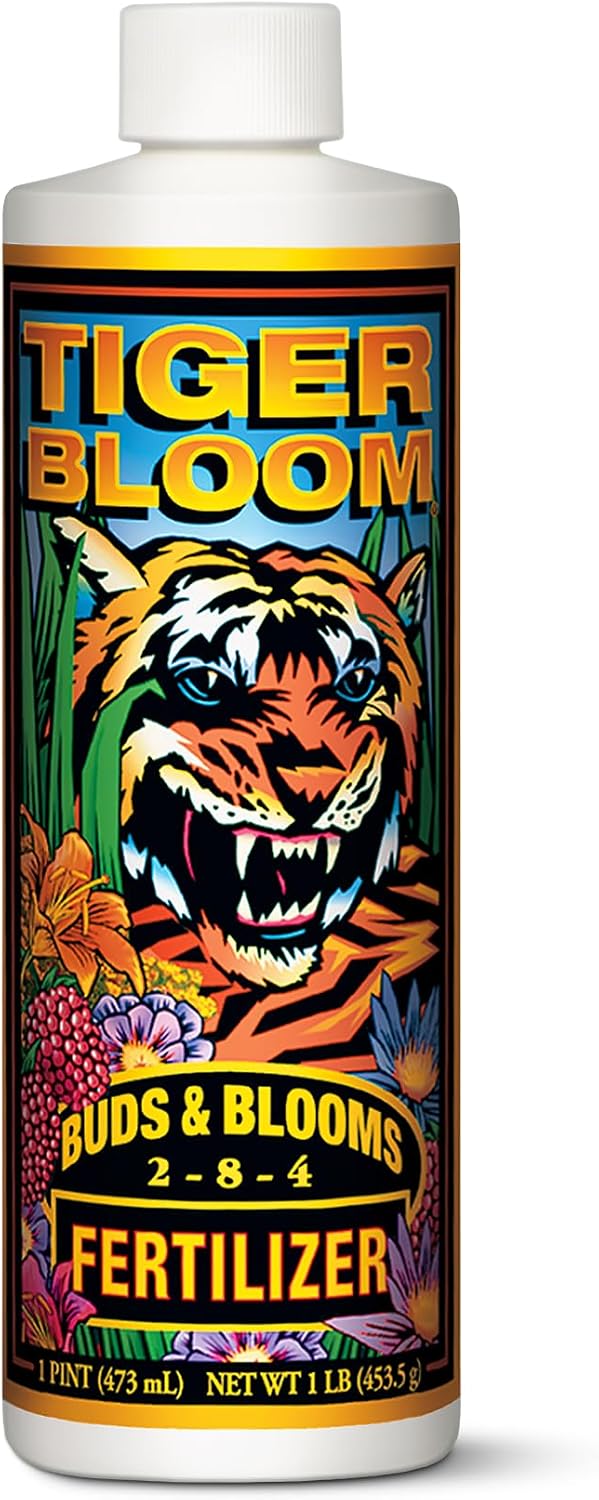
FoxFarm Tiger Bloom Liquid Plant Food (16 fl oz)
| Item Form | Liquid |
|---|---|
| Specific Uses For Product | Hydroponic |
| Application Method | Watering; Foliar spraying |
| Target Species | Flowering Plants |
| Mixing Ratio | 1:200 or 1:300 (1 part to 200 or 300 parts water) |
FoxFarm Tiger Bloom is a concentrated liquid fertilizer designed to push plants into a robust flowering and fruiting phase. With a 2-8-4 N-P-K profile and added micronutrients, it is applied as a dilute feed (about 2 to 3 teaspoons per gallon for regular use) either through watering or as a foliar spray. It works in both soil and hydroponic setups and is intended for use from the first signs of flowering through harvest, so growers can use it as a targeted bloom-stage supplement. Practical benefits include quick nutrient uptake thanks to its liquid form, easy mixing ratios for routine feedings, and compatibility with foliar feeding when a fast response is needed. Important limitations are its phosphorus focus, which makes it less suitable as an all-purpose base fertilizer, and the need to follow local regulations about phosphorus use to avoid runoff concerns. Small bottle size means frequent purchases for larger gardens or heavy feeders.
Best for: Gardeners focused on maximizing bloom and fruit production who want a targeted, easy-to-mix liquid feed for soil or hydroponic flowering stages.
Less Ideal for: Those seeking a single product to feed plants through all growth stages or gardeners managing large beds who prefer bulk fertilizers.
- High phosphorus ratio (2-8-4) targets stronger buds, blooms, and fruiting
- Liquid concentrate mixes easily for quick nutrient uptake and foliar spraying
- Works in both soil and hydroponic systems for flexible use
- Simple mixing instructions make regular feeding straightforward
- Not formulated as a balanced all-purpose fertilizer for vegetative growth
- Contains phosphorus which may be restricted in some local jurisdictions
- 16 fl oz bottle can be small for large gardens or frequent heavy feeding
Verdict: Use Tiger Bloom when you need a simple, phosphorus‑focused liquid boost to drive bigger buds and more abundant blooms during the flowering stage.
Miracle-Gro Water Soluble All Purpose Plant Food, 3 lb

| Item Form | Powder |
|---|---|
| Application Method | Mix with water in a watering can |
| Specific Uses For Product | Plant Food |
| Mixing Ratio | 5.875d-1 |
Miracle-Gro Water Soluble All Purpose Plant Food is a powdered fertilizer you mix into a watering can to give plants a fast nutrient boost. It is typically used every 1–2 weeks for houseplants and every 7–14 days outdoors, and the package includes a scoop with dosing guidance for containers and garden beds. The 24-8-16 formula supplies nitrogen for leafy growth plus phosphorus and potassium to support roots and flowering, and because it dissolves in water it delivers nutrients to the roots almost immediately. Practical benefits include flexible use across flowers, vegetables, trees, shrubs and houseplants and easy application with a watering can or compatible garden feeder. Important limitations are that it is a quick-feed soluble formula rather than a slow-release option, so it requires regular applications to maintain results and may not be the best sole source of long-term nutrition for low-maintenance plantings. Also follow directions carefully to avoid overfeeding and minimize contact with skin and eyes.
Best for: Buyers who want a straightforward, fast-acting fertilizer to boost growth across a mixed garden and container collection and who are willing to follow a regular feeding schedule.
Less Ideal for: Gardeners seeking a low-maintenance, infrequent-feeding solution or those who prefer exclusively organic slow-release products should consider alternatives.
- Water-soluble powder that feeds plants quickly when mixed with water
- Broadly labeled for use on indoor and outdoor plants including vegetables, flowers, trees and shrubs
- Includes scoop and clear mixing directions for container and garden use
- Effective NPK balance (24-8-16) for promoting leafy growth and overall vigor
- Requires frequent reapplication compared with slow-release fertilizers
Verdict: Choose this if you want an easy-to-use, fast-acting soluble fertilizer that reliably boosts growth for a wide range of plants.
Miracle-Gro Water Soluble All Purpose Plant Food, 1.5 lb

| Item Form | Powder |
|---|---|
| Application Method | Watering Can |
| Target Species | Flowers, vegetables, trees, shrubs and houseplants |
| Mixing Ratio | 24-8-16 |
Miracle-Gro Water Soluble All Purpose is a powdered plant food you mix into a watering can or a garden feeder to deliver nutrients directly to roots. It is used for everything from houseplants and container flowers to vegetables, shrubs and trees; the included scoop and product directions make it straightforward to dose for indoor and outdoor applications. The 24-8-16 analysis gives a strong nitrogen boost for leafy growth while supplying phosphorus and potassium for blooms and overall vigor, and because it is water-soluble you see results faster than with granular slow-release fertilizers. Practical benefits include simple mixing instructions, compatibility with common watering cans and feeders, and guidance for feeding frequency so you can incorporate it into regular watering. Limits are that it is a general all-purpose formula so it will not replace specialty blends for acid-loving plants or bloom-boosting mixes, and frequent use without attention to soil needs can lead to overfeeding if directions are ignored.
Best for: Gardeners who want an inexpensive, easy-to-use fertilizer that covers a wide range of plants and produces visible results quickly with routine feedings.
Less Ideal for: Growers seeking a low-maintenance slow-release solution or those who need plant-specific formulas for citrus, acid-loving shrubs, or heavy bloom boosting.
- Water-soluble powder feeds plants quickly when mixed with water
- Clear mixing and application directions for indoor and outdoor use
- All-purpose formula suitable for flowers, vegetables, shrubs, trees and houseplants
- High nitrogen ratio supports fast leafy growth
- Not specialized for acid-loving plants or bloom-only programs
- Requires regular application every 1 to 2 weeks which adds maintenance
Verdict: A budget-friendly, fast-acting all-purpose soluble fertilizer that makes frequent feeding simple for a wide range of plants.
Miracle-Gro Water Soluble All Purpose Plant Food, 12.5 lb

| Item Form | Powder |
|---|---|
| Specific Uses For Product | Plant Food |
| Coverage | general purpose, suitable for various plants |
| Mixing Ratio | 1 tablespoon per gallon of water |
| Unit Count | 200 Ounce |
Miracle‑Gro Water Soluble All Purpose Plant Food is a powdered fertilizer you mix with water to feed houseplants, container plants, flowers, vegetables, shrubs and trees. It dissolves into solution at the recommended 1 tablespoon per gallon (user guide notes 1/2 tsp for indoor and larger scoop for outdoor) so you can apply with a watering can or a compatible garden feeder. The 24‑8‑16 NPK profile supplies a higher nitrogen boost for leafy growth while phosphorus and potassium support blooms and root health. Practical benefits include fast uptake by roots, simple dosing, and wide coverage—one 12.5 lb container is rated to feed roughly 5,000 sq ft. For reliable, repeatable results follow the mixing and reapplication schedule (every 1 to 2 weeks) to avoid overfeeding. Limitations are that the product is a generalist rather than crop‑specific so growers seeking specialty bloom boosters or low‑nitrogen formulas should choose a targeted feed instead; also regular use requires measuring and consistent scheduling to maintain steady results.
Best for: Gardeners who prioritize consistent, dependable feeding across a mixed planting of houseplants, flowers and vegetables and who want a straightforward, repeatable program.
Less Ideal for: Specialist growers looking for tailored NPK ratios for peak flowering or slow‑release convenience should consider targeted or granular alternatives.
- Water‑soluble powder mixes easily for fast nutrient uptake
- Broad suitability for indoor and outdoor plants including vegetables, flowers and shrubs
- High nitrogen formula promotes noticeable leafy growth
- Includes clear mixing directions for watering can or garden feeder
- Large 12.5 lb container covers a large garden area (approx. 5,000 sq ft)
- All‑purpose NPK means it is not optimized for specific needs like bloom boosters or low‑nitrogen feeding
- Requires regular biweekly or weekly applications to maintain benefits
Verdict: A dependable, easy‑to‑mix all‑purpose fertilizer that delivers fast, repeatable feeding for mixed indoor and outdoor plantings.
Miracle-Gro Indoor Plant Food for All Plants, Liquid, 8 fl. oz. (2-Pack)

| Item Form | Liquid |
|---|---|
| Application Method | Apply directly to soil or mix with water |
| Target Species | Houseplants |
| Liquid Volume | 8 fluid ounces |
| Mixing Ratio | 4 pumps per 1 quart of water |
Miracle-Gro Indoor Plant Food is a ready-to-use liquid fertilizer aimed at indoor potted plants, sold here as two 8 fl. oz. bottles. It is applied by either pumping into a quart of water (manufacturer recommends four pumps per quart) or adding directly to the soil, and is intended for use every two weeks. In practice it provides quick, soluble nutrients that are easy to dose for regular maintenance of houseplants, herbs, flowering indoor plants, and small container vegetables. Notable practical features are the pump dispensing for simple mixing and the multi-use formulation meant to cover many plant types, which reduces the need for multiple specialty products. Because it is a concentrated liquid, results are visible faster than with granules or spikes, but it does require remembering a regular feeding schedule and careful dilution for small pots. The product is well suited to keeping established indoor plants healthy, though those seeking highly tailored NPK ratios for bloom boosting or sensitive succulents may prefer a specialized formula.
Best for: Indoor gardeners who want a simple, general-purpose fertilizer to maintain a variety of houseplants and prefer an easy pump-and-mix routine over granular products.
Less Ideal for: Growers seeking a specialized nutrient program for bloom maximization, orchids, or sensitive succulents should consider targeted formulas instead.
- Ready-to-use liquid formula feeds plants instantly when mixed or applied
- Pump dispenser simplifies measuring and mixing into watering can
- Broad-spectrum formulation for many indoor plant types including herbs and flowering pots
- Comes as a two-bottle pack for extended use without immediate repurchase
- Requires regular biweekly feeding and correct dilution to avoid overfeeding small pots
- Not tailored to specific needs like high-phosphorus bloom boosters or succulent-specific low-nitrogen formulas
Verdict: A convenient, general-purpose liquid feed that keeps a mixed indoor plant collection healthy with an easy pump-and-mix routine.
TPS Nutrients Indoor Plant Food Liquid Fertilizer, 8 oz

| Item Form | Liquid |
|---|---|
| Application Method | Watering can |
| Unit Count | 8 Fluid Ounces |
| Mixing Ratio | 1 tbsp per 32 oz water |
| Target Species | Plants |
This 8 oz TPS Nutrients indoor plant food is a liquid concentrate designed to mix with water and be applied during regular watering to support foliage, new growth, and root strength. Typical use is straightforward: measure the recommended dose, dilute per the mixing ratio, and water houseplants as usual. The formula is kelp-enriched and described as gentle enough for weekly feeding, which makes it practical for common species like pothos, monstera, snake plants, and peace lilies. Because it is liquid, it disperses evenly in the soil and can be used with a watering can for controlled application. The product’s small bottle is easy to store and mixes at a clear 1 tablespoon per 32 oz water guideline so dosing is consistent. Limitations are the small volume for larger collections and the need to follow safety guidance to keep it away from children and pets; it is not a one-step slow-release solution so you will need to feed regularly for best results.
Best for: Practical indoor gardeners who prefer a simple, reliably dosed liquid fertilizer for routine weekly feeding of common houseplants and want predictable, steady results.
Less Ideal for: People looking for long-duration slow-release fertilizers or those who maintain very large collections where a larger-volume product would be more convenient.
- Liquid concentrate mixes easily for even feeding with a watering can
- Kelp-enriched formula aimed at improving foliage color and promoting new growth
- Clear dosing instructions for consistent, repeatable application
- Gentle formula suitable for weekly feedings across many common houseplants
- Small 8 oz bottle may require frequent repurchasing for households with many plants
- Requires regular weekly application rather than a single long-term release product
Verdict: A dependable, easy-to-dose liquid fertilizer that simplifies weekly feeding for risk-averse indoor plant owners.
Choosing the Right Fertilizer for Plants and Flowers: Key Factors to Consider
Nutrient Composition and Ratios
The ratio of nitrogen, phosphorus, and potassium determines how a fertilizer affects growth. Higher nitrogen encourages leafy growth, phosphorus supports root development and blooms, and potassium strengthens overall plant resilience. For flowering plants you will often prioritize a balanced or bloom-boosting ratio rather than a high-nitrogen formula.
Look for products that list N-P-K clearly and include information on micronutrients. Knowing the relative balance lets you match a fertilizer to the plant life stage and whether you want to push flowering, build roots, or maintain foliage.
Release Type and Feeding Frequency
Fertilizers come in quick-release forms such as water-soluble liquids and granules, and slow-release forms that feed over weeks or months. Quick-release products give fast visible results but require more frequent applications and careful dosing. Slow-release granules reduce maintenance and lower the risk of overfeeding, which is useful for busy gardeners or container plants.
Consider how often you want to feed and how closely you monitor plants. For long-term containers, a controlled-release product can simplify care, while for bedding plants or seasonal blooms a water-soluble feed timed with flowering can boost color quickly.
Application Method and Ease of Use
Application format affects how easily you can feed plants. Liquids mix with water and work well for foliar sprays or root drenchings, granules can be top-dressed or mixed into potting media, and spikes or capsules offer minimal handling. Ease of measuring, clear dilution instructions, and compatibility with watering systems are practical considerations for everyday gardening tasks.
If you dislike mixing powders or measuring small doses, choose a format that matches your tolerance for routine work. Clear labeling that shows dilution rates per gallon or per plant reduces user error and improves results.
Suitability for Containers and Small Spaces
Containers place different demands on fertilizers than in-ground beds. Potting mixes have limited nutrient reserves and frequent watering can leach nutrients away, so container plants generally need more regular feeding. The wrong product can cause salt buildup or root burn in confined media.
Select fertilizers labeled for container use or those with gentler concentrations and clear feeding schedules. Consider salt index and the need for occasional flushes to prevent buildup, especially in small pots or hanging baskets.
Plant Type and Growth Stage
Different plants and growth stages have distinct nutrient needs. Seedlings and new transplants need more phosphorus to establish roots, vegetative plants require sufficient nitrogen, and flowering plants often benefit from feeds higher in phosphorus or with bloom-enhancing formulations. Seasonal stages like pre-bloom, bloom, and post-bloom call for adjusted feeding.
Match the fertilizer to the species and its current phase. Using a bloom-focused feed on young foliage can create imbalanced growth, while a vegetative formula on bloom-stage plants can reduce flower production.
Environmental Impact and Safety
Think about runoff, salt buildup, and the potential effects on nearby aquatic habitats. Slow-release products often reduce nutrient leaching, while concentrated water-soluble feeds can increase runoff risk if overapplied. Safe handling instructions, clear child and pet safety guidance, and recommendations for avoiding application before heavy rain are important.
Choose products with clear environmental guidance and apply them according to label directions to reduce the risk of nutrient runoff and damage to surrounding plants or wildlife.
How Different Formats Behave in the Garden
Liquid feeds offer rapid uptake and fast visible changes in color and growth, making them useful when you need an immediate boost or when applying foliar sprays. They mix quickly with water and can be applied at shorter intervals during active growth.
Granular and slow-release formulations deliver nutrients over a longer period. They are less likely to cause sudden nutrient spikes and require fewer applications. Spikes and coated granules are especially useful for planters or perennials where disturbance should be minimal.
- Liquids: quick results, higher application frequency
- Granules: extended feeding, lower maintenance
- Spikes/coated granules: convenient for long-term containers
Adjusting Feed Strength by Season
Feed strength and frequency should track plant activity. Increase feeding during active growth and bloom, then taper back as plants enter dormancy or slow growth. Overfeeding in late season can force tender growth that cold or dry weather will damage.
A lighter feed in early spring supports balanced growth, while targeted bloom formulas can be introduced as flower buds form. For perennials, reduce nitrogen-heavy feeds after peak bloom to encourage root and crown strengthening.
- Spring: moderate, balanced feeding
- Bloom: consider phosphorus-rich or bloom-specific feeds
- Fall: reduce feeding to promote hardening off
Feeding Containers Versus In-Ground Beds
Containers need more consistent feeding because their media hold fewer nutrients and are subject to frequent leaching. Use gentler concentrations or slow-release products to avoid salt buildup. Flushing pots occasionally by watering thoroughly helps remove excess salts.
In-ground beds have larger soil volumes and microbial activity that buffer nutrient swings. Incorporating organic matter and slow-release fertilizers can maintain steady plant nutrition without the same level of routine feeding required for pots.
- Containers: monitor for salt build-up, prefer slow-release or diluted liquids
- In-ground beds: build soil organic matter and use longer-duration feeds
Common Application Mistakes to Avoid
Applying too concentrated a dose is a leading cause of plant stress and root burn. Always follow labeled dilution rates and reduce concentration for young plants or stressed specimens. Mixing different fertilizers without guidance can also create nutrient imbalances.
Another frequent error is feeding right before heavy rain, which can wash nutrients away and create runoff. Time applications for dry periods with a day or two before expected rain so the soil can absorb the nutrients.
- Never exceed recommended dilution or application rates
- Avoid fertilizing immediately before heavy rainfall
- Rinse foliage when using foliar sprays if instructions advise
Organic Versus Synthetic Options
Organic fertilizers release nutrients as microbes break down organic matter. They improve soil structure and feed soil life, but their nutrient release is generally slower and less immediately measurable. Synthetic feeds deliver nutrients in plant-available forms quickly and predictably.
Gardeners wanting to build long-term soil health may prefer organic options, while those seeking rapid correction of deficiencies or quick bloom enhancement might choose a synthetic or concentrated water-soluble product. Both approaches can be combined strategically across a garden.
- Organic: slower release, improves soil biology
- Synthetic: fast-acting, precise nutrient delivery
How We Chose the Best Fertilizer for Plants and Flowers
We focused on fertilizers that deliver predictable results in typical home garden conditions. Our editorial filters prioritized nutrient formulation transparency, documented N-P-K ratios, and whether micronutrients or secondary elements were included. Ease of application was a major factor: formats that work cleanly with common garden tools and watering routines scored higher. We also checked label guidance for feeding frequency and dilution to ensure a range of gardeners can follow safe practices. Longevity of feeding effect and release type were considered so slow-release and controlled-release options are represented alongside water-soluble feeds. We excluded products lacking clear ingredient lists or without recommended rates for common ornamentals. The final list balances concentrated formulas, granular slow-release, and liquid options to match real gardener needs for bloom promotion, foliage health, and low-maintenance feeding.
FAQ
How often should I feed flowering annuals?
It often depends on the fertilizer format. Water-soluble feeds are commonly applied every one to two weeks during active bloom, while slow-release granules may only need application once per season. Monitor plant vigor and adjust frequency if growth looks weak or foliage appears burned.
Can I use the same fertilizer for containers and garden beds?
Sometimes, but application rates and frequency typically differ. Containers require gentler, more frequent feeding because potting mix holds fewer nutrients. If you use a product for both, follow container-specific dilution rates and consider a slow-release option for pots.
Will a high-phosphorus feed always increase flower production?
Not always. Adequate phosphorus supports bloom development, but plants also need balanced nitrogen and potassium and proper light and water. Excess phosphorus can lead to imbalances that reduce overall plant health, so use bloom-specific feeds as part of an overall care plan.
Is it safe to use fertilizer on newly planted transplants?
New transplants benefit from gentle feeding once established, usually after roots begin to grow into their new soil. Avoid strong concentrations on very young or stressed transplants; a light starter feed or low-concentration liquid can support establishment without risking root burn.
How do I prevent salt buildup in pots?
Use lower-concentration feeds, choose slow-release formulations, and occasionally flush pots by running ample water through the drain holes to leach accumulated salts. Repotting with fresh mix every couple of seasons also helps reset salt levels.
Final Verdict
Choosing the best fertilizer for plants and flowers means matching nutrient ratios, release type, and application method to your planting situation. Prioritize clear N-P-K labeling, appropriate release duration for your maintenance level, and formulas suited to containers if space is limited. Balance tradeoffs between fast results and long-term soil health to achieve stronger blooms and resilient plants. With the right feeding approach, you can optimize bloom performance while minimizing overfeeding risks and maintenance time.
