

Note: This article contains affiliate links. If you click on these links and make a purchase, I may earn a small commission at no extra cost to you. This helps support my research and content. Read my full affiliate disclosure here.
Pothos are forgiving, low-light houseplants, but the right fertilizer makes a visible difference in leaf color, growth rate, and root health. Choosing an appropriate fertilizer for pothos matters because overfeeding, incorrect nutrient balance, or messy application can cause leaf burn, legginess, or stalled growth. This guide covers seven well-chosen fertilizer options suited for pothos in pots and hanging baskets. We shortlisted products that suit common container sizes and indoor routines and evaluated them on nutrient balance, ease of use, and safety for houseplant settings. Read on for practical guidance to match a feeding method to your watering habits and care goals.
Top Picks at a Glance
| Best Overall The best all-around choice for most situations | TPS NUTRIENTS Indoor Plant Food Liquid Fertilizer, 8 oz |  |
| Best Quality Built to a higher standard if you want something more solid | Grow Queen Organic Liquid Indoor Plant Food 5-5-5 with Sea Kelp, 8 oz |  |
| Best Value The sweet spot between price and what you get | Purived 16 oz All-Purpose Liquid Houseplant Fertilizer |  |
| Best Budget The cheapest option that still gets the job done reliably | Miracle-Gro Indoor Plant Food Spikes for All Plants, 48 Count |  |
| Highest Rated A top-rated pick with lots of positive feedback | FOLLOWIN Pothos Liquid Fertilizer 3-1-2 NPK, 21 fl oz | 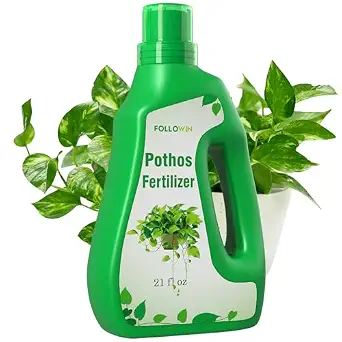 |
| Most Popular A crowd favorite that many people choose with confidence | Miracle-Gro Indoor Plant Food for All Plants, Liquid, 8 fl. oz. (2-Pack) |  |
| Best Seller A high-volume bestseller chosen again and again | Miracle-Gro Liquid All Purpose Plant Food Concentrate, 32 oz |  |
TPS NUTRIENTS Indoor Plant Food Liquid Fertilizer, 8 oz

| Item Form | Liquid |
|---|---|
| Application Method | Watering can |
| Unit Count | 8 Fluid Ounces |
| Mixing Ratio | 2:1 (oz/gallon) or 1:64 (tbsp/gallon) |
This 8 oz TPS NUTRIENTS indoor plant food is a kelp-enriched liquid concentrate designed for routine feeding of houseplants like pothos. You dilute it with water (manufacturer guidance: roughly 1 tablespoon per 32 oz) and apply it through your normal watering can, which makes it easy to add nutrients to weekly watering cycles. The formula is positioned to support leaf vibrancy, steady new growth, and stronger roots — practical benefits for pothos that respond to regular, balanced feeding with fuller foliage and faster recovery after pruning. Because it is a liquid concentrate it is simple to measure and mix, and the small bottle is convenient for apartment growers or those with a handful of plants. Limitations are the small unit size for larger collections and the lack of detailed N-P-K breakdown on the product page, which means you must trust the brand directions rather than tailoring exact macro ratios for specific growth stages.
Best for: Pothos owners who want a no-fuss, weekly liquid feed to support healthier foliage and steady new growth without tracking exact nutrient ratios.
Less Ideal for: Growers who manage large collections or who need precise N-P-K control for stage-specific fertilizing should look for larger containers or fully labeled formulations.
- Liquid concentrate mixes easily with watering can for simple weekly feedings
- Kelp-enriched formula aimed at promoting leaf color, new growth, and root strength
- Small 8 oz bottle is compact and handy for apartment or small-collection growers
- Directions include a clear mixing ratio for straightforward use
- No explicit N-P-K or full nutrient breakdown provided for precise formulation control
- 8 oz volume may require frequent repurchase for larger plant collections
Verdict: An easy-to-use liquid concentrate that gives pothos a reliable weekly nutrient boost for healthier, greener leaves.
Grow Queen Organic Liquid Indoor Plant Food 5-5-5 with Sea Kelp, 8 oz

| Item Form | Liquid |
|---|---|
| Application Method | Watering |
| Specific Uses For Product | Plant Growth |
| Mixing Ratio | 1:1 |
Grow Queen's 5-5-5 organic liquid plant food is a concentrated houseplant fertilizer intended for routine feeding of pothos and other tropicals. Measured as one capful (about 4 ml) per gallon, the solution mixes into your watering can for soil drenches or foliar sprays and claims to treat up to 50 gallons from an 8 oz bottle. The balanced NPK plus sea kelp supplies macronutrients and trace minerals that support greener foliage and stronger roots without a strong burn risk, so you can feed more often during active growth. It works in soil and oxygenated hydroponic setups, but should be mixed fresh for standing water systems. The product is organic and concentrated, so it fits into a maintenance routine alongside slow-release amendments. Limitations are the small bottle size for large collections and the kelp scent some users may notice after watering; also the directions let you vary frequency widely, so growers seeking exact programmatic feeding may need to standardize their schedule.
Best for: For growers who prioritize visible, steady growth in pothos and other tropical houseplants and want a concentrated, organics-based fertilizer they can use frequently.
Less Ideal for: Not a great fit for collectors who rely on passive standing-water reservoirs or need large-volume ready-to-use solutions without frequent mixing.
- Balanced 5-5-5 NPK suitable for regular feeding of foliage plants
- Concentrated formula treats up to 50 gallons from an 8 oz bottle for extended use
- Includes Ecklonia maxima sea kelp and micronutrients to support leaf color and root strength
- Flexible application: soil drench or foliar feed and compatible with aerated hydroponic systems
- Not ideal for standing water systems unless mixed fresh because organic nutrients can form a film
- 8 oz bottle may be small for very large plant collections
- Natural kelp scent is noticeable until soil dries
Verdict: A concentrated, sea-kelp–boosted 5-5-5 liquid fertilizer that delivers steady, safe growth for pothos when used regularly.
Purived 16 oz All-Purpose Liquid Houseplant Fertilizer

| Item Form | Liquid |
|---|---|
| Application Method | soil drench, foliar feed, full & semi hydroponics |
| Target Species | Houseplants |
| Mixing Ratio | 320:1 |
Purived 16 oz All-Purpose Liquid Houseplant Fertilizer is a concentrated, water-soluble feed formulated for routine maintenance of indoor plants like pothos. It is mixed at a 320:1 ratio (one cap per gallon) so a single bottle yields a large volume of solution for repeated feedings. The formula lists primary macronutrients and a full complement of micronutrients, and it is intended for soil drench, foliar sprays, and both full and semi-hydroponic systems, giving flexibility across common pothos setups. Practical benefits include low odor, long shelf life, and straightforward measuring that keeps routine care quick and economical. Important limitations are that the label provides a single standard mixing ratio rather than feeding schedules for different growth stages, and the concentrate requires careful dilution to avoid overfeeding sensitive plants. Users should also follow basic safety guidance to avoid contact with skin or eyes.
Best for: Buyers who want an economical, no-fuss fertilizer to maintain healthy pothos and prefer a single concentrate that can be used across pots, foliar sprays, and simple hydro setups.
Less Ideal for: Growers seeking tailored nutrient programs for heavy feeders or for propagation/flowering stages should consider specialized fertilizers with stage-specific instructions.
- Highly concentrated so one 16 oz bottle makes about 50 gallons of feed
- Compatible with soil drench, foliar feeding, and hydroponic systems
- Contains both macronutrients and a broad set of micronutrients useful for green foliage
- Low odor and a two year shelf life make it convenient for regular use
- No detailed feeding schedule or stage-specific dilution guidance provided
- Single mixing ratio increases risk of overfeeding if users do not adjust for plant size or season
Verdict: A concentrated, versatile liquid feed that stretches a small bottle into many gallons of ready-to-use fertilizer, ideal for straightforward pothos maintenance.
Miracle-Gro Indoor Plant Food Spikes for All Plants, 48 Count

| Item Form | Sticks |
|---|---|
| Application Method | Insert spike into soil |
| Coverage | Full |
| Target Species | Houseplants |
| Unit Count | 48 Count |
Miracle-Gro Indoor Plant Food Spikes are preformed fertilizer sticks meant for low-effort feeding of houseplants. You use the included Miracle-Aerator to make a small hole, push a spike into the soil, and cover it; each spike slowly releases nutrients for up to two months. The package of 48 provides staged coverage across many pots and the stick form keeps application tidy compared with liquid feeding. For pothos specifically the slow-release NPK spikes are convenient for regular but infrequent care and reduce the risk of overfeeding from liquid fertilizer. Limitations are that coverage varies by pot size so you must follow the suggested spike-per-pot guidance, and spikes are not granular or adjustable for precise dosing in very small containers. They also do not replace repotting or soil refresh; you still need to renew potting mix annually for best results.
Best for: Pothos owners who favor a low-maintenance feeding routine and want a tidy, infrequent solution that reduces measuring and weekly mixing.
Less Ideal for: Growers who prefer precisely adjustable dosing, frequent liquid feeding schedules, or those managing very small seedlings and cuttings that need minimal nutrient inputs.
- Pre-measured, low-mess spikes simplify feeding without measuring liquid fertilizer
- Feeds continuously for up to two months per application
- 48-count pack covers multiple plants for repeated treatments
- Easy application with a hole tool keeps soil disturbance minimal
- Fixed dose per spike limits fine-tuning for very small or unusually hungry plants
- Coverage recommendations vary by pot size so you must plan spike placement carefully
Verdict: A simple, low-mess way to keep pothos fed for two months at a time without weekly mixing or measuring.
FOLLOWIN Pothos Liquid Fertilizer 3-1-2 NPK, 21 fl oz

| Item Form | Liquid |
|---|---|
| Application Method | Watering |
| Target Species | Houseplants |
| Liquid Volume | 21 fluid ounces |
| Mixing Ratio | 1 cap in 3.2 gallons |
This FOLLOWIN liquid fertilizer is built for straightforward, repeatable pothos care. The 3-1-2 NPK formula targets foliage, roots, and stem strength while seven chelated micronutrients supply calcium, magnesium, iron and other trace elements that dissolve quickly in water. Use it by adding the measured capful to your watering solution (mixing ratio 1 cap per 3.2 gallons) and apply every other watering during active growth in spring and summer. Practical features include a fast-dissolving concentrate that blends cleanly and a measuring cap that removes guesswork, which helps create a consistent feeding routine for hanging baskets, shelves, or mixed collections of variegated and non-variegated pothos. Expect steadier leaf growth and improved root support after a few feed cycles. Limitations are that feed frequency should be reduced or stopped in winter and the product is a general-purpose pothos formula rather than a tailored solution for specific nutrient deficiencies.
Best for: Buyers who prioritize a predictable, low-fuss feeding routine for indoor pothos collections and want steady, reliable growth without complex dosing.
Less Ideal for: Gardeners seeking a corrective or highly specialized fertilizer for diagnosed nutrient problems or those who prefer dry slow-release options for long periods between feedings.
- Balanced 3-1-2 NPK supports leaf growth, root development, and stem strength
- Seven chelated micronutrients deliver trace elements in an available form
- Measuring cap and clear mixing ratio simplify dosing and reduce guesswork
- Fast-dissolving liquid blends cleanly into watering routine for indoor use
- Mixing ratio assumes larger water volumes which may be less convenient for small pots
- Not formulated to correct specific nutrient deficiencies or pH issues
Verdict: A simple, dependable liquid fertilizer that makes regular pothos feeding easy and consistent for reliable indoor growth.
Miracle-Gro Indoor Plant Food for All Plants, Liquid, 8 fl. oz. (2-Pack)

| Item Form | Liquid |
|---|---|
| Application Method | Apply directly to soil or mix with water |
| Target Species | Houseplants |
| Liquid Volume | 8 fluid ounces |
| Mixing Ratio | 4 pumps per 1 quart of water |
This Miracle-Gro liquid plant food is designed as an all-purpose indoor fertilizer for potted houseplants, including foliage plants like pothos. It is used by mixing a few pumps into a quart of water or applying directly to the soil, and the manufacturer recommends feeding every two weeks. Notable features are the pump dosing for quick measuring, an 8 fl. oz. bottle size sold as a two-pack, and a formula meant to deliver N, P, and K nutrients that feed plants instantly when applied. In practical use it simplifies regular feeding for busy plant owners and works well paired with routine watering, helping pothos maintain greener leaves and steady growth. Limitations are that the product is a generalist formula rather than a pothos-specific mix and it requires remembering a biweekly schedule to avoid under- or overfeeding. Also the label gives basic NPK information only and does not list micronutrients or exact NPK numbers on the provided data, so growers wanting a precise nutrient profile may prefer a product with detailed analysis.
Best for: Plant owners who want a simple, repeatable feeding routine for a mixed indoor collection and prefer an easy pump-dose liquid over granular or spike products.
Less Ideal for: Growers who need a precise NPK ratio or micronutrient-specific fertilizer for specialist plants or who prefer slow-release formats that require less frequent attention.
- Liquid formula feeds plants instantly when mixed with water or applied to soil
- Pump dosing makes measuring quick and reduces guesswork
- Marketed for all indoor container plants so one product covers multiple species
- Comes as a two-pack of 8 fl. oz. bottles for repeat feedings
- No detailed NPK breakdown or micronutrient list provided in the available product details
- General-purpose formula rather than a fertilizer targeted specifically to pothos needs
Verdict: A convenient pump-dosed liquid fertilizer that makes regular biweekly feeding easy for pothos and other common houseplants.
Miracle-Gro Liquid All Purpose Plant Food Concentrate, 32 oz

| Item Form | Liquid |
|---|---|
| Specific Uses For Product | Plant Growth, Root Development |
| Application Method | Mix with water in a watering can |
| Unit Count | 32 Fluid Ounces |
| Mixing Ratio | 1:10 (concentrate to water, estimate) |
Miracle-Gro Liquid All Purpose is a water-soluble concentrate that you mix with a watering can to feed container and in-ground plants. It is intended for frequent feeding—every 1 to 2 weeks for garden plants and every two weeks for houseplants—so it is most useful for gardeners who want a straightforward, regular feeding schedule. The bottle includes mixing guidance (cap to first line for garden use, or 1 teaspoon per gallon for houseplants) which makes dosing simple. As a general-purpose formula it supports plant growth and root development across flowers, vegetables, shrubs, trees and houseplants, including vining houseplants like pothos. The practicality is strong: easy mixing, quick application to soil, and broad compatibility. Limitations are that it is a general all-purpose feed rather than a Pothos-specific formula and requires regular applications to maintain results; overuse or incorrect dilution could stress sensitive plants. For someone seeking a reliable, easy-to-use liquid feed to keep pothos vigorous, this product is a practical choice when used at the recommended dilution and schedule.
Best for: A cautious houseplant owner who prefers a simple, proven liquid feed to maintain steady growth in pothos and other common indoor plants.
Less Ideal for: People who want a specialized fertilizer for aroids, a no-maintenance slow-release option, or who prefer organic-only formulations.
- Works with both indoor and outdoor plants so one product covers pothos and other houseplants
- Clear dilution instructions for houseplants and garden use simplify dosing
- Liquid concentrate mixes easily with water for quick application to soil
- Supports general plant growth and root development, useful for encouraging pothos vigor
- Not formulated specifically for pothos or other aroid houseplants
- Requires regular fortnightly to weekly feedings rather than a slow-release option
Verdict: A straightforward, easy-to-use liquid concentrate that reliably feeds pothos and other common houseplants when applied at the recommended dilution and schedule.
Choosing the Right Fertilizer for Pothos: Key Factors to Consider
Nutrient Ratio and Balance
Pothos are foliage-focused houseplants that benefit from a fertilizer with a balanced to slightly higher nitrogen component to support leaf production. Look for an N-P-K ratio that favors nitrogen without neglecting phosphorus and potassium, because phosphorus supports root health and potassium helps general hardiness.
Overly high phosphorus is unnecessary for non-flowering pothos and can contribute to salt buildup; conversely, too little nitrogen will slow new leaf formation. Choosing a formula with clear N-P-K values lets you match feeds to seasonal growth: lighter feeds in winter and fuller-strength during active spring and summer growth.
Concentration and Dosing Control
Indoor containers and small pots amplify the effect of concentrated fertilizers, so products that allow precise dilution are safer for pothos. Liquid concentrates with measured cups or dropper recommendations, or water-soluble formulas with clear grams-per-liter guidelines, let you reduce strength to a quarter or half of label rates when needed.
Slow-release granules remove the need for frequent dosing but can be harder to calibrate in small pots. Whatever format you choose, predictable concentration control reduces the risk of root burn and salt accumulation in potting mix.
Application Method and Frequency
Think about how you water and care for pothos when selecting a fertilizer format. If you water by soaking or use a saucer, a water-soluble or liquid feed integrates easily. For drip-irrigated or busy households, slow-release pellets or coated granules cut down on maintenance.
Frequency matters because pothos respond to consistent low-strength feeds better than occasional heavy doses. Choose a product whose recommended cadence matches your routine, and prefer options that allow you to back off strength rather than increasing frequency to get results.
Solubility and Potting-Soil Interaction
How a fertilizer dissolves and moves through potting mix affects nutrient availability and salt buildup. Water-soluble feeds provide immediate uptake but can concentrate salts near roots if overused. Chelated micronutrients and fully soluble formulas give even access to iron and trace elements that keep leaves green.
If you use organic potting mixes with higher organic matter, consider feeds that release steadily and do not lock up in the substrate. Good solubility ensures reliable feeding during active growth without sudden nutrient peaks.
Indoor Safety and Residue
Because pothos are common in homes with pets and children, choose fertilizers with clear ingredient lists and low dust when applied. Granules that scatter fine dust or volatile compounds can be less desirable in living spaces. Also consider odor and potential residue on leaves or saucers when selecting a format.
Low-salt, low-odor options reduce the need to rinse foliage or change watering routines, and products without excessive additives simplify long-term container health.
Feeding Schedule for Healthy Vines
Establish a feeding rhythm that suits your pot size and light level. During spring and summer active growth, pothos typically benefit from a light feeding every 2 to 4 weeks with a dilute liquid or soluble feed. In lower light or winter months, cut back to once every 6 to 8 weeks or stop altogether depending on growth activity.
Start with a reduced-strength feed and watch for leaf color and new growth. If growth is pale or weak, slightly increase strength within safe limits rather than increasing frequency. Regular but gentle feeding keeps foliage dense and reduces legginess.
- Active growth: dilute feed every 2 to 4 weeks.
- Low light/winter: cut back to infrequent feeding or pause.
- Signs of overfeeding: leaf tip burn, brown edges, or white crust on soil.
Choosing a Format That Fits Your Routine
Liquid concentrates and water-soluble powders are flexible and allow precise dilution, making them good choices for growers who check plants often. Slow-release granules are convenient for hands-off gardeners or for plants in hard-to-reach hanging baskets.
Fertilizer spikes and tablets can be less predictable in small pots and may concentrate near the rootball if the pot is shallow. Consider pot depth and media when deciding format to ensure even distribution and avoid hotspots of salts.
- Liquid/soluble: best for precise, adjustable feeding.
- Slow-release: low maintenance but monitor for buildup.
- Spikes/tablets: use cautiously in small containers.
Adjusting Feeding for Different Pothos Varieties
Variegated pothos varieties often grow a little slower and may need gentler feeding to preserve variegation. Plain green varieties can handle slightly more nitrogen to support vigorous leaf production. Match feeding strength to the variety's growth habit and watch how variegation responds to stronger feeds.
When propagating or growing young cuttings, reduce fertilizer strength to avoid shocking developing roots. Mature established plants tolerate standard dilute feeds better than newly rooted cuttings.
- Variegated types: favor lighter feeding to maintain leaf pattern.
- Green, vigorous types: moderate feeding supports fast growth.
- Cuttings and seedlings: very low-strength or delayed feeding.
Managing Salt Buildup and Flushing
Over time, dissolved fertilizer salts can accumulate in potting mix and show as white crust on pot rims or reduced water uptake. Periodic flushing with plain water, letting excess drain fully, helps prevent salt stress and leaf tip burn. For plants in saucers, empty standing water to avoid concentration.
If you use a slow-release product, monitor for gradual buildup and repot every 12 to 24 months depending on growth. Refresh the top layer of media or perform a light repot when salt crusting becomes evident.
- Flush pots with ample water every few months to remove salts.
- Empty saucers promptly to prevent concentrated salts near roots.
- Repot periodically to refresh media and reduce buildup.
Common Feeding Mistakes to Avoid
Avoid using full-strength garden or lawn fertilizers on pothos, as concentrations meant for outdoor use can easily burn small indoor root systems. Also do not feed more frequently to compensate for weak concentration; better to raise dilution slightly and keep a steady schedule.
Do not apply dry powders directly to foliage or leave granules on the surface without mixing into the top layer of soil. Always follow dilution guidance and err on the side of underfeeding rather than overfeeding for indoor foliage plants.
- Do not use outdoor-strength fertilizers at full label rates.
- Never apply undiluted powder to exposed roots or leaves.
- Prefer consistent low-strength feeds to sporadic heavy dosing.
How We Chose the Best Fertilizer for Pothos
We prioritized formulations and formats that work reliably in typical indoor pothos care. Evaluation focused on nutrient ratio suitability for foliage plants, concentration control to avoid root stress, and ease of application for container and hanging plants. We also scored solubility and dilution flexibility so feeds can be adjusted for seasonal growth, plus ingredient cleanliness relevant to indoor air and pet safety when possible. Excluded items included specialty fertilizers aimed only at flowering plants, products designed exclusively for outdoor soil beds, and any fertilizers with unclear ingredient lists or dosing instructions. We favored options that accommodate sink-and-soak, drench-and-drain, or slow-release approaches used by most pothos owners. Editorial filters emphasized clear labeling, predictable results for foliage color and growth, and straightforward dosing to reduce the risk of overfertilization.
FAQ
How often should I fertilize pothos kept in low light?
In low light, pothos grow more slowly and usually need feeding only once every 6 to 8 weeks during the growing season, or you can skip feeding through winter. Use a dilute solution when you do feed to avoid stressing the limited root activity.
Can I use an all-purpose houseplant fertilizer for pothos?
Often an all-purpose houseplant fertilizer with a balanced N-P-K works fine for pothos, provided you dilute it to houseplant strength. Avoid formulas geared specifically toward flowering or outdoor plants that have higher phosphorus or salts.
Are organic fertilizers suitable for pothos?
Organic fertilizers can be suitable and slower to release, which reduces burn risk. They may supply micronutrients more gently, but they can be less concentrated so you may need to feed more frequently or combine with occasional liquid feeds for rapid response.
What signs show my pothos is overfertilized?
Common signs include brown leaf edges or tips, leaf drop, white crust on soil surface, and slowed water uptake. If you suspect overfertilization, flush the potting mix with several volumes of water and reduce or pause feeding until recovery.
Should I fertilize newly rooted pothos cuttings?
New cuttings have fragile root systems and usually do better with little to no fertilizer until roots establish. If you feed, use a very dilute solution and apply sparingly to avoid shocking young roots.
Final Verdict
Pick a fertilizer format and strength that match how you water and how much growth you want from your pothos. Prioritize a balanced nutrient ratio, precise dilution control, and low-residue formulations to protect small container root systems. A steady, gentle feeding routine outperforms infrequent heavy doses. Focus on avoiding salt buildup and adjusting strength for variety and light level so you can support lush, healthy vines without risking root stress.
