

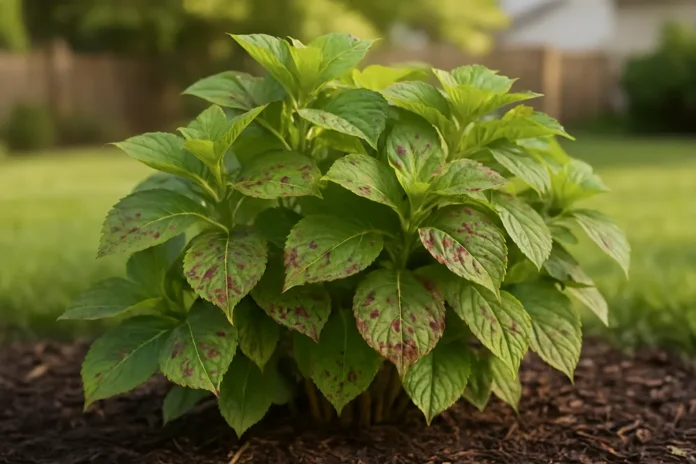
Hydrangea leaves usually develop red spots from fungal leaf spot diseases, environmental stress, or minor physical damage. In many cases, the spots are most noticeable during warm, wet weather or when the plant is under strain.
Seeing hydrangea leaves with red spots can be unsettling, especially when the shrub looked perfectly healthy a week earlier. In my garden, this symptom often shows up after a stretch of rain, muggy weather, or overhead watering, but it can also appear when the plant is stressed by heat, drought, or crowding.
The good news is that red spotting is often easier to sort out than gardeners expect. The location of the spots, whether they stay small or spread, and whether the leaves are also yellowing, browning, or dropping will usually tell you if you are dealing with a fungal problem, a care issue, or simple seasonal stress.
Most hydrangeas recover well once you address the real cause. The key is to focus on new growth and overall plant vigor rather than trying to make old damaged leaves look perfect again.
What Red Spots on Hydrangea Leaves Usually Mean
Red, purple-red, or reddish-brown spots on hydrangea leaves most often signal a leaf spot issue, especially Cercospora leaf spot. This is one of the most common hydrangea problems in warm, humid parts of the U.S. The spots usually begin as small purple or red flecks, then enlarge into round or irregular lesions with tan or grayish centers.
Not every red spot is a disease, though. Leaves can also redden from sun stress, inconsistent watering, nutrient imbalance, physical injury, or natural late-season color change. Some hydrangea varieties even show reddish or purplish tones more readily than others, which can make harmless stress coloring look worse than it really is.
- Small scattered spots on older inner leaves often suggest fungal leaf spot.
- Large bleached or scorched areas with red margins lean more toward sun or heat stress.
- Reddening along edges or between veins can be tied to environmental stress or nutrient issues.
- Spots that expand during rainy weather are more suspicious for disease than spots that stay static.
When I diagnose hydrangea leaf spotting, I look at the oldest leaves first. If the damage starts low and inside the shrub while newer outer leaves look cleaner, I usually suspect a moisture-related fungal issue rather than a whole-plant nutrient problem.
Cercospora Leaf Spot Is the Most Common Cause
How This Disease Looks
Cercospora leaf spot typically starts on the lower and inner leaves, where humidity stays high and air movement is poor. The spots are often small, circular to angular, and purple, red, or reddish-brown. As they age, the center may fade to tan or gray while the border stays darker.
In heavier infections, affected leaves may turn yellow around the spots and drop early. The plant can look thin by late summer, especially if it is already stressed by drought or crowding. While this disease rarely kills an established hydrangea outright, repeated defoliation weakens the shrub and reduces its overall appearance.
Why It Shows Up
Fungal spores spread and infect leaves most readily when the foliage stays wet for long periods. Frequent rain, overhead irrigation, dense branching, and nearby plants that block airflow all raise the odds. Splashing soil can also move spores up onto lower leaves.
- Warm temperatures paired with high humidity
- Watering late in the day so leaves stay wet overnight
- Mulch or bare soil splashing onto foliage during rain
- Old infected leaves left under the shrub from last season
- Plants packed too close together
What to Do
Start by removing the worst affected fallen leaves and any badly spotted leaves that are easy to reach. Do not strip the plant bare, since it still needs foliage to feed itself. Water at the base instead of from above, and if the shrub is crowded, thin a few small stems to improve airflow.
If the problem is mild, better sanitation and drier foliage are often enough to slow it down. If spotting is severe year after year, many home gardeners use a labeled fungicide preventively in spring or at the first sign of spread, following the product label carefully. Fungicides protect clean leaves better than they cure already spotted ones.
Other Diseases That Can Create Red or Purple Spots
Anthracnose
Anthracnose can also cause reddish, brown, or dark lesions on hydrangea leaves, but the spots are often larger and more irregular than Cercospora. They may appear water-soaked at first and can merge into bigger dead patches. This disease can affect stems and flowers too, making it more destructive when conditions favor it.
Bacterial Leaf Spot
Bacterial spots tend to look darker, wetter, or more angular because they are often constrained by leaf veins. The surrounding tissue may yellow, and the spots can spread quickly during persistently wet weather. Good sanitation and dry foliage are still important, but bacterial problems do not respond to typical fungicides in the same way fungal spots do.
Rust and Less Common Issues
Rust is less common on hydrangea than leaf spot, but it can cause reddish or purplish spotting on upper leaf surfaces with pustules underneath. If you flip the leaf over and see powdery orange, rust becomes more likely. Less often, unusual spotting may be tied to a specific cultivar's sensitivity or to multiple stresses happening at once.
Environmental Stress Can Mimic Disease
Sun Scorch and Heat Stress
Hydrangeas that receive too much harsh afternoon sun often develop leaf damage that starts as bleaching, bronzing, or browning, sometimes edged with red or purple. This is especially common with bigleaf hydrangeas planted in sites that were described as part shade but really get several hours of intense late-day sun.
Unlike fungal spot, scorch usually appears more on exposed outer leaves than on shaded inner ones. The damaged areas may look broad and papery instead of small and circular.
Drought or Uneven Watering
Hydrangeas are quick to show water stress. When the root zone swings from very dry to very wet, leaves can discolor in patches, develop reddening along edges, or show general stress spotting. The plant may also wilt during the hottest part of the day and recover in the evening.
Cold Snaps and Wind Damage
Late frosts, strong wind, or abrasive hail can leave behind red, purple, or dark marks where leaf tissue was bruised. This kind of damage usually appears suddenly and does not continue spreading in the same way a disease would.
If you are torn between disease and stress, watch the newest leaves for a week or two. Stress damage often stays limited to the leaves that were exposed during the event, while active leaf spot keeps showing up on additional foliage when conditions remain favorable.
Nutrient and Soil Issues to Consider
Nutrient problems are not the first thing I suspect when I see distinct red spots, but they can contribute to reddish or purplish discoloration, especially when roots are under stress. Phosphorus deficiency, root restriction, poor drainage, and cold soil can all interfere with nutrient uptake and cause leaves to develop unusual tints.
Hydrangeas also dislike extremes in soil conditions. Very compacted soil, soggy roots, or alkaline soil that ties up certain nutrients can weaken the plant enough that spotting becomes more noticeable or more severe. In other words, poor growing conditions may not create every spot directly, but they make the shrub less resilient.
- Persistent overall pale growth suggests a feeding or root issue more than a leaf-only disease.
- Poor drainage can stress roots and make leaf problems snowball quickly.
- Heavy fertilizer can burn roots and create secondary leaf discoloration.
- A soil test is more useful than guessing when nutrient imbalance is suspected.
How to Tell Which Cause Is Most Likely
The pattern matters more than the color alone. Red spots from disease, stress, and injury can overlap visually, but they usually differ in where they start, how fast they spread, and what the rest of the plant looks like.
- Check where the problem began. Lower interior leaves point toward fungal leaf spot. Outer sun-exposed leaves point toward heat or scorch.
- Look at spot shape. Small round or angular lesions fit leaf spot better than broad irregular scorch patches.
- Notice the timing. After rainy, humid weather, disease is more likely. After a heat wave or dry spell, stress rises on the list.
- Inspect leaf undersides. Rust and some other diseases leave clues there that the top surface does not show clearly.
- Compare old leaves to new ones. If new growth looks clean and strong, the issue may be temporary or already improving.
I do not judge a hydrangea by its ugliest leaf. I compare ten leaves from different parts of the shrub, because a true pattern tells you much more than one damaged leaf that may have been splashed, scorched, or physically bruised.
What to Do Right Now for a Spotted Hydrangea
If your hydrangea is otherwise growing and blooming well, there is no need to panic. Most red spotting problems improve with a few practical corrections and some patience. The goal is to stop additional damage, not to reverse marks on leaves that are already affected.
- Remove fallen spotted leaves from beneath the plant.
- Prune lightly for airflow if stems are densely packed, but avoid heavy pruning at the wrong season for your hydrangea type.
- Switch to base watering or drip irrigation so foliage stays drier.
- Apply a 2 to 3 inch mulch layer to reduce soil splash, keeping mulch a few inches away from the stems.
- Water deeply and consistently during hot weather rather than giving frequent shallow sprinkles.
- Avoid high-nitrogen fertilizer pushes when the plant is already stressed.
- Monitor fresh leaves to see whether the spotting continues to spread.
If disease pressure is high every summer, consider a labeled fungicide program timed to protect new growth, especially during wet periods. Always read the label for use on hydrangeas, application interval, and safety precautions.
When the Problem Is Serious Enough to Treat Aggressively
A few spots here and there are mostly cosmetic. More serious cases deserve faster action, especially if the shrub is losing leaves early or the damage is spreading to stems and blooms.
- Large sections of the plant defoliate by midsummer
- New leaves keep developing fresh spots despite improved watering habits
- Spots are accompanied by stem cankers, flower blight, or blackened tissue
- Multiple hydrangeas in the area are showing the same rapid spread
- The shrub is newly planted and already struggling to establish
In those situations, it is worth bringing a sample to a local extension office or reputable garden center for a closer look. Correct identification matters if you are deciding whether a fungicide, site change, or more serious pruning plan makes sense.
How to Prevent Red Spots From Coming Back
Prevention is mostly about growing conditions. Healthy hydrangeas in the right light, with steady moisture and decent airflow, are much less likely to develop severe spotting. Even when a fungus is present, good care often keeps the problem at a manageable level.
- Plant hydrangeas where they get morning sun and protection from harsh afternoon exposure, if your variety prefers that balance.
- Space shrubs so leaves dry reasonably fast after rain.
- Water early in the day and direct water to the root zone.
- Clean up infected leaves in fall so spores have fewer places to overwinter.
- Refresh mulch annually to reduce splashback from rain and irrigation.
- Avoid unnecessary shearing that creates a dense outer shell and poor inner airflow.
- Keep the plant vigorous with proper watering, soil improvement, and moderate feeding.
I have found that simple sanitation and watering changes solve more hydrangea spotting problems than many gardeners expect. Once the shrub gets through a season with cleaner foliage and less stress, it often looks dramatically better the following year.
FAQ
Will Red Spots on Hydrangea Leaves Kill the Plant?
Usually not. Most cases are cosmetic or mildly stressful, especially when caused by Cercospora leaf spot. Repeated heavy defoliation can weaken the shrub over time, but established hydrangeas often recover well with better care.
Should I Cut Off Every Spotted Hydrangea Leaf?
No. Remove badly affected or fallen leaves, but do not strip the plant bare. Hydrangeas still need healthy foliage to support growth and flowering.
Can I Spray Fungicide After Spots Appear?
Yes, but fungicides are most helpful at protecting healthy leaves and slowing new infections. They will not make old spots disappear, so sanitation and watering changes are still important.
Do Red Spots Mean My Hydrangea Needs Fertilizer?
Not usually. Distinct red or purple spots are more commonly linked to leaf spot disease or environmental stress than a simple feeding shortage. If you suspect a nutrient issue, a soil test is a better guide than guessing.
Why Are Only the Lower Leaves Affected?
That pattern often points to fungal leaf spot. Lower leaves stay humid longer, get splashed by soil, and tend to be the first place spores establish.
Can Too Much Sun Cause Red Spots on Hydrangea Leaves?
Yes. Too much harsh afternoon sun can stress hydrangea leaves and cause reddening, scorching, or bronzing, especially on exposed outer foliage.
Is It Safe to Compost Spotted Hydrangea Leaves?
It is better not to compost diseased leaves unless you manage a hot compost system that reliably breaks pathogens down. For most home gardeners, disposal is the safer option.
Do Red Spots Go Away on Their Own?
Existing spots do not heal, but the plant can outgrow the problem if conditions improve. What matters most is whether new leaves stay clean and the shrub keeps growing strongly.
Need help choosing the best fungicide, mulch, or watering setup for healthier hydrangeas? Read our hydrangea care and treatment guides to find the products and fixes that actually prevent repeat leaf problems.
