

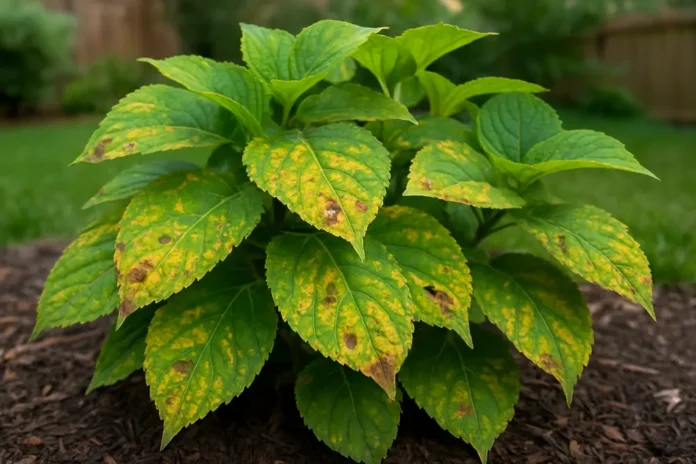
Hydrangea leaves usually develop yellow spots from fungal leaf diseases, pest feeding, watering stress, or nutrient imbalance. The exact cause depends on whether the spots stay small, spread, turn brown, or show up with webbing, mildew, or yellowing between veins.
Seeing hydrangea leaves with yellow spots can be frustrating because the symptom looks simple, but it can come from several very different problems. In my garden, this is one of those issues where the pattern on the leaf matters more than the color alone. Tiny scattered dots, larger blotches, yellow speckling, and yellowing between veins all point in different directions.
Most of the time, yellow spots on hydrangeas are caused by a leaf spot disease, sap-sucking pests, or stress that weakens the plant enough for symptoms to show. The good news is that established hydrangeas usually recover well once you match the fix to the cause. The key is not to treat every yellow spot as the same problem.
Below, I will walk through the most likely reasons hydrangea leaves develop yellow spotting, how to tell them apart, and what I would do first to keep the damage from spreading.
What Yellow Spots Usually Mean on Hydrangeas
Yellow spots are a symptom, not a diagnosis. On hydrangeas, they often show up when the leaf tissue is being damaged in a localized way. That damage may come from fungal infection, insects piercing the leaf and sucking sap, excess moisture around the foliage, or roots struggling to take up nutrients properly.
If the plant is otherwise growing well and only older leaves have a few spots, the issue is often manageable. If many leaves are affected quickly, spots are spreading upward, or foliage is dropping early, the plant is under more serious stress. Looking at where the spots start, how sharp their edges are, and whether the undersides of leaves show any growth or pests can save you a lot of guessing.
- Small round yellow spots that later turn tan or brown often suggest a leaf spot fungus.
- Fine yellow stippling or speckling can point to spider mites or other sap-sucking pests.
- Yellowing between veins while the veins stay greener is more consistent with chlorosis or nutrient uptake problems.
- Large irregular pale patches on exposed leaves may be linked to sun scorch or heat stress.
- Yellow spots paired with fuzzy growth or purplish-gray fungal coating under the leaf can indicate downy mildew in humid conditions.
When I diagnose hydrangea spotting, I compare several leaves from different parts of the shrub before deciding anything. If every affected leaf shows the same size and pattern, I lean toward disease. If the damage is heaviest on dry, dusty, or wind-stressed foliage, pests or moisture stress move higher on my list.
Leaf Spot Diseases Are the Most Common Culprit
Cercospora Leaf Spot
Cercospora leaf spot is one of the most common reasons hydrangea leaves develop yellow or purplish spots that later turn brown in the center. It usually begins on older, lower leaves where humidity stays high and air movement is poor. The spots may start small and yellowish, then darken and develop a more defined border as the disease progresses.
This disease rarely kills a mature hydrangea, but it can make the plant look tired by late summer and trigger early leaf drop. Repeated defoliation year after year weakens the shrub and reduces its overall vigor. Overhead watering, crowded growth, and wet foliage overnight all help the disease spread faster.
Downy Mildew and Other Moisture-related Diseases
Downy mildew can also begin as yellow spots, often with a more angular look because the lesions are bounded by leaf veins. In humid weather, the underside of the leaf may develop a gray, purple, or fuzzy fungal growth. This is more common when cool nights and damp mornings keep the foliage wet for long periods.
Bacterial leaf spots can create similar blotches, but they often look water-soaked at first and can spread rapidly during warm, rainy periods. In home gardens, the first response is usually the same: remove the worst leaves, improve air circulation, and keep water off the foliage.
- Spots start on lower or inner leaves first
- Damage increases after rainy or very humid weather
- Spots often become brown, tan, or purple-centered over time
- Leaves may yellow and drop early if the infection is heavy
- The plant may still bloom normally even while foliage looks rough
Pests Can Create Yellow Speckles That Look Like Spots
Spider Mites
Spider mites are tiny, but the damage they leave behind is easy to notice once you know the pattern. Instead of larger round spots, they tend to cause fine yellow stippling across the leaf surface. Heavy infestations can make leaves look dull, dusty, bronzed, or faded. In hot, dry weather, hydrangeas can pick up mite problems surprisingly fast.
If you flip over affected leaves, you may see very fine webbing, especially near veins or leaf stems. The leaves usually do not show the classic circular fungal lesions that come with leaf spot diseases. The yellowing often looks more like countless pinpricks blending together.
Aphids, Leafhoppers, and Other Sap Feeders
Other sap-sucking insects can also leave yellow flecks or pale patches as they feed. Aphids usually gather on tender new growth and may leave sticky honeydew. Leafhoppers are quick-moving and can cause stippling that resembles mite damage, though webbing is usually absent.
- Yellow spotting is very fine and widespread rather than made of larger lesions
- Damage may be worst during hot, dry spells
- Leaf undersides may show insects, cast skins, or webbing
- New growth may look distorted if aphids are involved
- Nearby dusty conditions can make mite outbreaks more likely
If I suspect mites, I hold a white sheet of paper under a leaf and tap it sharply. Tiny moving specks on the paper are often easier to spot than the mites on the leaf itself.
Nutrient Issues and Root Stress Can Mimic Disease
Iron Chlorosis and pH Problems
Sometimes what looks like yellow spotting is really chlorosis starting between the veins. Hydrangeas can struggle to take up iron when soil pH is too high, when drainage is poor, or when roots are stressed. In that case, the veins stay greener while the tissue between them turns yellow. It may not look like neat circles at all, but gardeners often describe it as yellow spotting at first glance.
Bigleaf hydrangeas and other common types generally prefer slightly acidic soil for the best nutrient uptake. If your soil is alkaline, the plant may have iron in the ground but still be unable to access it. This is especially common in areas with limestone-based soils or repeated applications of lime near the planting bed.
Overwatering, Poor Drainage, and Root Decline
Hydrangeas like consistent moisture, but roots sitting in soggy soil can cause yellowing that begins as scattered patches or mottling. When roots are stressed, the plant cannot move water and nutrients efficiently, so leaves may show blotchy discoloration before they turn fully yellow or drop. This can happen in heavy clay, low spots, or containers without enough drainage.
Underwatering can create a different kind of stress. Leaves may first show pale spotting or faded patches, especially after intense sun, then crisp at the edges. If the soil swings from bone dry to soaked, the plant has an even harder time maintaining healthy foliage.
- Yellowing between veins suggests chlorosis more than infection
- Newer leaves often show iron deficiency first
- Soggy soil, root crowding, or compacted ground can cause patchy leaf discoloration
- Sudden weather stress can make nutrient symptoms look worse
- A struggling root system often causes more general decline than a simple leaf spot disease
Sun Scorch and Weather Stress Sometimes Leave Pale Spots
Hydrangeas can also develop pale yellow or bleached patches when leaves are exposed to more intense sun than the plant is used to handling. This is especially common after pruning that opens up the canopy, after nearby trees are removed, or during a sudden heat wave. The damaged areas may start yellowish and then turn tan or papery.
Weather stress rarely creates the neat, repeated circular spotting of a fungal disease. Instead, the damage usually appears on the sunniest side of the plant or on leaves most exposed to hot afternoon light. Dry wind can make this worse by increasing moisture loss through the leaves.
This kind of damage does not spread like a pathogen. Once the weather evens out and watering is consistent, new growth often comes in cleaner. The old leaves will not repair themselves, but the plant can still recover well.
How to Tell Which Cause You Are Dealing With
The easiest way to narrow this down is to look at the shape, size, and location of the yellow spots. A hydrangea with fungal leaf spot usually has more defined lesions that begin on older foliage. A hydrangea with mites has finer speckling spread across the leaf. A hydrangea with chlorosis shows a more veined pattern, and one with sun stress usually shows larger washed-out patches on exposed leaves.
- Check whether the spotting is made of individual round lesions or a fine overall speckling.
- Turn leaves over and look for webbing, insects, fuzzy fungal growth, or sticky residue.
- Notice whether the worst damage is on lower shaded leaves, inner leaves, or outer sun-exposed leaves.
- Feel the soil a few inches down to see if it is soggy, evenly moist, or very dry.
- Watch whether new growth is healthy or already emerging pale and affected.
New growth tells me a lot. If the newest leaves are clean while the oldest leaves are spotted, I usually think disease or past stress. If fresh growth is already pale, mottled, or distorted, I start looking harder at roots, nutrients, or active pests.
What to Do Right Now
Start with the least disruptive steps first. Remove the most heavily spotted or badly damaged leaves and clean up any fallen foliage around the base of the plant. This reduces the amount of disease material sitting in the bed and makes it easier to monitor whether the problem is still spreading.
Next, adjust watering habits. Water the soil rather than the leaves, and try to do it early in the day so any splashed foliage dries quickly. If the bed stays wet for long stretches, improve drainage where possible or pull mulch slightly back from the crown so the root area can breathe.
If the pattern points to mites or other pests, a strong rinse of the undersides of leaves can knock populations back on lightly affected plants. Insecticidal soap or horticultural oil may help if used according to label directions, but avoid spraying during high heat. If the pattern clearly fits fungal leaf spot, improving airflow and keeping the leaves dry are often the biggest wins in a home garden.
For suspected chlorosis, consider a soil test before adding fertilizer blindly. If pH is too high, the long-term fix is usually adjusting soil conditions rather than just feeding more. Quick green-up products may help temporarily, but they do not solve the root cause if drainage or pH is off.
- Prune out crowded stems only if the plant is very dense and air circulation is poor
- Avoid overhead irrigation whenever possible
- Do not compost badly diseased leaves if leaf spot has been severe
- Pause high-nitrogen fertilizing until you know the cause
- Judge recovery by the condition of new growth, not by expecting old leaves to turn green again
How to Prevent Yellow Spots From Coming Back
Healthy hydrangeas are less likely to develop severe spotting, even when disease pressure is present. Give the shrub enough spacing for airflow, keep mulch at a reasonable depth, and avoid creating a damp jungle around the base. Morning sun with afternoon shade is ideal for many hydrangeas, especially in warmer parts of the U.S.
A consistent watering routine helps more than gardeners sometimes realize. Hydrangeas dislike long dry spells followed by saturation. Even moisture keeps roots working properly and reduces the stress that makes leaves more vulnerable to pests, scorch, and nutrient issues.
Clean garden hygiene matters too. Removing fallen infected leaves at the end of the season can significantly cut down repeat outbreaks. If your hydrangeas get leaf spot every year, thinning nearby plants or switching irrigation methods may make a bigger difference than any treatment spray.
- Water deeply and consistently rather than lightly and often
- Keep foliage as dry as possible
- Space plants for airflow and prune selectively if crowded
- Monitor leaf undersides during hot, dry weather for mites
- Test soil if chlorosis or repeated yellowing is a recurring issue
- Remove diseased leaf litter before winter and again in spring
FAQ
Will Yellow Spotted Hydrangea Leaves Turn Green Again?
Usually no. Damaged leaf tissue does not recover, so the goal is to stop the problem from spreading and watch for healthy new leaves.
Should I Cut Off Every Hydrangea Leaf with Yellow Spots?
Not always. Remove the worst leaves and any that have clearly diseased lesions, but avoid stripping too much foliage at once because the plant still needs leaves to grow.
Can Too Much Water Cause Yellow Spots on Hydrangeas?
Yes. Overly wet soil can stress the roots and lead to blotchy yellowing, while wet foliage also encourages leaf spot diseases.
Do Yellow Spots Mean My Hydrangea Has a Fungus?
Often, but not always. Fungal leaf spots are common, yet mites, chlorosis, and sun stress can create similar yellow spotting or mottling.
Is It Safe to Spray Fungicide Right Away?
Only if you are reasonably sure disease is the issue and the product is labeled for hydrangeas and the problem you suspect. Many cases improve most from sanitation, dry foliage, and better airflow.
Why Are Only the Lower Leaves on My Hydrangea Getting Yellow Spots?
That pattern often points to leaf spot disease because lower leaves stay wetter longer and receive less airflow. Splashing water from rain or irrigation also reaches them first.
Can Hydrangeas Get Yellow Spots From Too Much Sun?
Yes. Intense afternoon sun and heat can bleach leaves into pale yellow patches that later turn tan, especially on exposed outer foliage.
Want the right fix faster? Read our hydrangea care and treatment guides to compare fungicides, insect controls, and soil amendments that actually match the symptom pattern you are seeing.
