

Note: This article contains affiliate links. If you click on these links and make a purchase, I may earn a small commission at no extra cost to you. This helps support my research and content. Read my full affiliate disclosure here.
Growing vegetables in containers changes how plants access water and nutrients. In pots, soil volume is limited and nutrients are used up faster, so choosing the right fertilizer for potted vegetables has a direct impact on growth, fruit set, and flavor. This guide shortlists seven top options suited to container use and explains the practical differences gardeners need to weigh. We evaluated feeding methods, nutrient ratios, and how each option performs under common container conditions like frequent watering and small root zones. Use the overview and scoring criteria to match a fertilizer to your pot size, crop type, and maintenance rhythm.
Top Picks at a Glance
| Best Overall The best all-around choice for most situations | Miracle-Gro Shake 'N Feed Tomato, Fruit & Vegetable Plant Food, 4.5 lb |  |
| Best Quality Built to a higher standard if you want something more solid | Dr. Earth Organic Tomato, Vegetable & Herb Fertilizer (64 oz) |  |
| Best Value The sweet spot between price and what you get | FOOP Organic All-Purpose Liquid Plant Food (32 oz) |  |
| Best Budget The cheapest option that still gets the job done reliably | Miracle-Gro Water Soluble Tomato Plant Food, 1.5 lb |  |
| Highest Rated A top-rated pick with lots of positive feedback | Miracle-Gro Watering Can Singles All Purpose Plant Food, 24 Packets | 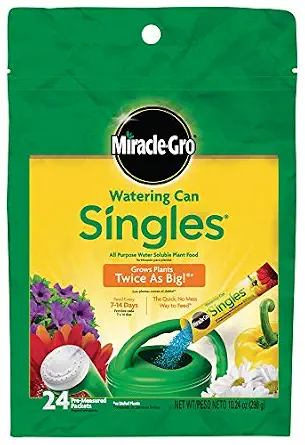 |
| Most Popular A crowd favorite that many people choose with confidence | Miracle-Gro Indoor Plant Food for All Plants, Liquid, 8 fl. oz. (2-Pack) |  |
| Best Seller A high-volume bestseller chosen again and again | TPS NUTRIENTS Indoor Plant Food Liquid Fertilizer, 8 fl oz |  |
Miracle-Gro Shake 'N Feed Tomato, Fruit & Vegetable Plant Food, 4.5 lb

| Item Form | Granules |
|---|---|
| Specific Uses For Product | Growing tomatoes, fruits, and vegetables |
| Application Method | Dry application |
| Mixing Ratio | 10:5:15 |
Miracle‑Gro Shake 'N Feed Tomato, Fruit & Vegetable is a granular, dry‑apply fertilizer designed for in‑ground beds and container vegetables. You sprinkle or shake the granules onto the soil and either work them into the top inch or three of soil or mix them into potting mix when planting, then water to activate feeding. The 10-5-15 NPK formula supplies balanced nitrogen for leafy growth and higher potassium for fruit development while added calcium helps reduce common blossom and fruit disorders. Because it feeds for up to three months, it cuts down on frequent applications and is convenient for busy gardeners. It is targeted specifically at tomatoes, peppers, berries and similar crops and is suitable for both established plants and new transplants. Limitations are that it must be applied to soil rather than foliar‑sprayed, and gardeners who prefer slow micronutrient tailoring or organic certified inputs may prefer other options. Follow label rates closely to avoid overapplication in small container setups.
Best for: A gardener who wants a low‑maintenance, reliable fertilizer for tomato and vegetable beds and containers and values fewer applications and straightforward instructions.
Less Ideal for: Growers seeking certified organic fertilizers, those who rely on foliar or liquid feeding programs, or gardeners wanting to precisely blend micro‑nutrients should consider other products.
- Long residual feeding up to three months reduces reapplication frequency
- Includes calcium to help prevent blossom and fruit disorders and improve fruit quality
- Ready‑to‑use granular form is simple to apply to in‑ground beds or mixed into potting soil
- NPK 10-5-15 balances vegetative growth with fruit development for vegetables and tomatoes
- Not suitable for foliar feeding or direct mixing into irrigation systems
- Contains conventional ingredients so it is not an organic‑certified product
Verdict: Choose this if you want an easy, long‑lasting granular fertilizer that reliably feeds vegetable and tomato plants for an entire season with minimal upkeep.
Dr. Earth Organic Tomato, Vegetable & Herb Fertilizer (64 oz)

| Unit Count | 64 Ounce |
|---|---|
| Item Form | Granules |
| Specific Uses For Product | Organic |
| Target Species | Herb |
| Coverage | Medium |
This granular organic fertilizer is designed to boost vegetable and herb production by supplying balanced nutrients and soil biology support. It is typically broadcast into beds, mixed into potting mixes, or applied at planting and midseason for a nutritional lift; the manufacturer recommends reapplying every six weeks for containers. Notable features include a fully organic ingredient list, fast but sustained nutrient release, and a blend of probiotic microbes plus ecto and endo mycorrhizae intended to improve nutrient uptake and drought tolerance. In practice that means healthier root systems and potentially better yields and flavor in crops like cucumbers when used as part of an organic program. Limitations are that it is a medium coverage product in a 64 ounce bag so larger plots will need more frequent purchases, and it contains phosphorus so local runoff rules should be checked before use. Follow the directions for pH and application timing to avoid overapplication in small containers.
Best for: Gardeners who prioritize organic soil health and want a single, biology‑focused fertilizer to support vegetables like cucumbers in beds or containers.
Less Ideal for: Large‑scale growers seeking a bulk, high‑coverage fertilizer or those who must avoid phosphorus due to local regulations should consider other options.
- 100 percent organic formula suitable for certified organic gardens
- Contains beneficial microbes and eight strains of mycorrhizae to support root health and nutrient uptake
- Granular form releases nutrients quickly and continues feeding for several months
- Works for beds, raised planters and containers and can be used at planting, transplanting or midseason
- Bag is medium coverage so not economical for very large vegetable plots
- Includes phosphorus which may be restricted in some local jurisdictions
Verdict: Choose this product if you want an organic, microbe‑rich granular fertilizer that supports root health and steady feeding for cucumber and other vegetable plantings.
FOOP Organic All-Purpose Liquid Plant Food (32 oz)

| Item Form | Liquid |
|---|---|
| Specific Uses For Product | General Plant Food |
| Coverage | Large |
| Target Species | vegetables, herbs, flowers, trees, shrubs |
| Mixing Ratio | 1:32 |
FOOP Organic All-Purpose Liquid Plant Food is a 32 oz concentrate formulated to feed a wide range of outdoor and indoor plants. It mixes at 1:32 to make a large volume of usable solution and contains organic inputs such as fish emulsion, kelp, mycorrhizae, and beneficial microbes to supply nitrogen, phosphorus, potassium, calcium, magnesium, and silica. In practice you dilute it and apply it as a routine feed to beds, containers, and established perennials; the microbial inoculant and kelp content support root health and vigor while the broad nutrient profile helps leafy plants develop. For gardeners growing hostas this product provides balanced, organic nutrition that encourages lush foliage without synthetic salts. Expect easy mixing and broad compatibility, but be prepared for the typical odor of fish-based fertilizers and to follow dilution guidance so you do not overapply. This is best used as a regular feed alongside good cultural care rather than a one-time corrective soil amendment.
Best for: Gardeners who prioritize practical, organic solutions and want a single concentrated feed to maintain lush, leafy perennials and mixed beds without complex dosing schemes.
Less Ideal for: Gardeners seeking odorless synthetic fertilizers or those who need a specialized slow-release granular product for long-term soil nutrient retention.
- Concentrated 1:32 mixing ratio stretches one bottle into a large amount of feed
- Broad nutrient spectrum including N, P, K plus calcium and magnesium for balanced feeding
- Contains kelp, mycorrhizae, and beneficial microbes to support root and soil biology
- Suitable for a wide range of plants from vegetables to ornamentals so one product covers multiple beds
- Fish emulsion base can have a strong odor that some users find unpleasant
- Not a targeted slow-release soil amendment for long-term nutrient holding
Verdict: A concentrated, organic liquid feed that provides balanced nutrition and soil-friendly microbes to keep hostas and other shade perennials lush and healthy.
Miracle-Gro Water Soluble Tomato Plant Food, 1.5 lb

| Item Form | Liquid |
|---|---|
| Application Method | Water Soluble |
| Target Species | Great for tomatoes and vegetables |
| Mixing Ratio | 18-18-21 |
Miracle-Gro Water Soluble Tomato Plant Food is a water-soluble fertilizer intended to boost vegetable growth by delivering nutrients quickly through a watering can or Miracle-Gro Garden Feeder. Its 18-18-21 mixing ratio supplies balanced nitrogen, phosphorus, and potassium so plants get a steady supply of the elements they need for leafy growth, flowering, and fruit set. Use it by mixing the recommended dose into a watering can for outdoor containers or in-ground beds and apply every 7 to 14 days during the growing season. The product works fast because it dissolves completely and can be applied directly to the root zone, which is useful for impatient gardeners trying to push tuber and foliage development in potatoes. On the downside it is a concentrated chemical fertilizer rather than an organic option and requires careful measuring to avoid overfeeding. Coverage notes from the brand indicate a small 1.5 lb package is meant to feed a modest area when used with the Garden Feeder, so larger plots will need multiple containers.
Best for: Ideal for gardeners on a budget who want a straightforward, fast-acting fertilizer to boost potato foliage and tuber development without complicated application methods.
Less Ideal for: Not the best choice for growers seeking organic or slow-release nutrition or for those managing large acreages who need bulk, long-lasting supplies.
- Water-soluble formula mixes easily for quick nutrient uptake
- Balanced NPK (18-18-21) supports foliage, flowers, and fruit development
- Designed for use with watering cans or the Miracle-Gro Garden Feeder for convenient application
- Feeds quickly when applied every 7 to 14 days during the growing season
- Concentrated synthetic formula, not an organic fertilizer
- 1.5 lb package is small for larger vegetable plots and will require frequent repurchasing
Verdict: A simple, fast-acting water-soluble fertilizer that gives budget-minded vegetable growers an easy way to boost potato growth and yields.
Miracle-Gro Watering Can Singles All Purpose Plant Food, 24 Packets

| Number of Packs | 24 |
|---|---|
| Unit Count | 10.24 Ounce |
| Item Form | SOLID |
| Application Method | watering can |
| Mixing Ratio | 1 teaspoon per 1 gallon of water |
Miracle-Gro Watering Can Singles are single-use, pre-measured fertilizer packets intended to make feeding roses and other garden plants simple and reliable. To use, tear a packet into a watering can, add the specified amount of water, then apply the solution while watering; the manufacturer recommends feeding every 7 to 14 days during active growth. The packets remove measuring errors and mess, which helps prevent accidental overfeeding. Because the formula is labeled for all flowers, vegetables, trees and shrubs, it fits into regular rose care routines for bloom and bush development. Practical benefits include instant solubility, clear application instructions for outdoor and indoor containers, and consistent coverage per packet for about 10 sq. ft. of garden. Limitations are that you must keep up with the every-1–2-week schedule for best results and that the product is sold as a general-purpose feed rather than a rose-specific bloom booster, so dedicated rosarians seeking targeted NPK ratios might prefer a specialized rose fertilizer.
Best for: Gardeners who want a low-risk, no-mess way to feed roses and mixed flower beds as part of routine watering and prefer simple, foolproof dosing.
Less Ideal for: Specialist rose growers seeking a targeted bloom-boosting formula or those who want a single, slow-release application instead of frequent liquid feedings.
- Pre-measured packets eliminate measuring and reduce mess and dosing errors
- Water-soluble formula mixes quickly in a watering can for immediate application
- Labeled for use on flowers, roses, shrubs, trees and vegetables so it suits mixed beds
- Clear directions for indoor and outdoor application and coverage per packet
- General all-purpose formula rather than a rose-specific NPK for bloom boosting
- Requires regular reapplication every 7–14 days to maintain results
Verdict: If you want a safe, fuss-free way to feed roses while you water, these pre-measured soluble packets make regular feeding simple and consistent.
Miracle-Gro Indoor Plant Food for All Plants, Liquid, 8 fl. oz. (2-Pack)

| Item Form | Liquid |
|---|---|
| Application Method | Apply directly to soil or mix with water |
| Target Species | Houseplants |
| Liquid Volume | 8 fluid ounces |
| Mixing Ratio | 4 pumps per 1 quart of water |
Miracle-Gro Indoor Plant Food is a ready-to-use liquid fertilizer for indoor potted plants that you apply either directly to soil or diluted in water. It is typically used every two weeks by mixing the recommended number of pumps into a quart of water or by applying a few pumps for larger pots, making it easy to add to a regular watering routine. The product feeds quickly because nutrients are water-soluble and the pump dispenser gives repeatable doses without measuring spoons. Practical benefits include broad compatibility with most houseplants and a compact bottle size that is convenient for small indoor gardens. Limitations are that the label lists only N, P, K without a full nutrient breakdown, so growers wanting precise NPK ratios or micronutrient profiles may prefer a more detailed formula. Also the 8 fl. oz. bottles are best for hobbyists or small collections rather than large indoor plantings because frequent repurchasing will be necessary for heavy users.
Best for: Buyers who want a simple, low-effort fertilizer to add to a regular watering routine and who prioritize straightforward dosing and broad houseplant compatibility.
Less Ideal for: Specialist growers who need exact NPK ratios, detailed micronutrient information, or bulk quantities for many plants should consider a different product.
- Liquid formula feeds instantly when mixed with water or applied to soil
- Pump dispenser provides simple, repeatable dosing without measuring
- Designed for use with a wide range of indoor plants including herbs, flowers and vegetables
- Full NPK ratio and micronutrient details are not shown on the product summary
- Small 8 fl. oz. bottle size may require frequent replacement for larger collections
Verdict: A convenient, pump-dosed liquid fertilizer that makes fortnightly feeding simple for casual indoor plant owners.
TPS NUTRIENTS Indoor Plant Food Liquid Fertilizer, 8 fl oz

| Item Form | Liquid |
|---|---|
| Specific Uses For Product | Plant Food |
| Application Method | Watering can |
| Mixing Ratio | 2:1 (oz/gallon) or 1:64 (tbsp/gallon) |
TPS NUTRIENTS Indoor Plant Food is a concentrated liquid fertilizer made for regular use with houseplants. You mix the measured dose into water and apply it with your usual watering can; the label gives an easy mixing ratio for household use. Its kelp-enriched formula is pitched at improving leaf color, encouraging steady new growth, and supporting root health, so expect glossier foliage and more frequent leaf production when plants are fed consistently. The 8 fl oz bottle is portable and fits on a plant shelf or utility area, and the liquid form dissolves readily for even application. It is intended for medium coverage and labeled as gentle for weekly feeding, which simplifies care for busy owners. Important limitations are that this is a small bottle meant for regular top-up feedings rather than long-term bulk use, and it assumes you will follow dilution directions to avoid overfeeding. Keep it away from children and pets and avoid skin or eye contact when handling.
Best for: Plant owners who want a simple, low-effort weekly fertilizer to keep indoor foliage vibrant and encourage steady new leaf growth. Good for people who prefer an easy liquid mix applied during regular watering routines.
Less Ideal for: Gardeners needing a bulk or multi-season fertilizer for outdoor beds or large collections should consider larger-capacity or specialized products instead.
- Liquid concentrate mixes easily for even application with a watering can
- Kelp-enriched formula aimed at improving foliage color and encouraging new growth
- Gentle enough for weekly feedings according to product guidance
- Clear mixing instructions for home use
- Small 8 fl oz volume limits how many plants you can feed before repurchasing
- Not formulated or labeled for outdoor or large-scale garden use
Verdict: A convenient kelp-enriched liquid concentrate that makes weekly feeding easy for anyone who wants healthier, more vibrant indoor foliage.
Choosing the Right Fertilizer for Potted Vegetables: Key Factors to Consider
Nutrient Balance and N-P-K Ratios
Container-grown vegetables need a fertilizer with an appropriate balance of nitrogen, phosphorus, and potassium because limited soil volume concentrates nutrient effects. A fertilizer with too much nitrogen can encourage lush foliage at the expense of fruiting, while too little phosphorus can limit root and flower development. Look for product guidance that lists exact N-P-K values and recommended application rates for small containers.
Balanced ratios also matter across the season. Seedlings and leafy crops often benefit from higher nitrogen early on, and fruiting vegetables perform better with formulas that increase phosphorus and potassium during bloom and fruit set. Using a product that provides clear stage-specific guidance helps avoid the common container pitfall of overfeeding in a small root zone.
Release Pattern and Feeding Frequency
Slow-release granules, water-soluble salts, and liquid feeds all behave differently in pots. Slow-release granules can reduce the frequency of applications, which is useful for busy gardeners or for larger containers where reaching the root zone is straightforward. Water-soluble or liquid fertilizers allow for quick correction of deficiencies but require more frequent dosing and careful measurement to avoid salt buildup in the limited soil volume.
Think about how often you can realistically feed plants. If you water daily or heavily, a slow-release formula designed for containers can prevent nutrients from washing away. If you prefer targeted weekly feeding, a dilute water-soluble or liquid fertilizer gives precise control over nutrient timing.
Salt Buildup and Leaching Risk
Pots have limited capacity to dilute salts from fertilizers, and repeated applications with insufficient leaching can lead to salt accumulation that damages roots. Fertilizers high in soluble salts or those applied at full strength are riskier in small containers. Products that recommend periodic deep watering to flush salts or that have lower salt indices are safer for frequent-feeding regimes.
Also consider how often you can repot or refresh potting mix. In long-term containers, choosing a fertilizer formulated to minimize salt buildup will reduce the need for frequent soil replacement and lower the risk of leaf scorch, tip dieback, or stunted growth caused by excess salts.
Micronutrient Content and Chelation
Vegetables need more than N-P-K. Micronutrients like calcium, magnesium, iron, and boron are essential for preventing common disorders such as blossom end rot or chlorosis. In containers, micronutrients can become unavailable due to pH swings or binding in the potting medium, so fertilizers that include chelated micronutrients or a complete micronutrient package offer insurance against deficiencies.
Check product labels for guaranteed micronutrient analysis and application advice for correcting specific deficiencies. Some formulations include extra calcium or magnesium, which is particularly helpful for tomatoes and peppers grown in containers where blossom end rot can appear quickly.
Application Method and Measuring Ease
Ease of measuring and applying fertilizer is more important in small pots than in beds. Granules that require weighing or large scoop sizes are inconvenient for 4- to 12-inch containers, while concentrated liquids that need careful dilution increase the chance of dosing errors. Look for products with measuring caps, clear dilution charts for small volumes, or slow-release options that come in small granule sizes suited to surface application in pots.
Reliable application instructions that include tablespoons or milliliters per gallon and guidance for common pot sizes reduce mistakes. Simpler application methods lower the risk of overfeeding and make it easier to maintain a consistent feeding schedule across many containers.
Compatibility with Potting Mix and Water Quality
Certain potting mixes and local water sources affect nutrient availability. High-salt tap water or a potting mix with a heavy starter charge can change how often you need to feed or what type of fertilizer is appropriate. Some fertilizers are formulated to complement soilless mixes by providing slow, steady nutrients that replace what the mix lacks over time.
If you use rainwater, softened water, or hard tap water, check for guidance on adjusting fertilizer strength and frequency. A fertilizer that offers flexibility for different water qualities and mixes reduces the need for guesswork and helps maintain consistent plant health in containers.
When to Start Feeding Container Vegetables
Begin feeding after seedlings have developed a true set of leaves or when plants are established in their final pots. Very young transplants may rely on the starter nutrients already in the potting mix, so wait until you see active growth and use a light feed to avoid shock.
For rapid growers like leafy greens, start a diluted feeding schedule earlier and more frequently. For slow-developing root crops or legumes, delay more concentrated feeding until the plants have a larger root system to handle increased nutrient loads.
- Seedlings: use a quarter-strength feed when true leaves appear
- Established containers: follow label rates adjusted to pot size
- Flowering and fruiting: increase phosphorus and potassium as plants set fruit
Adjusting Doses for Pot Size and Crop
Smaller pots require lower absolute amounts of fertilizer because nutrient concentration rises quickly in limited soil. Convert garden rates to container-appropriate doses by scaling down both volume and frequency. When in doubt, err on the side of lighter feeds and increase only if you see signs of deficiency.
Match the feed strength to the crop type. Leaf crops benefit from steady nitrogen, while tomato and pepper containers need a schedule that shifts toward bloom and fruiting support.
- 4 to 6 inch pots: very dilute, frequent feeds
- 8 to 12 inch pots: moderate dilution and steady schedule
- Large patio pots: can accept recommended label rates more closely
Correcting Common Container Disorders
Many problems in potted vegetables stem from nutritional imbalances that are easy to correct if diagnosed early. Yellowing between leaf veins often signals magnesium or iron issues; blossom end rot indicates inconsistent calcium supply. A targeted supplemental feeding or foliar spray can remedy deficiencies faster than changing the whole potting mix.
When correcting a disorder, apply conservative, repeatable doses rather than one strong treatment. Rapid shifts in nutrient concentration can stress roots already working in a restricted volume.
- Chlorosis: consider chelated iron or magnesium applications
- Blossom end rot: increase calcium supply and consistent soil moisture
- Leggy growth after heavy feeding: reduce nitrogen and increase light
Organic Vs Synthetic Options in Containers
Organic fertilizers release nutrients through microbial activity, which can be slower and more variable in sterile potting mixes. They are often gentler and lower risk for salt buildup, but may require warm, biologically active conditions to release nutrients in time for the crop.
Synthetic fertilizers provide predictable nutrient availability and are easier to tailor to a feeding schedule, but they can increase salt levels in small pots if applied at high strength. Consider a mixed approach: a light organic base in the potting mix supplemented by a dilute synthetic feed during peak demand.
- Organic feeds: lower salt risk, slower release
- Synthetic feeds: precise dosing, faster correction
- Combination approach: steady baseline plus targeted boosts
Storing and Handling Fertilizer for Small-Scale Use
Store fertilizers in cool, dry conditions and keep lids sealed to prevent caking and moisture uptake. For gardeners with many small containers, consider decanting small, labeled portions into airtight jars to reduce the chance of spills and make measuring easier.
Keep a feeding log that notes concentration and frequency for each crop and pot size. That record helps identify whether a fertilizer or a feeding habit is causing trouble and supports repeatable success year to year.
- Use dry scoops or measuring spoons dedicated to fertilizer
- Label and date any decanted portions
- Maintain a short feeding calendar for each container group
How We Chose the Best Fertilizer for Potted Vegetables
We focused on attributes that matter most for vegetables grown in containers. Key evaluation criteria included nutrient balance and release pattern to ensure steady availability without salt buildup, application method compatibility with small pots and hanging baskets, and concentration so gardeners can avoid overfeeding when working with limited soil volume. We also looked at ease of measuring and applying, resistance to leaching with frequent watering, and packaging that supports accurate dosing for small batches. Products that relied solely on vague marketing claims, lacked clear N-P-K and micronutrient information, or required complex mixing that increases the risk of over-application were excluded. We prioritized fertilizers that provide clear instructions for container use and that address common container-specific problems such as tip burn, blossom end rot, and nutrient imbalances. Editorial selection favored balanced, container-adapted formulas and practical delivery formats that reduce waste and simplify regular feeding.
FAQ
How often should I fertilize vegetables in containers?
It depends on the fertilizer type. Slow-release formulas may only need feeding every 8 to 12 weeks, while water-soluble or liquid feeds are commonly applied every one to two weeks at a diluted strength. Adjust frequency based on growth rate and crop demand.
Can I use garden soil fertilizer in potting mix
Garden soil fertilizers may be formulated for in-ground use and can be too concentrated or not suited to soilless mixes. Choose products labeled for containers or follow reduced rates and flush pots regularly to avoid salt buildup.
What do I do if leaves show yellowing or brown edges
Yellowing between veins often indicates a micronutrient deficiency while brown edges can point to salt stress or inconsistent moisture. Test a dilute corrective feed targeted to the suspected nutrient and flush the potting mix with fresh water if salt buildup is likely.
Are foliar feeds effective for container vegetables
Foliar feeds can provide rapid correction for certain micronutrient deficiencies because leaves absorb nutrients more quickly than roots. They are a supplement rather than a replacement for regular root feeding and work best when used at recommended concentrations.
Should I change fertilizing routine when repotting
Yes. Fresh potting mix often contains starter nutrients, so reduce or skip feeding for a short period after repotting. Resume a conservative feeding schedule once plants show active new growth and follow pot-appropriate dosing.
Final Verdict
For potted vegetables, prioritize a fertilizer that matches your watering habits, pot sizes, and crop types. Balance nutrient ratios and a release pattern that suit your maintenance routine to avoid salt buildup and deficiency problems. Pay attention to micronutrient content and application ease so you can feed accurately across many small containers. Choose a feeding strategy rather than chasing a single perfect product: select a base approach that suits your time and potting system, then fine-tune strength and frequency based on plant response for reliable container harvests.
