

Note: This article contains affiliate links. If you click on these links and make a purchase, I may earn a small commission at no extra cost to you. This helps support my research and content. Read my full affiliate disclosure here.
Radishes respond quickly to the right feeding, so picking fertilizer for radish affects how fast seedlings mature and how firm roots become. In tight spaces, containers, or succession plantings you need a formula that supports rapid leaf growth without forcing oversized tops or split roots. This guide covers seven shortlisted fertilizer options chosen for common radish situations, from spring beds to patio containers. We evaluated products on the nutrient ratios gardeners care about and practical use factors like application method and salt risk. Read on to see the criteria we used and to learn how to match a fertilizer to your soil and radish goals.
Top Picks at a Glance
| Best Overall The best all-around choice for most situations | Neptune's Harvest Fish & Seaweed Liquid Fertilizer (2-3-1) 36 oz |  |
| Best Quality Built to a higher standard if you want something more solid | FoxFarm Happy Frog Tomato & Vegetable Fertilizer, 5-7-3 Blend, 4 lb |  |
| Best Value The sweet spot between price and what you get | Jobe's Organics Granular Tomato & Vegetable Fertilizer, 4 lb |  |
| Best Budget The cheapest option that still gets the job done reliably | Miracle-Gro Water Soluble Tomato Plant Food, 1.5 lb |  |
| Highest Rated A top-rated pick with lots of positive feedback | TIANSHI Trifecta+ Organic All-Purpose Plant, Flower & Vegetable Fertilizer (48 oz) |  |
| Best Seller A high-volume bestseller chosen again and again | Dr. Earth Organic Tomato, Vegetable & Herb Fertilizer (64 oz) |  |
Neptune's Harvest Fish & Seaweed Liquid Fertilizer (2-3-1) 36 oz

| Item Form | Liquid |
|---|---|
| Mixing Ratio | 2:3 |
| Specific Uses For Product | Plant Growth |
| Liquid Volume | 946 ml |
Neptune's Harvest Fish & Seaweed Liquid Fertilizer is a concentrated organic plant food that mixes with water for use as a soil drench or foliar feed. It is typically diluted (manufacturer directions give roughly 1 fl oz per gallon for outdoor use and 1 tablespoon per gallon for houseplants) and applied every 1 to 3 weeks depending on the crop. The formula combines hydrolyzed fish and seaweed to deliver nitrogen, micronutrients, and seaweed-derived growth compounds in a plant-ready form, which helps green growth, flowering color, and vegetable flavor. Because it is a liquid concentrate it is easy to measure and applies evenly, and regular use can improve soil biology and structure over time. Limitations are that it is low in phosphorus and potassium relative to some specialty bloom or fruit formulas and it has an odor typical of fish-based fertilizers that some users may find strong. This product suits gardeners who want an effective, organic regular feed that supports both potted houseplants and garden beds.
Best for: Gardeners seeking a reliable, organic everyday fertilizer that simplifies feeding for a mixture of houseplants, vegetables, flowers and shrubs and who value soil health as well as plant vigor.
Less Ideal for: Growers who need a high-phosphorus bloom booster or a fertilizer formulated specifically for fruit set or lawns should look for a targeted specialty product instead.
- Organic concentrate blending hydrolyzed fish and seaweed for plant-ready nutrients
- Versatile application as soil drench or foliar feed for indoor and outdoor plants
- Supports soil biology and structure with regular use
- Easy-to-measure mixing ratios for routine feeding
- Has a strong fish odor that some users may find unpleasant
- Lower phosphorus and potassium compared with specialized bloom or fruit formulas
Verdict: A dependable organic liquid concentrate that provides balanced, plant-ready nutrients and improves soil health for routine feeding of mixed garden and houseplants.
FoxFarm Happy Frog Tomato & Vegetable Fertilizer, 5-7-3 Blend, 4 lb

| Item Form | Granules |
|---|---|
| Specific Uses For Product | Vegetables, Tomatoes, Soft Fruits, and Berries |
| Unit Count | 64 Ounce |
| Mixing Ratio | 5:7:3 |
| Target Species | Vegetables |
This granular FoxFarm Happy Frog fertilizer supplies a balanced 5-7-3 N-P-K blend designed to support leafy growth and plentiful fruit set, plus added calcium and mycorrhizal fungi to improve root uptake and reduce blossom end rot. It is applied to in-ground beds and containers following the package directions and is suitable across vegetable plantings. The OMRI listing means it fits organic-minded plots, and the inclusion of mycorrhizae can help young roots access nutrients and moisture more efficiently. For root crops such as turnips the moderate nitrogen level encourages healthy foliage without overly stimulating excessive top growth that can reduce root development when used at recommended rates. Practical limits are that it is a general vegetable formula rather than a turnip-specific mix, so tight control of nitrogen and timing is still needed for optimal root size, and application rates must be followed to avoid uneven root formation. The dry granules are easy to store and apply but require incorporation or watering in to activate nutrients.
Best for: Gardeners focused on reliable, performance-oriented nutrition for a variety of vegetable crops who want an organic-certified, all-purpose fertilizer that supports both roots and fruiting.
Less Ideal for: Growers seeking a specialized low-nitrogen or root-maximizing formula specifically for large-scale root vegetable production should consider a product formulated expressly for root crops.
- Balanced 5-7-3 N-P-K suited to vegetables that need both foliage and root development
- Contains calcium to help prevent blossom end rot and related fruiting issues
- Includes mycorrhizal fungi to improve root nutrient and water uptake
- OMRI listed, making it acceptable for organic gardens
- Granular form is simple to store, measure, and apply to containers or beds
- Not tailored specifically to root crops so growers may need to adjust application timing or rates for turnips
- Sold in a single size that may require multiple purchases for larger plots
Verdict: Choose this OMRI-listed 5-7-3 granular if you want a performance-oriented, organic-friendly fertilizer that supports healthy roots and reliable vegetable yields.
Jobe's Organics Granular Tomato & Vegetable Fertilizer, 4 lb

| NPK | 2-5-3 |
|---|---|
| Item Form | Granules |
| Target Species | Vegetable and tomato |
| Unit Count | 64 Ounce |
Jobe's Organics granular fertilizer is a simple, slow-release feed designed specifically for tomato and vegetable beds. You apply the granules around plants every 4 to 6 weeks during the growing season to supply roots with nitrogen, phosphorus, and potassium in a 2-5-3 ratio aimed at fruiting and root development. The formula derives nutrients from bone meal and processed poultry manure and includes calcium and other micronutrients, which helps reduce blossom end rot and supports solid fruit set. Because it is OMRI listed it fits into organic vegetable production and is safe to use around children and pets when applied as directed. Practical gardeners will appreciate the measured, low-mess granular format and the moderate coverage for small to medium plots. Limitations are that it is not a fast-acting soluble feed for immediate correction and the 4 lb bag covers only a modest area, so larger vegetable gardens will need larger or repeated purchases.
Best for: Gardeners who prioritize organic, low-maintenance feeding for home vegetable and tomato beds and who want a measured, slow-release product for steady crop development.
Less Ideal for: Growers who need rapid correction of nutrient deficiencies or who manage large-scale vegetable plots and prefer concentrated or high-coverage fertilizers.
- OMRI listed for use in certified organic vegetable production
- Balanced 2-5-3 NPK with added calcium and micronutrients to support fruiting and root health
- Slow-release granular form feeds roots over time and reduces risk of over-fertilizing
- Easy to measure and apply for small to medium garden beds
- Not a quick soluble feed for immediate nutrient correction
- 4 lb bag provides only moderate coverage for larger vegetable gardens
Verdict: A reliable OMRI-listed granular feed that delivers balanced, slow-release nutrition ideal for home tomato and vegetable gardens.
Miracle-Gro Water Soluble Tomato Plant Food, 1.5 lb

| Item Form | Liquid |
|---|---|
| Application Method | Water Soluble |
| Target Species | Great for tomatoes and vegetables |
| Mixing Ratio | 18-18-21 |
Miracle-Gro Water Soluble Tomato Plant Food is a water-soluble fertilizer intended to boost vegetable growth by delivering nutrients quickly through a watering can or Miracle-Gro Garden Feeder. Its 18-18-21 mixing ratio supplies balanced nitrogen, phosphorus, and potassium so plants get a steady supply of the elements they need for leafy growth, flowering, and fruit set. Use it by mixing the recommended dose into a watering can for outdoor containers or in-ground beds and apply every 7 to 14 days during the growing season. The product works fast because it dissolves completely and can be applied directly to the root zone, which is useful for impatient gardeners trying to push tuber and foliage development in potatoes. On the downside it is a concentrated chemical fertilizer rather than an organic option and requires careful measuring to avoid overfeeding. Coverage notes from the brand indicate a small 1.5 lb package is meant to feed a modest area when used with the Garden Feeder, so larger plots will need multiple containers.
Best for: Ideal for gardeners on a budget who want a straightforward, fast-acting fertilizer to boost potato foliage and tuber development without complicated application methods.
Less Ideal for: Not the best choice for growers seeking organic or slow-release nutrition or for those managing large acreages who need bulk, long-lasting supplies.
- Water-soluble formula mixes easily for quick nutrient uptake
- Balanced NPK (18-18-21) supports foliage, flowers, and fruit development
- Designed for use with watering cans or the Miracle-Gro Garden Feeder for convenient application
- Feeds quickly when applied every 7 to 14 days during the growing season
- Concentrated synthetic formula, not an organic fertilizer
- 1.5 lb package is small for larger vegetable plots and will require frequent repurchasing
Verdict: A simple, fast-acting water-soluble fertilizer that gives budget-minded vegetable growers an easy way to boost potato growth and yields.
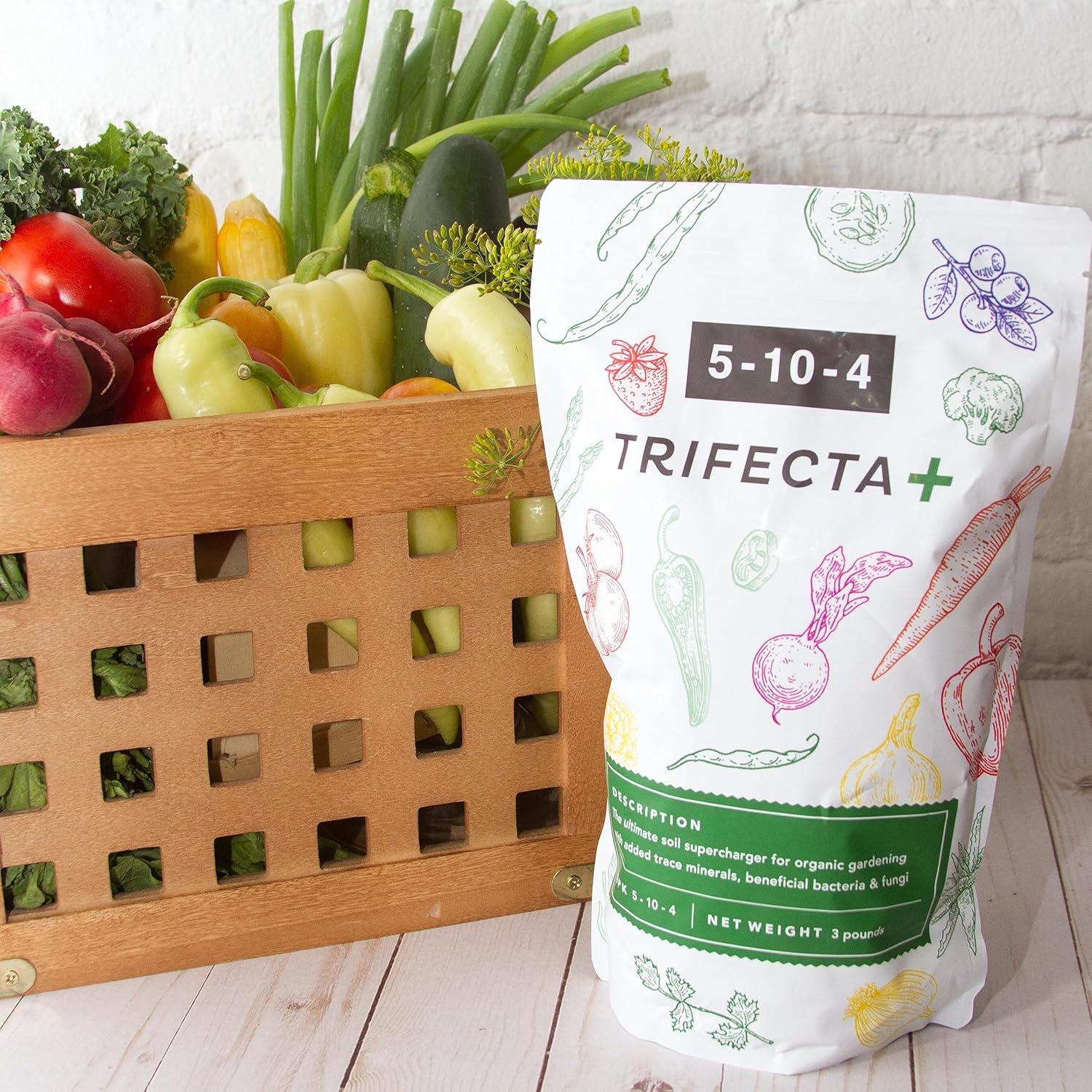
TIANSHI Trifecta+ Organic All-Purpose Plant, Flower & Vegetable Fertilizer (48 oz)
| Item Form | Granules |
|---|---|
| Unit Count | 48 Ounce |
| Target Species | Plants |
| Mixing Ratio | 5:10:4 |
This granular Trifecta+ fertilizer is an all-purpose organic formula intended for regular feeding of vegetables, flowers, and other garden plants. It mixes at a 5-10-4 ratio, which supplies a higher middle number useful for bloom and root development while still supporting leafy growth, making it suitable for short-season root crops like radishes when used at recommended rates. In practice you spread or mix the granules into potting media or garden soil according to the mixing instructions and water in; its full coverage claim and granular form make application straightforward and easy to measure. The product is concentrated in a 48 ounce bag, so a little goes a long way for small beds or containers. Limitations are that the listing does not include detailed nutrient analysis beyond the mix ratio, and granular organic feeds can take longer to release nutrients than soluble fertilizers, so it is not the fastest option for correcting acute deficiencies.
Best for: Gardeners who prioritize a reliable, easy-to-apply organic fertilizer for routine feeding of vegetables and small beds, especially those wanting a steady nutrient source for root crops like radishes.
Less Ideal for: Growers who need fast-acting nutrient fixes or those who require exact, complete NPK and micronutrient labels for precise fertilization plans.
- Organic granular formula suitable for vegetables, flowers, and general garden use
- 5-10-4 mixing ratio supports root and bloom development useful for radishes and other root crops
- Granular form enables easy measuring and even distribution for beds and containers
- Compact 48 oz package provides multiple applications for small plots
- No full nutrient breakdown or guaranteed analysis beyond the 5-10-4 ratio is provided
- Slower nutrient release compared with soluble or liquid fertilizers for rapid correction
Verdict: A practical organic granular feed that provides steady nutrients and easy application for reliable radish and vegetable production.
Dr. Earth Organic Tomato, Vegetable & Herb Fertilizer (64 oz)

| Unit Count | 64 Ounce |
|---|---|
| Item Form | Granules |
| Specific Uses For Product | Organic |
| Target Species | Herb |
| Coverage | Medium |
This granular organic fertilizer is designed to boost vegetable and herb production by supplying balanced nutrients and soil biology support. It is typically broadcast into beds, mixed into potting mixes, or applied at planting and midseason for a nutritional lift; the manufacturer recommends reapplying every six weeks for containers. Notable features include a fully organic ingredient list, fast but sustained nutrient release, and a blend of probiotic microbes plus ecto and endo mycorrhizae intended to improve nutrient uptake and drought tolerance. In practice that means healthier root systems and potentially better yields and flavor in crops like cucumbers when used as part of an organic program. Limitations are that it is a medium coverage product in a 64 ounce bag so larger plots will need more frequent purchases, and it contains phosphorus so local runoff rules should be checked before use. Follow the directions for pH and application timing to avoid overapplication in small containers.
Best for: Gardeners who prioritize organic soil health and want a single, biology‑focused fertilizer to support vegetables like cucumbers in beds or containers.
Less Ideal for: Large‑scale growers seeking a bulk, high‑coverage fertilizer or those who must avoid phosphorus due to local regulations should consider other options.
- 100 percent organic formula suitable for certified organic gardens
- Contains beneficial microbes and eight strains of mycorrhizae to support root health and nutrient uptake
- Granular form releases nutrients quickly and continues feeding for several months
- Works for beds, raised planters and containers and can be used at planting, transplanting or midseason
- Bag is medium coverage so not economical for very large vegetable plots
- Includes phosphorus which may be restricted in some local jurisdictions
Verdict: Choose this product if you want an organic, microbe‑rich granular fertilizer that supports root health and steady feeding for cucumber and other vegetable plantings.
Choosing the Right Fertilizer for Radish: Key Factors to Consider
Nutrient Ratio and Timing
Radishes are quick-maturing root crops that benefit from a fertilizer balance that encourages steady leaf growth without pushing excessive top growth at the expense of the root. A moderate nitrogen level supports the leafy canopy needed for root development, but excessive nitrogen can produce large, pithy tops and misshapen roots. Phosphorus supports early root establishment, so a formula with a slightly higher middle number or an easy-to-apply root starter can help seedling development.
Timing matters because radishes reach harvest in weeks not months. Use readily available forms early in the crop cycle and avoid heavy slow feeds that lock nutrients away when the plants need them immediately. For succession plantings, lighter, more frequent applications keep plants actively growing without spiking nutrients.
Salt Risk and Seedling Safety
Fertilizer salts can damage tender radish seeds and seedlings, especially in shallow seed trenches and small pots. High-salt synthetic fertilizers placed too close to seed will reduce germination or produce stunted seedlings. Look for low-salt formulations, dilute water-soluble options, or granular products that are incorporated away from seeds. When transplanting or sowing directly, apply fertilizer at a safe distance and use labeled rates to avoid burn.
Containers concentrate salts as water evaporates, so leaching and careful rate control are critical. Organic options usually have lower soluble salt loads but may release nutrients slower. Balance the need for immediate availability against the risk of salt damage when feeding newly sown radishes.
Form and Release Profile
How a fertilizer releases nutrients affects radish growth. Water-soluble fertilizers and liquid feeds supply nutrients immediately, which suits radish's short lifecycle and quick nutrient demands. Controlled-release granules and slow-release polymers are beneficial when you want steady feeding across a longer succession, but they may release too slowly for a crop that matures in 3 to 6 weeks.
Consider whether you prefer a single-feed boost at thinning or planting, or light weekly feeds. Also factor in how rainfall or irrigation will move nutrients in beds and containers. The release profile should match your watering habits and how quickly you want plants to respond.
Application Method and Ease
Ease of application affects whether you will follow recommended schedules. Liquid concentrates and water-soluble powders mix and apply through a watering can or hose-end sprayer, delivering fast results. Granules and spikes are low-effort but require correct placement and sometimes incorporation. For small gardens and containers, liquid feeding or gentle foliar feeds can be the most practical choice.
Consider how much time you want to spend measuring and mixing, whether you need tools for application, and the risk of uneven distribution. User-friendly instructions and clear dilution ratios matter for consistent results.
Suitability for Containers and Small Beds
Radishes are commonly grown in containers and narrow raised beds, which change nutrient dynamics. Containers have limited soil volume and can accumulate salts rapidly, so low-salt, soluble formulas with frequent light feedings are often best. Granular fertilizers that sit on top of potting mix can be less predictable unless incorporated and watered in thoroughly.
For tight beds where roots share close quarters, choose fertilizers that supply balanced nutrition without promoting crowding or excessive leaf length. The fertilizer should be easy to apply between closely spaced rows without disturbing delicate roots.
Environmental Impact and Soil Health
Fertilizer choice affects soil biology and runoff. Synthetic quick-release products provide immediate nutrients but can leach if overapplied. Organic fertilizers release nutrients more slowly and feed soil microbes, improving structure over time, but may not meet the fast nutrient demands of a radish crop without supplemental feeding.
Match your environmental priorities with practical needs: if you garden near water or follow strict runoff rules, prefer low-leaching options and precise application. Consider integrating compost or light organic amendments to support soil health while using targeted feeds for radishes.
Preparing Soil Before Planting
Good radish roots start with a fine, loose seedbed. Work in a small amount of well-aged compost to improve texture and base fertility without overloading nitrogen. Avoid heavy amendments that create clods or tie up nutrients.
If your soil test shows low phosphorus or potassium, correct those deficits a week or two before sowing so the nutrients are available during early root formation. For containers, use a sterile potting mix blended with a modest portion of compost to provide initial food and structure.
- Loosen soil to at least 6 inches for good root shape.
- Incorporate compost lightly to avoid nitrogen spikes.
- Adjust pH to the recommended range if significantly off.
Applying Fertilizer at Sowing and Thinning
When sowing radish seed, avoid direct contact between fertilizer granules and seeds. Broadcast a light, even application and rake it into the top inch of soil, or side-dress for established seedlings. If using liquid feeds, dilute to half or quarter strength for the first application to protect seedlings.
After the first true leaves appear and you thin the patch, give a mild follow-up feed to support root bulking. A light application at thinning helps plants recover from disturbance and channels energy into root growth.
- Keep strong fertilizers away from the seed trench.
- Use small, frequent feeds rather than a single heavy dose for best root form.
Feeding for Successive Sowings
Radishes are ideal for succession planting, which demands consistent fertility across batches. Choose a fertilizer strategy you can repeat reliably, such as a weekly diluted liquid or a granular product with predictable release over a brief window.
Monitor crop vigor and adjust feeding slightly for warm versus cool seasons. In hot weather plants may need more frequent light feeds to maintain steady root growth without bolting.
- Match feed frequency to planting interval.
- Watch for signs of overfeeding such as large, soft tops or split roots.
Using Fertilizer in Containers and Small Spaces
Containers concentrate nutrient and salt levels, so flush pots occasionally and prefer low-salt fertilizer forms. Water-soluble feeds at reduced strength are generally safer and more controllable in small volumes of soil. Consider mixing a slow-release granular into the potting mix at planting for baseline fertility, then supplement with light liquid feeds.
Avoid piling fresh compost on the surface in containers because it can release uneven nutrients and cause moisture imbalance. Instead blend amendments thoroughly into the media before sowing.
- Leach containers monthly if salts build up.
- Use measured, diluted liquid feeds rather than full-strength solutions.
Common Feeding Problems and How to Fix Them
Yellowing leaves with weak roots often point to nutrient deficiency or poor soil structure. A balanced, gentle feed and improved drainage can correct that. Conversely, lush, soft leaves with poor root development usually indicate excess nitrogen; reduce feeding and avoid high-nitrogen top dressings.
If seedlings show burned leaf edges or poor germination, flush the bed with water to dilute salt concentrations and cut back on feeding frequency. For persistent issues, perform a simple soil test to guide adjustments.
- For suspected salt burn, water deeply to flush salts.
- Reduce nitrogen if roots are malformed or excessive foliage develops.
How We Chose the Best Fertilizer for Radish
We focused on attributes that matter for radish culture and short-season root crops. Primary evaluation criteria included nutrient ratio suitability, specifically balanced nitrogen for leafing without excess that causes pithy roots; soluble versus slow-release delivery and how quickly nutrients become available to fast-growing radish seedlings; salt index and fertilizer strength to avoid seedling burn in shallow beds and containers; form and ease of application, covering powders, granules, liquids, and water-soluble formulas; and suitability for different growing situations such as raised beds, in-ground rows, and pots. We excluded fertilizer types better suited to long-season fruiting crops or heavy feeders where prolonged high phosphorus or potassium is the goal. We also filtered out products with insufficient label information about N-P-K ratios or unclear application rates. The remaining picks balance measurable nutrient specs with user-friendly application and safety for radish seed and young roots.
FAQ
How soon after sowing should I feed radishes?
Usually feed lightly after the first true leaves appear, a week or two after germination. Seedlings need gentle nutrition to build roots without risking burn.
Are organic fertilizers OK for radishes?
Yes, organic fertilizers work well for radishes but often release nutrients slower. Combine a modest organic base with light supplemental liquid feeds if you need quicker nutrient availability.
Can I use a general vegetable fertilizer for radishes?
General vegetable fertilizers that are balanced and low-salt are suitable, provided the N-P-K supports root development and you avoid excessive nitrogen that encourages leafy growth over root bulking.
How do I avoid fertilizer burn in containers?
Use low-salt formulas, dilute water-soluble feeds, and flush pots occasionally. Apply granular fertilizers mixed into the media rather than placed on the surface near seeds.
Should I test my soil before choosing a fertilizer?
A basic soil test helps identify deficiencies and informs whether you need extra phosphorus or potassium. Tests guide targeted applications and prevent overfeeding.
Final Verdict
When choosing fertilizer for radish, prioritize nutrient ratio, salt safety, and a release profile that matches radish's rapid lifecycle. For most gardeners a moderate nitrogen balance, low-salt formulation, and easy application method will produce the firm, well-formed roots you want. Decide based on your planting method and container use: choose immediate-acting soluble feeds for quick response or combine mild slow-release baseline fertility with light supplements for succession plantings. Focus on careful placement and measured rates to avoid burn and maximize root quality.
