

Note: This article contains affiliate links. If you click on these links and make a purchase, I may earn a small commission at no extra cost to you. This helps support my research and content. Read my full affiliate disclosure here.
Sago palms respond to focused feeding more than many landscape plants, so choosing the right fertilizer changes how quickly new fronds appear and how resilient the plant is through cooler months. This guide covers seven carefully shortlisted fertilizers for Sago Palm selected for suitability in containers and in-ground plantings, with attention to nutrient balance, release pattern, and ease of use. You will find practical notes on feeding cadence, application method, and what to watch for after feeding. The products below were evaluated against clear gardener-focused criteria to help you pick the option that fits your maintenance style and planting situation.
Top Picks at a Glance
| Best Overall The best all-around choice for most situations | TPS Nutrients Sago Palm Liquid Fertilizer, 8 oz |  |
| Best Quality Built to a higher standard if you want something more solid | Real Growers Ultimate Palm Tree Fertilizer 12-4-11, 2 lb |  |
| Best Value The sweet spot between price and what you get | Jobe's Organics Granular Palm Tree Fertilizer, 4 lb |  |
| Best Budget The cheapest option that still gets the job done reliably | Jobe's Fern & Palm Fertilizer Spikes, 30 Count |  |
| Highest Rated A top-rated pick with lots of positive feedback | Espoma Palm-Tone Organic Plant Food (4 lb) |  |
| Most Popular A crowd favorite that many people choose with confidence | Miracle-Gro Shake 'N Feed Palm Plant Food, 4.5 lb |  |
| Best Seller A high-volume bestseller chosen again and again | PERFECT PALM Dual Action Palm Tree Fertilizer, 7 lb Pail with Measuring Scoop |  |
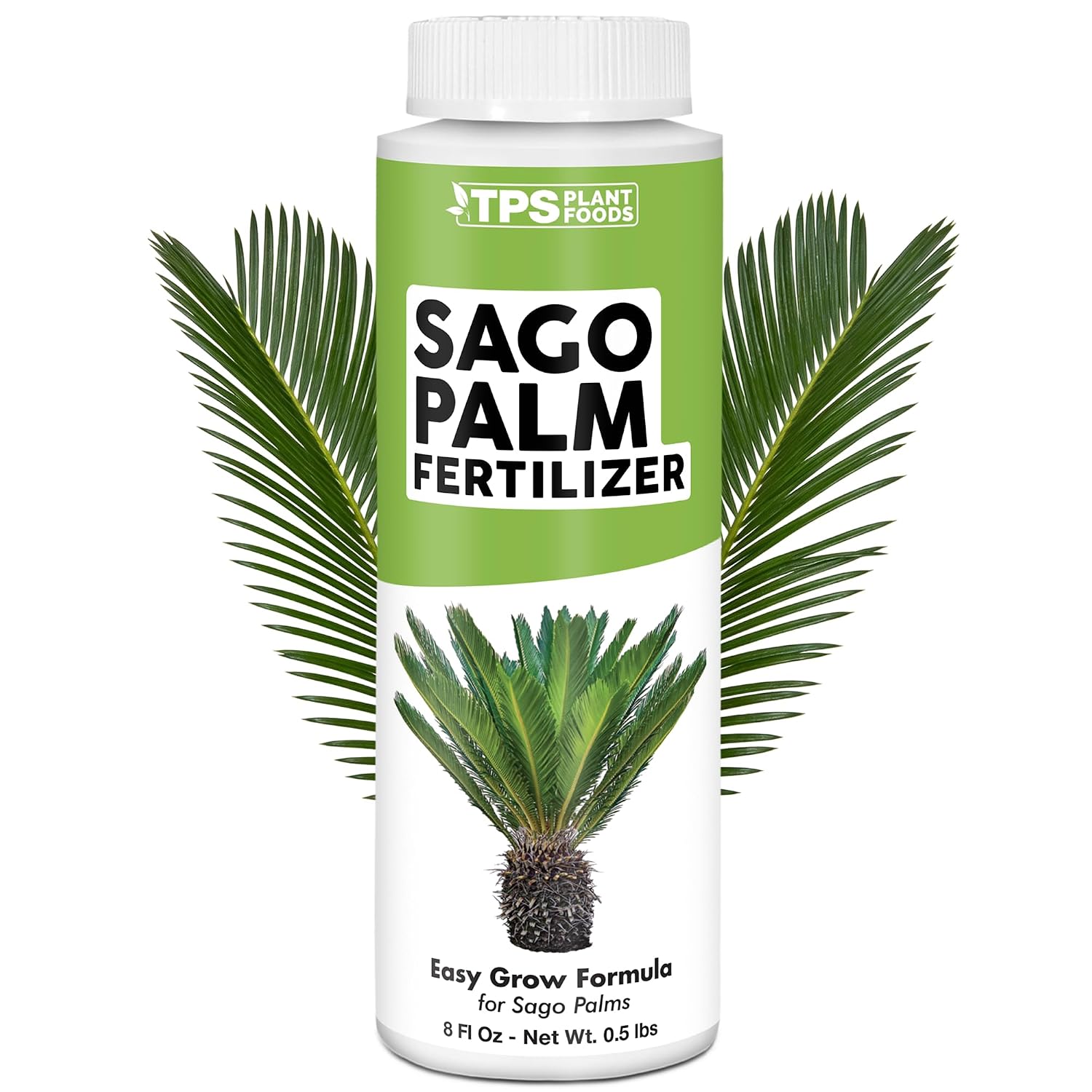
TPS Nutrients Sago Palm Liquid Fertilizer, 8 oz
| Item Form | Liquid |
|---|---|
| Application Method | Watering |
| Coverage | Sago Palms |
| Mixing Ratio | 2 tbsp/gallon |
| Unit Count | 8 Fluid Ounces |
This liquid formula is designed for routine feeding of sago palms and is mixed into water at the manufacturer recommended rate of 2 tablespoons per gallon. It is intended for both indoor and outdoor plantings, making it convenient for container plants on patios as well as landscape specimens. The product highlights focused benefits for palms such as reducing frizzle top, strengthening roots, and encouraging greener fronds, and the easy‑pour bottle and liquid form simplify dosing into a watering can. Because it is a purpose‑made palm feed, it avoids some of the guesswork of choosing NPK ratios for cycads and palms and fits into a regular watering schedule. The main limitation is the small 8 ounce volume, which means frequent repurchase for larger collections or mature outdoor plants, and users seeking broader plant coverage will need a different, multi‑species fertilizer. For gardeners who want a targeted palm feed and simple mixing instructions, this delivers practical, plant‑specific nutrition.
Best for: Buyers who want a targeted, easy‑to‑use fertilizer for sago palms and prefer a simple watering‑based feeding routine for container or landscape palms.
Less Ideal for: Gardeners with large palm collections or mixed beds who need bulk fertilizer or a universal plant food should look for larger or multi‑species products.
- Formulated specifically for sago palms to address common palm issues like frizzle top and weak foliage
- Liquid concentrate mixes at 2 tablespoons per gallon for straightforward application through watering
- Suitable for indoor and outdoor use, so it works for containers and landscape plantings
- Easy‑pour bottle design simplifies measuring and adding to a watering can
- Small 8 ounce bottle may not last long for multiple or mature palms
- Not labeled for other plant types, so it is not a multi‑purpose fertilizer
Verdict: A convenient, palm‑specific liquid feed for gardeners who want an easy watering‑based program to keep sago palms healthy and green.
Real Growers Ultimate Palm Tree Fertilizer 12-4-11, 2 lb

| Item Form | Granules |
|---|---|
| Coverage | Medium |
| Target Species | palm |
| Mixing Ratio | 13:5:11 |
Real Growers Ultimate Palm Tree Fertilizer is a controlled-release granular formula designed to feed palms and cycads for up to 12 months from a single application. You spread the granules around the root zone, water them in, and the product delivers steady nutrition through the growing season without monthly reapplications. The 12-4-11 NPK ratio plus magnesium, sulfur, iron, and molybdenum targets the needs of sago palms and other cycads to encourage improved color and new growth. Practical benefits include a single annual feed for low-maintenance care, even nutrient release that reduces burn risk compared with fast-release fertilizers, and suitability for both container and landscape palms. The main limitation is package size and coverage: the 2 lb bag is intended to feed up to two palms for a season, so larger plantings require multiple bags. Also, as with any granular slow-release product, results build over time rather than producing instant greening.
Best for: Gardeners who want reliable, low-maintenance nutrition for one or two sago palms or cycads and prioritize steady seasonal performance over quick fixes.
Less Ideal for: People needing fast greening or those managing large palm plantings who need big-coverage or bulk fertilizer options.
- 12-month controlled-release formula provides steady feeding from one application
- Palm-specific 12-4-11 NPK plus magnesium, sulfur, iron, and molybdenum addresses micronutrient needs
- Suitable for both container and landscape palms including sago palms and cycads
- Granular form is easy to apply and water in for low-maintenance annual feeding
- 2 lb bag covers only a small number of palms, so larger landscapes need multiple purchases
- Slow-release action means visible improvement occurs gradually rather than immediately
Verdict: A convenient single-application, 12-month slow-release fertilizer tailored to sago palms and cycads for steady seasonal growth and improved color.
Jobe's Organics Granular Palm Tree Fertilizer, 4 lb

| NPK | 4-2-4 |
|---|---|
| Item Form | Granules |
| Unit Count | 64 Ounce |
| Target Species | palm trees and plants |
This granular palm fertilizer is designed to feed palms and similar house or landscape plants on a slow-release schedule. It is OMRI listed and made from organic sources such as feather meal and bone meal, so you can apply it around ornamentals, indoor palms, and planted containers without synthetic chemicals. Typical use is straightforward: broadcast or sprinkle the granules around the root zone every 2 to 3 months during the growing season and water in. The 4-2-4 NPK plus added calcium and magnesium supplies steady nitrogen and potash for leaf development while supporting root health. Practical benefits include low risk of burn when used as directed, easy measuring, and longer-lasting effects compared with quick-release feeds. Limitations are that a 4 lb bag covers a moderate area only, so larger landscapes will need multiple bags, and nutrient release is slower so you will not see immediate greening after a single application.
Best for: Gardeners looking for an affordable, organic palm fertilizer they can apply infrequently and safely around ornamental palms and potted specimens.
Less Ideal for: People who need rapid greening or who manage large acreages of palms and want a high-volume commercial option.
- OMRI listed organic formula safe for use around ornamentals, children, and pets when used as directed
- Balanced 4-2-4 NPK with added calcium and magnesium supports foliage and root development
- Slow-release granular form provides longer-lasting feeding and lower burn risk
- Simple application schedule of every 2 to 3 months makes maintenance easy
- 4 lb bag provides only medium coverage so multiple purchases may be needed for larger plantings
- Slow-release formula delays visible results compared with fast-release fertilizers
Verdict: A budget-friendly organic granular fertilizer that gives steady, low-risk nutrition to palms with easy, infrequent applications.
Jobe's Fern & Palm Fertilizer Spikes, 30 Count

| Unit Count | 30 Count |
|---|---|
| Application Method | Insert into soil |
| Target Species | Fern and Palm |
| NPK | 16-2-6 |
Jobe's Fern & Palm Fertilizer Spikes are ready-to-use sticks that deliver a slow-release dose of nutrients directly to the root zone of potted palms and ferns. You insert the pre-measured spikes into the soil at planting or around established plants, and repeat application about every 60 days. The 16-2-6 NPK blend emphasizes nitrogen for leafy growth with small amounts of phosphorus and potassium, making it suited to encourage lush foliage in indoor and container palms. Practical advantages include no mixing, minimal mess, and built-in portion control that reduces the chance of overfeeding. Because they release slowly, spikes provide steady feeding without frequent attention. Limitations are the fixed nutrient ratio and limited coverage per spike, so larger landscape palms or trees will need many spikes or an alternate granular/tree fertilizer formulated for big palms and root volumes outdoors. Also the product contains phosphorus, which may be restricted in some locales near waterways.
Best for: Buyers who want a simple, low-effort way to keep container or small palm specimens and ferns fed without mixing fertilizers or precise measuring.
Less Ideal for: People caring for large landscape palms or those who need a custom NPK program should choose a granular or liquid palm fertilizer designed for trees and wide root zones.
- Pre-measured spikes for no-mess, easy application
- Slow-release formula targets roots for steady feeding
- High nitrogen NPK (16-2-6) encourages leafy growth in palms and ferns
- Safe for indoor use around homes when used as directed
- Fixed NPK ratio may not suit palms needing different nutrient balance
- Limited coverage per spike makes it impractical for large outdoor palms
Verdict: A convenient, no-mess slow-release spike that keeps potted palms and ferns fed with minimal effort.
Espoma Palm-Tone Organic Plant Food (4 lb)

| Item Form | Granules |
|---|---|
| Specific Uses For Product | Gardening |
| Coverage | Medium |
| Target Species | Hibiscus |
| Mixing Ratio | No mixing required |
Espoma Palm-Tone is an organic granular plant food made specifically for palms and hibiscus that you apply to the soil around the plant drip line every three months. It delivers a 4-1-5 NPK balance in an easy-to-spread granule form and requires no mixing, so it is straightforward to use on sago palms and other tropical palms. The product’s organic ingredients and instructions to water after application support steady, low-risk feeding that encourages blooms and healthy foliage without synthetic salts. Because it is sold as a ready-to-use bag with medium coverage, you can treat individual container specimens or a few landscape palms without measuring concentrates. Limitations are that the bag is modest in size for larger plantings and the formula is tailored to palms and hibiscus rather than balanced general-purpose feeding for all garden plants, so you may need a different fertilizer for lawns or heavy feeders.
Best for: Buyers who prioritize a reliable, low-risk organic fertilizer for individual sago palms or a few landscape palms and want a product that is simple to apply on a regular schedule.
Less Ideal for: Gardeners managing large palm plantings, lawns, or diverse beds that need a more general or higher-volume fertilizer solution.
- Formulated specifically for palms and hibiscus with a 4-1-5 NPK ratio
- Organic granular formula requires no mixing and is simple to apply
- Instructions recommend quarterly application and watering for steady nutrient release
- Ready-to-use packaging is convenient for spot-treating individual palms
- 4 lb bag provides limited coverage for larger landscapes
- Not a general-purpose fertilizer for lawns or heavy-feeding plants
Verdict: A dependable, ready-to-use organic fertilizer tailored to palms that makes quarterly feeding of sago palms simple and low risk.
Miracle-Gro Shake 'N Feed Palm Plant Food, 4.5 lb

| Item Form | Powder |
|---|---|
| Application Method | shake onto soil |
| Target Species | Palm plants |
| Unit Count | 72 Ounce |
| Mixing Ratio | 8:2:12 |
Miracle-Gro Shake 'N Feed Palm Plant Food is a shake-on granular fertilizer designed to supply steady nutrition to palms, cycads, and other tropical plants for up to three months per application. You apply it by shaking the powder evenly onto soil beneath the fronds, working it into the top 1–3 inches of soil, then watering to activate the feed; it can also be mixed into new potting soil at planting. The formulation includes nitrogen, phosphorus and potassium plus magnesium, iron and manganese to help reduce yellowing and promote greener fronds, and the product contains compost to support root health. The main practical benefits are simple application without measuring equipment, slow-release feeding that reduces application frequency, and targeted nutrients for palm health. Limitations are that it is a general palm formula rather than tailored to specific palm species and you must avoid contact with trunks and foliage to prevent damage; correct application rates are important to avoid overfeeding. This is a straightforward option if you want low-effort, periodic feeding for established palms in containers or in-ground beds.
Best for: Gardeners who want a low-effort, reliable palm fertilizer that requires infrequent applications and straightforward shake-on use for established container or in-ground palms.
Less Ideal for: Growers needing a species-specific nutrient program or precise, frequent feeding schedules for high-value or finicky palms.
- Continuous-release formula that feeds up to three months reducing application frequency
- Includes micronutrients (magnesium, iron, manganese) to help prevent yellowing of fronds
- Easy shake-on application for in-ground and container palms without mixing equipment
- Contains compost to support root health and improve water efficiency
- Not species-specific so it may not address unique nutrient needs of all palm varieties
Verdict: A no-fuss, slow-release palm fertilizer that delivers targeted micronutrients and three months of feeding with simple shake-on application.
PERFECT PALM Dual Action Palm Tree Fertilizer, 7 lb Pail with Measuring Scoop

| Item Form | Granules |
|---|---|
| Application Method | Sprinkle |
| Specific Uses For Product | Palm Tree Health and Growth |
| Mixing Ratio | 7:14:40 |
Perfect Palm 7 lb is a granular, dual-action fertilizer designed specifically for palms and built around a spoon-feed application that is easy to use. You simply fill the included scoop, sprinkle the granules evenly within the root zone around the trunk and irrigate as normal; the mix contains quick-release and slow-release granules so some nutrients take effect immediately while others feed the tree over about six weeks. Notable features include a free measuring scoop and a resealable pail for tidy storage, a 7-14-40 NPK ratio that prioritizes potassium for stress resistance, and micronutrients such as iron and magnesium to support greening. The product is intended for repeated applications every six weeks and is sized to feed multiple small to medium palms per container. Limitations are that it is a palm-specific formula so it is not a balanced all-purpose fertilizer for non-palm ornamentals and the granular surface application requires even distribution and routine irrigation to dissolve evenly.
Best for: Buyers who prioritize measurable performance for Majesty palms and want a palm-specific program that delivers steady feeding and improved frond color with minimal mixing or calibration.
Less Ideal for: Gardeners seeking a multi-purpose fertilizer for lawns or non-palm ornamentals or those who prefer liquid or foliar feeding methods.
- Formulated specifically for palms with a 7-14-40 NPK that boosts potassium for improved stress tolerance
- Includes a measuring scoop and resealable pail for precise, tidy application
- Dual-action granules combine immediate and sustained nutrient release over roughly six weeks
- Contains micronutrients (iron, magnesium, manganese, zinc) to help correct deficiencies and improve frond color
- Designed for palms rather than as a general-purpose fertilizer for mixed plantings
- Requires even surface distribution and consistent irrigation to activate slow-release granules
Verdict: A purpose-built granular program for Majesty palms that delivers predictable, spoon-fed nutrition and improved frond color with minimal fuss.
Choosing the Right Fertilizer for Sago Palm: Key Factors to Consider
Nutrient Ratio
Sago palms need a balanced supply of nitrogen, phosphorus, and potassium, but they usually benefit from formulas that do not push excessive vegetative growth. A moderate nitrogen level with adequate phosphorus and potassium supports sturdy trunk and frond development without producing weak, floppy growth. When selecting a fertilizer, check the guaranteed analysis and look for a formula that emphasizes steady development rather than rapid leaf flush.
Imbalanced ratios can lead to chlorosis or distorted fronds. Over time, repeated high-nitrogen feeding can cause thin, weak fronds that are more susceptible to pests and cold damage. Match the nutrient ratio to your climate and the plant's growth stage, using lighter feeding in cooler months and slightly richer support during active spring and summer growth.
Delivery System and Release Pattern
Slow-release granular fertilizers gradually provide nutrients over weeks or months, reducing the risk of spikes that can stress roots. They are useful for established plants where steady nutrition is preferred and for gardeners who want fewer applications. Water-soluble or liquid feeds act quickly and are better when you need a fast correction, such as addressing pale fronds or after repotting.
Consider how often you want to feed and how accessible the planting is. Containers typically benefit from more regular, lighter liquid feedings because nutrients leach out with watering. In-ground specimens can often make do with slow-release formulations applied less frequently.
Salt Content and Root Safety
High soluble salt levels in a fertilizer can harm sago palm roots, especially in containers where salts accumulate between waterings. Low-salt or controlled-release products reduce the chance of root burn and leaf tip burn. When using soluble feeds, always follow label dilution rates and flush container media periodically to prevent salt buildup.
If you have hard water or irrigate with high-salt water, choose fertilizers formulated for lower salt indices or plan regular leaching. Pay attention to any warnings about root sensitivity and avoid concentrated applications near the crown.
Application Practicality
How a fertilizer is applied affects whether it will actually get used correctly. Granules sprinkled around the root zone and watered in are convenient for landscape plants. Coated slow-release granules that do not dust make outdoor application cleaner. Liquid concentrates require measuring and mixing but let you target dosing for container plants or newly planted specimens.
Practical concerns include whether the product needs special equipment, how easy the label makes rate conversions for various pot sizes, and whether the physical form will be messy for balcony or patio use. Choose a form that fits where you garden and how often you want to work.
Timing and Frequency
Sago palms have seasonal growth rhythms. In most climates, active growth occurs in warm months and slows as temperatures drop. Fertilizer timing should match these cycles: lighter feeding in spring to support new fronds, with reduced or halted applications in cooler months. Slow-release products smooth feeding across seasons, while liquid feeds allow for more precise seasonal control.
Overapplication can weaken plants or encourage pests, so follow a schedule that reflects plant vigor, soil fertility, and local climate. Keep records of feeding dates and plant response to refine timing for future seasons.
Label Information and Instructions
Clear label directions reduce the chance of overfeeding or underfeeding. Look for products that list specific rates for containers and landscape plantings and that spell out frequency and dilution for liquid feeds. Instructions should include safety notes about avoiding crown contact and guidance on how to apply to newly planted or recently repotted specimens.
Labels that explain nutrient ratios and application rationale help gardeners make informed choices and adapt feeding to their specific situation. Avoid products with vague or minimal guidance.
Feeding Schedule for Healthy Growth
Set a simple schedule that matches your chosen delivery system. For slow-release granules, a single spring application is often sufficient for many climates, with a light mid-summer top-up if frond growth looks slow. For container plants or recently repotted sago palms, plan for monthly or biweekly diluted liquid feeds during the active growth period.
Observe the plant rather than sticking rigidly to calendar dates. Pale new fronds or slow emergence signal the need for a corrective feed. Conversely, dark green, overly vigorous new growth can indicate you are feeding too heavily and may be a cue to pause or reduce frequency.
- Apply granular feeds to the root zone and water in thoroughly.
- Avoid getting fertilizer on the crown or emerging fronds.
- Flush container media periodically to reduce salt buildup.
Adjusting Feeding by Soil and Potting Mix
Potting mixes tend to hold fewer nutrients than garden soils, so container sago palms usually need more frequent feeding. Use lighter concentrations of liquid feed for containers to avoid salt accumulation. For in-ground plants in rich, loamy soil, reduce supplemental feeding frequency and monitor natural soil fertility.
When repotting or replacing media, amend with a modest starter nutrient and wait a few weeks before applying a full-strength fertilizer. Fresh mixes often contain slow-release components that provide initial nutrition, so check what the mix already contains to avoid over-application.
- Test compost or organic amendments first to understand baseline fertility.
- Account for existing slow-release fertilizer in potting mixes before adding more.
Organic Vs Synthetic Options
Organic fertilizers release nutrients more slowly through microbial activity and can improve soil structure over time. They are gentler on roots and lower the risk of salt buildup, making them attractive for container-grown sago palms and home gardeners who prefer natural inputs.
Synthetic fertilizers deliver nutrients predictably and quickly, which helps correct visible deficiencies faster. Choose synthetic options with controlled-release technology or precise dilution instructions to avoid sudden nutrient spikes that can damage cycads.
- Organic choices improve long-term media health but act slower.
- Synthetic feeds are better for rapid correction when fronds show deficiency symptoms.
Correcting Common Nutrient Symptoms
Yellowing of new fronds can point to insufficient iron or manganese in some situations but can also reflect general nutrient shortage. Slow, steady feeding that balances key macronutrients often restores normal frond color over several growth cycles. If only the oldest fronds yellow, consider that the plant may be reallocating resources rather than suffering a nutrient deficit.
Leaf tip burn commonly signals salt stress from overfeeding or poor flushing in containers. If you see that symptom, reduce feeding frequency and flush the potting medium with ample water. Always confirm symptoms before applying targeted micronutrient sprays or heavy doses of fertilizer, because incorrect treatment can worsen problems.
- Flush container media if salts accumulate or leaf tip burn appears.
- Confirm deficiency symptoms before applying targeted corrections.
Safe Application Techniques
Spread granular fertilizer evenly around the drip line rather than against the trunk or crown. Water in to move nutrients toward active root zones. For liquids, dilute according to label directions and apply evenly to the root zone surface.
Protect new plantings by using very light or no fertilizer until roots have established. For all applications, wear gloves, measure accurately, and store products safely out of reach of children and pets.
- Keep fertilizer off the crown and emerging fronds.
- Measure liquids with a dedicated container to avoid concentration mistakes.
How We Chose the Best Fertilizer for Sago Palm
We selected fertilizers that match the specific nutritional needs and growth habits of cycads, emphasizing formula balance and predictable feeding. Key evaluation criteria included nutrient ratio accuracy for middle-of-the-road Sago palm needs, the delivery system and how consistently nutrients become available, and ease of application for container and landscape settings. We also assessed salt load and potential for root burn, since sago palms are sensitive to excessive soluble salts, and we looked for products with clear label directions so gardeners can feed confidently. Longevity and reapplication frequency mattered because frequent disturbance stresses these plants. Exclusions included mixes designed only for acid-loving shrubs or high-nitrogen lawn formulas that do not suit cycads. Final selections were those supplying adequate phosphorus and potassium relative to nitrogen, offering either slow-release forms or clear liquid schedules, and providing guidance to avoid overfeeding.
FAQ
How often should I fertilize a potted sago palm?
Potted sago palms usually do best with lighter, more frequent feedings during active growth. That often means monthly diluted liquid feeds or a slow-release product applied every 3 to 4 months, depending on pot size and media.
Can I use a standard palm fertilizer on sago palms?
Many palm fertilizers have useful nutrient profiles, but check the N-P-K ratio and salt content. Avoid high-nitrogen lawn formulas and choose products with balanced phosphorus and potassium to support sago palm structure.
What should I do if new fronds are yellowing after fertilizing?
Yellow new fronds can indicate a mismatch of nutrients or overapplication. Stop feeding for a few weeks, flush container media if appropriate, and reassess the fertilizer ratio. If symptoms persist, investigate watering, light, and temperature factors as well.
Are organic fertilizers effective for sago palms?
Organic fertilizers provide gentler, slower nutrient release and improve media biology over time. They are effective for maintaining sago palms but act more slowly than synthetic options when correcting a visible deficiency.
Should I reduce feeding in winter?
Yes. Sago palms slow their growth in cooler months, so reduce or pause feeding during winter to avoid forcing tender new growth that could be damaged by cold.
Final Verdict
Prioritize a fertilizer that matches sago palm nutrient needs, uses a delivery system appropriate to your planting situation, and carries clear instructions that reduce the risk of overfeeding. Balance between steady maintenance and targeted correction will produce the healthiest fronds and the least stress on roots. Choose a product that fits your seasonal schedule and feeding habits, and adjust based on visible plant response to feed with confidence.
