

Note: This article contains affiliate links. If you click on these links and make a purchase, I may earn a small commission at no extra cost to you. This helps support my research and content. Read my full affiliate disclosure here.
If you grow tuberose in beds, containers, or a cut-flower patch, the right fertilizer changes how many blooms you get and how well bulbs overwinter. Tuberose needs a mix of steady nitrogen early and higher phosphorus and potassium as spikes form, plus predictable slow-release or regular liquid feeds to avoid foliage burn. This guide shortlists six top options for fertilizing tuberose and explains why each type made the list. We evaluate nutrient ratios, application ease, and how each feed performs in real garden settings so you can pick the approach that fits your soil, planting method, and bloom goals.
Top Picks at a Glance
| Best Overall The best all-around choice for most situations | Espoma Bulb-Tone Organic Fertilizer 3-5-3, 4 lb |  |
| Best Quality Built to a higher standard if you want something more solid | FoxFarm Tiger Bloom Liquid Plant Food (1 pint) |  |
| Best Value The sweet spot between price and what you get | Osmocote Smart‑Release Plant Food Plus Outdoor & Indoor, 2 lb |  |
| Best Budget The cheapest option that still gets the job done reliably | Miracle-Gro Water Soluble Bloom Booster Flower Food, 10-52-10, 1 lb |  |
| Highest Rated A top-rated pick with lots of positive feedback | Espoma Bulb-Tone Organic Fertilizer (3-5-3), 4 lb. bag (Pack of 2) |  |
| Most Popular A crowd favorite that many people choose with confidence | Miracle-Gro Water Soluble All Purpose Plant Food, 1.5 lb |  |
Espoma Bulb-Tone Organic Fertilizer 3-5-3, 4 lb

| Item Form | Granules |
|---|---|
| Specific Uses For Product | Gardening,Organic,Plant Food |
| Coverage | Medium |
| Target Species | bulbs |
| Mixing Ratio | 3:5:3 |
Espoma Bulb-Tone is an organic granular fertilizer designed primarily for planting and feeding spring and fall bulbs, but it can be applied to other allium crops like onions when a balanced, natural boost is desired. It is ready to use out of the bag and recommended for placing in the planting hole for new bulbs or sprinkling on the soil surface for established plants then watering in. Notable features include its 3-5-3 NPK ratio, inclusion of calcium, and Espoma's Bio-tone formula made from organic ingredients approved for organic gardening. In practice this product provides steady nutrient release and helps support root development and flowering; for onions that translates to healthier sets and improved bulb formation when applied at planting and during early growth. Limitations are that it is formulated for bulbs rather than specifically for vegetable onions, so growers seeking higher nitrogen for heavier foliage or a slow-release formulation tailored to vegetable production may want a fertilizer made for vegetables. For gardeners who prioritize natural inputs and predictable, gentle feeding, Bulb-Tone is a dependable choice.
Best for: Gardeners who prefer organic, reliable products and want a gentle, easy-to-apply fertilizer to support bulb and bulb-like crops during planting and early growth.
Less Ideal for: Growers who need a vegetable-specific fertilizer with higher nitrogen or a targeted slow-release program for commercial onion production.
- Organic formula approved for organic gardening
- Ready-to-use granular form that can be placed at planting or sprinkled on soil
- Balanced 3-5-3 NPK with added calcium to support root and bulb development
- Produces steady, gentle nutrient release suitable for sensitive bulb roots
- Formulated for ornamental bulbs rather than specifically for vegetable onions
- Not a high-nitrogen feed if you want vigorous foliage growth
Verdict: Choose Bulb-Tone when you want an organic, ready-to-use granular fertilizer that reliably supports bulb and bulb-like crops with balanced nutrients.
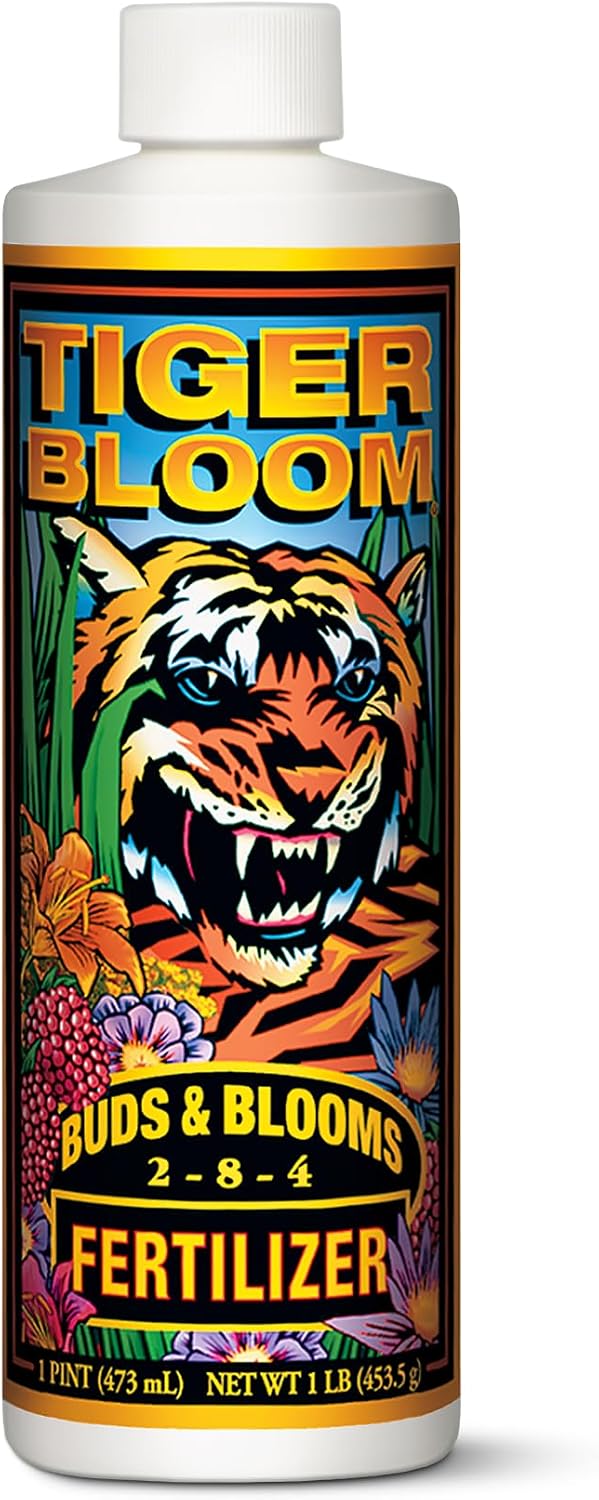
FoxFarm Tiger Bloom Liquid Plant Food (1 pint)
| Item Form | Liquid |
|---|---|
| Specific Uses For Product | Hydroponic |
| Application Method | Watering; Foliar spraying |
| Target Species | Flowering Plants |
| Mixing Ratio | 1:200 or 1:300 |
Tiger Bloom is a liquid, high-phosphorus fertilizer designed to push plants into a strong flowering and fruiting phase. You mix a small amount into the irrigation water or use it as a foliar spray and apply from first signs of flowering through harvest. The 2-8-4 formula and included micronutrients support bud set and larger blooms, and the concentrate mixes at 1:200 to 1:300 for routine feeding or 2 to 4 teaspoons per gallon for heavier feeding. It works in both soil and hydroponic setups and is formulated for quick nutrient uptake and stable micronutrient availability during storage. Practical benefits include flexible application methods, suitability for intensive flowering cycles, and a small bottle that lasts when used at recommended dilutions. Important limitations are that it is bloom-focused rather than an all-purpose feed so it may not meet vegetative needs, and the phosphorus content means users near waterways should follow local regulations to avoid runoff issues.
Best for: Serious growers who prioritize maximizing flower and bloom performance and want a concentrated, fast-acting bloom booster for soil or hydroponic environments.
Less Ideal for: Casual gardeners seeking a single all-purpose fertilizer for every growth stage or those managing turf or non-flowering lawns where phosphorus restrictions apply.
- High phosphorus NPK (2-8-4) concentrated for stronger bud development
- Works in soil and hydroponic systems for versatile use
- Liquid concentrate mixes easily for foliar or watering applications
- Formulated for quick nutrient uptake and stable micronutrient availability
- Focused on flowering so it is not a balanced all-stage fertilizer
- Contains phosphorus which may be restricted near waterways
Verdict: Choose Tiger Bloom when you need a concentrated, fast-acting bloom booster to maximize flower and fruit production.
Osmocote Smart‑Release Plant Food Plus Outdoor & Indoor, 2 lb

| Item Form | Granules |
|---|---|
| Application Method | Sprinkle |
| Target Species | All plants |
| Mixing Ratio | 1 capful (3 tablespoons) per 2 gallons soil or per 4 sq. ft. |
| Unit Count | 32 Ounce |
Osmocote Smart‑Release Plant Food Plus is a granular, resin‑coated fertilizer designed to feed flowers and other plants steadily for up to six months with 11 essential nutrients. You apply it by sprinkling the recommended amount into the top inch or two of potting mix or garden soil, watering it in, and reapplying every six months; indoor plants use about half the outdoor rate. The resin coating times nutrient release to moisture and temperature, which reduces the need for frequent feedings and lowers the risk of fertilizer burn when used as directed. It works across containers, raised beds, and in‑ground flower beds and covers up to roughly 75 square feet per 2 lb container. Limitations are that a single 2 lb container is only enough for small gardens or several pots, and the slow‑release formula is not suitable when an immediate corrective boost is needed for acute nutrient deficiencies. For gardeners focused on steady, maintenance feeding for flowering plants this is an easy, low‑effort option.
Best for: Gardeners who want reliable, low‑maintenance feeding for flowers and mixed plantings and prefer a consistent supply of nutrients over months rather than frequent liquid feedings.
Less Ideal for: Growers who need fast corrective feeding for visible nutrient deficiencies or those managing very large beds who want bulk fertilizer options to reduce trips to reapply.
- Feeds continuously up to six months with a single application
- Resin coating times nutrient release to plant needs based on moisture and temperature
- Formulated with 11 essential nutrients suitable for a wide range of flowering plants
- No-burn pledge when used as directed reduces risk of overfeeding
- 2 lb container only covers about 75 sq. ft., so frequent repurchase is needed for larger gardens
- Slow‑release formulation does not provide a rapid corrective nutrient boost
Verdict: Choose this product if you want a hands-off, long‑lasting fertilizer that keeps flowering plants fed for months with a single application.
Miracle-Gro Water Soluble Bloom Booster Flower Food, 10-52-10, 1 lb

| Item Form | Liquid |
|---|---|
| Application Method | Water Soluble |
| Coverage | 500 square feet |
| Target Species | all blooming plants |
| Mixing Ratio | 1 tablespoon/gallon (1.5 tsp for indoor plants) |
This Miracle-Gro bloom booster is a water-soluble plant food designed for flowering annuals and perennials, and it is typically mixed into a watering can or used with a garden feeder. The 10-52-10 formula supplies a high phosphorus dose aimed at increasing bud set and flower production, and it starts working quickly through root and foliar feeding when applied as directed. Practical features include a simple mixing ratio (1 tablespoon per gallon for outdoor use, reduced rate for indoor plants) and compatibility with the Miracle-Gro garden feeder for easy coverage up to about 500 square feet per refill. For gardeners focused on colorful displays, the concentrated phosphorus and repeat feeding schedule (every 7 to 14 days during bloom) deliver noticeably fuller flower shows. Limitations are that it is specifically a bloom booster rather than an all-purpose fertilizer and should be used only during bud set and bloom to avoid nutrient imbalance; following label rates is important to prevent overfeeding. For basic container or bedding displays, it is an easy-to-use option that targets bloom performance without complicated application steps.
Best for: Gardeners who want an affordable, straightforward booster to increase flower production on annuals and container displays and who plan to feed regularly during the bloom period.
Less Ideal for: Those seeking an all-in-one, season-long fertilizer or a slow-release product for hands-off maintenance should look elsewhere.
- High phosphorus 10-52-10 formula to promote more blooms and better bud set
- Water-soluble for quick uptake and easy mixing in a watering can or garden feeder
- Clear mixing instructions with lower indoor rate to reduce risk of burning when used as directed
- Covers a substantial area per feeder refill, useful for beds and multiple containers
- Focused on bloom boosting rather than providing a balanced, all-season nutrient program
Verdict: If you want an inexpensive, easy-to-use booster that reliably increases blooms on annuals and containers, this is a strong, no-frills choice.
Espoma Bulb-Tone Organic Fertilizer (3-5-3), 4 lb. bag (Pack of 2)

| Item Form | Powder |
|---|---|
| Specific Uses For Product | Plant Food |
| Coverage | 60 Sq. Ft. |
| Target Species | Fall and spring flowering bulbs |
| Mixing Ratio | 3-5-3 |
Espoma Bulb-Tone is an organic bulb fertilizer designed to feed spring and fall bulbs and encourage strong blooms. It is applied at planting by placing granules in the planting hole for new bulbs or sprinkled on the soil surface and watered in for established bulbs. The 3-5-3 formula emphasizes phosphorus for bloom development while added calcium and Espoma’s Bio-tone support root establishment and soil biology. Because it is ready to use and approved for organic gardening, it is convenient for gardeners who prefer natural inputs and do not want to mix solutions. Coverage is listed at about 60 sq ft per 4 lb bag, so larger beds will require multiple bags. It is focused on bulb flowering rather than general-purpose feeding, so gardeners needing balanced, continuous feed for foliage or non-bulb ornamentals may need a supplemental product. Overall this is a straightforward, reliable option when you want an organic, bloom-focused fertilizer for bulbs like ranunculus, tulips and daffodils.
Best for: Gardeners who prioritize consistent, organic bloom feeding for bulbs and want a low-effort product they can rely on each planting season.
Less Ideal for: People seeking a general-purpose fertilizer for foliage-heavy or non-bulb plants should consider a different balanced or slow-release formula.
- Organic formula approved for organic gardening and safe for use in ornamental beds
- Ready-to-use granular form requires no mixing and is easy to apply at planting or post-bloom
- Higher phosphorus ratio (3-5-3) and added calcium support bloom development and root health
- Coverage per bag is modest so multiple bags are needed for large beds
Verdict: Choose this for an easy, certified-organic bloom booster that reliably supports bulbs like ranunculus at planting and post-bloom.
Miracle-Gro Water Soluble All Purpose Plant Food, 1.5 lb

| Item Form | Powder |
|---|---|
| Application Method | Watering Can |
| Target Species | For all flowers, vegetables, trees, shrubs and houseplants |
| Mixing Ratio | 24-8-16 |
Miracle-Gro Water Soluble All Purpose Plant Food is a powder concentrate you mix with water to give a quick nutrient boost to flowers, vegetables, houseplants, shrubs and trees. It is typically dissolved in a watering can or used with a compatible garden feeder to soak soil at the base of plants, delivering nitrogen-heavy nutrition that shows effects faster than granular fertilizers. Notable features include an easy scooping method for indoor and outdoor dosing, compatibility with containers and in-ground planting, and clear directions for feeding every one to two weeks. In practice this makes the product a convenient option when you want visible growth and greener foliage quickly, and the 1.5 lb container covers roughly 600 sq. ft. Important limitations are that it is a fast-release, high-nitrogen formula best used as a regular quick feed rather than a long-term slow-release solution, and it requires careful measuring to avoid overfeeding. For routine maintenance combine with good watering and follow the label to avoid nutrient imbalance.
Best for: Buyers who prefer proven, easy-to-use feeding routines and want noticeable growth quickly for a variety of garden and houseplants, guided by established usage directions and broad user experience.
Less Ideal for: Gardeners seeking a single, long-term slow-release solution or those who prefer organic or low-nitrogen fertilizers for sensitive plantings should consider alternative products.
- Water-soluble powder starts working quickly at the roots when mixed and applied
- Clear, simple dosing for indoor and outdoor use with included scoop guidance
- Suitable for a wide range of plants including vegetables, flowers, shrubs and houseplants
- Covers a large area from a small container (about 600 sq. ft. per 1.5 lb)
- Fast-release formula means benefits are short-term compared with slow-release granular fertilizers
- Requires precise measuring and regular reapplication to avoid overfeeding
Verdict: A reliable, fast-acting water-soluble plant food for gardeners who want easy, repeatable feeding and quick visible results.
Choosing the Right Fertilizer for Tuberose: Key Factors to Consider
Nutrient Ratio and Timing
Tuberose responds to changes in nutrient balance as plants move from leaf production to spike formation. Early growth benefits from modest nitrogen to build foliage and a root system, but too much nitrogen later reduces spike formation and flower count. Increased phosphorus and potassium during spike initiation and bud set support flower development, stem strength, and bulb reserves.
Look for fertilizers that specify N-P-K ratios and give stage-specific guidance. If a formula does not match a tuberose feeding pattern, plan a two-product approach: a balanced feed for establishment and a bloom-boosting higher phosphorus feed later.
Formulation Type: Granular, Slow-Release, or Liquid
Granular and slow-release fertilizers deliver nutrients over weeks or months, which reduces the risk of sudden salt spikes and cuts down on frequent applications. They work well in borders and containers when mixed into the topsoil or used as top-dress around bulbs.
Liquid soluble feeds give faster uptake and are useful when you need a quick correction or to support buds close to flowering. Liquids are convenient for container-grown tuberose and for foliar feeding, but they require more frequent applications and careful dilution to avoid burn.
Salt Index and Bulb Safety
Bulbs are vulnerable to high fertilizer salts, which can damage roots and scorch leaves. Formulations with a low salt index or those designed for bulbs reduce the chance of root stress. If you use a higher-salt product, apply it at reduced strength or work it into the soil away from direct contact with bulbs.
Gardeners in hot, dry climates should be particularly cautious because fertilizer salts concentrate more quickly with high evaporation rates. Regular watering after application helps prevent localized salt buildup.
Compatibility With Potting Mixes and Soil
Container tuberose and in-ground plantings present different nutrient dynamics. Potting mixes often have less buffering capacity and require more frequent feeding, while garden soils with organic matter can supply some nutrients and release them slowly.
Choose a fertilizer that lists compatibility with container media if you plan to grow tuberose in pots. For in-ground beds, prefer products that complement existing soil fertility and can be used as a top-dress or incorporated without disturbing bulbs.
Ease of Application and Instructions
Clear, practical application instructions reduce mistakes like overfeeding or forgotten top-dressing. Look for fertilizers with straightforward dosing and guidance for frequency during establishment, pre-bloom, and peak flowering. Products that allow both soil and foliar application add flexibility for timely corrections.
Ease of measuring and dissolving matters when you want consistent results. Pelleted or slow-release prills that spread evenly, or liquid concentrates with measured caps, make follow-through easier for busy gardeners.
Environmental Impact and Runoff Risk
Fertilizer choices affect local water quality when nutrients run off into storm drains or leach through sandy soils. Slow-release and controlled-release formulas reduce immediate runoff risk because nutrients are released gradually. Organic amendents and low-salt formulations also lessen environmental impact.
If you grow tuberose near water features or on slopes, favor products with reduced runoff potential and follow label guidance on timing to avoid heavy rain events after application.
When to Start Feeding Tuberose
Begin feeding when shoots are a few inches tall and roots are active. Early, light feeding helps develop foliage and root mass without forcing excessive leafy growth that delays flowering.
Switch to a bloom-oriented feeding schedule as you see the first buds form. The exact timing depends on variety and climate, but adjusting the nutrient balance a few weeks before spike development gives the plant the resources it needs for full flower production.
- Start with a balanced, lower-nitrogen feed during early growth.
- Move to higher phosphorus and potassium as buds develop.
- Water after granular applications to move nutrients into the root zone.
Feeding Containers Vs In-Ground Plantings
Containers hold less soil and nutrients, so they often need more frequent, lighter feedings than garden beds. Use soluble feeds on a schedule suited to the potting mix and pot size, and monitor leaves for signs of nutrient deficiency or excess.
In-ground tuberose planted in amended beds benefit from a good base of organic matter and a slower-release fertilizer. Top-dress once or twice during the season rather than frequent liquid feeds unless soil tests show low available nutrients.
- Check potting mix label for initial nutrient content.
- Reduce application rates in containers to avoid salt buildup.
- Top-dress beds in early spring and again at pre-bloom if needed.
Organic Options and Soil Health
Organic fertilizers and well-rotted compost feed soil biology in addition to supplying nutrients. This supports steady nutrient release and improves soil structure around bulbs, which helps drainage and root development.
Organic options often have lower immediate salt levels, so they are safer for bulbs. However, they can be slower to correct a specific deficiency, so pair them with targeted soluble feeds if a quick response is needed.
- Use compost or aged manure mixed into the bed in fall or early spring.
- Consider bone meal or rock phosphate for long-term phosphorus needs.
- Supplement with a soluble bloom feed during spike formation if necessary.
Common Feeding Mistakes to Avoid
Over-fertilizing late in the season can leave bulbs with lush foliage but weak flower spikes and lower overwintering success. Avoid heavy nitrogen applications once buds begin to form.
Applying granular fertilizer too close to bulb necks can cause localized burn. Broadcast evenly and lightly incorporate or water in to move nutrients away from direct bulb contact.
- Do not exceed recommended doses on product labels.
- Avoid fertilizing just before a forecasted heavy rain.
- Rinse foliage after foliar feeding if labels warn about leaf scorch risk.
Testing Soil and Adjusting Feed Plans
A simple soil test gives a baseline for pH and available phosphorus and potassium. Tuberose prefers slightly acidic to neutral pH and benefits most from adjustments that correct clear deficiencies.
Use test results to tailor feed strength and frequency. If phosphorus is already adequate, focus on balanced maintenance feeds rather than additional bloom boosters.
- Test once every 2 to 3 years for established beds.
- Use pH amendments before planting bulbs to avoid later nutrient lockup.
- Record feed dates and plant responses to refine your routine.
How We Chose the Best Fertilizer for Tuberose
We filtered candidate fertilizers by the nutrient needs and growth habit of tuberose. Priority went to products and formulas that provide clear N-P-K ratios suited to bulb development, options for both slow-release granular and soluble liquid feeds, and compatibility with common potting mixes and garden soils. Ease of application was essential because overfeeding or uneven distribution can scorch foliage or reduce flowering. We also considered fertilizer salt index and recommendations for use around bulbs to favor formulations that minimize burn risk. Longevity of feeding, compatibility with side-dressing or top-dressing, and guidance for bloom-stage feeding were additional selection filters. Exclusions included general-purpose blends without clear N-P-K labeling, specialty formulas for unrelated crops, and products meant only for turf or non-flowering bulbs. The final list emphasizes predictable nutrient release, straightforward directions, and real-world usefulness for gardeners growing tuberose.
FAQ
How often should I fertilize tuberose during the growing season?
It depends on the fertilizer type. Slow-release granular products typically need one or two applications per season, while soluble feeds are used every two to four weeks. Adjust frequency for containers and follow product directions.
Can I use a general-purpose fertilizer on tuberose?
General-purpose formulas can work for establishment, but you may need to shift to a bloom-oriented feed as spikes form. Check N-P-K ratios and lower nitrogen later to encourage flowers rather than leafy growth.
Are organic fertilizers effective for tuberose flowering?
Organic fertilizers improve soil health and provide steady nutrition, which supports sustained flowering. They act more slowly, so combine them with targeted soluble feeds if you need a quick boost during bud set.
Will too much phosphorus help produce more blooms?
Excess phosphorus will not necessarily increase bloom count and can create nutrient imbalances. Use bloom-supporting phosphorus amounts as recommended and base adjustments on soil test results to avoid harming plant health.
How should I protect bulbs from fertilizer burn?
Avoid placing undiluted granular fertilizer directly on bulbs. Spread fertilizer evenly, water it in, and consider reducing concentration for containers. Low-salt or bulb-specific formulations further lower burn risk.
Final Verdict
Choose a fertilizer strategy that matches how you grow tuberose and what you want from the plants. Prioritize formulas with clear N-P-K guidance, low burn risk, and application methods that suit containers or beds. Be prepared to adjust nutrient balance as shoots transition to bud and spike development. A practical feeding routine and attention to soil tests will produce the most reliable blooms and help bulbs accumulate reserves for the next season. Focus on timing, safe application, and appropriate formulation to make confident fertilizing decisions.
