

Note: This article contains affiliate links. If you click on these links and make a purchase, I may earn a small commission at no extra cost to you. This helps support my research and content. Read my full affiliate disclosure here.
If you grow grapes, kiwi, climbing roses, or ornamental vines, the right fertilizer makes a noticeable difference in shoot growth, flowering, and fruit set. Vines have specific nutrient needs and respond to both the balance of N-P-K and the timing of applications. This guide narrows the field to seven top options suited for vines and explains how each was judged for common garden situations. The shortlist covers granular and liquid formulas, slow-release and quick-feed choices, and products suitable for container and in-ground vines. Below we summarize what mattered in our picks and how to use these fertilizers effectively in a home garden.
Top Picks at a Glance
| Best Overall The best all-around choice for most situations | Nelson NutriStar Bougainvillea & Flowering Vine Food, Granular 17-7-10 (2 lb) |  |
| Best Quality Built to a higher standard if you want something more solid | FoxFarm Soil Liquid Trio Pack (Big Bloom, Grow Big, Tiger Bloom) |  |
| Best Value The sweet spot between price and what you get | GARDENWISE 10-10-10 Slow-Release Granular Plant Fertilizer (1/2 Quart) |  |
| Best Budget The cheapest option that still gets the job done reliably | Fairhaven Vitis-Max Grape Vine Fertilizer, 1 lb |  |
| Highest Rated A top-rated pick with lots of positive feedback | Cz Garden Supply Elevanta Flowering Vines Plant Food (Granules) — 2% Iron |  |
| Most Popular A crowd favorite that many people choose with confidence | Miracle-Gro Water Soluble All Purpose Plant Food, 1.5 lb |  |
| Best Seller A high-volume bestseller chosen again and again | Miracle-Gro Liquid All Purpose Plant Food Concentrate, 32 oz |  |
Nelson NutriStar Bougainvillea & Flowering Vine Food, Granular 17-7-10 (2 lb)

| Item Form | Granules |
|---|---|
| Application Method | Granular |
| Coverage | Medium |
| Target Species | bougainvillea vines and flowering |
| Mixing Ratio | 17:7:10 |
This granular NutriStar formula is built for gardeners who want bigger, more frequent blooms from bougainvillea and similar flowering vines. You apply the slow‑release granules on the soil surface for use in pots, hanging baskets or the ground, feeding every 14 days until blooming then monthly during bloom. The 17-7-10 blend with four sources of nitrogen, added sulfur and gypsum is designed to encourage root health, acidify soil slightly and support sustained flower production without frequent liquid feeding. In practice it simplifies maintenance: it is easy to sprinkle, creates little mess and supports both indoor and outdoor plants. Expect noticeable improvements in bloom size and quantity when used as directed, especially on acid‑loving vines. Limits to consider are that the product is a targeted bloom formula so it emphasizes flowering over foliage greening and the 2 lb jar covers medium area only compared with larger commercial bags, so frequent users or larger plantings will need the bigger sizes.
Best for: Gardeners focused on maximizing bloom production from bougainvillea and other flowering vines who want an easy, low‑maintenance granular feed for pots and landscapes.
Less Ideal for: People managing large beds or many plants who need bulk coverage or those seeking a balanced fertilizer to drive leafy growth rather than flowering.
- 17-7-10 slow‑release formula developed to boost bloom size and frequency
- Contains sulfur and gypsum to help acidify soil and improve root zone structure
- Four sources of nitrogen provide sustained feeding without liquid fertilizers
- Suitable for indoor and outdoor use in hanging baskets, pots, and ground plantings
- Small 2 lb package provides limited coverage compared with larger sizes
- Formula prioritizes flowering which may not correct nitrogen deficiencies for heavy foliage growth
Verdict: Choose this slow‑release 17-7-10 granular feed if you want an easy, bloom-focused fertilizer that reliably increases flower size and frequency on bougainvillea and other flowering vines.
FoxFarm Soil Liquid Trio Pack (Big Bloom, Grow Big, Tiger Bloom)

| Brand | FoxFarm |
|---|---|
| Item Form | Liquid |
| Unit Count | 48 Fluid Ounces |
| Specific Uses For Product | Plant Food |
| Coverage | Organic |
The FoxFarm Soil Liquid Trio Pack combines Big Bloom, Grow Big, and Tiger Bloom into a simple program for indoor gardeners who want strong vegetative growth followed by bigger blooms and fruit. Typical use is stage-based: Grow Big during vegetative growth to push leafy development, Big Bloom as an all-purpose supplement across cycles, and Tiger Bloom once buds form to encourage multiple bud sites and fuller flowers. The liquids are concentrated and greenhouse-tested for consistency, so measured feedings integrate easily with regular watering schedules. Practical benefits include a complete, complementary nutrient progression and formulations designed to keep micronutrients available in storage. Important limitations are that these are general-purpose concentrates rather than precision NPK formulations for specialty crops, and users who want exact nutrient ratios or automated dosing systems will need extra equipment and testing. Safety precautions such as keeping away from children and pets and wearing protective clothing are required when handling concentrated liquids.
Best for: Indoor growers who prioritize measurable performance and want a simple, stage-based feeding plan to push vigorous growth and larger blooms without building their own nutrient lineup.
Less Ideal for: Growers seeking exact NPK control, automated dosing integration, or a fertilizer tailored to a single specialist crop should consider lab-formulated or hydroponic-specific options instead.
- Three complementary formulas cover vegetative growth, bloom support, and fruiting in one kit
- Concentrated liquid form mixes readily for regular indoor feedings
- Greenhouse-tested formulations deliver consistent performance across batches
- Suitable for a wide range of indoor plants including houseplants, herbs, and vegetables
- Not a precision nutrient program for specialty or hydroponic crops
- Concentrated liquids require careful measuring and handling to avoid overfeeding
Verdict: For indoor gardeners who want a proven, stage-based liquid feeding program to boost vegetative growth and maximize blooms, this trio delivers a ready-made performance pathway.
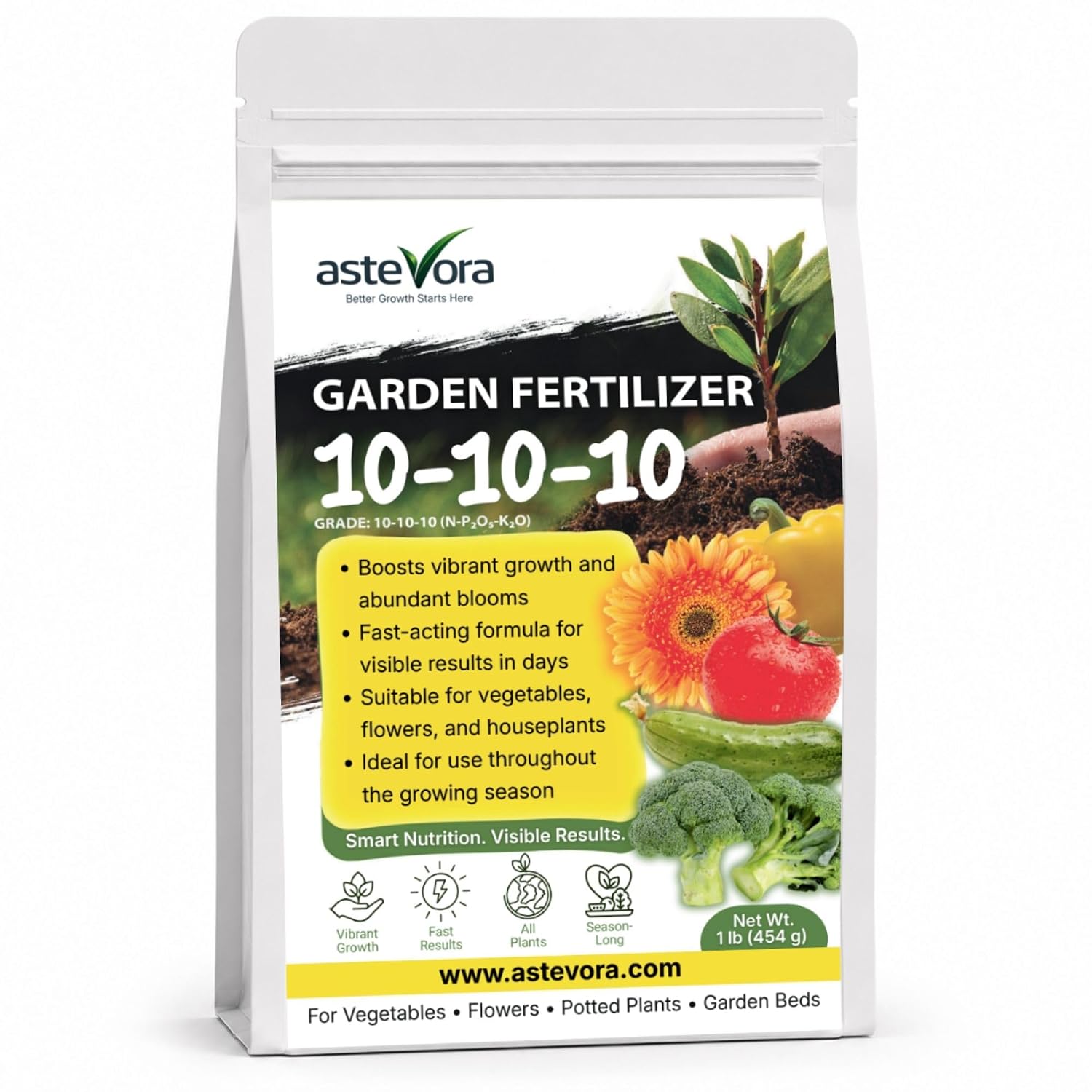
GARDENWISE 10-10-10 Slow-Release Granular Plant Fertilizer (1/2 Quart)
| Item Form | Granules |
|---|---|
| Mixing Ratio | 10-10-10 |
| Specific Uses For Product | Vegetable gardens, fruit trees, shrubs, lawns, flowers, potted plants, indoor gardening |
| Liquid Volume | 0.5 quarts |
This GARDENWISE 10-10-10 granular fertilizer is an all-purpose, slow-release plant food that supplies equal parts nitrogen, phosphorus, and potassium for up to eight weeks. You apply the fine granules evenly around the root zone and water in; directions include specific rates for vegetable beds, lawns, flowers, shrubs, and trunk-diameter-based dosing for fruit trees. The balanced N-P-K and slow-release formulation support root development, steady leaf and shoot growth, and improved stress tolerance—useful for fig trees between spring feeding cycles and as a maintenance boost during the growing season. Practical benefits include predictable feeding intervals that cut down on frequent applications and clear dosing guidance for different plant types. Limitations are that the product is a general-purpose formula rather than a fig-specific blend, so if your soil test shows particular nutrient imbalances or micronutrient needs you may need a supplemental product. Also the pack is a small consumer size, so larger orchards will need multiple bags.
Best for: Buyers who want a straightforward, low-maintenance fertilizer to support fig tree growth without fuss and who prefer predictable feeding intervals and simple dosing instructions.
Less Ideal for: Growers managing nutrient-deficient or pH-sensitive soils, or those who need large-volume supplies for multiple mature trees should consider targeted or bulk alternatives.
- Balanced 10-10-10 N-P-K supports roots, foliage, and fruiting for a wide range of plants
- Slow-release granules provide up to eight weeks of continuous feeding, reducing application frequency
- Clear, plant-specific dosing guidelines including per-inch trunk recommendations for fruit trees
- Fine granule form spreads evenly for good soil contact and easy watering-in
- Not formulated with fig-specific micronutrients or pH adjustments that some fruit growers prefer
- Small 0.5 quart/16 ounce consumer size may be insufficient for larger fig trees or multiple trees
Verdict: A convenient, balanced slow-release granular fertilizer that makes routine feeding of fig trees simple and low-effort.
Fairhaven Vitis-Max Grape Vine Fertilizer, 1 lb

| Item Form | Granules |
|---|---|
| Specific Uses For Product | Organic |
| Application Method | top dress |
| Target Species | grape |
| Unit Count | 16 Fluid Ounces |
Fairhaven Vitis-Max is a granular, controlled-release fertilizer made for grape culture and intended as a single-season top-dress. The resin-coated prills open when soil is wet and close when dry, which helps deliver steady nutrition without burning vines. The maker recommends about 2 ounces per vine and says one pound treats roughly eight vines, so a single 1 lb container covers a small planting or a few established vines. It is sold as an organic formulation with a full range of grape-targeted nutrients and is straightforward to apply to the soil surface or mixed into planting medium. Practical benefits include easy, infrequent feeding and reduced risk of overfertilizing compared with soluble feedings. Limitations are coverage and longevity for larger vineyards since the package is small and it is designed for one-season use; heavier-feeding vines or larger blocks will need more product or repeated purchases. For gardeners on a budget this product can be cost-effective for small plantings but will require calculating per-vine cost for larger needs.
Best for: Home gardeners with a few grapevines who want a simple, low-maintenance, organic seasonal feed and prioritize straightforward application over bulk coverage.
Less Ideal for: Owners of larger vineyards or those who need long-term bulk supply should consider larger-capacity or multi-season products to lower per-vine cost and reduce repeat purchases.
- Resin-coated granules provide controlled, moisture-triggered release to reduce burn risk
- Formulated specifically for grape vines rather than a generic fertilizer
- Simple top-dress application or mixing at planting makes it easy to use
- Organic labeled formulation for growers avoiding synthetic feeds
- Small 1 lb package only covers about eight vines so not efficient for larger plantings
- Single-season formulation means repeat purchases for multi-year feeding plans
Verdict: A small, grape-specific controlled-release fertilizer that delivers easy, low-risk seasonal feeding ideal for small home plantings.
Cz Garden Supply Elevanta Flowering Vines Plant Food (Granules) — 2% Iron

| Item Form | Granules |
|---|---|
| Specific Uses For Product | Plant Growth, Root Development, Seed Development, Soil Conditioning |
| Target Species | Flowers |
| Unit Count | 1 Ounce |
This granular plant food is formulated specifically for bougainvillea and other flowering vines such as mandevilla, jasmine, and clematis. It supplies a balanced mix of nitrogen, phosphorus and potassium along with 2% iron and micronutrients to support root health, greener foliage, and more consistent flowering. The granules are easy to apply around containers or garden plantings with no mixing required, so routine feeding is quick for gardeners who want a low-effort solution. Packaged in a resealable pouch, the product is convenient to store and measure for repeat applications. Because it is a general-purpose vine fertilizer rather than a specialty formula, expect broadly improved vigor and blooms rather than dramatic, immediate changes after a single feeding. Also the listing provides limited sizing detail, so buyers should confirm how much area a pouch will cover before purchasing multiple quantities. For someone growing mandevilla and similar tropical climbers, this offers a practical, simple feed that targets the needs of flowering vines throughout the season.
Best for: Gardeners growing mandevilla and similar flowering vines who want a straightforward, low-effort granular feed to maintain healthy foliage and steady blooms throughout the season.
Less Ideal for: Growers who need precise dosing for large beds or who prefer liquid fertilizers and foliar applications should consider other formats better suited to those needs.
- Formulated specifically for flowering vines including bougainvillea and mandevilla
- Balanced NPK plus 2% iron and micronutrients to support foliage color and flowering
- Granular form requires no mixing and is simple to apply to containers or garden beds
- Resealable pouch for easier storage and repeat usage
- Unit count and coverage per pouch are not clearly detailed, requiring buyers to estimate quantity needed
- Not a liquid concentrate so cannot be used for foliar feeding or quick foliar iron sprays
Verdict: A simple, vine-targeted granular fertilizer that makes routine feeding of mandevilla and other flowering climbers quick and reliable.
Miracle-Gro Water Soluble All Purpose Plant Food, 1.5 lb

| Item Form | Powder |
|---|---|
| Application Method | Watering Can |
| Target Species | For all flowers, vegetables, trees, shrubs and houseplants |
| Mixing Ratio | 24-8-16 |
Miracle-Gro Water Soluble All Purpose Plant Food is a powder concentrate you mix with water to give a quick nutrient boost to flowers, vegetables, houseplants, shrubs and trees. It is typically dissolved in a watering can or used with a compatible garden feeder to soak soil at the base of plants, delivering nitrogen-heavy nutrition that shows effects faster than granular fertilizers. Notable features include an easy scooping method for indoor and outdoor dosing, compatibility with containers and in-ground planting, and clear directions for feeding every one to two weeks. In practice this makes the product a convenient option when you want visible growth and greener foliage quickly, and the 1.5 lb container covers roughly 600 sq. ft. Important limitations are that it is a fast-release, high-nitrogen formula best used as a regular quick feed rather than a long-term slow-release solution, and it requires careful measuring to avoid overfeeding. For routine maintenance combine with good watering and follow the label to avoid nutrient imbalance.
Best for: Buyers who prefer proven, easy-to-use feeding routines and want noticeable growth quickly for a variety of garden and houseplants, guided by established usage directions and broad user experience.
Less Ideal for: Gardeners seeking a single, long-term slow-release solution or those who prefer organic or low-nitrogen fertilizers for sensitive plantings should consider alternative products.
- Water-soluble powder starts working quickly at the roots when mixed and applied
- Clear, simple dosing for indoor and outdoor use with included scoop guidance
- Suitable for a wide range of plants including vegetables, flowers, shrubs and houseplants
- Covers a large area from a small container (about 600 sq. ft. per 1.5 lb)
- Fast-release formula means benefits are short-term compared with slow-release granular fertilizers
- Requires precise measuring and regular reapplication to avoid overfeeding
Verdict: A reliable, fast-acting water-soluble plant food for gardeners who want easy, repeatable feeding and quick visible results.
Miracle-Gro Liquid All Purpose Plant Food Concentrate, 32 oz

| Item Form | Liquid |
|---|---|
| Specific Uses For Product | Plant Growth, Root Development |
| Application Method | Mix with water in a watering can |
| Mixing Ratio | 1:10 (concentrate to water, estimate) |
Miracle-Gro Liquid All Purpose is a water-soluble concentrate you mix into a watering can and apply every 1 to 2 weeks to container and in-ground plants. It is formulated for general plant growth and root development and is marketed for flowers, vegetables, shrubs and houseplants, so it works as a straightforward feed for flowering bulbs like calla lilies. The bottle’s mixing guidance (cap measures for garden application and 1 teaspoon per gallon for containers) makes it easy to dose for pots or small beds. Practical benefits include fast uptake through the soil when applied as directed and compatibility with routine watering schedules. Limitations to note are that it is an all-purpose formula rather than a bloom-focused or calcium-rich fertilizer tailored specifically to calla lilies, so growers seeking targeted bloom enhancement or specialty nutrition may want a supplement. Also, frequent use at higher-than-recommended strength can risk fertilizer burn, so follow the mixing directions and schedule.
Best for: Buyers who want an affordable, easy-to-use liquid fertilizer to keep calla lilies and other flowering plants regularly fed without fuss.
Less Ideal for: Growers seeking a specialist bloom-boost or a fertilizer formulated for specific micronutrient needs should consider a targeted or bloom-specific product instead.
- Concentrated liquid mixes easily with water for quick application
- Clear dosing instructions for both garden beds and container plants
- Suitable for a wide range of plant types including flowering bulbs and houseplants
- General all-purpose formula not specifically formulated for enhancing blooms of calla lilies
Verdict: A budget-friendly, easy-to-use liquid concentrate that reliably feeds calla lilies and other common garden plants on a regular schedule.
Choosing the Right Fertilizer for Vines: Key Factors to Consider
Nutrient Balance and Ratios
The ratio of nitrogen, phosphorus, and potassium determines whether a vine will focus on leafy growth or fruiting. A higher nitrogen level encourages vegetative growth and long shoots, which is useful for establishing young vines but can reduce fruit set if overused. Conversely, phosphorus supports root development and flowering, which helps fruit formation on mature vines.
Look for fertilizers that match the vine's growth stage. Early season feeds often benefit from a balanced or slightly nitrogen-biased mix to encourage canopy development, while pre-flowering and fruiting stages benefit from higher phosphorus and potassium. Micronutrients such as magnesium, iron, and boron are also important for specific disorders and should be present or available in your soil.
Release Profile and Timing
Release profile defines how quickly a fertilizer becomes available to the plant. Slow-release granular products supply nutrients over weeks to months and reduce the risk of nutrient spikes or root burn. They work well for established, in-ground vines where frequent feeding is inconvenient.
Soluble or quick-release formulas give rapid correction for deficiencies and are useful during rapid growth or when fruit development stalls. They are also commonly used as foliar sprays for faster uptake. Consider your maintenance routine: if you prefer infrequent feeding, choose a controlled-release option; if you monitor and adjust frequently, soluble feeds offer more control.
Application Method and Ease
Vines can be grown in beds, trellises, containers, or espaliered against walls, and each setting influences how you apply fertilizer. Granules and slow-release spikes are easy for in-ground plantings, while liquid concentrates and water-soluble powders are more practical for containers and foliar feeding on trained vines.
Think about reach and accessibility. If the canopy is high or climbing structures are dense, a soil drench applied at the root zone is often safer and more efficient than trying to spray leaves. Ease of measuring and mixing also matters for hobby gardeners; pre-measured, labeled mixes reduce dosing errors.
Soil Type and Root Safety
Soil texture and drainage affect nutrient retention and salt accumulation. Sandy soils drain quickly and may require more frequent, lower-dose applications. Clay soils hold nutrients and water longer, which can increase the risk of overfeeding and salt build-up.
Root safety is critical for perennial vines. Avoid high-salt formulations or excessive application rates that can cause root burn. Organic sources tend to release nutrients more slowly and can improve soil structure, while synthetic feeds typically deliver precise nutrient ratios that are quickly available. Match the fertilizer type to your soil characteristics and water management to protect roots.
Compatibility with Fruit and Flower Goals
If the primary goal is fruit production, prioritize fertilizers that support flowering and fruit set rather than excessive vegetative growth. Potassium and phosphorus are particularly important for fruit size, sugar accumulation, and overall yield. For ornamental vines where blooms matter most, phosphorus and micronutrient availability can be more impactful than sheer nitrogen.
Assess whether the product supports end goals like larger grapes or more abundant flowers. Some formulations include bloom-boosting ratios or chelated micronutrients aimed at improving color and fruit quality. Consider the tradeoff between lush foliage and reproductive output when selecting a feed.
Container Versus In-Ground Suitability
Containers concentrate roots and salts, so fertilizers for potted vines should be formulated for lower salt index or designed for regular, diluted feedings. Controlled-release pellets reduce the frequency of top-ups, but their fixed release schedule may not match rapid seasonal demands.
In-ground vines have more buffering capacity and access to wider root zones. When choosing a product, consider whether it allows flexible dosing to accommodate rainy seasons, drought, or transplanting. The best choice for containers is often a soluble fertilizer used at reduced strength with consistent watering practices.
When to Feed Vines Through the Season
Timing feeds to vine growth stages helps deliver nutrients when the plant needs them most. Apply a balanced or slightly nitrogen-lean feed in late winter or early spring as shoots begin to grow. This supports canopy establishment without forcing excessive late-season vigor.
Before flowering, reduce high-nitrogen inputs and switch to a formulation that supports bloom and fruit set. After harvest, a light feed with potassium and phosphorus can help plants recover and store energy for the next season. Avoid heavy fertilizing late in the season because it can stimulate tender growth that is vulnerable to frost.
- Early season: balanced or light nitrogen to jump-start growth
- Pre-flowering: more phosphorus and potassium to support blooms and fruit set
- Post-harvest: maintenance feed for root recovery and winter hardiness
Organic Versus Synthetic Options
Organic fertilizers release nutrients more slowly and often improve soil biology and structure. They are gentler on roots and less likely to cause sudden nutrient spikes. Common organic sources include composted manures, bone meal, and kelp-based products that supply micronutrients and trace elements.
Synthetic fertilizers provide predictable nutrient ratios and rapid availability, which is useful for correcting deficiencies or when you need a quick response. Both approaches are valid for vines; your choice should reflect your gardening philosophy, labor preferences, and how quickly you need nutrients to become available.
- Organic: slower release, soil-building benefits, lower burn risk
- Synthetic: precise ratios, fast uptake, easier to target specific deficiencies
Applying Fertilizer to Established Trellised Vines
For vines on trellises, concentrate applications near the dripline where most feeder roots are active. Avoid piling granular fertilizer against the trunk. A ring application slightly beyond the trunk base encourages roots to spread into the amended zone.
If the trellis is high, use soil drenches or root-targeted granules rather than foliar sprays that are difficult to reach. Watering in after application helps move nutrients into the root zone and reduces volatilization or surface runoff.
- Place granules at the dripline, not against the trunk
- Water in granular or soluble applications to move nutrients into roots
- Use root drenches for tall or dense canopies
Common Nutrient Deficiencies in Vines
Leaf yellowing between veins often signals magnesium or iron deficiency, while uniform yellowing can indicate nitrogen shortfall. Small, distorted leaves and poor fruit set sometimes point to boron or zinc deficiencies in sensitive vines.
Regular soil testing and leaf tissue analysis help identify problems before they become severe. Correct deficiencies with targeted amendments rather than broad-spectrum high-nitrogen feeds to avoid unintended growth imbalances.
- Interveinal chlorosis may signal magnesium or iron issues
- Small leaves and poor set can indicate micronutrient shortages
- Use tests to confirm issues before applying corrective treatments
Safety and Environmental Considerations
Avoid overapplication to reduce runoff into nearby water features and to prevent salt accumulation in the root zone. Follow label guidance for maximum annual application rates and adjust for soil organic matter and irrigation frequency.
Store fertilizers where pets and children cannot access them, and rinse equipment after use. For organic options, consider certified products where applicable to ensure consistent quality and safety.
- Follow annual application limits to minimize runoff
- Adjust rates for soil type and irrigation patterns
- Store and handle fertilizers safely to protect people and pets
How We Chose the Best Fertilizer for Vines
We focused on criteria that directly affect vine health and gardener actions. Nutrient balance and bioavailable forms were prioritized because vines need the right ratios of nitrogen, phosphorus, and potassium through different growth stages. Release profile and feeding cadence were reviewed next, since slow-release formulas reduce overfeeding risk while soluble feeds let you correct deficiencies quickly. Ease of application was essential for gardeners who manage vertical plantings or containers; we examined whether a product can be applied as a top-dress, soil drench, or foliar spray. Soil and root safety was another key filter: options that risk salt build-up or root burn were deprioritized for common home use. Organic and synthetic sources were both considered so long as their nutrient claims were clear and consistent. We excluded products intended only for lawngrass, houseplants, or broad-use ornamental mixes that do not provide vine-specific guidance. The final selection reflects nutrient formulation, release behavior, application flexibility, and safety for in-ground and container vines.
FAQ
How often should I fertilize vines in containers?
Container vines typically need more frequent, lighter feedings because nutrients wash out with regular watering. Use a diluted soluble fertilizer every two to four weeks during the growing season, or choose a low-release pellet designed for containers and follow the product's recommended interval.
Can I use a general-purpose vegetable fertilizer on grapevines?
Often a general vegetable fertilizer will supply the main nutrients vines need, but check the N-P-K ratio. Vines that are fruiting benefit from formulations that do not overemphasize nitrogen at the expense of phosphorus and potassium. Tailor feeding to the vine's growth stage for best results.
Will foliar feeding fix nutrient deficiencies quickly?
Foliar feeding can correct some micronutrient deficiencies faster than soil applications because leaves absorb certain elements directly. However, foliar sprays are usually a short-term fix and should be paired with soil amendments for sustained recovery.
Is it safe to use slow-release fertilizer around young vines?
Slow-release fertilizers are generally safe for young vines when applied at recommended rates. Ensure you do not place concentrated granules against the stem and water after application to initiate gradual nutrient release. For very young transplants, lighter, more frequent feeds may be gentler.
How does soil testing change my fertilizer choice?
Soil testing reveals existing nutrient levels and pH, which helps you choose a fertilizer that addresses specific deficiencies. Tests can prevent unnecessary additions of nutrients that are already abundant and help avoid imbalances that reduce fruit quality or cause excessive vegetative growth.
Final Verdict
Choose a fertilizer for vines by matching nutrient ratios and release behavior to the vine's growth stage and planting style. Prioritize root safety and application methods that suit trellised or container situations, and use soil testing to target deficiencies rather than applying broad treatments. Tradeoffs are common: fast-release formulas give quick results but require careful dosing, while slow-release and organic options are gentler but less flexible. Focus on the vine's reproductive goals-flowering and fruiting-or vegetative establishment when selecting a product, and adjust feeding through the season for the best overall performance.
