

Note: This article contains affiliate links. If you click on these links and make a purchase, I may earn a small commission at no extra cost to you. This helps support my research and content. Read my full affiliate disclosure here.
If you grow Vanilla Strawberry hydrangeas you want fertilizer that encourages strong growth without producing floppy, leafy plants or sparse flower sets. Choosing the right fertilizer affects bloom count, flower size, and overall plant health in garden beds, containers, or borders. This guide shortlists five top fertilizer options suited to the specific needs of Vanilla Strawberry hydrangeas and explains the practical tradeoffs gardeners face. We evaluated candidates for their nutrient balance, bloom-promoting characteristics, application ease, and suitability for soil pH and container use. The following picks are the top options for the common garden situations where these hydrangeas are grown.
Top Picks at a Glance
| Best Overall The best all-around choice for most situations | Down To Earth Acid Mix Organic Fertilizer 4-3-6, 1 lb |  |
| Best Quality Built to a higher standard if you want something more solid | Espoma Holly-Tone Organic 4-3-4 Fertilizer for Acid-Loving Plants, 36 lb Bag |  |
| Best Value The sweet spot between price and what you get | Osmocote Smart-Release Plant Food for Flowers & Vegetables, 2 lb |  |
| Highest Rated A top-rated pick with lots of positive feedback | GreenGro Acid Loving Organic Fertilizer 5-5-3, 4 lb |  |
| Most Popular A crowd favorite that many people choose with confidence | Farmer's Secret Fruit & Bloom Booster Liquid Fertilizer (8 oz) |  |
Down To Earth Acid Mix Organic Fertilizer 4-3-6, 1 lb
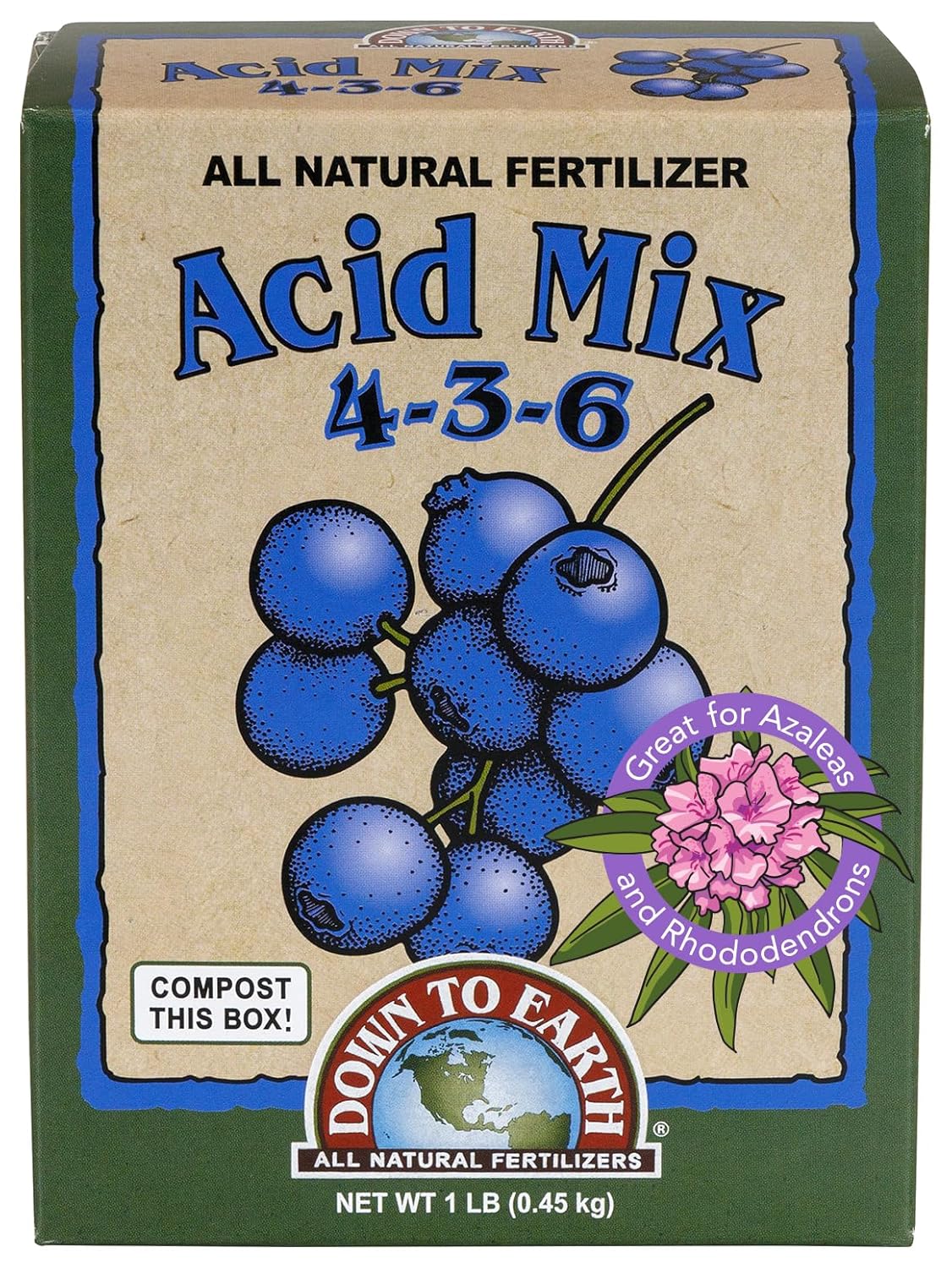
| Item Form | Granules |
|---|---|
| Specific Uses For Product | Acid-loving plants |
| Target Species | rhododendrons, azaleas, hydrangeas, evergreen trees and shrubs, blueberries, raspberries |
| Mixing Ratio | 4:3:6 |
Down To Earth Acid Mix is an organic granular fertilizer designed to feed acid-loving plants such as blueberries, azaleas, rhododendrons and other shrubs. You can broadcast it on the soil surface or mix it into planting holes, then water it in; the manufacturer recommends applications in early spring, at bloom and again in fall to support vegetative growth, flowering and root development. The 4-3-6 formula delivers a higher potassium ratio to help fruiting and overall plant vigor, while slow-release materials like feather meal, fish bone meal and kelp provide longer-lasting nutrition so you do not need to feed frequently. It is shelf stable and OMRI-listed ingredients support organic gardening practices. Limitations to note are the small 1 lb unit size, which means frequent repurchase for larger beds, and that this product is a fertilizer rather than a soil pH fixer so you will still need sulfur or lime to significantly change soil acidity. For gardeners feeding a few blueberry plants or refreshening planting holes, it is an effective, low-fuss organic option.
Best for: Gardeners with a few blueberry plants or small acid-loving beds who want an easy-to-use organic fertilizer and prefer low-maintenance, sustained feeding.
Less Ideal for: Large-scale blueberry plantings or growers who need to change soil pH significantly without using separate amendments.
- Formulated specifically for acid-loving plants including blueberries and azaleas
- Slow-release organic ingredients provide sustained feeding and reduce application frequency
- Can be applied on the soil surface or mixed into planting holes for flexible use
- OMRI-friendly ingredient sources support organic gardening practices
- Small 1 lb package limits coverage for larger beds or multiple bushes
Verdict: A compact, slow-release organic fertilizer tailored for small blueberry plantings and other acid-loving plants to provide steady, low-maintenance nutrition.
Espoma Holly-Tone Organic 4-3-4 Fertilizer for Acid-Loving Plants, 36 lb Bag

| Item Form | Granules |
|---|---|
| Specific Uses For Product | Acid-loving plants |
| Application Method | Sprinkle around the drip line and water thoroughly |
| Coverage | Acid-loving plants (hollies, azaleas, camellias, evergreens, dogwoods, rhododendrons) |
Espoma Holly-Tone is an organic, granular plant food designed specifically for acid-loving plants and evergreens. You apply it by sprinkling around the drip line and watering it in, typically in spring and fall for flowering and evergreen shrubs; it is also recommended for blueberries and other acid-preferring species. The 4-3-4 NPK formulation with added sulfur and Bio-tone microbes provides a steady nutrient release that supports leaf color and flowering while improving soil biology over time. Because it is organic and approved for organic gardening, it suits gardeners who prefer natural inputs and want to avoid synthetic quick-release fertilizers. The product comes ready to use with no mixing required and covers multiple shrubs per bag, making it practical for yards and small landscapes. Limitations are that results build gradually rather than immediately and the large 36 lb bag may be bulky to handle for some users; detailed application rates by plant size are not provided on the product page, so careful dosing is needed to avoid over-application.
Best for: Gardeners who want a reliable, organic fertilizer for hollies, rhododendrons and other evergreens and prefer steady feeding and improved soil biology over instant results.
Less Ideal for: People who need fast, visible green-up within days or who only have tiny container plants where a smaller, more concentrated product would be easier to manage.
- Formulated specifically for acid-loving plants and broad evergreen coverage
- Organic granular formula with Bio-tone microbes supports soil health
- Slow-release nutrients provide longer-lasting feeding than quick-release products
- Ready-to-use granules require no mixing and are easy to apply around the drip line
- Large 36 lb bag can be heavy and awkward to handle for one person
- Nutrient uptake is gradual so visible improvement may take time
Verdict: Choose Espoma Holly-Tone when you want an organic, slow-release fertilizer tailored to acid-loving evergreens that improves plant health and soil life over time.
Osmocote Smart-Release Plant Food for Flowers & Vegetables, 2 lb

| Item Form | Granules |
|---|---|
| Specific Uses For Product | Plant Growth, Root Development, Seed Development |
| Application Method | Mix into 1 – 3” of soil |
| Coverage | 80 sq. ft. |
Osmocote Smart-Release Plant Food is a granular, slow-release fertilizer designed to support both root development and above-ground growth in flowers, vegetables and herbs. Applied by mixing into the top 1–3 inches of soil, one pound covers about 40 sq. ft. and the formula releases nutrients over up to four months, so it reduces the need for frequent feeding during the growing season. The balanced 14-14-14 NPK makes it suitable for general-purpose feeding of seasonal vegetables, perennials and mulched garden beds, and the manufacturer notes a no-burn performance even if over-applied moderately. Practical benefits include predictable nutrient delivery driven by soil temperature and an included applicator for easier distribution. Limitations are that specific ingredient details are not listed and the coverage of a 2 lb container is modest for larger plots, so you will need more product for medium to large vegetable beds. It is a straightforward, low-maintenance option for gardeners who want steady feeding without weekly fertilizer chores.
Best for: Gardeners who want an easy, dependable all-purpose fertilizer for small to medium vegetable beds and mixed flower/edible plantings and prefer low-maintenance, seasonal feeding.
Less Ideal for: Growers managing large-scale vegetable plots, container-only growers needing very frequent dosing, or those seeking a targeted specialist fertilizer for specific soil deficiencies.
- Slow-release granules feed up to four months, reducing reapplication frequency
- Balanced 14-14-14 NPK suitable for general vegetable and flower feeding
- Includes applicator and simple application method of mixing into 1–3 inches of soil
- Manufacturer states low risk of burning plants even if applied above recommended rates
- Coverage guidance provided for planning garden usage (approx. 1 lb per 40 sq. ft.)
- 2 lb size provides limited coverage for medium to large vegetable gardens
- Ingredients are not specified in the product details
- Not formulated for specialty nutrient needs such as high-phosphorus bloom boosting
Verdict: A reliable, low-maintenance slow-release fertilizer that delivers balanced nutrients for steady vegetable and flower growth over the season.
GreenGro Acid Loving Organic Fertilizer 5-5-3, 4 lb

| Item Form | Granules |
|---|---|
| Specific Uses For Product | Acid-loving plants, Indoor & Outdoor use |
| Target Species | Acid-loving plants |
| Unit Count | 64 Ounce |
This 5-5-3 granular fertilizer is designed for spring feeding of hydrangeas and other acid-loving plants by providing balanced nutrients while gradually lowering soil pH with elemental sulfur. It is typically applied by mixing the recommended amount into the soil at the plant base or into container media and watered in; the label gives clear rates for garden and pot use and schedules for repeat applications. Notable features are the inclusion of mycorrhizal fungi, beneficial bacteria, and biochar, which support root extension, nutrient availability, and microbial habitat in addition to the fertilizer itself. For gardeners looking for a dependable spring booster that also nudges pH toward the range bigleaf hydrangeas prefer, this product combines feeding and biological soil support in one bag. Limitations to keep in mind are that pH changes are gradual so immediate color shifts are not guaranteed and repeated applications can push soil acidity too low if overused, so following the directions and testing soil pH periodically is important.
Best for: Gardeners who want a reliable, no-fuss spring fertilizer that both feeds hydrangeas and slowly acidifies soil while supporting soil biology.
Less Ideal for: People who need immediate pH changes or those who prefer separate specialized soil amendments and microbial inoculants rather than a combined product.
- Formulated to lower soil pH gradually with elemental sulfur for acid-loving plants
- Contains mycorrhizae, beneficial bacteria, and biochar to improve root access and soil biology
- Clear application rates for both in-ground and container hydrangeas
- Balanced 5-5-3 N-P-K to provide steady spring nutrition
- pH adjustment is gradual and requires repeated applications and monitoring to reach target acidity
Verdict: A practical spring choice for hydrangea growers who want steady feeding plus gradual pH lowering and improved soil biology in one product.
Farmer's Secret Fruit & Bloom Booster Liquid Fertilizer (8 oz)

| Item Form | Liquid |
|---|---|
| Liquid Volume | 8 fluid ounces |
| Mixing Ratio | 1 teaspoon : 2 gallons |
| Application Method | dilute with water and pour or spray |
Farmer's Secret Fruit & Bloom Booster is a concentrated liquid plant food designed for mid-to-late season use when plants begin to bud and set fruit. You dilute a small amount (1 teaspoon per 2 gallons) and apply it either to the soil with your watering can or as a foliar spray, repeating every 1 to 2 weeks. The formula emphasizes phosphorus and potassium alongside trace minerals to promote root development, flowering and fruit set, which is the kind of nutrient profile banana growers look for during fruiting. Because it is liquid and already mixed, nutrients are immediately available and it is easy to integrate with irrigation or regular watering. The bottle is small but very concentrated, so a little goes a long way. A practical limitation is that the 8 ounce size supplies only a limited number of applications for larger banana plants or multiple trees, so you will need to plan purchases for season-long feeding. Follow dilution directions carefully to avoid overapplication.
Best for: Gardeners who prefer a proven, easy-to-use liquid feed to encourage blooms and fruit and who want straightforward instructions and predictable results.
Less Ideal for: Growers with large banana groves or multiple mature plants who need bulk or long-term feeding should consider larger-volume fertilizers or granular options.
- High phosphorus and potassium formulation supports flowering and fruit set
- Liquid concentrate delivers nutrients immediately and is usable as soil or foliar feed
- Simple, low-strength mixing ratio makes it easy for beginners to apply safely
- Contains additional trace minerals (iron, zinc, calcium) that support overall plant health
- Small 8 oz bottle provides relatively few applications for mature banana plants or multiple trees
Verdict: A highly concentrated, easy-to-use liquid booster that quickly delivers flowering and fruiting nutrients for backyard banana plants and other fruiting ornamentals.
Choosing the Right Fertilizer for Vanilla Strawberry Hydrangea: Key Factors to Consider
Nutrient Ratio and Release Type
Hydrangeas respond differently to nitrogen, phosphorus, and potassium. A fertilizer that is heavy on nitrogen can produce lush green growth at the expense of flowers, so look for balanced or bloom-focused ratios that moderate nitrogen while supplying enough phosphorus for buds. Release type matters too. Slow-release granular formulas provide steady feeding over weeks or months and reduce the risk of rapid, leggy growth. Water-soluble fertilizers let you correct deficiencies or give targeted bloom feeds during the flowering season.
For container-grown Vanilla Strawberry hydrangeas, a combination approach often works best: a slow-release base plus periodic dilute liquid feeds during peak bloom. Always follow label dilution rates to avoid root burn and monitor plant response so you can adjust frequency.
Bloom Promotion and Micronutrients
Fertilizer blends that explicitly support flowering usually contain elevated phosphorus or added micronutrients like magnesium and iron, which help flower development and maintain leaf color. These elements do not replace good pruning and light conditions, but they can significantly increase bloom quantity and longevity when soil fertility is otherwise adequate.
Micronutrients are especially important in container soils or sandy beds that do not hold trace elements well. If your soil test shows deficiencies, choose a formulation that addresses those gaps rather than adding more macronutrients alone.
Soil pH and Its Effect on Flowering
Vanilla Strawberry hydrangeas can exhibit different flower color responses depending on soil pH. While not all fertilizer decisions change color, some formulations include acidifying components that slightly lower pH and help plants access aluminum in acidic soils when blue tones are desired. For gardeners focused on flower color, check whether a fertilizer is neutral, acidifying, or labeled safe for pH-sensitive hydrangeas.
In many garden beds, soil amendments and regular mulching influence pH more than fertilizer alone. Use a soil test to determine pH before relying on fertilizer to adjust color or nutrient availability.
Salt Index and Root Safety
Fertilizers differ in their salt index and how they affect root health. High-salt or overapplied fertilizer can cause root desiccation, leaf scorch, and reduced water uptake, especially in containers. Choose products with lower salt indices for frequent use, and water thoroughly after application to move nutrients into the root zone.
Slow-release options typically pose lower short-term salt risk than concentrated water-soluble feeds, but cumulative buildup can occur. Periodic flushing and following label rates helps protect roots and companion plants.
Application Method and Garden Context
Consider how you garden. If you maintain many shrubs or prefer low-effort care, granular slow-release fertilizers let you feed once or twice per season. If you grow in containers, hanging baskets, or want quick correction during bloom, water-soluble or liquid feeds provide rapid uptake. Foliar sprays can supplement micronutrient needs but are not a substitute for adequate root-zone nutrition.
Also think about timing: early spring feeding supports leaf and shoot development, while a bloom-boosting feed applied at bud set can increase flower count. Avoid late-season high-nitrogen applications that delay hardening off.
Environmental Impact and Neighboring Plants
Fertilizer runoff and leaching can affect nearby plants, water features, and pollinator habitat. Choose formulations that release nutrients gradually and apply when rain is not imminent to reduce runoff. Organic options tend to release nutrients more slowly and add soil-building organic matter, while synthetic fertilizers may be more precise but require careful application.
If you have mixed beds, consider the needs of adjacent plants and avoid blanket applications that favor one species over others. Targeted application around the hydrangea dripline limits exposure to neighbors.
Timing Feeds for Strong Bud Sets
When to apply fertilizer influences how Vanilla Strawberry hydrangeas allocate energy. Feed lightly in early spring as new shoots emerge to support leafing and root growth. Apply a bloom-focused feed at the start of bud formation to encourage more and larger flower heads.
Avoid heavy nitrogen later in the season. Late summer high-nitrogen feeding can delay dormancy and reduce winter hardiness. For most climates, stop fertilizing several weeks before the first expected frost to allow plants to prepare for dormancy.
- Early spring: balanced or low-nitrogen feed for shoot vigor
- Bud set: bloom-promoting feed higher in phosphorus or with bloom nutrients
- Late season: reduce or stop feeding to allow hardening off
Fertilizing Containers Versus In-Ground Plants
Containers hold less soil and nutrients wash out faster, so container-grown Vanilla Strawberry hydrangeas need more consistent feeding than those planted in the ground. Use a regular dilute liquid feed or a slow-release charge designed for container mixes.
In-ground hydrangeas benefit from organic matter and slow-release fertilizers that feed over weeks. Topdressing with compost or well-rotted manure supplies steady nutrients and improves moisture retention.
- Containers: shorter intervals, dilute liquid feeds, and monitoring for salt buildup
- In-ground: slow-release or organic amendments and occasional targeted boosts
Organic Versus Synthetic Options
Organic fertilizers release nutrients as microbes break down organic matter and often improve soil structure over time. They are forgiving and reduce the risk of rapid nutrient spikes but may act more slowly, which can matter during active blooming periods.
Synthetic fertilizers deliver nutrients in readily available forms and are useful when quick correction is needed. They are precise but require careful dosing to avoid root stress. Many gardeners combine approaches: organic amendments for long-term soil health and occasional synthetic feeds for bloom pushes.
- Organic: slower release, builds soil, lower burn risk
- Synthetic: fast-acting, more precise, needs careful application
Adjusting Fertilizer for Soil Test Results
A soil test helps target fertilizer choices. If phosphorus is already adequate, a higher-phosphorus bloom formula is unnecessary and could lead to imbalances. If micronutrients like magnesium or iron are lacking, a supplement or a tailored formulation will give better results than more macronutrients.
Follow soil test recommendations for application rates and amendments. Regular testing every few years helps prevent cumulative imbalances and ensures your feeding program supports healthy flowers and foliage.
- Test before changing fertilizer strategies
- Address specific deficiencies rather than blanket feeding
Practical Tips for Application and Safety
Measure and follow label rates to avoid overapplication. Apply fertilizer evenly around the dripline and avoid placing concentrated granules against the trunk. Water after applying to move nutrients into the root zone and reduce foliar contact.
Store products safely and keep pets and children away from freshly applied fertilizer until it is watered in. For repeat applications, track dates to avoid overlapping feeds.
- Apply around the dripline, not at the trunk
- Water in after application to reduce burn risk
- Record application dates to avoid overfeeding
How We Chose the Best Fertilizer for Vanilla Strawberry Hydrangea
We focused on criteria that matter to home gardeners growing Vanilla Strawberry hydrangeas. Primary evaluation points included nutrient ratio and release type, because hydrangeas need a balance that encourages flowers without excessive leafy growth. We also assessed bloom support, looking for formulas with higher phosphorus or bloom-boosting micronutrients that promote abundant inflorescences. Ease of use was another filter: granular, slow-release, and water-soluble formats were considered for their predictability and convenience in beds and containers. Soil and pH compatibility mattered because hydrangea vigor and flower color can respond to soil conditions; products that worked across a range of garden soils scored higher. Finally, we checked safety for established shrubs and for use around companion plants to avoid salt buildup or root stress. Excluded items included general-purpose lawn fertilizers not formulated for flowering shrubs and products that rely on unverified claims rather than clear nutrient labeling. Our choices favored clearly labeled formulations and practical application methods aligned with home garden maintenance.
FAQ
How often should I fertilize Vanilla Strawberry hydrangeas?
Frequency depends on the product and planting situation. Slow-release granular fertilizers are typically applied once or twice per season, while container plants often need dilute liquid feeds every two to four weeks during the growing season.
Can feeding change the flower color of Vanilla Strawberry hydrangeas?
Fertilizer can influence nutrient availability but flower color is primarily driven by soil pH and aluminum availability. Some fertilizers are mildly acidifying and may help if you are already managing pH. A soil test is the best way to decide if pH adjustment is needed.
Is organic fertilizer sufficient for heavy bloom production?
Organic fertilizers can support strong blooms, especially when soil organic matter is low, but they release nutrients more slowly. For a targeted bloom push, some gardeners supplement organic feeding with a timely, dilute synthetic bloom feed.
Will too much fertilizer make my hydrangea grow poorly?
Overfertilizing, particularly with high-nitrogen formulas, can produce excessive leafy growth and fewer flowers, and can increase salt buildup that harms roots. Follow label rates and water in applications to reduce negative effects.
When is the best time to give a bloom-boosting feed?
Apply a bloom-focused feed at the onset of bud formation in late spring to early summer, depending on your climate. This timing gives the plant nutrients when it is forming and expanding flower heads.
Final Verdict
Prioritize a fertilizer plan that balances steady nutrition with a targeted bloom boost for Vanilla Strawberry hydrangeas. Match release type and nutrient ratios to whether plants are in-ground or container-grown, and adjust for soil test results and pH-sensitive goals. Careful timing and measured application prevent overgrowth and root stress while maximizing flower production. Use the decision criteria above to pick the feeding approach that fits your garden rhythm and maintenance preferences.
