

Note: This article contains affiliate links. If you click on these links and make a purchase, I may earn a small commission at no extra cost to you. This helps support my research and content. Read my full affiliate disclosure here.
Growing healthy, productive watermelon plants depends as much on the right nutrients as it does on sun and water. The wrong fertility plan can produce lots of vine growth with few fruits, or pumpkinsized rinds without sugar. This guide covers seven top fertilizer choices that suit common garden situations for watermelon production, from beds and raised planters to small-market plots. We shortlisted options based on nutrient mix, ease of application, and how they behave in typical garden soils. Read on to understand the tradeoffs between fast-release feeds and slow-release or organic alternatives, and to see which features matter for your patch.
Top Picks at a Glance
| Best Overall The best all-around choice for most situations | Leaves & Soul Melon Liquid Fertilizer, 5-1-5 Formula, 8 oz |  |
| Best Quality Built to a higher standard if you want something more solid | FoxFarm Big Bloom Liquid Plant Food, 1 Pint |  |
| Best Value The sweet spot between price and what you get | Pennington Water Soluble All-Purpose Plant Food 20-10-20, 1.5 lb |  |
| Best Budget The cheapest option that still gets the job done reliably | Miracle-Gro Water Soluble Tomato Plant Food (1.5 lb) |  |
| Highest Rated A top-rated pick with lots of positive feedback | Gardenera Liquid Silica Spray for Watermelon Plants, Ready-to-Use 8 oz |  |
| Most Popular A crowd favorite that many people choose with confidence | Miracle-Gro Pour & Feed Liquid Plant Food, 32 fl. oz. | 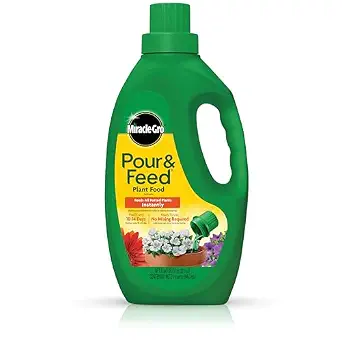 |
Leaves & Soul Melon Liquid Fertilizer, 5-1-5 Formula, 8 oz

| Unit Count | 8 Ounce |
|---|---|
| NPK | 5-1-5 |
| Application Method | Watering |
| Target Species | Melon |
Leaves & Soul Melon Liquid Fertilizer is a small, concentrated plant food designed to support melon growth from seedlings through fruiting. Mixed at 2 tablespoons per gallon, the fast-absorbing liquid delivers a 5-1-5 NPK blend plus micronutrients to the root zone when applied every 2 to 4 weeks. In practice it is easy to use for container, raised-bed, or in-ground melons and helps encourage foliage, vine vigor, and fruit development without granular mess. The concentrate is convenient for gardeners who prefer quick-dissolving feeds and who want to maintain a regular feeding schedule throughout the season. Important limitations are the small 8 oz bottle size, which will require frequent repurchasing for larger plantings, and the need to follow dilution directions closely to avoid overfeeding. This product fits well into an overall cultural program that includes good soil, watering, and support for vining varieties rather than as a standalone fix for poor growing conditions.
Best for: Gardeners who want a simple, melon-focused feed to support steady vine growth and fruiting and who grow a few plants in containers or small beds and prefer liquid concentrates.
Less Ideal for: Growers with large-scale plantings or those who want slow-release, low-maintenance fertilizing should consider bulk or granular options instead.
- Melon-specific 5-1-5 NPK formula supports vine growth and fruit development
- Concentrated liquid mixes quickly and is fast absorbing for root uptake
- Works for seedlings through mature plants and across containers and beds
- Includes micronutrients for broader nutritional support
- 8 oz bottle is small for larger gardens and will need frequent replacement
- Requires careful dilution and regular feeding schedule to avoid overapplication
Verdict: A compact, easy-to-mix 5-1-5 liquid concentrate that gives melon growers a targeted, fast-absorbing feed to boost vines and fruit on small to moderate plantings.
FoxFarm Big Bloom Liquid Plant Food, 1 Pint

| Item Form | Liquid |
|---|---|
| Specific Uses For Product | Organic |
| Application Method | watering can, sprayer, or drip system |
| Liquid Volume | 16 fluid ounces |
| Mixing Ratio | 4 |
Big Bloom is a concentrated organic liquid fertilizer designed to boost blooms and fruit set for flowering and fruiting plants. It is mixed into water (manufacturer suggests 4 tablespoons per gallon) and can be applied by watering can, sprayer, or hooked into a drip system, so it fits into typical home-watering routines. Notable features include an OMRI-listed formula that contains earthworm castings and bat guano for readily available organic nutrients and a low NPK that emphasizes bloom and fruit production rather than leafy growth. Practically, gardeners will see faster nutrient uptake and an easy-to-use dosing method that can be used every other watering to extend flowering and fruiting later in the season. Limitations are that it contains phosphorus, which some municipalities restrict near water bodies, so check local rules before regular use, and a single pint is a modest volume for larger patch plantings of watermelons where repeated feeding is needed; larger areas may require multiple bottles or a different concentrate size.
Best for: Gardeners who prioritize boosting flowering and fruit production and want an organic, easy-to-apply fertilizer for individual or small-group watermelon plants.
Less Ideal for: Large-scale growers or those with many watermelon beds who need higher-volume fertilizers or ready-to-use granular programs.
- OMRI-listed organic formula with natural ingredients like earthworm castings and bat guano
- Designed for easy application via watering can, sprayer, or drip systems
- Low NPK focused on blooms and fruiting rather than excessive vegetative growth
- Concentrated liquid that provides relatively quick nutrient uptake
- Contains phosphorus which may be restricted in some areas due to runoff concerns
- 16 fl oz bottle may be insufficient for feeding multiple watermelon plants over a full season
Verdict: Choose Big Bloom when you want an organic, bloom-focused liquid feed to encourage flowering and fruit set on watermelon plants.
Pennington Water Soluble All-Purpose Plant Food 20-10-20, 1.5 lb

| Item Form | Powder |
|---|---|
| Specific Uses For Product | Indoor, Outdoor |
| Application Method | Pour |
| Coverage | 100 square feet |
| Mixing Ratio | 20:10:20 |
This Pennington 20-10-20 water-soluble plant food is a straightforward, fast-acting fertilizer for general garden use. You scoop the measured powder into a watering can, dissolve it, and apply to soil around plants every 7 to 14 days according to the label. The 20% nitrogen promotes quick green growth while the 10% phosphate and 20% potassium support blooms and fruiting, so it can be used during watermelon vegetative and fruiting stages. The wide-mouth jar, foam-sealed lid, and included scoop make dosing and storage tidy and reduce waste. Because it is water soluble it delivers nutrients quickly but needs regular reapplication compared with slow-release options. It is not a specialty formula for cucurbits, so if you want a tailored low-nitrogen, high-phosphorus program for specific stages you may supplement with targeted fertilizers. For gardeners who want an easy-to-measure, multipurpose soluble feed to boost vigor and yields, this product is convenient and effective when used as directed.
Best for: Gardeners who want a simple, easy-to-measure soluble fertilizer to boost general growth and increase yields without complex feeding schedules.
Less Ideal for: Growers seeking a stage-specific fertilizer program for large-scale or commercial watermelon production should consider specialist formulas and soil-tested nutrient plans.
- High nitrogen 20-10-20 formula delivers fast greening and vegetative growth
- Water-soluble powder provides quick nutrient availability when mixed and applied
- Wide-mouth jar with foam-seal lid and included scoop simplifies measuring and storage
- Suitable for both indoor and outdoor use and listed coverage for routine feeding
- Requires frequent reapplication compared with slow-release fertilizers
- Not a crop-specific formula for watermelon growth stages so may need complementary feeds
Verdict: A convenient, high-nitrogen water-soluble feed that makes routine feeding easy for home gardeners aiming to boost watermelon growth and yields.
Miracle-Gro Water Soluble Tomato Plant Food (1.5 lb)

| Item Form | Liquid |
|---|---|
| Application Method | Water Soluble |
| Target Species | Tomatoes and vegetables |
| Mixing Ratio | 18-18-21 |
| Unit Count | 24 Ounce |
Miracle-Gro Water Soluble Tomato Plant Food is a concentrated, water-soluble fertilizer intended to give vegetables faster nutrition compared with unfed plants. You mix the measured dose into a watering can or use the Miracle-Gro Garden Feeder and apply every 7 to 14 days during the growing season. The formula (listed mixing ratio 18-18-21) supplies a balanced NPK profile tailored to fruiting vegetables, so it promotes leafy growth early and supports fruit development as plants set. It is easy to use, works instantly when watered in, and is safe for most garden plants when the label directions are followed. For budget-minded gardeners growing watermelons, it provides a straightforward way to feed plants regularly without specialized equipment. Limitations are that the bottle is a general tomato/vegetable formula rather than a watermelon-specific mix and frequent applications are required to maintain nutrient levels, so you will need to monitor overall fertility and complement with soil amendments for long-season crops.
Best for: Gardeners on a budget who want an easy, repeatable liquid feed to boost fruiting vegetables and keep watermelon vines nourished through the season.
Less Ideal for: Growers who prefer low-maintenance, once-or-twice seasonal feeding or need a custom nutrient program for large commercial watermelon plots should consider slow-release or specialty fertilizers instead.
- Water-soluble formula mixes easily for use with a watering can or hose feeder
- Balanced N-P-K ratio for vegetables that supports both foliage and fruit development
- Fast-acting when watered in so plants receive nutrients quickly
- Instructions support frequent, straightforward feeding every 7–14 days
- Not a watermelon-specific formula so may need complementary soil amendments for long-season crops
- Requires frequent reapplication compared with slow-release fertilizers
Verdict: A simple, low-cost water-soluble vegetable fertilizer that delivers fast, regular nutrition to support bigger, fruiting plants like watermelons.
Gardenera Liquid Silica Spray for Watermelon Plants, Ready-to-Use 8 oz

| Item Form | Liquid |
|---|---|
| Application Method | Spray |
| Coverage | Ready-to-Use Mist Spray |
| Target Species | Watermelon |
| Unit Count | 8 Fluid Ounces |
This ready-to-use Gardenera Liquid Silica Spray delivers plant-available silica in a mist designed for weekly foliar application to watermelon leaves and stems. It is pre-mixed so you simply spray the foliage; the product claims a low to moderate molecular weight form of monosilicic acid for faster plant uptake and includes trace humic and fulvic acids. In practice that means you can use it alongside your regular watering schedule to help reduce leaf browning and increase stem strength, which is useful during heat or drought stress. The 8 oz bottle is convenient for small gardens, container-grown melons, or indoor trials. Important limitations are its small volume for larger beds and that it is presented as a supplement rather than a complete fertilizer, so you will still need a balanced feeding program for nutrients like NPK. The label also notes professional use language, so follow directions and avoid overapplication. For growers seeking a simple foliar silica boost, this product is easy to integrate into routine care.
Best for: Growers who prioritize consistent, low-effort supplements to improve watermelon plant vigor and reduce stress damage and who prefer products that are easy to add into a weekly care routine.
Less Ideal for: Large-scale growers managing many beds or growers looking for an all-in-one complete fertilizer rather than a targeted silica supplement.
- Pre-mixed ready-to-use spray requires no dilution or measuring
- Contains plant-available monosilicic acid for rapid foliar uptake
- Formulated to strengthen stems and reduce leaf browning under stress
- Biodegradable and non-toxic formulation suitable for routine weekly use
- Small 8 oz volume may require multiple bottles for larger gardens or multiple applications
- Not a complete fertilizer so additional NPK feeding is still required
Verdict: Use this ready-to-spray liquid silica to give watermelon plants an easy weekly foliar boost that strengthens stems and helps reduce stress-related leaf damage.
Miracle-Gro Pour & Feed Liquid Plant Food, 32 fl. oz.

| Item Form | Liquid |
|---|---|
| Application Method | Directly to the soil |
| Target Species | potted plants |
| Unit Count | 32 Fluid Ounces |
Miracle-Gro Pour & Feed is a ready-to-use liquid plant food designed for container-grown plants that you apply by pouring a measured capful directly onto the soil. It removes the need to mix with water, making regular feedings quick and convenient for busy gardeners. The bottle is intended for indoor and outdoor potted plants and is used every 10 to 14 days; the manufacturer provides simple cap-measure instructions so you can dose by container size. For someone growing watermelons in large containers or grow bags, this product makes routine feeding straightforward and helps maintain steady nutrient availability during the critical fruiting period. The product is liquid so it reaches roots quickly, but it is formulated specifically for containers and not recommended for in-ground beds. Expect good short-term responsiveness in foliage and flowering when used as directed, but you will need to follow the schedule closely and supplement with other cultural practices for large fruit crops since the bottle is targeted at potted plants rather than heavy-feeding field-grown melons.
Best for: Gardeners growing watermelons in pots, large containers, or grow bags who prioritize an easy, no-mix feeding routine and want straightforward, repeatable applications.
Less Ideal for: Growers planting watermelons directly in raised beds or in-ground rows who need high-application fertility plans for large, heavy-yield crops.
- Ready-to-use liquid requires no mixing so feedings are quick and simple
- Cap-measure application makes dosing by container size easy and repeatable
- Formulated for indoor and outdoor container plants so suitable for watermelon grown in pots or grow bags
- Liquid form delivers nutrients to roots fast for visible responses in foliage and blooms
- Not intended for in-ground use so it is not ideal for garden beds or field-grown melons
- Nutrient formula is general-purpose and may be insufficient alone for heavy fruiting without additional targeted amendments
Verdict: If you grow watermelons in containers and want a simple, no-mess feeding routine, this ready-to-use liquid makes regular nourishment fast and reliable.
Choosing the Right Fertilizer for Watermelon Plants: Key Factors to Consider
Nutrient Ratio and Fruit Development
Watermelon plants need a nutrient balance that encourages flowering and fruiting rather than excessive leaf growth. A fertilizer with a moderate nitrogen level and higher phosphorus and potassium during bloom and fruit set helps promote strong root development, good fruit set, and sugar accumulation.
Choosing the right N-P-K ratio matters because nitrogen fuels leafy growth while phosphorus supports blooms and root health and potassium supports fruit size and sweetness. Adjusting the ratio through the season is common: a slightly higher nitrogen early on for establishment, then shifting to higher phosphorus and potassium as flowers appear.
Release Profile and Timing
How quickly nutrients become available affects vine behavior and the risk of nutrient loss. Fast-release fertilizers give a rapid boost but may require frequent applications and can increase vine growth at the expense of fruit if applied too late. Slow-release granules or controlled-release formulations provide steadier feeding and reduce the need for repeat applications during the growing season.
Timing feeds to match growth stages is critical. Apply establishment feeds at planting, a bloom feed when flowers appear, and a fruit-development feed as fruits set. Matching product release characteristics to these timing needs keeps plants fed without causing imbalances.
Soil Type and pH Influence
Soil texture and pH affect nutrient availability and how fertilizers behave. Sandy soils drain quickly and can leach soluble nutrients, so they often need more frequent feeding or slow-release products. Clay and loam hold nutrients longer but may bind certain elements unless pH is adjusted.
Testing soil and adjusting pH if needed ensures the fertilizer you choose will actually be available to the plant. Some fertilizers include sulfur or lime to nudge pH, while others rely on supplemental applications to correct imbalances.
Form Factor and Application Method
Fertilizers come as powders, granules, liquids, and spikes, and each form fits a different gardening routine. Granules and slow-release pellets are low effort and work well broadcast or banded at planting. Liquids are good for quick corrections, foliar applications, and precise timing during bloom. Spikes or stakes offer convenience but may deliver nutrients unevenly in wider beds.
Choose a form that matches how you maintain the patch. If you irrigate frequently, consider how a product dissolves and whether it will move with water. If you prefer low-maintenance feeds, a reliable slow-release granule can reduce labor.
Supplemental Nutrients and Trace Elements
Beyond N-P-K, elements such as magnesium, calcium, and micronutrients like boron and manganese can affect rind firmness, blossom health, and sugar transport. A fertilizer that includes these or that allows easy supplementation can prevent common deficiencies that reduce yield or fruit quality.
Watch for signs of specific deficiencies, such as mottled leaves or blossom drop, and select products or add-ons that address those needs without upsetting the overall nutrient balance.
Environmental and Safety Considerations
Consider runoff risk, safety around children and pets, and how a product impacts soil life. Organic or mineral-based slow-release options often have lower runoff risk and support soil biology, but they may release nutrients more slowly and require planning.
Follow label directions for application rates to avoid overfertilizing, which can harm plants and the environment. Consider proximity to water sources and use buffer zones or careful application methods to reduce nutrient loss.
When to Feed Watermelon Plants
Start with a preplant application or an incorporation of balanced nutrients at planting to give seedlings a good start. After vines establish and runners begin, a feed slightly higher in nitrogen can support healthy foliage without pushing excessive growth.
Switch to a bloom and fruit-set feeding strategy once flowers appear. Applying potassium-rich feed during fruit development improves size and sugar content. Time applications to avoid heavy nitrogen inputs late in the season to prevent late vegetative flushes that reduce ripening.
- Preplant: balanced starter nutrients
- Early growth: modest nitrogen support
- Bloom and fruit set: higher phosphorus and potassium
- Late season: reduce nitrogen to promote ripening
Organic Vs Synthetic Options
Organic fertilizers release nutrients as soil organisms break them down, which supports long-term soil health and microbial life. They tend to release nutrients more slowly and can improve soil structure, but their nutrient concentrations are often lower, requiring larger application volumes.
Synthetic fertilizers deliver predictable, concentrated nutrients and are useful for targeted corrections or where quick responses are needed. They also come in controlled-release forms that mimic slower feeds. Choose based on how quickly you need results and your preference for soil-building practices.
- Organics: steady release, soil improvement, larger volumes
- Synthetics: precise dosing, quick response, available in slow-release forms
Applying Fertilizer in Different Planting Setups
Raised beds, in-ground rows, and containers each change how fertilizer behaves. Containers have limited soil volume and often need more frequent feeding, while raised beds warm and drain faster and may consume nutrients at a different rate than in-ground plots.
Banding fertilizer along the row or placing it in a ring a few inches from the stem reduces wastage and targets feeding to the root zone. Foliar feeds can correct short-term deficiencies but should not replace soil fertility plans.
- Containers: smaller doses, more frequent applications
- Raised beds: monitor moisture and drainage for nutrient movement
- In-ground: banding near roots reduces waste
Signs of Nutrient Problems in Watermelons
Yellowing or stunted leaves early in the season often point to nitrogen or iron issues, while poor flowering and blossom drop can indicate phosphorus or boron shortages. Brown or sunken spots on fruit and poor rind quality may relate to calcium deficiencies or inconsistent watering.
Regular visual checks combined with soil tests help diagnose issues before they severely affect yield. Correcting with targeted amendments is more effective than blanket feeding.
- Early yellow leaves: possible nitrogen or iron shortage
- Poor flowering: check phosphorus and boron
- Rind defects: consider calcium and watering consistency
Integrating Fertilizer with Watering and Pest Management
Fertilizer effectiveness depends on consistent watering. Irregular moisture can cause nutrient lockup or uneven uptake, leading to patchy fruit quality. Coordinate feed timing with irrigation to move nutrients into the root zone without causing runoff.
Pest pressure and disease can alter nutrient needs. Stressed vines may require gentler feeding to recover, while heavy pest damage calls for fixing the underlying issue rather than increasing fertilizer. Use fertility to support plant health, not as a substitute for pest control.
- Water regularly and evenly to improve nutrient uptake
- Apply feeds before rainfall or irrigation where runoff is unlikely
- Address pests and disease promptly; avoid overfertilizing stressed plants
How We Chose the Best Fertilizer for Watermelon Plants
We prioritized criteria that matter in everyday watermelon growing rather than broad manufacturer claims. Key evaluation dimensions included nutrient ratio and targeted potassium, phosphorus, and nitrogen levels appropriate for fruiting vines; release profile and timing to support blossom set and sugar accumulation; ease of application and compatibility with common garden watering methods; and product form and handling for backyard use, including safety around children and pets. We also looked at how fertilizers perform in different soil types and the availability of secondary nutrients like magnesium and calcium, which can influence rind quality and sugar development. Longevity and the need for reapplication were considered to estimate labor and maintenance. Products were excluded if they were unsuitable for small-scale garden use or required commercial equipment to apply. The resulting list favors balanced solutions that help growers set fruit without excessive vegetative growth, while remaining practical for home gardeners and small-scale producers.
FAQ
How often should I fertilize watermelon plants?
It depends on the product form and soil. Slow-release granules may only need one or two applications per season, while soluble feeds often require reapplication every two to four weeks during active growth. Adjust frequency for sandy soils and container plantings.
What N-P-K ratio is best for watermelons?
A balanced starter ratio helps establishment, then shift to lower nitrogen and higher phosphorus and potassium for bloom and fruit set. Exact numbers vary by product, but focus on reducing nitrogen once flowers form to favor fruit development.
Can I use compost instead of commercial fertilizer?
Compost can supply nutrients and improve soil structure, but it often releases nutrients slowly and may not meet peak demands during fruit set. Combining compost with targeted feeds or choosing higher-analysis organic fertilizers can cover both soil health and crop needs.
Will foliar feeding help sweeten my melons?
Foliar feeds can correct short-term micronutrient deficiencies and support blossom health, but long-term sugar accumulation depends on balanced soil fertility and consistent water. Use foliar sprays as a supplement, not the primary fertility strategy.
Are there risks to overfertilizing watermelons?
Yes. Excess nitrogen can cause lush vines with poor fruit set and delay ripening. Overapplication can also harm soil biology and increase runoff risk. Follow recommended rates and base applications on soil test results.
Final Verdict
Choose a fertilizer strategy that matches your soil, planting method, and the watermelon growth stage. Prioritize products that allow you to shift nutrient emphasis from establishment to bloom and fruit set, and consider form factor so feeding fits your routine. Balance the desire for quick results with longer-term soil health. By matching nutrient ratios, timing applications correctly, and monitoring plant signs, you can improve yields and fruit quality while avoiding common pitfalls.
