

Note: This article contains affiliate links. If you click on these links and make a purchase, I may earn a small commission at no extra cost to you. This helps support my research and content. Read my full affiliate disclosure here.
Growing healthy, flavorful watermelons depends as much on good feeding as on sun and water. The right fertilizer for watermelon helps plants set more fruits, build sugar in the flesh, and maintain vigorous vines without excessive foliage. This guide covers seven top fertilizers chosen for common home and small-scale growing situations, from patio containers to backyard rows. We evaluated options based on nutrient balance, ease of application, and how well they fit common soil types and planting schedules. Read on to see which types of fertilizer match your soil test and growing method.
Top Picks at a Glance
| Best Overall The best all-around choice for most situations | TPS Nutrients Watermelon Liquid Fertilizer, 8 oz | 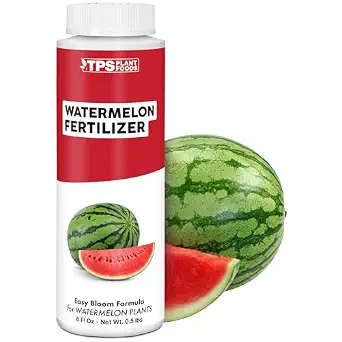 |
| Best Quality Built to a higher standard if you want something more solid | Gardenera Liquid Power Watermelon Fertilizer Concentrate, 8 fl oz |  |
| Best Value The sweet spot between price and what you get | Farmer's Secret Fruit & Bloom Booster Liquid Fertilizer (16 oz) |  |
| Best Budget The cheapest option that still gets the job done reliably | TPS NUTRIENTS Melon Fertilizer Liquid Plant Food, 8 oz |  |
| Highest Rated A top-rated pick with lots of positive feedback | Gardenera Liquid Silica Spray for Watermelon Plants, Ready-to-Use 8 oz |  |
| Most Popular A crowd favorite that many people choose with confidence | Farmer's Secret Fruit & Bloom Booster Liquid Fertilizer (8 oz) |  |
| Best Seller A high-volume bestseller chosen again and again | Gardenera Liquid Power Watermelon Fertilizer Spray, Ready-to-Use 8 fl oz |  |
TPS Nutrients Watermelon Liquid Fertilizer, 8 oz

| Item Form | Liquid |
|---|---|
| Application Method | Pour on plants |
| Coverage | Low |
| Target Species | Watermelon |
| Unit Count | 8 Fluid Ounces |
This 8-ounce liquid fertilizer from TPS Nutrients is designed specifically for watermelon and other melons, supplying targeted nutrients to support vine vigor, flowering, and fruit development. It is applied by pouring onto plants, so it integrates simply into regular watering or feeding routines in backyard gardens, raised beds, or small field plots. The formula emphasizes potassium and balanced nutrition to help produce larger, juicier melons and maintain steady growth through the season. Its low coverage and compact bottle make it convenient for gardeners who want precise, repeatable feedings rather than broad-area broadcast applications. Limitations include the small unit size, which means frequent purchases or multiple bottles are needed for larger plots, and it is not labeled for granular or soil-amendment use. Expect useful results for individual plants or small patch plantings when used as part of a consistent feeding schedule, but plan ahead for supply if treating many plants or a large area.
Best for: Gardeners who grow a modest number of watermelon plants and want an easy-to-use, melon-focused feed to support flowering and fruit set. Good for backyard growers who follow a regular feeding routine and prefer targeted liquid applications.
Less Ideal for: Growers managing large fields, community gardens, or many plants who need high-coverage or bulk fertilizer solutions should consider larger-capacity or granular products instead.
- Formulated specifically for watermelons to support flowering and fruit development
- Liquid form is easy to apply and mixes into routine watering or pour-on feeding
- Potassium-rich blend aimed at improving fruit size and juiciness
- Small 8 oz bottle provides low coverage and may not be cost-effective for large plantings
- No granular or soil-amendment option for broad-area application
Verdict: Choose this if you want a simple, melon-specific liquid feed to boost flowering and fruit quality for a small backyard patch of watermelons.
Gardenera Liquid Power Watermelon Fertilizer Concentrate, 8 fl oz

| Item Form | Liquid |
|---|---|
| Coverage | watermelon plants |
| Target Species | Watermelons |
| Mixing Ratio | 1:128 |
| Liquid Volume | 8 fluid ounces |
Gardenera Liquid Power Watermelon Fertilizer is an 8 fl oz concentrated liquid feed made for watermelon plants and intended to speed nutrient uptake and improve yield. You mix the concentrate at 1:128 and apply it to pots or garden plots to encourage vigorous vine growth, stronger roots, and bigger, sweeter melons. The formula lists balanced NPK plus organic acids and chelated micronutrients, and its low pH helps unlock iron and other elements in alkaline soils so micronutrient deficiencies are less likely to limit growth. For performance-focused growers this product is useful during vegetative growth and fruit set when extra phosphorus and potassium support root development and fruit quality. The small bottle is easy to store and transport but requires accurate measuring for the recommended dilution rate. Because it is a concentrated, acidic feed, users should follow mixing instructions carefully and avoid overapplication on seedlings or already well-fertilized soils.
Best for: Growers focused on maximizing watermelon yield and fruit quality who want a targeted, fast-acting feed to use during vine growth and fruit set.
Less Ideal for: Beginners who prefer low-maintenance, slow-release fertilizers or gardeners with very small seedlings that need a gentler feed should consider milder alternatives.
- Formulated specifically for watermelon with balanced NPK and chelated micronutrients
- Low pH concentrate helps unlock iron and other micronutrients in alkaline soils
- Fast-acting liquid form promotes quick uptake and visible results in growth and fruit quality
- Compact 8 fl oz concentrate is convenient for mixing and storing
- Very acidic formula (pH 1.69) requires careful dilution and handling
- Small bottle size means frequent repurchasing for larger patches or many plants
Verdict: A concentrated, watermelon-specific liquid feed that unlocks micronutrients and speeds up growth for growers chasing bigger, sweeter harvests.
Farmer's Secret Fruit & Bloom Booster Liquid Fertilizer (16 oz)

| Item Form | Liquid |
|---|---|
| Specific Uses For Product | Organic |
| Application Method | pour or spray |
| Liquid Volume | 16 fluid ounces |
| Mixing Ratio | 1 teaspoon per 2 gallons of water |
Farmer’s Secret Fruit & Bloom Booster is a super‑concentrated liquid fertilizer designed to encourage blooms, stronger roots, and higher yields when applied as a foliar spray or soil drench. It is mixed at 1 teaspoon per 2 gallons of water and is intended for mid‑to‑late growth stages, applied every 1–2 weeks. The formula emphasizes phosphorus and potassium to support flowering and fruit set while supplying nitrogen and trace minerals to maintain overall plant health. Practical benefits include quick availability to plants compared with granular feeds, flexible application with a watering can, sprayer, or irrigation system, and a long shelf life. Limitations are that exact N‑P‑K percentages are not listed on the product page and dosing relies on the single recommended dilution, so careful measuring is needed to avoid overfeeding. For watermelons, using this during bloom and fruit set should promote stronger root systems and better fruit development, but pair it with a balanced program that meets seedlings' earlier nitrogen needs and with appropriate soil moisture management.
Best for: Gardeners who prioritize efficient, results‑driven feeding during bloom and fruit set and who want a concentrated liquid they can apply selectively to maximize yield.
Less Ideal for: Growers looking for detailed N‑P‑K labels or those who prefer slow‑release granular fertilizers for steady early‑season nitrogen feeding.
- Highly concentrated so a small amount treats a large area
- Formulated to boost flowering and fruit set with elevated phosphorus and potassium
- Can be applied as a soil drench, foliar spray, or through irrigation for flexible use
- Contains trace minerals in addition to primary macronutrients
- Long practical shelf life when stored properly
- No explicit N‑P‑K ratio printed in the provided product details
- Requires accurate dilution to avoid overapplication
Verdict: A concentrated, bloom‑focused liquid fertilizer that is ideal for gardeners wanting a targeted, easy‑to‑apply boost during watermelon bloom and fruit set.
TPS NUTRIENTS Melon Fertilizer Liquid Plant Food, 8 oz

| Item Form | Liquid |
|---|---|
| Application Method | Watering can or hose-end sprayer |
| Coverage | Medium |
| Target Species | Melons |
| Liquid Volume | 8 fluid ounces |
This 8 oz liquid melon fertilizer from TPS Nutrients is a concentrated feed designed for foliar or soil application to support vine vigor and fruit development in melons. It is typically mixed according to the product directions and applied with a watering can or hose-end sprayer during the growing season to encourage steady growth, reduce blossom drop, and improve fruit set and sweetness. Notable features include a liquid formulation for quick uptake and a mixing ratio that makes small bottles easier to dose for backyard gardens. Practical benefits are targeted nutrition for melon crops, flexibility to feed by foliar spray or soil drench, and suitability for both garden beds and larger plantings. Important limitations are the small 8 oz volume, which means frequent repurchase for larger plantings, and the lack of detailed NPK values on the label for precise nutrient planning. For gardeners on a budget it offers a focused, easy-to-use option for improving melon performance, but larger or more chemically specified feeds may be more economical per season for extensive plantings.
Best for: Home gardeners growing a few watermelon or melon plants who want a simple, melon-focused feed that is easy to apply and requires minimal mixing.
Less Ideal for: Commercial growers or gardeners managing large melon beds who need larger volumes or detailed nutrient formulations for precise fertilization programs.
- Liquid formula allows faster nutrient uptake via foliar or soil application
- Designed specifically for melons to support vine growth, fruit set, and sweetness
- Compatible with watering can or hose-end sprayer for easy backyard use
- Small concentrated bottle is convenient for gardeners with a few plants
- Only 8 fl oz per bottle so cost per season can be high for larger plantings
- Product listing does not specify full NPK breakdown for precise nutrient planning
Verdict: A convenient, melon-specific liquid feed that makes it easy for backyard growers to boost vine vigor and fruit set.
Gardenera Liquid Silica Spray for Watermelon Plants, Ready-to-Use 8 oz

| Unit Count | 8 Fluid Ounces |
|---|---|
| Item Form | Liquid |
| Application Method | Spray |
| Coverage | Ready-to-Use Mist Spray |
| Target Species | Watermelon |
This pre-mixed Gardenera Liquid Silica Spray is a foliar supplement intended to boost structural strength and stress tolerance in watermelon plants. It is used by spraying leaves and stems directly once a week alongside regular watering. The formula provides a plant-available form of silicon (monosilicic acid) plus trace humic and fulvic acids, which the brand says promotes rapid uptake and thicker stems and healthier leaf tissue. Practical benefits include easy, no-mix application, suitability for indoor or outdoor watermelon plants, and a non-toxic, biodegradable composition that fits into routine care without extra handling. Limitations to note are the small 8 oz volume, which means frequent repurchase for larger gardens, and that it is a supplement rather than a complete fertilizer so it does not replace balanced NPK feeding. Also the product is presented as professional-grade, so casual gardeners should follow directions and integrate it with their existing fertility plan rather than expecting standalone results.
Best for: Gardeners who prioritize consistent, low-effort supplements to improve watermelon plant structure and resilience and who plan to integrate a silicon spray into their weekly care routine.
Less Ideal for: Growers managing large-scale or commercial fields who need bulk fertilizers or a full nutrient program rather than a foliar silicon supplement.
- Ready-to-use foliar spray requires no mixing for quick application
- Provides plant-available silicon (monosilicic acid) for faster uptake
- Safe formulation described as non-toxic, biodegradable and water-soluble
- Suitable for both indoor and outdoor watermelon plants and weekly use
- Small 8 oz volume may be insufficient for larger gardens
- Not a complete fertilizer so must be used alongside regular NPK feeding
Verdict: Use this ready-to-use silica spray when you want an easy weekly supplement to strengthen watermelon stems and reduce leaf stress.
Farmer's Secret Fruit & Bloom Booster Liquid Fertilizer (8 oz)

| Item Form | Liquid |
|---|---|
| Application Method | dilute with water and pour or spray |
| Coverage | general garden use |
| Mixing Ratio | 1 teaspoon : 2 gallons |
| Target Species | Multiple |
This concentrated liquid booster is designed for mid-to-late growth stages to encourage stronger roots, bigger blooms and higher fruit yields. You dilute one teaspoon per two gallons of water and apply by watering or foliar spray every 1–2 weeks; the small 8 oz bottle goes a long way thanks to the high concentration. The formula emphasizes phosphorus and potassium plus trace minerals, which helps set flowers and support fruit development on a wide range of plants including melons. Practical benefits include fast availability to plants compared with granular feeds and flexible application options compatible with hand watering, sprayers or irrigation. Important limitations are the small bottle size if you have large acreage and the need to follow dilution instructions closely to avoid overfeeding; it is intended as a supplemental feed during the fruiting phase rather than a complete fertilizer program. For watermelon growers it works best as a targeted bloom/fruit feed alongside a balanced baseline fertility plan.
Best for: Home gardeners growing watermelons who want a targeted bloom and fruit booster they can apply easily and see results from within a few feeding cycles.
Less Ideal for: Large-scale growers or anyone needing a full-season, granular base fertilizer for soil amendment should consider larger-capacity or complete feed options instead.
- High phosphorus and potassium focus to encourage flowering and fruit set
- Very concentrated formula so small amounts cover many applications
- Can be applied to soil or as a foliar spray and is compatible with irrigation systems
- Includes trace minerals in addition to NPK for broader plant nutrition
- Simple mixing ratio makes it easy for beginners to use safely
- 8 oz bottle may be insufficient for larger gardens or multiple watermelon plants
- Not a complete soil amendment—best used alongside a balanced fertilizer program
Verdict: A compact, pro-formulated bloom booster that is easy to apply and effective for increasing flower set and fruit development on home-grown watermelons.
Gardenera Liquid Power Watermelon Fertilizer Spray, Ready-to-Use 8 fl oz

| Item Form | Liquid |
|---|---|
| Application Method | Spray |
| Coverage | Watermelon |
| Unit Count | 8 Fluid Ounces |
This ready-to-use foliar spray is formulated to give watermelon plants an immediate nutrient boost without measuring or mixing. You simply shake the bottle and mist leaves and stems every 7 to 14 days, which makes it convenient for container and garden growers who want a low-effort feeding program. The fast-acting liquid formula is designed for direct leaf uptake, so you can expect quicker visible improvement in leaf color and vigor compared with soil-only applications. Its small 8 ounce bottle is handy for spot treatments, indoor seedling care, or treating a few vines in a backyard patch. Limitations are its limited volume for larger plantings and the need to reapply frequently; it is not a soil amendment so it should be used as part of a broader fertility plan rather than a sole long-term source of nutrients. For gardeners who prefer simple, foliar feeding targeted to watermelon, this product is easy and predictable to use.
Best for: Gardeners who want a low-effort, predictable foliar feed for watermelon plants and prefer ready-to-use products with minimal mixing or guesswork.
Less Ideal for: Growers managing large acreage or full-season fertility programs who need bulk soil amendments or slow-release fertilizers for continuous feeding.
- Premixed spray that requires no measuring or dilution
- Formulated for foliar application to deliver nutrients directly to leaves and stems
- Suitable for indoor and outdoor use, useful for pots and small garden plots
- Fast-acting formula that promotes visible improvement in growth and foliage
- Only 8 fluid ounces, so multiple bottles are needed for larger plantings
- Not formulated as a soil amendment or long-term nutrient source
Verdict: Pick this if you want a simple, ready-to-use foliar spray to quickly boost watermelon growth without mixing or complex application steps.
Choosing the Right Fertilizer for Watermelon: Key Factors to Consider
N-P-K Ratio and Timing
The ratio of nitrogen, phosphorus, and potassium determines vine growth versus fruit development. Early in the season, slightly higher nitrogen supports leafy growth and strong vines. As flowers form and fruit sets, gardeners should shift to formulations with lower nitrogen and higher phosphorus and potassium to encourage bloom retention and sugar accumulation.
Timing also matters because overapplication of nitrogen late in the season can delay ripening and reduce sugar content. Look for feeds or feeding plans that specify stage-based rates so you can adjust applications from planting through harvest.
Solubility and Release Rate
How quickly nutrients become available affects both plant response and risk of nutrient loss. Water-soluble fertilizers deliver immediate nutrients and are useful for correcting deficiencies or for foliar feeding during bloom. Controlled-release granules or slow-release organic amendments provide a steadier supply and reduce the need for frequent applications.
Choose fast-release options when a rapid correction is needed after a soil test. Choose slower-release or blended feeds when you want consistent feeding across weeks without risking salt buildup in container situations.
Phosphorus and Potassium Importance
Phosphorus supports root development and early bloom formation while potassium is crucial for fruit set, size, and sugar translocation. Watermelons in fruiting stage benefit most from adequate available phosphorus and potassium rather than excess nitrogen.
If your soil test shows low P or K, prioritize fertilizers that supply those elements in plant-available forms. In soils already high in these nutrients, choose a balanced feed to avoid unnecessary accumulation.
Soil Type and Drainage
Sandy soils drain quickly and tend to lose nutrients through leaching, so they benefit from more frequent, lighter feedings or slow-release products. Clay soils hold nutrients longer but can become waterlogged; in those soils, avoid heavy soluble feeds that increase salt stress and consider organic matter to improve structure.
Drainage also affects root health and fertilizer uptake. Ensure your feeding plan accounts for local soil characteristics and watering habits to prevent root burn and nutrient imbalances.
Application Method and Equipment
Fertilizers for watermelon can be applied as granular topdressings, side dressings, liquid drench, or foliar sprays. Each method changes how quickly plants access nutrients and how precisely you can target feeding. Side dressing with granular or banded fertilizers near the root zone is a common way to support fruiting vines without disturbing roots.
Consider the tools you have: a watering can or hose-end applicator supports liquid feeds, while a small hand spreader or scoop works for granulars. Accurate measuring is important to avoid overapplication, especially for concentrated liquids or soluble powders.
Organic Compatibility and Soil Biology
Organic fertilizers feed plants indirectly by supporting soil biology, which in turn cycles nutrients into plant-available forms. They often improve long-term soil structure and microbial activity, which benefits watermelon root systems and moisture retention.
If you prefer organic methods, select amendments with clear nutrient content and consider combining them with microbial inoculants or compost teas. Keep in mind organic sources may release nutrients more slowly and require earlier or more frequent applications to meet peak fruiting demand.
Understanding Watermelon Nutrient Needs
Watermelons are heavy feeders during fruit set and filling. After vines establish, the plant shifts energy from leaf production to flowering and directing sugars into developing fruits. That means your feeding plan should change as the season progresses rather than remaining constant.
Monitor vine vigor and flower set as visual cues. Excessive leaf growth with few fruits usually indicates too much nitrogen, while poor fruit set or small melons can be a sign of insufficient phosphorus or potassium.
- Start with a balanced starter feed at planting to support roots.
- Reduce nitrogen and increase potassium during bloom and fruit fill.
- Use visual cues and soil tests to fine-tune applications.
Matching Fertilizer Type to Growing Setup
Your chosen fertilizer should fit how you grow. In-ground rows with deep soil can tolerate fewer, heavier applications of granular or organic amendments. Containers and raised beds need more careful dosing because nutrients and water escape more quickly and salts can build up.
Liquid feeds are convenient for containers and foliar applications, while controlled-release granules are practical for in-ground melons where you want steady nutrition without frequent visits.
- Containers: smaller, more frequent liquid or soluble feeds.
- In-ground: granular or slow-release options with side dressing.
- Raised beds: combine organic matter with periodic mineral feeds.
Interpreting a Soil Test
A soil test is the single most useful tool for matching fertilizer to actual needs. Tests reveal existing levels of phosphorus, potassium, pH, and organic matter so you apply only what the soil lacks. For watermelon, pay particular attention to P and K readings and the soil pH range, which affects nutrient availability.
Adjust fertilizer choices based on deficiencies. If pH is outside the optimal range, address that first because adjusting pH can change nutrient uptake and might reduce the need for aggressive feeding.
- Test at least a few weeks before planting to allow time for soil amendments.
- Use test results to guide whether to choose high-P/K formulations or a gentler balanced feed.
Feeding Schedule Basics
A simple feeding schedule starts with a starter application at planting, continues with moderate feeds at vine establishment, and shifts to bloom and fruiting formulations when flowers appear. Many gardeners apply a side dressing when fruits begin to form and again during the early fill stage.
Avoid heavy nitrogen applications late in the season. As melons approach maturity, reduce or stop fertilizing to let sugar concentrations concentrate in the fruit.
- Planting: starter balanced feed to support roots.
- Vine growth: moderate nitrogen to develop structure.
- Bloom and fruit set: increase P and K, reduce N.
- Late season: taper off feeding to encourage ripening.
Common Mistakes and How to Avoid Them
Overfeeding with high-nitrogen products late in the season is a common mistake that produces lush vines but fewer or flatter-tasting melons. Another frequent issue is applying fertilizers too close to the crown or directly on foliage, which can burn tissue and damage young plants.
Prevent mistakes by following label rates, using measured applications, and applying feeds in bands or side dressings away from the stem. If you use soluble concentrates, dilute exactly as directed and water in after application to move nutrients to the root zone.
- Do not exceed recommended rates based on pot size or row width.
- Avoid applying concentrated fertilizer to dry soil without subsequent watering.
- Rely on soil tests rather than guesswork for major amendments.
How We Chose the Best Fertilizer for Watermelon
We shortlisted fertilizers that match the nutrient timeline and growth habits of watermelon plants. Key evaluation criteria included nutrient ratio and formulation suitability for fruiting, whether the product supplies readily available phosphorus and potassium for bloom set and sugar development, application flexibility across soil and container grows, and clarity of labeling so gardeners can follow feeding schedules easily. We also weighed how well each option integrates with organic or conventional garden systems when applicable, plus the practical ease of use: how simple it is to measure, apply, and avoid overfeeding. Excluded items included general all-purpose feeds without clear N-P-K breakdowns, products intended only for lawns or non-bearing ornamentals, and fertilizers lacking usage guidance for vegetables or fruiting crops. The final list favors products and formulations that provide focused support during flowering and fruit fill stages while minimizing the risk of excessive vegetative growth.
FAQ
When should I start fertilizing watermelon seedlings?
Begin with a diluted starter feed when seedlings have at least two true leaves and after they are established in the ground or larger containers. Use a gentle, balanced fertilizer to avoid burning young roots and to support early root growth.
How do I correct a phosphorus or potassium deficiency?
First confirm a deficiency with a soil test. Apply a fertilizer or amendment that supplies available phosphorus or potassium and follow label rates. For quick correction during bloom, a water-soluble drench targeted to the root zone can help, while granular or organic amendments improve levels over the longer term.
Can I use compost alone to feed watermelons?
Compost improves soil structure and provides slow-release nutrients, but it may not supply enough immediately available phosphorus and potassium for heavy fruiting. Many gardeners combine compost with targeted mineral feeds or timed applications during bloom for best results.
Is foliar feeding effective for watermelons?
Foliar sprays can quickly correct minor nutrient shortages, especially micronutrients, but they are not a substitute for root-zone feeding of primary nutrients like phosphorus and potassium. Use foliar feeding as a supplementary measure when rapid correction is needed.
How often should I side-dress my melon plants?
Side-dressing frequency depends on soil type and fertilizer formulation. In sandy soils or container grows, lighter feedings every two to three weeks are common. In heavier soils with slow-release fertilizers, one or two well-timed side dressings during the fruit set and early fill stages may be enough.
Will too much fertilizer affect melon flavor?
Yes, excessive nitrogen late in the season can reduce sugar concentration and dilute flavor. Balanced feeding that emphasizes potassium during fruit fill helps sugar translocation and results in sweeter melons.
Final Verdict
Choose a fertilizer strategy that matches soil test results, your growing setup, and the seasonal needs of watermelon plants. Prioritize formulations and timing that supply phosphorus and potassium during bloom and fruit fill while avoiding excess nitrogen late in the season. By matching nutrient form, application method, and schedule to your soil and planting style, you will maximize fruit size and flavor while minimizing waste and plant stress. Focus on simple, stage-based feeding and monitor vines visually and with periodic soil tests. That approach gives the best chance of consistent yields and sweet, well-ripened melons.
