

Note: This article contains affiliate links. If you click on these links and make a purchase, I may earn a small commission at no extra cost to you. This helps support my research and content. Read my full affiliate disclosure here.
Picking the right flower booster fertilizer makes a noticeable difference in bloom size, color intensity, and how long flowers stay in peak condition. Whether you tend a mixed perennial border, a container display on a balcony, or a cutting garden, the correct concentrate and feeding schedule will affect outcomes in the bed and the pot alike. This guide shortlists seven top flower booster fertilizers and walks through how they perform for different garden situations, focusing on nutrient balance and ease of use. Read on to understand the practical tradeoffs so you can match a feeding program to your plants and routine.
Top Picks at a Glance
| Best Overall The best all-around choice for most situations | Miracle-Gro Water Soluble Bloom Booster Flower Food, 5.5 lb |  |
| Best Quality Built to a higher standard if you want something more solid | FoxFarm Tiger Bloom Liquid Plant Food (1 pint) |  |
| Best Value The sweet spot between price and what you get | Miracle-Gro Water Soluble Bloom Booster Flower Food, 4 lb |  |
| Best Budget The cheapest option that still gets the job done reliably | RAINFLOW 10-30-20 Blossom Booster Water-Soluble Fertilizer (11.28 oz) |  |
| Highest Rated A top-rated pick with lots of positive feedback | Jack's Classic Blossom Booster Water-Soluble Fertilizer 10-30-20, 1.5 lb |  |
| Most Popular A crowd favorite that many people choose with confidence | Farmer's Secret Fruit & Bloom Booster Liquid Fertilizer (8 oz) |  |
| Best Seller A high-volume bestseller chosen again and again | TPS Nutrients Orchid Fertilizer Bloom Boosting Liquid Plant Food, 8 oz |  |
Miracle-Gro Water Soluble Bloom Booster Flower Food, 5.5 lb

| Item Form | Powder |
|---|---|
| Application Method | Mix with water |
| Target Species | Flower |
| Mixing Ratio | 1:Water |
Miracle‑Gro Water Soluble Bloom Booster is a powdered, water‑mix fertilizer designed to be dissolved and applied every 7 to 14 days to flowering plants. It carries a high middle number NPK (10‑52‑10) so it delivers an extra boost of phosphorus to encourage bud set and larger blooms, and it can be used for in‑ground beds, containers and indoor flowering plants when diluted to the package directions. The included mixing guidance and scoop make it straightforward to dose for small containers or larger garden areas, and one 5.5 lb container covers a substantial area. Practical benefits include fast uptake when watered in at the base of plants and compatibility with common feeders or a watering can. Limitations are that the concentrated phosphorus focus is for flowering performance rather than overall foliage growth and it requires regular reapplication through the blooming season rather than a single slow‑release feed. Also users should follow safety directions when handling and avoid overfeeding sensitive or newly transplanted plants.
Best for: Gardeners who prioritize showy, frequent blooms and want a product they can apply regularly to flower beds and containers during the flowering season.
Less Ideal for: People looking for an all‑season, low‑maintenance slow‑release fertilizer or those who need a balanced feed for foliage and establishment of new transplants.
- High phosphorus NPK (10-52-10) targets bud set and bloom production
- Water‑soluble powder mixes quickly for fast feeding and easy use in a watering can or garden feeder
- Suitable for both in‑ground beds and container flowering plants including roses and hydrangeas
- Covers a large area from a single 5.5 lb container when used to label directions
- Requires frequent applications during bloom period rather than providing long‑term slow release
- Formulation focuses on flowering so it is less balanced for leafy growth or general maintenance
Verdict: Choose this bloom booster if your goal is bigger, more frequent flowers by feeding a high‑phosphorus, fast‑acting soluble fertilizer during bloom season.
FoxFarm Tiger Bloom Liquid Plant Food (1 pint)
| Item Form | Liquid |
|---|---|
| Specific Uses For Product | Hydroponic |
| Application Method | Watering; Foliar spraying |
| Target Species | Flowering Plants |
| Mixing Ratio | 1:200 or 1:300 |
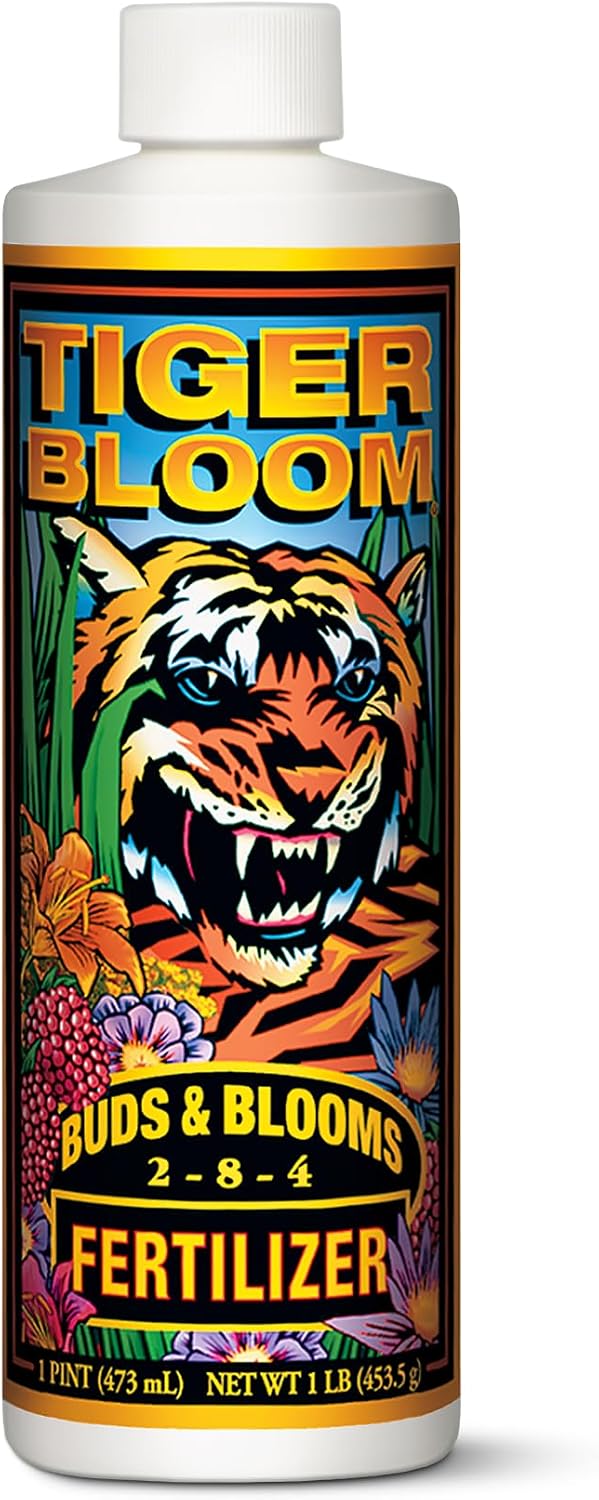
Tiger Bloom is a liquid, high-phosphorus fertilizer designed to push plants into a strong flowering and fruiting phase. You mix a small amount into the irrigation water or use it as a foliar spray and apply from first signs of flowering through harvest. The 2-8-4 formula and included micronutrients support bud set and larger blooms, and the concentrate mixes at 1:200 to 1:300 for routine feeding or 2 to 4 teaspoons per gallon for heavier feeding. It works in both soil and hydroponic setups and is formulated for quick nutrient uptake and stable micronutrient availability during storage. Practical benefits include flexible application methods, suitability for intensive flowering cycles, and a small bottle that lasts when used at recommended dilutions. Important limitations are that it is bloom-focused rather than an all-purpose feed so it may not meet vegetative needs, and the phosphorus content means users near waterways should follow local regulations to avoid runoff issues.
Best for: Serious growers who prioritize maximizing flower and bloom performance and want a concentrated, fast-acting bloom booster for soil or hydroponic environments.
Less Ideal for: Casual gardeners seeking a single all-purpose fertilizer for every growth stage or those managing turf or non-flowering lawns where phosphorus restrictions apply.
- High phosphorus NPK (2-8-4) concentrated for stronger bud development
- Works in soil and hydroponic systems for versatile use
- Liquid concentrate mixes easily for foliar or watering applications
- Formulated for quick nutrient uptake and stable micronutrient availability
- Focused on flowering so it is not a balanced all-stage fertilizer
- Contains phosphorus which may be restricted near waterways
Verdict: Choose Tiger Bloom when you need a concentrated, fast-acting bloom booster to maximize flower and fruit production.
Miracle-Gro Water Soluble Bloom Booster Flower Food, 4 lb

| Item Form | Powder |
|---|---|
| Application Method | Water Soluble |
| Target Species | flowers |
| Mixing Ratio | 1 tablespoon per gallon |
This Miracle‑Gro Bloom Booster is a water‑soluble powder designed to promote bigger, more colorful blooms on annuals and perennials. It mixes easily in a watering can (mixing ratio 1 tablespoon per gallon for outdoor use) and can also be used with a garden feeder to treat multiple containers and flower beds. The high phosphorus 10-52-10 formulation is the notable feature for encouraging bud set and more abundant flowers, and it delivers results quickly because nutrients dissolve and reach roots fast. Typical use is every 7 to 14 days during the growing season, which makes it convenient for regular maintenance of flowering groundcovers like creeping phlox or mixed container displays. Limitations include the frequent reapplication schedule compared with slow‑release granular fertilizers and the focused bloom‑boosting formula which is not balanced for leafy growth or nonflowering plants. It is best used as a periodic flowering supplement alongside a basic all‑purpose feed or when you specifically want to increase bloom production.
Best for: Gardeners who prioritize frequent, visible flowering results and want an easy soluble booster to use on spring and summer bloomers such as creeping phlox in beds and containers.
Less Ideal for: Those seeking a low‑maintenance, slow‑release fertilizer for foliage development or for primarily nonflowering perennials should consider an all‑purpose or slow‑release option instead.
- High phosphorus 10-52-10 formula to encourage bud formation and more blooms
- Water‑soluble powder that dissolves quickly for fast nutrient uptake
- Works with a watering can or Miracle‑Gro Garden Feeder for flexible application
- Clear mixing directions (1 tablespoon per gallon) make dosing straightforward
- Requires feeding every 7–14 days rather than long‑term slow release
- Specialized bloom formula may not support vigorous leafy growth for nonflowering periods
Verdict: Choose this bloom booster when you want a fast‑acting, water‑soluble fertilizer that reliably increases flower production in creeping phlox and other bloom‑focused plantings.
RAINFLOW 10-30-20 Blossom Booster Water-Soluble Fertilizer (11.28 oz)

| Item Form | Granules |
|---|---|
| Application Method | Water-soluble |
| Target Species | Flowers |
| Unit Count | 11.28 Ounce |
This RAINFLOW 10-30-20 Blossom Booster is a small, water-soluble granule fertilizer formulated to push bloom production and enhance flower color for azaleas, hydrangeas, bougainvillea and similar ornamentals. You mix measured granules into water and apply to soil or potted plants, where the high phosphorus ratio supports bud set and visible flowering without complex application. The blue granules dissolve quickly for fast absorption, making it handy for seasonal feeding or targeted bloom boosts before shows or heavy flowering periods. Its compact 11.28 ounce package is convenient for home gardeners and greenhouse users who need a single-season supply or want to test a bloom-specific feed. Expect noticeably stronger bloom development when used during the flowering stage, but you will need to reapply according to plant needs since the small unit covers limited area compared with larger commercial bags. Also it is focused on flowering benefits rather than balanced all-season nutrition, so pair it with general-purpose feeds for vegetative growth if needed.
Best for: Home gardeners on a budget who want an easy-to-mix bloom booster for potted plants, beds, or seasonal flowering displays and who prioritize visible flower production over all-purpose feeding.
Less Ideal for: Large-scale gardeners or those seeking a single all-purpose feed for both foliage and long-term soil building should consider bulk or balanced fertilizers instead.
- High phosphorus NPK (10-30-20) targets bud set and stronger blooms
- Water-soluble granules dissolve quickly for fast nutrient uptake
- Compact 11.28 oz package is easy to store and carry for home gardeners
- Blue granules make measuring and mixing more straightforward
- Small unit size provides limited coverage for larger gardens
- Formulation emphasizes flowering so it is not a complete all-season fertilizer
Verdict: Choose this compact 10-30-20 water-soluble booster when you want an inexpensive, easy-to-apply feed that quickly increases bloom size and color.
Jack's Classic Blossom Booster Water-Soluble Fertilizer 10-30-20, 1.5 lb

| Item Form | Powder |
|---|---|
| Application Method | foliar or root feeding |
| Target Species | Flowers |
| Mixing Ratio | 1:3:2 |
Jack's Classic 10-30-20 Blossom Booster is a concentrated powdered fertilizer formulated to push flowering and improve bloom color and quantity. It mixes with water using the included scoop and can be applied as a foliar spray, root drench, or in continuous-feed setups, which makes it convenient for both potted dahlias and garden beds. The high middle number (phosphorus) supports bud set and flowering while added micronutrients help overall plant health. Practical benefits include economical coverage from a powder concentrate, clear mixing directions for frequent or maintenance feedings, and compatibility with different application methods. Limitations to note are that it is a bloom-focused formula so it is not balanced for heavy leafy growth and must be measured and mixed correctly to avoid overfeeding. Users should follow the specified dilution rates and timing around bud set to get the best results for dahlias.
Best for: Gardeners who prioritize bigger, more plentiful blooms on dahlias and want a cost-effective, flexible fertilizer they can apply by spray or soil drench.
Less Ideal for: Growers focused on building foliage, establishing young plants, or those who want an all-in-one balanced feed for both vegetative growth and flowering.
- High phosphorus ratio (10-30-20) tailored to increase bloom set and flower production
- Water-soluble powder concentrates allow economical mixing for multiple gallons of feed
- Can be used as foliar spray or root drench and works with continuous-feed systems
- Includes a measuring spoon and clear mixing ratios for straightforward application
- Formulated primarily for flowering so it is not ideal when promoting strong vegetative growth
- Requires careful measuring and mixing which adds a small learning step for new users
Verdict: Choose this concentrated 10-30-20 water-soluble booster when you want a practical, application-flexible fertilizer to increase dahlia bloom number and color.
Farmer's Secret Fruit & Bloom Booster Liquid Fertilizer (8 oz)

| Item Form | Liquid |
|---|---|
| Liquid Volume | 8 fluid ounces |
| Mixing Ratio | 1 teaspoon : 2 gallons |
| Application Method | dilute with water and pour or spray |
Farmer's Secret Fruit & Bloom Booster is a concentrated liquid plant food designed for mid-to-late season use when plants begin to bud and set fruit. You dilute a small amount (1 teaspoon per 2 gallons) and apply it either to the soil with your watering can or as a foliar spray, repeating every 1 to 2 weeks. The formula emphasizes phosphorus and potassium alongside trace minerals to promote root development, flowering and fruit set, which is the kind of nutrient profile banana growers look for during fruiting. Because it is liquid and already mixed, nutrients are immediately available and it is easy to integrate with irrigation or regular watering. The bottle is small but very concentrated, so a little goes a long way. A practical limitation is that the 8 ounce size supplies only a limited number of applications for larger banana plants or multiple trees, so you will need to plan purchases for season-long feeding. Follow dilution directions carefully to avoid overapplication.
Best for: Gardeners who prefer a proven, easy-to-use liquid feed to encourage blooms and fruit and who want straightforward instructions and predictable results.
Less Ideal for: Growers with large banana groves or multiple mature plants who need bulk or long-term feeding should consider larger-volume fertilizers or granular options.
- High phosphorus and potassium formulation supports flowering and fruit set
- Liquid concentrate delivers nutrients immediately and is usable as soil or foliar feed
- Simple, low-strength mixing ratio makes it easy for beginners to apply safely
- Contains additional trace minerals (iron, zinc, calcium) that support overall plant health
- Small 8 oz bottle provides relatively few applications for mature banana plants or multiple trees
Verdict: A highly concentrated, easy-to-use liquid booster that quickly delivers flowering and fruiting nutrients for backyard banana plants and other fruiting ornamentals.
TPS Nutrients Orchid Fertilizer Bloom Boosting Liquid Plant Food, 8 oz

| Item Form | Liquid |
|---|---|
| Application Method | foliar spray |
| Coverage | Medium |
| Target Species | orchids |
| Unit Count | 8 Fluid Ounces |
This 8 oz TPS Nutrients orchid fertilizer is a liquid, foliar-spray plant food designed specifically to support flowering and root health in indoor orchids. It delivers a kelp-enriched nutrient mix meant to encourage new bloom spikes and richer color in foliage, and the liquid form absorbs quickly when applied as a spray. Typical use is straightforward: dilute per the included mixing guidance and spray the leaves and growing medium on a routine schedule to support blooms and root uptake. Its compact bottle is convenient for hobbyists and small collections and the product focuses on flowering results rather than heavy vegetative growth. Limits to consider are the small unit size for larger collections and the lack of detailed NPK ratios on the main listing, so users who track exact fertilizer balance may want to supplement with a general-purpose orchid feed or test mixes first. For cautious growers, the foliar method reduces waste and can be spot-applied to individual plants.
Best for: Buyers who want a simple, bloom-focused foliar feed for indoor orchids and prefer a ready-to-use liquid that is easy to apply to individual plants.
Less Ideal for: Growers managing large collections, greenhouse operations, or those who require exact NPK ratios for strict fertilization schedules should consider bulk or fully specified alternatives.
- Formulated specifically for orchids to encourage bloom spikes and flowering.
- Kelp-enriched liquid promotes root health and nutrient uptake.
- Foliar spray application allows quick absorption and targeted feeding.
- Compact 8 fl oz bottle is easy to store and handy for small collections.
- Small 8 oz volume may require frequent repurchasing for multiple plants.
- Product listing does not provide a full NPK breakdown in the visible details.
Verdict: A convenient kelp-enriched foliar liquid that makes it easy to boost orchid blooms and support root health in small indoor collections.
Choosing the Right Flower Booster Fertilizer: Key Factors to Consider
Nutrient Ratio and Timing
Flower boosters typically emphasize phosphorus and potassium relative to nitrogen. Phosphorus supports bud set and early bloom development while potassium helps flower size, color saturation, and stem strength. Understanding the ratio helps you choose a product that encourages blooms rather than leafy growth.
Timing matters because many flowering plants respond best to booster feeds at specific life stages. Apply higher-phosphorus feeds at bud formation and early bloom, then switch to maintenance-strength feeds if the label recommends it. Matching nutrient timing to your plants' cycle prevents wasted feed and reduces stress.
Application Method and Convenience
Liquid concentrates, water-soluble powders, and slow-release granules all put nutrients into the garden in different ways. Liquids and soluble powders deliver a fast uptake that is useful for encouraging immediate bud set, especially in containers and hanging baskets. Granules or coated slow-release products reduce how often you need to dress beds.
Consider how you garden. If you prefer weekly watering and feeding with a hose or watering can, a liquid or soluble feed that dissolves easily is practical. If you maintain multiple beds and want low-maintenance feeding, slow-release formats save time but may deliver a slower visible bloom response.
Concentration and Dilution Guidance
Concentration determines how forgiving a product is to user error. Highly concentrated formulas can produce excellent results but increase the risk of fertilizer burn if mixed too strong, especially in containers. Clear, conservative dilution instructions reduce that risk for less experienced gardeners.
Look for labels that provide specific dose ranges for different plant types and pot sizes. Products that include measuring caps or marked containers make accurate dosing easier in the field, which helps prevent overfeeding and stress on flower roots.
Compatibility With Soil and Water
Soil pH and water chemistry influence nutrient availability. Some flower boosters include chelated micronutrients or pH-buffering components that keep phosphorus and other elements more available in a range of soils. If you garden in hard water or alkaline soils, choose formulas known for stable uptake under those conditions.
Also consider salt index for container gardening. High-salt formulations can accumulate salts in potting mix, which harms root health over time. Rinsing or periodic flushing helps, but selecting a lower-salt bloom feed minimizes risk.
Plant Safety and Target Crop Recommendations
Different flowering plants have varied nutrient needs and tolerance levels. Tender annuals and young perennials can be more sensitive to strong booster feeds than established shrubs or woody plants. A product that lists recommended plant types and provides separate doses for seedlings, young plants, and mature specimens is easier to adapt safely around the garden.
Check instructions for whether a product is suitable for edible flowers or cutting gardens if you plan to harvest. Safety language and withholding periods, if any, are critical when using on plants that will be handled or cut for floral arrangements.
Environmental Impact and Runoff Risk
Because flower boosters emphasize flowering nutrients, careless application can increase runoff of phosphorus and other elements into stormwater. Choose application methods and schedules that minimize runoff risk, such as targeted soil drench for root uptake rather than broadcast scattering near impermeable surfaces.
Slow-release or controlled-release formats often reduce immediate leaching risks. Also consider products with clear guidance on avoiding application before heavy rain and that recommend buffer zones near water features or drainage.
Matching Feed Strength to Plant Type
Not all flowering plants respond the same way to a given booster. Hardy perennials and shrubs usually tolerate stronger and less frequent feeds, while annuals and container plants benefit from gentler, regular doses. Match feed strength to the sensitivity of the plant and adjust frequency rather than concentration when possible.
For mixed borders, use a moderate-strength program timed around bud set. For containers and hanging baskets, prioritize soluble, low-salt feeds applied more often for consistent bloom display.
- Hardy shrubs: lower frequency, moderate strength
- Annuals in containers: regular, lower-strength feeds
- Cut flowers: choose products labeled safe for harvesting and follow timing guidance
Liquid Vs. Granular Formats: Practical Impacts
Liquid feeds provide fast results and are easy to mix into regular watering. They are ideal for growers who water frequently and want rapid responses in bud set and color. Granular and slow-release formats reduce labor by spacing out nutrient delivery, which is useful for low-maintenance borders and larger plantings.
Consider storage and handling too. Liquids can be bulkier and may require careful measuring, while granules are simple to broadcast or topdress but may need incorporation into the soil or potting mix for best contact with roots.
- Liquids: quick uptake, ideal for containers
- Granules: lower maintenance, useful for beds
- Water-soluble powders: flexible dosing for different pot sizes
Feeding Frequency and Seasonality
Establish a seasonal feeding rhythm. Many gardeners apply bloom boosters during the active flowering season and reduce or stop feeding during plant dormancy. For long-blooming annuals, a steady low-concentration schedule often yields the best sustained display.
Avoid overfeeding late in the season when plants are setting seed or preparing for dormancy. Overuse can reduce hardiness in perennials and lead to late-season growth that is vulnerable to frost.
- Start at bud formation, continue through peak bloom
- Reduce feeding after peak flowering
- Adjust frequency based on observed plant response
Application Tips for Containers and Small Beds
Containers concentrate salts and nutrients in a small volume of soil, so measure and dilute carefully. Use water-soluble feeds at recommended lower concentrations and flush pots occasionally to prevent salt buildup. For small beds, deliver feed directly to the root zone rather than over foliage to reduce waste and encourage root uptake.
Hanging baskets and window boxes often need more frequent, lighter feeds because they dry out faster. Consider quick-absorbing liquid boosters applied with each watering or on a regular schedule to maintain color and bud production.
- Dilute more for small pots and seedling trays
- Target soil, not foliage, when possible
- Flush containers periodically to avoid salt accumulation
Managing Plant Stress While Encouraging Blooms
Flowering responds best when plants are otherwise healthy. Address water management, pests, and root health before increasing feed strength. If a plant is drought stressed or infested, a booster will not produce strong blooms and may exacerbate stress.
When introducing a new booster, test at reduced strength on a few plants first. Observe for a couple of weeks for leaf tip burn, wilting, or unexpected foliage changes before applying garden-wide.
- Fix watering and pest issues before boosting
- Test new feeds on a small group at lower strength
- Watch for leaf tip burn as an early sign of overfeeding
How We Chose the Best Flower Booster Fertilizer
We prioritized formulas and formulations that directly affect flowering response and day-to-day garden handling. Key evaluation dimensions included nutrient ratio and bioavailability, because phosphorus and potassium drive bud formation and flower quality. We assessed solubility and application method to judge how easily home gardeners can feed beds, containers, and hanging baskets. Plant safety and burn risk were measured by label concentration and recommended dilution rates. Longevity and release profile were considered to balance how often gardeners must reapply. Finally, we looked at compatibility with common soil types and whether the fertilizer fits organic or conventional programs. We excluded general-purpose lawn or vegetable fertilizers that are not tailored for flowering plants, and we did not consider products intended solely for houseplants or for professional greenhouse use. Our filters removed formulas with unclear nutrient labeling or those that require specialized equipment to apply. The selected items match the evaluation criteria above and represent practical options for typical home gardeners who want more blooms without complex routines.
FAQ
How often should I apply a flower booster fertilizer?
It depends on the formulation. Liquids are often applied every one to two weeks at a lower concentration, while slow-release granules may only need application every one to three months. Always follow label guidance and adjust frequency based on plant response.
Will a flower booster harm foliage if it lands on leaves?
Many boosters are formulated for soil application and can cause leaf spotting if concentrated liquid contacts foliage. When foliar contact is unavoidable, use a more dilute solution and apply in cooler parts of the day to reduce burn risk.
Can I use a flower booster on tomatoes or other edible crops?
Some formulas are safe for edible flowers and crops, but others are intended for ornamental use only. Check the product labeling for guidance on edible plants and any recommended withholding periods before harvest.
What should I do if I notice leaf burn after applying a booster?
Stop feeding and water the soil thoroughly to dilute salts. Remove severely damaged foliage and resume feeding at a reduced concentration only after plants show recovery. Re-evaluate application frequency and concentration to prevent recurrence.
Are organic and synthetic flower boosters equally effective?
Both types can increase bloom production, but they work differently. Organic feeds often release nutrients more slowly as they break down, which reduces burn risk and supports soil biology. Synthetic feeds can deliver nutrients quickly and predictably. Choice depends on gardening goals and tolerance for maintenance.
Can I mix a flower booster with regular fertilizer or pesticides?
Mixing should follow label instructions because compatibility varies. Some boosters are formulated to combine safely with common fungicides or insecticides, while others are not. Perform a small jar test and read product guidance before tank mixing.
Final Verdict
When choosing a flower booster fertilizer, prioritize the nutrient ratio and the application format that fits how you garden. Liquids and soluble feeds are best for quick, visible responses in containers and small plantings. Slow-release and granular options reduce labor for larger beds but produce slower bloom responses. Balance feed strength with plant sensitivity, follow dilution guidance, and address overall plant health before increasing fertilizer. By matching a booster to your plant types, watering routine, and seasonal needs, you can encourage bigger, more frequent blooms without adding extra risk to your beds or containers.
