

Note: This article contains affiliate links. If you click on these links and make a purchase, I may earn a small commission at no extra cost to you. This helps support my research and content. Read my full affiliate disclosure here.
Picking the right flowering tree fertilizer shapes how well your trees bloom, set fruit, and recover from stress. Different formulas behave very differently in a garden: some feed fast for an immediate bloom flush while others build root reserves over months. In this guide we shortlist seven top options that suit established mature trees, young transplants, and small urban specimens. We evaluated each choice for nutrient balance, release type, and how easily home gardeners can apply it without disturbing roots. Read on to compare those tradeoffs and find the feeding approach that matches your soil, planting age, and bloom goals.
Top Picks at a Glance
| Best Overall The best all-around choice for most situations | Miracle-Gro Shake 'N Feed Flowering Trees & Shrubs Plant Food, 8 lb. |  |
| Best Quality Built to a higher standard if you want something more solid | Nelson NutriStar Granular Fertilizer for Crape Myrtle & Flowering Trees 10-15-9 (2 lb) |  |
| Best Value The sweet spot between price and what you get | Farmer's Secret Fruit & Bloom Booster Liquid Fertilizer (32 oz) |  |
| Best Budget The cheapest option that still gets the job done reliably | Scotts Evergreen, Flowering Tree & Shrub Continuous Release Plant Food |  |
| Highest Rated A top-rated pick with lots of positive feedback | Jobe's Organics Tree & Shrub Fertilizer Spikes 16-4-4, 30 Count (2 Pack) | 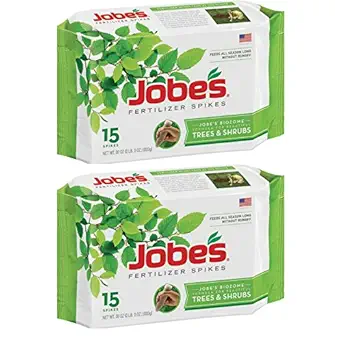 |
| Most Popular A crowd favorite that many people choose with confidence | Miracle-Gro Tree & Shrub Plant Food Spikes, 12 Spikes |  |
| Best Seller A high-volume bestseller chosen again and again | TPS Nutrients Lemon Tree Fertilizer Liquid, 8 fl oz |  |
Miracle-Gro Shake 'N Feed Flowering Trees & Shrubs Plant Food, 8 lb.

| Item Form | Granules |
|---|---|
| Application Method | shake evenly onto the soil |
| Target Species | flowering trees, shrubs and other acid-loving plants |
| Mixing Ratio | 18:6:12 |
| Unit Count | 128 Ounce |
Miracle-Gro Shake 'N Feed Flowering Trees & Shrubs is a granular, slow-release fertilizer designed to support flowering shrubs and acid-loving plants over an extended period. You apply it by shaking the granules evenly onto the soil under the branch spread or working it into potting mix for containers, then watering to activate the nutrients. The formula lists an 18-6-12 N-P-K ratio and includes organic-derived inputs such as kelp, feather meal, bone meal and earthworm castings to help feed soil microbes and support root development. Practically, that means less frequent feeding and improved foliage and bloom quality across a season—Miracle-Gro recommends reapplying every three months. It works for both in-ground and container plantings and covers a medium area per bag. Limitations are that it is a general-purpose shrub formula tuned for acid-loving species so it is not a precision fertilizer for nutrient-deficient soils and you still need to avoid contact with trunks and foliage when applying. For best results monitor soil pH and follow labeled application rates for newly planted versus established shrubs.
Best for: Gardeners who want a low-effort, season-long feed for flowering shrubs like forsythia and prefer a product that supports soil health without frequent reapplication.
Less Ideal for: Growers who need a precise corrective fertilizer for diagnosed nutrient deficiencies or who maintain shrubs that prefer neutral to alkaline soils.
- Continuous-release granules feed plants for up to three months reducing application frequency
- Contains organic inputs like kelp and earthworm castings to support soil microbes and root health
- Clear application method for both in-ground and container plants makes it easy to use
- Higher nitrogen ratio (18-6-12) promotes lush foliage and supports flowering season-long
- Not a targeted corrective fertilizer for specific mineral deficiencies
- Designed for acid-loving plants so less suitable for neutral or alkaline-preferring shrubs
Verdict: Use this to give forsythia and other acid-loving shrubs an easy, three-month continuous feeding that boosts foliage and blooms with minimal effort.
Nelson NutriStar Granular Fertilizer for Crape Myrtle & Flowering Trees 10-15-9 (2 lb)

| Item Form | Granules |
|---|---|
| Specific Uses For Product | Plant Food |
| Target Species | Crape Myrtle, Desert Willow, Mimosa, Orchid Tree |
| Mixing Ratio | 10-15-9 |
| Unit Count | 32 Ounce |
This NutriStar granular fertilizer is a performance-focused feed designed for crape myrtles and similar flowering trees. It supplies an NPK ratio of 10-15-9 with multiple nitrogen sources and added micronutrients such as sulfur, iron, zinc, manganese, and copper to promote bigger and more abundant blooms. Typical use is an early spring full-rate application, then follow-up half-rate applications every 60 days; it can be top-dressed around established trees or incorporated when planting. The slow-release formulation provides an immediate nutrient boost while continuing to feed for up to several months, which reduces the need for frequent applications. Practical benefits include targeted bloom enhancement from the higher phosphorus content and improved soil acidity from elemental sulfur for acid-loving species. Important limitations are the small 2 lb package size, which may be inconvenient for large landscapes, and the need to follow safety precautions when handling concentrated granules. For gardeners who want aggressive bloom performance, this product translates professional fertilizer chemistry into an easy granular format.
Best for: Gardeners who prioritize bloom performance and want a targeted, professional-style fertilizer for single or small numbers of crape myrtles and other flowering trees.
Less Ideal for: Large-scale landscapers or homeowners managing many trees who need bulk quantities or a lower-handling liquid feed option.
- NPK 10-15-9 formulation specifically balanced to boost flowering and bloom size
- Multiple nitrogen sources and slow-release technology provide sustained feeding
- Includes micronutrients (S, Fe, Zn, Mn, Cu) that support bloom color and plant health
- Can be used as top dress or incorporated at planting for in-ground and container trees
- Small 2 lb unit is not cost-effective for large properties or many trees
- Contains concentrated granules that require careful handling and protective gear
Verdict: Choose this granular NutriStar formula when you want a horticulturally tuned, slow-release fertilizer that increases bloom number and size on crape myrtles and other flowering trees.
Farmer's Secret Fruit & Bloom Booster Liquid Fertilizer (32 oz)

| Item Form | Liquid |
|---|---|
| Specific Uses For Product | Root Development, Seed Development |
| Application Method | pour or spray |
| Target Species | Fruit, vegetable, and flower producing plants |
| Mixing Ratio | 1 teaspoon:2 gallons |
Farmer's Secret Fruit & Bloom Booster is a super-concentrated liquid fertilizer designed for the bloom and fruiting stages of garden plants. You dilute it at the recommended rate and apply by watering can, sprayer, or through irrigation for either soil feeding or foliar feeding; the brand suggests starting applications when buds form and repeating every 1 to 2 weeks. The formula emphasizes higher phosphorus and potassium to encourage blooms and fruit set while supplying nitrogen and trace minerals that support root health and general vigor. Because it is liquid and concentrated, nutrients are immediately available to plants, which can produce visible improvements faster than granular feeds. Practical benefits include flexible application methods, suitability for a wide range of fruiting plants, and a long shelf life. Important limitations are that it requires careful dilution to avoid overfeeding and that optimal timing and results vary by crop and climate, so some trialing on a small number of plants is wise.
Best for: Home gardeners seeking a simple, proven boost for flowering and fruiting plants who prefer an easy-to-use, professional-style liquid feed and play it safe by following dilution instructions.
Less Ideal for: Gardeners who want dry granular feeds, slow-release long-season feeding, or need exact NPK ratios for fine-tuned fertilization plans.
- High phosphorus and potassium focus to support flowering and fruit set.
- Concentrated liquid formula makes nutrients immediately available and extends number of applications per bottle.
- Versatile application: pour, spray, foliar feed, or use with irrigation systems.
- Contains macronutrients plus trace minerals for balanced plant support.
- Long practical shelf life so unopened product can be stored for years.
- Requires precise dilution and schedule to avoid overfeeding sensitive plants.
- No guaranteed NPK numbers listed on the provided details for exact nutrient breakdown.
Verdict: A concentrated liquid bloom booster that reliably supports stronger roots and bigger yields for fruiting plants when used as directed.
Scotts Evergreen, Flowering Tree & Shrub Continuous Release Plant Food

| Item Form | Powder |
|---|---|
| Application Method | Apply directly to soil |
| Coverage | Medium |
| Target Species | Evergreens, dogwoods, hydrangeas, magnolias, azaleas, camellias, rhododendrons |
This Scotts continuous-release plant food is designed for established magnolias, hydrangeas, azaleas and other acid-loving trees and shrubs. You apply the powder directly to the soil under the canopy, rake it into the top 1 to 3 inches, then water to start the slow-release feeding that lasts about two months. The formulation emphasizes steady nutrient availability to encourage vigorous root growth and lush foliage without the quick spikes that can stress woody shrubs. It is straightforward to use and sized for repeated applications through the growing season every two months. Limitations are that it is a general shrub formula rather than a magnolia-specific mix and coverage is described as medium, so larger trees will require multiple bags or repeated applications to treat the whole drip line. Also it is a granular/powder form so you must measure and distribute it evenly rather than using a liquid drench for quick correction of deficiencies.
Best for: Home gardeners on a budget who want a low-effort, periodic fertilizer to maintain established magnolia trees and similar acid-loving shrubs during the growing season.
Less Ideal for: People seeking a quick corrective treatment for nutrient deficiencies or a fertilizer tailored with a magnolia-specific N‑P‑K balance for intensive bloom or fruiting goals.
- Continuous-release formula feeds for up to two months reducing application frequency
- Formulated for acid-loving trees and shrubs common to magnolia care
- Easy application: apply from bag, rake into topsoil and water in
- Promotes root growth and fuller foliage suitable for woody ornamentals
- Coverage rated as medium so larger magnolias may need additional product to treat full canopy
Verdict: A simple, budget-friendly slow-release shrub fertilizer that keeps magnolias fed with minimal effort every two months.
Jobe's Organics Tree & Shrub Fertilizer Spikes 16-4-4, 30 Count (2 Pack)

| Item Form | Sticks |
|---|---|
| Application Method | Insert spikes around each tree's dripline |
| Coverage | Medium |
| Target Species | Trees and shrubs |
| Mixing Ratio | 16:4:4 |
Jobe's Organics Tree & Shrub Fertilizer Spikes deliver a season-long supply of nutrients directly to root zones using ready-to-insert sticks. You place spikes around each tree's dripline in early spring and late fall and the time-release 16-4-4 formula supplies nitrogen, phosphorus, and potassium over time without mixing, runoff, or strong odors. The sticks are simple to use for homeowners who want low-effort maintenance and are especially helpful for fruit trees that benefit from steady nitrogen and balanced nutrients during the growing season. Practical advantages include mess-free application and reduced risk of overfertilizing since the product releases slowly. Limitations are that spikes give a general, medium coverage rather than precise dosing for individual tree ages or soil tests, and they are not a complete soil amendment if the soil lacks micronutrients or organic matter. For productive fruit trees, use these spikes as a routine, easy supplemental feed while still monitoring tree health and adjusting with soil tests or targeted treatments as needed.
Best for: Homeowners who want a low-effort, consistent feeding method for established fruit trees and shrubs and prefer an easy seasonal routine over frequent liquid or granular applications.
Less Ideal for: Gardeners who need customized fertilizer programs based on soil tests, young transplants requiring precise starter feeds, or those who want to correct micronutrient deficiencies with targeted products.
- Slow-release 16-4-4 formula feeds trees over the season without runoff
- Very easy application by inserting spikes around the tree dripline
- Mess-free, no mixing or strong odors
- Pack contains 30 spikes suitable for multiple trees or repeat treatments
- Medium coverage and fixed nutrient ratio limit precise dosing for specific tree needs
- Does not address soil structure or micronutrient deficiencies
Verdict: A simple, season-long slow-release spike that makes regular supplemental feeding of fruit trees quick and nearly foolproof.
Miracle-Gro Tree & Shrub Plant Food Spikes, 12 Spikes

| NPK | 15-5-10 |
|---|---|
| Coverage | 12 spikes per season |
| Target Species | trees, shrubs, evergreens and acid-loving plants |
| Application Method | Place spikes around the tree's drip line |
These Miracle-Gro Tree & Shrub Plant Food Spikes are pre-measured sticks that deliver slow-release nutrition directly to the root zone of trees and shrubs. They are typically used by watering the soil around the drip line, spacing spikes around the drip line at least 3 feet apart, and driving them into the ground so they sit below the soil surface. The 15-5-10 NPK mix supplies a higher proportion of nitrogen for foliage with phosphorus and potassium to support root and overall plant health, and the package contains 12 spikes intended for seasonal feedings. Practical benefits include simple, low-effort applications for established cherry trees where precise granular spreading is inconvenient, and the spikes help localize nutrients to the root zone rather than blanket-feeding the whole bed. Limitations are that they are designed for early spring and mid-fall use only, so they do not replace a tailored feeding schedule for trees needing summer supplements, and they require firm soil for insertion which can be difficult in very compacted or rocky sites. The product is best as an easy seasonal maintenance feed rather than an intensive corrective treatment.
Best for: Gardeners who want a low-effort, dependable seasonal feed for established flowering trees and shrubs and prefer an application that targets the root zone without granular spreading.
Less Ideal for: People needing aggressive summer corrections, quick nutrient fixes, or those working on newly planted trees that require a different feeding routine.
- Slow-release formula delivers nutrients directly to the root zone
- Pre-measured spikes make application simple and low-mess
- NPK 15-5-10 supports foliage color and overall tree vigor
- Includes 12 spikes, enough for multiple small trees or one larger drip line
- Intended for two seasonal applications only and not for summer feeding needs
- Can be hard to install in very rocky or compacted soils
Verdict: A simple, targeted seasonal feeding option that makes it easy to maintain vibrant foliage on established flowering trees with minimal effort.
TPS Nutrients Lemon Tree Fertilizer Liquid, 8 fl oz

| Item Form | Liquid |
|---|---|
| Application Method | Watering can, hose end sprayer, or leaf misting |
| Target Species | Lemon Trees |
| Mixing Ratio | 1:200 |
| Liquid Volume | 8 fluid ounces |
This 8 fl oz liquid fertilizer from TPS Nutrients is made specifically for lemon and other citrus trees and is used by diluting at the recommended 1:200 ratio and applying with a watering can, hose‑end sprayer, or by leaf misting. It is designed to promote fruit production, support healthy leaves and shoots, and build stronger roots so trees absorb water and nutrients more effectively. The liquid form delivers nutrients quickly for potted trees on patios as well as in-ground specimens, and the medium coverage makes it suitable for individual trees or small groups. Practical benefits include fast absorption, simple dilution and multiple application methods that fit common garden routines. Limitations are the small 8 ounce bottle size, which means frequent repurchasing for larger citrus collections, and lack of detailed NPK values on the label for gardeners who prefer exact nutrient ratios. Overall this is a convenient, citrus-focused supplement for home growers seeking straightforward feeding for Meyer and dwarf varieties.
Best for: Home gardeners who want a ready-to-use, citrus-specific feed for one or a few lemon trees and prefer simple dilution and flexible application methods.
Less Ideal for: Growers managing larger orchards or multiple mature trees who need bulk quantities or exact NPK formulations should consider commercial‑scale fertilizers instead.
- Formulated specifically for lemon and citrus so nutrients suit citrus needs.
- Liquid concentrate with 1:200 mixing for quick uptake and flexible application.
- Multiple application methods: watering can, hose‑end sprayer, or foliar misting.
- Suitable for both potted and in‑ground citrus, useful for patios and small orchards.
- Small 8 fl oz bottle may not last for multiple trees or large plantings.
- Product listing does not provide explicit NPK numbers for precise nutrient planning.
Verdict: A convenient liquid concentrate tailored to lemon and citrus that makes regular feeding easy for home growers with one or a few trees.
Choosing the Right Flowering Tree Fertilizer: Key Factors to Consider
Nutrient Ratio and Bloom Support
The primary nutrients-nitrogen, phosphorus, and potassium-directly influence flowering tree behavior. Nitrogen promotes leafy growth, phosphorus supports root development and flower set, and potassium helps overall stress tolerance and bloom quality.
When choosing a fertilizer for flowering trees, consider a formula with a balanced approach that leans toward phosphorus when your goal is bigger or more abundant blooms. Excessive nitrogen can produce lush foliage at the expense of flowers, so match the N-P-K ratio to the tree's age and your flowering goals.
Release Type and Feeding Schedule
Fertilizers come as quick-release water-soluble formulas, slow-release granules, or time-release spikes and tablets. Water-soluble products give a fast, visible response and are useful for jump-starting an undernourished tree before bloom. Slow-release granules feed steadily over weeks to months, reducing the risk of nutrient spikes and simplifying maintenance.
Your calendar, watering habits, and access to irrigation should drive the choice. For low-maintenance gardeners, a quality slow-release product reduces repeat visits. If you need immediate bloom enhancement or are correcting a deficiency, a soluble feed applied according to label directions is appropriate.
Root Safety and Application Method
Flowering trees often have shallow, spreading root systems close to the trunk. Application methods that concentrate fertilizer in a small area risk root burn. Surface-broadcasting or using a spreader across the tree's root zone is generally safer than piling near the trunk.
Consider products with lower salt index for young trees or transplants. Liquid and water-soluble feeds can be easier to dilute and distribute evenly, while granules and spikes require attention to placement and timing to avoid localized overfertilization.
Soil Type and pH Interaction
Soil texture and pH affect nutrient availability. In heavy clay, nutrients bind differently than in sandy soils and can leach less readily. Acidic or alkaline pH can lock up phosphorus and micronutrients, reducing a fertilizer's effectiveness even when applied correctly.
Test soil pH before committing to a feeding program. Some fertilizers include sulfur or acidifying agents to lower pH, and others supply chelated micronutrients that remain available across a wider pH range. Match the product chemistry to your soil to get the expected flowering response.
Micronutrients and Flower Quality
Beyond primary N-P-K values, micronutrients like magnesium, iron, boron, and manganese impact flower production and color intensity. Magnesium is central to chlorophyll and energy production, supporting sustained bloom, while boron influences pollination and fruit set in some species.
If your soil test shows deficiencies, choose a fertilizer that includes the needed trace elements or plan spot treatments. Avoid overapplication of micronutrient concentrates; follow label directions and retest after a season to measure change.
Environmental Impact and Runoff Risk
Fertilizer applied improperly can run off into waterways or volatilize into the atmosphere. Slow-release and controlled-release products reduce peak nutrient concentrations in soil and lower runoff risk. Placement under mulch and following recommended rates also minimizes off-site movement.
Gardeners near streams or with sloped sites should favor low-salt, slow-release options and time applications to avoid heavy rain events. Organic-based choices often release nutrients more slowly and support soil biology, though their nutrient concentrations may be lower and require different application timing.
Timing Feeds for Flowering Cycles
Most flowering trees benefit from feeding at two key times: early spring as active growth resumes, and in late summer or early fall to build root reserves. An early spring feed supports bud development and bloom formation while a late-season, lower-nitrogen feed helps roots recover before dormancy.
- Apply a bloom-focused feed 4-6 weeks before typical flowering for your species.
- Avoid high-nitrogen applications in late summer to prevent tender new growth that is vulnerable to cold damage.
Application Techniques for Established Trees
For mature trees, distribute fertilizer across the root zone, which often extends well beyond the canopy edge. Use a broadcast spreader or hand-broadcast granules from the trunk outward toward the drip line, then water in thoroughly so nutrients move into the active root zone.
- Measure the canopy spread and apply proportionally across that area.
- Avoid placing granular fertilizer against the trunk or in planting holes for newly added soil.
Feeding Young Trees and Transplants
Young flowering trees need gentler feeding because their root systems are still developing. Use low-salt, slow-release formulas or dilute soluble feeds at reduced rates to prevent root burn while supporting steady growth and bloom potential.
- Place fertilizer evenly in a ring outside the immediate trunk flare.
- Follow label rates adjusted for tree age and root spread.
Organic Versus Synthetic Options
Organic fertilizers release nutrients more slowly and feed soil life, which can improve long-term soil structure and nutrient cycling. Synthetic formulas offer precise nutrient ratios and faster correction of deficiencies, which can be valuable when quick bloom improvement is needed.
- Consider a blended approach: organic material for baseline nutrition and a targeted synthetic boost for bloom periods.
- Account for different feeding frequencies; organics often require larger initial applications or seasonal top-ups.
Spot Treatments for Deficiencies
Yellowing leaves, poor bud set, or reduced bloom size can indicate specific deficiencies. A soil test is the most reliable diagnostic. For foliar or micronutrient issues, spot treatments or foliar sprays can provide targeted relief faster than soil applications.
- Use foliar sprays for quick correction of trace element shortages.
- Retest soil after remediation to confirm the deficiency is resolved.
How We Chose the Best Flowering Tree Fertilizer
Our selection focused on products that fit common garden situations for flowering trees: established shade and ornamental trees, newly planted specimens, and small-space patio trees. We prioritized nutrient formulations targeted to flowering and root development, including N-P-K ratios beneficial to bloom set and phosphorus or micronutrient support where appropriate. We applied concrete filters: fertilizer release type (slow-release granular, water-soluble, or time-release spikes), suitability across tree ages, application safety for surface roots, and presence of micronutrients that support flowering. Performance indicators included expected time to visible response, labor and equipment needed to apply, and compatibility with typical garden soils and mulches. Items were excluded if their labeling focused solely on turf or vegetable crops, if they required professional licensing to apply, or if they depended on heavy supplemental equipment. We also filtered out formulations that pose known root burn risks when used at common homeowner rates. The resulting picks balance bloom support with root safety and practical application for most gardeners.
FAQ
When is the best time to fertilize flowering trees?
Early spring before bud break and late summer to early fall are common times. Early feeds support bloom formation; late-season, lower-nitrogen feeds help root recovery. Timing depends on your local climate and the species.
How much fertilizer should I use on a young tree?
Young trees need reduced rates compared with mature specimens. Follow label rates for young or newly planted trees, or apply 50 to 75 percent of the standard rate and increase as the root system develops.
Can I use lawn fertilizer around my flowering tree?
Lawn fertilizers often have higher nitrogen and are formulated for turf, which can encourage leafy growth instead of flowers. If used, choose a balanced formula, apply at reduced rates, and avoid concentrating it near the trunk.
Will organic fertilizer produce as many blooms as synthetic options?
Organic fertilizers release nutrients more slowly and improve soil biology, which can support steady flowering over time. Synthetic products can give a faster visible bloom response, so the choice depends on whether you want immediate results or longer-term soil improvement.
How do I avoid burning my tree's roots when applying fertilizer?
Use low-salt or slow-release products, distribute fertilizer evenly across the root zone, and water in after application. Avoid piling granules near the trunk and reduce rates for transplants.
Final Verdict
Choose a flowering tree fertilizer by matching feed type and nutrient balance to your tree's age, soil conditions, and bloom goals. Prioritize products that support flower-setting phosphorus and include appropriate micronutrients while minimizing salt stress to shallow roots. Tradeoffs are common: fast-acting feeds can produce quick blooms but require careful placement and timing, while slow-release and organic options are lower risk and easier to maintain. Use soil testing and sensible application techniques to pick the feeding approach that best fits your garden and flowering objectives.
