

Note: This article contains affiliate links. If you click on these links and make a purchase, I may earn a small commission at no extra cost to you. This helps support my research and content. Read my full affiliate disclosure here.
If flies swarm your chicken coop you need targeted, reliable control that does not stress birds or contaminate bedding. The right fly trap for a chicken coop reduces nuisance flies, lowers pathogen risk, and fits into daily coop maintenance without constant intervention. This guide covers seven shortlisted options built for coop use and compares how they capture flies, how durable and safe they are around poultry, and how much upkeep they require. Below you'll find practical notes on where and how to place traps, what to expect from each capture method, and clear criteria we used to pick the top choices.
Top Picks at a Glance
| Best Overall The best all-around choice for most situations | RESCUE! Big Bag Disposable Outdoor Fly Trap (10 Pack) |  |
| Best Quality Built to a higher standard if you want something more solid | RESCUE! POP! Large Reusable Outdoor Fly Trap, 3-Pack |  |
| Best Value The sweet spot between price and what you get | RESCUE! Outdoor Disposable Hanging Fly Trap, 2-Pack |  |
| Best Budget The cheapest option that still gets the job done reliably | RESCUE! Outdoor Disposable Hanging Fly Trap with Attractant Bait |  |
| Highest Rated A top-rated pick with lots of positive feedback | RESCUE! Outdoor Disposable Hanging Fly Trap (12 count) |  |
| Most Popular A crowd favorite that many people choose with confidence | TERRO Fly Magnet Outdoor Reusable Fly Trap with Bait |  |
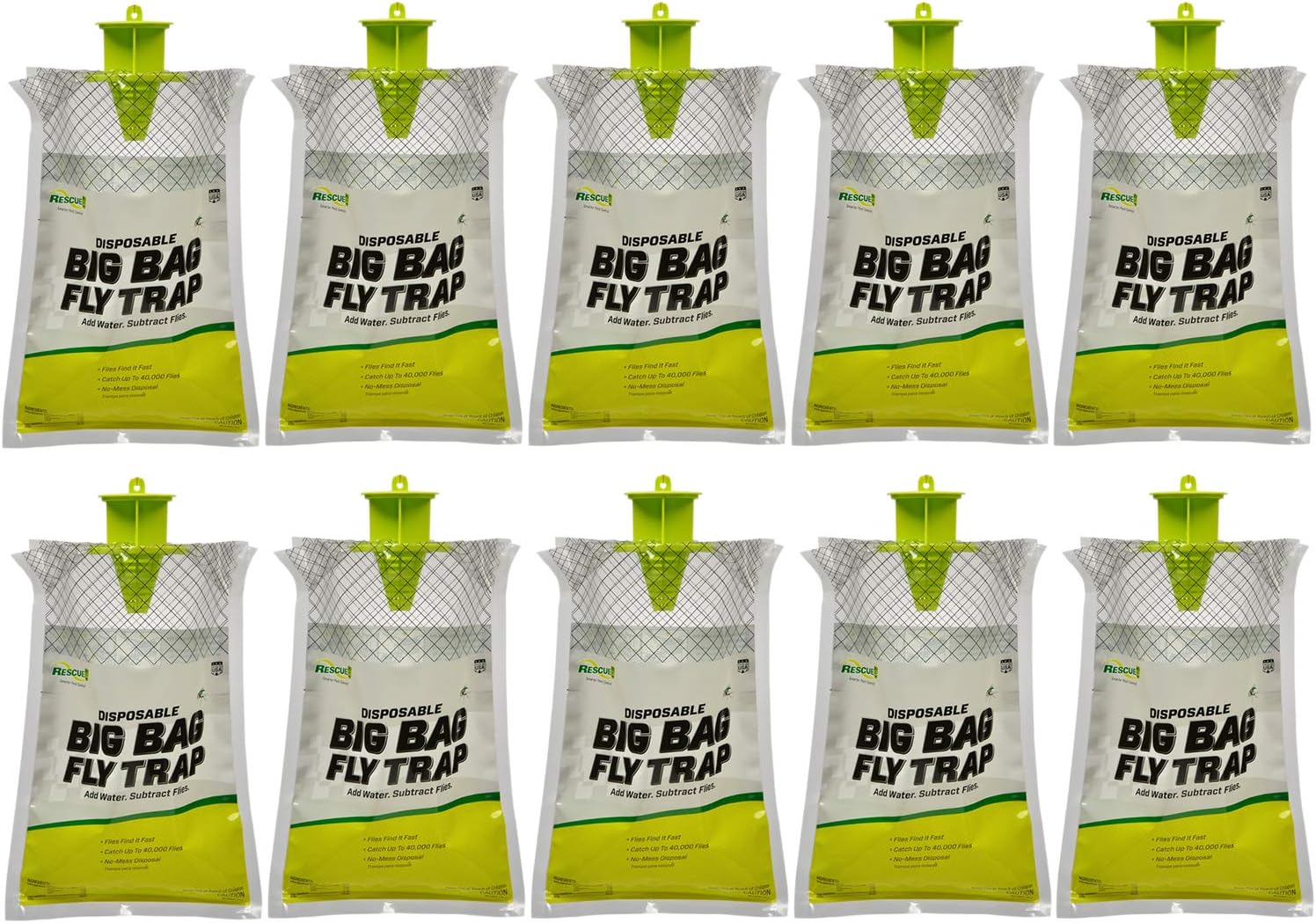
RESCUE! Big Bag Disposable Outdoor Fly Trap (10 Pack)
| Material | Plastic |
|---|---|
| Number of Items | 10 |
| Target Species | Fly |
| Made in | USA |
The RESCUE! Big Bag disposable fly trap is made for heavy outdoor fly problems like coops, barns, and yards. Setup is simple: cut the top, add the hanger, pour water to the fill line to activate the attractant, then hang the bag away from living areas. The trap’s baited design lures flies through the entrance where they drown, and a single bag can catch large quantities over its active life. Because the product is disposable plastic it requires no maintenance or cleaning — when full you seal and throw it away. Important practical notes for coop use are the strong odor after activation and the recommendation to hang traps at least 20 feet from living spaces, so place them downwind and away from chickens’ main areas. The pack of ten gives good coverage for multiple hang points or seasonal replacement, but ongoing seasonal purchases are necessary since these are single-use traps.
Best for: Someone who wants a low-effort, high-capacity solution to reduce fly pressure around a chicken coop and prefers disposable products they can hang and forget until replacement is needed.
Less Ideal for: People who prefer reusable or low-waste pest control methods or who need odor-free solutions placed close to living areas should consider other options.
- Effective baited design that attracts and kills large numbers of flies
- Very easy setup with no assembly tools required
- Disposable format removes the need for cleaning or maintenance
- Ten-pack provides multiple hang points or replacements for a season
- Produces a noticeable odor when active which can be unpleasant if placed too near people or animals
- Single-use plastic bags generate ongoing waste compared with reusable traps
Verdict: If you need an easy, high-capacity disposable trap to cut heavy fly populations around a chicken coop, this ten-pack delivers fast, no-fuss control.
RESCUE! POP! Large Reusable Outdoor Fly Trap, 3-Pack

| Unit Count | 3 Count |
|---|---|
| Target Species | Fly |
| Power Source | Manual |
| Material Type | Plastic |
The RESCUE! POP! Large Reusable Fly Trap is built for heavy-duty outdoor fly control and comes as a three-pack for coverage around patios, barns, or yards. Use is straightforward: add the included bait pouch and water to the fill line, hang the trap well away from living areas, and let the attractant lure flies into the reservoir where they drown. Its high stated capacity and reusable design mean fewer replacements over a season — simply empty, rinse, and refill with a new attractant packet. The trap is manual and plastic, so it needs no power and is lightweight to hang and reposition. Practical benefits include continuous, low-effort control for large infestations and reduced reliance on sprays. Important limitations are the strong odor once activated that confines use to outdoor, well-ventilated locations and the need to periodically empty and refill the trap. For people who want a robust, hands-off solution for big outdoor fly problems, this trap focuses on performance more than aesthetics.
Best for: Buyers needing a high-capacity, low-effort outdoor solution for persistent fly problems who prioritize continuous performance over appearance.
Less Ideal for: People who need indoor-safe, odor-free control or who do not want the periodic task of emptying and refilling traps.
- High capacity suitable for large outdoor infestations
- Reusable design lets you rinse and refill to cut waste and ongoing cost
- Simple manual operation with food-based attractant requires no power
- Comes as a three-pack to cover multiple hang points or larger areas
- Strong odor when active requires placement well away from living spaces
- Made of basic plastic that may show wear over repeated seasonal use
Verdict: Choose this trap if you want a high-capacity, reusable outdoor fly solution that delivers continuous, hands-off performance for large infestations.
RESCUE! Outdoor Disposable Hanging Fly Trap, 2-Pack

| Unit Count | 2 Count |
|---|---|
| Target Species | Fly |
| Power Source | manual |
| Material Type | Plastic |
The RESCUE! Outdoor Disposable Hanging Fly Trap is a simple, no-frills solution for reducing flies around patios, garbage areas, barns, and yards. Setup is straightforward: cut the top, add water to the fill line, attach the hanger, and suspend the trap away from living areas so the strong attractant scent draws flies inside. The disposable plastic design means you do not need to handle bait or dead insects; when the trap is full you tie the bag and throw it away. Because the lure is activated by water it works continuously without power and is best for seasonal or localized fly problems rather than year-round heavy infestations. Key practical benefits are ease of use, minimal maintenance, and the ability to place traps where flies congregate. Limitations include the strong odor that requires placing traps downwind and the single-use format, which creates recurring replacement needs and waste compared with reusable options.
Best for: Homeowners who want a low-effort, proven way to reduce flies around outdoor living areas or garbage zones and who prefer a straightforward product that works without power or complex setup.
Less Ideal for: Gardeners or property owners seeking a long-term reusable system or those who need silent, scent-free solutions for flies near high-traffic living spaces.
- Very easy to set up—just add water and hang
- Effective water-activated attractant designed specifically for flies
- Disposable design avoids touching bait or trapped insects
- Made in the USA and EPA registered
- Strong scent means traps must be placed well away from seating areas
- Single-use construction generates recurring replacement and waste
Verdict: Choose this disposable hang-and-forget trap when you want an easy, EPA-registered way to cut fly activity around yards and trash areas with minimal setup.
RESCUE! Outdoor Disposable Hanging Fly Trap with Attractant Bait

| Target Species | Fly |
|---|---|
| Unit Count | 1 Count |
| Material Type | Plastic |
| Included Components | RESCUE – FTD-DB12 |
The RESCUE! Disposable Hanging Fly Trap is a low-effort solution for reducing nuisance flies around patios, garbage, barns, and yards. Setup is straightforward: cut the top, add water to the fill line, insert the hanger and hang the trap away from seating areas. The internal bait contains sucrose and putrescent egg solids that release a strong odor to lure common flies into the bag where they cannot escape. Its disposable, mess-free design means you toss the entire unit when full rather than handling bait or carcasses. Practical benefits include quick deployment, no electricity or messy refills, and suitability for multiple outdoor problem spots. Limitations are the strong scent that requires placement well away from people and the single-use format, which creates recurring replacement needs and waste if used continuously. Expect the trap to work best as a targeted, budget-friendly control in specific fly hotspots rather than as a full-yard long-term solution.
Best for: Buyers who want an inexpensive, low-effort way to cut down flies in specific outdoor trouble spots and prefer a grab-and-go disposable solution.
Less Ideal for: People seeking an odorless or permanent reusable control method or those who need whole-yard, long-term fly management.
- Very easy setup using only water and the included hanger
- Disposable, mess-free design eliminates direct contact with bait or trapped flies
- Formulated attractant targets common nuisance flies for effective localized control
- Strong bait odor requires hanging the trap well away from living or dining areas
- Single-use design means ongoing purchases for continuous fly pressure
Verdict: A cheap, no-fuss disposable trap that quickly reduces nuisance flies in targeted outdoor areas.
RESCUE! Outdoor Disposable Hanging Fly Trap (12 count)

| Unit Count | 12 Count |
|---|---|
| Target Species | Fly |
| Power Source | manual |
| Material Type | Plastic |
The RESCUE! Outdoor Disposable Hanging Fly Trap is a straightforward, no-frills solution for reducing flies around patios, trash areas, barns, and other outdoor spots. Setup is quick: cut the top, add the included attractant and water to the fill line, insert the hanger and hang the trap away from living spaces. The bait produces a strong scent that draws common nuisance flies into the plastic bag where they cannot escape, and when the trap is full you wrap and discard it for a mess-free replacement. Because the traps are disposable and pre-baited, there is minimal maintenance and no need to handle sticky surfaces or refill liquids. The main compromises are the single-use design and the odor, which means you must place traps well away from seating areas and replace them periodically in heavy-fly seasons. For someone prioritizing reliable, low-effort fly control, these traps deliver predictable performance without complicated upkeep.
Best for: Buyers who want dependable, low-maintenance outdoor fly control and prefer simple, ready-to-hang solutions that require minimal upkeep.
Less Ideal for: People seeking a reusable or odorless solution or those who need fly control directly adjacent to patios and seating areas.
- Ready-to-use disposable design requires only water and hanging for quick setup
- Effective water-activated attractant formulated for common nuisance flies
- Mess-free disposal eliminates contact with trapped flies
- Made in the USA and EPA registered, indicating regulatory compliance and consistent manufacturing
- Single-use design creates recurring replacement needs
- Attractant has a strong odor and must be positioned away from living areas
Verdict: A dependable, no-touch disposable trap that delivers reliable outdoor fly reduction with minimal setup and maintenance.
TERRO Fly Magnet Outdoor Reusable Fly Trap with Bait

| Target Species | Fly |
|---|---|
| Included Components | Trap with bait |
| Material Type | Plastic |
| Power Source | power_source_type |
The TERRO Fly Magnet is a simple, reusable outdoor fly trap designed to reduce populations of house flies, barn flies, and bottle flies around patios, yards, and outbuildings. Use is straightforward: empty the included bait packet into the trap, add warm water to the fill line, swirl to mix, then hang or set the quart‑sized trap at ground level in a warm, bright, calm spot. The diamond‑pattern lid and bait are formulated to lure flies in and make escape unlikely. Because the bait contains no chemical insecticides the trap is suitable for use near outdoor living areas where people and pets gather. It can be emptied and re‑baited for ongoing control, so one unit provides season‑long service if maintained. Limitations are that bait can take a few hours to activate and placement matters for best results, and it captures flies rather than repelling them from a large radius, so expect localized control rather than elimination of flies across a whole property.
Best for: Buyers who want a low‑toxicity, easy‑to‑use way to reduce nuisance flies around outdoor living spaces and value products with a strong track record.
Less Ideal for: People who need instant wide‑area repellency or who prefer a deterrent that prevents flies from approaching rather than trapping them in one spot.
- Reusable design allows emptying and re‑baiting for ongoing seasonal use
- Included non‑poisonous bait formulated to attract multiple common fly species
- Easy setup and placement: fill with water, mix, then hang or set at ground level
- Works by trapping flies locally rather than repelling them from a wide area
Verdict: Choose this trap if you want a low‑chemical, reusable solution that reliably captures nuisance flies around patios and outdoor gathering areas.
Choosing the Right Fly Trap for Chicken Coop: Key Factors to Consider
Capture Method
How a trap attracts and holds flies directly affects its usefulness in a coop environment. Baited liquid or food-based traps rely on scent lures that work well in enclosed spaces but require secure containment so birds cannot access bait. Sticky traps can be effective for immediate reduction but create disposal and contamination concerns if placed where droppings or bedding can touch them.
Consider whether the method captures only adult flies or also eases larval pressure by reducing egg-laying spots. In coops you want a method that is effective without introducing open toxins or residues that could come into contact with birds or eggs.
Bird Safety and Containment
Any trap used near chickens should prevent pecking and accidental contact. Secure housings, closed reservoirs, or hung placements out of reach reduce the risk of birds sampling bait or sticky surfaces. The trap design should also minimize dust and aerosolized bait, which can attract curious hens.
Evaluate how easily a chicken could knock over or break the trap. Tough materials, fasteners, and the option to hang traps or mount them above ground level help maintain safety and keep birds away from potentially harmful components.
Durability in Coop Conditions
Coops are humid, dusty, and can expose equipment to ammonia from droppings. Materials that resist corrosion, UV breakdown, and odor absorption last longer and perform more consistently. Look for plastic rated for outdoor or agricultural use, rust-resistant metals, and seal designs that prevent bait leakage into bedding.
Durable traps also tolerate occasional knocks from birds or people and withstand cleaning and disinfection. Long-lived traps reduce replacement frequency and lower the chance of leaving damaged units that attract pests.
Ease of Maintenance
Traps that are easy to empty, clean, and refill will actually get used correctly in a busy coop routine. Consider how often fluid baits need changing, whether sticky panels are simply replaceable, and how easy it is to remove trapped flies without touching them. A design with a removable reservoir, simple disposal bag, or washable parts cuts the time you spend managing fly control.
Also assess whether the trap needs special tools or protective gear to service. Choose traps that integrate into your existing cleaning schedule to avoid lapses in control.
Placement Flexibility
Coops vary in layout and airflow, so a trap that can be hung, mounted to a wall, or freestanding offers greater usefulness. Placement affects lure dispersal and capture rates; traps that let you adjust height and position help target fly traffic near roosts, feeders, or entry points without interfering with hens.
Flexible mounting options also let you move traps seasonally or during cleaning, and make it easier to keep them out of direct sun or rain to preserve bait life.
Maintenance Cost and Consumables
Consider how often the trap requires replacement lures, sticky panels, or fluid refills and whether those consumables are easy to source. A cheap trap with expensive or hard-to-find cartridges can be harder to maintain than a modestly priced unit with simple, reusable parts.
Also think about disposal: whether captured flies and spent materials can be composted or need to be bagged and discarded. Matching consumable frequency to your maintenance willingness prevents gaps in fly control.
Where to Place Fly Traps in and Around a Coop
Placement determines how well a trap intercepts flies before they concentrate on birds or eggs. Position traps near known fly corridors such as close to manure piles, compost bins, or the coop entrance, but keep them upwind and above bird reach so bait scents draw flies away from the flock rather than towards it.
Hang traps 3 to 6 feet off the ground when possible and out of direct sunlight to preserve sticky panels or liquid bait. If mounting inside a run, place traps near ventilation openings where flies enter, not directly over nesting boxes or feeders to prevent contamination risks.
- Avoid placing traps directly above roosts or nest boxes.
- Keep baited units sealed and out of reach of curious birds.
- Move traps periodically if fly pressure shifts after cleaning or weather changes.
Integrating Traps With Coop Cleaning and Sanitation
Fly traps are most effective when combined with good coop sanitation. Regularly remove soiled bedding, keep feed stored in sealed containers, and compost or remove manure promptly to reduce breeding habitat.
Use traps as a targeted supplement rather than a substitute for cleaning. After major cleanouts you may need fewer traps or lower lure strength, so check traps after scheduled maintenance and adjust placement or servicing frequency accordingly.
- Schedule trap servicing on the same day as bedding changes to streamline chores.
- Inspect traps after heavy rain or cleaning to ensure they are still secure and functional.
Seasonal Considerations for Fly Control
Fly populations rise with warm weather, so you may need more traps or more frequent servicing in spring and summer. In cooler months flies are less active and traps can be reduced or stored until needed.
Monitor fly activity rather than relying solely on calendar dates. Early-season deployments near warm, sheltered areas of the coop can intercept pests before populations explode, while peak-season strategies focus on higher-capacity traps and more frequent bait changes.
- Increase trap density near peak fly season for faster control.
- Reduce or remove traps in late fall to avoid attracting overwintering pests into sheltered coop areas.
Nonchemical Options and When to Use Them
Many coop-friendly traps use physical capture or non-toxic baits to avoid exposing birds to insecticides. Sticky panels, light-based electric traps with protective housings, and baited capture bottles are common nonchemical choices that work well in enclosed coop settings.
Nonchemical options are particularly useful where eggs are collected frequently, children interact with birds, or you want to avoid residues on coop surfaces. They also pair well with sanitation and exclusion tactics such as fly screens on vents.
- Choose protected electric units or enclosed bait traps when keeping birds in close quarters.
- Use fly screens and sealed feeders together with traps to lower overall fly pressure.
How We Chose the Best Fly Trap for Chicken Coop
We focused on solutions that work specifically around poultry housing, where bird safety and avoiding contamination are primary concerns. Selection started by screening for traps suitable for enclosed or semi-enclosed coop spaces, excluding methods that require open-air deployment only or products intended solely for ornamental lawns. We prioritized capture method effectiveness, measuring how reliably a trap attracts and retains common coop flies across repeated use. Durability under damp, dusty, or ammonia-prone coop conditions was assessed next, since many traps sit near bedding and feeders. Ease of maintenance and cleanup mattered because coop chores must be quick and low-mess. Finally, safety features were required to prevent bird access to bait, sticky surfaces, or toxic residues. Excluded items included general outdoor insect sprayers, traps that use unrestricted poisons, and devices that require frequent replacement cartridges not suited to farm use. The criteria that actually decided the list align with the scoring metrics below and reflect real-world coop routines and sanitation demands.
FAQ
Are sticky fly strips safe to use in a chicken coop?
Sticky strips can be effective but must be placed out of reach of hens to avoid accidental contact. Avoid attaching them near bedding or nest boxes where dust and droppings can contaminate the adhesive and complicate disposal.
How often should I change bait or replace trap panels?
Frequency depends on trap type and fly pressure. In peak season many liquid baits or panels need attention every one to two weeks, while heavy infestations may require more frequent servicing. Check traps during routine coop cleaning to set an interval that fits your schedule.
Will fly traps reduce maggots in my coop bedding?
Adult fly reduction lowers egg-laying and therefore larval presence over time, but traps do not directly eliminate existing maggots. Combine traps with thorough bedding removal and cleaning to remove larval habitats and break the life cycle.
Can I hang a trap inside the run where chickens free-range?
You can hang traps inside a run if they are securely enclosed and out of bird reach. Ensure the trap does not drip bait or leave sticky residues on surfaces birds can contact, and fasten it to prevent curious chickens from knocking it down.
Do traps attract more flies to the coop before they start catching them?
Some baited traps produce attractant plumes that can draw flies from surrounding areas temporarily. Place traps so the lure draws flies away from chickens and consider starting with fewer traps to monitor how flies respond before scaling up.
Final Verdict
Choose a trap that balances effective fly capture with bird safety and easy upkeep. Prioritize capture methods and housings that keep bait or sticky surfaces inaccessible to hens, and match trap durability to the damp, dusty environment of a coop. Pair traps with regular cleaning and placement adjustments to reduce breeding sites and maintain long-term control. Focus on the tradeoff between maintenance frequency and attractant strength: higher-capacity traps can cut servicing time but may need secure mounting. With the right placement and routine, fly traps become a low-effort complement to good coop management that protects flock health.
