

Note: This article contains affiliate links. If you click on these links and make a purchase, I may earn a small commission at no extra cost to you. This helps support my research and content. Read my full affiliate disclosure here.
If you want to garden without bending, kneeling, or wrestling with poor drainage, a raised planting surface can change how you grow. Garden elevated planters lift beds to waist height, reduce pest access, and help you control soil mix and moisture more precisely. This guide focuses on the top shortlisted elevated planters suitable for patios, small yards, and accessible gardening setups. We evaluated options across durability, drainage, planting depth, and ease of use so you can pick a planter that matches your space and the crops you intend to grow. Below are the top picks followed by practical buying guidance and common questions to help you choose the right elevated planter for your garden setup.
Top Picks at a Glance
| Best Overall The best all-around choice for most situations | Vego Garden 17" Tall Modular Metal Raised Garden Bed Kit (8ft x 2ft) |  |
| Best Quality Built to a higher standard if you want something more solid | Vego Garden Rolling Elevated Raised Garden Bed 2' x 4' with Legs and Storage Rack |  |
| Best Value The sweet spot between price and what you get | Best Choice Products 72in Fir Wood Raised Garden Bed |  |
| Best Budget The cheapest option that still gets the job done reliably | PROXRACER Elevated Metal Raised Garden Bed with Detachable Legs (White, Small) |  |
| Highest Rated A top-rated pick with lots of positive feedback | Megawodar 4-Piece Self-Watering Elevated Raised Garden Bed |  |
| Most Popular A crowd favorite that many people choose with confidence | FOYUEE Elevated Mobile Raised Garden Bed with Wheels and Shelf |  |
| Best Seller A high-volume bestseller chosen again and again | Land Guard 2-Pack 4×2×1 ft Galvanized Raised Garden Bed |  |
Vego Garden 17" Tall Modular Metal Raised Garden Bed Kit (8ft x 2ft)

| Material Type | Metal |
|---|---|
| Finish Types | Powder Coated |
| Capacity | 23 cubic feet |
| Number of Pieces | 20 |
| Indoor Outdoor Usage | Outdoor |
This Vego Garden raised bed kit is a modular metal planter designed for growing vegetables and flowers without bending to ground level. The 9-in-1 system assembles into multiple layouts so you can build an 8ft x 2ft oval bed or reconfigure panels to fit different garden footprints. Constructed from a Zn-Mg-Al coated steel with a powder-coated finish, the kit is marketed for long durability and corrosion resistance and includes rubber edging to cover panel edges for safer handling. At 17 inches deep it gives room for healthy root development and better drainage compared with shallow containers, which makes it suitable for most common vegetables. Installation is straightforward and uses fasteners and preformed panels so no specialized carpentry is required, though assembly of 20 pieces still takes time and two people make alignment easier. The system accepts add-ons such as trellises, covers, and irrigation to expand functionality, but those accessories are sold separately. This is a solid, low-maintenance option if you want a long-lasting, reconfigurable metal raised bed for productive vegetable planting.
Best for: Gardeners who want a durable, reconfigurable raised bed that supports productive vegetable growing and reduces bending while working. It suits practical owners who value long-term weather resistance and modular flexibility over a quick, one-piece planter.
Less Ideal for: People who need a ready-to-plant, lightweight single-piece container or those who prefer untreated wood or plastic planters for aesthetic or budget reasons.
- Modular 9-in-1 design lets you reconfigure layout to fit different garden spaces
- 17" planting depth supports deeper root systems and improved drainage for vegetables
- Powder-coated, Zn-Mg-Al treated steel construction for weather resistance and long life
- Rubber-edged panels reduce sharp edges for safer handling during assembly
- Accessories like trellises, covers, and irrigation are not included and must be purchased separately
- Assembly involves multiple panels and fasteners so it requires time and at least one helper
Verdict: A durable, 17" deep modular metal raised bed that gives serious vegetable growers a reconfigurable, low-maintenance planting system.
Vego Garden Rolling Elevated Raised Garden Bed 2' x 4' with Legs and Storage Rack

| Size | 2' x 4' |
|---|---|
| Capacity | 3.9 cubic feet |
| Material Type | Metal |
| Finish Types | Powder Coated |
| Weight Capacity | 700 lbs |
The Vego Garden Rolling Elevated Raised Garden Bed is a metal, floor-standing planter built for heavier-duty container gardening on patios and decks. It assembles from powder-coated VZ 2.0 steel panels and welded corner legs to create a 32-inch tall bed that raises the planting surface to reduce bending and offers a 12-inch planting depth for substantial root volume. The bed is tested to support up to 700 pounds for the 2' x 4' size, so it handles heavy soil mixes, multiple large plants, or potted specimens without sagging. Practical touches include rot- and rust-resistant finish, a lower storage rack integrated into the leg frame, and rubber edging for safer handling during assembly. Because it is elevated and rolling, the bed is easy to reposition for sun, shade, or winter storage, and it pairs with the brand's add-on covers and irrigation accessories. Limitations are typical of metal beds: you will need to manage insulating and drainage for extreme heat or cold, and assembly requires tightening multiple fasteners and aligning panels for the welded supports to sit correctly.
Best for: Buyers who prioritize durable, performance-oriented raised beds that hold heavy soil loads and make planting easier on the back, and who want a mobile solution for patios or small outdoor spaces.
Less Ideal for: People seeking a lightweight, foldable planter for seasonal use or those who prefer natural wood aesthetics for garden beds.
- High tested weight capacity (700 lbs) suitable for heavy soil and large plants
- VZ 2.0 powder-coated steel construction with welded corners for long-term corrosion resistance
- Raised 32" height reduces bending and provides a deeper planting profile
- Integrated lower storage rack adds useful tool or supply storage without extra footprint
- Metal construction can transfer heat to roots in hot climates without added insulation
- Assembly requires multiple fasteners and careful alignment of panels and legs
Verdict: Choose this rolling Vego Garden elevated bed when you need a tough, high-capacity, mobile planter that minimizes bending and stands up to heavy soil and large plants.
Best Choice Products 72in Fir Wood Raised Garden Bed

| Capacity | 251 quarts |
|---|---|
| Material Type | Fir Wood |
| Mounting Type | Floor Standing |
| Other Special Features of the Product | Drainage Hole |
| Indoor Outdoor Usage | Outdoor |
This elevated planter is a straightforward solution for backyard and patio gardeners who want a large, ergonomic raised bed without complex installation. Built from unfinished fir wood, it offers a roomy planting area and a 30-inch height that reduces bending and makes routine tasks like planting, weeding, and harvesting easier on the back. The box includes multiple drainage holes to prevent waterlogging and promote healthy root aeration, and its floor-standing design keeps plants off the ground to deter small animals. Assembly requires some time and basic tools but is manageable for two people using the included guide. Because the wood is unfinished, you can stain or seal it to match your space and extend its lifespan but you should expect some weathering if left untreated. The unit has a substantial weight capacity suitable for heavy soil mixes but it is large, so plan placement carefully and ensure a level surface for stability.
Best for: Buyers who prioritize comfortable, elevated gardening and want a roomy, natural wood planter for a balcony, deck, or backyard where social proof and reliability matter.
Less Ideal for: Those who need a maintenance-free, synthetic planter or who cannot position a large box-bed due to space or weight restrictions.
- Ergonomic 30-inch height reduces bending and kneeling when gardening
- Large planting capacity suitable for vegetables, flowers, and mixed beds
- Multiple drainage holes to prevent waterlogging and support healthy roots
- All-wood construction gives a natural look and can be customized with stain or sealant
- Wood is unfinished so it requires sealing or periodic maintenance to resist weathering
Verdict: A roomy, back-friendly wooden raised bed that delivers a proven and comfortable elevated planting platform for vegetable and container gardening.
PROXRACER Elevated Metal Raised Garden Bed with Detachable Legs (White, Small)

| Material Type | Metal |
|---|---|
| Finish Types | Stainless Steel |
| Other Special Features of the Product | Drainage Hole |
| Mounting Type | Outside Mount |
| Indoor Outdoor Usage | Outdoor |
This PROXRACER elevated raised bed is a simple, budget-friendly planter aimed at small patios, balconies, and backyard edges. It assembles from pre-drilled panels and included hardware into a rectangular metal planting box mounted on detachable legs so you can use it as a low planter or elevate it to an ergonomic height to avoid bending. The galvanized-steel construction has an anti-rust coating and built-in drainage holes to keep soils from waterlogging and to extend outdoor life. Its modest planting volume fits herbs, a few vegetables, or a dense bed of annuals and the corner pads protect floors and prevent scratches. Because it is metal and compact, it is lightweight to move when empty but offers limited soil depth and planting area compared with larger raised beds, so it is best for shallow-rooted plants and smaller harvests. Installation is straightforward but may require two people to align panels cleanly.
Best for: Buyers who want an affordable, space-saving elevated planter for small outdoor spaces and who prioritize ease of setup and minimal bending while gardening.
Less Ideal for: People planning to grow large, deep-rooted vegetables or seeking high-yield raised beds for serious food production should consider larger, deeper planters instead.
- Galvanized steel with anti-rust coating for outdoor durability
- Drainage holes in the box to prevent waterlogging
- Detachable legs let you use it elevated or as a low planter
- Compact footprint fits balconies, patios, and small yard spaces
- Shallow planting depth limits use to herbs, lettuces, and small vegetables
- Smaller planting area provides limited yield compared with larger raised beds
Verdict: A low-cost, durable elevated metal planter that makes small-space container gardening easier by reducing bending and providing built-in drainage.
Megawodar 4-Piece Self-Watering Elevated Raised Garden Bed
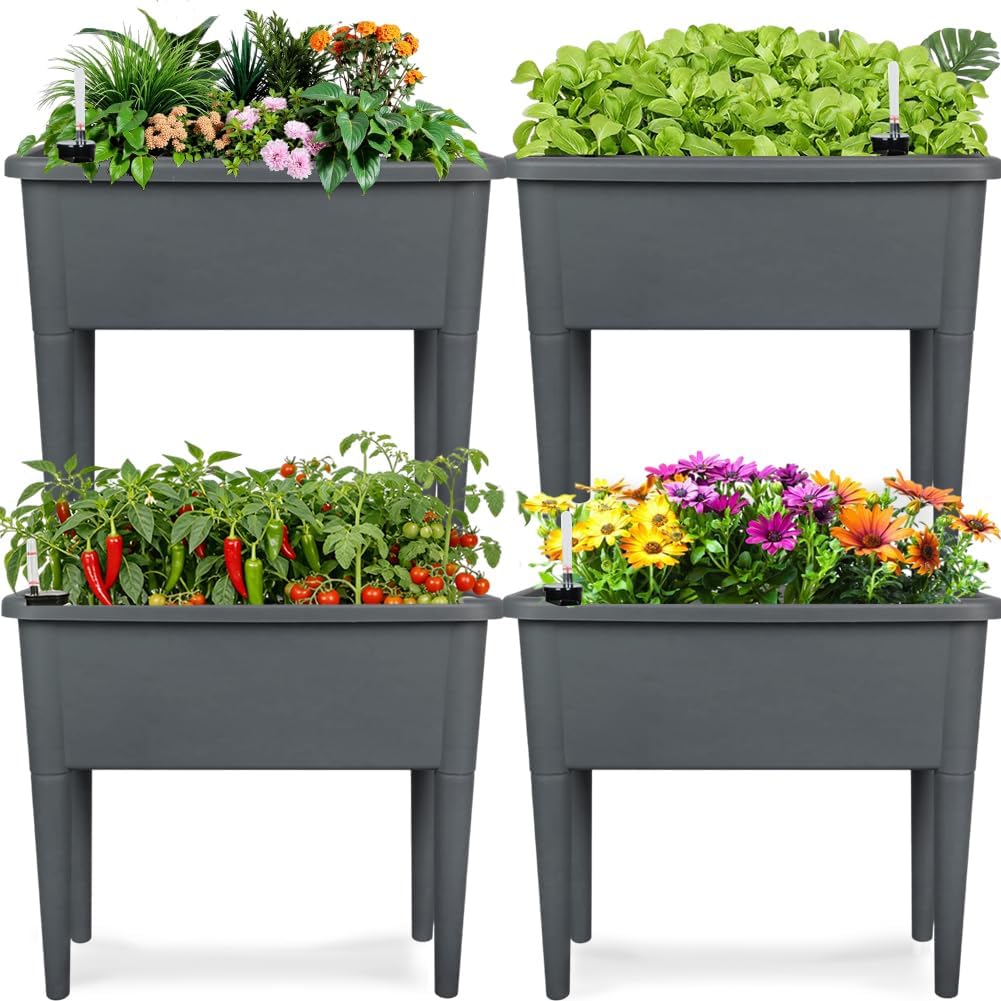
| Set Name | Megawodar 4-Piece Self-Watering Raised Garden Bed Set |
|---|---|
| Material Type | Plastic |
| Other Special Features of the Product | Self Watering |
| Mounting Type | Floor Standing |
| Indoor Outdoor Usage | Indoor, Outdoor |
This Megawodar raised garden bed set is a plastic, elevated planter designed to simplify container gardening for herbs, flowers, and compact vegetables. Each unit uses a built-in water reservoir and float gauge so you can monitor water levels and refill less often—manufacturer claims suggest the reservoir can supply 2 to 3 weeks of moisture depending on plants. The design includes a controllable drainage system to avoid waterlogging and reduce root rot, and the polypropylene construction is lightweight and straightforward to assemble and move on a patio or balcony. Practical benefits are low maintenance watering, better root aeration compared with closed pots, and raised height that reduces bending for planting and harvest. Limitations are that the planters are plastic which may degrade over many seasons in harsh sun, and their capacity suits small to medium plantings rather than large row crops. Also the set appearance and plastic finish are utilitarian rather than decorative.
Best for: Buyers who prioritize reliable, low-maintenance container gardening and want an elevated, self-watering solution for balconies, patios, or small yards.
Less Ideal for: Gardeners seeking decorative planters for formal landscaping or those who need very large planting volume for full-season row vegetables.
- Self-watering reservoir with float gauge for low-frequency watering
- Integrated drainage control to prevent standing water and root rot
- Elevated, floor-standing design reduces bending and improves access for planting and harvest
- Made of plastic which can fade or become brittle after long sun exposure
- Best suited to small-to-medium plantings rather than large-scale vegetable production
Verdict: Choose this self-watering elevated bed set if you want a practical, low-maintenance planter that reliably keeps small to medium plantings watered with minimal effort.
FOYUEE Elevated Mobile Raised Garden Bed with Wheels and Shelf

| Capacity | 2.5 cubic feet |
|---|---|
| Material Type | Metal |
| Finish Types | Powder Coated |
| Mounting Type | Floor Standing |
| Indoor Outdoor Usage | Outdoor |
This FOYUEE elevated raised bed is a mobile planter built for productive container gardening without bending or kneeling. The powder-coated galvanized steel box sits at a standing height and includes a handle plus 6-inch all-terrain wheels so you can roll a full bed around a patio or balcony to follow sun or clear space for events. The planting box is wider than many compact planters, holds several cubic feet of soil, and has molded drainage channels plus a central drain to reduce waterlogging and protect roots. A lower shelf gives handy storage for tools and pots. Construction is heavy-duty enough to support substantial loads, and the rust-resistant finish makes it practical for outdoor seasons. Expect assembly and some metal hardware alignment during setup, and the steel construction makes it heavier to move before wheels are fitted. It is best used for herbs, salad greens, and shallow-rooted vegetables in small outdoor spaces rather than deep-root vegetables that need more soil depth.
Best for: Gardeners who prioritize durability and high performance in a compact, accessible planter and want to maximize yield from a patio, balcony, or small backyard while avoiding frequent bending.
Less Ideal for: Those who need very deep soil for root vegetables or who prefer ultra-lightweight, portable fabric or plastic planters for frequent long-distance moves.
- Sturdy galvanized steel with outdoor-grade powder coating resists rust and supports heavy loads.
- Built-in wheels and handle let you reposition a fully planted bed without lifting.
- Integrated drainage channels and a central drain reduce overwatering and improve root health.
- Wider planting area and a lower storage shelf increase usable space for plants and tools.
- Not suitable for deep-rooted crops because planting box depth is limited.
- Steel construction adds weight before wheels are attached, making initial placement harder.
Verdict: Choose this elevated, wheeled galvanized-steel planter when you want a heavy-duty, rust-resistant mobile bed that boosts productivity and saves your back.
Land Guard 2-Pack 4×2×1 ft Galvanized Raised Garden Bed

| Capacity | 54 gallons |
|---|---|
| Material Type | Galvanized Metal |
| Included Components | 2x Planter, Instruction manual, Tools |
| Indoor Outdoor Usage | Outdoor |
These Land Guard raised beds are a practical two-pack of galvanized steel planters meant for patios, backyard beds, and small vegetable plots. Each 4×2×1 ft planter assembles from panels and included hardware to create an open-bottom raised bed that sits directly on soil or hard surfaces. The galvanized finish with a thickened zinc layer offers weather and rust resistance so the beds can stay outdoors through seasons without significant corrosion. The open base supports strong drainage and reduces trapped moisture, which helps prevent root rot and makes the beds easy to integrate into an existing garden or over a weed barrier. They arrive with basic tools and instructions, so assembly is straightforward for one person. Limitations are the shallow 1 ft depth, which restricts large root crops and long-term tree planting, and the metal will warm more in hot sun compared with wood or composite. For gardeners who prioritize durability, easy setup, and tidy planting zones, these planters are a low-maintenance option; heavy-duty growers wanting deeper soil will need a different solution.
Best for: Gardeners who want a durable, low-maintenance raised bed solution to organize vegetable, herb, or flower planting in small yards or patios and who prefer quick assembly and long-lasting materials.
Less Ideal for: Growers who need deep soil for root vegetables, large perennials, or who prefer insulating materials like wood or composite to moderate soil temperature.
- Galvanized steel construction with thick zinc coating provides strong rust and weather resistance
- Open-bottom design promotes excellent drainage and easier integration with ground soil
- Two-planter set covers multiple planting rows or doubles planting area without buying extra units
- Includes hardware and instructions for relatively simple assembly
- Only 12 inches deep, limiting suitability for deeper-rooted vegetables and perennial shrubs
- Metal surfaces can heat up in full sun, which may affect soil temperature and moisture
Verdict: A durable, easy-to-assemble two-pack of galvanized raised beds that gives practical, low-maintenance planting space for small-scale veggie and flower gardens.
Choosing the Right Garden Elevated Planter: Key Factors to Consider
Material and Weather Resistance
The material determines how long an elevated planter will last outdoors and how much maintenance it needs. Solid hardwoods, rot-resistant softwoods, powder-coated metals, and durable plastics each age differently when exposed to sun, rain, and freeze-thaw cycles. Wood may need occasional sealing to slow weathering, while some plastics and coated metals resist moisture without treatment.
Material also affects weight and portability. Heavier materials are more stable in wind but harder to move if you want to rearrange the patio. Consider the local climate and whether the planter will sit under cover or in full sun when choosing material.
Drainage and Water Management
Good drainage prevents root rot and simplifies watering schedules. Elevated planters should provide clear outlets for excess water, either through built-in drain holes, slatted bottoms, or removable liners with drainage layers. The planter design should allow you to create a well-draining soil profile with coarse material at the bottom and lighter potting mix on top.
Think about where runoff will go. If the planter sits on a deck or balcony, ensure water will not pool or damage the surface. Some planters include trays to catch runoff, which is helpful for balconies but can retain unwanted moisture if not monitored.
Planting Depth and Crop Suitability
Different plants need different root space. Shallow-rooted herbs and lettuces do fine in 6 to 8 inches of soil, but tomatoes, peppers, and many perennials need 12 inches or more of effective root depth. Check the internal depth and whether soil or liners reduce the usable planting depth.
If you plan to grow a mix of shallow and deep-rooted crops, choose a planter with enough depth to support the deepest crops, or use modular inserts that allow a deeper zone where needed.
Accessibility and Working Height
One of the main reasons gardeners choose elevated planters is to reduce bending and kneeling. The ideal working height depends on the gardener's height and mobility. Waist-height planters minimize bending for most adults, while lower raised beds may serve gardeners who prefer a sitting position. Edge design matters too; wide ledges can serve as temporary work surfaces, while narrow rims can be uncomfortable for leaning.
If accessibility is the priority, check clearance under the planter for knee space and whether the height accommodates seated use with a stool or wheelchair access where relevant.
Assembly, Maintenance, and Longevity
Ease of assembly affects how quickly you can begin using the planter. Look for straightforward joinery, clear instructions, and common fasteners. Maintenance needs vary by material: wood may need periodic sealing, metal may require rust prevention, and plastics usually need only occasional cleaning.
Consider the long-term durability and whether parts can be replaced. Removable liners and replaceable feet extend service life because you can refresh the soil or swap damaged components without replacing the whole unit.
Footprint and Placement Constraints
Measure your intended location before buying. Elevated planters occupy horizontal and vertical space, and overhanging rims or wide legs can reduce usable patio area. Consider pathway clearances and how the planter will affect traffic flow in a small yard.
Also think about sun exposure and how the planter height changes shading on nearby plants or structures. A tall planter on a small balcony can alter light patterns and wind exposure for surrounding plants.
Best Uses by Garden Type
Elevated planters work in many garden situations, but their greatest advantages show in specific contexts. On balconies and patios they let you grow vegetables and herbs without soil contamination concerns and with easier access to watering. In small yards, elevated planters create tidy, defined growing zones that keep soil off pathways and reduce trampling.
For accessible or therapeutic gardens, elevated planters reduce strain and enable seated gardening. In hot climates, raised soil warms faster in spring, giving a longer growing window for some crops, while in wet climates the improved drainage helps avoid soggy root conditions.
- Balconies and patios: shallow to medium depth planters for herbs and salad greens
- Small yards: longer, narrower units for rows of vegetables
- Accessible gardening: knee clearance, comfortable working height, and wide edges
How to Prepare Soil for Elevated Planters
A proper soil mix in an elevated planter is lighter and more friable than in-ground garden soil. Start with a high-quality potting mix blended with compost for nutrients and a bit of coarse material like perlite or poultry grit to improve drainage. Avoid dense garden clay that compacts in containers.
Layering helps: a thin base of coarse material can reduce compaction, followed by a loose, nutrient-rich planting mix. Replenish the top layer each season and refresh the entire mix every few years to maintain structure and fertility.
- Aim for a mix that retains moisture but drains freely
- Add slow-release organic fertilizer or change potting mix annually for heavy feeders
- Mulch the surface to reduce evaporation and suppress weeds
Placement, Sunlight, and Microclimates
Where you place an elevated planter affects plant success. Most vegetables and many herbs need at least six hours of direct sun. Use the planter's mobility to move containers into more favorable light as the season changes. Consider afternoon shade for heat-sensitive crops in hot climates.
Also watch for microclimates created by walls, fences, and buildings. A planter near a south-facing wall warms earlier in spring but may get hotter in summer. Wind exposure at height can increase evaporation, so plan irrigation accordingly.
- Track sun patterns for several days before final placement
- Avoid placing planters where runoff will damage decking or paint
- Use windbreaks or temporary shade cloth if plants show stress
Winter Care and Off-Season Storage
Elevated planters require winter planning depending on material and climate. In freezing regions, proper drainage and removing water-trapping liners prevents freeze damage. Some gardeners empty planters and store them upside down or under cover to extend life. For heavier, fixed planters, protect exposed wood with breathable covers and ensure metal finishes are clean to reduce corrosion.
If you leave planters filled over winter, choose cold-hardy cover crops or mulch heavily to protect soil structure and reduce erosion. Consider moving lightweight planters closer to a sheltered wall to reduce exposure to harsh winds and temperature swings.
- Empty or elevate planters off the ground to reduce freeze-thaw stress
- Use breathable fabric covers rather than plastic sheeting to avoid trapped moisture
- Bring potted seedlings indoors and insulate root zones for tender plants
Customizing Elevated Planters
Many gardeners customize elevated planters to better suit crops and ergonomics. You can add trellis systems for vining plants, install drip irrigation for consistent moisture, or attach shelves for tools and pots. Lining the interior with breathable fabric can slow soil loss while still allowing drainage.
Think modularly. Removable inserts or add-on legs allow you to change planting depth or height over time. Painting or staining exterior surfaces can protect materials and let the planter match your outdoor style.
- Add trellises for beans and cucumbers to maximize vertical space
- Install a simple drip line or a soaker tube to reduce watering frequency
- Use liners to protect wood from wet soil while retaining good drainage
How We Chose the Best Garden Elevated Planter
We selected elevated planters by filtering for products that suit real garden conditions and everyday use. First, we required durable construction and weather resistance to ensure units withstand outdoor seasons. Second, drainage and soil depth were prioritized because they directly affect plant health and watering frequency. Third, we assessed accessibility features such as working height and edge design to reduce bending and improve comfort for gardeners with limited mobility. Fourth, ease of assembly and ongoing maintenance were considered so that busy gardeners can install and care for their planter without specialized tools. Finally, we looked at planting capacity and footprint to match small patios and narrow garden paths. Units were excluded if they offered inadequate drainage options, insufficient soil depth for common vegetables and perennials, or if materials were unlikely to hold up outdoors. The criteria used here align with the scorecard metrics below and focus on practical performance in real garden environments rather than promotional claims.
FAQ
What size elevated planter do I need for vegetables?
For most vegetables aim for at least 12 inches of planting depth for roots to develop; shallow-rooted crops like lettuce do fine in 6 to 8 inches. Also consider the horizontal space per plant: larger crops need wider spacing, so choose a planter length and width that matches the expected plant canopy.
Can elevated planters be used on balconies or decks?
Yes, elevated planters are suitable for balconies and decks if you account for weight, drainage, and runoff. Use lighter materials for upper-floor balconies and place trays or saucers to catch excess water. Confirm the structure can support the filled planter before installing heavy units.
How often should I water an elevated planter?
Watering frequency depends on weather, soil mix, and plant types, but elevated planters typically dry faster than in-ground beds. Check moisture daily in hot weather and water when the top inch of soil feels dry. Using mulch and a moisture-retentive mix reduces how often you need to water.
Do elevated planters need liners?
Liners protect certain materials from constant moisture but can interfere with drainage if not appropriate. Use breathable landscape fabric or purpose-made liners with drainage provision. Avoid sealing the bottom completely, and provide drain holes or gaps to let excess water escape.
How do I prevent pests in an elevated planter?
Elevated planters reduce ground pest access but do not eliminate insects or birds. Use physical barriers like mesh covers or row covers for seedlings, maintain clean soil and plant debris removal, and inspect plants regularly for early signs of infestation.
Final Verdict
Choose an elevated planter by balancing the planting depth and drainage needs of your intended crops with the material durability and the working height that makes gardening comfortable. In small spaces prioritize footprint and mobility; for accessible gardening prioritize ergonomic height and knee clearance. Accept tradeoffs: lighter materials are easier to move but may need more frequent replacement, while heavier, more durable units require careful placement. Focus on drainage, soil quality, and maintenance needs to get reliable harvests and long-term value from your elevated planter.
