

Note: This article contains affiliate links. If you click on these links and make a purchase, I may earn a small commission at no extra cost to you. This helps support my research and content. Read my full affiliate disclosure here.
When you need a hose that can handle hot water for outdoor cleaning, pressure washing prep, or greenhouse tasks, an ordinary garden hose may fail quickly. Choosing the right garden hose for hot water helps prevent leaks, bursts, and premature wear while keeping heat transfer and fittings safe during use. This guide looks at five shortlisted hoses built for higher-temperature chores and explains the practical criteria gardeners care about, such as maximum working temperature, material resilience, and connection reliability. Read on to understand the differences that matter in real-world yard and greenhouse work and to see which features match the way you use hot water outside.
Top Picks at a Glance
| Best Value The sweet spot between price and what you get | BLENDLITE 5/8" Rubber Garden Hose, 50 ft |  |
| Best Budget The cheapest option that still gets the job done reliably | BLUBIRD AG-LITE Rubber Garden Hose, 5/8 in x 6 ft, 500 PSI |  |
| Highest Rated A top-rated pick with lots of positive feedback | Continental ContiTech 20582672 Heavy Duty Hot Water Rubber Hose, 5/8" ID, 50' |  |
| Most Popular A crowd favorite that many people choose with confidence | Continental Premium Heavy Duty Hot Water Rubber Garden Hose, 5/8" x 50 ft |  |
| Best Seller A high-volume bestseller chosen again and again | Guitrees 75 ft Heavy Duty Rubber Garden Hose (5/8") |  |
BLENDLITE 5/8" Rubber Garden Hose, 50 ft

| Material Type | Rubber |
|---|---|
| Item Length | 600 inches |
| Nominal Wall Thickness | 3 millimeters |
| Maximum Pressure | 1000 psi |
This BLENDLITE 5/8" rubber hose is built for demanding yard work and frequent use. It pairs a multi-layer hybrid rubber body with internally expanded brass fittings and a locking ferrule to reduce leaks and prevent end pull-off under pressure. Typical uses include watering beds, washing cars or equipment, and light commercial wash-downs; the hose stays flexible in extreme temperatures and resists kinks thanks to an internal spine and spring-guarded coupling. The hose claims a high burst rating and a wide operating temperature range, which makes it reliable for hot or cold conditions. Practical benefits include easy coiling and carrying, solid water flow from the 5/8" bore, and detachable quick-connect ends for customizing length. Important limitations are that the listing emphasizes high pressure figures that exceed common residential needs and the hose is heavier than lightweight polymer options, which can make long runs or frequent handling more effortful. Buyers should also verify the exact working pressure for their use since different parts of the description list varying numbers.
Best for: For gardeners and homeowners who want a durable, workhorse rubber hose that stays flexible in extreme temperatures and stands up to frequent or heavier-duty use.
Less Ideal for: Not the best choice for users who prioritize a very lightweight, ultra-portable hose for occasional light watering or those who need a compact coil for tight storage spaces.
- Durable rubber construction engineered for all-weather flexibility from very cold to high heat
- Internally expanded professional brass fittings and locking ferrule to reduce leaks and pull-offs
- Kink-resistant design with reinforced spine and spring guard for reliable water flow during bends
- Detachable quick-connect ends and customizable length for adaptable use
- Heavier than ultralight hoses, which can make handling and storage more tiring
- Listing includes inconsistent pressure figures that require buyer verification
Verdict: Choose this hose if you need a rugged, all-weather rubber hose with professional-style fittings that resists kinks and end pull-offs.
BLUBIRD AG-LITE Rubber Garden Hose, 5/8 in x 6 ft, 500 PSI

| Maximum Pressure | 500 psi |
|---|---|
| Material Type | Brass, Polyester, Rubber |
| Item Length | 72 inches |
The BLUBIRD AG-LITE is a compact rubber garden hose built to handle hot and cold water and heavier-duty use despite its short 6-foot length. It is made from rubber with polyester braiding and brass fittings, and is rated to 500 psi and temperatures up to about 200F, so it will tolerate hot-water tasks such as rinsing equipment or supplying warm water to pressure washers. Its construction emphasizes durability and flexibility in cold weather and the hose includes a grip-style bend restrictor to protect the ends. As a budget-oriented, shorter hose it is easy to move and store, and the high pressure rating gives confidence for tougher jobs. The primary limitation is the short length, which restricts reach compared with standard garden hoses, and the product description focuses on rugged performance rather than lightweight convenience for long watering runs. For hot-water use in tight spaces or as a connection hose to tools, it performs well; for general yard watering you will likely need a longer hose.
Best for: Buyers who need a short, rugged hose for hot-water tasks or to connect power washers and equipment in tight work areas and who prioritize durability on a budget.
Less Ideal for: Gardeners who need long-reach watering hoses for lawns or beds or who prefer very lightweight, long-length hoses for everyday garden use.
- Rated for high pressure up to 500 psi suitable for demanding applications
- Designed to handle hot water up to around 200F for equipment cleaning and hot-water tasks
- 100% rubber construction with polyester braid provides strong abrasion and kink resistance
- Good cold-weather flexibility and ozone resistant cover to resist cracking in low temperatures
- Only 6 feet long, which limits reach for most garden watering tasks
- Short length and heavier rubber construction make it less convenient for long-distance watering
Verdict: Choose this hose when you need a short, budget-friendly rubber hose that safely handles hot water and high-pressure connections.
Continental ContiTech 20582672 Heavy Duty Hot Water Rubber Hose, 5/8" ID, 50'

| Inner Diameter | 5/8" |
|---|---|
| Length | 50 feet |
| Material Type | Rubber |
| Temperature Range | -40 to +190 °F |
| Fittings | Brass MxF 5/8" NPT Threads |
This Continental ContiTech heavy-duty hose is designed specifically for hot-water applications and stands out for its durable rubber construction and service temperature range from -40 to +190°F. In typical use it carries hot water for cleaning, pressure-washer supply lines, and other outdoor tasks where higher temperature tolerance is needed. Notable features include an internal spring coil to reduce kinking at the faucet, crush-resistant brass fittings, and good flexibility in cold conditions. Practically, the hose feels robust on the job, resists abrasion when dragged across rough surfaces, and the brass ends are less likely to deform under clamp pressure. The 5/8-inch inner diameter balances flow and maneuverability for most garden and light industrial uses. Limitations are that its listed maximum working pressure is unusually low on the spec sheet and this model is relatively heavy compared with lightweight vinyl hoses, so it is best suited to fixed or seasonal use rather than frequent coiling and carrying. Expect long service life when stored properly and used within its temperature range.
Best for: Buyers who prioritize a dependable hose for hot-water tasks and want a durable, abrasion-resistant line that will hold up under regular outdoor use.
Less Ideal for: Gardeners who need a very lightweight, easy-to-store hose for casual watering or frequent portability should consider lighter alternatives.
- Rated for hot-water service up to 190°F suitable for pressure-washer or hot-water supply use
- Rubber construction offers abrasion resistance and retains flexibility in cold temperatures
- Internal spring coil reduces kinking at the faucet for smoother flow and fewer interruptions
- Crush-resistant brass fittings provide durable, corrosion-resistant connection points
- Product listing shows a maximum pressure value that appears incorrect and could be misleading
- Heavier and bulkier than lightweight vinyl hoses, making frequent carrying or storage more cumbersome
Verdict: Choose this hose when you need a rugged, hot-water-rated rubber hose with brass fittings and built-in kink resistance for reliable, long-term outdoor use.
Continental Premium Heavy Duty Hot Water Rubber Garden Hose, 5/8" x 50 ft

| Material Type | Rubber |
|---|---|
| Inside Diameter | 5/8 in |
| Item Length | 50 feet |
| Maximum Pressure | 130 psi |
| Temperature Range | Up to 190°F |
This Continental Premium rubber hose is designed for demanding yard work and hot‑water applications up to 190°F. In practice it behaves like a commercial‑grade hose: the heavy‑gauge rubber stays flexible across temperature swings, resists abrasion from rough surfaces, and is reinforced for higher burst strength. The crush‑resistant brass fittings hold up when the hose is run over or stepped on, and the cover is formulated to resist ozone and UV damage so it lasts longer in sun‑exposed storage. Kink and tangle reduction makes longer runs easier to manage around beds and hardscape. Expect a substantial, somewhat stiff hose compared with light vinyl models, which helps durability but makes coiling and handling heavier for one person. There is no warranty listed and the hose is sold as a single 50 ft length, so buyers should plan for long‑term outdoor use rather than occasional light duty.
Best for: Shoppers who prioritize long‑term durability and real‑world performance over light weight, and who need a hose that tolerates hot water and rough surfaces for regular outdoor work.
Less Ideal for: If you want an ultra‑light, easy‑to‑carry hose for occasional watering or for frequent one‑person handling, a lighter synthetic hose would be a better choice.
- Rated for hot water to 190°F for applications that need high temperature tolerance
- Heavy‑gauge rubber construction resists abrasion and corrosion in rough yards
- Reinforced for high burst strength, improving reliability under pressure
- Crush‑resistant brass fittings that withstand being run over or stepped on
- Cover resists ozone and UV to reduce weathering over time
- Heavier and stiffer than lightweight vinyl hoses, making handling and storage more effortful
- Manufacturer lists no warranty or guarantee in the product details
Verdict: Buy this hose if you need a rugged, hot‑water‑rated rubber hose that stands up to abrasion and heavy use.
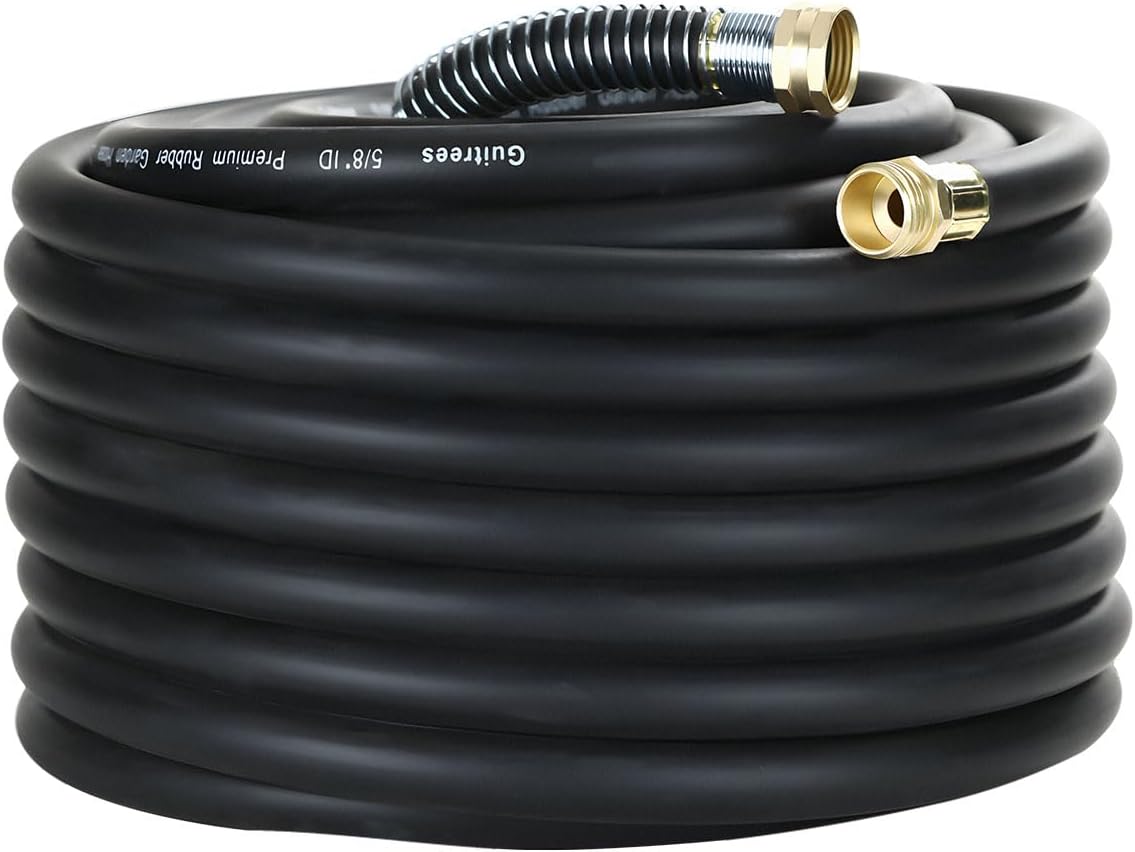
Guitrees 75 ft Heavy Duty Rubber Garden Hose (5/8")
| Material Type | Rubber |
|---|---|
| Unit Count | 75 Feet |
| Maximum Pressure | 600 psi |
The Guitrees 75 ft heavy duty rubber hose is designed for demanding outdoor use where durability and heat resistance matter. It features five-layer braiding and solid brass 3/4" GHT fittings, which help prevent kinks and provide secure connections when running hot water for tasks like cleaning, equipment rinsing, or watering with warm supply. The hose is rated for working pressures up to 600 psi in the listing and the product copy references hot-water compatibility and burst ratings that indicate strong pressure tolerance. In practice this means fewer failures under higher temperature or pressure compared with lightweight vinyl hoses, and the rubber construction stays flexible in cold weather as well. The trade-offs are its heavier weight and bulk compared with lighter consumer hoses, which makes coiling and moving it more effort and may require a sturdy reel or storage. For routine garden watering and occasional hot-water tasks the Guitrees hose offers reliable performance and long service life when handled and stored properly.
Best for: Buyers who prioritize a dependable, heat-capable hose for regular garden work and occasional hot-water tasks and who prefer a durable rubber construction over lightweight alternatives.
Less Ideal for: People who need an ultra-light, easily portable hose for frequent moving or for very small patios where storage space and weight are the top priorities.
- Rubber five-layer construction for improved durability and kink resistance
- Solid brass 3/4" GHT fittings for secure, corrosion-resistant connections
- Designed for hot and cold water use, suitable for higher-temperature tasks
- High pressure capability and strong burst rating for heavy-duty jobs
- Noticeably heavier and bulkier than lightweight vinyl hoses, making handling and storage more strenuous
- Some listings show differing pressure values which could confuse buyers about exact working pressure
Verdict: Choose this rubber 75 ft hose if you want a rugged, hot-water-capable garden hose built to withstand higher pressure and frequent heavy use.
Choosing the Right Garden Hose for Hot Water: Key Factors to Consider
Maximum Working Temperature
Hose temperature ratings determine the hottest water the hose can carry continuously without damage. A higher rated working temperature matters when you plan to use heated water for cleaning, filling hot-soak containers, or connecting to appliances that deliver warm water.
Choose a hose whose continuous working temperature exceeds the typical water temperature you will run through it. Allow a margin between your hottest expected water and the hose rating to reduce stress on materials and fittings over time.
Core and Jacket Material
The inner core and outer jacket materials control how a hose responds to heat. Rubber blends typically tolerate heat better than thin vinyl, and certain thermoplastic elastomers offer a balance of flexibility and temperature resistance. The jacket protects the core from UV and abrasion while the core carries the hot water, so both need to be specified for heat use.
Inspect material descriptions and look for compounds labeled heat-resistant or high-temperature rated. Materials that soften under heat will kink, leak, or fail at connections more quickly, so prioritize hoses with thermally stable compositions.
Fitting Construction and Seal Design
Fittings take a lot of stress when water is hot because thermal expansion and reduced material stiffness can loosen connections. Brass or stainless fittings generally resist heat cycles better than low-grade metals or plastic couplers. Crimped or swage fittings that compress the hose body can also perform better than push-fit or glued connectors when temperatures fluctuate.
Pay attention to gasket type and whether replacement seals are available. A strong mechanical attachment combined with a resilient gasket reduces leaks and the need for early replacement.
Reinforcement and Burst Resistance
Reinforcement layers, such as braided polyester or woven textile sleeves, increase a hose's burst pressure rating and help it resist deformation when carrying hot water under pressure. Heat can reduce the tensile strength of some materials, so robust reinforcement is essential for preventing bulging or ruptures.
Look for hoses with specified burst pressure or reinforced construction when you will use hot water at higher pressures or with powered equipment.
Flexibility and Kink Resistance When Warm
A hose that stays flexible when warm is easier to handle and less likely to kink at warm temperatures. Some hoses become stiff or gummy when exposed to heat, which makes them hard to reel, uncoil, or route around obstacles. Built-in anti-kink designs and materials chosen for thermal flexibility maintain flow and reduce wear at bending points.
Consider how you store and move the hose when it is warm; hoses used near hot equipment or left in the sun should keep usability in mind so you are not fighting stiffness during tasks.
UV, Abrasion, and Outdoor Durability
Hot-water work often happens outdoors in sun-exposed locations or near abrasive surfaces. A hose jacket that resists UV degradation and abrasion will extend service life even when regularly carrying hot water. UV can accelerate material breakdown, especially when combined with repeated thermal cycling.
Choose jackets with UV inhibitors or thicker protective layers if you plan to run hot water in exposed yards, near concrete, or across rough surfaces frequently.
Situations That Require Hot-Water Rated Hoses
Not every outdoor chore needs a hot-water capable hose. Tasks that commonly call for higher water temperatures include rinsing oil and grease from tools and surfaces, filling a portable steam cleaner reservoir outside, warming water for greenhouse sanitation, and connecting to some pressure washers or outdoor heaters that output warm water. Using a cold-water-only hose for these tasks increases the risk of leaks and failure.
Also consider how often you will use hot water and whether the hose will be left in direct sunlight while hot. Occasional brief exposure to moderately warm water is different from repeated, prolonged use of near-boiling water. Matching hose capability to the routine intensity of heat exposure protects both the hose and the fittings.
- Cleaning greasy equipment or driveways
- Filling or draining greenhouse hot-water systems
- Outdoor appliance hookups that emit warm water
- Tasks that combine pressure and temperature
Testing and Reading Temperature Ratings
Manufacturers sometimes list maximum temperatures and separate working temperatures. The working temperature is the more useful number for gardeners because it reflects continuous use limits rather than short bursts. Where possible, select hoses with clear continuous working temperature specifications rather than vague claims of 'high heat tolerance'.
Also look for accompanying burst pressure ratings at specified temperatures. A hose with a respectable burst rating at room temperature may perform poorly when the temperature climbs. If the manufacturer provides pressure ratings at elevated temperatures, those figures are more meaningful for hot-water use.
- Prefer continuous working temperature over short-burst max figures
- Check burst pressure ratings and whether they change with temperature
- Read specification sheets or packaging for clear thermal details
Care and Maintenance for Hot-Water Hoses
Regular maintenance extends hose life when using hot water. Flush hoses with cool water after heavy hot-water use to remove residues that can accelerate wear. Store hoses out of direct sun when hot and avoid leaving them kinked or under tension while cooling, as this can stress fittings and material joints.
Inspect fittings and gaskets frequently for signs of hardening or deformation. Replace worn gaskets promptly to maintain a reliable seal, and avoid dragging hoses across sharp edges that can abrade a softened jacket.
- Flush with cooler water after hot use
- Store coiled away from direct sun while cooling
- Inspect and replace gaskets or seals as needed
Connecting to Hot-Water Sources Safely
When attaching a hose to a hot-water outlet, tighten fittings to the recommended torque without over-stressing the connection. Over-tightening can crush internal gaskets, while under-tightening allows slow leaks that accelerate heat damage. If you expect thermal cycling, check connections after the first few minutes of use to ensure they remain snug.
Consider using protective sleeves or routing away from ignition sources if hot water is used near engines or hot surfaces. Keep flexible loops rather than sharp bends and use hose guides or ramps to protect against abrasion where necessary.
- Check connections after initial hot-water flow
- Avoid tight bends and use protective routing
- Use replacement gaskets rated for higher temperatures
Common Pitfalls to Avoid
A frequent mistake is assuming a heavy-looking hose is heat-capable. Weight alone does not indicate thermal stability; examine the material specs and temperature ratings. Another pitfall is using ambient-pressure ratings as the only measure without considering how temperature reduces material strength and burst resistance.
Do not assume backyard storage conditions are benign. Sun, chemical exposure, and repeated heating can combine to accelerate degradation. Make storage and inspection part of your hot-water hose routine to avoid failures at inconvenient times.
- Do not rely on weight or appearance for heat capability
- Avoid ignoring temperature-adjusted pressure ratings
- Include inspection and proper storage in regular maintenance
How We Chose the Best Garden Hose for Hot Water
We prioritized hoses designed or rated for repeated exposure to elevated water temperatures and looked for construction features that reduce heat-related failure. Key evaluation criteria included rated maximum and working temperature, core and jacket materials that resist softening or cracking, reinforcement against burst risk under heat and pressure, and durable fittings that maintain seals as temperatures fluctuate. We also assessed flexibility at higher temperatures, kink resistance when warm, and overall expected longevity in outdoor conditions such as UV exposure and freeze-thaw cycles. Products were excluded if their specifications did not include a clear hot-water rating or if the listed materials are known to degrade quickly when exposed to hot water. We filtered out hoses intended only for light duty cold-water garden use. The final list favors hose designs that combine verified temperature tolerance with robust fittings and reinforcement, so gardeners can pick a hose based on the temperatures they expect to run and the tasks they plan to tackle.
FAQ
Can I use a regular garden hose for warm water tasks?
Often you can use a regular hose for mildly warm water, but many are not rated for repeated or high-temperature use. Regular hoses may soften, kink, or develop leaks if exposed frequently to elevated temperatures.
What temperature range should I look for in a hot-water hose?
Look for a continuous working temperature that exceeds the hottest water you expect to run. Typical hot-water hoses list working temperatures in the range of 120 to 160 degrees Fahrenheit or higher for heavy-duty applications, but you should choose based on your specific needs.
Are brass fittings necessary for hot-water hoses?
Brass or stainless fittings are usually more reliable under thermal cycling than plastic or plated low-grade metals. Durable metal fittings combined with quality gaskets reduce the chance of leaks as temperatures change.
How does hot water affect burst pressure?
Higher water temperatures can reduce material strength and lower the effective burst pressure of a hose. Reinforced construction and rated burst pressures at elevated temperatures are helpful indicators that a hose will remain safe under hot-water use.
Should I disinfect a hose used for hot-water tasks in a greenhouse?
It depends on the application. If you are using hot water for sanitation, flushing the hose with fresh water after use and occasionally cleaning the interior can help prevent buildup. Avoid chemical cleaners that could damage heat-rated materials unless they are specified as safe.
Final Verdict
When selecting a garden hose for hot water, prioritize rated working temperature, thermally stable core and jacket materials, and rugged fittings that handle thermal cycling. Reinforcement and kink resistance at elevated temperatures are important tradeoffs for durability versus flexibility. Match the hose specification to the hottest and most frequent tasks you plan to perform, maintain fittings and gaskets, and store the hose out of direct sun when possible. Choosing with these factors in mind gives you a safer, longer-lasting hose suited to hot-water outdoor chores.
