

Note: This article contains affiliate links. If you click on these links and make a purchase, I may earn a small commission at no extra cost to you. This helps support my research and content. Read my full affiliate disclosure here.
If you spend time shaping, smoothing, or cleaning garden beds, the right garden rake for garden beds changes how fast and neatly you work. A purpose-built bed rake controls soil texture, removes debris without gouging roots, and helps you establish a consistent seedbed or transplanting surface. This guide covers five shortlisted options suited to common bed tasks and growing styles. We evaluated candidates on how they handle soil preparation, durability, and ergonomic comfort so you can choose a tool that fits your physical needs and the way you garden. Read on for the practical differences that matter in the real garden.
Top Picks at a Glance
| Best Overall The best all-around choice for most situations | Bird Twig Small Leaf Rake with 8.5" Head and Adjustable 36–74" Handle |  |
| Best Quality Built to a higher standard if you want something more solid | Garden Helper Japanese Hand Rake — Steel Head with Wooden Handle |  |
| Best Value The sweet spot between price and what you get | WORKPRO 16" Hand Rake with Soft Grip |  |
| Highest Rated A top-rated pick with lots of positive feedback | Haliaeetus 14.6" Stainless Steel Garden Hand Rake with Ergonomic Wood Handle |  |
| Most Popular A crowd favorite that many people choose with confidence | Oliynedy Adjustable Metal Leaf Rake with Expandable Head |  |
Bird Twig Small Leaf Rake with 8.5" Head and Adjustable 36–74" Handle

| Head width | 8.5" |
|---|---|
| Handle length | 36-74" |
| Tine type | Solid metal |
| Head finish | Rust-resistant coated steel |
This small leaf rake is built specifically to work in narrow garden beds, along shrub lines, and between plants where full-size rakes are awkward. The 8.5 inch rigid head with solid metal tines pulls leaves, pine needles, grass clippings, and light debris from tight spots with good control compared with thin wire-style tines. The handle telescopes from 36 to 74 inches, so you can shorten it for raised beds or extend it to reach under hedges without excessive bending. Construction is practical for yard use: a thickened metal handle and rust-resistant coated steel head should tolerate regular outdoor work, and the screw-together sections make assembly and compact storage straightforward. Expect it to handle light-to-moderate debris well but not replace a wide fan rake for large lawns or heavy wet leaves. The narrow head is a clear advantage for precision work but slows large-area cleanup.
Best for: Gardeners who need a precise, easy-to-store rake for beds, borders, and tight spaces and who balance maneuverability with everyday durability.
Less Ideal for: People who primarily need to clear large lawns or heavy, wet leaves should choose a wide fan rake or leaf blower instead.
- Narrow 8.5 inch head reaches between plants and along bed edges for precision cleanup
- Solid metal tines provide sturdier, more controlled raking than thin wire tines
- Telescoping 36–74 inch handle adjusts for different tasks and reduces bending
- Rust-resistant coated steel head and thicker metal handle for outdoor durability
- Screw-together handle breaks down for compact storage and easy transport
- Small head limits efficiency on large lawns or heavy leaf loads
- Screw-together handle may loosen over time compared with one-piece handles
Verdict: If you want a compact, sturdy rake for precise cleanup in garden beds and around shrubs, this adjustable narrow-head rake is a practical choice.
Garden Helper Japanese Hand Rake — Steel Head with Wooden Handle

| Head Material | Japanese Steel |
|---|---|
| Handle Material | Wood |
| Made in | JAPAN |
| Unit Count | 1 Count |
This Garden Helper Japanese hand rake is a small, precision tool made in Japan for cleaning leaves, grass clippings, and light debris in garden beds and narrow spaces. The chrome-plated Japanese steel head has four slim tines that let you comb through mulch and between plants without disturbing roots, while the short wooden handle gives good control for targeted work near borders, perennials, and container edges. Its lightweight, handheld size makes it easy to use for quick touch-ups, bed edging, and working around delicate plants where a full-size rake would be cumbersome. Because it is compact and built from quality steel, it offers durability and neat, accurate results, though the short handle means it is not suited to raking large areas or heavy wet leaves and it requires more bending than a long-handled tool. For performance-focused gardeners who need a precise, long-lasting hand rake for beds and tight spots, this tool delivers dependable control and craftsmanship.
Best for: Gardeners who prioritize precise, reliable tools for tidy bed maintenance and need a durable hand rake for working around plants and tight spaces.
Less Ideal for: People who need to clear large lawns, heavy accumulations of debris, or who prefer long-handled tools to avoid bending over for extended work.
- Chrome-plated Japanese steel head for durability and wear resistance
- Compact handheld size for precise work in narrow garden beds and around plants
- Comfortable wooden handle that provides a secure grip and good control
- Made in Japan construction reflecting traditional metalworking quality
- Short handle requires bending and is inefficient for large areas
- Not designed for heavy wet leaves or heavy-duty clearing
Verdict: Choose this hand rake if you want a high-quality, Japan-made tool that gives precise, durable control for cleaning and detailing garden beds.
WORKPRO 16" Hand Rake with Soft Grip

| Handle Material | PP+TRP |
|---|---|
| Head Material | Stainless Steel |
| Length | 16" |
| Item Weight | 8 ounces |
This small WORKPRO hand rake is a practical tool for gathering grass clippings, debris, and loosening soil in tight spots where a full-size rake is awkward. Its polished stainless-steel head and flexible tines resist rust and provide enough spring to collect clippings without digging up delicate roots. The PP+TPR soft-grip handle improves comfort and control during repetitive raking, and the hole in the handle makes it easy to hang for storage. Because it is only 16 inches long and lightweight, it is easy to maneuver around flower beds, planters, and lawn edges, but it is not intended to replace a full-size rake for large lawns. For routine clipping cleanup on small to medium patches of grass, edging, or quick spot work near garden beds, this rake offers precise results and durable construction at a modest scale.
Best for: Buyers who want an affordable, durable hand rake for spot-cleaning grass clippings, edging, and precision work around beds and containers.
Less Ideal for: Users who need to clear large areas of turf or collect heavy, wet clippings should choose a full-size rake or a leaf blower instead.
- Stainless steel tines resist rust and maintain shape for long-term use
- Soft PP+TPR handle offers a secure, comfortable grip that reduces wrist strain
- Compact 16-inch length reaches tight spots and works well around beds and edges
- Lightweight design is easy to maneuver for quick grass clipping cleanup
- Short length makes it inefficient for cleaning large lawns or long sessions
Verdict: A compact, budget-friendly stainless-steel hand rake that excels at precise grass clipping cleanup and edging in small garden areas.
Haliaeetus 14.6" Stainless Steel Garden Hand Rake with Ergonomic Wood Handle
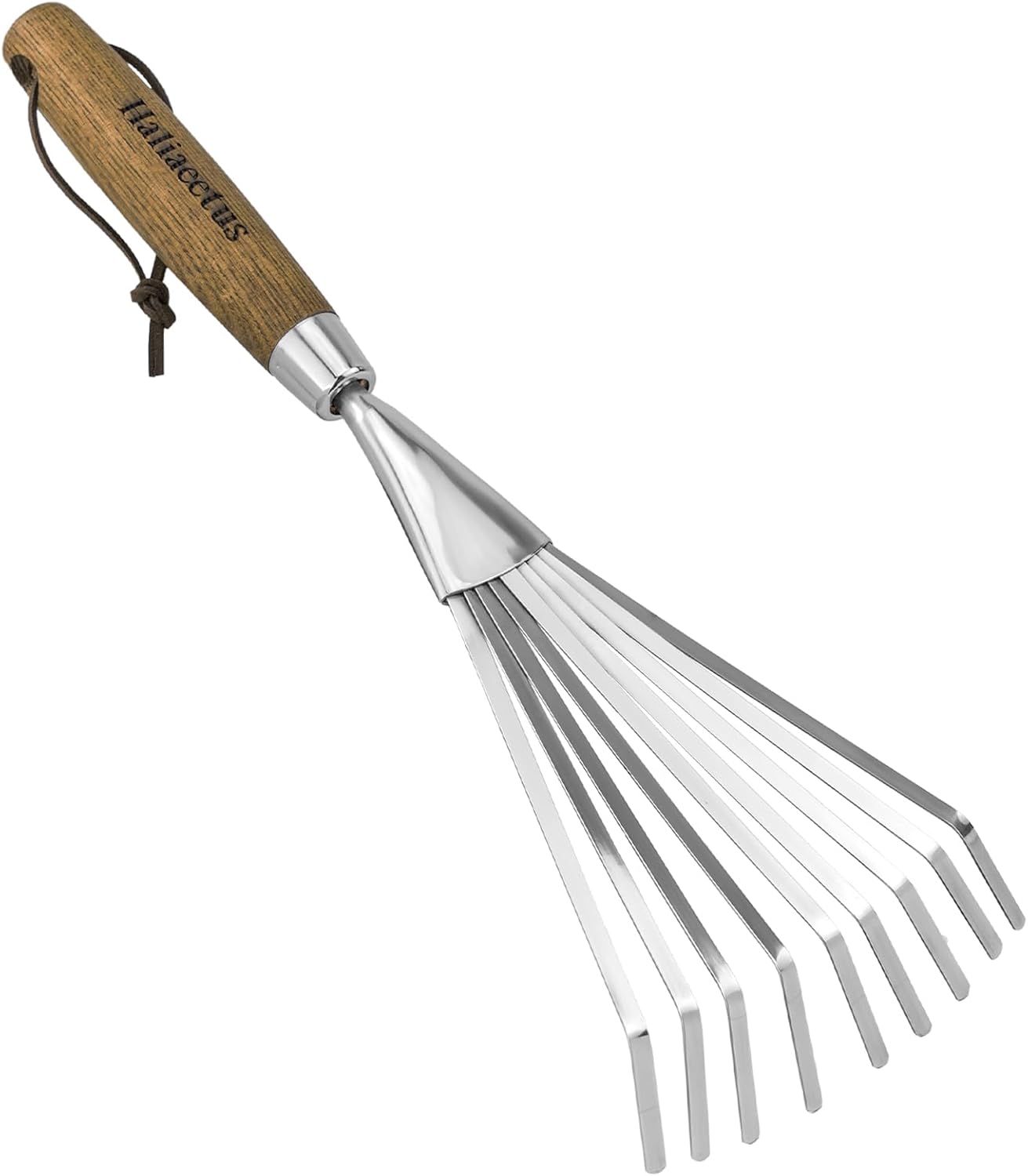
| Item Highlight | 9 Tine Stainless Steel Small Rake with Ergonomic Wood Handle |
|---|---|
| Handle Material | Wood |
| Head Material | Stainless Steel |
| Item Type Name | Gardening Hand Shrub Rake |
This small Haliaeetus hand rake is designed for precise work in garden beds and tight areas around plants. Its nine closely spaced stainless steel tines grab leaves, mulch, and small debris more effectively than bare hands and allow light soil stirring and mulch spreading without disturbing roots. The polished metal head and thicker steel resist bending, while the ergonomically shaped solid wood handle is sanded smooth for a comfortable grip during extended use. The seamless welding between head and handle aims to improve long-term durability. Typical uses include cleaning around perennials, removing debris from between shrubs, and tidying narrow bed edges where a full-size rake cannot reach. The compact length makes it highly maneuverable but means it is not suitable for large-area raking or heavy-duty excavation. Buyers who prioritize a durable, well-finished tool will appreciate the materials and construction, though users needing to move larger volumes of debris should pair this with a full-size rake.
Best for: Gardeners who want a reliable hand tool for precise bed maintenance and cleanup around plants and shrubs and who value durable construction and a comfortable grip.
Less Ideal for: People who need to clear large lawns or move heavy volumes of debris frequently should choose a full-size rake instead.
- Stainless steel head and thick tines resist bending and corrode less than softer metals
- Ergonomic solid wood handle is smooth and comfortable for extended use
- Nine closely spaced tines capture small leaves and debris in tight spaces effectively
- Compact, maneuverable size reaches between plants and along bed edges where larger rakes cannot
- Short length and small head make it inefficient for raking large areas
- Wood handle requires occasional care to prevent weathering if left outdoors
Verdict: A well-made compact hand rake built for reliable, precise cleaning around plants and in tight garden beds.
Oliynedy Adjustable Metal Leaf Rake with Expandable Head

| Rake Type | Garden Rake |
|---|---|
| Manufacturer Warranty Description | 1 Year Warranty |
| Head Material | Metal |
| Handle Material | Plastic |
| Head Size | 17 inches |
This adjustable metal leaf rake lets you change the head width from about 9 to 17 inches and breaks down into multiple handle pieces for easier storage and transport. The metal head and 1-inch diameter poles give it enough stiffness for clearing leaves and light debris across lawns and around shrubs, while the narrower setting is useful for tight spots like flower beds or pine straw. The plastic-sleeved handle and grip make it comfortable to hold, and assembly is simple: screw the poles together with no tools. Because the head is painted to resist rust and the pole joints collapse, the rake works well both at home and carried in an RV or trunk. Expect reasonable durability for routine leaf cleanup but not industrial abuse; the plastic handle sections and locking mechanism can wear faster than all-metal models if subjected to heavy leverage or prying. This is a practical, portable option for homeowners who need a versatile rake without specialized features.
Best for: A buyer who values social proof and wants a dependable, versatile rake for routine yard care and occasional travel; good for homeowners who prefer a portable, easy-to-assemble tool.
Less Ideal for: Landscape professionals or gardeners who need a heavy-duty, single-piece all-metal rake for daily commercial use.
- Adjustable head width (9–17 inches) for tight spots and open areas
- Collapsible multi-piece handle for compact storage and transport
- Metal head and 1" diameter poles provide firm raking performance
- Painted finish on head helps resist rust during outdoor use
- Handle sections and plastic top may be less durable than a single-piece wooden or all-metal handle
- Not intended for heavy-duty prying or moving large, wet debris
Verdict: A practical, portable adjustable-head metal rake that balances everyday yard performance with easy storage and transport.
Choosing the Right Garden Rake for Garden Beds: Key Factors to Consider
Tine Design and Spacing
Tine shape, material, and spacing determine how a rake interacts with soil. Narrow, closely spaced tines are better for leveling fine seedbeds and removing small debris without disturbing transplants. Wider, stiffer tines are useful for breaking small clods and moving heavier organic matter.
Consider whether you need straight tines for smoothing or slightly curved tines that can scoop and move material. The material matters too: spring steel tines hold their shape in stony soils, while softer metal or plastic tines may bend more easily but reduce damage to roots in established beds.
Handle Length and Grip Comfort
Handle length affects posture and leverage. Taller gardeners or those who prefer standing work will benefit from longer handles that reduce bending, while shorter handles can improve control in tight beds. The grip shape and material influence how long you can work without hotspots on hands or wrist strain.
Look for handles with a comfortable diameter and either a soft coating or an ergonomically shaped wood grip. A secure grip reduces slippage when pulling through damp soil and decreases the chance of wrist fatigue during repetitive passes.
Head Width and Maneuverability
Head width determines how quickly you can cover a bed and how accurately you can work near edges and plants. A wider head speeds up broad-leveling tasks but can be cumbersome in narrow rows or raised beds with short edges.
Choose a width that matches your typical bed dimensions. Some rakes offer a mid-range head that balances speed and control, while others with narrower heads excel at working between plants and around ornamentals without hitting stems or borders.
Construction Materials and Durability
Materials affect a rake's lifespan in outdoor conditions. Metal heads and steel ferrules resist wear from soil and rocks, but they should be treated or finished to limit rust. Wooden handles are traditional and comfortable but require occasional maintenance, whereas fiberglass and composite handles resist moisture and cracking.
Pay attention to how the head is attached to the handle. A welded or bolted joint typically lasts longer than simple glued fittings. Durable construction saves time and replacement cost over seasons of use.
Weight, Balance, and Fatigue
Weight influences both the effort needed to push or pull the rake and the control you have over delicate bed work. A heavier rake can help break clods without extra force but may tire you faster. Conversely, an overly light rake may require more passes to achieve the same result.
Balance is equally important. A well-balanced tool lets you apply pressure evenly across the head for consistent leveling. Consider how long you will use the tool in one session and choose a weight that keeps you comfortable while remaining effective.
Preparing Seedbeds and Transplant Rows
Preparing a fine seedbed is less about brute force and more about control. Use a rake that can both break small clods and produce a smooth, even surface for seed-to-soil contact. Work in the same direction for several passes to compress loose soil slightly, then finish with light, shallow strokes to level the surface.
When laying transplant rows, keep a narrow head or careful hand placement in mind to avoid disturbing adjacent plants. Pay attention to tine spacing so you do not lift newly placed seedlings while working the surface between them.
- Start with a single deep pass to break compacted clumps
- Follow with lighter lateral strokes to even texture
- Avoid aggressive tines near delicate transplants
Breaking Clods and Incorporating Amendments
When working heavier or clay soils, tines that are slightly stiffer and set farther apart can help fracture clods and draw in compost or grit. Use a forward-pull motion and apply steady pressure; let the tool do the cutting rather than forcing it and risking bent tines.
If you add amendments like compost or sand, distribute them evenly first and then use the rake to fold the material into the top few inches of soil. Multiple light passes mix more evenly than a single heavy scrape.
- Use firm, deliberate strokes for clay and compacted patches
- Mix amendments gradually with shallow passes for uniformity
Working Raised Beds and Narrow Spaces
Raised beds and narrow vegetable rows require tools that move easily without overreaching. A medium-width head with slightly flexible tines lets you clear debris and level without striking bed edges. Handle length should allow you to stand comfortably at the bed side while still reaching the center.
Consider trimming strokes rather than long pulls to avoid hitting raised bed sides. Lightweight, well-balanced rakes reduce wrist strain when frequently switching direction in tight beds.
- Choose a head that fits the bed width for efficient coverage
- Stand at the bed edge and use short strokes to preserve borders
Caring for Your Rake
Regular maintenance extends the life of any garden rake. After use, knock off excess soil, rinse if needed, and dry the head thoroughly to limit corrosion. Tighten any loose ferrules or fasteners and sand and oil wooden handles once or twice a season.
Store the rake off the ground in a dry spot. Inspect tines periodically for bending; some light reshaping with pliers can restore alignment, but severely damaged heads should be replaced to avoid uneven soil work.
- Clean and dry the head after use
- Inspect and tighten attachments seasonally
- Oil wooden handles to prevent cracking
Ergonomics and Reducing Strain
Technique matters as much as tool choice for reducing strain. Bend from the hips rather than the lower back, and use your legs and body weight to push or pull rather than relying solely on your arms. Alternate tasks to avoid repetitive motion in the same wrist or shoulder.
Pick a rake with a comfortable grip and handle length that suits your posture. Some gardeners add a short padded sleeve to the handle where they hold it most to reduce hotspots during long sessions.
- Use body mechanics to reduce back and wrist stress
- Match handle length to your height and working style
How We Chose the Best Garden Rake for Garden Beds
We focused on the specific demands of preparing and maintaining garden beds when selecting these five rakes. Key evaluation criteria included tine design and spacing for effective soil leveling and breaking clods; handle length and grip shape to reduce bending and wrist strain during repeated passes; construction materials and joint strength for resistance to corrosion and bending when used on varied soil types; head width and maneuverability to suit narrow rows and tight beds; and overall weight and balance to minimize fatigue during longer sessions. Products were excluded if their design was primarily for lawns, leaf clearing, or landscaping that requires very different tine spacing and head shapes. We filtered out rakes with fragile attachments, excessively short handles for standing use, or unclear material specifications. The final selections reflect tools that combine practical bed-focused performance with robust construction and ergonomic handling. These same dimensions are used in the scorecard so readers can compare options on the attributes that matter in everyday garden-bed work.
FAQ
What tine spacing is best for a vegetable garden bed?
Closely spaced tines, roughly a few millimeters apart, work well for creating a fine seedbed and moving small debris without disturbing seedlings. Slightly wider spacing can be useful for breaking clods and mixing amendments in heavier soils.
Should I choose a wooden or fiberglass handle for my rake?
Wood handles are comfortable and absorb vibration but need occasional maintenance like oiling. Fiberglass or composite handles resist moisture and are less likely to crack, making them a low-maintenance choice for wetter climates.
How wide should the rake head be for raised beds?
Match the head width to the bed size. A medium head that covers a good portion of the bed in a couple of passes is efficient, while a narrower head offers better control around plants and bed edges.
Can I use a leaf rake for garden beds?
Leaf rakes are designed for lightweight debris and have flexible tines that do not hold up well for soil preparation. They can clear leaves but are usually ineffective at breaking clods or leveling soil reliably in bed work.
How do I prevent tines from bending in stony soil?
Choose a rake with spring steel or reinforced tines and a strong head-to-handle connection. Use controlled strokes rather than forcing the rake into rocky patches, and remove larger stones by hand to reduce stress on the tool.
Final Verdict
Choosing the right garden rake for garden beds depends on the tasks you do most: fine tines and a smooth head for seedbeds, stiffer tines for clod breaking, and a handle length that matches your posture for comfort. Prioritize tine design, handle ergonomics, and durable construction to reduce effort and extend the tool's life. Balance speed and control when picking a head width and weight. Focus on the tradeoffs described here and select the rake that best fits your bed size, soil type, and how long you typically work so you end each session with less fatigue and neater beds.
