

Note: This article contains affiliate links. If you click on these links and make a purchase, I may earn a small commission at no extra cost to you. This helps support my research and content. Read my full affiliate disclosure here.
If you have a persistently wet patch in your yard, choosing the right seeds makes the difference between a muddy mess and a stable planting. Seed mixes and individual species adapted to boggy ground handle saturated soils, resist rot, and form root systems that stabilize soggy spots. This guide shortlists five top-rated garden seed options for boggy ground and explains the factors we used to evaluate them, including wet-site tolerance and how quickly they establish. Use the notes here to match seed choices to your moisture level, sun exposure, and maintenance goals before planting.
Top Picks at a Glance
| Best Overall The best all-around choice for most situations | SURVIVAL GARDEN SEEDS Spotted Joe Pye Weed Wildflower Seeds (1 Pack) |  |
| Best Quality Built to a higher standard if you want something more solid | Whitetail Hill Soggy Bottoms Seed Mix (Turnips and Moisture-Tolerant Clovers) |  |
| Best Value The sweet spot between price and what you get | Hazzard's Caltha palustris (Marsh Marigold) Seeds — 20 Count |  |
| Best Budget The cheapest option that still gets the job done reliably | Seed Needs Watercress Seeds (500 count, heirloom non‑GMO) |  |
| Highest Rated A top-rated pick with lots of positive feedback | Palm Beach Medicinal Herbs Sweet Flag (Acorus calamus americanus) Seeds — 50 Pack |  |
SURVIVAL GARDEN SEEDS Spotted Joe Pye Weed Wildflower Seeds (1 Pack)

| Expected Blooming Period | Summer to Fall |
|---|---|
| Sunlight Exposure | Full Sun |
| USDA Hardiness Zone | 3-8 |
| Seed Treatment Method | Untreated |
| Material Features | GMO Free, Heirloom |
These Spotted Joe Pye Weed seeds are a practical choice for gardeners who need a tall, moisture-tolerant perennial for boggy or damp sites. The packet contains untreated, heirloom, non-GMO seed and clear instructions for direct sowing or cold stratification; seeds are surface-sown because they need light to germinate. Once established the plants reach several feet and produce dusty rose-purple flower clusters from July through September that reliably draw bees and butterflies and add late-season interest. This variety tolerates full sun to partial shade and prefers loam that stays regularly moist, so it is especially suited to rain gardens, pond edges, and wet meadows. Expect blooms in the first or second season and self-seeding that can expand a wildflower patch over time. Limitations: germination requires either winter sowing or a 60-day cold stratify, and plants can get tall enough to need pruning or thinning for tidy borders. For a balanced gardener looking for a low-maintenance native that supports pollinators in damp conditions, these seeds are a solid match.
Best for: Gardeners who want a reliable native perennial for damp spots and rain gardens and value low-maintenance plants that support pollinators and natural self-seeding.
Less Ideal for: Those needing instant color or very compact plants for small containers or dry, drought-prone sites should consider alternatives better suited to those conditions.
- Designed for wet or boggy sites and thrives in regularly moist soil
- Heirloom, open-pollinated and non-GMO seeds suitable for seed saving
- Attracts native bees and butterflies providing late-season pollinator forage
- Clear planting instructions with recommended cold stratification for better germination
- Requires cold stratification or winter sowing for reliable germination
- Plants grow tall and need thinning or pruning to prevent flopping in borders
Verdict: A low-maintenance, pollinator-friendly native perennial ideal for planting in boggy ground, rain gardens, and pond edges.
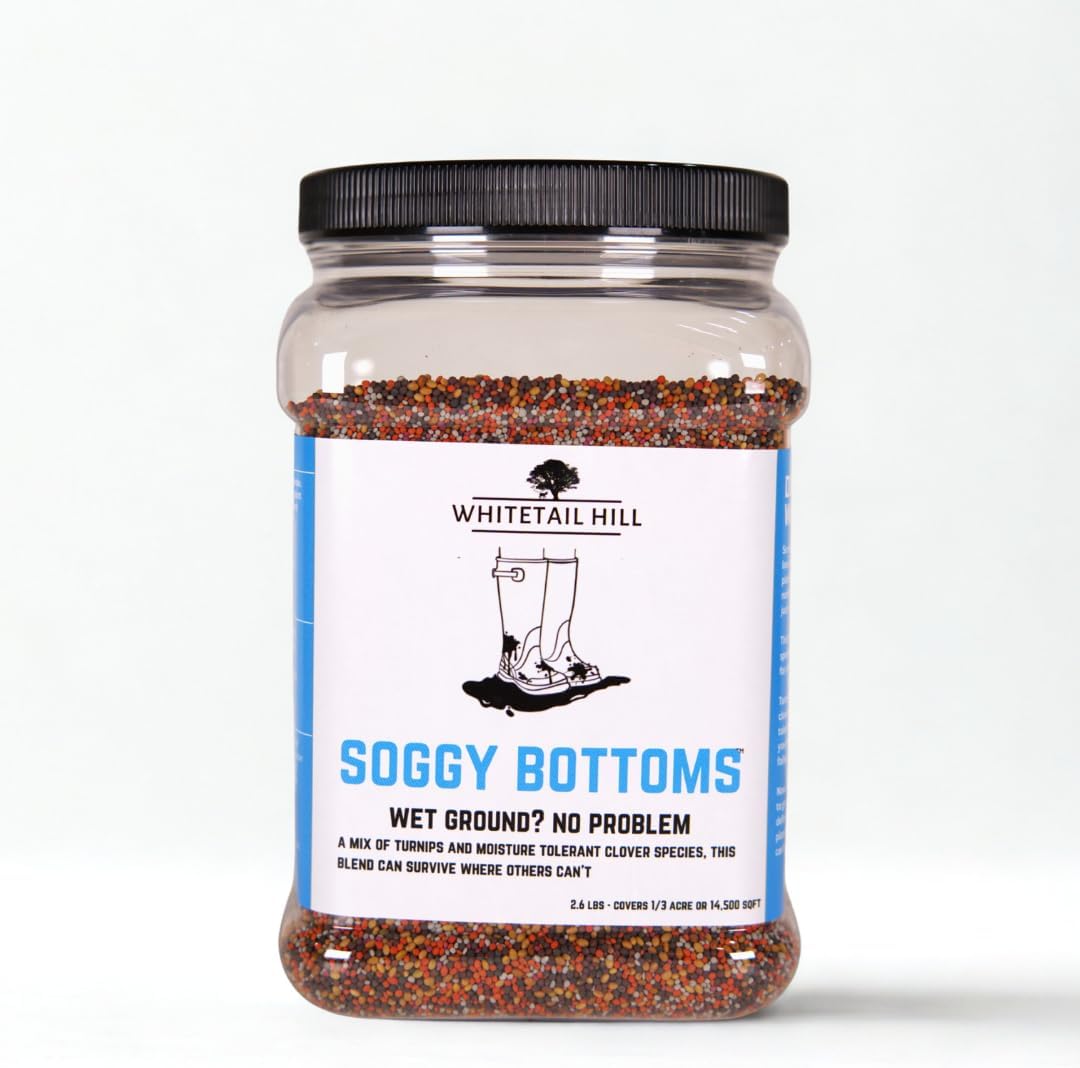
Whitetail Hill Soggy Bottoms Seed Mix (Turnips and Moisture-Tolerant Clovers)
| Indoor Outdoor Usage | Outdoor |
|---|---|
| Other Special Features of the Product | High Germination Rate |
| Sunlight Exposure | Full Sun to Partial Shade |
| Expected Blooming Period | Year Round |
This Soggy Bottoms blend combines turnips with specially selected clover species to give you a planting option for wet spots where conventional mixes fail. It is typically used for food plots or forage in low-lying areas that stay moist but are not flooded, and the package includes planting guidance for timing, soil prep, and depth. Notable features are its moisture-tolerant clovers, suitability for full sun to moderate shade, and a stated high germination rate. In practice the mix opens up otherwise marginal ground and establishes relatively quickly in spring or late summer plantings when soil fertility is at least moderate. Practical benefits include improved ground cover in soggy patches and a cold-hardy composition that can be frost-seeded in appropriate regions. Limitations to expect are that it will not tolerate standing water, requires basic soil preparation or light surface work for best results, and benefits from fertilizer recommendations based on a soil test to maximize performance.
Best for: Gardeners and land managers who need a performance-focused seed mix to establish forage or cover on persistently wet but not flooded ground and who prioritize reliable germination in challenging spots.
Less Ideal for: People trying to plant in permanently flooded or ponded areas or those who want a general-purpose lawn or dry-ground seed mix.
- Formulated specifically for moist, low-lying ground where many mixes fail
- Contains turnips and moisture-tolerant clover species for reliable forage and cover
- Works in full sun to moderate shade, increasing planting location flexibility
- Cold-hardy and can be frost-seeded in appropriate climates
- Not suitable for areas with standing water
- Performs best with at least moderate soil fertility and may need soil testing and fertilizer
Verdict: Choose this mix when you need a dependable seed blend that establishes forage and cover on moist, low spots that standard mixes cannot handle.
Hazzard's Caltha palustris (Marsh Marigold) Seeds — 20 Count

| USDA Hardiness Zone | 3 |
|---|---|
| Soil Type | Sandy Soil |
| Unit Count | 20 Count |
These Hazzard's marsh marigold seeds supply 20 seeds of Caltha palustris, a perennial prized for bright yellow spring flowers in wet or boggy spots. They are intended for gardeners who need a moisture-loving groundcover or accent in pond edges, rain gardens, and other saturated soils. Germination guidance on the packet recommends a cool, moist stratification around 40°F for four weeks followed by warmth at 70–80°F in peat moss to encourage sprouting. The plant is described as hardy to Zone 3 and grows to about 12 inches, making it suitable for low, wet areas where many perennials struggle. Practical benefits include providing reliable spring color and thriving in conditions that exclude many other flowering plants. Limitations are typical of seed purchases: germination requires correct pre-treatment and timing, and establishing plants from seed takes longer than transplanting mature divisions. Also the packet is small at 20 seeds, so expect modest coverage unless sowing over multiple seasons or combining with plugs.
Best for: Gardeners looking to optimize plantings for persistently wet or saturated sites who prefer starting inexpensive perennials from seed to fill pond margins or rain gardens.
Less Ideal for: Gardeners who need instant coverage or quick blooms should prefer mature divisions or potted plants instead of seeds; those wanting large-scale planting immediately may find the packet too small.
- Adapted for consistently wet or boggy soils where many garden plants fail
- Hardy to USDA Zone 3, suitable for cold climates
- Clear germination instructions provided for cold stratification then warmth
- Compact mature height (~12 inches) fits pond edges and low wet borders
- Small packet size of 20 seeds limits immediate area coverage
- Requires cold, moist stratification and correct second-stage warmth for reliable germination
Verdict: A practical, cold-hardy seed option for establishing spring-flowering plants specifically in boggy or pond-edge garden spots.
Seed Needs Watercress Seeds (500 count, heirloom non‑GMO)

| Indoor Outdoor Usage | Outdoor |
|---|---|
| Other Special Features of the Product | Culinary Herb, Easy to Grow, Heirloom, Non-GMO, Untreated Seed |
| Sunlight Exposure | Full Sun |
| USDA Hardiness Zone | 5,6,7,8,9,10,11 |
| Moisture Needs | Constant Watering |
These Seed Needs watercress seeds are aimed at gardeners who want an easy-to-grow, high-yield crop for wet or boggy spots. The seeds are sold in large counts (500) and come in water-resistant packets with step-by-step sowing instructions and a QR code for more info. Watercress is semi-aquatic and is planted on pond edges, in bog gardens, or in containers set in shallow water; it prefers rich soil, full sun, and constant moisture. Practical benefits include quick germination, frequent harvests 40–55 days after emergence, and lots of seed to share or replant. The packet emphasizes fresh, untreated, non-GMO heirloom seed and simple care guidance, which makes it suitable for repeat plantings over the current and following seasons. Limitations are inherent to watercress as a crop: it needs consistently wet conditions and may not perform in dry beds or without a way to keep the root zone saturated, and large seed counts may be more than a single small plot requires.
Best for: Gardeners on a budget who need an affordable, high-volume source of watercress for bog gardens, pond edges, or containers kept consistently moist and who value straightforward planting instructions.
Less Ideal for: Growers without a reliable source of standing or consistently saturated moisture, or those wanting a low-count packet for a single small pot, should choose a different seed size or more drought-tolerant herb.
- High seed count (500) lets you sow large areas or save seed for future seasons.
- Packets are water resistant and include clear sowing instructions plus a QR code for extra guidance.
- Non-GMO, heirloom/untreated seeds suitable for culinary use.
- Designed for boggy or pond-edge planting so it performs where moisture is constant.
- Requires constantly wet conditions so it will fail in typical well-drained garden beds.
- No germination rate or cold stratification details provided on the listing for precise planning.
Verdict: A budget-friendly bulk packet of fresh, non-GMO watercress seed ideal for planting and harvesting in wet boggy areas or containers kept in shallow water.
Palm Beach Medicinal Herbs Sweet Flag (Acorus calamus americanus) Seeds — 50 Pack

| Sunlight Exposure | Full Sun, Partial Shade |
|---|---|
| USDA Hardiness Zone | 3 |
| Soil Type | Sandy Soil |
| Moisture Needs | Moderate Watering |
| Unit Count | 50 Count |
These Sweet Flag seeds are aimed at gardeners who need a reliable wetland plant for boggy ground and water-edge planting. The packet contains 50 seeds and includes basic growing instructions; the species is described as hardy across broad USDA zones and tolerates full sun to partial shade. In practice this means you can sow them along pond margins, in rain gardens, marshy beds, or in containers that are kept consistently wet. The fragrant, sword-like foliage adds texture and can be used for potpourri or crafts. Notable features are its wet-soil preference and broad hardiness, which reduce the need for microclimate tinkering once established. Limitations are that seeds of wetland species often require specific moisture and sometimes cold stratification or patience for germination, so instant dense coverage is unlikely from a single packet. Also the listing offers minimal cultivar or provenance details, so expectations about wild versus cultivated performance should be conservative. For gardeners restoring pond edges or creating reliable bog planting, these seeds are a sensible, low-fuss option when planted in the right consistently wet conditions.
Best for: Gardeners creating or restoring pond margins, rain gardens, or marshy beds who want a hardy wetland species that performs reliably in consistently moist conditions.
Less Ideal for: Gardeners looking for fast groundcover in dry soils or those who need precise cultivar information for formal plantings should consider alternative, better-documented options.
- Contains 50 seeds which is useful for filling pond margins or small bog beds
- Described hardiness across wide USDA zones making it suitable for many climates
- Specifies full sun to partial shade tolerance for flexible site placement
- Designed for consistently moist to boggy conditions so it is well suited to water features and rain gardens
- Product information lacks detailed germination requirements or provenance for seed batch
- Wetland seeds can need specific moisture management and time to establish, so results are not immediate
Verdict: A dependable choice for establishing fragrant, hardy wetland planting along pond edges and rain gardens when kept consistently moist.
Choosing the Right Garden Seed for Boggy Ground: Key Factors to Consider
Soil Saturation Level and Duration
Boggy ground covers a range from soils that stay wet for days after rain to spots that remain saturated year-round. Knowing how long water stands or how high the water table is determines which seeds will survive. Some species tolerate occasional flooding but will fail where waterlogged conditions persist through the growing season.
When selecting seed, match the plant's tolerance to your site's worst-case wetness. Plants suited for intermittent wetness often have shallower root systems, while true wetland-tolerant species develop aerenchyma or other adaptations for oxygen transport in roots. Choosing the wrong tolerance class leads to poor germination and high loss in the first season.
Sun Exposure and Microclimate
Boggy patches can be in full sun, partial shade, or deep shade depending on canopy cover and orientation. Sun exposure affects soil temperature and evapotranspiration, which in turn influence seedbed drying and germination rates. Some wet-soil species thrive in open, sunny marsh conditions, while others are adapted to the cooler, shaded edges of streams and ponds.
Assess the microclimate across the planting area and pick seeds that match exposure. In shaded wet areas, choose species that tolerate low light and slower growth. In sunny, wet depressions, select vigorous groundcovers or grasses that can outcompete annual weeds and establish dense cover quickly.
Seed Mix Composition and Native Adaptation
A seed mix designed for wet soils should contain complementary species that perform different roles: quick-establishing annuals or short-lived perennials to stabilize soil, plus longer-lived natives for permanent cover. Native species are often better adapted to local hydrology and pest pressure than exotics.
Evaluate the species list for ecological fit rather than marketing claims. Look for mixes with a balance of fast germinators and deep-rooted perennials to provide immediate soil protection and long-term resilience. Avoid mixes that list many ornamental or turf species with no wetland tolerance.
Seeding Rate and Establishment Method
How much seed to apply and how you sow it are crucial in wet soils. Oversowing can cause dense surface mats that rot, while undersowing leaves bare patches vulnerable to erosion. Some seeds require surface contact and light to germinate, while others need shallow covering.
Consider the recommended seeding rate for wet sites and whether the area needs soil preparation such as light raking or broadcast into firm, moist seedbeds. In some boggy areas, initial placement on biodegradable mats or use of planting terraces may improve contact and prevent washout before seedlings anchor the soil.
Maintenance and Management After Planting
Maintenance expectations differ for wet-site plantings. Some seed choices establish into low-maintenance stands that only need seasonal mowing, while others require frequent cutting to prevent dominance by aggressive species. Ongoing management also includes monitoring for invasive weeds that exploit disturbed, wet soils.
Plan for first-season care such as light watering only if drought threatens, removing competing weeds, and timing any mowing or trimming to avoid damaging young plants. Understand whether the chosen species tolerate cutting and how quickly they recover before adopting them for erosion control or habitat goals.
Disease, Pest Pressure, and Rot Risk
Constant moisture increases the risk of seed rot, fungal diseases, and certain pests. Species selection should account for inherent resistance to common wet-soil pathogens as well as the local disease climate. Seed quality and proper seedbed preparation reduce disease outbreaks in the crucial germination period.
Choose varieties or mixes with a record of low rot susceptibility in wet conditions and follow sowing guidance to minimize standing water directly on seedbeds. In heavier soils, consider improving drainage only where it aligns with site goals, because altering hydrology can harm wetland-adapted species.
Matching Seed Types to Typical Boggy Situations
Not all wet ground is the same. Distinguish between seasonally wet depressions, permanently saturated edges of ponds or streams, and compacted low spots with poor drainage. Each situation favors different growth habits and root structures.
For seasonally wet areas, mixes with fast-germinating meadow species plus perennial grasses give quick cover and later persistence. For permanently saturated edges, pick true wetland-tolerant sedges, rushes, and salt-tolerant meadow plants if applicable. In compacted or trampled spots, choose hardy, low-growing plants that tolerate disturbance and can slowly build organic matter to improve soil structure.
- Seasonally wet: fast-establishing meadow seeds and perennial grasses
- Permanently saturated: sedges and rushes with aerenchyma-adapted roots
- Compacted spots: tough groundcovers that handle foot traffic and trampling
Preparing a Seedbed in Wet Conditions
Preparation focuses on firm, stable seed contact. Avoid working overly saturated soil because compaction and smearing reduce oxygen and harm seedlings. If the site is very wet, wait for a drier window or work from boards to avoid damaging the seedbed.
Light grading to reduce channels that funnel water and the use of erosion-control blankets or coir mats can help keep seed in place during establishment. In some cases, planting into shallow depressions or on small berms can keep seed out of the deepest standing water while roots establish.
- Do not till or dig when soil is sodden
- Use temporary erosion-control fabric on slopes
- Work from firm surfaces to minimize compaction
Timing and Seasonal Considerations
Timing planting to local seasonal moisture cycles improves germination. Late-summer or early-fall sowing gives many species a cool, moist window to establish roots before growth slows. Spring sowing may work for some annual stabilizers but can be risky if heavy spring floods are common.
Consider local frost dates and the typical period of highest water levels. For species that need cold stratification, fall sowing lets winter conditions prepare seeds naturally. For seed that requires warm soil, wait until soils consistently reach the specified temperature.
- Fall sowing benefits many perennials in cool climates
- Avoid sowing immediately before expected heavy flooding
- Check species-specific germination temperature and light needs
Establishment Techniques to Reduce Washout
Sowing technique affects how much seed washes away after rain. Broadcasting followed by light raking works on gently sloping sites but may fail on steeper banks or where runoff is strong. In those cases, small-scale erosion control measures help.
Using mulch that permits moisture exchange, such as straw netting or coir fibers, protects seed without suffocating it. Temporary fencing to reduce foot traffic and shading to moderate soil temperature can also improve seedling survival during the vulnerable first weeks.
- Broadcast and lightly rake for even contact on flats
- Use coir or straw blankets on slopes and exposed banks
- Anchor erosion-control materials to prevent displacement
Integrating Seeded Areas Into a Larger Landscape
Think about transitions between boggy plantings and adjacent dry garden beds or turf. Gradational plantings that move from wet-tolerant species into mesic perennials create habitat and reduce maintenance edges. Sudden changes often create management headaches and increase invasive pressure.
Plan access routes and mowing strips where necessary to manage the seeded area without damaging wet-adapted plants. Buffer plantings of shrubs or grasses can slow runoff, trap sediment, and expand the functionality of the wet planting beyond aesthetics.
- Create gradual plant transitions to reduce edge issues
- Include maintenance access to avoid trampling seedlings
- Use buffer strips to slow runoff and capture sediment
How We Chose the Best Garden Seed for Boggy Ground
We focused on traits that matter for long-term success in saturated soils. Key evaluation criteria were wet-site tolerance, establishment speed, root structure and erosion control, disease and rot resistance, and maintenance needs. We favored seed types and mixes with documented performance in saturated or seasonally flooded conditions and clear instructions for sowing depth and timing. We excluded seeds intended only for dry, well-drained soils or those requiring extensive soil amendments that contradict low-intervention wet-site management. We also excluded ornamental-only varieties that lack dense groundcover or deep fibrous roots. Our process prioritized proven species and mixes that perform across a range of boggy conditions while still being suitable for typical home garden planting windows. Editorial filters included seed purity and germination information, habitat suitability, and practical gardener-facing factors like required sunlight and mowing tolerance. Where sources presented conflicting results for a species in saturated sites, we leaned toward conservative recommendations that favor establishment reliability.
FAQ
Can I seed a boggy area in spring, or is fall better?
It depends on local conditions. Fall sowing often gives perennials a cool, moist period to root before winter, which improves survival. Spring can work for some quick-establishing annuals, but heavy spring floods or late frosts increase risk.
Will adding compost or sand improve seed success in wet spots?
Amending soil can help where the goal is to grow garden plants rather than recreate wetland habitat. Compost improves structure but may increase moisture retention in already soggy spots. Sand can improve drainage in certain soils but altering hydrology can harm wet-adapted species.
How can I prevent seed from washing away after sowing?
Use erosion-control blankets, coir mats, or mulch that allows light and moisture through while holding seed in place. On slopes, anchor materials and consider staggered planting terraces or wattles to slow surface flow.
Are native seeds better for boggy ground than ornamental mixes?
Often, yes. Native species are typically adapted to local moisture regimes and pests, making them more resilient. However, the suitability depends on the specific species list in a mix rather than the label alone.
Do I need to prepare the soil before seeding a permanently saturated area?
Minimal preparation is usually best to avoid soil compaction. Create a firm, even seedbed and remove competing vegetation when possible. In permanently saturated sites, choose true wetland-tolerant species and avoid deep digging that alters water flow.
Final Verdict
Prioritize species and mixes that match your site's wetness, sun exposure, and maintenance capacity. The best choices combine quick-establishing plants for immediate soil protection with longer-lived, wet-tolerant species that build resilience over time. Accept tradeoffs between immediate cover and long-term habitat value, and plan planting timing and seedbed methods to reduce washout and rot. With the right seed selection and simple establishment steps, you can transform soggy trouble spots into stable, attractive plantings.
