

Note: This article contains affiliate links. If you click on these links and make a purchase, I may earn a small commission at no extra cost to you. This helps support my research and content. Read my full affiliate disclosure here.
If you want planting that cuts down on weeding time and fills bare patches with living cover, choosing the right garden seed matters. Seeds selected for weed control behave differently than ornamental mixes: they establish dense canopy, germinate uniformly, and tolerate the site long enough to shut out weed seedlings. This guide looks at seven top garden seed options suited specifically for suppressing weeds in beds, borders, and bare spots. We shortlisted choices that germinate reliably, produce quick coverage, and match common sun and soil conditions. Read on for practical notes about establishment, maintenance, and using these seed types effectively.
Top Picks at a Glance
| Best Overall The best all-around choice for most situations | Tin Shed Cover Crop Weed Suppressor Seed Mix (Buckwheat, Ryegrass, Pea & Clover) |  |
| Best Quality Built to a higher standard if you want something more solid | TnT Seed Company Peas, Oats & Vetch Cover Crop Mix — 5 lb Jug |  |
| Best Value The sweet spot between price and what you get | No-Till Solutions 13-Seed Cover Crop Mix (1 lb) |  |
| Best Budget The cheapest option that still gets the job done reliably | Survival Garden Seeds 5-Variety Cover Crop Seed Collection |  |
| Highest Rated A top-rated pick with lots of positive feedback | TnT Seed Company All-Purpose Garden Cover Crop Seed Mix, 5 lb |  |
| Most Popular A crowd favorite that many people choose with confidence | Outsidepride White Dutch Clover Seed, 1 lb Nitrocoated & Inoculated |  |
| Best Seller A high-volume bestseller chosen again and again | Mountain Valley Seed Co No-Till Garden Cover Crop Mix |  |
Tin Shed Cover Crop Weed Suppressor Seed Mix (Buckwheat, Ryegrass, Pea & Clover)

| Product type | Cover crop seed mix |
|---|---|
| Featured species | Buckwheat, Ryegrass, Pea, Clover |
| Primary benefit | Rapid canopy weed suppression |
This multi-species cover crop mix is designed to establish quickly and form a dense canopy that shades the soil and reduces weed pressure between plantings. It combines fast-growing species such as buckwheat with ryegrass, peas, and clover to deliver both quick ground cover and nitrogen-fixing benefits for soil health. Gardeners typically broadcast the seed over bare beds or amended soil in early spring or late summer and then mow or incorporate the growth before the next crop. Notable features are the emphasis on rapid canopy formation for natural weed suppression and the inclusion of legumes to support soil fertility. In practice the mix is low-effort: it needs basic soil contact and regular moisture to germinate, and it can reduce hand-weeding while providing organic matter when turned in. Limitations are that it is not a permanent groundcover and requires seasonal management (mowing or incorporation) to avoid becoming a volunteer in future planting beds, and its performance depends on timely planting and adequate moisture for germination.
Best for: Gardeners who want a low-effort seasonal cover crop to reduce weeds and build soil between plantings and who value quick results without specialist management.
Less Ideal for: People seeking a permanent groundcover or a no-maintenance, year-round weed barrier should choose a different product or hardscape solution.
- Fast-establishing mix that creates dense canopy to shade and suppress weeds
- Includes legumes (pea and clover) to add nitrogen and improve soil fertility
- Multi-species blend balances quick cover with longer-lasting biomass
- Simple broadcast application works for beds and bare soil with minimal prep
- Not a permanent solution and requires mowing or incorporation each season
- Effectiveness depends on proper timing and adequate moisture for germination
Verdict: Choose this blend if you want a fast-establishing, multi-species cover crop that shades out weeds and improves soil fertility between plantings.
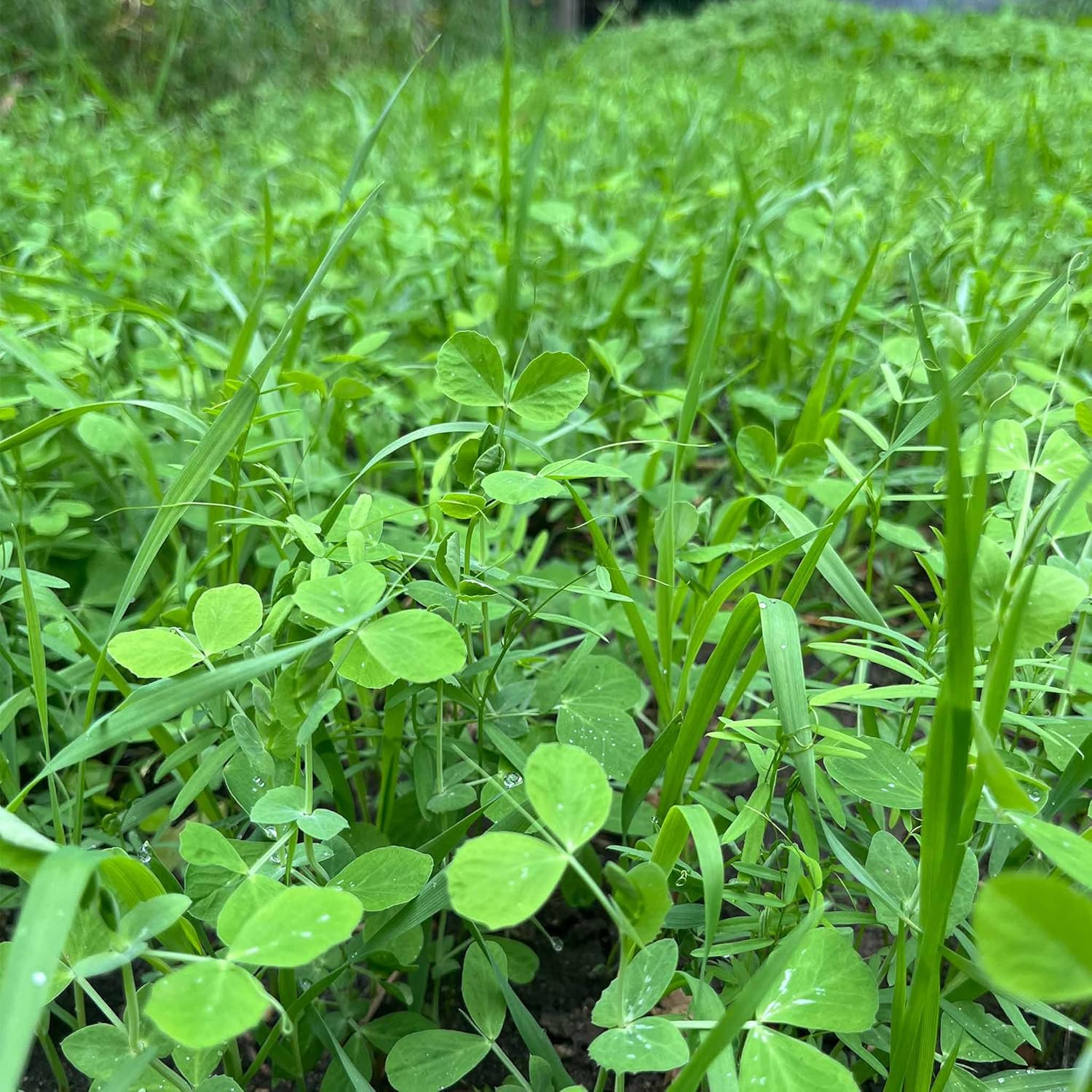
TnT Seed Company Peas, Oats & Vetch Cover Crop Mix — 5 lb Jug
| Plant or Animal Product Type | Cover Crop |
|---|---|
| Expected Planting Period | Spring, Summer, Fall |
| Sunlight Exposure | Full Sun to Partial Shade |
| Moisture Needs | Moderate Watering |
| Item Weight | 5 pounds |
This peas, oats, and vetch blend is built for gardeners who want rapid ground cover and measurable soil improvement between growing seasons. Spread or lightly incorporate the seed in spring or fall; peas and hairy vetch fix nitrogen while oats and the mix’s quick growth create dense biomass that shades out weeds and protects bare soil. The resealable 5 lb jug covers roughly 3,000–3,750 sq ft and is easy to handle, and the mix adapts to many soil types with moderate watering. Practical benefits include reduced fertilizer need over time, less erosion, and a more workable seedbed after decomposition or mowing. Limitations are that it is a cover crop rather than an immediate food crop, so it requires a season of growth and a plan for termination (mowing, tilling, or winterkill) before planting vegetables. Also, success depends on timely planting and adequate moisture to achieve the high germination the brand advertises.
Best for: Gardeners focused on improving soil health and reducing weed pressure between crop seasons who want a performance-oriented cover crop that builds fertility and biomass.
Less Ideal for: Growers seeking an instant edible harvest or those unwilling to manage cover-crop termination and planting windows should consider other seed options.
- Fast-establishing mix that provides quick ground cover to suppress weeds
- Includes nitrogen-fixing peas and vetch to improve soil fertility naturally
- Adaptable to a wide range of soils and tolerates full sun to partial shade
- Comes in a resealable 5 lb jug sized for treating several thousand square feet
- Can be mowed, tilled, or left to decompose to add organic matter
- Not intended as an immediate vegetable crop so requires a season of growth and a termination plan
- Effectiveness depends on correct planting window and soil moisture for germination
Verdict: Choose this mix when you want a fast, nitrogen-adding cover crop that suppresses weeds and builds soil fertility between planting seasons.
No-Till Solutions 13-Seed Cover Crop Mix (1 lb)

| Sunlight Exposure | Full Sun, Partial Sun |
|---|---|
| Soil Type | No-Till |
| Moisture Needs | Moderate Watering |
| Material Features | GMO Free, Natural |
| Unit Count | 13 Count |
This 13-seed No-Till Solutions mix combines clovers, vetch, peas, buckwheat, millet, lentils, flax and other species to create a quick-establishing, biodiverse cover crop for small-scale gardens and raised beds. It is designed for no-till and container use and is inoculated with Rhizobium to help legumes fix nitrogen and encourage beneficial mycorrhizal fungi. In practice the clover-heavy blend and fast-growing buckwheat and millet provide rapid ground cover to shade emerging weeds while the mix’s diversity attracts beneficial insects and builds organic matter. The seed is described as nitro-coated and GMO-free, which supports robust germination and early vigor in moderate watering and full to partial sun. Limitations are the one-pound bag size, which suits small plots but may not cover larger areas, and the fixed species mix that gives a strong clover presence that may dominate if you prefer grasses or brassicas in a cover rotation. Germination and performance will still depend on local timing and soil contact, so prepare a good seedbed for best weed suppression results.
Best for: Gardeners who want a practical, easy-to-establish cover crop to reduce weeds and build soil fertility in raised beds or small no-till plots and who value reliable establishment and low-maintenance ground cover.
Less Ideal for: Large-scale growers or those who need a specific single-species cover or a grass-dominant mix for erosion control should look for bulk or specialized seed blends instead.
- Broad species diversity for multiple functions including nitrogen fixation and quick ground cover
- Inoculated legumes to improve nitrogen uptake and early establishment
- Suitable for no-till, raised beds, and containers where quick cover is needed
- Nitro-coated, non-GMO seed aimed at reliable germination
- Packaged as a 1 lb bag which may be insufficient for larger beds or acreage
- Predominant clover content can outcompete other cover species in some situations
Verdict: A compact, diverse no-till mix that establishes quickly to smother weeds and improve soil fertility in raised beds and small plots.
Survival Garden Seeds 5-Variety Cover Crop Seed Collection

| Indoor Outdoor Usage | Outdoor |
|---|---|
| Other Special Features of the Product | Attracts Pollinators, Disease Resistant, Drought Tolerant, High Germination Rate, Low Maintenance |
| Sunlight Exposure | Full Sun |
| Expected Planting Period | Spring to Fall |
| USDA Hardiness Zone | 3-9 |
This five-variety cover crop collection is aimed at gardeners who want a simple, low-cost way to build soil and reduce weeds between cash crops. The packets include oats, buckwheat, white clover, crimson clover, and hairy vetch; planting spring or fall lets you use fast-growing buckwheat for summer smothering and the cool-season grains and legumes for fall/winter cover. Seeds are untreated, non-GMO heirloom varieties with packet instructions for planting depth, soil temperature, and watering, so even new growers can get good germination without extra inputs. In practice you sow densely across a bed or container, let the mix outcompete weeds, then mow or incorporate the growth to add organic matter and feed soil microbes. Because the mix contains legumes, it also helps add nitrogen. Limitations: quantities are intended for small plots and raised beds rather than large acreage, and untreated seeds mean no seed treatments to guard against some soil pathogens. For budget-focused gardeners wanting an easy seasonal weed-suppressing cover, this is a practical pick.
Best for: Budget-minded home gardeners with raised beds, square-foot gardens, or containers who want an inexpensive, low-input way to suppress weeds and rebuild soil between plantings.
Less Ideal for: Large-scale gardeners or farmers needing bulk seed for many acres should choose commercial-size cover crop seed sold by weight rather than small packet collections.
- Balanced mix of warm- and cool-season species for spring or fall planting
- Heirloom, open-pollinated, non-GMO seeds suitable for seed saving
- Untreated seeds with variety-specific planting instructions increase control for growers
- Attracts pollinators while suppressing weeds and adding organic matter
- Includes legumes (clover and vetch) that help fix nitrogen and improve fertility
- Pack sizes are focused on small beds and containers, not large-scale coverage
- No seed treatments means higher responsibility for site preparation and disease management
Verdict: A cheap, easy-to-use five-species cover crop pack that suppresses weeds and builds soil in small beds and containers.
TnT Seed Company All-Purpose Garden Cover Crop Seed Mix, 5 lb

| Sunlight Exposure | Full Sun to Partial Sun |
|---|---|
| Expected Planting Period | Spring, Summer, Fall |
| Other Special Features of the Product | High Germination Rate |
| Product Care Instructions | Seeding Depth: 1/4 Inch |
| Item Weight | 5 pounds |
This 15-seed all-purpose cover crop mix is engineered to rebuild soil health with minimal fuss. It combines nitrogen-fixing legumes (clovers, vetch, peas), biomass-producing grains (oats, triticale, barley), and deep-rooted brassicas (radish, turnip, rapeseed) so it both adds nitrogen and produces substantial organic matter. Typical use is broadcasting in spring or fall at shallow depth and keeping moist until established; it fits raised beds and larger garden areas and is easy to terminate by mowing, light tillage, or winterkill. The resealable 5 lb jug is convenient for storage and covers a large area, and the mix is described as adaptable to many soils and tolerant of full to partial sun. Expect faster ground cover and improved structure over a season, which helps suppress weeds by outcompeting them. Limitations: it is a general-purpose blend rather than a targeted weed-specific mix, so highly aggressive perennial weeds may require additional control; success depends on timely planting and moisture during establishment.
Best for: Gardeners who prioritize reliable, low-effort soil improvement and want a straightforward way to suppress annual weeds while building organic matter.
Less Ideal for: People needing a specialized solution for aggressive perennial weeds or immediate, chemical-free eradication of established invasive species.
- Balanced mix of legumes and grains that builds nitrogen and produces biomass
- Includes deep-rooted brassicas to improve soil aeration and loosen compacted areas
- Covers a large area from one 5 lb jug and comes in a resealable container for easy storage
- Adaptable to many soils and establishes in full sun to partial shade
- Not formulated to target specific stubborn perennial weeds
- Requires proper timing and moisture to establish effectively
Verdict: A dependable, easy-to-use cover crop blend that reliably builds organic matter and suppresses annual weeds while improving soil structure.
Outsidepride White Dutch Clover Seed, 1 lb Nitrocoated & Inoculated

| Indoor Outdoor Usage | Outdoor |
|---|---|
| Other Special Features of the Product | High Germination Rate |
| Expected Blooming Period | Summer |
| Sunlight Exposure | Full Sun |
| USDA Hardiness Zone | 3-10 |
Outsidepride White Dutch clover is a perennial ground-cover seed blend packaged and treated (nitrocoated and inoculated) to encourage quick, reliable establishment. It is typically broadcast or mixed with grass seed, lightly raked in, and kept moist until germination, which the brand says can occur in about 14 days at 65–70°F. The seed is aimed at suppressing weeds by forming a dense mat, attracting pollinators with white summer blooms, and improving soil nitrogen through natural fixation. Practical benefits include reduced need for herbicides, improved soil structure when used as a cover crop or in rotations, and drought resilience once established. The treated seed and clear seeding rate guidance make establishment straightforward for most gardeners. Important limitations are that clover changes the look of a traditional turf and reaches about 8 inches tall, so it may not match a formal lawn aesthetic, and it requires initial moisture during germination. Also, while useful for weed suppression, very aggressive perennial weeds or heavy shade may limit its effectiveness.
Best for: Gardeners and landscapers who want a natural, low-input way to suppress weeds and improve soil health and who prioritize proven performance backed by clear usage instructions.
Less Ideal for: Homeowners seeking a formal, short-mown traditional lawn or those with dense shade where clover and many ground covers struggle to thrive.
- Nitrocoated and inoculated seed to improve germination and soil nitrogen fixation
- Effective dense ground cover that helps crowd out weeds
- Attracts pollinators with white flowers, supporting beneficial insects
- Suitable across a wide climate range (USDA zones 3–10) and tolerant of low watering once established
- Alters traditional turf appearance by growing a clover mat up to about 8 inches tall
- Needs consistent moisture during establishment for reliable germination
Verdict: Choose this treated White Dutch clover seed when you want a proven, low-maintenance ground cover that suppresses weeds while improving soil fertility.
Mountain Valley Seed Co No-Till Garden Cover Crop Mix

| Indoor Outdoor Usage | Outdoor |
|---|---|
| Other Special Features of the Product | High Germination Rate |
| Sunlight Exposure | Full Sun |
| Expected Planting Period | Fall |
| Moisture Needs | Moderate Watering |
This cover crop mix is designed as a performance-focused blend for gardeners who want rapid soil improvement with minimal tilling. It combines peas, winter wheat, triticale, radish, vetch, clovers, mustard, and collards so you get nitrogen-fixing legumes, deep-rooting radish for compaction relief, and quick-growing cereals for biomass and weed suppression. Typical use is broadcasting the seed over prepared soil in fall or spring, lightly raking, and watering; in 30 to 70 days the mix produces significant ground cover you can cut, mow, or mulch into the soil. Notable features include non-GMO seeds, some inoculated legumes to aid nodulation, and a formula suited for both small raised beds and larger no-till plots. Practical benefits are faster improvement of soil tilth, reduced erosion, and a supply of organic matter without intensive labor. Limitations are that a mixed-species cover can include plants that overwinter or reseed in milder climates and that performance on heavy clay will depend on initial drainage and planting timing rather than the seed mix alone.
Best for: Gardeners and small-scale growers who prioritize measurable soil improvement and want a no-till solution that adds nitrogen and organic matter with minimal labor.
Less Ideal for: Those seeking a single-species groundcover or an ornamental lawn substitute should look for specialized turf or monoculture options instead.
- Diverse nine-species blend delivers complementary functions: nitrogen fixation, deep rooting, and quick biomass.
- Includes deep-rooted daikon radish to help break up compacted soil.
- Some legume seeds are pre-inoculated to improve nitrogen fixation and germination.
- Suitable for no-till, raised beds, containers, and larger farm applications.
- May contain species that overwinter or self-seed in mild climates, requiring management.
- Effectiveness on very heavy clay depends on drainage and timing rather than the seed mix alone.
Verdict: Choose this diverse no-till cover crop mix when you want a performance-driven, low-labor way to rebuild soil structure and fertility.
Choosing the Right Garden Seed for Weed Control: Key Factors to Consider
Germination Reliability
Germination rate and uniformity determine how quickly a seeded area fills in. High and consistent germination reduces bare patches that invite weed seedlings. Look for seed types and mixes with clearly stated germination percentages and straightforward seeding rates. In practice, variability in germination due to temperature, moisture, and seed age means planning for a modest overseed in marginal spots.
Fast, reliable germination also shortens the window when you must protect young seedlings from weed competition. If you expect cool, wet springs or hot dry conditions, choose seed that tolerates those conditions rather than relying on ideal germination assumptions.
Speed of Coverage
How quickly seeded plants close the canopy is the single biggest factor in suppressing weeds. Species that spread via runners or tiller rapidly or that establish dense leaf layers will outcompete weed seedlings by shading the soil. Consider mixes that combine quick-establishing annual cover with longer-lived perennials to get both immediate suppression and lasting coverage.
Seeding rate, planting time, and initial care influence coverage speed. Even fast-growing seed will not suppress weeds if sown too thinly, planted at the wrong depth, or left dry during the first weeks. Assess expected weeks to full cover for the climate and plan maintenance accordingly.
Shade and Sun Tolerance
Light levels vary dramatically across garden spaces, and a seed choice that thrives in full sun may fail in dappled shade. For weed control, you want species that produce dense foliage under the actual light conditions of the site. Some grass and groundcover species thicken in sun but stay sparse in shade, leaving opportunities for weeds.
Match the seed's recommended light exposure to your bed. If a site has mixed light, choose mixes designed for partial shade or combine sun-adapted and shade-tolerant species to minimize gaps.
Soil Adaptability
Soil texture, fertility, drainage, and pH all affect seedling survival and subsequent cover density. Some seeds prefer well-draining, lean soils and will struggle in heavy clay. Others handle moisture extremes or poor fertility better. For weed suppression, a seed that tolerates your soil type will establish more uniformly and require fewer interventions.
Soil preparation also matters. Light raking and firming the seed into contact with soil often improve results more than heavy amendments. Consider mixes labeled for a wide range of soils if your site conditions vary.
Seeding Rate and Seed Density
The amount of seed applied per area influences how quickly plants interlock and shade the surface. Underseeding leaves bare spots and increases weed pressure, while overseeding can waste seed and create excessive competition among desirable plants. Follow recommended rates adjusted for slope, erosion risk, or heavy weed seedbeds where higher rates help crowd out competitors.
Also factor in seed size. Very small seeds require shallower placement and may need light pressing or mulching to maintain contact with soil, whereas larger seed tolerates deeper placement and rougher soil finishes.
Establishment Care Needs
Even the best seed needs appropriate follow-up care to deliver weed suppression. This includes initial watering frequency during germination, light weed control or hand weeding of large weed seedlings, and timing of first mowing or trimming where applicable. Some seeded covers benefit from a short initial mowing to encourage tillering, while others should be left to develop.
Consider the labor and irrigation you can commit during the establishment period. Seed choices that require minimal hands-on care are often better for low-maintenance gardens.
Best Times and Techniques to Sow for Rapid Suppression
Timing seeding to match favorable soil temperatures and moisture is critical. In many temperate regions, early spring or early fall gives cool-season species the best chance to germinate and establish before summer heat or winter cold sets in. For warmer climates, late winter to early spring often works better to avoid summer drought.
Techniques that improve seed-to-soil contact and conserve moisture include light raking, using a roller or board to press seeds into the soil, and applying a thin layer of straw mulch or erosion-control matting where needed. Avoid deep burial of small seeds; most garden-cover seeds perform best at or just below the soil surface.
If you are seeding on slopes or exposed sites, increase seeding rate slightly and use erosion-control measures to keep seed in place during the first rains.
- Match sowing season to the seed type's preferred temperature range
- Press small seeds gently into the soil instead of burying deeply
- Use temporary mulch to retain moisture without blocking light
Site Preparation and Managing Existing Weeds
Preparing a seedbed that reduces existing weed pressure improves the chance of establishing a dense cover. Remove large perennial weeds and reduce weed seedbanks by clearing loose debris. Light tilling or solarization can help in heavily infested areas but avoid leaving a loose, crust-prone surface.
Consider a two-stage approach: remove mature weeds, allow any flush of annuals to germinate, then clear and seed into the cleaned surface. This reduces competition from pre-existing weed seedlings during the crucial establishment weeks.
- Hand-pull or cut back persistent perennials before seeding
- Avoid overworking soil that increases weed seed exposure
- Firm the seedbed after sowing for better contact
Maintenance During Establishment
For the first few weeks after sowing, keep soil evenly moist to encourage even germination. Watering lightly and frequently is often better than deep, infrequent drenches for tiny seedlings. Monitor for early weed seedlings and remove them by hand while the desirable seedlings are still small.
Plan the first mechanical or hand mowing carefully. A single low mow can stimulate denser growth in some seeded covers, but mowing too soon or too low can weaken young plants. Delay heavy pruning or foot traffic until the cover has developed a robust root system.
- Water lightly and regularly until seedlings are established
- Remove larger weed seedlings early to prevent shading
- Postpone heavy use of the area until roots are established
Combining Seed Choices With Other Weed Control
Seed-based suppression works best as one part of an integrated approach. Combining dense-seeding strategies with mulches, landscape fabric in targeted zones, and selective hand-weeding gives the quickest decline in weed pressure. Mulch can be used around newly seeded strips if it is applied thinly and does not smother the seed.
Consider staggered seeding or overseeding in high-traffic patches to maintain density over time. In some cases, targeted perennial plantings or groundcovers alongside seeded areas can interrupt weed corridors and reduce reinfestation.
- Use mulch carefully to protect seedlings without blocking light
- Overseed thin areas in subsequent seasons to maintain density
- Integrate hand weeding and spot treatments during establishment
Special Considerations for Shade or Difficult Soils
Shaded beds and compacted or heavy clay soils present distinct challenges for seed establishment. In low light, prioritize species that form broad leaves and hold low canopies to intercept light. In heavy soils, improve drainage where possible and choose seed known to tolerate moisture variability.
When remediation is limited, accept that complete suppression may require repeated sowing and patching. Combining small-scale soil amendment with careful seeding often yields better long-term coverage than one-time heavy inputs.
- Select shade-tolerant seed mixes for under-tree or north-facing beds
- Amend compacted sites modestly and focus on seed contact
- Be prepared for ongoing patching in especially poor soils
How We Chose the Best Garden Seed for Weed Control
We focused on traits that directly affect a seed mix or species ability to reduce weed pressure in real garden conditions. Primary evaluation criteria included germination reliability, speed of canopy closure, tolerance to common sun and soil conditions, seed density and seeding rate recommendations, and maintenance needs during establishment. We prioritized varieties and mixes that are known for producing quick, uniform stands rather than slow, patchy growth that leaves gaps for weeds. We excluded ornamental-only wildflower blends and low-density meadow mixes that intentionally leave open space. Also excluded were seeds aimed solely at forage or turf performance where crowding behavior differs from garden cover goals. We considered practical gardener concerns such as ease of establishment from seed, typical first-season care, and how long the cover persists relative to seasonal weed flushes. The resulting shortlist balances fast coverage with manageable maintenance and realistic germination expectations.
FAQ
Can I use grass seed to suppress garden weeds?
Often yes. Dense turf-type grass seed can outcompete many annual weeds when sown and maintained correctly. However, turf often requires regular mowing and specific care that may not suit all garden beds. Choose grass species appropriate to the planting site and intended use.
How long after sowing will the cover suppress most weeds?
It depends on species and conditions, but many quick-establishing covers begin providing significant suppression within 4 to 8 weeks. Full canopy closure that suppresses most weed seedlings may take longer, especially in cool or dry conditions.
Is overseeding helpful if weeds return the next season?
Yes. Overseeding thin patches in the following season helps maintain density and reduces opportunities for weeds to reestablish. Plan to reseed problem areas during the optimal sowing window for the seed type.
Will seed mixes that include annuals work long term?
Annuals can give rapid short-term suppression but usually need reseeding the following year to persist. Blends that combine annuals for quick cover with perennial species for durability provide a balance between immediate suppression and longer-term stability.
Should I test my soil before choosing a seed?
Testing soil helps match seed to pH, fertility, and texture. While many seed types tolerate a range of conditions, a basic soil test can reveal limitations that change establishment success and inform amendments or species choice.
Final Verdict
Choosing garden seed for weed control is a balance between speed, density, and the practical constraints of your site. Prioritize seeds and mixes that germinate reliably, close canopy quickly, and suit the light and soil where you will plant. Expect an establishment period that requires watering and early weed removal; higher seeding rates and proper timing shorten that window. For confident results, match the seeding approach to your maintenance capacity: choose low-care, tolerant seed for less hands-on gardens and faster-establishing blends when you can manage initial irrigation and spot weeding. That approach will reduce weed pressure and produce the dense cover that keeps future weed problems at bay.
