

Note: This article contains affiliate links. If you click on these links and make a purchase, I may earn a small commission at no extra cost to you. This helps support my research and content. Read my full affiliate disclosure here.
If you want a thick, even lawn after overseeding, the right garden spreader makes the job faster and more reliable than hand-scattering. A spreader designed for overseeding balances low seed damage, fine control of application rates, and a spread pattern that avoids gaps and clumps across bare or thin turf. This guide covers six top garden spreaders for overseeding selected for their handling in a real yard, ease of calibration, and how they treat small seed mixes. Below we explain the selection criteria and practical tradeoffs so you can pick the best tool for your lawn size and seeding plan.
Top Picks at a Glance
| Best Overall The best all-around choice for most situations | John Deere 130 lb Push Broadcast Spreader |  |
| Best Quality Built to a higher standard if you want something more solid | EarthWay 2150 Commercial 50 lb Broadcast Fertilizer Spreader |  |
| Best Value The sweet spot between price and what you get | Amazon Basics Broadcast Fertilizer Spreader, Multi-Gear, 5000 sq ft Coverage |  |
| Best Budget The cheapest option that still gets the job done reliably | CHAPIN 8740A 64 oz Hand Shaker Spreader |  |
| Highest Rated A top-rated pick with lots of positive feedback | ZXJ Handheld Seed Shaker Hand Spreader — 90 oz Capacity |  |
| Most Popular A crowd favorite that many people choose with confidence | Scotts Whirl Hand-Powered Handheld Spreader |  |
John Deere 130 lb Push Broadcast Spreader

| Capacity | 130 lbs. |
|---|---|
| Approximate coverage | Up to 25,000 sq ft |
| Spread width | 10 – 12 ft |
| Wheels | 13" x 4" pneumatic tires |
This John Deere push broadcast spreader is built for larger lawns and frequent use. The 130 lb rust-proof poly hopper lets you cover roughly half an acre between refills, while the broadcast plate delivers a 10 to 12 ft spread that speeds application and reduces passes. Control is simple: a direct rod gate and adjustable flow stop let you dial output for seed, fertilizer, weed control products, or ice melt so you get more even coverage and less waste. Durability is focused on practical longevity rather than lightweight portability — heat-treated steel gears are enclosed to resist corrosive materials and large turf-tread pneumatic tires make it easy to push across uneven turf. Assembly is required and the unit is substantial to maneuver compared with compact hand spreaders, but that heft contributes to stability and capacity. For performance-focused gardeners with mid-size to large lawns, it reduces refill frequency and produces consistent spreading; casual users with very small yards may find it larger than necessary.
Best for: Gardeners and property owners who prioritize efficient, consistent coverage across mid-size to large lawns and want a durable spreader that reduces refill interruptions.
Less Ideal for: People with very small yards, limited storage space, or who need a lightweight, highly portable seed spreader.
- Large 130 lb poly hopper reduces refills for up to 25,000 sq ft of coverage
- Wide 10–12 ft broadcast spread speeds application and improves uniformity
- Direct rod control and adjustable flow stop for precise output with different materials
- Enclosed heat-treated steel gears and turf-tread pneumatic tires improve durability and maneuverability
- Substantial size and weight make it less convenient for very small yards or frequent transport
- Some assembly required before first use
Verdict: Choose this spreader if you need high-capacity, consistent broadcast coverage for mid-size to large lawns without frequent refilling.
EarthWay 2150 Commercial 50 lb Broadcast Fertilizer Spreader

| Brand | EarthWay |
|---|---|
| Model Number | 2150 |
| Hopper Capacity | 50 lb |
| Tire Type | 13 inch pneumatic |
| Gearbox | Fully enclosed |
The EarthWay 2150 is a professional-grade broadcast spreader designed to deliver an even application of fertilizer, seed, or ice melt across turf. It is typically used as a push spreader for lawns where accuracy and durability matter. Notable features include EarthWay’s patented 3-hole drop shut off system and side-spread control for an approximately 50/50 spread pattern, a clog-free removable grate, an enclosed gearbox that resists moisture, and large 13 inch pneumatic tires that roll smoothly over uneven turf. The rustproof poly hopper is impact resistant and easy to wash down, and stainless-steel linkage replaces sticky cables for reliable operation. In practice this means fewer missed spots, less product waste, and consistent results across multiple passes. The unit is engineered for longevity with powder-coated steel and a sealed gearbox, but its commercial construction makes it heavier and bulkier than lightweight consumer models and requires storage space. Assembly and calibration take a bit more time up front, but the payoff is precise, repeatable spreading season after season.
Best for: Buyers who prioritize application accuracy and long-term durability for frequent or professional lawn care and who are willing to trade portability for performance.
Less Ideal for: Casual or infrequent users with very small yards who prefer a lightweight, compact spreader that is easier to store and transport.
- Patented 3-hole drop system plus side-spread control for a consistent, even spread pattern
- Fully enclosed gearbox allows use in moist or damp conditions and reduces maintenance
- Large 13 inch pneumatic tires provide smooth movement over rough or uneven lawns
- Rustproof poly hopper with removable grate is clog resistant and easy to clean
- Commercial-grade weight and size make it less convenient to move and store than lightweight spreaders
- Requires initial assembly and calibration to achieve optimal accuracy
Verdict: Choose the EarthWay 2150 when you need a durable, precision spreader that delivers consistent, professional results across uneven lawns.
Amazon Basics Broadcast Fertilizer Spreader, Multi-Gear, 5000 sq ft Coverage

| Coverage per load | 5000 square feet |
|---|---|
| Hopper volume | 0.5 cubic feet |
| Item weight | 8.86 pounds |
| Construction | Steel frame with plastic hopper |
| Operation | Multi-gear precision control |
This Amazon Basics broadcast spreader is a straightforward, value-focused tool for treating small to medium lawns. It features a plastic hopper on a steel frame and a multi-gear control that lets you adjust the opening for different granular materials including seed, fertilizer, salt, and ice melt. Use it for one-pass coverage up to about 5,000 square feet per fill; the pre-installed release cable and simple assembly mean you can get working quickly. The steel frame provides durability for seasonal outdoor use while the plastic bin keeps weight down and resists corrosion. Because it is a broadcast model, it throws material over a wide swath which speeds coverage but requires careful overlap management to avoid uneven application. The unit is best for homeowners who want a reliable, no-frills spreader for routine lawn feeding and winter deicing. If you need pinpoint placement, heavy-duty commercial capacity, or advanced calibration markings for very precise application rates, you will likely want a different style of spreader.
Best for: A practical homeowner who wants a durable, easy-to-use spreader to speed routine fertilizing and occasional ice-melt work without overcomplicating setup or operation.
Less Ideal for: Not a great fit for contractors or landscapers who need high-capacity commercial equipment or for gardeners who require exact, spot-specific placement.
- Multi-gear control for adjustable flow and material types
- Covers up to 5,000 sq ft per load for efficient one-pass work
- Steel frame with plastic hopper resists seasonal wear
- Easy assembly with release cable pre-installed
- Suitable for spread of seed, fertilizer, salt, and ice melt
- Broadcast pattern can make precise, narrow placement difficult
- Less suitable for very large or commercial lawns due to single-load capacity
Verdict: A durable, no-frills broadcast spreader that efficiently treats medium lawns and simplifies routine fertilizing and deicing tasks.
CHAPIN 8740A 64 oz Hand Shaker Spreader

| Capacity | 1.8 kg |
|---|
The CHAPIN 8740A is a straightforward hand shaker that makes targeted spreading tasks quick and low-effort. Fill the 64-ounce poly bottle through a wide screw-top, select one of three lid openings by twisting for fine, medium, or wide flow, and apply product with one hand while walking small areas like sidewalks, steps, lawn patches or garden beds. The large handle and glove-friendly design make scooping and pouring easier in cold weather. Because it uses no motors or complex parts it is extremely durable and inexpensive to maintain, and it can stand upright on a shelf even with material inside. The trade-offs are its manual operation and limited reach compared with broadcast or wheeled push spreaders, so it is best for spot jobs rather than treating an entire lawn. Plastic construction keeps it lightweight but means it is less robust than metal tools for heavy-duty commercial use.
Best for: Small‑scale homeowners or renters who need an affordable, no-fuss tool for spot seeding, fertilizing, or deicing around walkways and small lawn areas.
Less Ideal for: Those who need to cover large lawns, commercial properties, or want a precise motorized broadcast spreader for even whole‑lawn applications.
- High 64-ounce capacity reduces refills for small jobs
- Three twist-select lid openings for fine, medium and wide distribution
- Large, glove-friendly handle that is easy to scoop and operate one-handed
- Simple, no-maintenance plastic design that stores upright with contents inside
- Manual operation limits speed and is inefficient for large yards
- Plastic construction is less durable under heavy commercial use
Verdict: A cheap, durable hand shaker perfect for budget-minded gardeners who need an easy, no-frills tool for spot spreading tasks.
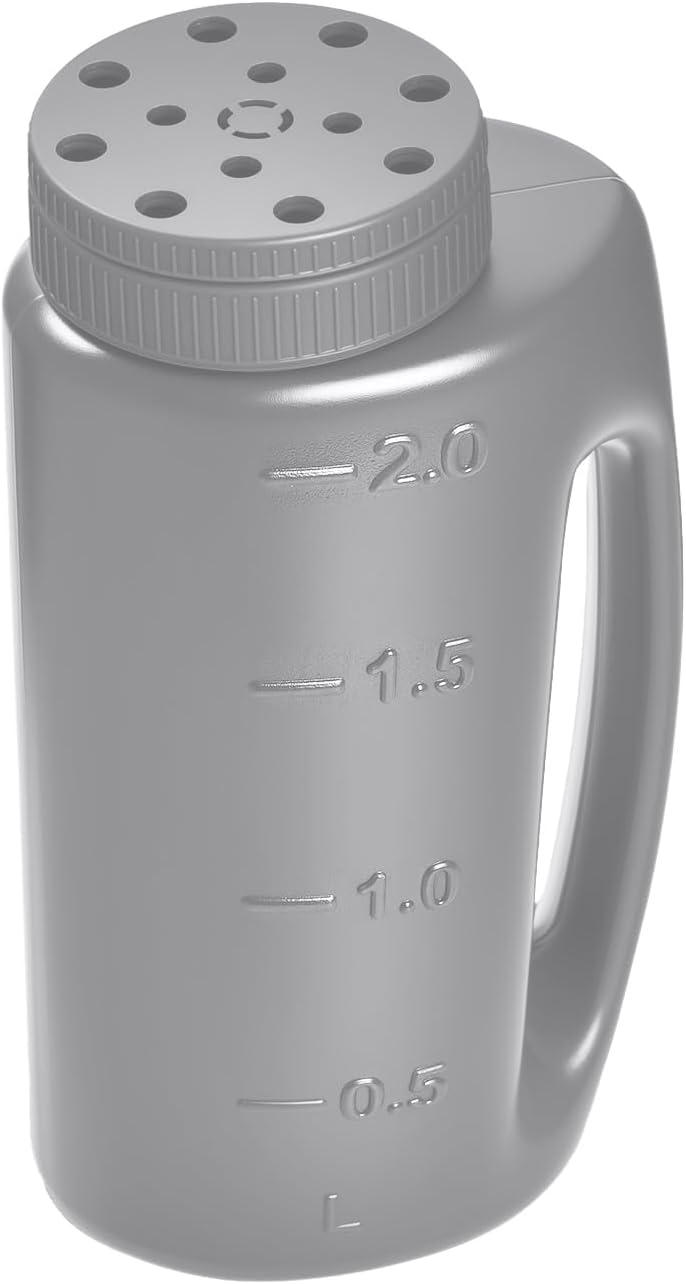
ZXJ Handheld Seed Shaker Hand Spreader — 90 oz Capacity
| Capacity | 90 oz |
|---|---|
| Included accessory | Garden gloves |
| Material | Weather-resistant plastic |
| Adjustable openings | Three settings |
The ZXJ Handheld Seed Shaker is a compact broadcast spreader aimed at small to medium yard tasks. It uses a front-facing diffuser and three adjustable openings to control flow so you can switch between fine grass seed and coarser materials like ice melt. The 90 oz capacity reduces refills compared with tiny hand spreaders, and the included garden gloves and ergonomic handle make longer passes more comfortable. Built from weather-resistant plastic, it is lightweight and easy to rinse after use. Expect good uniformity on lawns and walkways when cranked to the right setting, but it lacks a motorized or hopper-agitation system so very damp or clumpy products may need pre-breaking. The unit is straightforward to operate and store, making it a practical, no-frills choice for routine lawn seeding, fertilizing small plots, or spreading salt in winter.
Best for: Homeowners who want an affordable, easy-to-use spreader for routine lawn seeding, fertilizing, and occasional ice-melt tasks and who prioritize simplicity and low maintenance.
Less Ideal for: Commercial landscapers or users who need to treat very large areas quickly or handle consistently wet, clumpy materials should choose a heavier-duty or motorized spreader.
- Large 90 oz hopper reduces trips to refill during small to medium jobs
- Three adjustable openings provide flow control for seeds, fertilizer, or ice melt
- Ergonomic handle and included gloves improve comfort during extended use
- Weather-resistant plastic construction is easy to clean and store
- No mechanical agitation or motor makes it less effective with damp or clumpy materials
- Lightweight plastic may feel less durable under heavy professional use
Verdict: A budget-friendly, easy-to-use handheld spreader that delivers good control and reduced refills for small to medium seasonal lawn and ice-melt tasks.
Scotts Whirl Hand-Powered Handheld Spreader

| Material Type | Poly |
|---|---|
| Capacity coverage | Up to 1,500 sq. ft. |
| Included Components | Scotts – 71060 |
The Scotts Whirl is a simple, hand-powered spreader designed for small yards and spot treatments. It delivers smooth, even coverage of grass seed, fertilizer, salt, or ice melt by turning a small spreader wheel as you walk. Its ergonomic, adjustable arm support makes repeated passes more comfortable than basic handheld scoops, and the unit arrives fully assembled so you can use it right away. With a capacity rated up to 1,500 square feet it is best for modest lawns, beds, and patch repairs rather than large properties. Construction is lightweight poly, which keeps it easy to carry and maneuver but means it is not as rugged as metal commercial units. The straightforward mechanical design keeps maintenance trivial and there are no batteries or power hooks to worry about. If you want a low-cost, low-effort tool to improve distribution and avoid clumping during seeding or fertilizing, this does the job well, but those needing heavy-duty durability or very large coverage will want a larger tow-behind or broadcast spreader.
Best for: Buyers who want a practical, no-frills tool to improve distribution for routine lawn care on small to medium yards and value ease of use and low maintenance.
Less Ideal for: Homeowners with large lawns, commercial landscapers, or anyone needing a heavy-duty, high-capacity spreader should consider larger tow-behind or broadcast models.
- Provides smooth, even coverage for seed, fertilizer, salt, and ice melt
- Ergonomic adjustable arm support for more comfortable use during extended passes
- Lightweight poly construction makes it easy to carry and maneuver
- Comes fully assembled so it is ready to use out of the box
- Poly construction is less durable than metal alternatives for heavy or commercial use
- Capacity is limited to small lawns and spot treatments, not appropriate for large properties
Verdict: A lightweight, ready-to-use handheld spreader that delivers even coverage for small lawns and routine spot treatments.
Choosing the Right Garden Spreader for Overseeding: Key Factors to Consider
Seed Metering and Feed Control
Accurate metering is critical when overseeding because grass seed is small and you need low application rates to avoid overplanting. A spreader with fine, adjustable feed settings lets you dial in the grams or pounds per square foot that your seed mix requires. Coarse or binary settings tend to dump too much seed and create waste or poor germination.
Look for metering mechanisms that offer a steady, predictable flow rather than intermittent dumps. Some designs use a narrow slot or variable aperture that moves slowly to drop seed, which minimizes damage to fragile seed coatings. How the feed is shielded from wind and operator stride also affects accuracy in real lawn conditions.
Spread Pattern and Coverage Width
The shape and uniformity of the spread pattern determine how many passes you must make and how likely you are to end up with streaks. For overseeding, a tight but even spread pattern is usually better than a wide, uneven scatter because it reduces over-application at the pass edges and limits seed loss to sidewalks or flower beds.
Coverage width affects productivity. Wider spreaders cover more ground per pass but can be harder to control at low application rates. Consider how the pattern behaves at typical walking speeds – many spreaders are calibrated with a target speed in mind. Consistent overlap between passes without concentrated ridges of seed is a sign of a good pattern for overseeding.
Hopper Design and Seed Handling
Hopper shape, mouth size, and internal baffling change how seed moves and whether it bridges or clumps. Seed that clogs in the hopper forces stops to clear blockages and leads to inconsistent application. For overseeding, where seed mixes can contain fine and fluffy particles, a hopper that funnels smoothly and has a wide, accessible fill opening will save time and reduce frustration.
Also check how the spreader protects seed from moisture while you work. Some hoppers have rain-resistant lips or covers that reduce dampening. Easy-to-remove components make cleaning and emptying the hopper simple when you switch between seed and fertilizer tasks.
Calibration and Rate Adjustment
A spreader that is easy to calibrate helps you match manufacturer or seed-coating instructions for pounds per 1,000 square feet. Calibration often involves setting a dial and measuring output on a small test swath. Designs with clear numerical settings and repeatable detents let you replicate the same rate across multiple sessions.
If the spreader lacks fine-scale markings, you will spend more time trialing rates on the lawn. For overseeding, small differences in rate matter, so equipment that supports incremental adjustments is preferable. Some spreaders include calibrating charts for common grass seed types which speeds setup.
Maneuverability and Field Mobility
How a spreader handles over uneven turf, around obstacles, and on slopes affects how quickly you can seed a lawn without damaging existing turf. Push-style spreaders require comfortable grips and wheel designs that track straight; tow or ATV-mounted spreaders need stable hitching and predictable drop at low speeds.
Wheel diameter, tread, and axle robustness determine how the device navigates thatch, ruts, and wet spots. For smaller yards, compact and nimble units reduce fatigue, while larger lawns often benefit from units with wider wheels and larger hoppers that cut down on refill frequency.
Cleaning, Maintenance, and Durability
Seed dust and coatings can be corrosive or sticky if left in the mechanism, so easy cleaning matters for long-term reliability. Look for spreaders with removable agitators and hoppers that can be rinsed without taking the whole frame apart. Corrosion-resistant finishes and stainless or reinforced plastic parts resist wear from seed and moisture.
Consider how replacement parts or simple hardware like pins and springs are accessed. A design that allows field-level repairs-like clearing a jam or replacing a worn agitator-keeps downtime low during a seeding window.
Why Overseeding Needs Different Spreaders Than Fertilizing
Grass seed is lighter and more easily damaged than granular fertilizer, so a spreader that excels with heavy granules may not perform well with seed. Overseeding requires gentler handling to avoid cracking seed coatings and to maintain consistent drop rates.
The distribution pattern and metering precision matter more when you are aiming for even turf thickening rather than blanket nutrient delivery. Choosing equipment optimized for seed will save time and reduce wasted material.
- Seed is usually applied at much lower rates than fertilizer
- Fine control reduces waste and improves germination uniformity
- Hopper and metering design determine seed flow quality
Preparing the Lawn Before You Seed
Prepare soil by raking or using a dethatcher to open small gaps where seed can reach soil contact. Seed that sits on top of heavy thatch or dense turf will not germinate as reliably. If possible, mow slightly lower than usual before overseeding to expose more soil surface.
Address bare spots by loosening soil and adding a thin layer of starter topdressing. Good seed-to-soil contact is more important than spreading speed; plan passes so seed lands and is not simply trapped in clumps of thatch.
- Remove debris and mow to create a clean surface
- Rake or slit-seed high thatch areas
- Topdress bare spots for better soil contact
Calibrating Your Spreader for Common Seed Mixes
Before treating the full lawn, measure output on a short test strip to confirm the setting. Walk at your normal pace while collecting the seed for a fixed time period or area, then adjust the dial until the amount matches the recommended rate for your seed mix.
If the spreader provides no precise chart, start conservatively and make a second pass rather than overfeeding on the first run. Overlap passes slightly to avoid streaks but avoid doubling up in the center of the pass.
- Use a measured area or a calibration tray to verify output
- Match the seed rate to the mix label instructions
- Re-check calibration after refilling the hopper
Techniques to Reduce Seed Loss to Wind and Walkways
Seed blown by wind or scattered onto hard surfaces is wasted and creates messy regrowth in non-turf areas. To reduce loss, seed during calm conditions and use a lower spread setting with slower walking speed. Consider broadcasting into targeted swaths rather than wide arcs near sidewalks and driveways.
Edge treatments can be done with handheld seeders or by shielding the spreader output with a temporary board to prevent drift. For small yards, hand-firming the seed with a light roller or the back of a rake improves contact and limits movement from wind or rain.
- Seed on calm days and at low walking speeds
- Shield edges near hard surfaces
- Lightly firm seed into the soil after spreading
Maintaining Your Spreader After Overseeding
Clean out the hopper and metering mechanism promptly after use to prevent crusting from seed coatings and dust. A quick rinse and drying, plus a light lubricant on moving parts, will extend life and keep calibration predictable over multiple seasons.
Store the spreader off the ground in a dry place. Periodically inspect wheels, axle pins, and calibration components for wear and replace small hardware before it fails during a seeding run.
- Empty and rinse hopper after use
- Lubricate moving parts and check for corrosion
- Store dry and inspect wear points seasonally
How We Chose the Best Garden Spreader for Overseeding
We shortlisted garden spreaders that perform well specifically for overseeding, focusing on features that matter when applying small grass seed and thin mixes. Evaluation emphasized spreader control and seed handling rather than general fertilizer tasks. Key criteria included seed metering accuracy, adjustability for fine application rates, and the spread pattern at walking speeds typical for yard work. We also tested usability aspects important to gardeners, such as hopper access for filling, ergonomic push or tow handling, and ease of calibrating the rate without specialized tools. Durability of the spreader components and resistance to seed bridging and moisture were considered because seed mixes are often fine and prone to clumping. Mobility and width of coverage were checked to gauge how quickly a typical suburban lawn could be seeded. We excluded spreaders designed only for heavy granular fertilizers or ice-melt products because their metering and delivery systems are not optimized for small, delicate seed. The final picks reflect machines and handheld designs that balance gentle seed delivery with consistent coverage for overseeding tasks.
FAQ
Can I use a fertilizer spreader for overseeding?
Often you can, but many fertilizer spreaders are designed for larger granules and heavier flow rates. If using one, calibrate carefully, choose the lowest metering setting, and confirm output on a test strip to avoid over-application or seed damage.
What is the best time to overseed for successful germination?
It depends on grass type and climate, but overseeding typically succeeds when soil temperatures are warm enough for the seed to germinate and cooler air temperatures reduce stress. Early fall is often ideal for cool-season lawns, while late spring suits warm-season varieties.
How do I know the correct seeding rate for my lawn?
Follow the seed mix label for pounds per 1,000 square feet, then calibrate your spreader to deliver that amount. Use a short test run or calibration tray to measure output and adjust until it matches the recommended rate.
Do I need to water immediately after overseeding?
Usually light, frequent watering that keeps the seedbed moist is best until seedlings establish. Avoid heavy watering that causes seed movement or crusting. The exact schedule depends on temperature and soil; aim to keep the top inch of soil consistently damp.
How often should I clean my spreader after use?
Clean it after every seeding session to remove seed dust and coatings that can clog the mechanism. For occasional light use, a rinse and dry plus lubrication is usually sufficient; for heavier or repeated use check moving parts more thoroughly.
Final Verdict
Choose a spreader for overseeding by prioritizing precise metering, a controlled spread pattern, and a hopper that handles fine seed without bridging. Balance coverage width with the need for gentle delivery: wider units reduce passes but can be harder to set at low rates. If you seed small lawns, favor maneuverability and easy calibration. For larger areas, a stable spread pattern and a larger hopper cut refill time. Focus on predictable seed distribution and simple calibration to get even germination across your lawn.
